Skip to content
Details

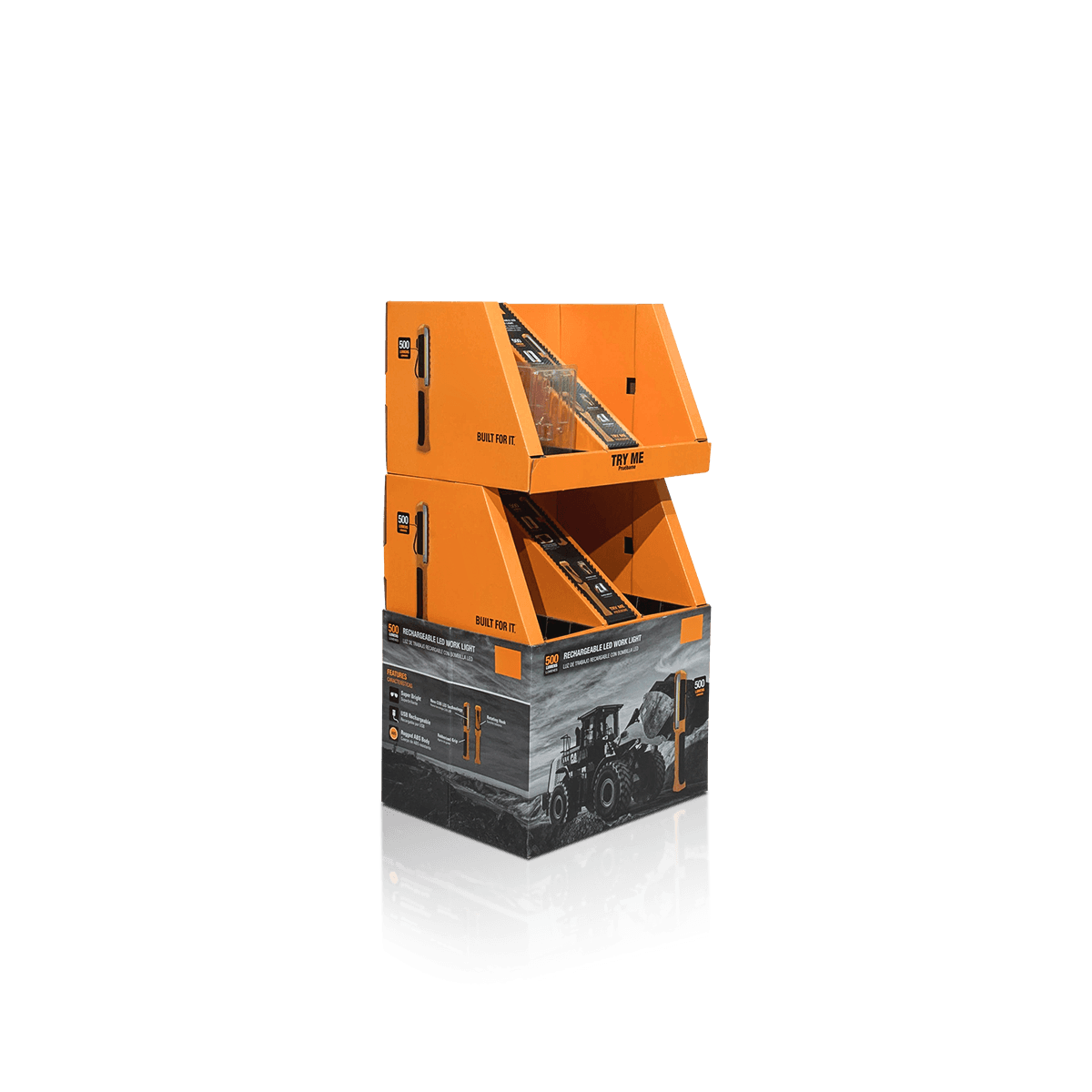
Custom Electrical Parts Display Boxes for Trade Counters

Give connectors, terminals and other small electrical parts clear labels, stable display lanes and a practical path from distributor case to trade counter.

The Label Must Survive the Lip

A row of nearly identical connector packs can look orderly until someone needs a specific wire gauge, terminal size or manufacturer part number. If the front wall of the tray hides that distinction, the display creates another search task instead of helping a contractor take the correct pack.

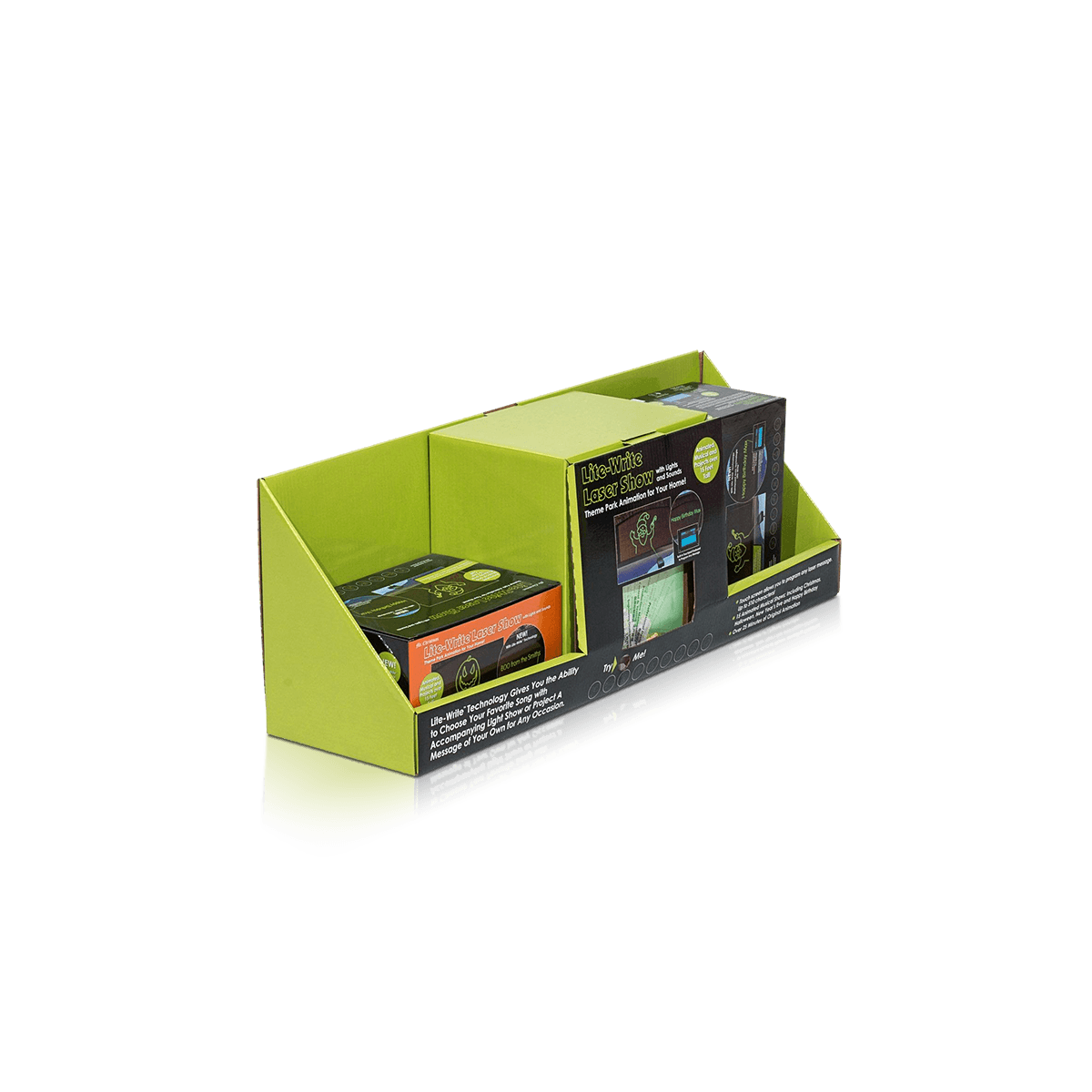
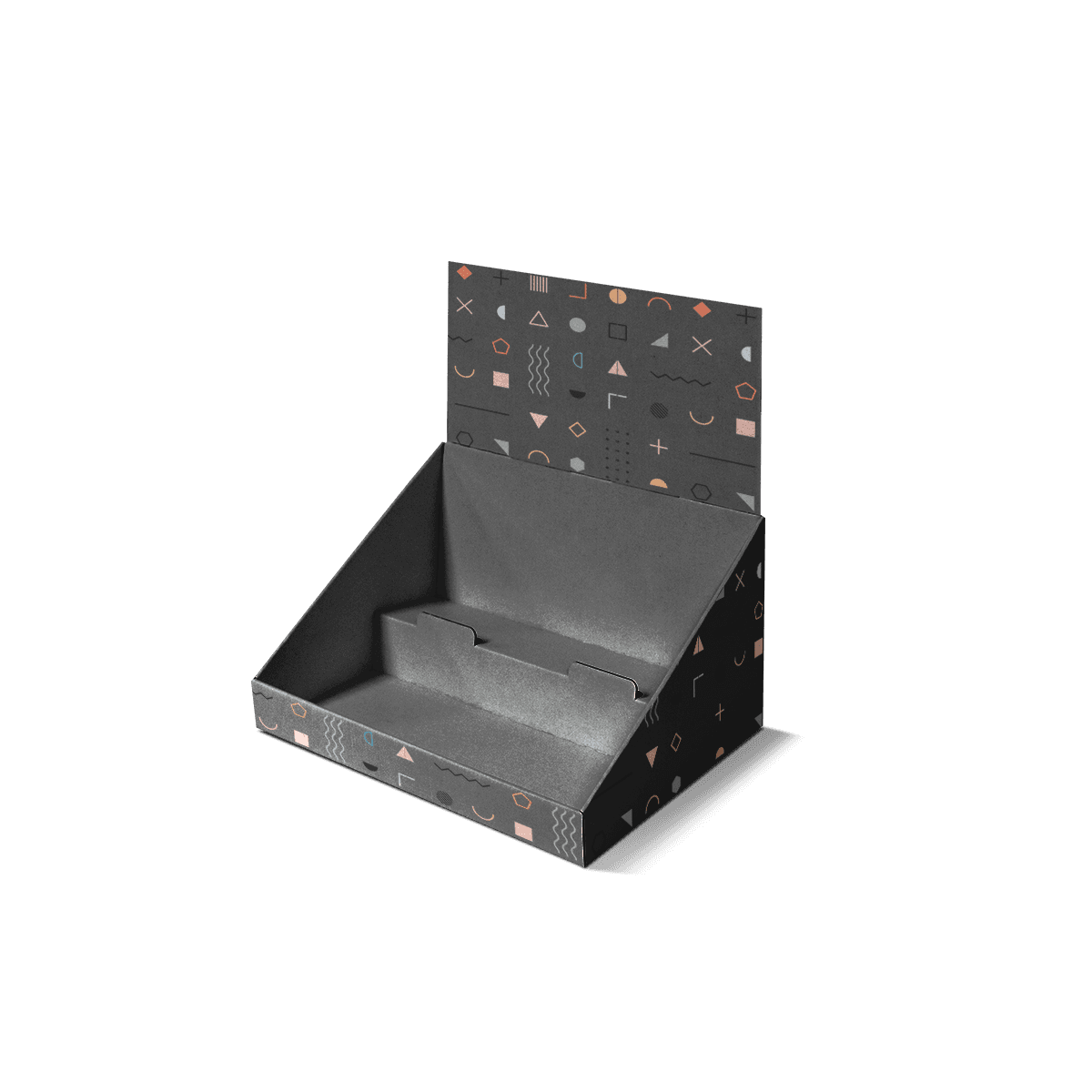
Custom Electrical Parts Display Boxes are printed counter or shelf display units that hold multiple sellable packs of electrical components. They are suited to distributors, supply houses and hardware retailers presenting connectors, terminals, switches, fuses, mounting accessories and similarly compact products. The contents normally stay in their own labeled retail packs; an open display tray is not a substitute for the packaging that contains each component.

The important measurement is not only the tray's outside footprint. It is the portion of every label that remains visible once the unit is full, partly depleted and placed behind a counter. A shallow front lip may reveal the product name but obscure the amperage or conductor size printed lower on the pack. Move that identifier into the exposed zone or change the packing orientation before approving the tray.

For electrical parts, an attractive display that obscures the exact part number is a failed display. The first structural decision is the customer's reading and picking position, not the header artwork.

Sell the Pack, Not Loose Parts

Display geometry should follow the unit the store actually sells. A bag of wire nuts, a carded terminal assortment and a boxed wall switch may contain similar-sized components but behave very differently when stacked or removed. Measure the finished sellable pack, including its seal, folded header, hang hole, rigid corners and any projecting closure.

Bags Need an Upright Edge

Soft bags settle toward the bottom of a tray and can hide their labels behind the front wall. A shallow divider, fitted pocket or angled backing surface may help each bag stay upright. If the contents are dense, the bag can still slump; the display needs to support the whole packed unit instead of relying on a printed header for stiffness.

A bag's contents and printed count should also remain visible after another customer takes the pack in front. A simple illustrated arrangement is a starting point, but test it with bags filled to their normal selling weight.

Cards and Cartons Behave Differently

Blister cards and folded paperboard cartons usually give the tray a repeatable width. Their edges can be guided by lanes without compressing the merchandise. A display that holds cards vertically may need a rear stop, while a deeper carton can stand independently if the floor and front lip provide enough restraint.

Do not pour unwrapped terminals or loose electrical fittings directly into a printed open tray merely to save a retail pack. The individual container is what controls counts, product labeling, safe handling and the point at which a customer receives the parts. An open bulk-pick arrangement belongs to a different operating process.

Facing Count Sets the Footprint

A facing is one visible front position in a retail display. Decide how many distinct packs must be visible at once, then calculate the outside width from the real packed widths, lane partitions and picking clearance. Starting with an arbitrary tray size invites compressed packs, hidden variants or wasted space.

One SKU or Adjacent Variants

A single-SKU tray can hold several units in depth if the next pack becomes visible after the front one is taken. Two sizes of terminal should not share one undivided channel simply because their bags have the same brand color. Give each size its own physical lane or sell it in a separate display.

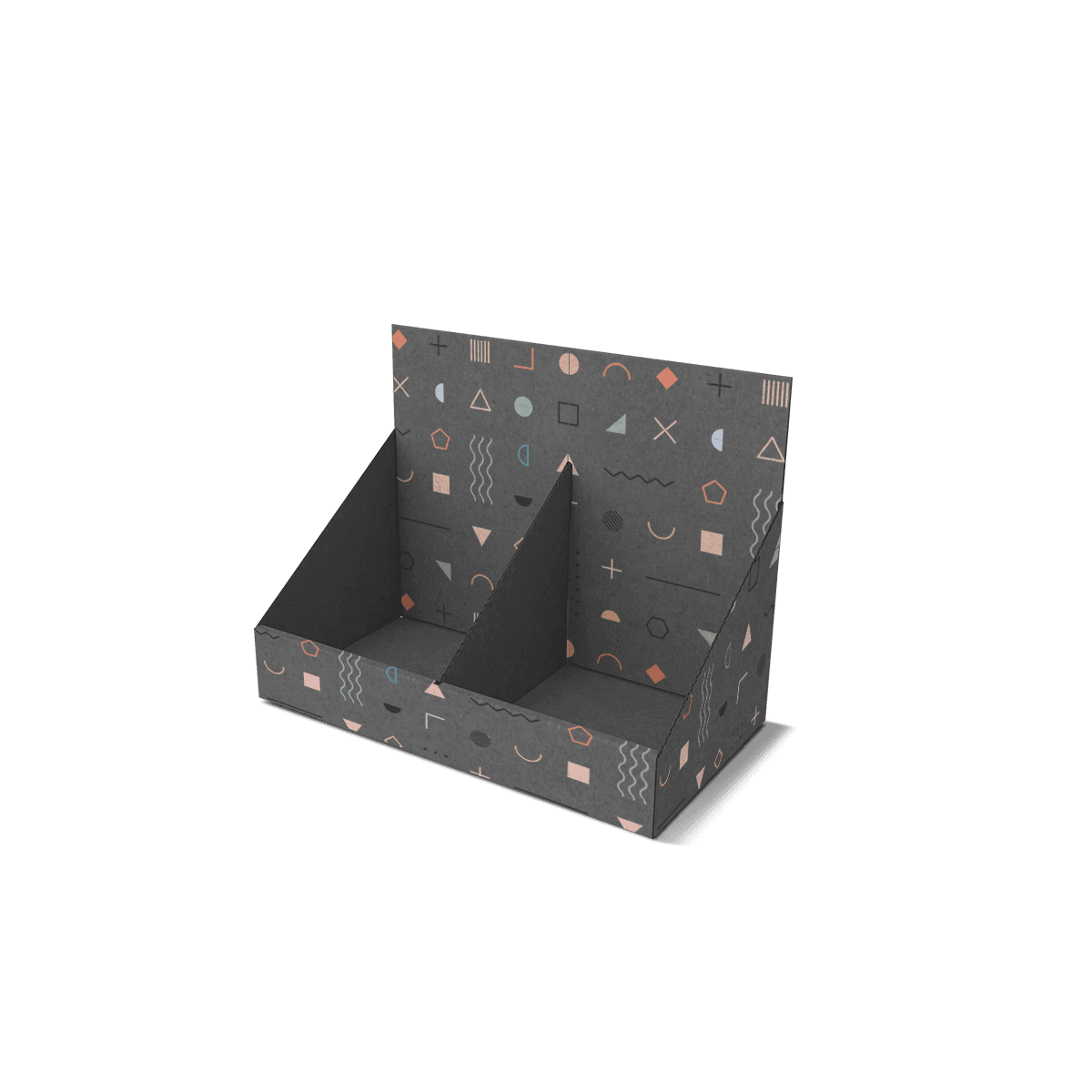
For an illustrative trade-counter arrangement, three connector sizes could occupy three labeled lanes. If one size moves faster, its lane can be deeper or wider, but the resulting layout must still allow staff to replenish it without reaching through neighboring stock. The exact count depends on the sellable packs and the store's allocated space.

A Half-Full Display Tells More

Load the intended pack count, then remove every second or third item. If the remaining packages lean into the vacant lane or fall below the front wall, the full display photo has hidden a structural problem. Check the last pack as well as the first. Rear stops and modest lane walls can preserve a readable presentation as inventory changes.

A front lip should hold the merchandise without becoming a barrier. The relationship between lip height, label position and hand clearance matters more than adding another decorative panel.

Separation Prevents Wrong Picks

Similar-looking components need more than color coding when ratings, sizes or fitting types differ. A printed divider can name the variant, but a divider that bends or lifts out of its slot can allow merchandise to cross lanes. Tie the separation method to the weight and shape of the actual packs.

Die-cut partitions work for light bagged accessories when their tabs seat firmly in the tray floor. Heavier boxed switches may need a more rigid compartment or a reinforced channel. Make the internal lanes easy to fill from the rear or top so a busy employee does not have to rebuild the display every time one size sells out.

The distinction between a sales display and backroom inventory is operational. A backroom picking station should use bin boxes when staff need quick access to bulk stock without a customer-facing header. Bulk inventory can also stay organized in parts storage boxes while the counter carries only the current sellable packs.

For a replenishment run, mark each lane with its actual item code, not an informal description such as “small connector.” That reduces the chance of refilling a vacant position with a visually similar but incompatible item. Store staff should still verify product labels and manufacturer specifications.

Store Position Changes the Structure

The same electrical assortment can require different display construction depending on where a customer encounters it. A counter beside the register rewards compact depth and direct hand access. A branch shelf may have more width but a fixed height and sightline. A peg-based fixture changes how the weight is supported.

Trade-Counter Reach

A low tray is usually easier to shop from across a service counter than a tall enclosed carton. When the store must protect staff workspace, position the display so the customer can read the pack without reaching into an employee-only zone. A header may help identify the product line, but it must not block the staff member's view or tip the unit when the rear pack is removed.

The footprint and access behavior of counter-top display boxes matter when a defined counter position drives the design. Electrical parts add a second constraint: size, rating and part number must remain legible from that position.

Shelf and Hook Systems

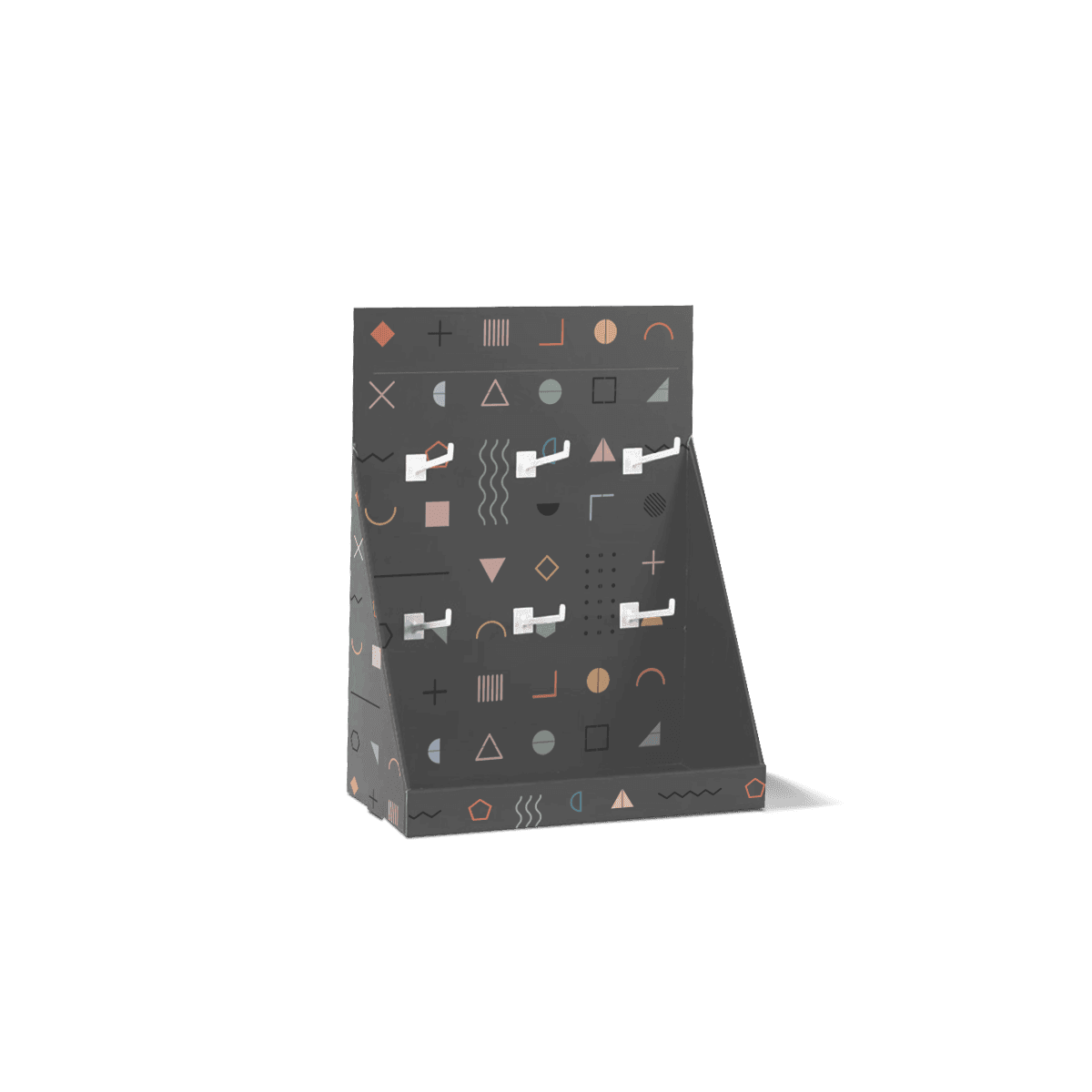
A shallow shelf-ready tray needs an exposed front row and enough backing to stop tall packs falling backward. If the store uses peg rails for carded merchandise, peg hook display boxes belong in the discussion because the hook positions and loaded weight set a different structure.

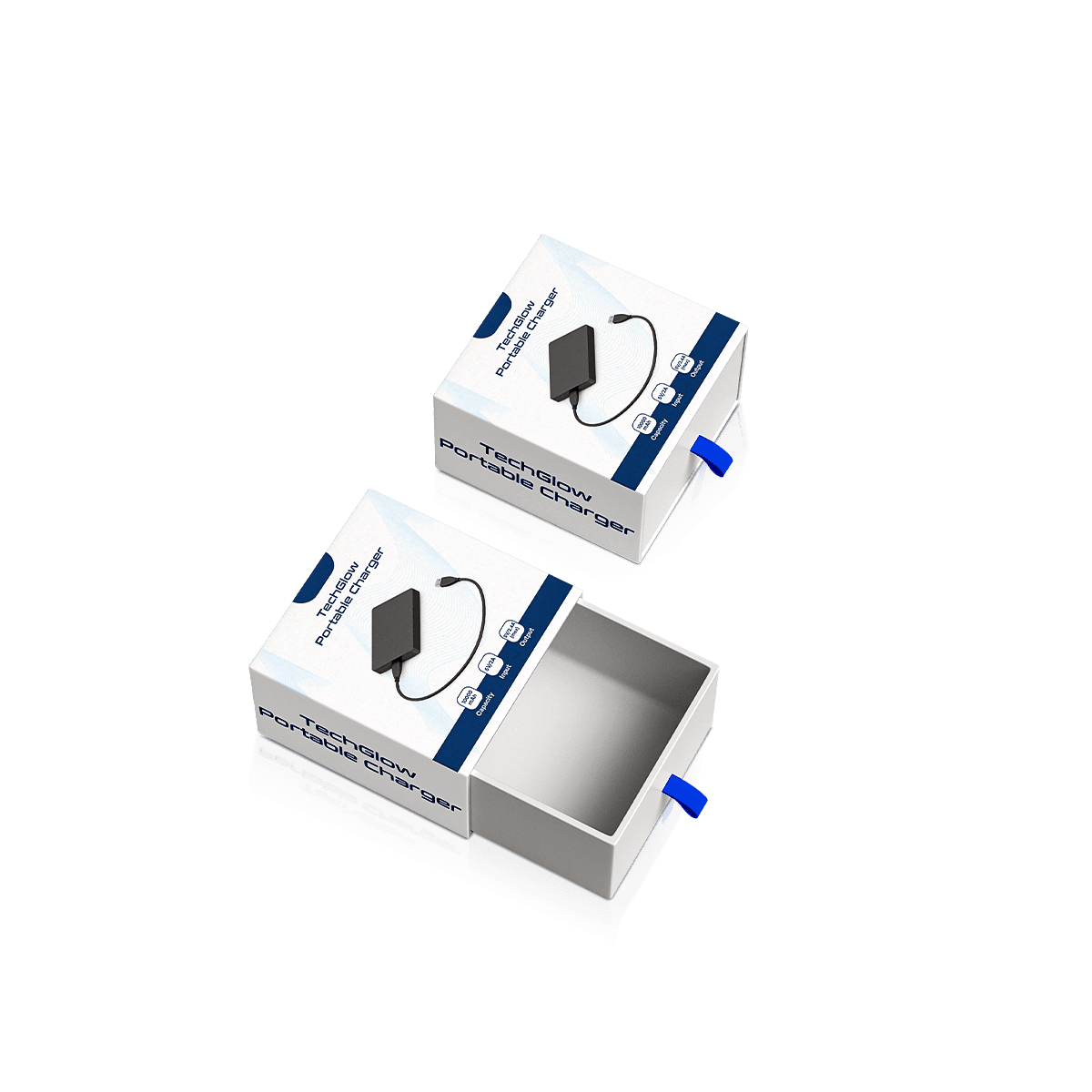
For finished consumer chargers or branded tech accessories, retail display boxes for gadgets organize larger consumer products rather than the numbered replacement components sold at an electrical trade counter. Do not enlarge a parts tray into a generic technology fixture without a reason.

The display box structures used across store formats can share materials while requiring entirely different access and replenishment geometry.

The Case-to-Counter Handoff

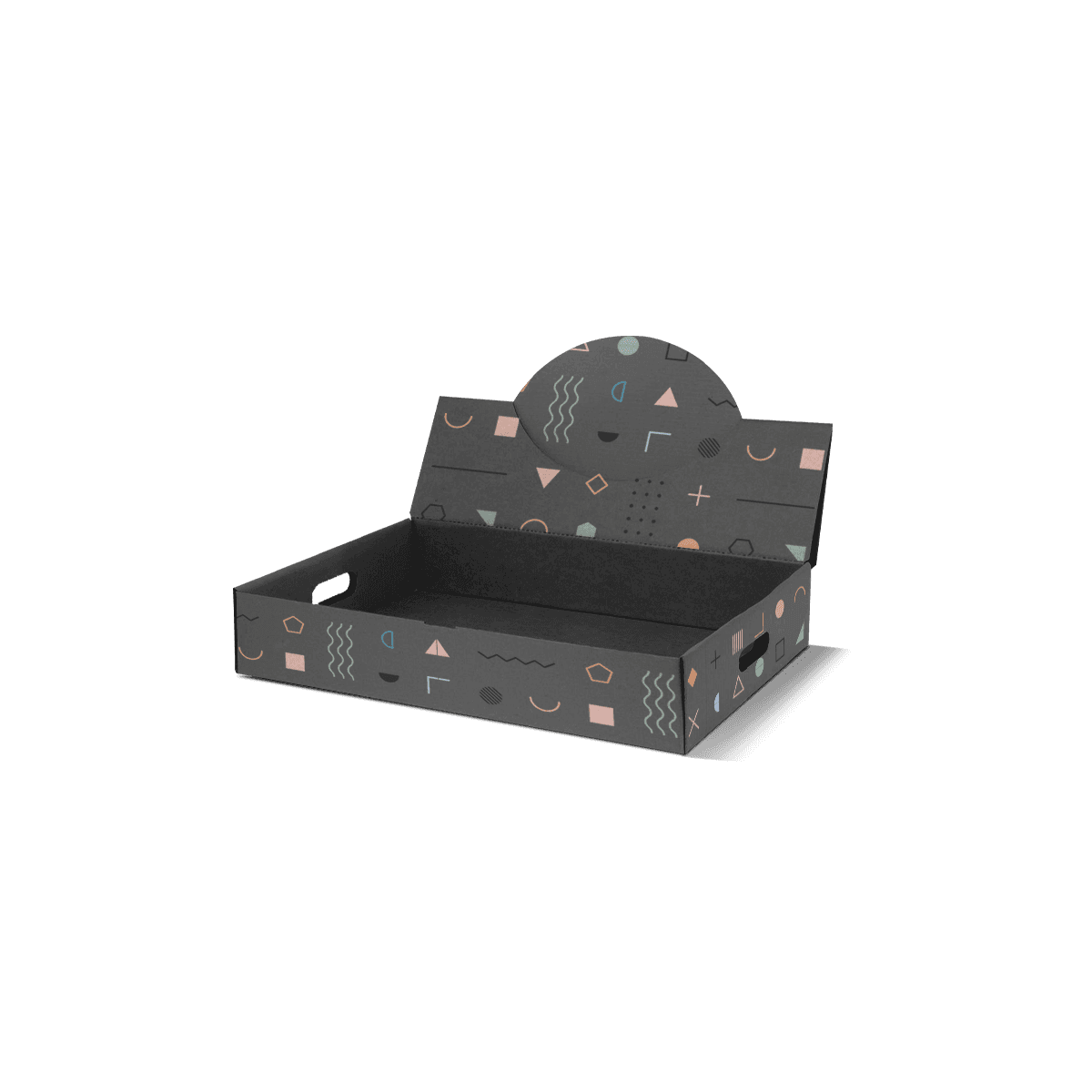
Some electrical assortments arrive in a shipping case and become a selling display when the store removes a cover or tears away a front panel. That conversion can save individual handling, but only if the shipping configuration protects the contents and the remaining tray is attractive and stable after opening.

A perforated panel needs a tear path that does not cross an important label or weaken the tray's front corners. Loose paper fibers and a ragged edge are especially distracting on a small technical product with compact printed specifications. Where a neat conversion cannot be achieved, a separate outer shipper and an independently finished display tray may be a better system.

The receiving team should be able to identify the opening edge without a knife near the merchandise. Put opening instructions on the sacrificial cover and keep the store-facing part number or assortment name on the tray that remains. If the cover also holds the upper wall in place during shipping, the exposed tray needs adequate strength after that wall is removed.

Test a filled converted display on the actual shelf depth or counter surface before signing off on this construction. A carton that survives case handling is not automatically a stable open tray. The product should not spill when staff pull the last rear pack forward.

Board Must Handle Repeated Picking

A display's duty is different from a sealed carton that is handled once. Customers repeatedly lift packs over the front lip, staff move the unit during cleaning and the same corners may be gripped at every refill. Paperboard and corrugated board can both work, but the decision follows loaded weight, span and expected handling.

Paperboard for Lighter Packs

A compact display of lightweight bagged clips or small carded parts may use folded paperboard. Its smoother face supports fine specifications and sharp printing. A reinforced base or folded sidewall may still be needed if the tray carries several dense packs. Increasing the printed board's thickness without reviewing the fold pattern may make assembly harder without correcting the weak point.

Corrugated for Higher Loads

Microflute or other suitable corrugated constructions can add stiffness for deeper lanes, denser connector packs or displays that double as distribution trays. Confirm that exposed flute edges and folding tolerances suit the intended finish. A printed liner may give the display a cleaner retail surface, but the material choice should still be checked against actual weight and handling.

A deep score or perforation through a load-bearing corner can undo the benefit of heavier board. Review the cut and crease geometry at the points where the display is lifted. The packaging dieline should account for removable panels, loaded corners and the visible surfaces after assembly.

Make Technical Copy Easy to Read

Product identification does more commercial work here than decorative copy. A contractor deciding between similar terminal packs may need the exact manufacturer part number, conductor size, connector type, count and applicable product rating. Reproduce the manufacturer's approved specifications; packaging artwork should never invent compatibility or imply a certification the component does not have.

Give the front-facing area one clear product identifier and place the longer specifications on the individual retail pack or an exposed side panel. The display header can name the assortment, but it should not be the sole place where a rating appears. Once the header is covered by stock or the tray is separated from its outer cover, staff still need the correct product identifiers.

Print the retailer's required barcode on the individual sellable pack and keep any display or case identifier distinct. Test scans on the actual printed stock using the retailer's checkout or receiving equipment. Barcodes crossing a fold, perforation or heavily textured edge may fail even when they look fine on a digital proof.

Color bands can speed recognition between product lines, but they cannot replace precise part numbers. For an assortment that changes frequently, an interchangeable lane label may be more practical than reprinting a fully branded tray every time a component designation changes.

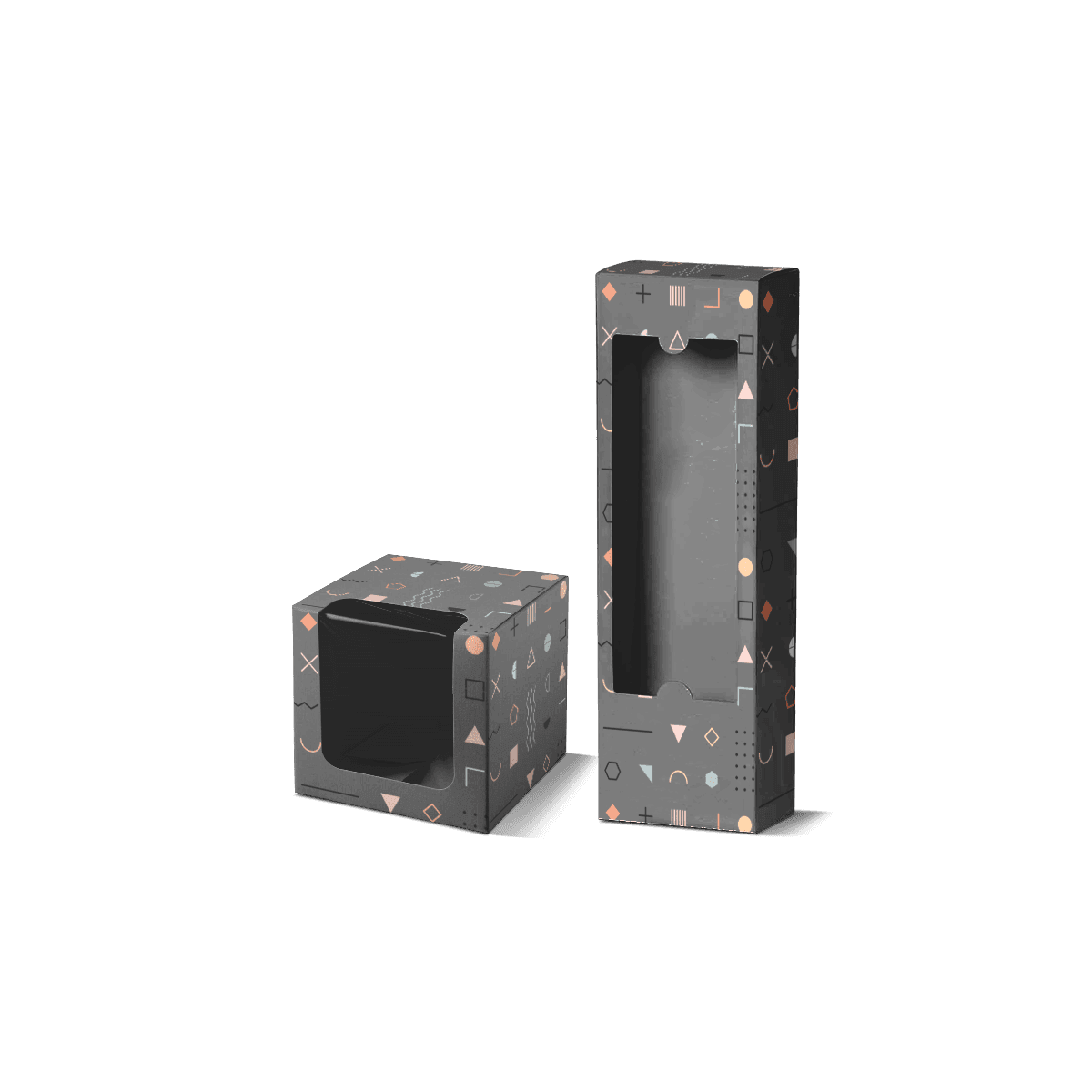
The same hierarchy matters in clear shelf-facing packaging: an item that cannot be identified quickly is harder to select correctly. Prioritize legibility and contrast before considering foil, embossing or other decorative finishes.

Electrical Does Not Mean ESD-Safe

An ordinary cardboard display can merchandise sealed consumer electrical parts, but its material alone does not provide electrostatic discharge shielding. The word “electrical” covers very different products. A boxed wall plate, a bag of mechanical cable clips and an exposed sensitive electronic assembly do not share one protective requirement.

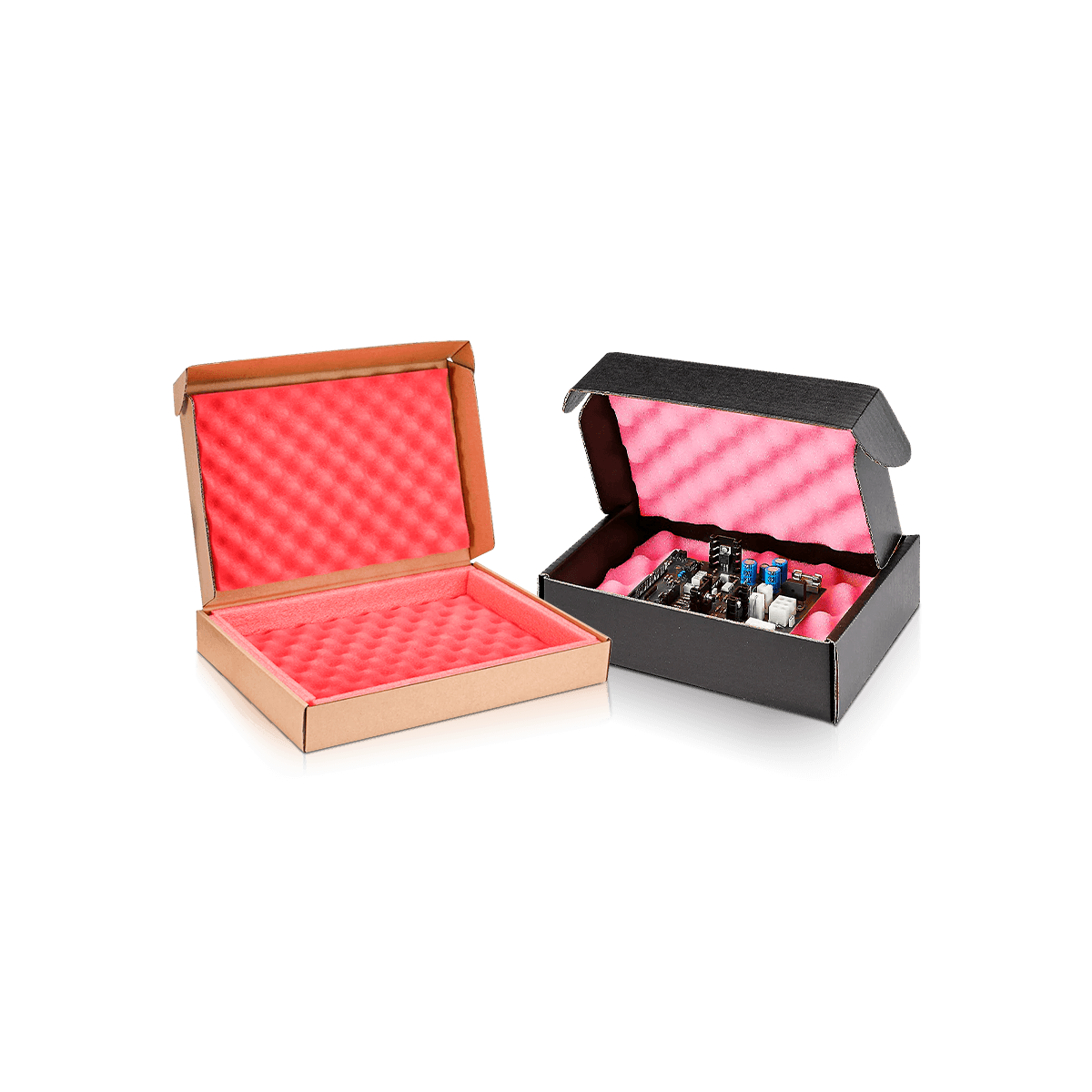
If a component is sensitive to electrostatic discharge, preserve its specified protective packaging and handling process throughout storage, distribution and retail display. The open tray may carry those already protected units; it should not be presented as the protective barrier. ESD protection boxes address a different job when a controlled protective system is required.

Do not use an unspecified black insert or dark-colored board as evidence of anti-static performance. Material electrical properties require confirmation for the actual construction and use environment. If the product also has sharp pins or fragile terminals, its individual pack should keep those features from damaging neighboring merchandise.

A printed electrical symbol or safety claim is not proof of a product rating. Confirm the required wording with the component manufacturer and any applicable retailer requirements before approving artwork.

Price the Displayed Selling Unit

Compare quotations using a consistent merchandising specification: the finished tray, number of facings, loaded pack count, divider construction, printing and any outer case. A price for an empty printed tray is not directly comparable with a price for a ship-and-display unit that includes a separate cover and fitted channels.

A multibranch program should establish how many completed displays each store receives and whether branches refill an existing tray or replace the whole unit. A disposable promotional tray and a reusable branch fixture have different costs. If the product mix is changing, committing to a large stock of preprinted part-specific trays can create obsolete packaging.

MOQ for Custom Packly USA starts at 100 boxes. Standard turnaround is generally 4–6 days after artwork and specifications are approved; complex displays, specialty materials or additional production requirements may take longer. US production, free shipping and free 3D mockups can support the ordering process, but an approved mockup is not a physical load test.

For a program with several artwork versions, digital, offset and flexographic printing have different setup and repeat-run economics. Count the display units per version, not only the aggregate order.

Request a custom packaging quote once the actual sellable pack, facing count, branch quantity and shipping configuration are known. That produces a price for the unit stores will receive and use, rather than an abstract printed box.

Make the Refill Handoff Obvious

The display is complete when a branch employee can place it, identify every lane and replenish it without reconstructing the original arrangement. The final operating decision is what stays at the point of sale and what arrives separately in backstock.

A one-time launch can use a full ship-and-display case. A steady assortment may need the tray only once and receive counted refill packs afterward. If several branches use the same layout, give the tray a stable assortment identifier while individual lanes carry the exact component codes. That keeps a packaging reprint from becoming necessary each time one item changes.

Custom retail packaging is relevant when one electrical product program must serve different store footprints or merchandising rules. An MRO packaging plan may also distinguish customer-facing stock from the bulk inventory held for service and repair work.

Custom Packly can review the display's footprint, actual sellable packs and branch replenishment method with free design and dieline support. For recurring rollout quantities, ask about warehousing and scheduled deliveries where those services suit the program. The intended handoff is a display that store staff can place and refill without guessing which electrical part belongs in each position.

FAQs

They are a practical fit for wire connectors, terminals, cable clips, small adapters, fuses, wall accessories, repair components and other compact electrical items sold in counted packs or fast-turnover assortments.

Electrical Parts Display Boxes are better when the pack needs to support customer-facing presentation, SKU visibility and retail-ready access. Bin Boxes make more sense for backroom storage, internal picking, or warehouse use where selling display is not the priority.

Yes. Divider layouts help prevent mixed inventory, support count accuracy and make similar-looking components easier to separate during stocking and purchase.

The most useful placement is on front and side panels where buyers and staff can read key specs quickly. That usually includes part numbers, usage notes, quantity per pack and barcode data.

Yes, when the structure matches the product weight and restocking frequency. Corrugated display formats work well for many light-to-medium electrical accessories that need daily handling without looking messy on the shelf.

Process

How it works

Your Packaging Journey, From Idea to Production and Delivery

01

Tell Us Your Specs

Custom packaging boxes

Tell Us Your Specs

Provide size, quantity, printing, and finishes.

02

Get a Fast Quote

Custom packaging boxes

Get a Fast Quote

Instant transparent pricing, no hidden fees.

03

Design and Approval

Custom packaging boxes

Design and Approval

Artwork checks, revisions, and final sign-off.

04

Produce

Custom packaging boxes

Produce

Expert manufacturing to meet deadlines.

05

Ship to Your Door

Custom packaging boxes

Ship to Your Door

Hassle-free, flexible delivery options.

Get Your Quote for Custom Electrical Parts Display Boxes for Trade Counters

Share your product details, size, quantity and artwork needs. We’ll help choose the right packaging style and send a clear quote.