Skip to content
Details

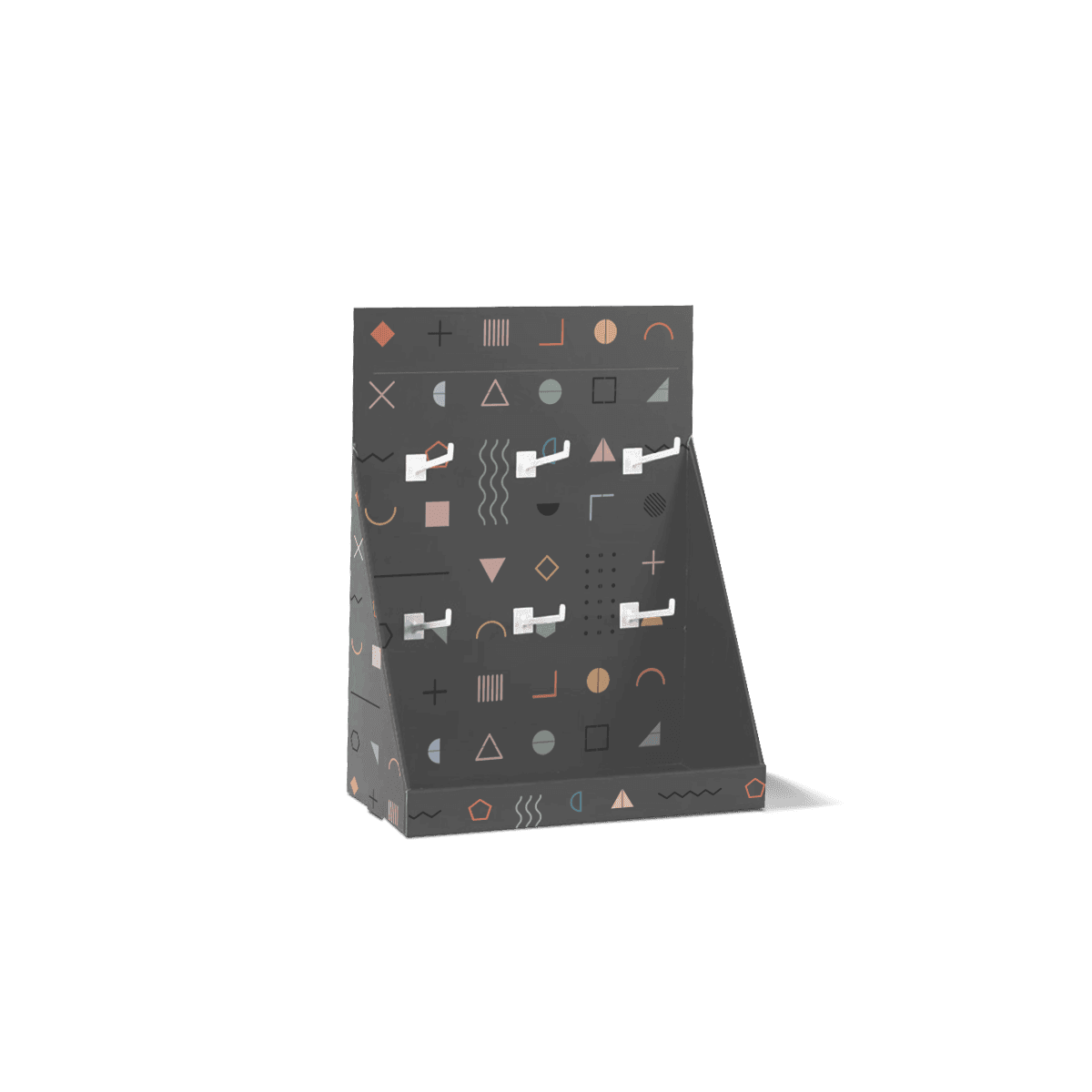
Custom Peg Hook Display Boxes for Multi-Hook Retail

Branded peg-hook merchandising units with a load-bearing panel, deliberate hook spacing and a clear refill plan for compact packaged products.

Pitch Comes From the Hanging Pack

Two evenly spaced hooks can still produce an unusable display if the packaged products touch, cover one another's labels or block the next hook. The controlling dimension is the full hanging pack, including its header card, folded carton, blister rim or projecting closure, not the bare item inside.

Custom Peg Hook Display Boxes are printed retail merchandising units with a backing panel and multiple peg-hook positions. Separate sellable packs hang from hooks fitted to that panel. The display organizes several products at once; it is not the closed carton that hangs from its own tab.

The Pack's Actual Envelope

Measure the widest point at the orientation in which the finished pack hangs. A blister flange may be wider than the product; a folded leash may occupy more depth than its card; a charger pack may have a projecting hang header. Use those finished dimensions to set the horizontal and vertical hook pitch, with enough room for the next pack to be seen and lifted.

An illustrative cable-accessory display might need fewer hooks than a sketch suggests once several packs are hung behind one another. Increasing the panel width is one response, but shortening each peg's inventory depth or separating bulky SKUs can preserve the original footprint.

Access Is Three-Dimensional

The hand needs an approach path as well as a clear front view. Check whether a customer can lift the front pack past the hook tip without brushing an adjacent row. A lower row that begins too close to an upper row may be inaccessible even when the printed fronts do not overlap.

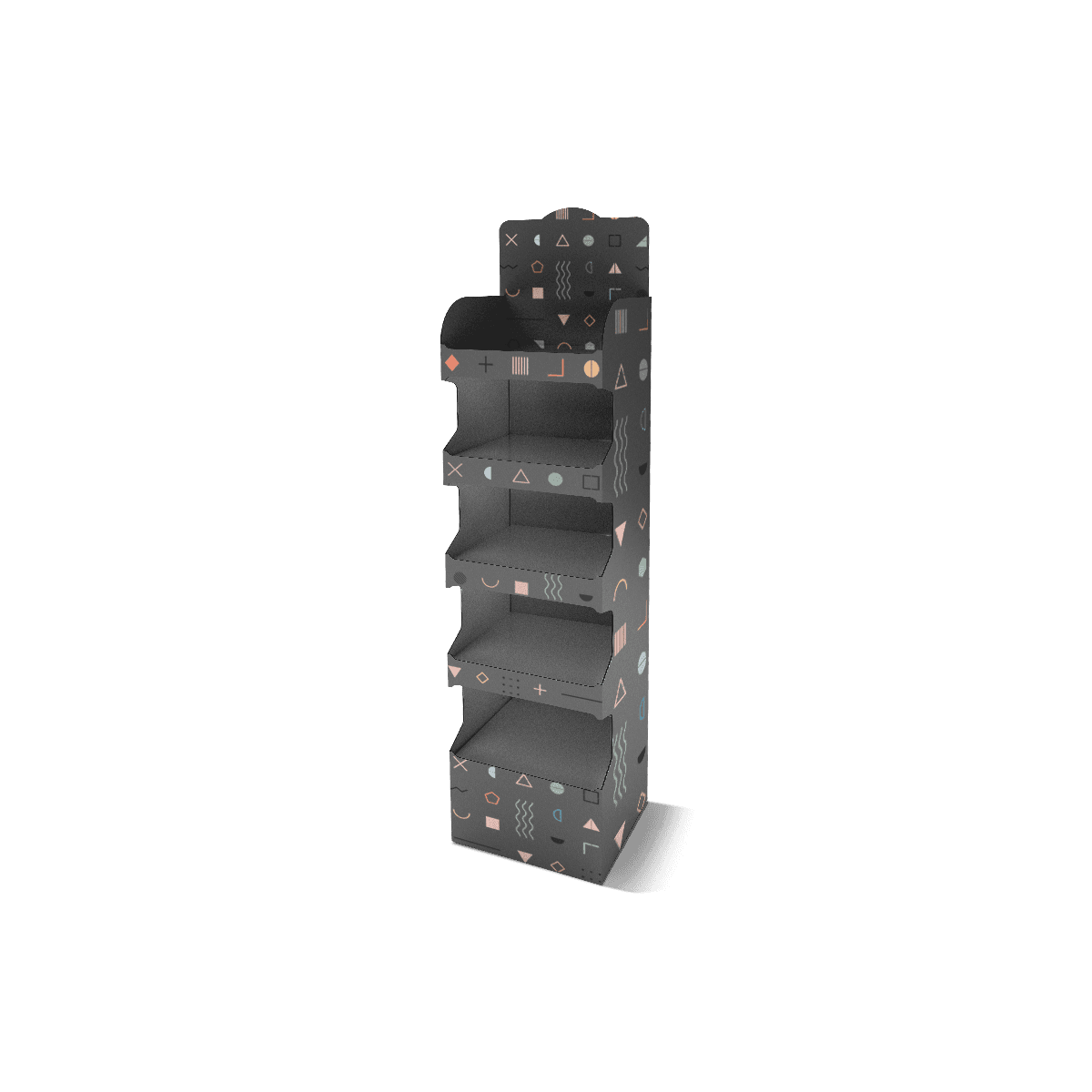
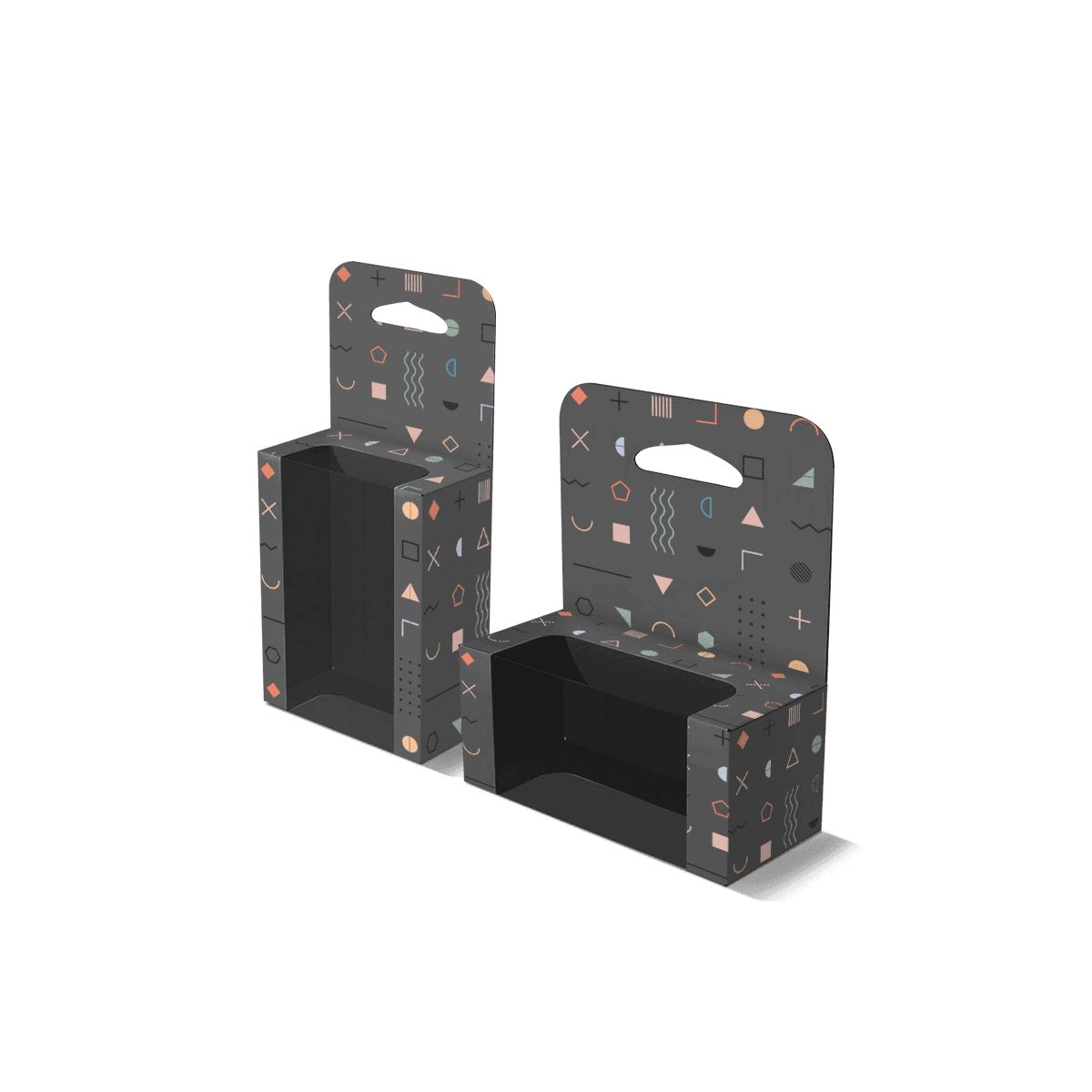
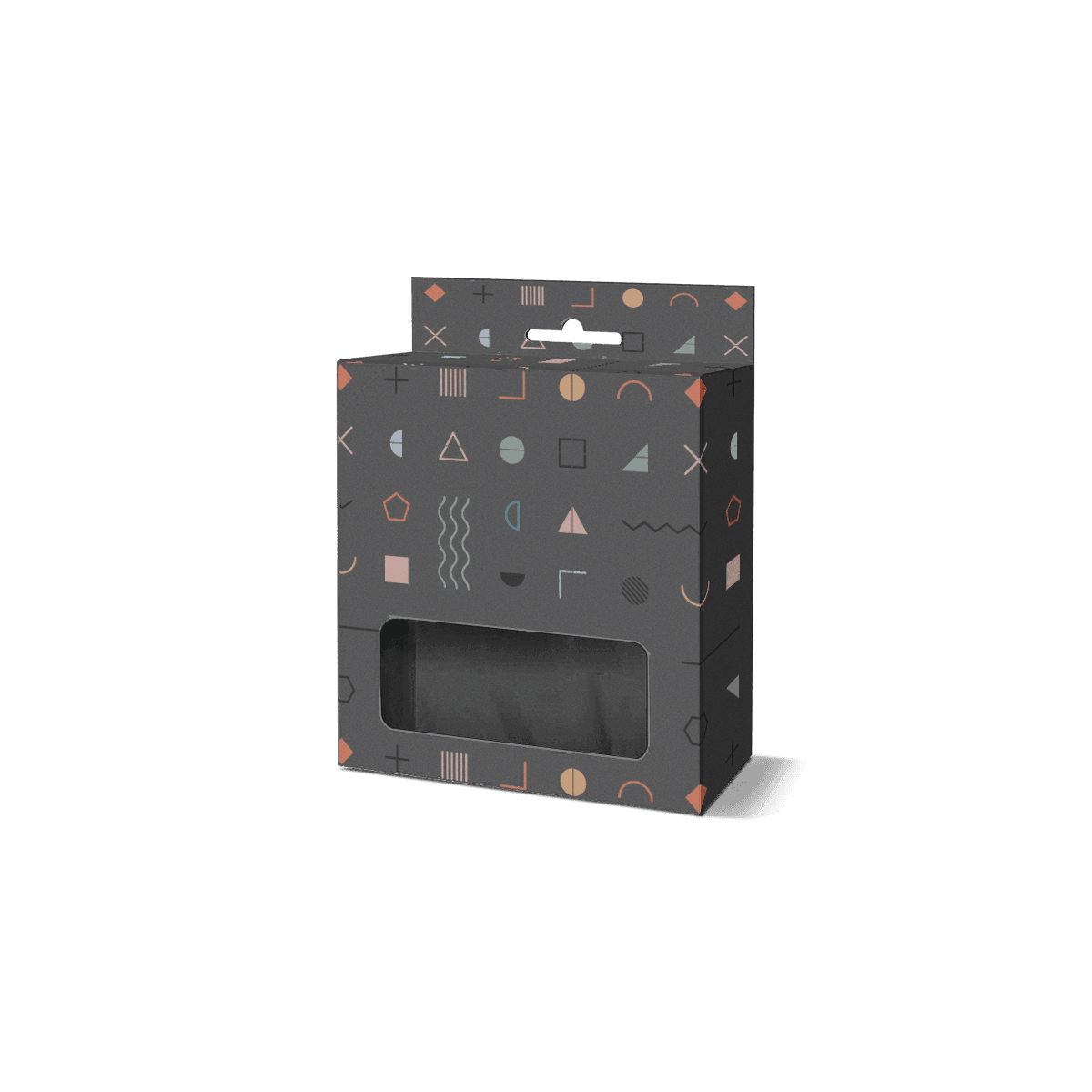
Different display box formats solve different store positions, but a peg unit earns its space only when the mounted packs remain easy to remove.
The Hook Loads the Back Panel

The load from a peg does not spread evenly through the printed display. It concentrates around the hook's mounting slots or holes and then travels through the backing panel into the base, frame or retail fixture. A thicker board alone will not correct a weak slot pattern.

Slots, Shanks and Retainers

Specify the actual hook hardware before cutting the panel. Its shank diameter, rear retainer, slot spacing and installation direction determine the cut geometry. A nominally similar replacement hook may rotate, loosen or pull through a different slot.

Confirm whether the retailer supplies hardware or whether the display kit must include it. Hook count and hardware compatibility are commercial specifications, not assumptions hidden inside a box quote.

Reinforcement at Load Points

For heavier hanging packs or densely stocked pegs, a doubled backing area, reinforced mounting zone or a different panel construction may distribute stress better than changing the entire unit to heavier board. The appropriate reinforcement depends on the filled load, hook length and how the display is supported.

A physical fit check should load the actual hooks with the heaviest intended packs, then repeat ordinary removal and replacement. Look for slot elongation, panel bowing and hooks turning toward neighboring merchandise. Custom packaging testing gives a separate framework for evaluating structure and print, but the peg mounting point needs its own real-load check.

A Base Must Resist Forward Pull

On a freestanding countertop or floor unit, hooks pull the center of mass forward as merchandise is added. The load changes again when a shopper removes several packs from one side. Back-panel strength and base stability must therefore be assessed together.

Countertop Footprint

A shallow footprint can save counter space while making a tall, heavily loaded hook panel easier to tip. Compare the intended counter depth with the full loaded profile, including the forward reach of hooks and packs. The display should not rely on neighboring merchandise to remain upright.

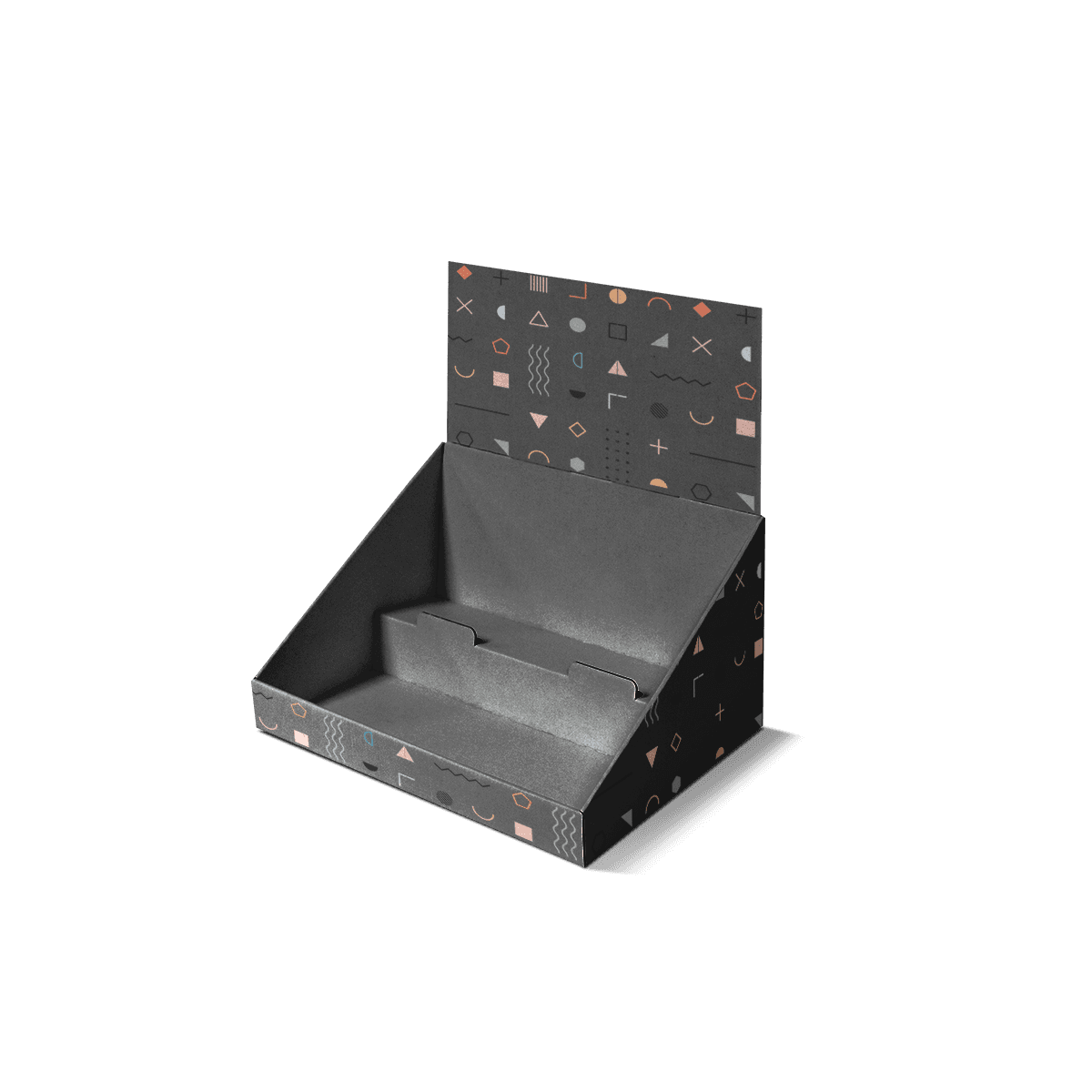
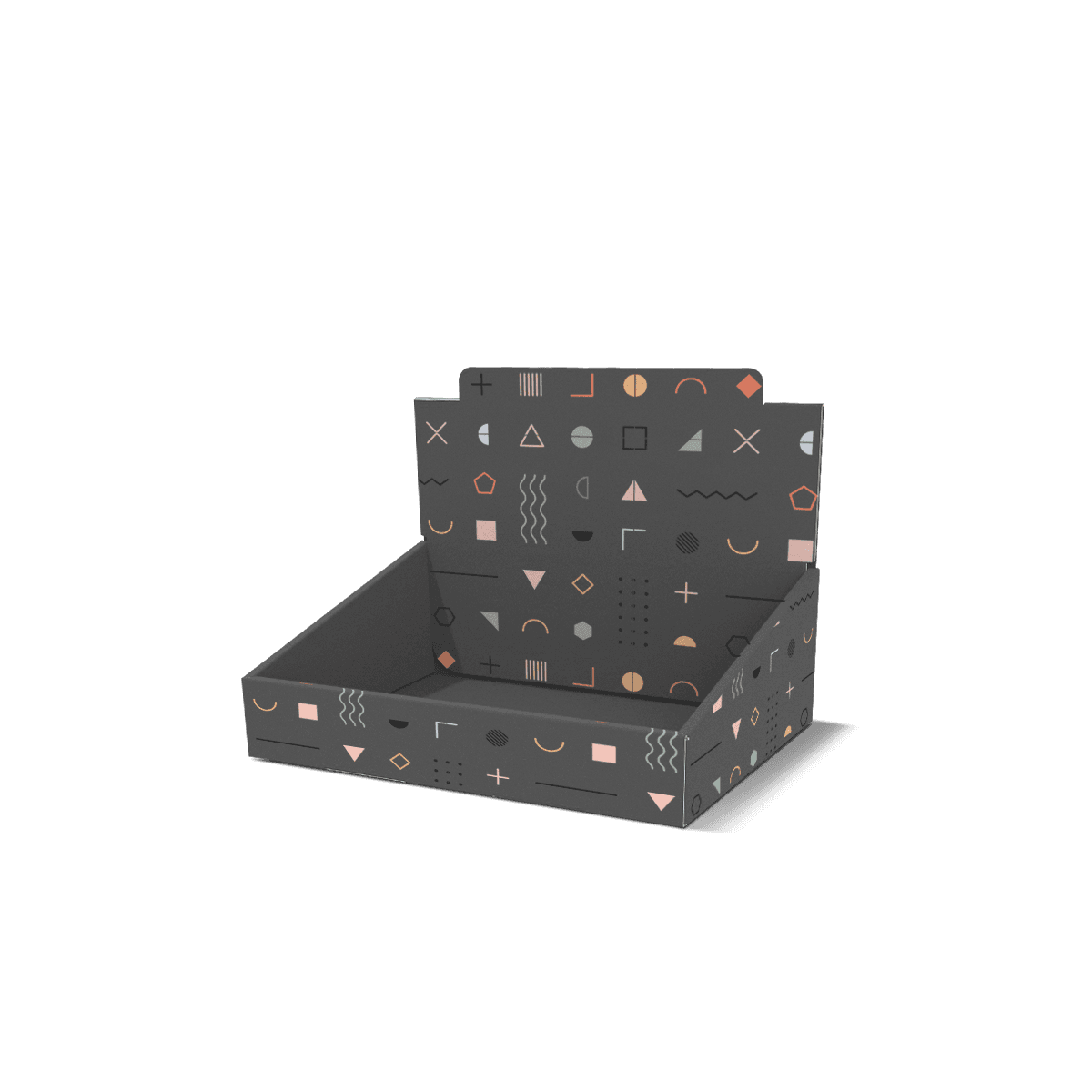
An open tray is a different solution when the product can sit rather than hang. Counter-Top Display Boxes prioritize a reachable front lip and product support at the base instead of projecting pegs.

Fixture-Mounted Backers

If the retailer mounts the printed panel to an existing wall or gondola, its attachment method replaces the freestanding base as the stability decision. Confirm rail spacing, attachment locations and the clearance behind the panel before specifying die cuts. Do not assume a freestanding construction can be attached to a fixture without a structural change.

Capacity Is More Than Hook Count

A display with eight hooks does not have a capacity of eight products. Its actual holding quantity depends on the usable length of each peg, the thickness of the packed merchandise and the space left for safe removal at the tip.

Front-to-Back Pack Depth

Calculate capacity using the thickest pack assigned to each hook. Account for curved blister fronts, handles and folded accessories that prevent packs from nesting closely. Packing the peg to its full metal length may leave no room for shoppers to lift the first item.

A small nominal capacity loss can produce a cleaner selling unit if customers can remove one pack without taking down the whole row. Confirm the intended display quantity in sellable packs rather than stating a theoretical maximum.

Mixed Assortments

A uniform grid often fits one product size but wastes space when two or three sizes share the panel. Consider separate hook lengths or pitch zones for bulky and slim packs. Put heavier packs on positions that do not overload an unsupported part of the board.

Mixed SKU plans should also account for color, size or compatibility labels. A front-facing pack should identify its variant before a customer pulls it forward; otherwise the merchandising density merely moves the search problem onto the peg.

Lower Rows Need Removal Clearance

Vertical spacing is often measured between two mounting holes. That is the wrong measurement for a tall hanging pack: the product beneath must clear the full drop of the upper pack and the path taken to remove it.

Test the highest and lowest permitted hook positions with fully loaded pegs. Upper packs may rest against lower products, causing hang cards to bend or lower hooks to tilt. A small increase in row separation can prevent both interference and repeated handling damage.

Do not treat a perfect front photograph as approval. View the display from an aisle angle, take one item from each row and check that the remaining packs return to a readable front-facing position.

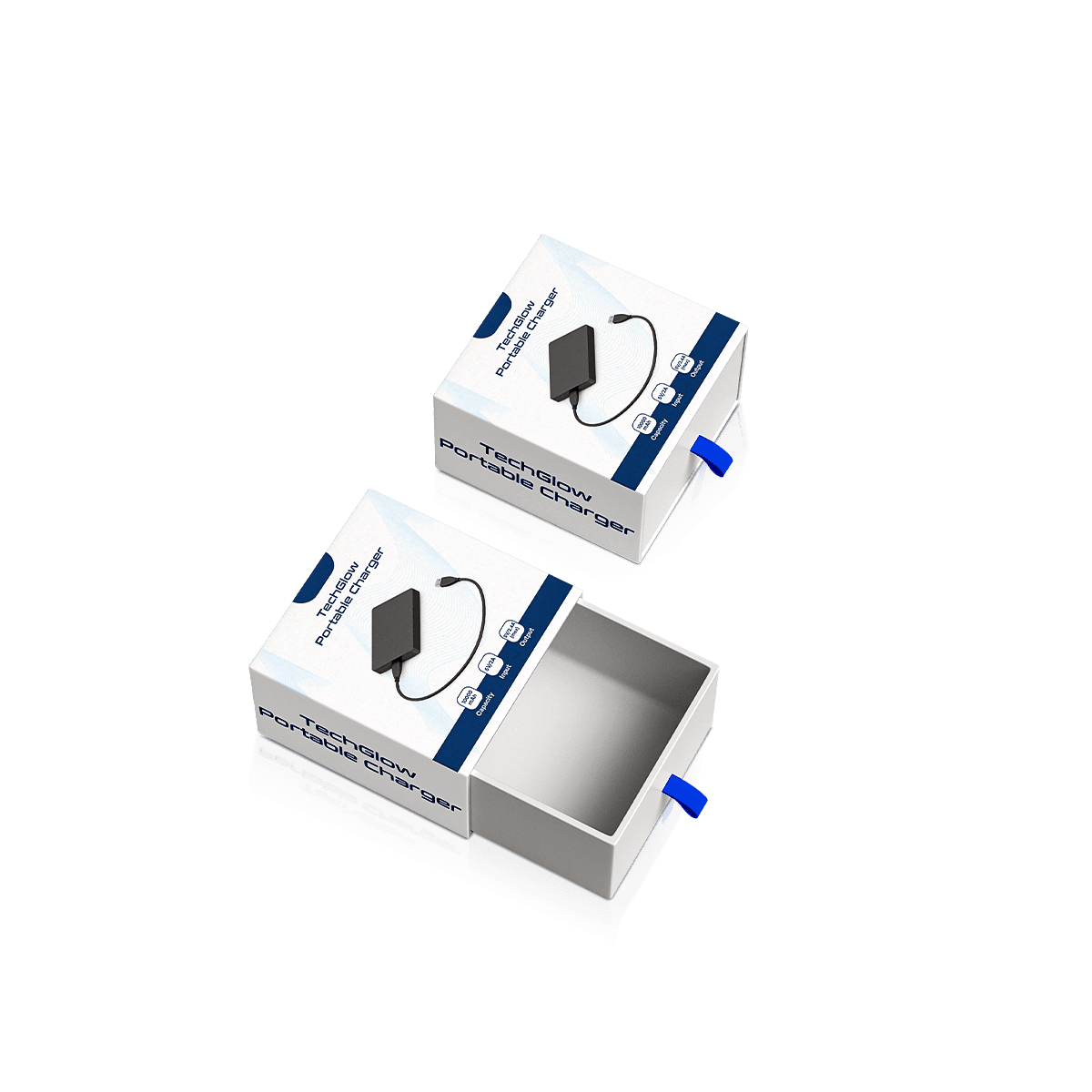
Hang-Tab Display Boxes address the individual carton and its own hanging aperture. This merchandising structure instead must coordinate several hanging products and transfer their combined loads through one display.

Board Follows the Mounting System

Corrugated board can give a retail backer useful stiffness at modest weight, particularly when hooks impose concentrated loads and the display has a substantial height. Paperboard may suit smaller, lightweight structures or printed facings attached to a separately supported backer.

Higher board thickness is not a universal substitute for reinforcement. Flute orientation, panel span, crease location, back folds and the hardware's retaining geometry all influence how the panel behaves. Avoid placing a heavily loaded slot near a fold that reduces the effective bearing area.

Kraft stock can suit restrained graphics, while a white printed liner can carry fine SKU graphics and strong color differentiation. For detailed offset artwork on corrugated, the printed surface may be laminated to a corrugated sheet; agree on construction before assuming the finish will behave like direct printing.

Fold a representative structural sample with the real hooks before approving a large rollout. Custom Packly can help review die cuts and artwork at no design-support charge, while a fully customized physical sample may be a paid part of the project.

Digital, offset and flexographic printing have different setup and surface requirements; the chosen board construction should come before the final print specification.

A Display Needs a Packing Method

The visible retail unit may be flat-packed, partly assembled or packed as a complete merchandiser. Those choices change shipment volume, store labor, hardware handling and the risk of losing small components.

Flat Panels and Loose Hardware

Flat supply can reduce the space required for display bodies, but the store still needs hooks, any reinforcement pieces and an unambiguous assembly order. Count the components per display and specify how the hardware is bagged or otherwise retained during transit.

If a printed panel folds around an upright support, check that the score lines do not run through the loaded mounting area. A display that is easy to fold flat but difficult to square up in store will not maintain its intended hook pitch.

Preloaded Versus Store-Filled

Preloading may simplify store setup but increases handling demands on the completed unit and its outer transit pack. Store filling shifts labor to the retailer but may reduce the risk of products pulling against hooks during distribution.

The carton that protects the display in transit is not necessarily the display itself. Treat the outer shipping case and in-store peg assembly as separate structures unless a tested design genuinely performs both jobs.

Artwork Has an Obstruction Map

The hook grid is a physical overlay on the graphics. A logo placed at the center of a flat backer may disappear behind the first row of products once the display is stocked. Set the printable hierarchy using a loaded elevation rather than an empty dieline.

Header Above the Merchandise

A short header can identify the brand or product line without raising the entire unit unnecessarily. Its height should be based on the loaded packs and the likely aisle sightline. The lowest brand message should not depend on the last item being removed.

SKU Cues Beside the Pegs

When visually similar accessories share a display, small labels aligned with fixed peg positions can reduce incorrect picks. Leave barcode and required product labeling on the sellable pack where the retail workflow requires it; the fixture graphic cannot replace the individual unit's identification.

Packaging that stands out on store shelves focuses on readable hierarchy and the selling environment. On a peg panel, that hierarchy must also survive the parts obscured by hooks and hanging packs.

Premium offset printing can suit consistent branded graphics across a rollout. For a mixed or changing assortment, confirm which graphic elements belong on permanent display panels and which need replaceable labels.

Two Store Positions Change the Build

A compact countertop peg unit and a freestanding aisle display can share a hook pattern without sharing the same support structure. The retailer's space and access rules determine how far a peg assembly may project and where shoppers approach it.

A countertop version needs a stable base, limited height and front access that does not interfere with the checkout process. A floor unit may need a taller frame, stronger base and a loading pattern that remains stable when one column sells faster than another.

A side-mounted promotional unit has another attachment and traffic problem. Power Wing Display Boxes suit merchandise positioned beside an existing retail fixture, where permitted mounting and aisle clearance govern the form.

Get the store's fixture dimensions and merchandising requirements before treating a counter prototype as a floor or sidekick production design. Retailer acceptance of the final assembled configuration should be confirmed for the intended installation.

The Selling Packs Set Suitability

Peg-hook displays are most practical for finished packs that already have a reliable hanging aperture and hold their shape while suspended. Blister-packed accessories, hang cards, lightweight tools and compact retail cartons can work when their mass and dimensions fit the proposed hooks.

Technical Accessories

Cable packs and small electronic accessories often look similar at a glance. A separate peg assignment by connector type or compatibility can make the display easier to shop. Retail Display Boxes for Gadgets address the larger tech merchandising decision when the format may also be a counter tray or shelf unit.

Parts at Trade Counters

Blister-packed fittings or sealed repair accessories can hang from short pegs, but loose metal parts should not be tipped into an improvised hanging carton. Their retail pack must restrain sharp edges and carry its own weight. Electrical Parts Display Boxes treat accurate pack identification and separation as the primary trade-counter problem.

Heavy products, items requiring locked security fixtures and goods with no suitable hang aperture may need another format. Adding more hooks cannot resolve an unsuitable selling pack.

Price the Complete Installed Unit

Two displays with the same printed area can have different costs if one needs more hooks, reinforced slots, an independent base, individual hardware kits or a more labor-intensive assembly method. Establish the installed unit rather than pricing only the printed board.

State the number of displays, planned hooks per display, loaded packs per peg, finished merchandise weight, store position, hardware source, printing and assembly method. A retailer's fixture drawing or photograph can prevent a quote for a unit that cannot be installed.

Custom Packly's USA box MOQ starts at 100, but the minimum and production schedule for a specific hardware-led display must be confirmed during quoting. Standard USA turnaround is 4–6 days after specifications and artwork approval; custom components, complex construction or physical approvals can require more time.

Once the installation and component count are defined, request pricing for the peg display. Free 3D mockups and design support can clarify the proposed construction before production, while free shipping applies to the confirmed USA order terms.

Storewide campaigns that combine product cartons and merchandising fixtures may also require custom retail packaging for a coordinated artwork and order plan.

The Peg Map Is the Handoff

The production file should tell store staff which hook goes where, what stock belongs on each position and how the finished unit attaches or stands. A branded board without that operating logic leaves the final merchandising decision to whoever happens to unpack the carton.

Handoff materials can be as simple as an approved front elevation identifying the hook positions, component count, packed SKU assignment and loaded quantity. If a hook position intentionally stays empty for a future product, mark it rather than allowing staff to fill it with an incompatible pack.

For repeated store replenishment, separate the durable display components from the consumable selling packs. Confirm who orders replacement hardware, whether graphics change with seasonal SKUs and whether stores receive complete new units or only refill cartons.

The strongest approval is an assembled unit that a person unfamiliar with the artwork can load from that peg map. When setup is self-evident, the grid remains readable without making every store invent its own merchandising method.

FAQs

They work best in pegboard, slatwall, and hook-led retail areas where small packaged products need to stay visible, separated, and easy to grab. Retail fixture suppliers position display hooks around organized aisle presentation and flexible product hanging across multiple fixture types.

Yes. They are especially useful when one display needs to hold several variants without mixing them together, such as colors, sizes, scents, or compatible accessory types.

Peg Hook Display Boxes are usually better when the goal is to show more units vertically and preserve counter space. Counter-Top Display Boxes make more sense when the products should sit within arm’s reach on a desk, checkout, or sample station.

No, but they are most effective for light to mid-weight items. The right corrugated or paperboard specification, hook style, and pack size should be matched to the product load before production. Corrugated peg-hook display formats are commonly sold for compact retail merchandise rather than bulky packs.

The strongest layouts keep the hooks simple and use the header, side panels, and top card for branding, pricing, or product guidance so the hanging area stays easy to shop.

Process

How it works

Your Packaging Journey, From Idea to Production and Delivery

01

Tell Us Your Specs

Custom packaging boxes

Tell Us Your Specs

Provide size, quantity, printing, and finishes.

02

Get a Fast Quote

Custom packaging boxes

Get a Fast Quote

Instant transparent pricing, no hidden fees.

03

Design and Approval

Custom packaging boxes

Design and Approval

Artwork checks, revisions, and final sign-off.

04

Produce

Custom packaging boxes

Produce

Expert manufacturing to meet deadlines.

05

Ship to Your Door

Custom packaging boxes

Ship to Your Door

Hassle-free, flexible delivery options.

Get Your Quote for Custom Peg Hook Display Boxes for Multi-Hook Retail

Share your product details, size, quantity and artwork needs. We’ll help choose the right packaging style and send a clear quote.