Custom Jewelry Packaging
Keep rings, chains, earrings, watches and jewelry sets in the position they were meant to be seen, gifted and delivered.
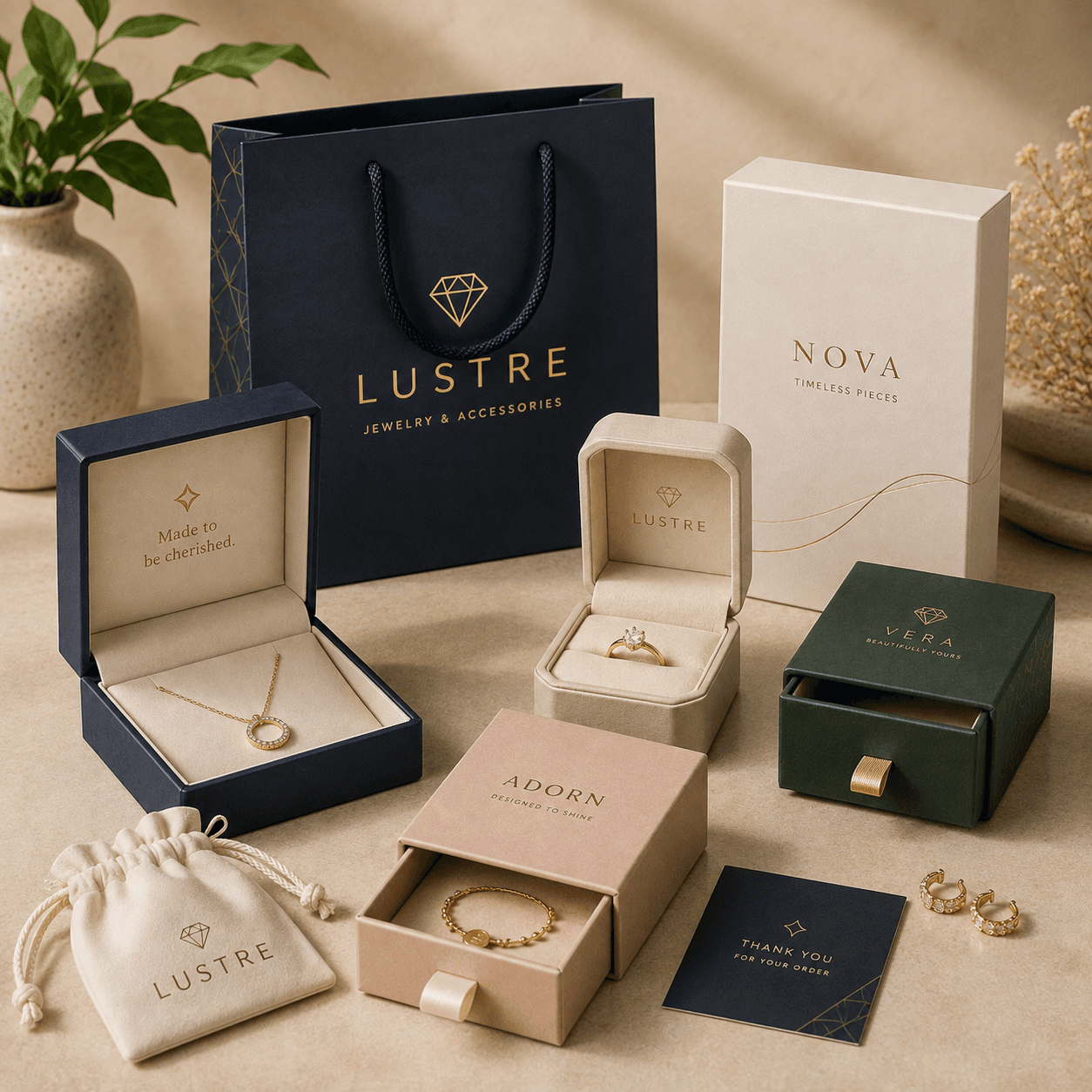
Jewelry & Accessories options
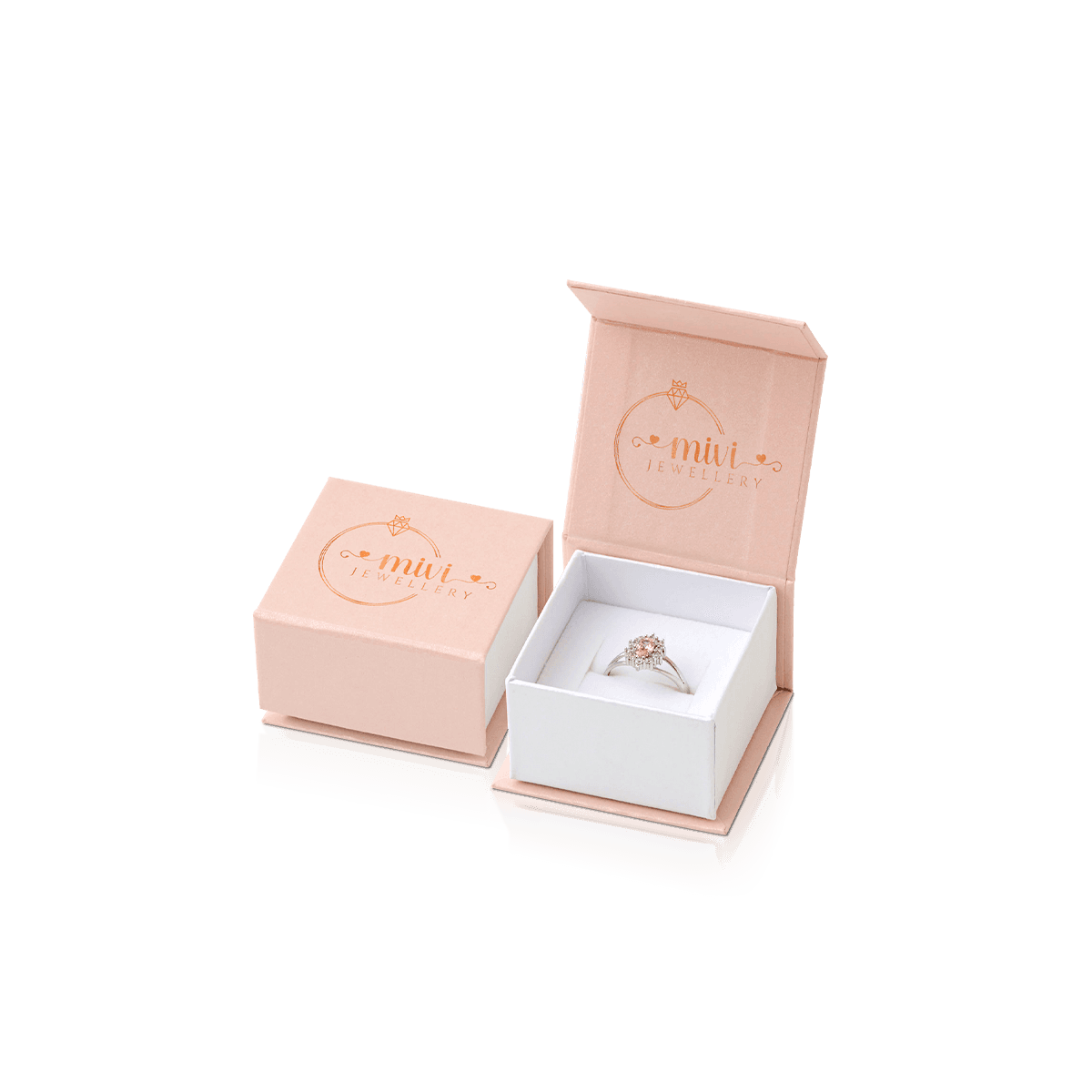
Ring Boxes
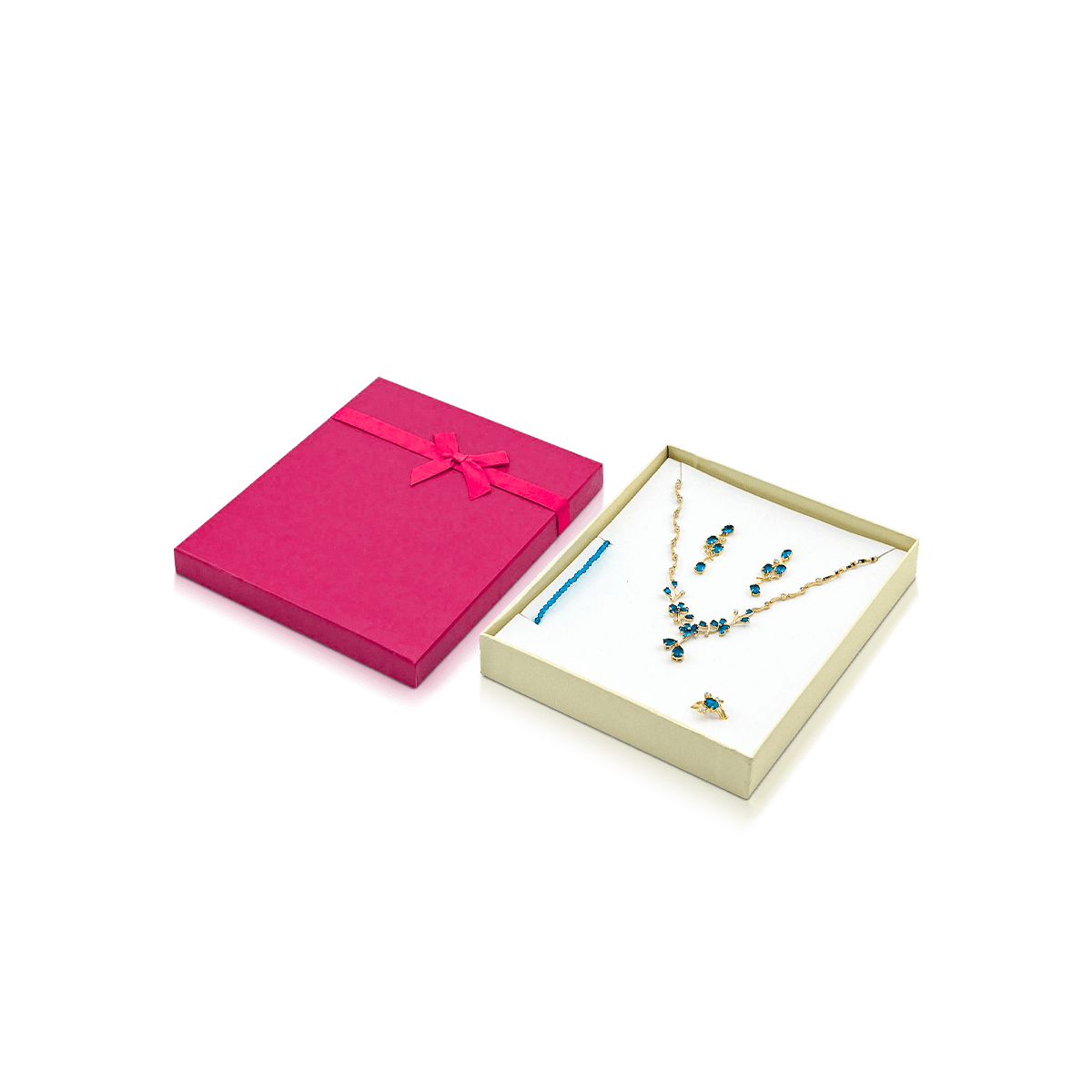
Necklace Boxes
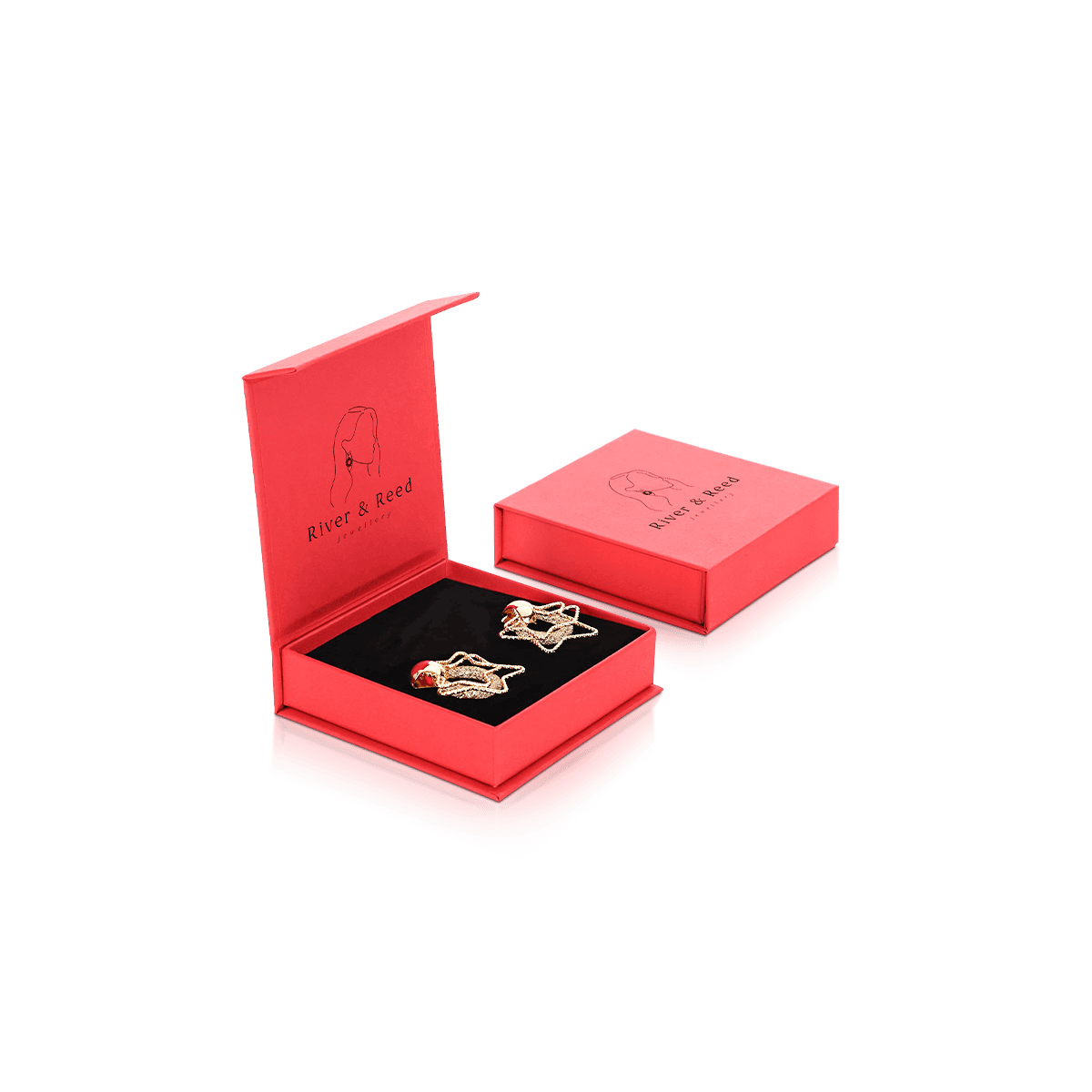
Earring Boxes
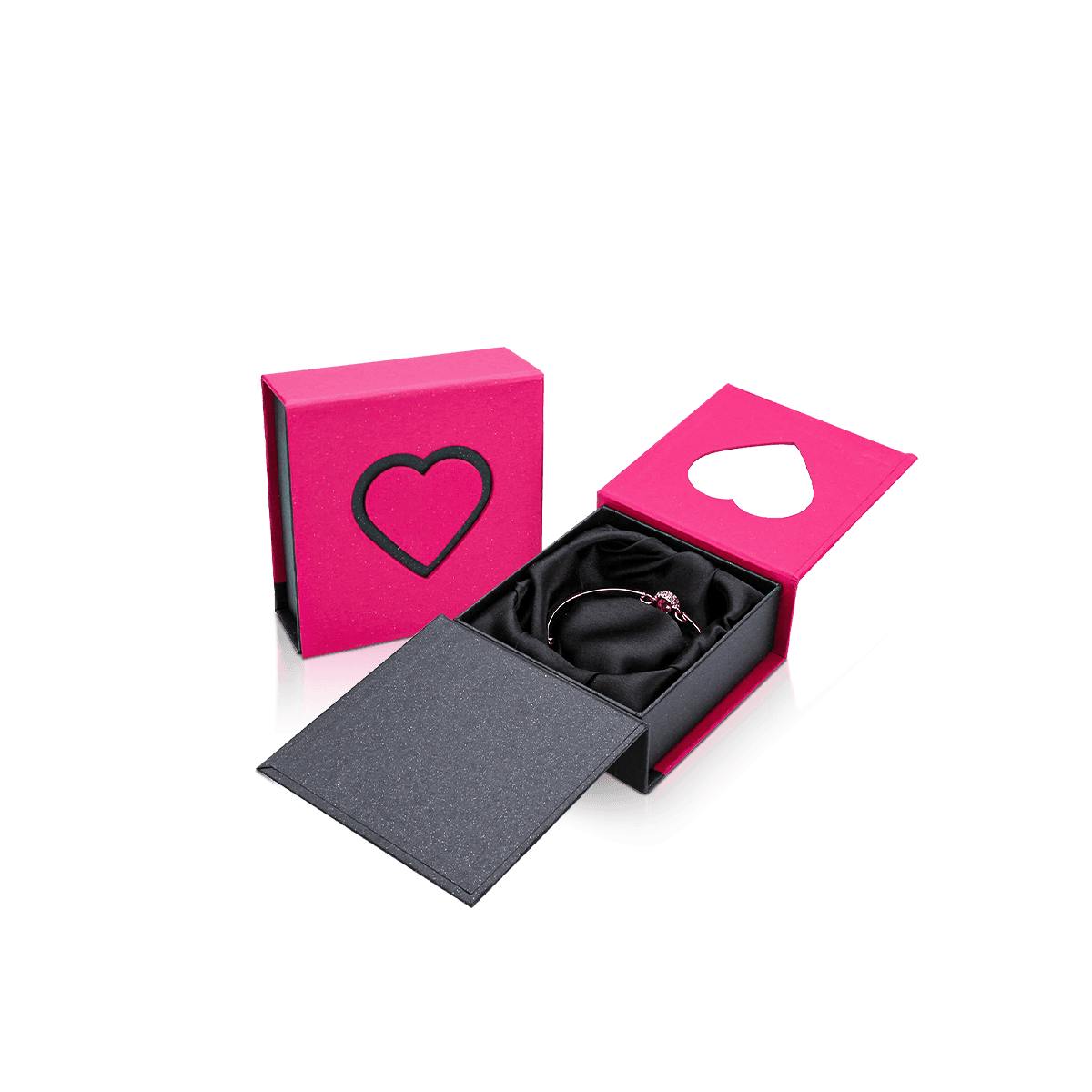
Bracelet Boxes
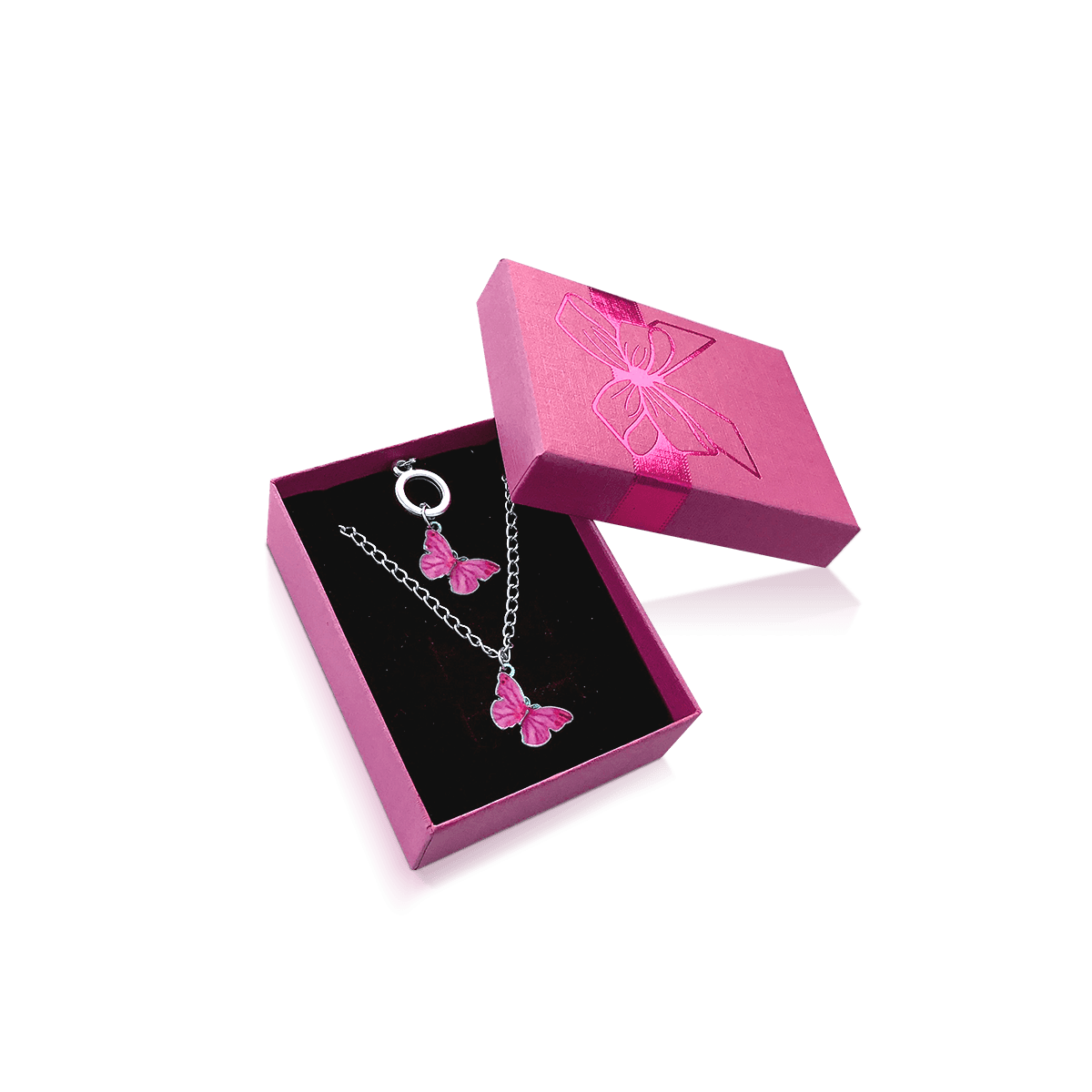
Pendant Boxes
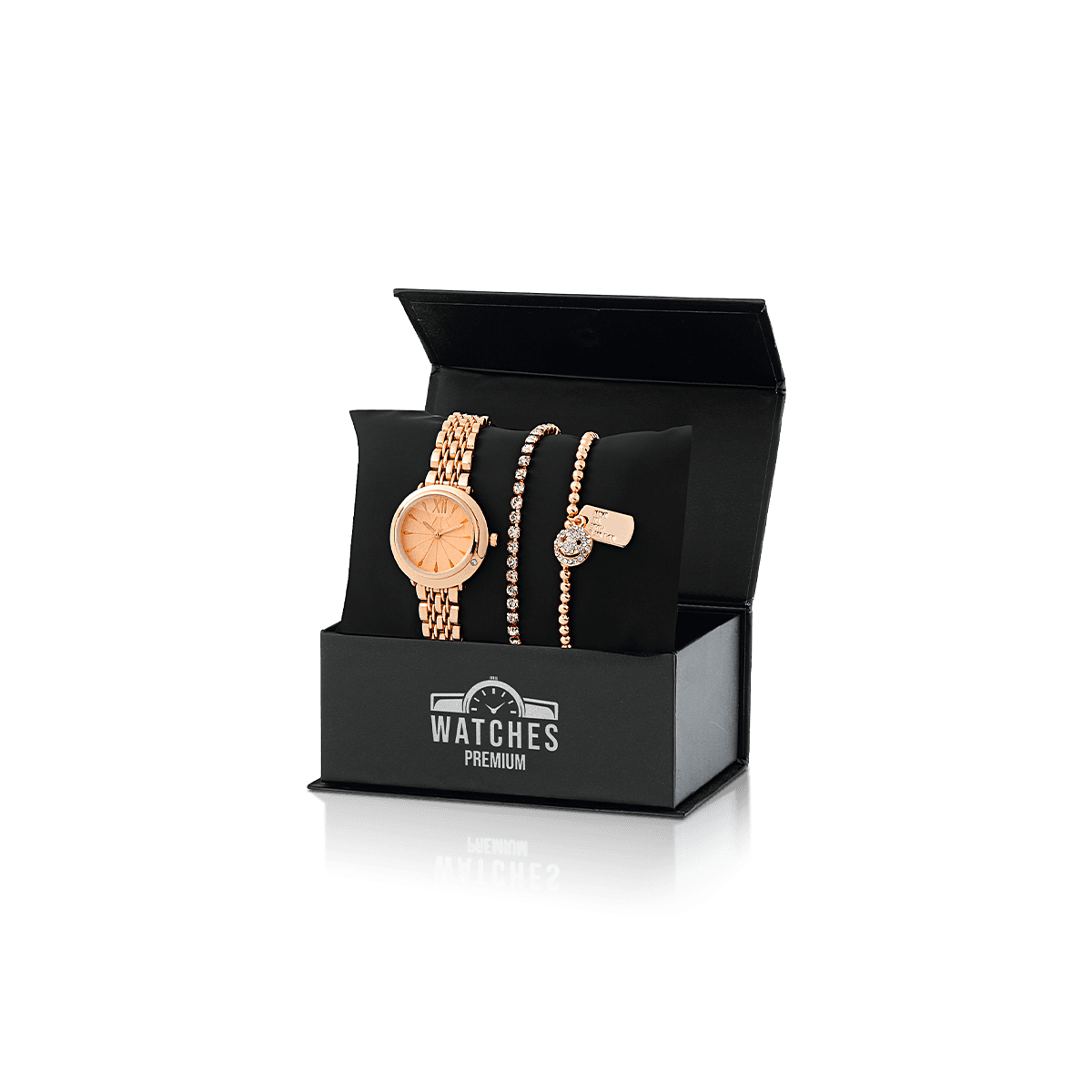
Watch Boxes
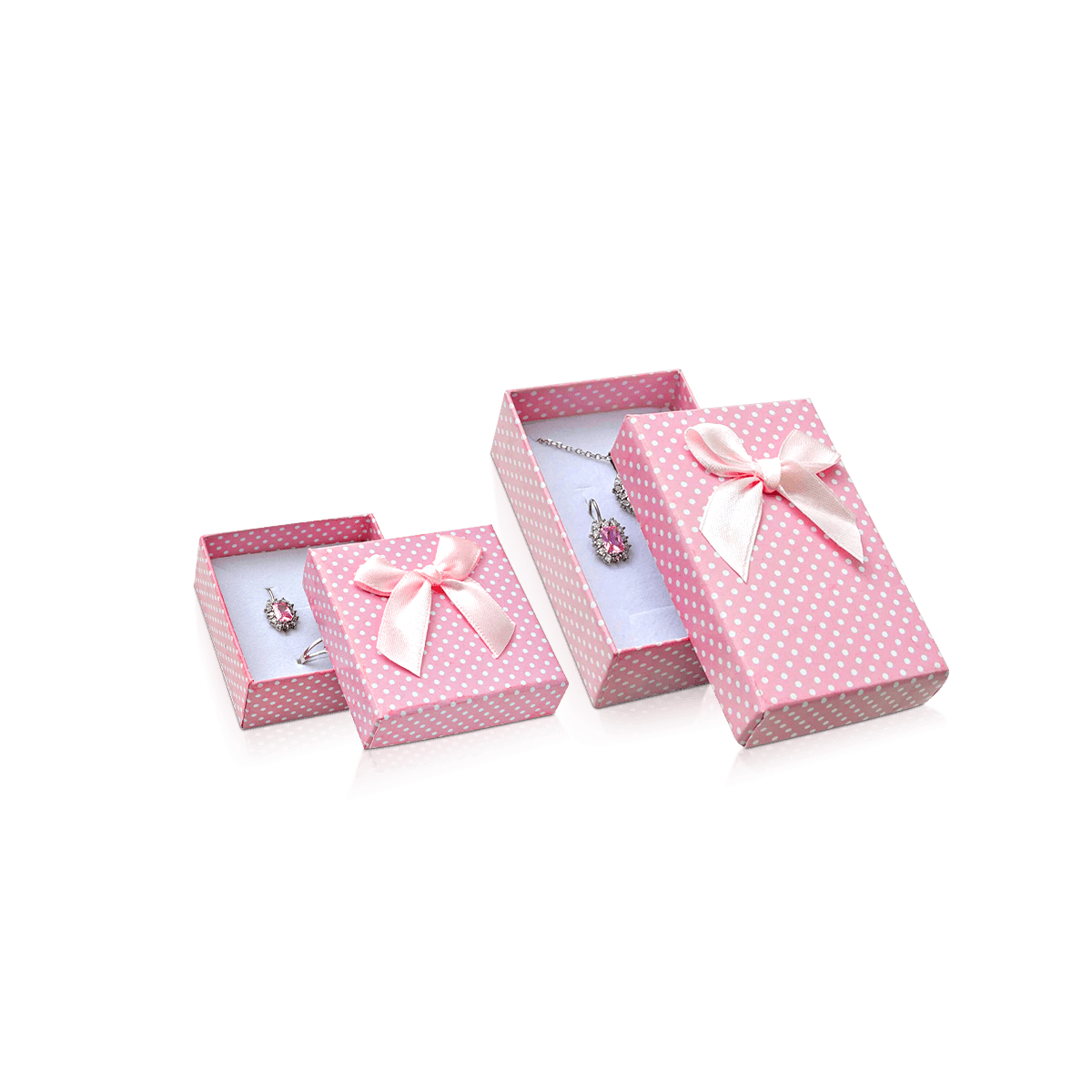
Jewelry Gift Boxes
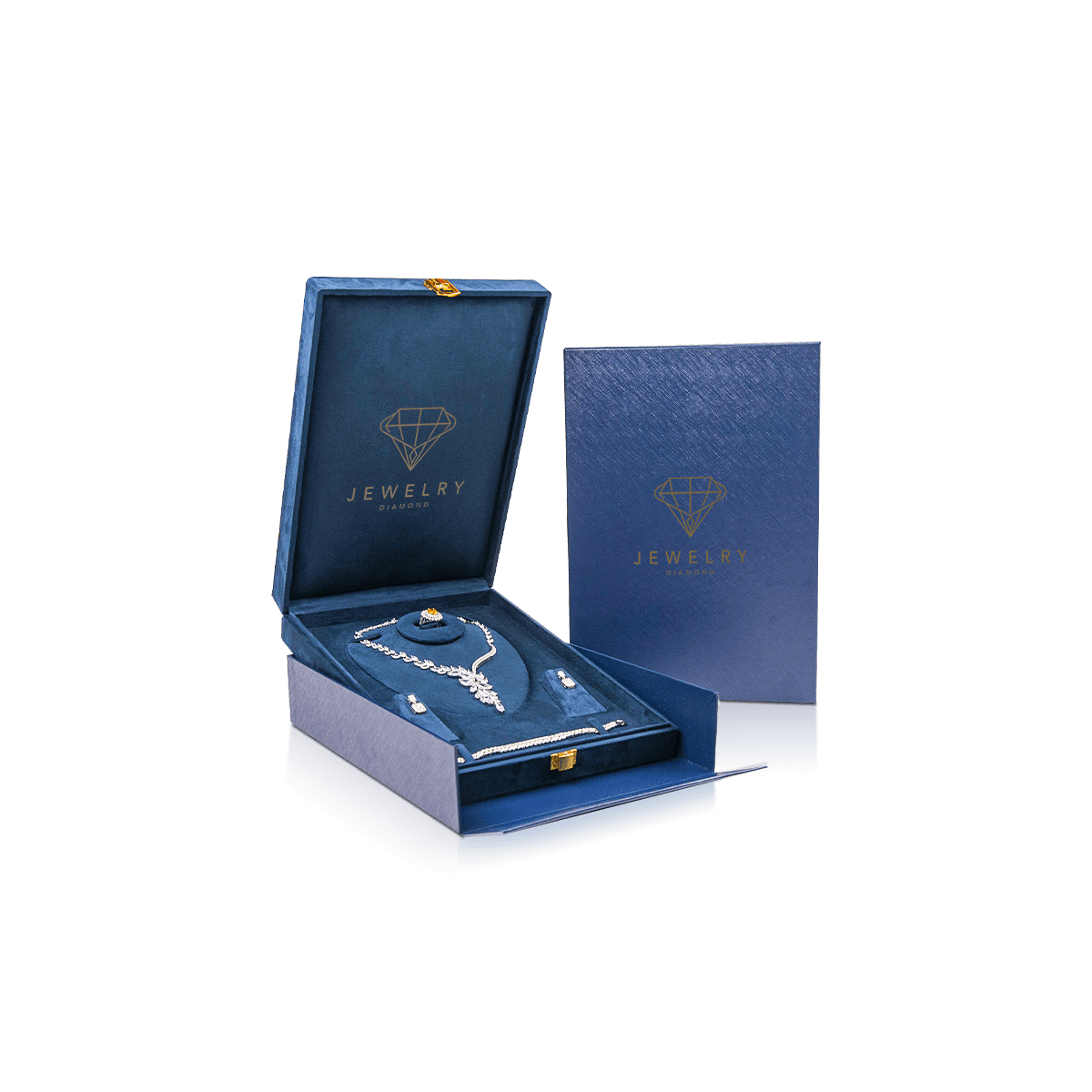
Luxury Jewelry Boxes
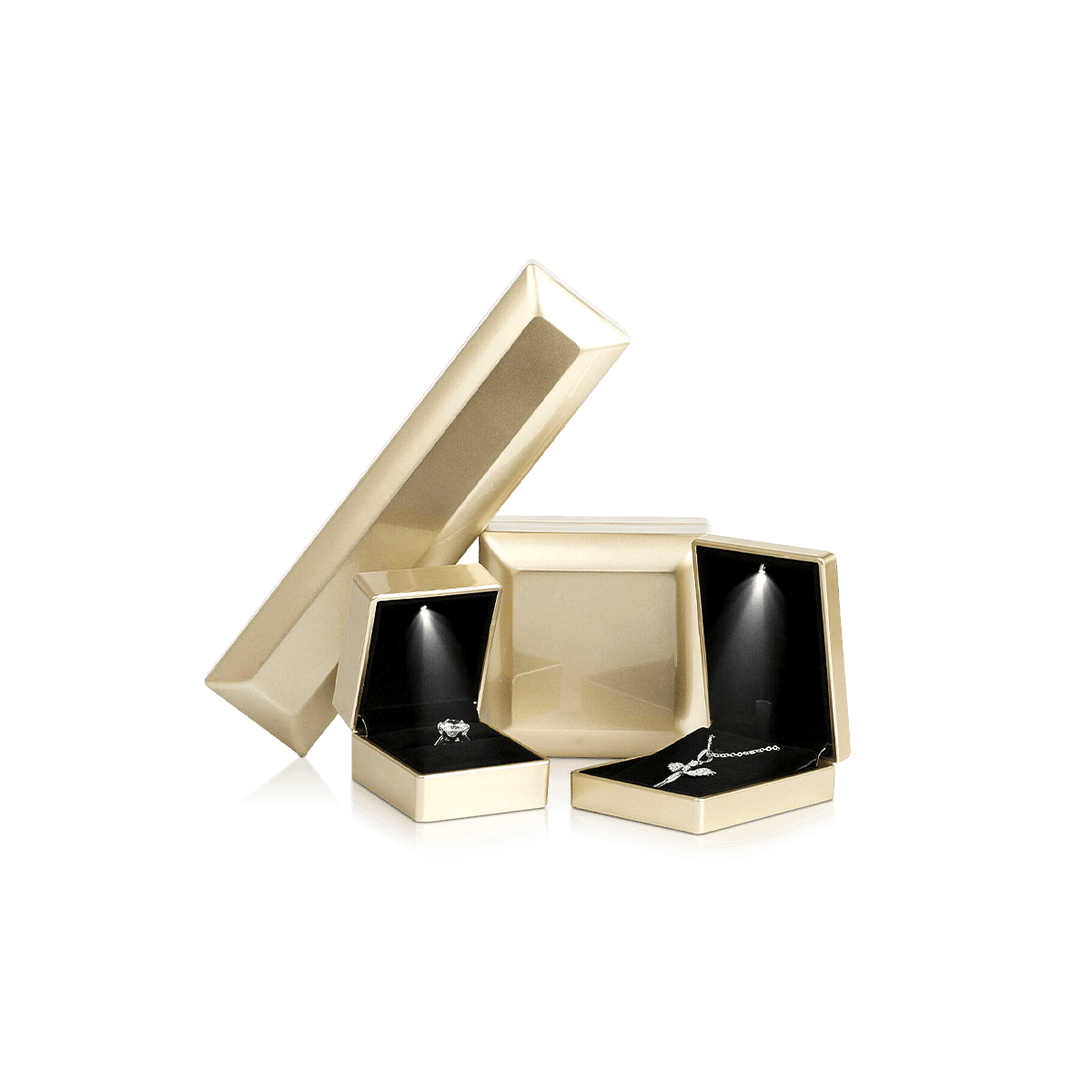
LED Light Jewelry Boxes
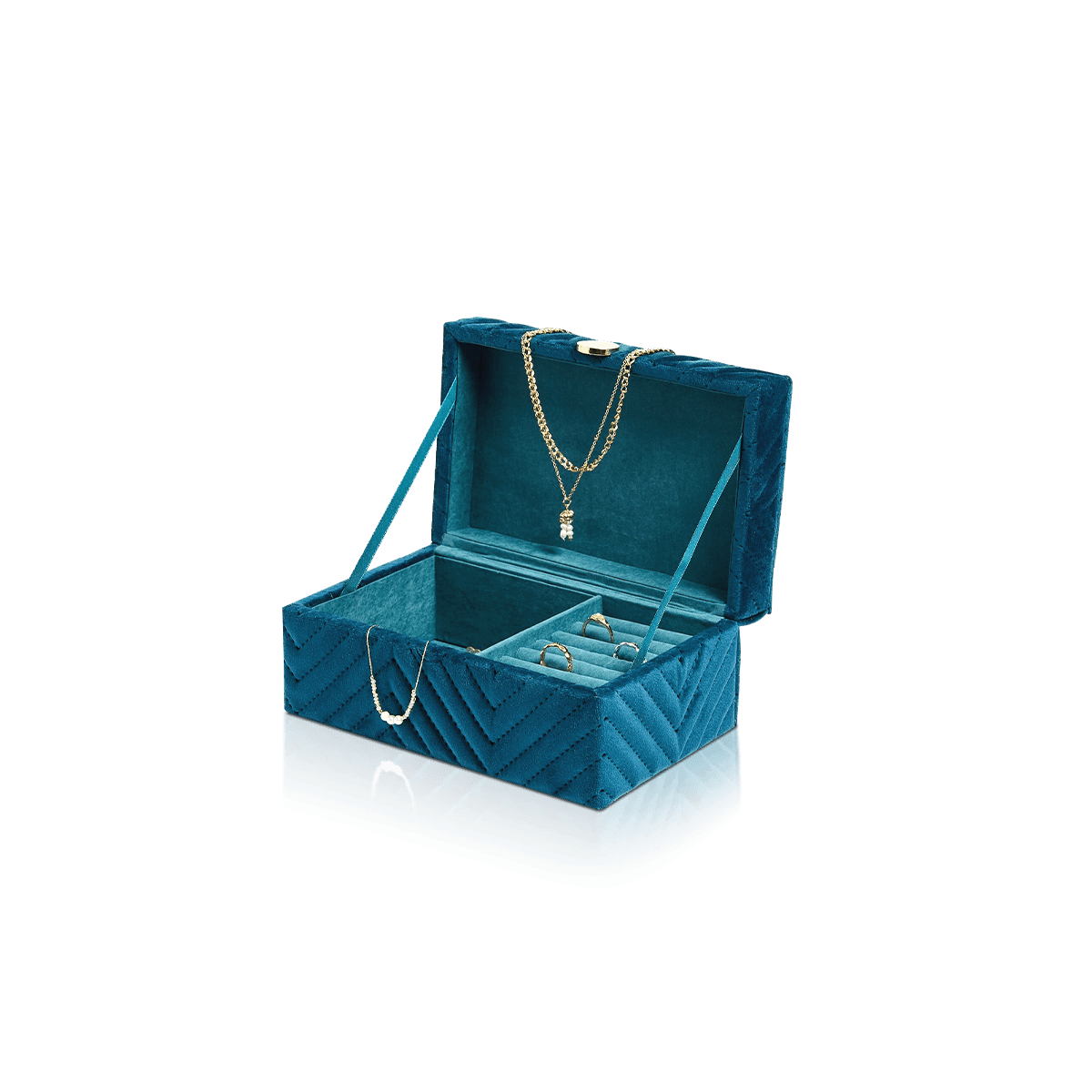
Velvet Lined Boxes
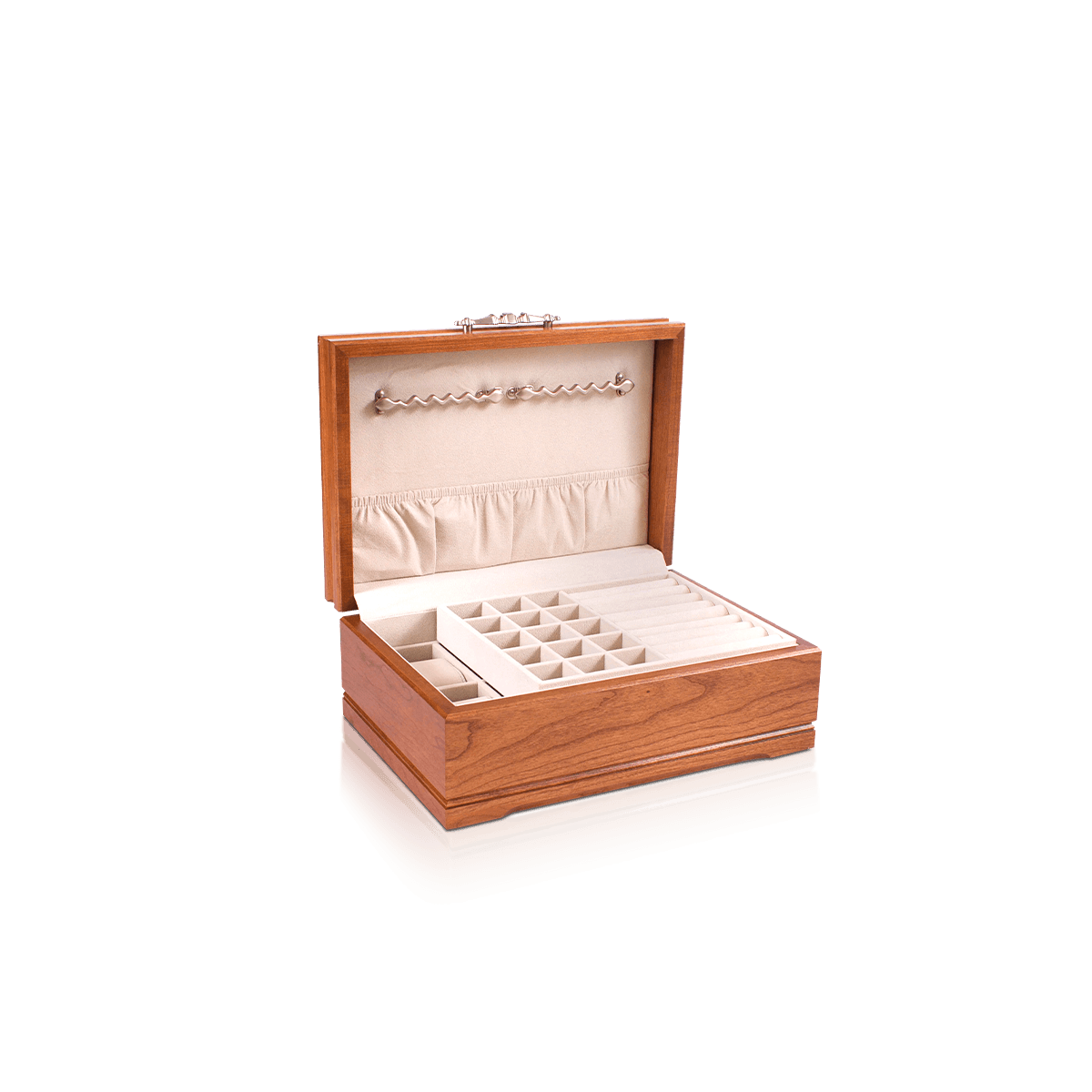
Wooden Jewelry Boxes
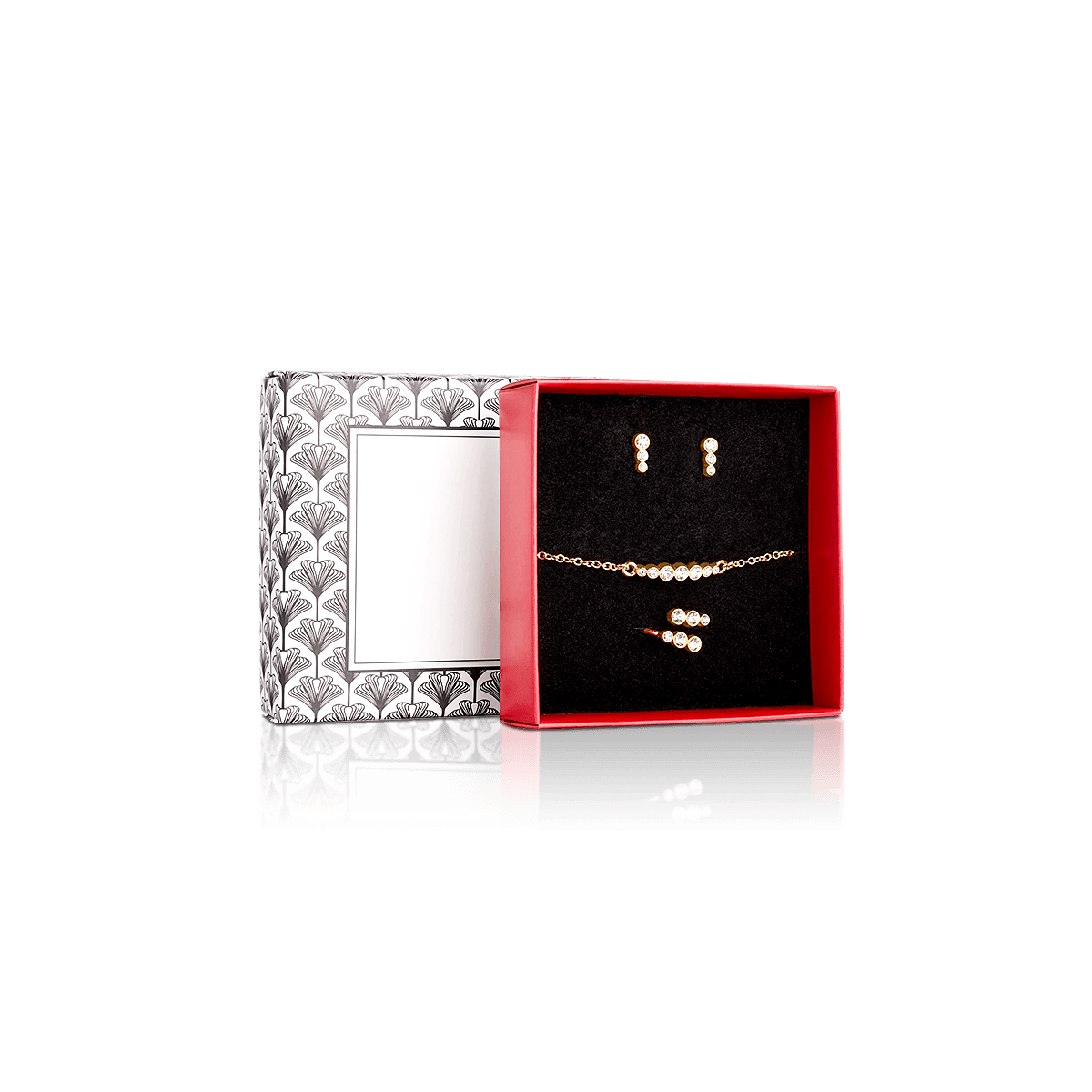
Cardboard Jewelry Boxes
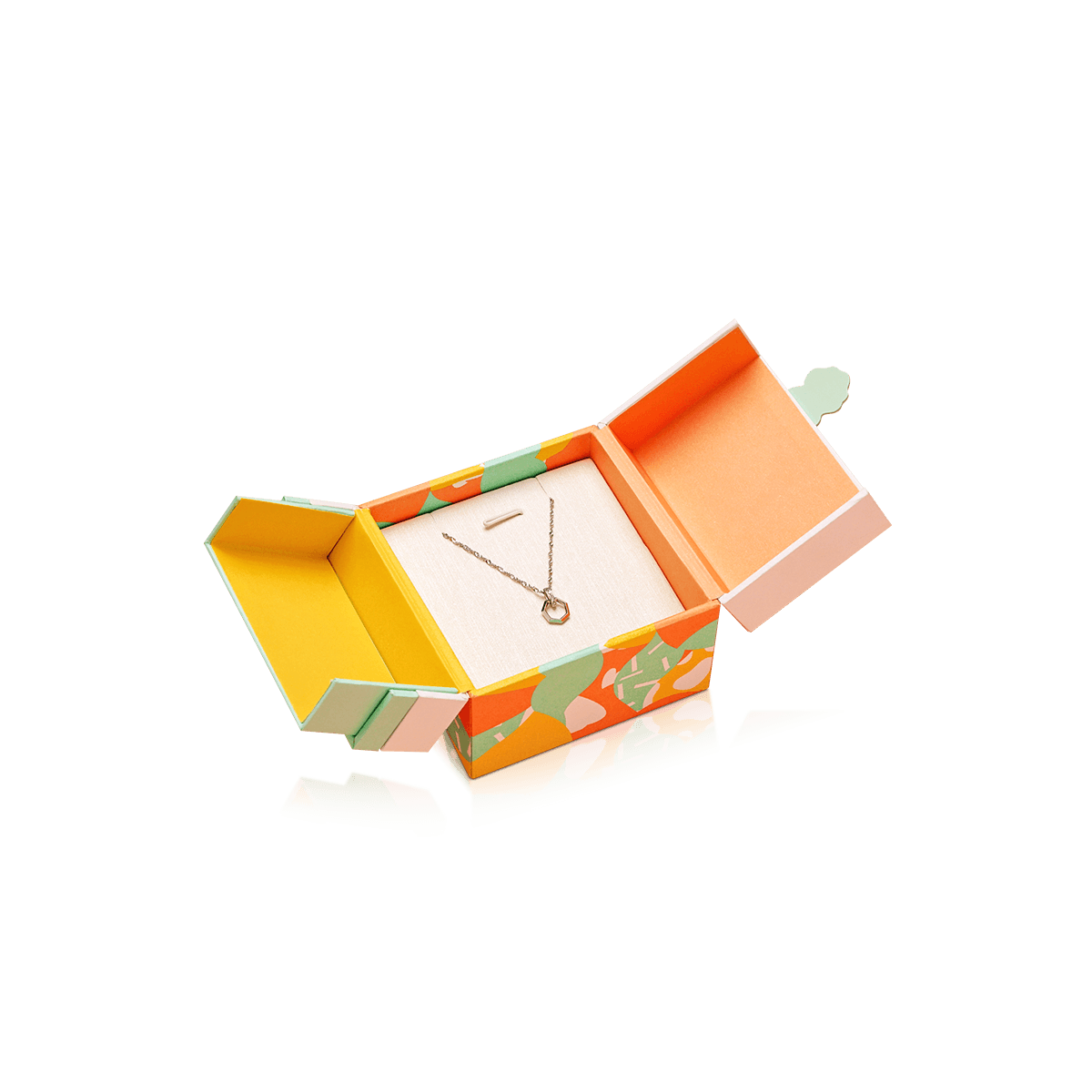
Custom Printed Jewelry Boxes
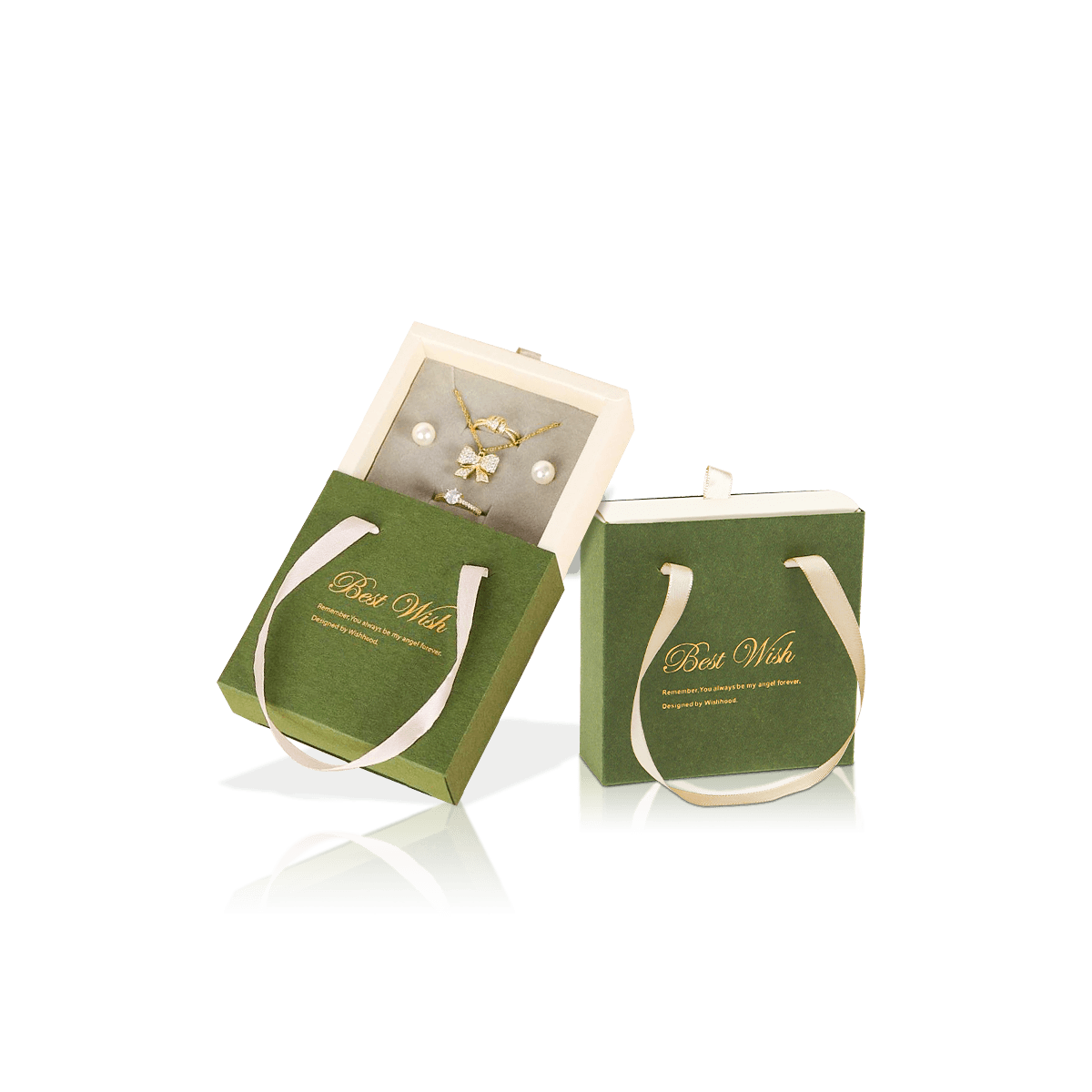
Eco-Friendly Jewelry Boxes
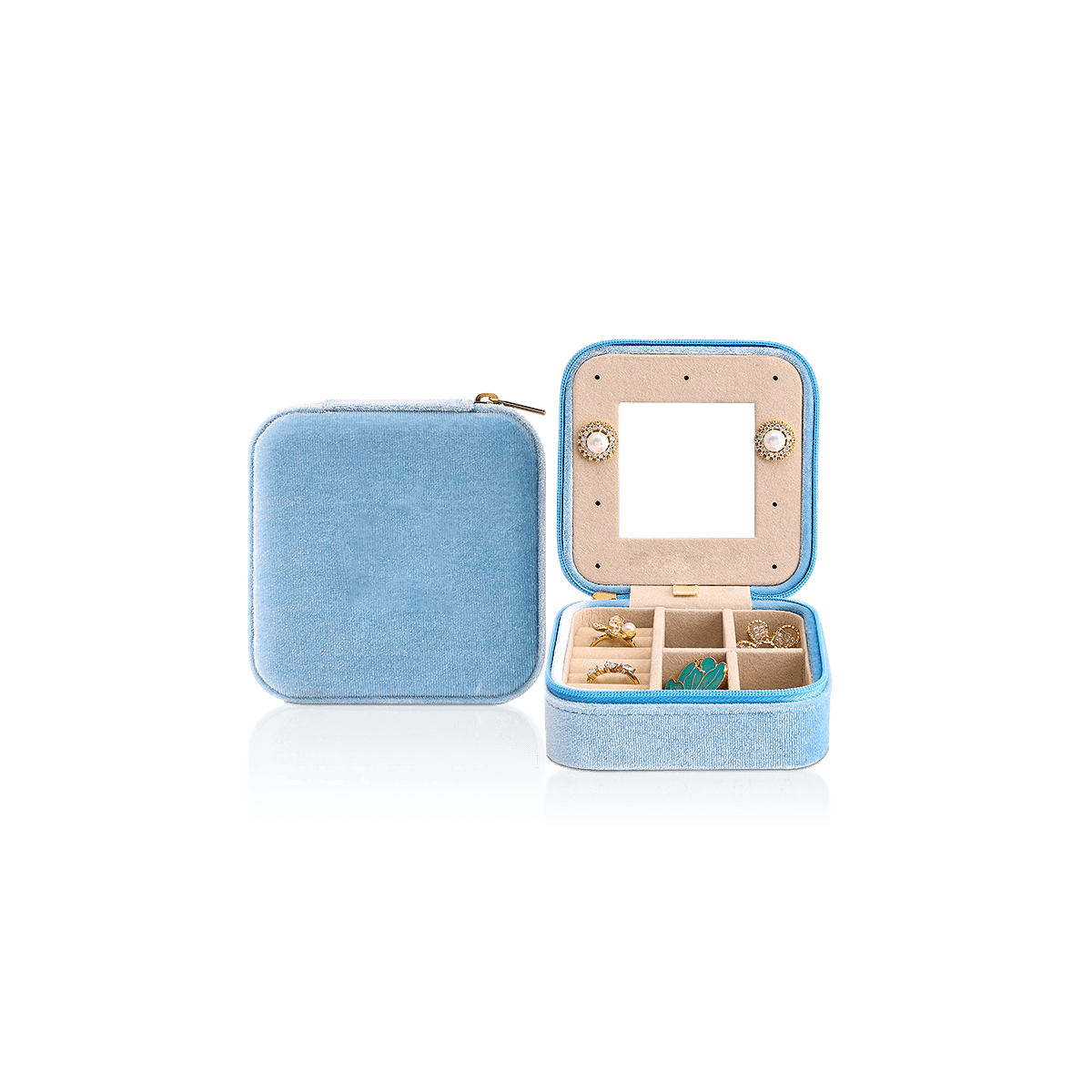
Travel Jewelry Tubes
Display Jewelry Boxes
Set Jewelry Boxes

Magnetic Closure Jewelry Boxes
Rigid Jewelry Boxes
Folding Jewelry Flexible Pouches
Your product shouldn’t have to fit an off-the-shelf box.
Share the shape, size, material, finish, or insert you have in mind. We’ll turn the details into a tailored packaging recommendation and a clear quote.
Custom sizes · materials · finishes · inserts
FAQs
Jewelry Packaging Has To Preserve A Presentation Position
Custom jewelry packaging does more than put a small product inside a box. It has to keep the piece facing, hanging, resting or pairing the way it was intended to be presented.
That creates different packaging problems from most retail products. A ring should remain centered. A necklace should not arrive with the chain gathered underneath the pendant. Earrings should stay paired. A watch should remain wrapped around its support instead of rotating inside the box.
The box dimensions matter, but the presentation position is what makes the packaging feel deliberate.
A Ring Needs A Stable Center Point
A compact Ring Box can create substantial visual presence around a very small product, but the insert has to hold the ring upright without overwhelming it.
The slot should retain the ring securely enough to survive handling while allowing the customer to remove it without pulling against the setting. Clearance above the piece also matters. A tall stone or raised setting should not approach the lid simply because the box footprint is small.
A Necklace Needs More Than A Flat Cavity
Necklace Boxes have to manage both the focal piece and the chain.
The pendant can look perfectly positioned while the chain remains free to migrate. Anchor points, tabs or channels can control the upper chain while a lower retention point manages the remaining length.
That creates a cleaner reveal and reduces the chance that the customer first sees a pendant resting on a loose coil of chain.
Small Pieces Create Large Problems When They Move
Jewelry is often light enough that even a small amount of internal movement changes the presentation.
The objective is not simply to stop the item from hitting the walls. It is to preserve relationships between small components.
Earring Pairs Need To Remain A Pair
With Earring Boxes, spacing between the two pieces matters as much as overall box size.
Studs need controlled post positions. Hoops need enough clearance to avoid overlapping. Drop earrings need space beneath the attachment point so the hanging section does not fold against itself.
An insert that merely prevents the earrings from leaving the box can still fail if one rotates while the other remains upright.
Bracelets And Watches Need Curved Support
Bracelets, bangles and watches often sit better around a shaped support than on a completely flat tray.
A Watch Box may use a cushion or curved holder so the strap maintains its intended form while the face stays visible. The support should match the strap range closely enough to prevent rotation without placing unnecessary tension on the closure.
The same principle applies to selected bracelets and cuffs. Their natural geometry should influence the support rather than being flattened into a generic cavity.
Contact Points Matter More Than Filling Every Empty Area
Jewelry inserts should control the piece at specific points. Filling the entire interior with padding is rarely necessary.
A ring may need one clean slot. Earrings may need two controlled attachment points. A pendant can use a flat presentation surface with chain retention. A watch may need a shaped cushion.
Different materials change how those contact points behave. Foam, cardboard and molded pulp inserts offer different levels of stiffness, cushioning, precision and presentation.
Soft liners or fabric finishes can also separate polished surfaces from harder interior materials where that matters to the product.
The insert should hold enough of the jewelry to preserve position while leaving enough exposed for the customer to understand the piece immediately.
Where the interior surface is part of the presentation, Velvet Lined Boxes can add a softer contact and display surface, but the lining still has to work with the exact jewelry shape and retention method.
A Small Product Does Not Need An Oversized Box To Feel Important
Jewelry packaging often uses negative space to frame a small item, but there is a point where presentation space becomes empty volume.
An oversized ring or earring box can make the product look lost rather than premium. It also increases material use, storage space and the size of any outer ecommerce package.
The correct scale comes from proportion.
A ring can sit inside a compact square presentation field. A necklace needs a longer visual plane because the chain is part of the composition. A watch needs enough depth for its support. A set requires more space because several pieces need independent positions.
The package should amplify the product without making the product look small inside its own presentation.
Shape can be expressive without adding unnecessary volume. Round rigid presentation boxes can support a circular presentation concept, but the insert still has to keep the jewelry in its intended position.
Retail Jewelry Packaging Has To Survive Repeated Handling
Jewelry packaging at a retail counter can be opened, closed, moved between drawers and displays and handled by staff before a sale takes place.
That makes reset behavior important.
A ring should return to its original position quickly. Earrings should be easy to match with the correct pack. A necklace should not require several minutes of arranging every time it is returned to the box.
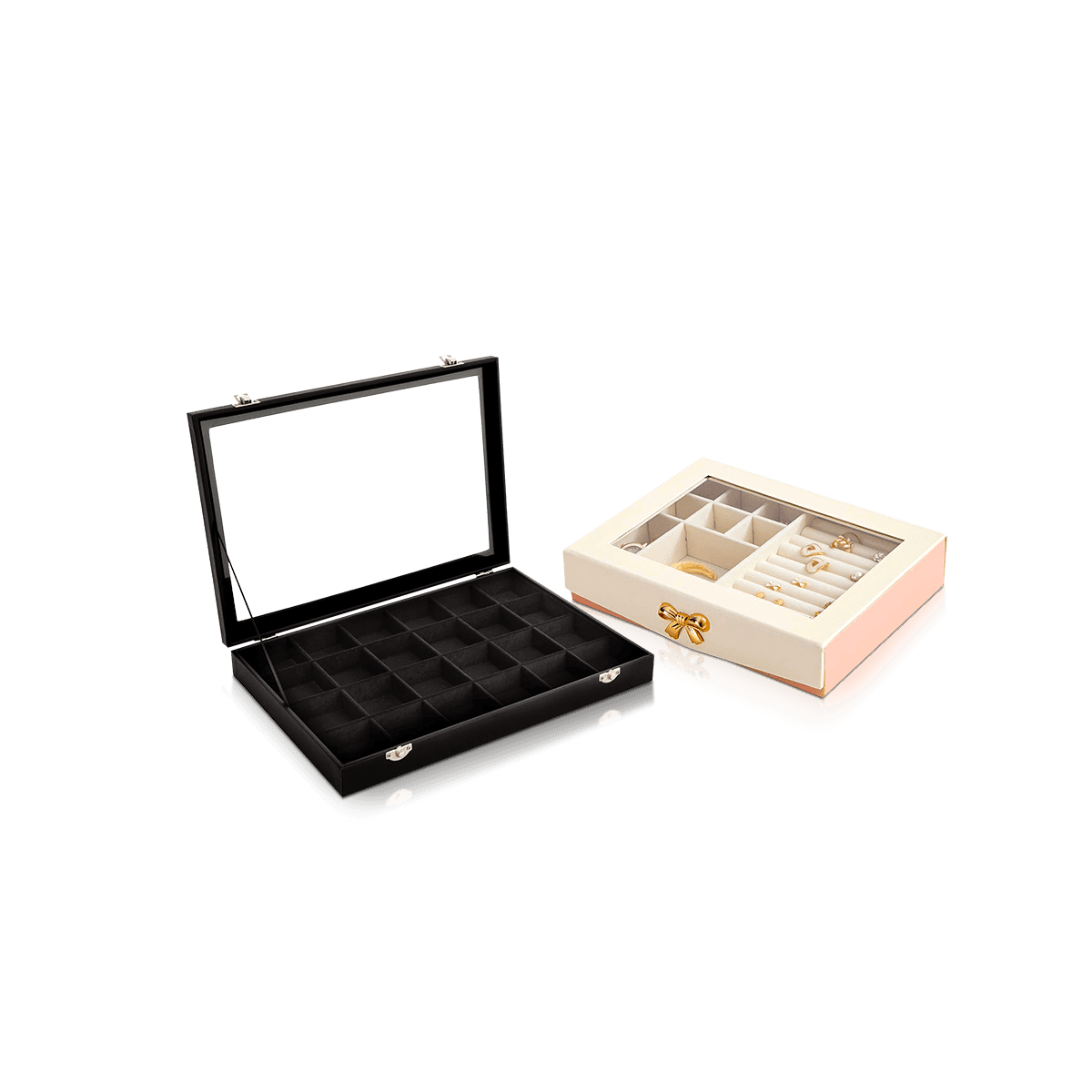
Display Jewelry Boxes can organize multiple pieces where customer comparison is part of the selling process. Individual packaging still needs clear identifiers so staff can return products to the correct stock.
Identification Should Work At Counter Distance
Product code, metal finish, stone, collection name or another internal identifier may need a predictable location on the packaging.
The identifier should sit where staff naturally see it when the boxes are stacked or stored. That can be an end panel, base label or sleeve depending on the format.
Custom Printed Jewelry Boxes can carry consistent brand artwork while leaving a controlled area for product-specific information.
Gift Packaging Should Control The Moment Without Complicating The Product
Jewelry and gifting often overlap, but adding layers does not automatically improve the experience.
Jewelry Gift Boxes can use lift-off lids, magnetic closures, drawers, ribbons or other opening details when the gift moment justifies them. The closure should still give direct access to the piece.
A message card, care card or certificate can be integrated into the interior without sitting loosely on top of the jewelry.
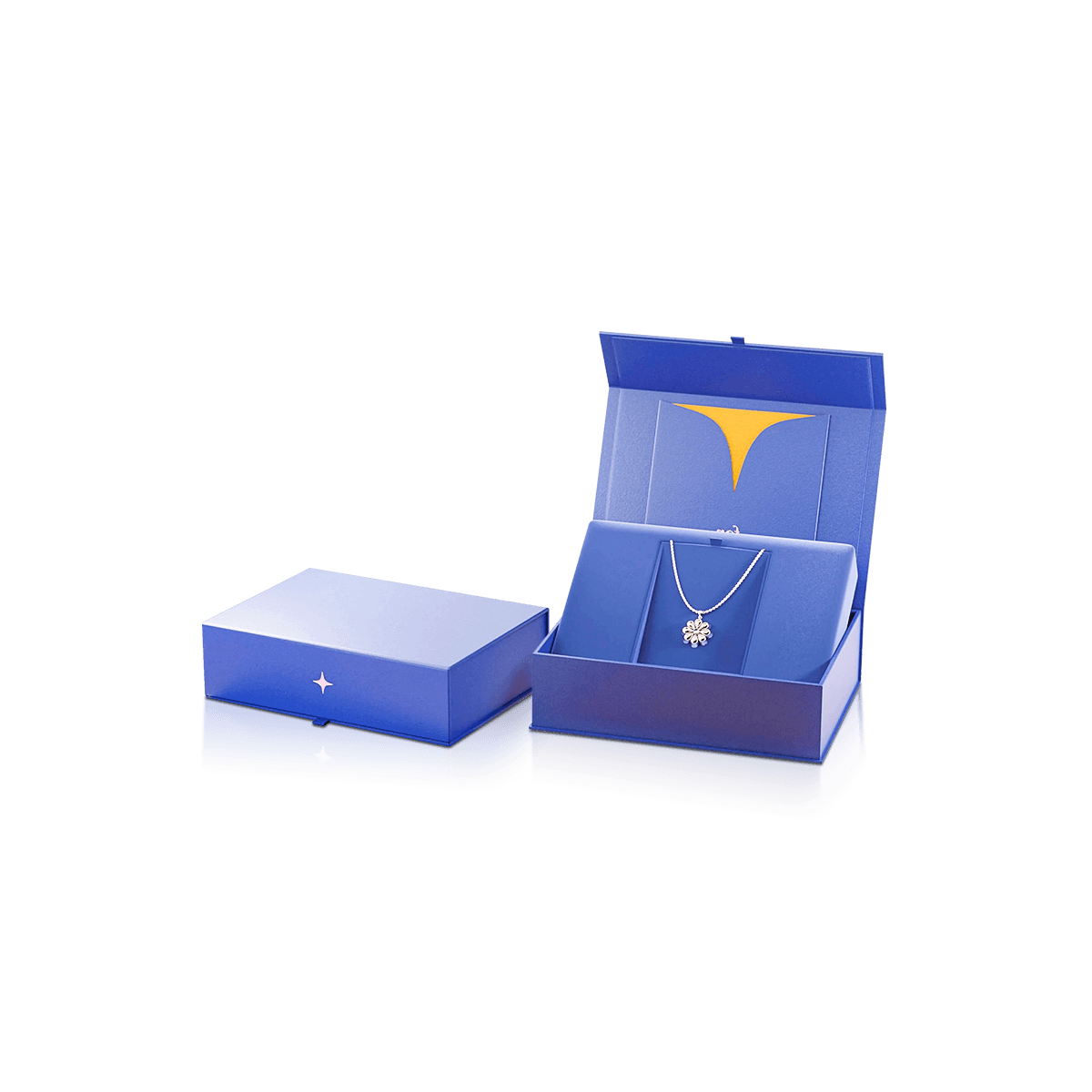
For higher-value pieces, Luxury Jewelry Boxes may use wrapped rigid construction and more substantial interiors. The added structure should improve the presentation or retained use rather than merely increase weight.
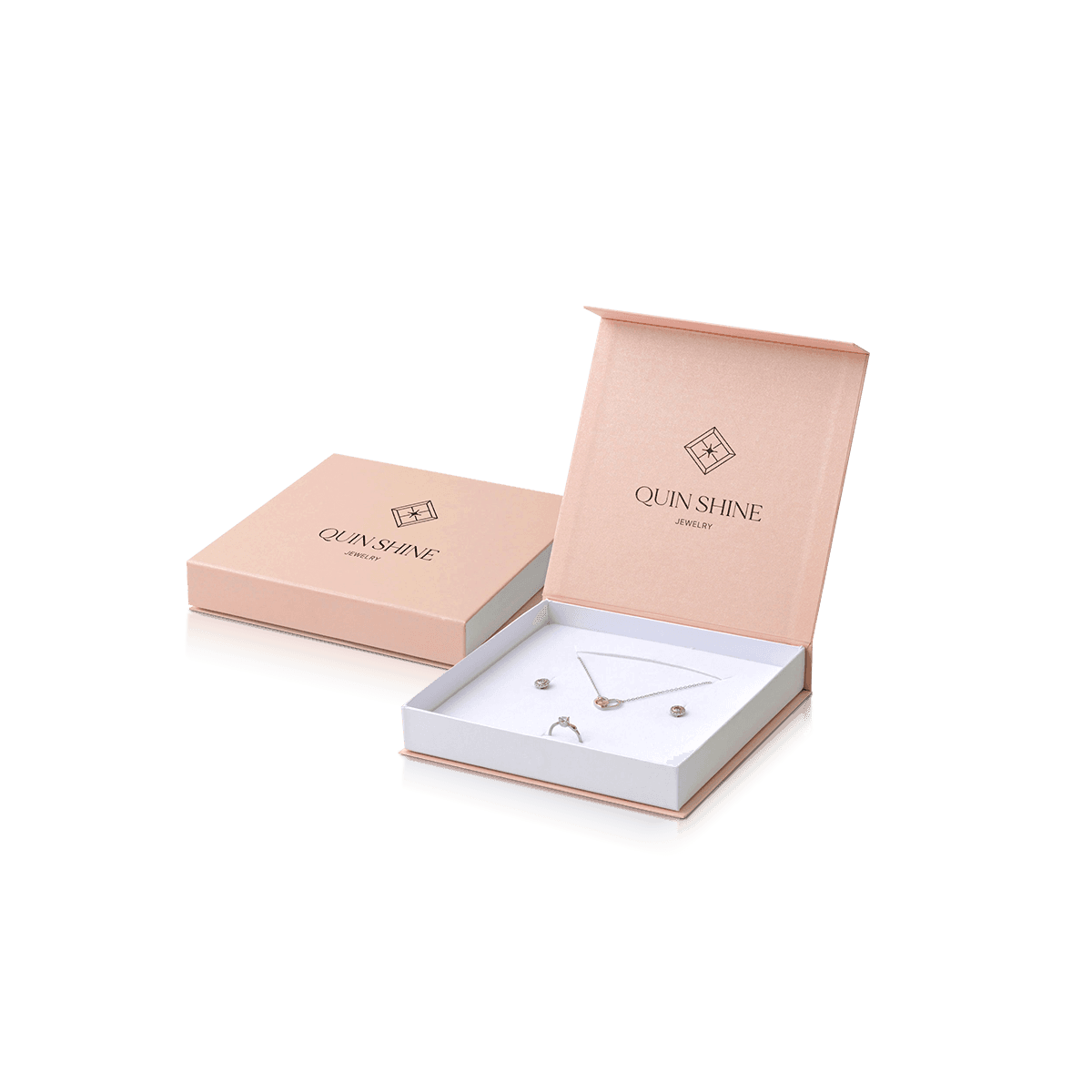
Premium jewelry sets often move into Custom Rigid Boxes when the box is expected to support gifting, retained storage and a more substantial opening experience.
Custom Packly's USA MOQ starts from 100 boxes, which can support limited collections, seasonal gifting and smaller launches without forcing every jewelry program into one large initial quantity.
A Pendant Can Be Secure And Still Arrive Looking Wrong
Consider a pendant necklace packed flat on a padded insert.
At the packing table, the pendant sits perfectly centered. The chain runs neatly toward the top corners. The lid closes with no contact.
After parcel handling, the pendant remains undamaged, but most of the chain has slipped through the upper slots and collected underneath it. Technically, the jewelry survived. Visually, the packaging failed.
Making the box smaller would not fix that. Adding more soft padding might still allow the chain to migrate.
The better adjustment is to control the chain at more than one point. Upper retention keeps the necklace aligned, while another subtle anchor manages the excess length without covering the pendant.
The solution changes orientation control rather than simply increasing protection.
That distinction matters throughout jewelry packaging. A piece can be safe and still be badly presented.
Ecommerce Needs Protection Outside The Presentation Box
A jewelry box designed for gifting or retail presentation should not automatically be treated as the exposed shipping parcel.
Courier labels, abrasion, corner impacts and moisture exposure can affect the presentation surface long before the customer opens it.
A fitted presentation box can sit inside a right-sized Custom Mailer Box when the outer corrugated layer needs to handle parcel treatment.
The presentation box then stays focused on jewelry retention and reveal. The outer package handles labels, sealing and transit.
Retail packaging and ecommerce packaging can share the same inner jewelry pack while changing the outer layer according to the sales channel.
Free shipping is part of Custom Packly's current US offer, while the packaging itself can still be specified around the real delivery route rather than treated as a generic mail-order box.
Finishes Are Judged From Inches Away
Jewelry packaging is often handled close to the face and hands. Small details that disappear on a large shipping carton can become obvious on a ring or pendant box.
Foil edges, embossing depth, wrap alignment, print registration and surface scuffs therefore deserve restraint and precision.
Matte, gloss, spot UV, foil and embossing create different effects depending on the board, wrap and artwork. A small foil logo on a clean lid can carry more visual weight than several competing finishes.
Premium offset printing can support precise branded artwork across repeat production. Pantone may suit brand colors requiring tighter control, while CMYK remains appropriate for full-color artwork and imagery.
Free 3D mockups and design and dieline support can establish layout and proportion before production. A paid fully custom pre-production sample can be used when the exact opening, insert behavior, material or finish needs physical approval.
Travel Packaging Has To Secure Jewelry While It Moves Repeatedly
Travel changes the jewelry-packaging job again.
The package may be opened several times, packed inside luggage and asked to hold multiple small items without letting them contact or tangle.
Travel Jewelry Tubes use a compact cylindrical direction for selected jewelry and accessory applications where portability matters.
The interior still needs organization. A portable container that allows rings, chains and earrings to mix freely solves the outer-shape problem but creates an internal one.
Travel formats should therefore be evaluated by how easily each item can be returned to a secure position after use.
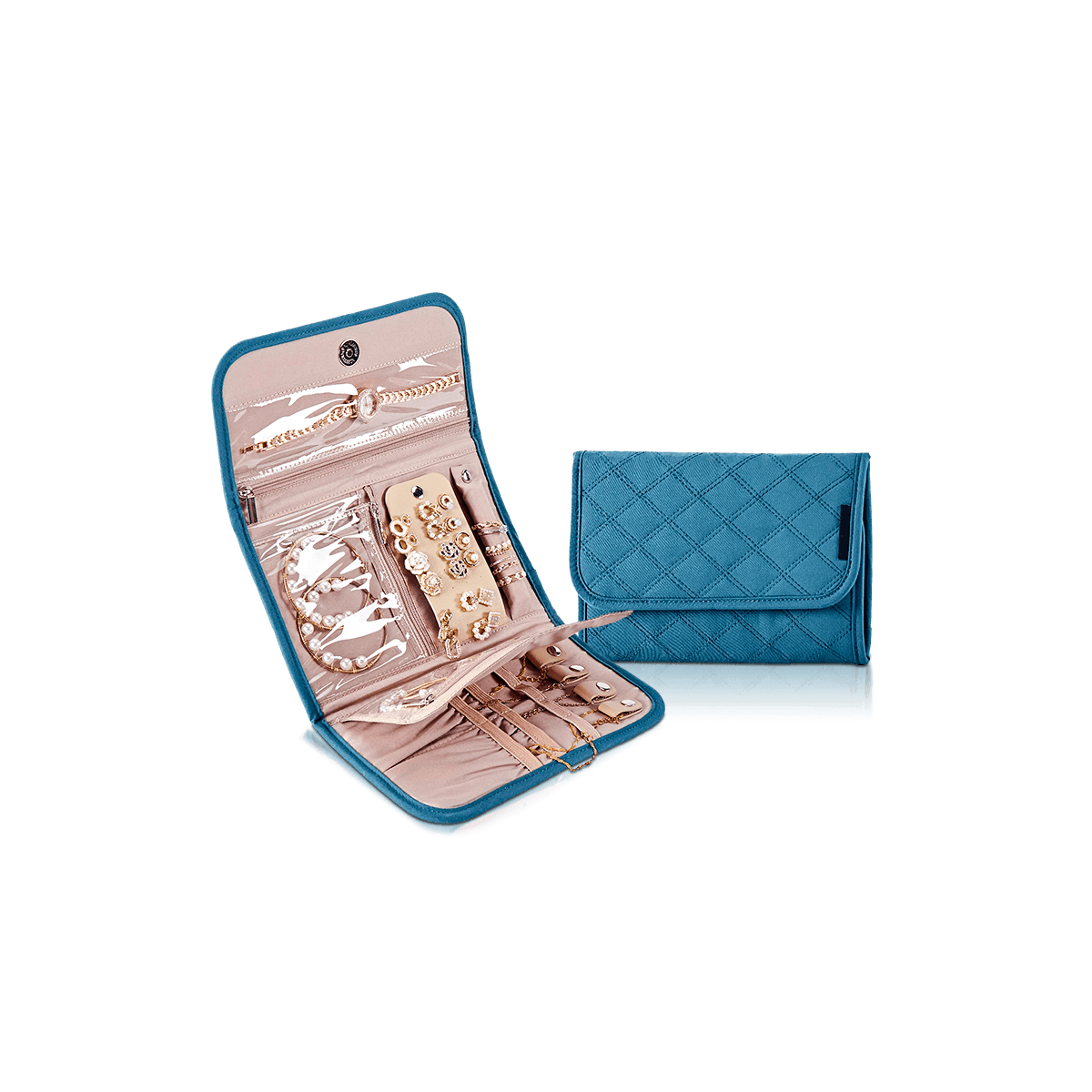
When the priority is compact travel or storage rather than a fixed reveal, flexible pouches for jewelry can reduce bulk while still requiring a deliberate way to separate and locate the piece.
Jewelry Collections Need Interior Rules As Much As Brand Rules
A collection can use one exterior brand language without giving every product the same insert.
The box color, logo, typography and finish can remain consistent across rings, bracelets, necklaces and watches. The interior should change when the jewelry changes.
That separation makes it possible to create a recognizable jewelry-packaging system without compromising product retention.
For repeat production, record each item's approved orientation, insert material, slot or retention positions, cavity dimensions, box dimensions, finish placement and artwork version. A minor change to an insert can alter how the product appears even when the exterior box remains unchanged.
Custom Packly provides warehousing and scheduled deliveries for repeat programs where several approved jewelry packs need controlled replenishment. Standard turnaround is 4–6 days after final artwork and specifications are approved, with 24/7 expert support available when packaging specifications or artwork versions need coordination. Complex structures, specialty materials or advanced finishes may require additional time.
When the product types, box dimensions, insert requirements, quantities and finishes are established, an instant custom packaging quote can price the actual mix rather than one generic jewelry box.
Decide Whether The Packaging Ends At The Sale
Some jewelry packaging only needs to present the item through purchase and gifting. Other boxes are likely to remain with the product for storage.
That distinction should influence how much structure the package deserves.
A simple paperboard box can be appropriate when the customer already has a separate storage solution or the jewelry sits at an accessible price point. A rigid box becomes easier to justify when the container is expected to protect and organize the piece after the initial purchase.
The decision changes the closure, board, insert durability and amount of finishing that makes commercial sense.
Custom Packly's Packaging Capabilities can combine rigid board, paperboard, wraps, inserts, printing and finishing when those elements need to operate as one jewelry-packaging system.
Custom jewelry packaging succeeds when the piece remains where it was intentionally placed, reaches the customer without losing that presentation and uses enough structure for the life the box is actually expected to have.
Start Your Custom Packaging Quote
Share your product details, size, quantity and artwork needs. We’ll help choose the right packaging style and send a clear quote.