Skip to content
Details

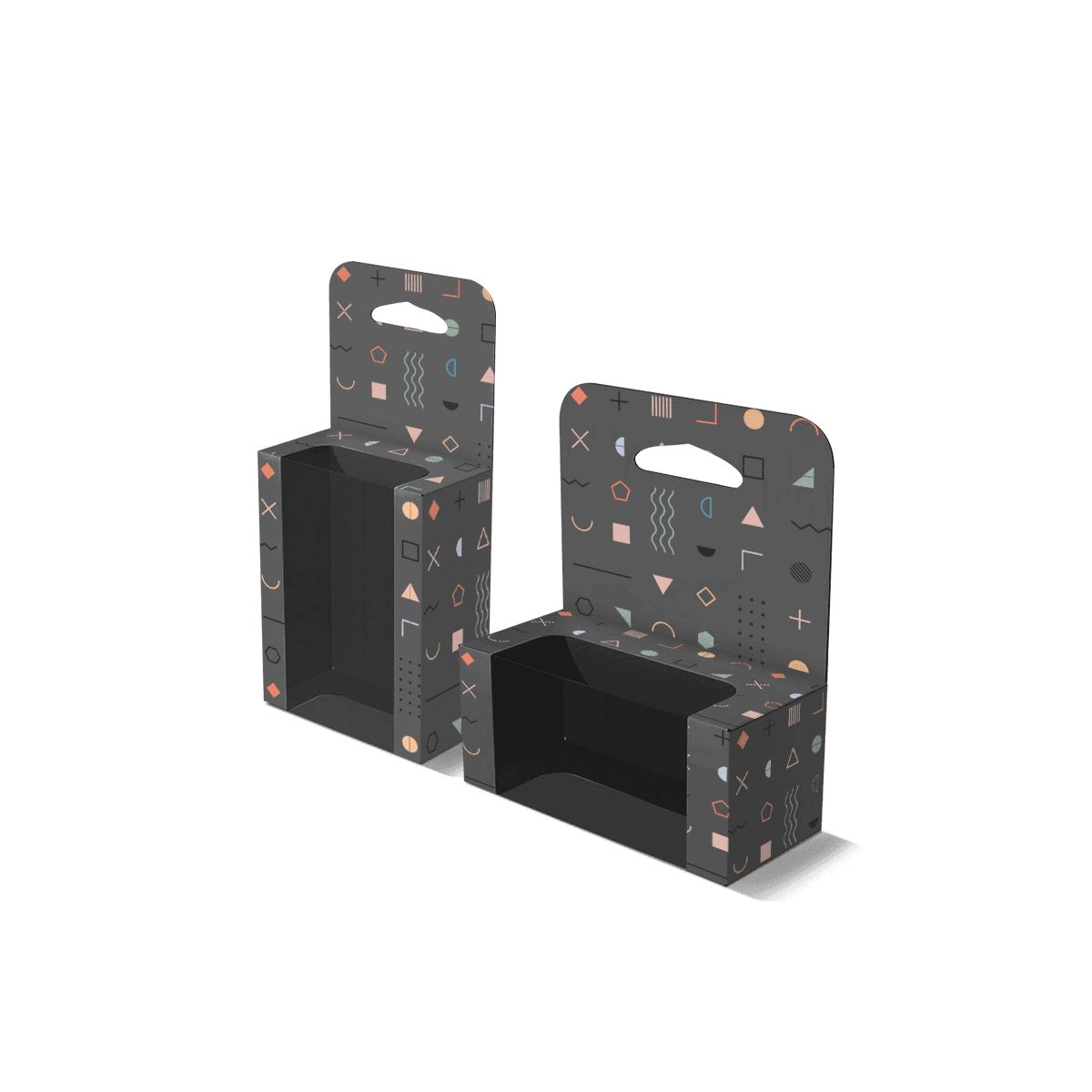
Custom Hanging Display Boxes

Branded suspended displays that organize multiple small products in compact retail spaces, with secure mounting, accessible compartments and clear merchandising.

One Carrier, Several Products

Custom Hanging Display Boxes hold multiple small retail products in a suspended merchandising unit. Instead of giving every product a separate display position, one branded carrier organizes the assortment through pockets, retention slots or compact compartments.

This structure suits lightweight accessories, individually packaged products and promotional merchandise sold from store fixtures, shelving attachments or dedicated hanging positions.

Its main advantage is the relationship between the merchandise and the space it occupies. A hanging display can introduce several products without requiring a separate countertop tray or freestanding floor unit.

The display must perform three jobs throughout its use: carry the combined product weight, let shoppers remove individual units and remain presentable as the assortment sells.

A Shared Merchandising Unit

A suspended display normally combines a printed backing panel or structural body with a mounting point and one or more product-holding positions.

The products may sit in shallow pockets, engage with die-cut retention slots or occupy small compartments attached to the main structure.

The finished construction depends on how the products are packaged. Flat accessory packets can use a different retention arrangement from small cartons or individually wrapped components.

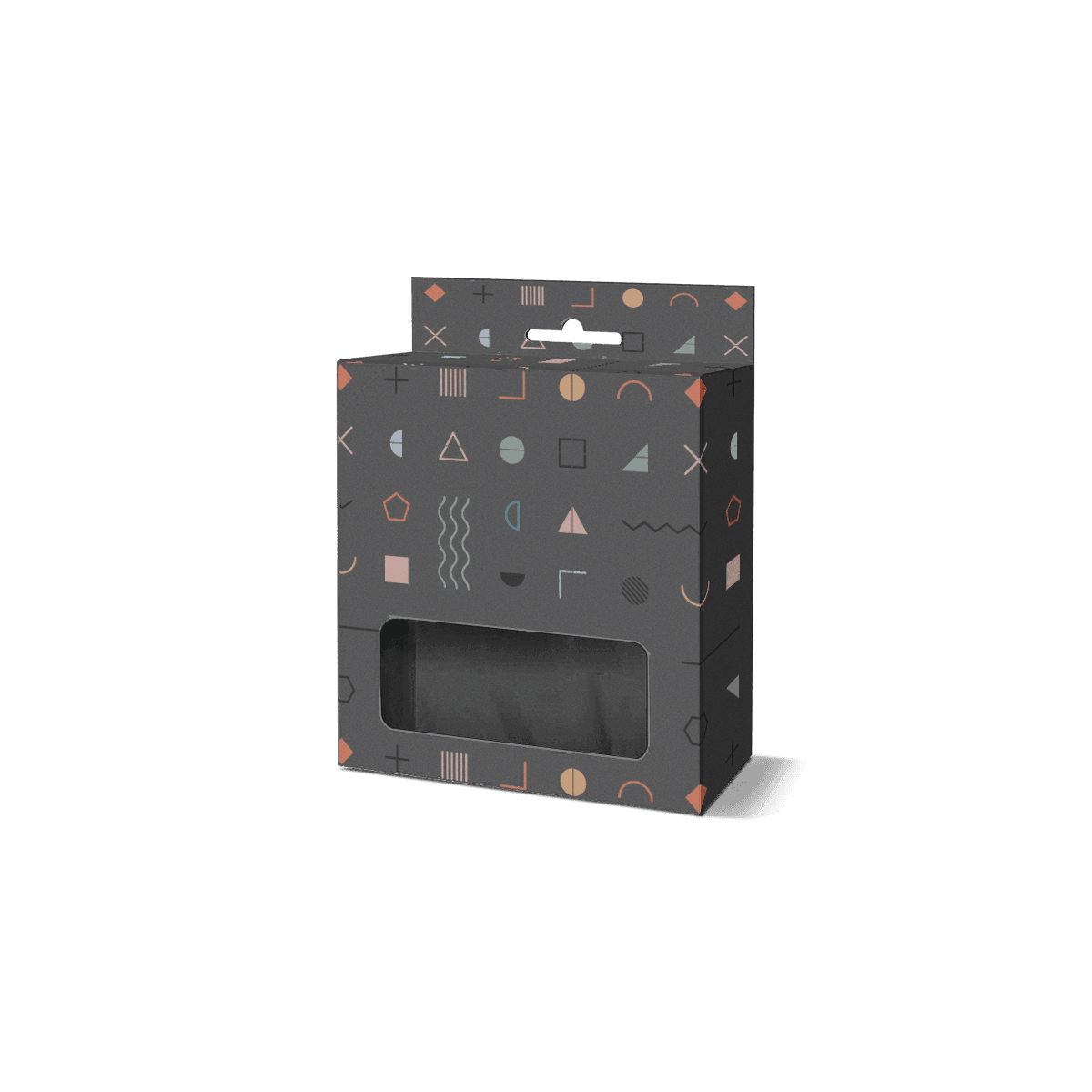
For a single retail carton that hangs independently, hang-tab display boxes put the hanging feature on the individual product pack.

A shared hanging display instead groups several sellable units into one merchandising assembly.

That distinction affects the mounting design, product count, structural load and amount of branding space required.
The Retail Position Comes First

A suspended display must fit the retailer's actual fixture, including its attachment method, occupied width, hanging depth and clearance beneath the mounting position.

A visually attractive display is of little value if it blocks adjacent merchandise or cannot be mounted securely in the intended store.

The retail location should establish the basic display configuration before individual compartments are finalized.

Fixture and Mounting Requirements

Different retail environments use pegboards, slatwall accessories, shelf-edge attachments, rails and other hanging fixtures.

These systems do not necessarily accept the same mounting arrangement.

For a proposed display, establish:

  • The fixture type and attachment hardware.
  • The number and position of mounting points.
  • The space between neighboring products or displays.
  • The permitted display width and vertical drop.
  • The distance the loaded display can project into the aisle.
  • Any retailer-specific restrictions on dimensions or placement.

A single mounting point may suit a narrow display carrying a balanced lightweight assortment. A broader display may need a different attachment arrangement to control rotation and maintain its intended orientation.

Do not assume that a die-cut hanging hole will fit every retail fixture.

The shape, position and strength of the mounting feature should follow the actual hardware and load.

Space Beneath the Display

The available vertical space determines how many product positions a hanging carrier can accommodate.

A display suspended from a shelf should not obstruct products on the shelf beneath it. Nor should lower compartments hang so low that shoppers cannot reach them comfortably.

Product depth matters as much as overall display height.

A shallow backing panel can project considerably farther into the aisle once loaded with cartons or accessories.

The maximum occupied dimensions should therefore include the products in their intended selling positions, not just the empty display.

For a promotional assortment that needs to occupy the side of a larger merchandising fixture, the mounting arrangement should be considered as part of the overall custom retail packaging program.

Suspended Weight Changes the Structure

Unlike a shelf-supported display, a hanging unit transfers its load upward through the mounting feature and supporting body.

Every product position contributes to that load.

The structure must support the intended merchandise without allowing the header to tear, the backing panel to distort or the compartments to pull away from their attachment points.

The Hanging Load Path

The mounting feature is usually one of the most important structural decisions.

A simple punched hole may work for a light display, but increasing the number of products places greater demand on the material surrounding that opening.

Depending on the construction, additional strength may come from a folded header, a reinforced mounting area or another mechanically appropriate attachment.

The backing panel and individual product holders also need to transfer their loads into the main structure.

A reinforced top does little good if a heavily loaded lower compartment can tear away from the panel supporting it.

For displays using multiple pockets, each attachment point must be evaluated alongside the combined load on the complete unit.

Balance During Sell-Down

A fully stocked display and a partially stocked display do not necessarily hang the same way.

Consider a hypothetical display carrying several small accessory cartons in two vertical groups.

When both groups are filled, the weight may be reasonably balanced. If customers remove most of the products from one side, the remaining weight can cause the display to lean or rotate.

That movement can make the merchandise harder to see and may place additional stress on the mounting feature.

A narrower arrangement, central mounting position or revised compartment distribution may improve stability.

The structural decision should account for the expected removal sequence rather than relying exclusively on the appearance of a fully stocked display.

Validate the Loaded Construction

An exact physical sample becomes valuable when mounting strength, compartment retention or uneven loading cannot be judged reliably from drawings.

Load the proposed display with the intended products, suspend it from the actual fixture and remove merchandise in a realistic sequence.

Check for movement around the mounting point, progressive panel bending and damage to pocket attachments.

A digital mockup can show how the assembled unit looks, but it cannot establish its physical load capacity.

Custom Packly can arrange paid fully custom samples when the exact construction requires physical validation. Free examples of previous work can also help with material and print assessment.

Product Removal Shapes the Layout

Each item should be removable without pulling neighboring products out of position or damaging the display.

This requirement affects compartment openings, retention geometry, row spacing and the direction from which shoppers approach the merchandise.

The most compact arrangement is not necessarily the easiest to shop.

Pockets and Retention Slots

Open-front pockets work well when small boxed products or packets need to remain upright but accessible.

The pocket depth should retain the product without concealing its primary identification or forcing shoppers to dig into the compartment.

Die-cut retention slots can suit products with an appropriate hanging or engagement feature.

These slots should hold the merchandise securely during normal retail handling while allowing individual removal without excessive force.

Some products benefit from additional support beneath the item rather than depending entirely on friction around a slot.

The appropriate arrangement depends on the product's dimensions, filled weight and packaging construction.

Clearance Between Positions

Vertical spacing becomes important when products sit in successive rows.

If the upper row extends too far downward, it can obstruct the merchandise beneath it. If the lower compartment is too close, shoppers may struggle to grasp products without disturbing the row above.

A small amount of additional spacing may be preferable to a denser arrangement that makes purchasing awkward.

For products sold in several sizes, the largest packaged unit should establish the minimum clearance required for its position.

Uniformly spaced compartments are appropriate only when the products have sufficiently similar dimensions and removal behavior.

An Accessory Display Example

Consider a hanging display carrying individually packaged charging cables and compact adapters.

The cables are relatively flat, while the adapter cartons project farther from the backing panel.

Placing both products in identical pockets could create two problems. The shallow cable packets may move excessively, while the adapter cartons may be difficult to remove.

The display could instead use different pocket depths or separate retention arrangements for the two product types.

Positioning the deeper cartons where they do not obscure the flatter packets can improve access without increasing the display's overall width.

This type of arrangement is particularly relevant to packaging for electronics and gadgets, where compatibility, product type and accessory identification influence purchasing decisions.

The Board Must Hold Shape

Paperboard, kraft stock and corrugated board can all serve hanging display applications, but they are not interchangeable.

The correct material depends on the loaded weight, structural configuration, number of compartments and expected handling.

Material selection should also account for printing, die-cutting and how the display will be assembled.

Paperboard for Lighter Merchandise

White paperboard can suit compact displays carrying lightweight packaged accessories, small promotional items or individual retail packets.

Its relatively smooth surface supports printed product imagery, detailed typography and controlled brand colors.

Folded edges and structural panels can provide additional stiffness where the design requires it.

Kraft stock offers a different appearance and can suit simpler printed merchandising concepts. Its grade and thickness still need to be assessed against the required load.

Neither material should be selected solely because it is familiar from ordinary folding-carton production.

A display carrying several products concentrates more weight around its support points than a single lightweight carton.

Corrugated Display Construction

Corrugated board becomes relevant when a larger suspended unit needs additional stiffness or must carry a more demanding load.

Fine-flute corrugated constructions may suit printed display applications where the material needs greater structural support without unnecessarily increasing the overall size.

However, flute selection affects bending, die-cutting, scoring and the construction of smaller compartments.

A thick board can create difficulties when the display depends on narrow retention slots or compact folds.

The stronger material is not always the better choice if it prevents the intended structure from assembling or functioning correctly.

Custom Packly's packaging capabilities support material, structural and printing decisions for made-to-order display construction.

Reinforcement Where It Matters

Increasing the board thickness throughout the entire display can add material without addressing the weakest structural area.

A folded header may need greater reinforcement than a decorative side panel. A heavily loaded pocket may need additional support at its connection to the backing panel.

The material specification should reflect those different functions.

For a hanging construction, strength must be considered across the complete assembly, including the mounting area, product holders, folds and connection points.

Branding That Remains Visible

The most valuable branding space on a hanging display is the area shoppers can see throughout the selling cycle.

A printed header often remains visible after merchandise has been removed. Graphics behind the products, however, may be concealed while the display is stocked.

Artwork should account for both conditions.

The Header's Primary Message

The upper display area can identify the brand, introduce the product assortment or communicate a specific promotional message.

Its shape and position should work with the hanging attachment.

An unusually large header may create an attractive artwork area but can also increase the display's occupied height or interfere with neighboring merchandise.

Place the most important message where it remains readable from the intended viewing position.

If the display holds several product variants, use a shared header message that remains accurate as individual variants sell out.

For merchandising in a crowded retail environment, what makes packaging stand out on store shelves is closely connected to clear product identification, readable typography and visual contrast.

Artwork Behind the Products

The backing panel can carry additional graphics, but those graphics should not depend on the display remaining empty.

Important messages can disappear behind the merchandise once the unit is loaded.

Conversely, graphics concealed by a full assortment may become increasingly prominent as products are sold.

That changing visibility creates an opportunity to use a consistent background, restrained brand pattern or appropriate promotional message without depending on a fixed product count.

A design that requires every pocket to remain full to make visual sense may look unfinished during ordinary retail use.

Printing and Finish Decisions

Premium offset printing can support detailed artwork and consistent graphics across a production run.

CMYK is appropriate for multi-color illustrations and product photography. Pantone may be considered where a particular brand color needs tighter control.

Matte and gloss finishes can change the display's appearance, while selected spot UV or foil effects may emphasize a header or other prominent printed area.

Finishes should not interfere with functional folds, attachment points or the opening of retention features.

The layout also needs to account for the final panel sequence.

Understanding packaging dielines and artwork placement helps prevent important graphics from landing across creases, mounting openings or concealed assembly areas.

Custom Packly provides free design and dieline support alongside free 3D mockups, allowing the assembled orientation and visible artwork to be reviewed before production.

Assembly and Store Handling

The person assembling a hanging display may not be the person who designed it, filled it or selected its retail position.

That makes the assembly method a commercial and operational consideration.

A structure with numerous small tabs, separate compartments and uncertain mounting instructions may be inconvenient for a multi-store promotional program.

The preferred configuration depends on where assembly takes place and how merchandise reaches the store.

Ship-Flat Display Components

A folding display can be supplied flat when its construction supports efficient assembly.

Flat supply can reduce the storage space required for empty displays and allow stores to assemble the units as needed.

However, the structure should not depend on complicated folding sequences or difficult-to-identify components.

Clear placement of pockets, structural tabs and mounting features can reduce assembly errors.

Where the unit has several separately assembled compartments, the attachment method should make incorrect installation difficult.

Empty or Preloaded Displays

There are two distinct operational approaches.

An empty display may be shipped to the store and loaded with merchandise from existing inventory.

This can suit retailers that already receive individual product cartons and need a merchandising unit for selected locations.

A preloaded display may be assembled and filled before it reaches the store.

That approach can reduce in-store setup but changes the packaging requirement. The loaded unit needs suitable outer transit protection so the hanging structure and merchandise are not damaged during distribution.

The retail display itself should not automatically be treated as a shipping carton.

If the display travels loaded, the shipment must account for the combined product weight, internal movement and pressure on the suspended compartments.

Retailer Attachment Hardware

Mounting hardware should be confirmed separately from the printed display.

A retailer may use existing hooks or fixtures rather than accepting a new attachment supplied with the merchandising unit.

The display design should identify which components belong to the packaging and which are supplied by the retailer.

This avoids approving a structure that depends on hardware unavailable at the actual store.

Assortment Control Across Locations

Multi-product displays need an assortment plan that fits the number of selling positions without making replenishment unnecessarily complicated.

The decision is especially important when one hanging unit carries several products with different sales patterns.

Fixed and Mixed Assortments

A fixed assortment assigns each compartment to a particular product.

This can make the initial display visually consistent and help staff understand where each item belongs.

However, a fast-selling variant may leave an empty position while another product remains fully stocked.

A mixed assortment allows greater flexibility but needs sufficient product identification to prevent confusion.

The right arrangement depends on whether the products share dimensions, whether variants can occupy the same compartment and how the retailer replenishes them.

For hardware accessories, part numbers may be more important than decorative product grouping. MRO packaging can support the identification and organization of compact repair products before they enter a retail merchandising program.

One Structure, Several Product Lines

A common display structure can sometimes support multiple assortments when the products share compatible dimensions and weight requirements.

The mounting arrangement, compartment positions and outer footprint can remain consistent while artwork or the intended merchandise changes.

That approach is less suitable when different products require substantially different pocket depths or retention methods.

Changing the merchandise without revisiting those physical requirements can create poor fit and unreliable retention.

For a multi-store program, confirm the number of units intended for each display and whether the assortment is assembled centrally or at individual retail locations.

The product distribution should also account for the practical case quantity used to replenish the display.

Hanging Versus Other Displays

Hanging Display Boxes are most suitable when several compact products can share one suspended structure and remain individually accessible.

Other merchandising constructions may be more appropriate when the products need independent hanging positions, a different support method or greater carrying capacity.

Individual Peg-Ready Cartons

Individual hanging cartons give every product its own mounting feature.

This approach suits merchandise that retailers need to position independently across existing hooks or mix with products from other brands.

A shared hanging display is more appropriate when several units need to appear together as one branded merchandising assembly.

Dedicated Hook Structures

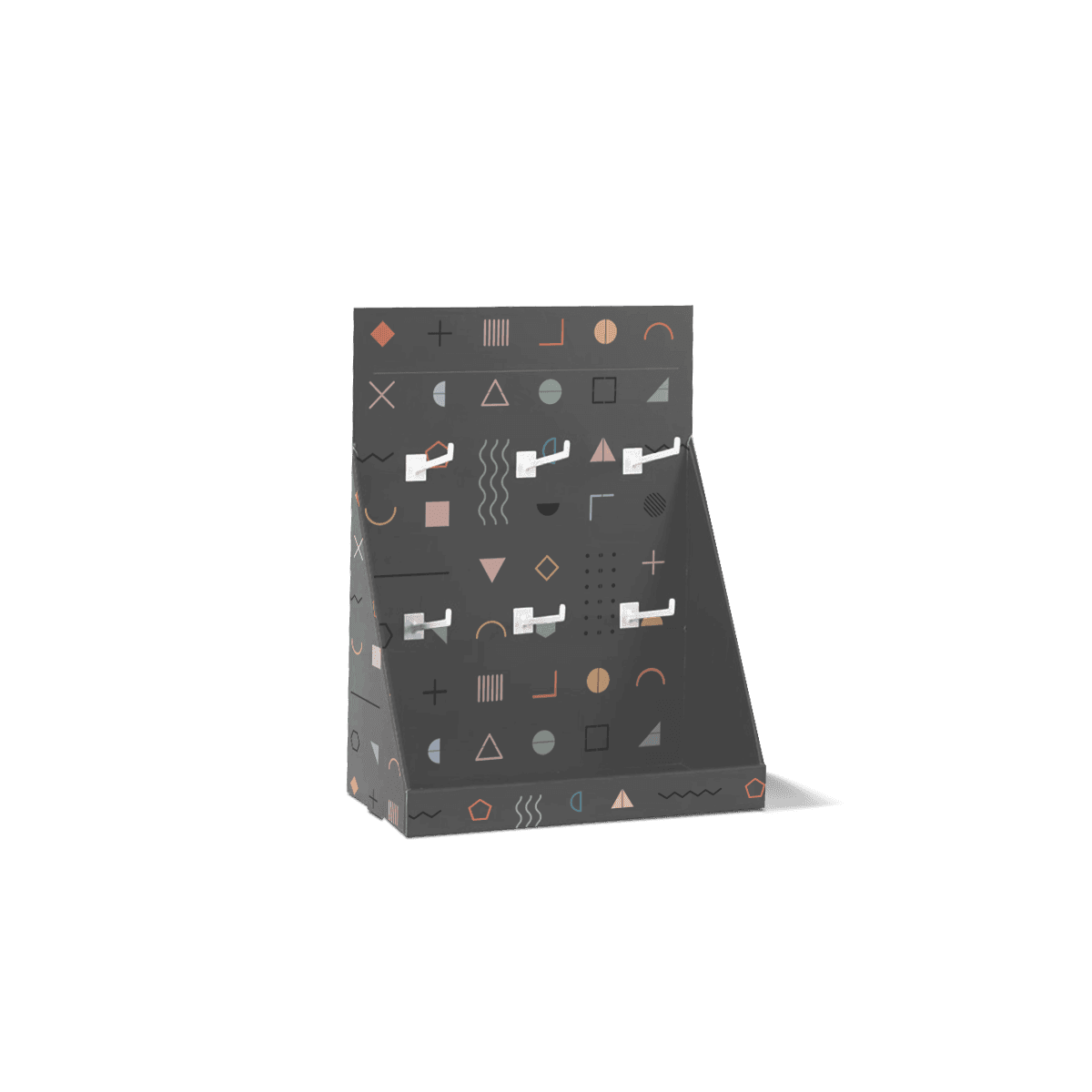
A peg hook display box can organize products through multiple hook positions on a dedicated merchandising structure.

That arrangement is worth considering when the products already have hanging cards or slots and need separate positions for browsing.

A pocket-based hanging carrier is more appropriate when one suspended backing or box structure should retain the merchandise itself.

The display's actual construction, rather than its name, should determine which approach is appropriate.

Counter and Shelf Merchandising

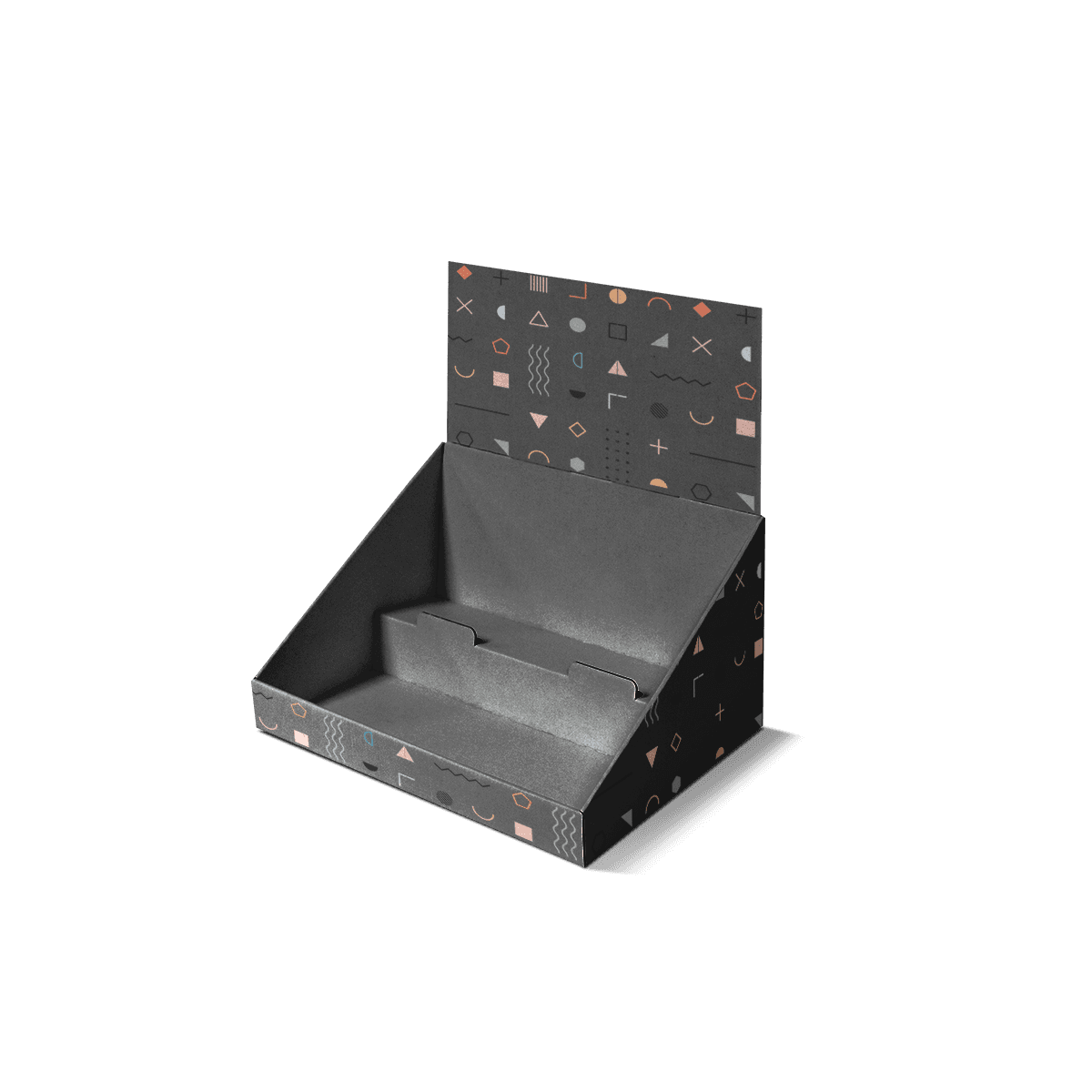
A countertop display can be more practical when products are too heavy for a suspended paper-based carrier or need direct access from above.

Shelf-supported trays also make sense when the merchandise must remain upright without relying on an overhead attachment.

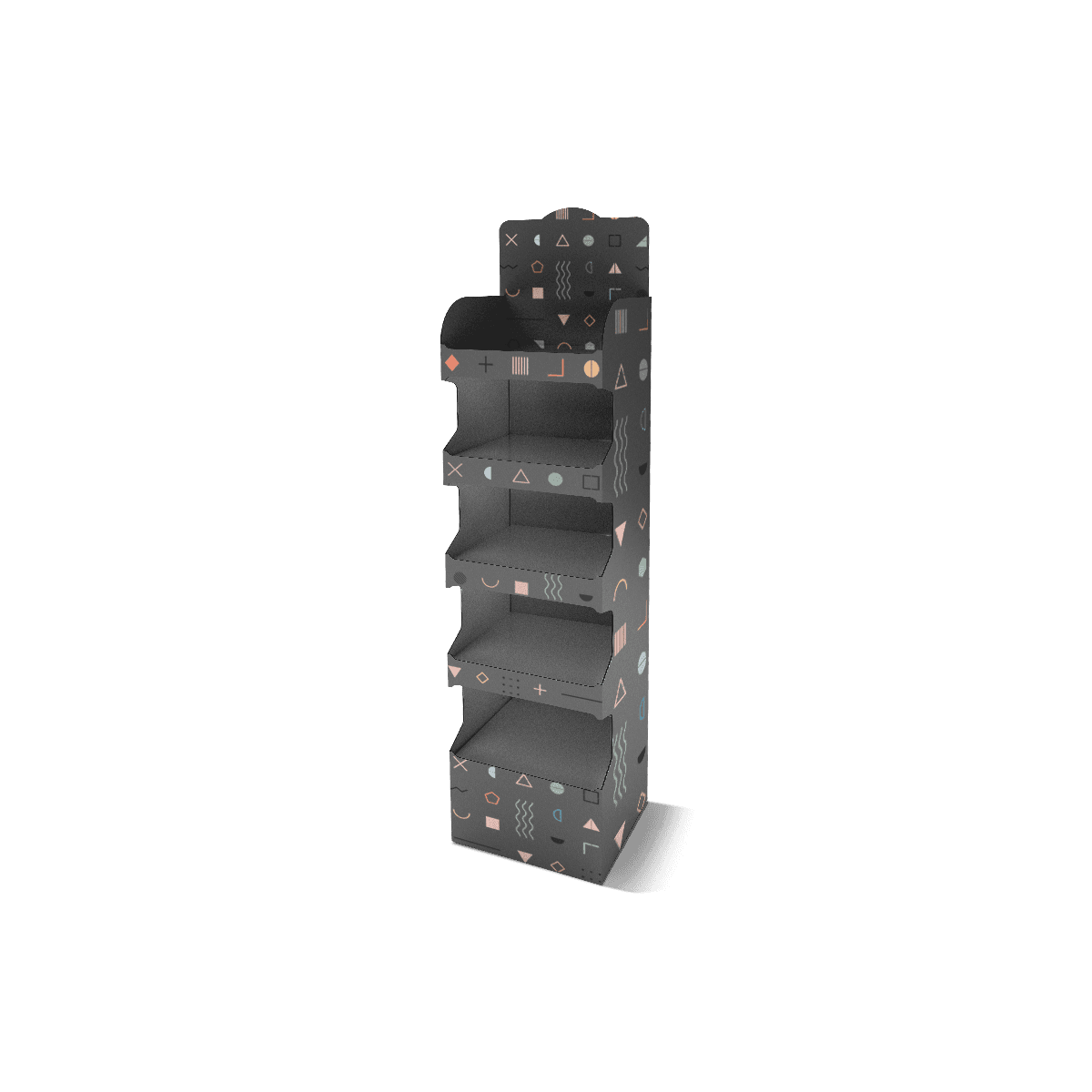
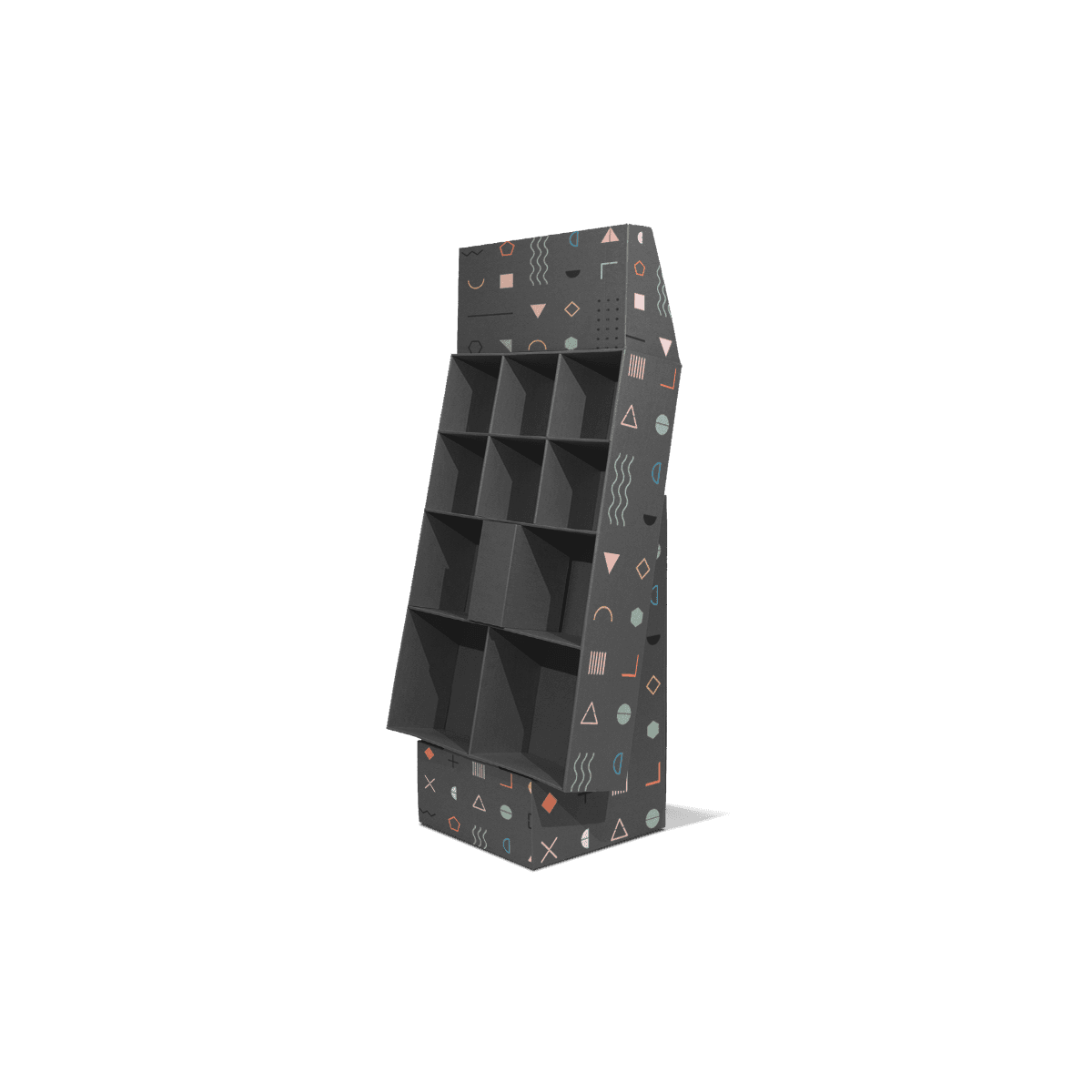
The full set of display box structures accommodates different retail positions, from compact hanging merchandise to larger floor-supported units.

Heavy, fragile or unusually bulky products may require a substantially different merchandising structure.

The amount of unused vertical space should never be the only reason to select a hanging display.

Production and Order Economics

The cost of a custom hanging display depends on its structural complexity as well as its dimensions and printing.

A single-piece folded carrier generally has different production requirements from a multi-compartment assembly with separately attached components.

Board selection, die-cutting, printing and assembly all contribute to the final specification.

Structural Complexity and Quantity

Before adding compartments or decorative elements, consider what each component contributes to product retention or merchandising.

An additional pocket may increase selling capacity, but it can also introduce another assembly operation or attachment point.

A more complicated construction may be justified for a mixed assortment but unnecessary for a small group of identical products.

Production quantity also changes the commercial calculation.

The principles behind custom printed box pricing and order quantities can help assess the trade-off between a smaller promotional run and a larger production commitment.

Custom Packly's USA minimum order quantity starts from 100 boxes. The appropriate order quantity for a hanging display program depends on the final construction and the number of retail locations involved.

Launch Timing and Supply

Standard USA turnaround is 4–6 days after final artwork and specifications are approved. Complex structures, specialty materials or advanced finishes may require additional time.

This should be treated as production turnaround rather than a guarantee that an order will arrive within six days.

Free USA shipping and US production can support order planning once the display specification is approved.

For repeat retail programs, warehousing and scheduled deliveries can help manage larger production quantities without requiring every location to receive its full allocation at once.

If the display structure, intended product count and order quantity are established, request a custom packaging quote to assess the proposed construction and printing requirements.

Turn the Fixture Into Specifications

A retail fixture photograph or simple placement sketch can be more informative than an isolated drawing of the display.

It establishes the mounting environment and helps identify limitations that may otherwise remain hidden until store installation.

For a hanging display project, the most informative starting materials are the actual products, the intended mounting arrangement and the space assigned to the finished unit.

The Placement Brief

A practical retail brief should establish:

  • Where the display will hang and how it will attach.
  • The usable width, height and projection from the fixture.
  • The dimensions and weight of each finished product pack.
  • The number of items held in each compartment.
  • Any required product grouping or assortment arrangement.
  • The number of displays needed across retail locations.
  • Whether stores will receive empty or preloaded units.

A photograph of the fixture with basic measurements can help identify clearance issues before the structural layout is developed.

For a multi-product display, a simple sketch showing which products occupy each position is equally valuable.

Custom Packly can use these inputs to develop a suitable construction, prepare the dieline and review the intended retail presentation.

With free design support and 24/7 assistance, the structural decisions can be addressed before the artwork is finalized.

The objective is a hanging display that fits the actual retail position, carries its intended merchandise and remains easy to shop after the first products have been removed.

FAQs

They create the most value in stores that rely on pegboards, hanging strips, or hook merchandising for compact products, especially in high-traffic sections where shoppers make quick comparisons.

Both can work. Single-item programs benefit from cleaner front-facing presentation, while assorted programs benefit from better SKU separation and easier visual scanning.

Hanging Display Boxes fit better when the display itself is meant to hold and present multiple items in one hanging unit. Hang-Tab Display Boxes are the better choice when each individual product carton needs its own tab and hangs as a separate pack. Packlane’s hanging-tab format, for example, is built around individual box sizing and direct retail hanging.

The strongest layouts keep the pickup area simple and place graphics on the header, face panel, or side areas so the merchandise stays visible and easy to remove.

Yes. Lightweight paperboard and corrugated hanging formats are commonly used for promotional accessories and small retail items because they are easy to assemble, easy to place, and adaptable to different hook counts or display plans.

Process

How it works

Your Packaging Journey, From Idea to Production and Delivery

01

Tell Us Your Specs

Custom packaging boxes

Tell Us Your Specs

Provide size, quantity, printing, and finishes.

02

Get a Fast Quote

Custom packaging boxes

Get a Fast Quote

Instant transparent pricing, no hidden fees.

03

Design and Approval

Custom packaging boxes

Design and Approval

Artwork checks, revisions, and final sign-off.

04

Produce

Custom packaging boxes

Produce

Expert manufacturing to meet deadlines.

05

Ship to Your Door

Custom packaging boxes

Ship to Your Door

Hassle-free, flexible delivery options.

Get Your Quote for Custom Hanging Display Boxes

Share your product details, size, quantity and artwork needs. We’ll help choose the right packaging style and send a clear quote.