Skip to content
Details

Custom Gondola Display Boxes

Custom printed merchandising trays and shelf-fitted displays that organize products on existing retail gondolas, maintain clear facings and simplify store replenishment.

Merchandise the Existing Gondola

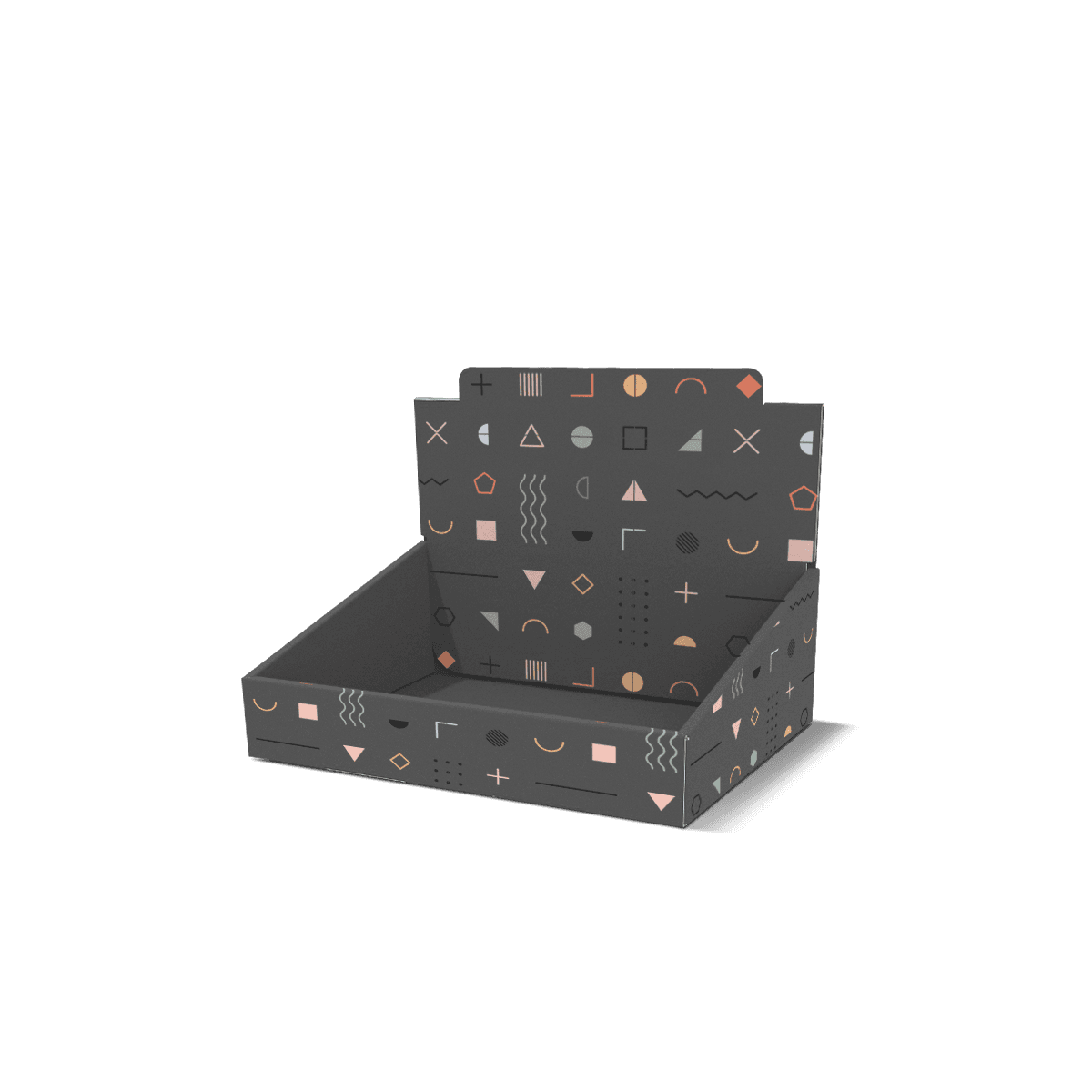
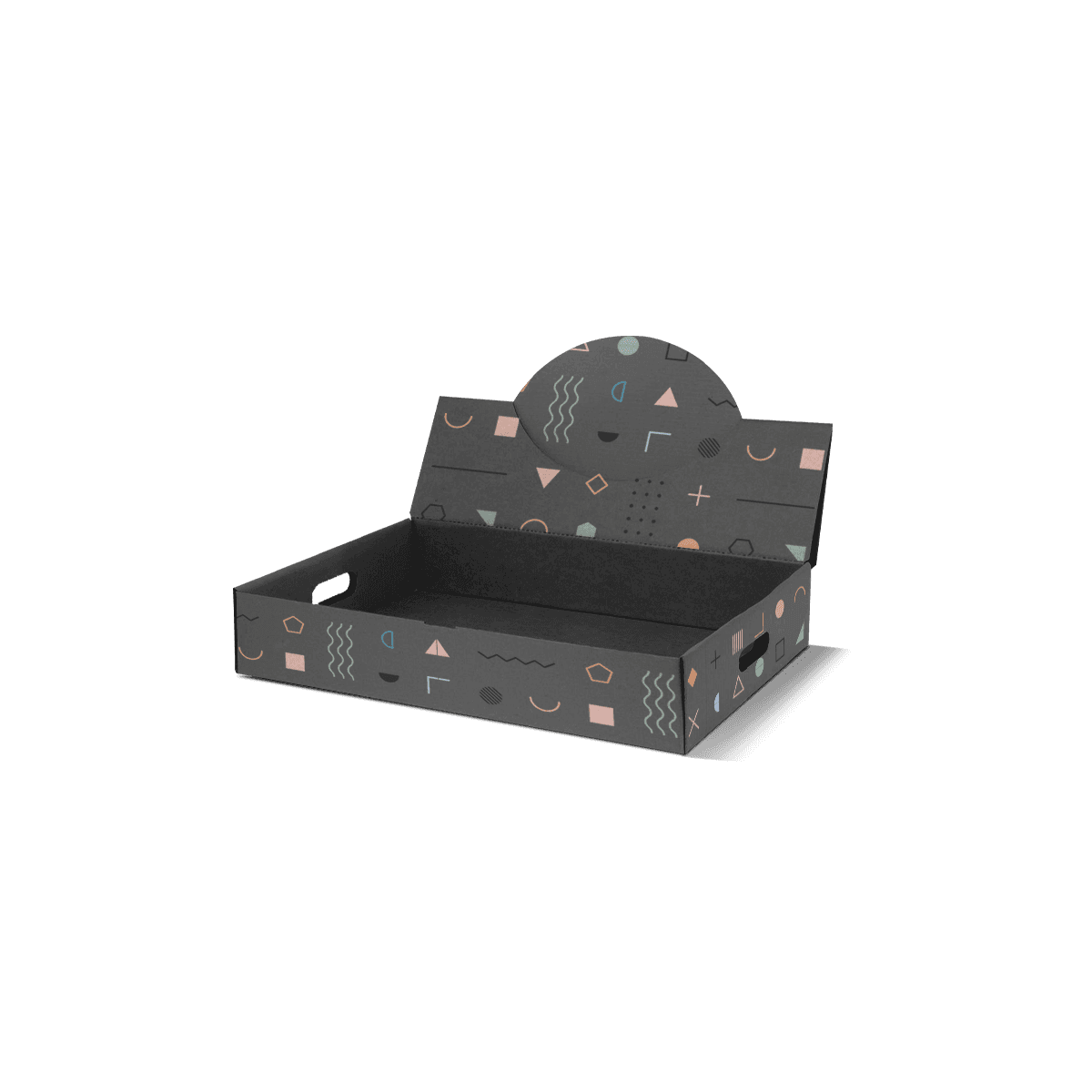
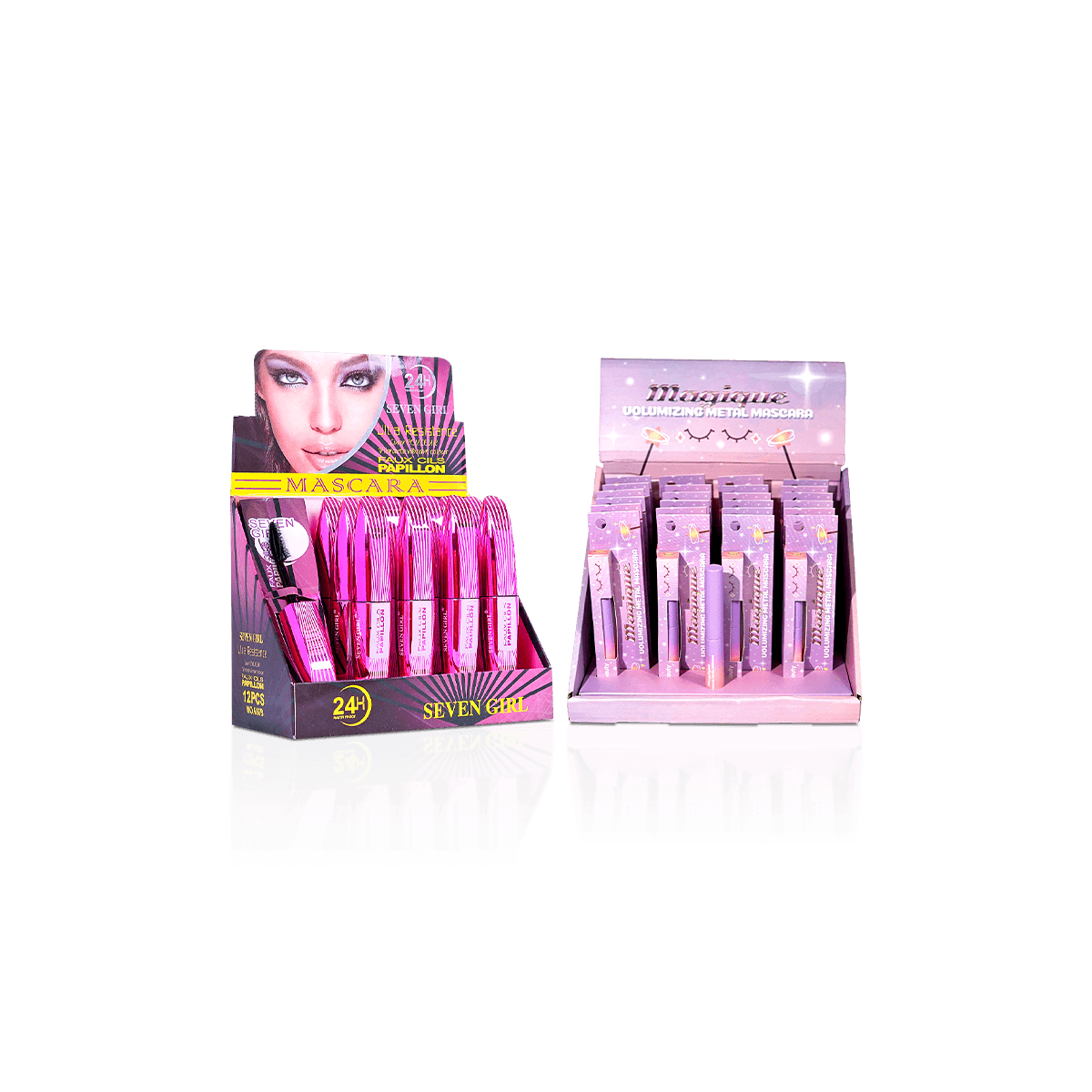
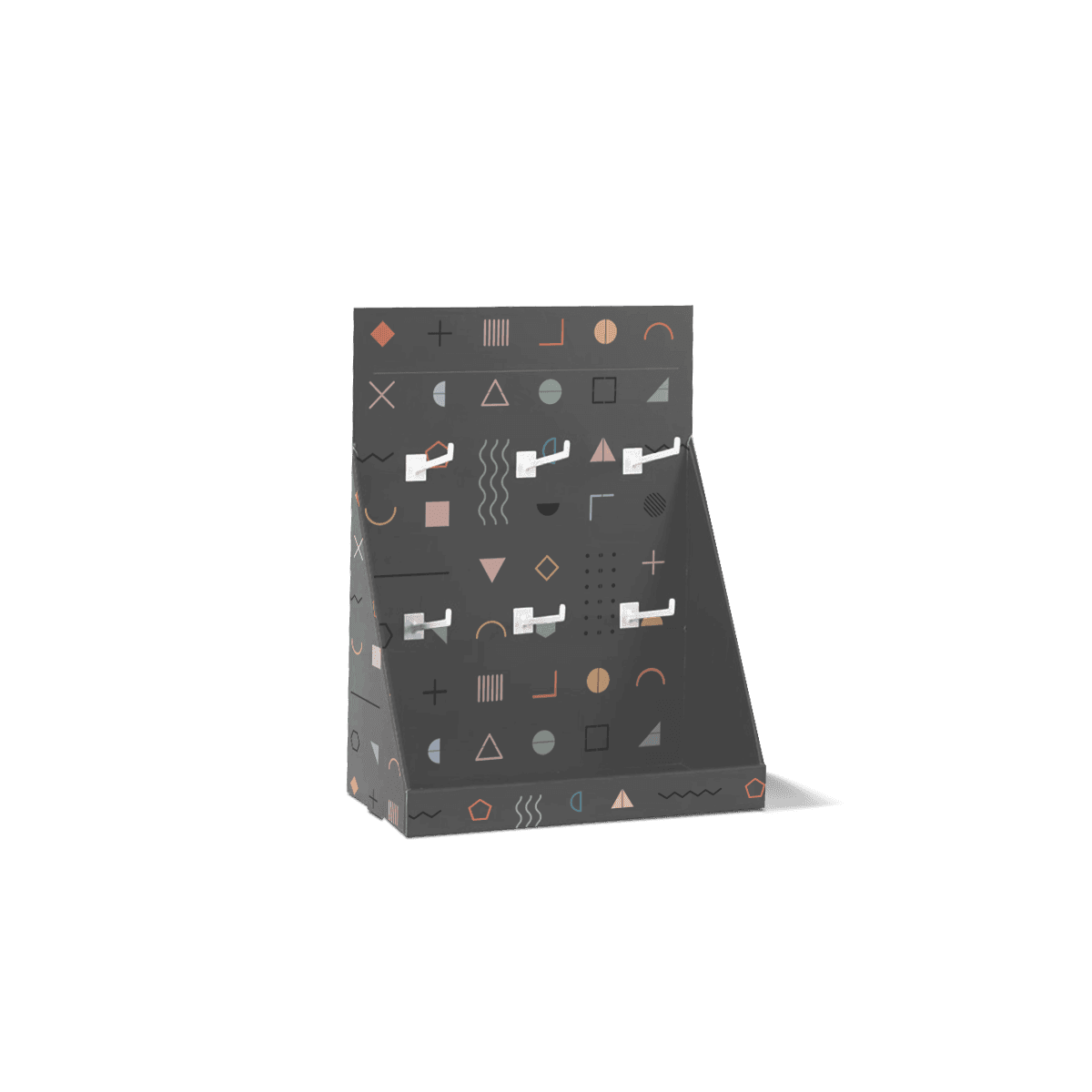
Custom Gondola Display Boxes are printed paperboard or corrugated merchandising units made to fit existing gondola shelving. They organize merchandise in branded trays, compartments or shelf-fitted arrangements without requiring the retailer to replace its shelving fixture.

The gondola supplies the main structural support. The display box controls how the products sit, face shoppers and occupy their assigned shelf space.

This distinction matters in supermarkets, pharmacies, convenience stores and other retail environments where products compete for space inside established shelving systems.

A gondola display can create a branded selling area using the retailer's existing equipment. Its size, construction and presentation must respect the allocated position.

The Fixture and Display

A conventional gondola is a modular retail shelving system, often with upright supports and adjustable shelves. The fixture may be single-sided against a wall or double-sided between aisles.

The printed display is a separate component placed onto or fitted to that system.

Depending on the merchandise, the packaging may take the form of:

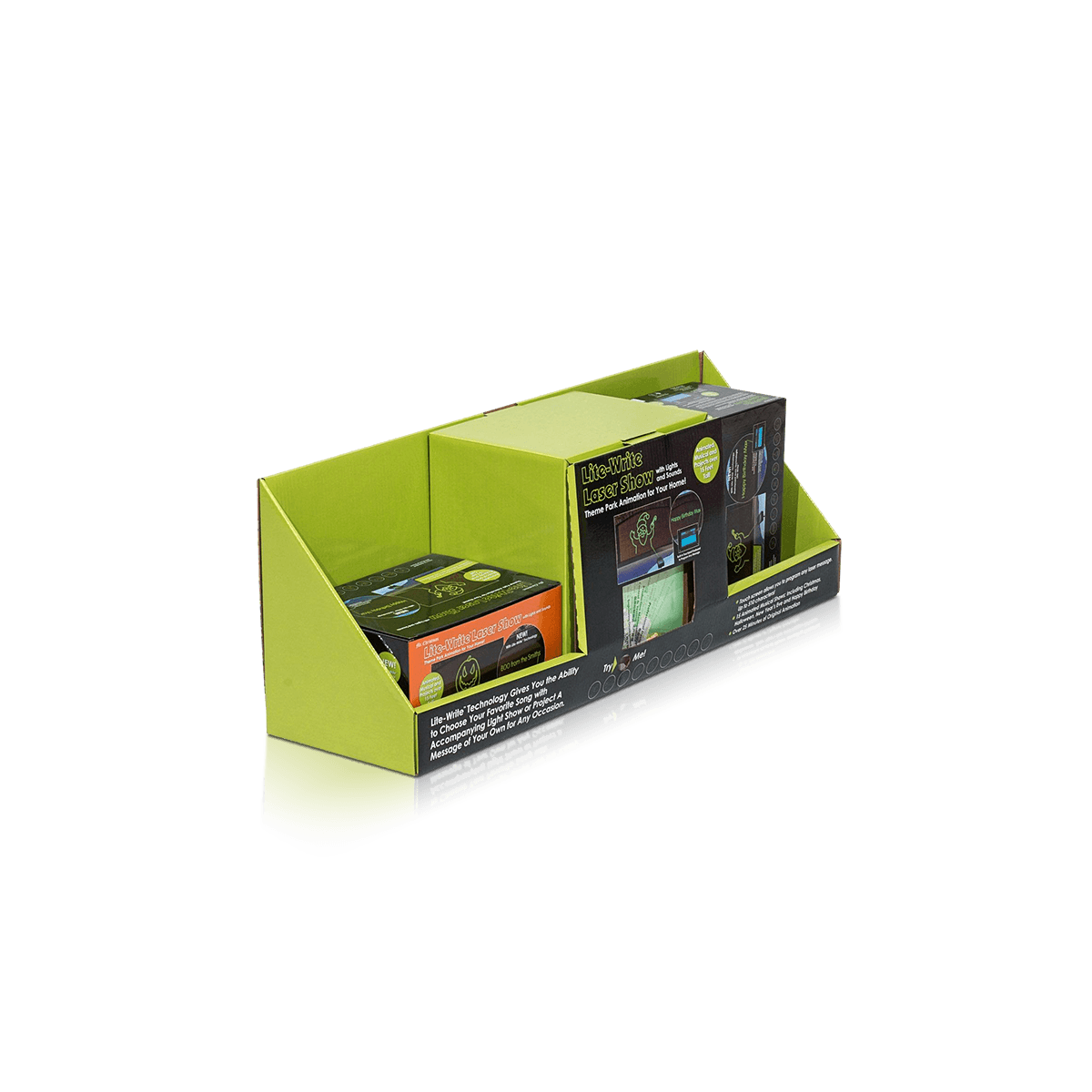
  • A shallow tray holding several product facings.
  • A compartmented display organizing different SKUs.
  • A branded shelf insert containing individually packaged merchandise.
  • A display with a printed front lip and low side walls.
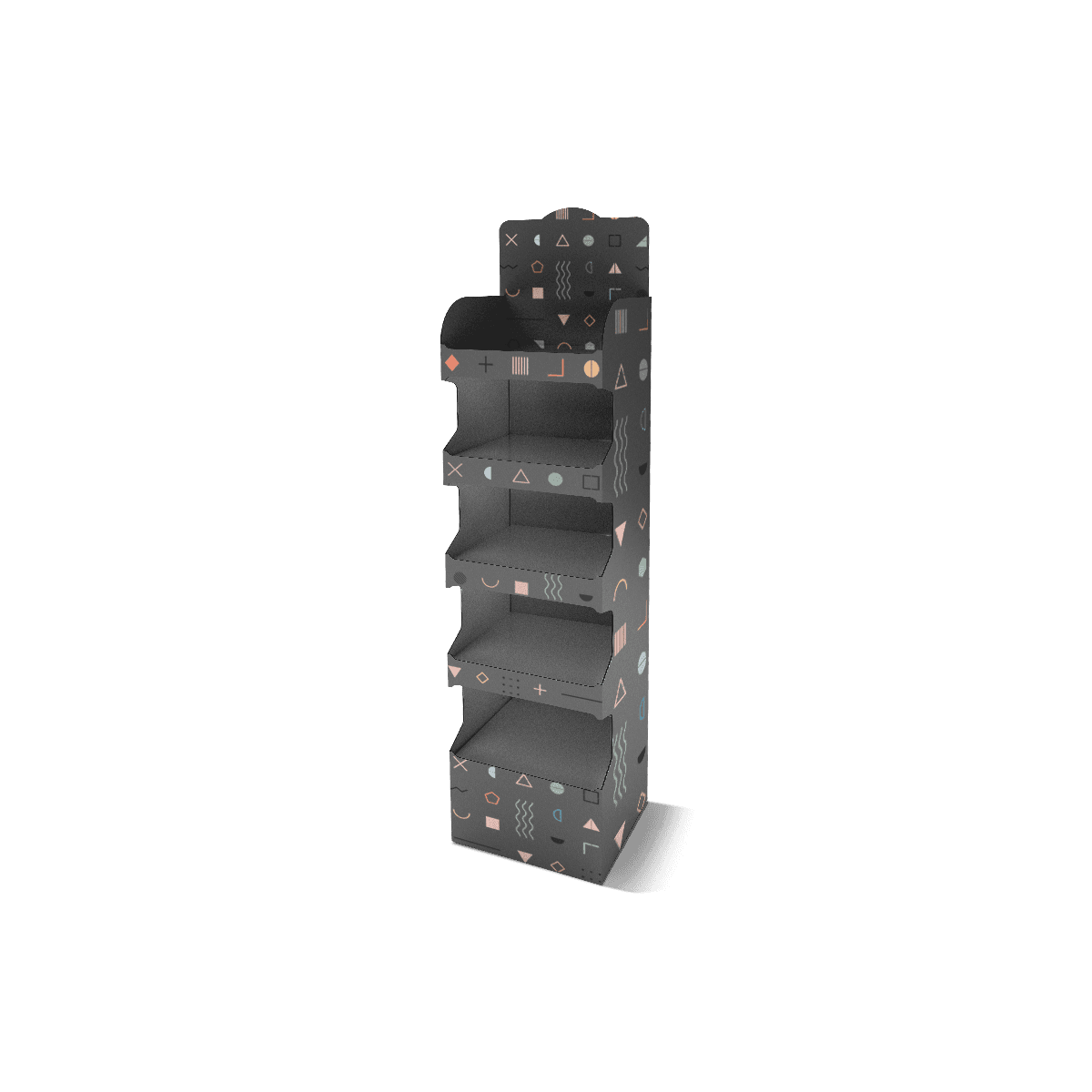
  • A multi-tray arrangement occupying an approved portion of a gondola.

The most suitable construction depends on the merchandise, shelf dimensions and retailer's stocking requirements.

For brands developing coordinated in-store merchandising, custom retail packaging can bring individual product cartons and their shelf presentation into one packaging specification.

Placement Determines Construction

A gondola display is not automatically an aisle-end promotion or a freestanding merchandising stand.

It may occupy a standard shelf bay, a designated promotional position or an approved area of the retailer's existing fixture.

The intended position determines how the display is supported and approached.

A tray installed in the middle of a long aisle usually has different visibility requirements from one positioned near a cross-aisle.

Likewise, merchandise on an upper shelf needs a different access arrangement from products displayed near waist level.

The existing fixture should inform the display's construction before the artwork or product count is finalized.
A Shelf Has Boundaries

An allocated gondola position has several dimensional limits. The most obvious are shelf width and depth, but usable height, existing price rails and neighboring merchandise can be equally important.

The display must fit the actual selling space without extending into another product's allocation.

Usable Shelf Dimensions

Three measurements establish the basic display footprint:

  • Width: the horizontal space assigned to the display.
  • Depth: the usable distance from the front shelf edge to the back.
  • Height: the clearance between the supporting shelf and any fixture or shelf immediately overhead.

These are usable dimensions, not necessarily the nominal measurements of the metal shelving.

A front price rail may occupy space that appears unobstructed in a plan. Shelf brackets, rear panels and other fixture components can also affect the available area.

For a tray resting on the shelf, its finished outside dimensions must account for those obstructions.

The product's full packaged height also matters. A tray may fit beneath the shelf overhead while its tallest product does not.

The Price Rail

Retail shelf-edge labels often occupy a fixed position at the front of a gondola.

A printed display with an unnecessarily deep front wall can obstruct those labels or make prices difficult to associate with the correct merchandise.

Where the retailer requires its existing price rail to remain visible, the display's front profile should accommodate it.

Where approved, printed display panels and separate pricing labels can be coordinated to create a clear product presentation.

However, essential pricing or retailer identification should not depend on a decorative panel that staff may remove during replenishment.

Clearance for Product Removal

A display can fit the assigned shelf perfectly and still be difficult to shop.

Products need sufficient clearance to be lifted, pulled or otherwise removed without striking the shelf overhead.

The necessary space depends on the product's height and the direction from which customers grasp it.

Tall cartons may require additional clearance above the product. Flat packets may need room for a shopper's fingers at the front.

A display on a lower shelf must also account for the viewing and reaching angle.

The correct dimensions come from the product's full removal movement, not just its stationary position.

The Planogram Controls Capacity

A planogram establishes where products belong on a retail fixture, how many facings they receive and how their positions relate to neighboring merchandise.

For gondola displays, this arrangement determines the internal layout.

Designing a tray around maximum product capacity without considering the assigned facings can produce a structure that conflicts with the retailer's merchandising requirements.

Facings Before Total Count

A facing is one product position presented toward the shopper.

A display may hold several units behind each facing, depending on product depth and the available shelf space.

For example, a tray intended to present four facings should establish the width of those positions before determining how many units can sit behind them.

The number of products visible at the front and the total stock capacity are separate decisions.

A narrow tray with several deep rows may hold substantial stock while making the merchandise harder to reach.

A shallower layout can improve accessibility but require more frequent replenishment.

The right arrangement depends on the retailer's allocated space and expected stocking process.

Products With Different Footprints

Mixed assortments create an additional dimensional problem.

A group of similarly sized cartons may fit evenly across one shelf. Introducing a wider pack can disrupt the entire arrangement.

Consider a hypothetical gondola promotion containing three pet accessory products.

Two products arrive in narrow rectangular cartons. The third uses a wider package.

Giving all three products identical lane widths could waste space around the smaller cartons or leave insufficient room for the larger one.

A better arrangement assigns each product an appropriate lane while maintaining the retailer's required front-facing positions.

For pet product packaging, the merchandising requirements may also differ between compact accessories, boxed toys and heavier packaged supplies.

The display should reflect those physical differences rather than treating every product as an interchangeable unit.

Lane Width and Retention

A lane should hold its intended merchandise without allowing excessive sideways movement.

However, a tight compartment can create friction that makes removal or replenishment difficult.

The required clearance depends on the finished product packaging, including labels, seams and any protruding components.

Dividers can separate product variants when the stock would otherwise mix.

They should be high enough to maintain separation without concealing the products or obstructing removal.

A multi-SKU display also needs a clear arrangement that helps staff return each product to its intended position.

Replenishment Shapes the Tray

A gondola display usually remains on the shelf while individual products are sold and replaced.

That means its refill method matters throughout its retail life.

The structure should allow staff to replenish stock without removing the entire display or disturbing neighboring merchandise.

Access to the Back Row

Deep trays may allow several products to sit behind the front-facing units.

This arrangement can increase stock capacity, but it also makes replenishment more demanding.

Staff must be able to reach the rear positions without damaging the tray or pushing adjacent products out of place.

A divider that rises too high may interfere with that movement.

A tall rear wall can create similar problems, particularly when the shelf overhead leaves limited working space.

The product arrangement should account for both customer removal from the front and staff replenishment from the accessible direction.

Shelf-Ready Distribution

Some retail programs can use product-filled trays that move directly from the distribution carton to the gondola.

Others use empty printed displays that staff assemble and load separately.

These methods create different structural requirements.

If the stocking carton itself must convert into the final selling unit, counter-ready display boxes may be appropriate.

A dedicated gondola tray can instead prioritize a fixed shelf position, branded presentation and repeated refilling.

The same tray may still be supplied preloaded where its construction and distribution arrangements support that approach.

Case Quantity and Shelf Capacity

A gondola display should hold a practical quantity of merchandise.

If a tray holds substantially fewer units than the retailer normally receives in each replenishment case, staff may be left with awkward quantities of backstock.

Conversely, a tray that holds too many units can consume shelf depth without improving the required number of facings.

The display's capacity should be considered alongside the case-pack quantity and stocking frequency.

For a multi-store program, this relationship can affect how consistently each location maintains the intended merchandising arrangement.

Structural Support on Existing Shelves

The gondola shelf carries the display and merchandise, but the printed tray must still maintain its own shape under the product load.

Its bottom panel, front wall, dividers and side walls each perform a different function.

The supporting shelf does not eliminate the need for appropriate board strength.

The Tray Bottom

The tray bottom transfers product weight to the gondola shelf.

When the base rests continuously on a solid shelf, its support conditions differ from those of an unsupported freestanding display.

However, the base can still distort if the products create uneven pressure or the material is unsuitable.

The actual fixture also matters.

Wire shelving, solid metal shelves and other support arrangements may create different contact conditions beneath the display.

A design approved for one shelf construction should not automatically be assumed to perform identically on another.

Front and Side Walls

The front wall retains merchandise near the shelf edge.

Its height should prevent products from slipping forward during ordinary handling without hiding the primary product identification.

Side walls can prevent lateral movement and help maintain the tray's rectangular shape.

However, full-height walls are not always necessary.

For relatively stable cartons, lower side panels may retain the arrangement while allowing customers to view the merchandise from an angle.

Taller products with narrow bases may benefit from additional lateral support.

Paperboard or Corrugated

Paperboard can suit lightweight gondola inserts carrying compact, stable merchandise.

White paperboard provides a smooth surface for detailed printing, while kraft stock can support simpler branding where its natural appearance is appropriate.

Corrugated board becomes relevant for heavier products, deeper trays or constructions that need greater stiffness.

The chosen flute and board grade affect material thickness, folding behavior, die-cutting and finished strength.

Fine-flute corrugated board may suit compact retail displays, but the appropriate construction must follow the actual load.

A tray carrying several small accessory packets has different requirements from one holding multiple filled bottles.

Custom Packly's packaging capabilities support board selection, structural development and printing for product-specific retail displays.

Branding Across a Shared Shelf

Gondola merchandise competes visually with neighboring products, shelf-edge pricing and the retailer's existing fixtures.

The display's printed surfaces should establish brand recognition without obscuring the merchandise or disrupting the shelf arrangement.

A gondola tray often has less visible artwork space than a freestanding display.

That makes the position of each printed message more important.

The Front Lip

The front lip is frequently the most consistent branded surface on a gondola tray.

Its principal role may be to identify the brand, product line or promotional assortment.

The actual usable area depends on the tray's depth, front-wall height and the shelf's viewing angle.

A low front panel may keep products visible but leave limited room for printed text.

A tall panel creates more artwork space but can conceal the lower portion of the merchandise.

The panel should support the product presentation rather than compete with it.

For crowded retail environments, packaging that stands out on store shelves depends heavily on readable typography, controlled contrast and the position of the product itself.

Side-Panel Visibility

Side panels may carry useful branding when the display sits near an aisle opening or occupies an exposed promotional position.

However, a tray surrounded by other products may have little or no visible side-panel area.

Printing the most important message on those concealed surfaces adds little to the actual retail presentation.

The artwork should follow the surfaces shoppers can see from the intended approach.

For a conventional aisle shelf, the front lip and the product's own primary packaging may carry most of the visual communication.

Branding Multiple SKUs

A display carrying several product variants needs a visual system that makes the assortment understandable.

Shared branding can establish the product line, while the individual packages communicate flavor, size, color or product type.

Printed lane identifiers may help where the retailer permits them and the assortment requires clear separation.

However, permanent variant names on the display can create a problem if the retailer later changes the assortment.

For displays intended to support changing merchandise, common brand graphics may be more practical than highly specific printed product positions.

Printing for Retail Campaigns

The printing specification should reflect the intended display life, artwork complexity and number of designs in the order.

A temporary promotion and a recurring merchandising program may use the same structural tray but require different artwork arrangements.

Printed Corrugated Surfaces

Corrugated display packaging can be printed using different processes depending on the material, quantity and required graphic quality.

Premium offset printing with an appropriate laminated facing can support detailed graphics and controlled brand colors.

Direct printing may also be considered where the board and artwork requirements make it suitable.

The decision should account for how much of the display remains visible after it is stocked.

An expensive printed treatment on a concealed base panel may contribute little to the finished merchandising unit.

For brands evaluating production methods, digital, offset and flexographic printing have different requirements for artwork, production setup and order quantity.

Finishes Under Store Handling

Matte and gloss finishes can be considered for the printed display surfaces.

Selected spot UV or foil treatments may suit a prominent promotional element where the material and production process support them.

However, decorative finishes should not interfere with functional folds, glued connections or product retention.

A display that is repeatedly handled during restocking also needs an appropriate surface treatment for its intended use.

The primary objective is to maintain readable, consistent artwork throughout the planned retail program.

Artwork Approval

The dieline should identify the tray's cut lines, creases, glue areas and visible printed panels.

The artwork should respect the final folded geometry.

A continuous graphic across the front and side walls needs to account for the position of the folds and the finished panel dimensions.

Custom Packly provides free design and dieline support, digital proofing and free 3D mockups.

These can help establish the printed appearance before the production artwork is approved.

Gondola Displays and Aisle Promotions

The term *gondola display* can describe several merchandising arrangements associated with retail shelving.

The distinction that matters is how the display interacts with the fixture.

A shelf-fitted tray, an aisle-end promotion and a side-mounted merchandising unit may all use a gondola, but they occupy different retail positions.

Standard Gondola Bays

A conventional shelf-fitted display uses the allocated space inside the existing gondola.

It can organize products across one shelf or form part of a coordinated arrangement across several shelf levels.

The fixture remains the primary support.

This construction suits products that need branded presentation without occupying additional floor space.

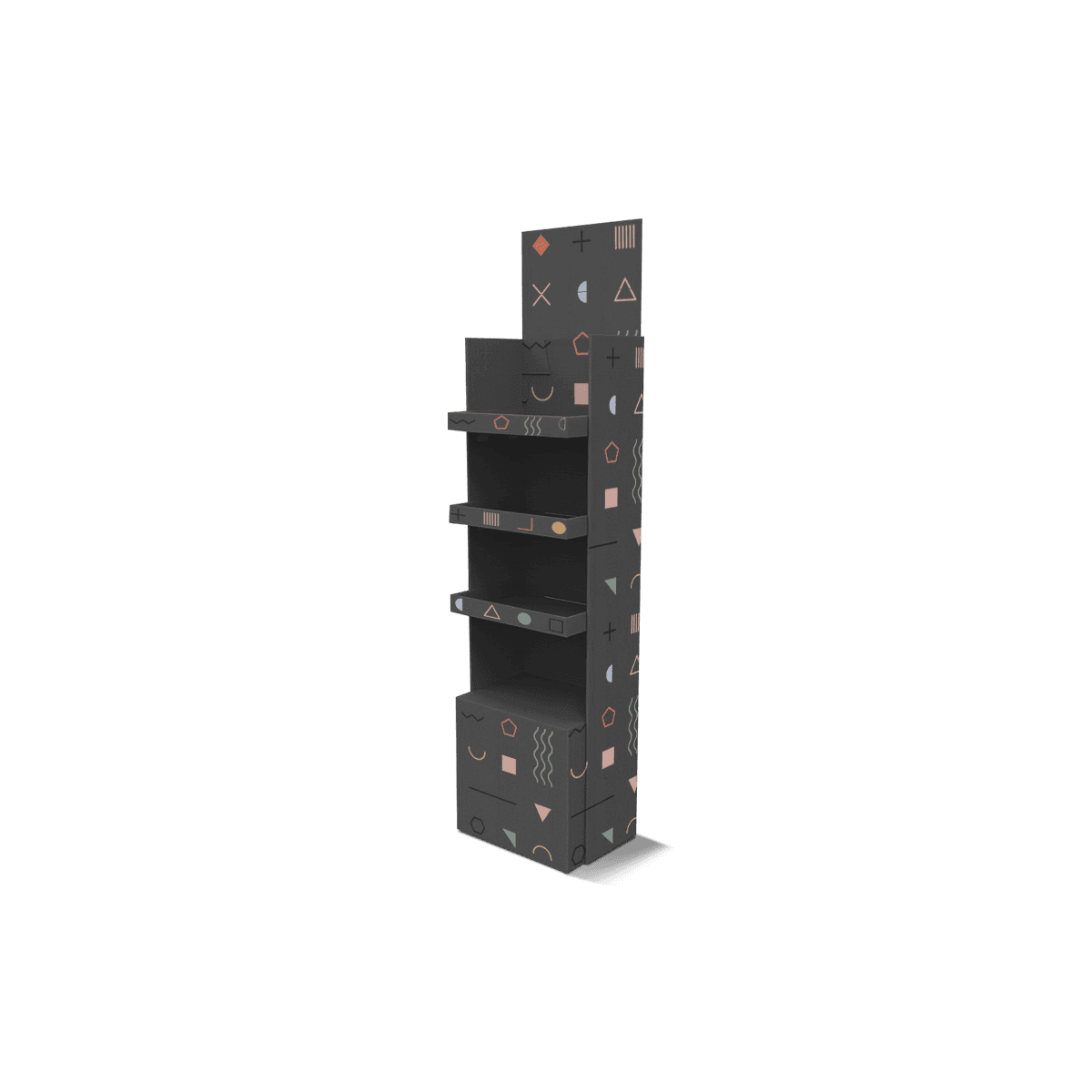
Aisle-End Displays

End cap display boxes occupy the end of an aisle rather than a conventional position along the shelving run.

That placement can create more prominent promotional visibility.

However, it introduces different considerations for product capacity, approach direction and retailer allocation.

An aisle-end display may incorporate several shelf trays, but its overall merchandising purpose extends beyond fitting a standard gondola bay.

Side-Mounted Promotions

Some retail fixtures permit narrow merchandising units to attach to their ends or sides.

These are often called sidekick or power-wing displays.

They depend on compatible mounting hardware and an approved attachment position.

Unlike a conventional gondola tray, the attached unit may transfer its load through a bracket or hanging connection rather than resting directly on the shelf.

The retailer's fixture requirements should determine whether that construction is appropriate.

Independent Floor Displays

A freestanding floor display can be appropriate when a promotion requires more capacity or a separate selling position.

It must support its own merchandise load and remain stable independently of the gondola.

A shelf-fitted display does not need the same structural base because the existing retail fixture supports it.

The appropriate choice depends on the approved merchandising location.

Product Applications by Shelf Behavior

Gondola displays can accommodate many retail products, but the intended merchandise should determine the tray geometry and internal organization.

The type of product influences its required support, visible identification and replenishment method.

Cosmetics and Personal Care

Small skincare cartons, beauty accessories and similar products often need organized front-facing presentation.

A gondola tray can group products by type, shade or size while retaining a consistent printed brand identity.

Tall containers may require additional lateral support.

Where the merchandise contains liquids, the primary packaging must remain appropriately sealed. A display tray does not replace the product's containment system.

Wellness Products

Boxed supplements and other suitable wellness merchandise may benefit from compact, clearly organized shelf positions.

In wellness packaging, individual product labeling and identification remain important.

The display should not conceal essential product names, pack counts or applicable labeling.

Where the assortment includes products with special handling requirements, the merchandising construction and retail placement must accommodate those requirements.

Electronics Accessories

Chargers, cables and compact gadget accessories can use gondola displays to organize different product specifications.

Printed compartment identifiers may help distinguish compatible models or product types.

However, the display's labels should not conflict with the individual product packaging.

For electronics and gadget packaging, compatibility and product identification can matter more than decorative merchandising graphics.

Packaged Grocery Products

Snack cartons, individually packaged treats and lightweight grocery products can use trays that organize several front-facing units.

The product's weight, shape and primary packaging determine the suitable construction.

A shelf display does not automatically require direct food-contact materials when the merchandise is already contained in suitable primary packaging.

If the display material will contact food directly, the actual board, coating and intended contact conditions need separate assessment.

Ordering for Multiple Stores

A gondola display program becomes more complex when several retail locations use different shelf arrangements.

A structure approved for one fixture may not fit every store.

Before a production quantity is established, the retailer's requirements should identify whether the same display dimensions can be used throughout the program.

One Footprint or Several

A common tray footprint can simplify production and replenishment when stores have compatible shelving.

However, forcing one size into different allocated spaces can create problems.

An oversized tray may not fit the smaller position. A significantly undersized tray may leave an unattractive gap or fail to maintain the intended facings.

Where shelf allocations differ, separate tray dimensions may be necessary.

The commercial decision should consider the number of stores using each configuration rather than assuming one size will be suitable everywhere.

Production Quantity

Custom Packly's USA minimum order quantity starts from 100 boxes.

Final pricing depends on the dimensions, material, printing, structural complexity and quantity of each required display.

A program using one common structure with several artwork versions may have different production requirements from one involving multiple structural sizes.

Large retail programs may also benefit from warehousing and scheduled deliveries when displays need to be distributed in stages.

For pricing preparation, the requirements for an accurate custom packaging quote help establish the necessary product, material, quantity and delivery inputs.

Production and Shipping

Custom Packly's standard USA turnaround is 4–6 days after final artwork and specifications are approved.

Complex display constructions, specialty materials or advanced finishes may require additional time.

US production and free USA shipping support domestic retail programs, but the standard production turnaround does not guarantee arrival within six days.

For larger replenishment programs, the intended delivery schedule should be established alongside the production quantity.

Once the fixture dimensions, product count and required display construction are established, request a custom packaging quote for the proposed retail program.

The Store Installation Brief

A gondola display should arrive with enough structural and placement clarity for staff to install it in the approved position.

The final handoff is not simply a box specification. It is a merchandising arrangement that must work with the retailer's existing fixture.

Fixture Identification

The installation brief should identify the applicable fixture and assigned shelf position.

A photograph or drawing showing the actual shelving can help establish the expected installation.

Where the display depends on an existing shelf-edge rail, bracket or attachment feature, that relationship should be confirmed before the structure is finalized.

Placement and Product Count

The approved arrangement should establish which products occupy each position and how many units are intended for the initial display.

If several product variants use different compartments, the arrangement must remain understandable to store staff.

The same applies when multiple shelf levels form one coordinated merchandising area.

An installation drawing can show the intended layout without requiring additional printed instructions on every display surface.

Assembly at the Store

The supply method should reflect who assembles and stocks the display.

An empty flat-packed tray may be appropriate when the store already holds the merchandise.

A preassembled display may reduce setup work but require more transport space.

A preloaded arrangement introduces further distribution requirements because the display and merchandise travel together.

Any physical validation should address the specific uncertainty. For example, an exact sample may be appropriate when a tray must fit an unfamiliar fixture or when the loaded structure has an unusual support arrangement.

Fully custom physical samples can be arranged as paid samples. Free examples of previous work can assist with material and printing decisions.

Custom Packly's free design support and 24/7 assistance can help resolve the construction and installation requirements.

The finished gondola display should fit the assigned shelf, preserve the intended product facings and allow staff to maintain the merchandising arrangement without changing the retailer's existing fixture.

FAQs

They perform best in aisle categories with repeated facings, steady replenishment, and multiple SKUs that need to stay orderly, such as snacks, supplements, beauty items, and small electronics accessories.

Both can work, but they are especially useful for ongoing shelf programs because gondola-based merchandising tools are built to support product visibility, organization, and quick sign changes inside existing fixtures.

Gondola Display Boxes usually suit a wider mix better because they can organize multiple rows or lanes on shelf, while Peg Hook Display Boxes make more sense for hanging items in narrower vertical presentations.

They support cleaner facings through lane separation, product guidance, and shelf-management add-ons that keep items in line and visible. Retail shelf systems for gondolas are specifically marketed around organized rows, easier access, and lower front-facing effort.

Usually not much. Many gondola merchandising components are designed to work with standard gondola shelves or uprights, which makes them practical for fixture-based retail updates instead of full display replacements.

Process

How it works

Your Packaging Journey, From Idea to Production and Delivery

01

Tell Us Your Specs

Custom packaging boxes

Tell Us Your Specs

Provide size, quantity, printing, and finishes.

02

Get a Fast Quote

Custom packaging boxes

Get a Fast Quote

Instant transparent pricing, no hidden fees.

03

Design and Approval

Custom packaging boxes

Design and Approval

Artwork checks, revisions, and final sign-off.

04

Produce

Custom packaging boxes

Produce

Expert manufacturing to meet deadlines.

05

Ship to Your Door

Custom packaging boxes

Ship to Your Door

Hassle-free, flexible delivery options.

Get Your Quote for Custom Gondola Display Boxes

Share your product details, size, quantity and artwork needs. We’ll help choose the right packaging style and send a clear quote.