Skip to content
Details

Custom Counter Ready Display Boxes

Custom printed shipping cases that convert into retail display trays, keeping products organized from distribution to the store shelf or checkout counter.

The Case Becomes the Tray

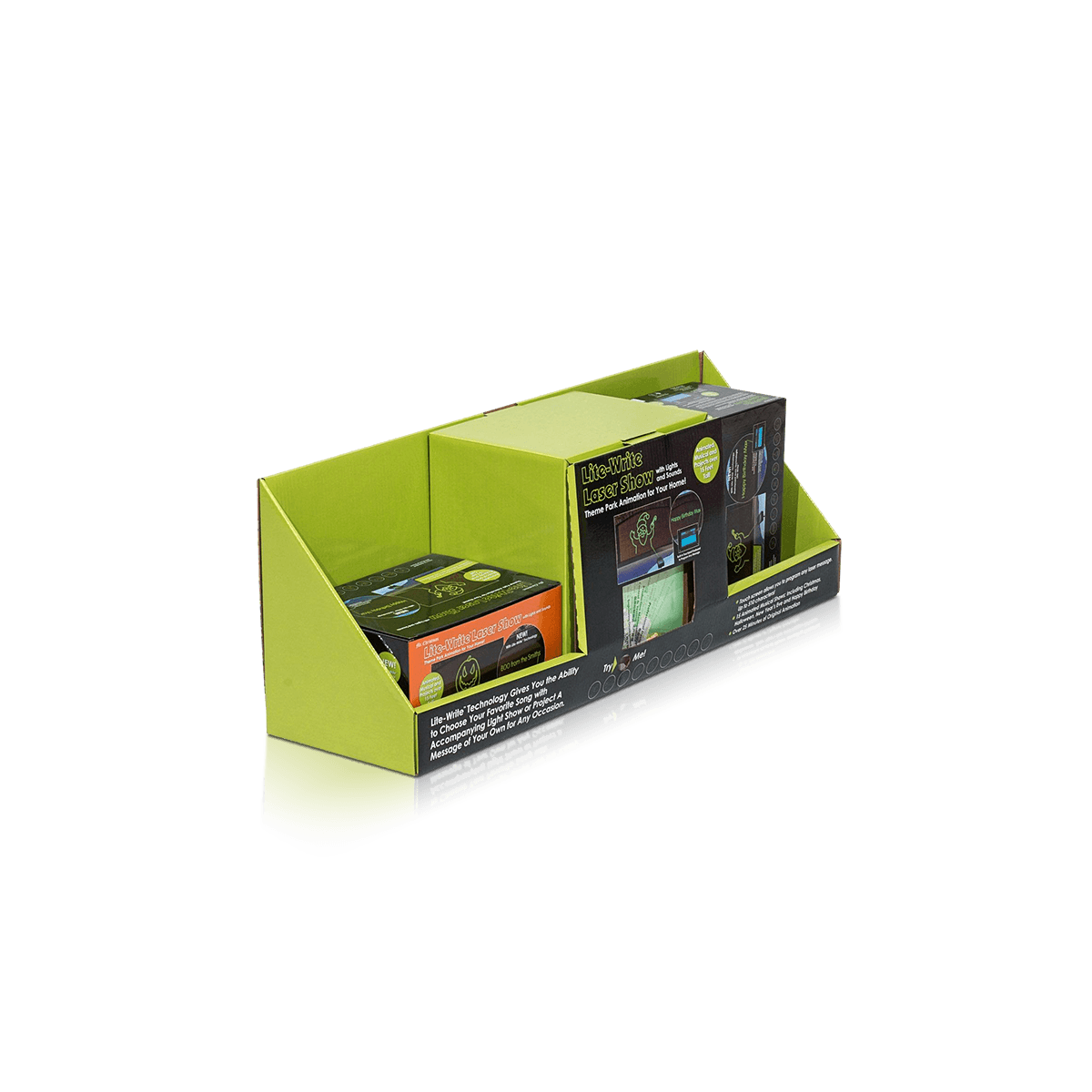
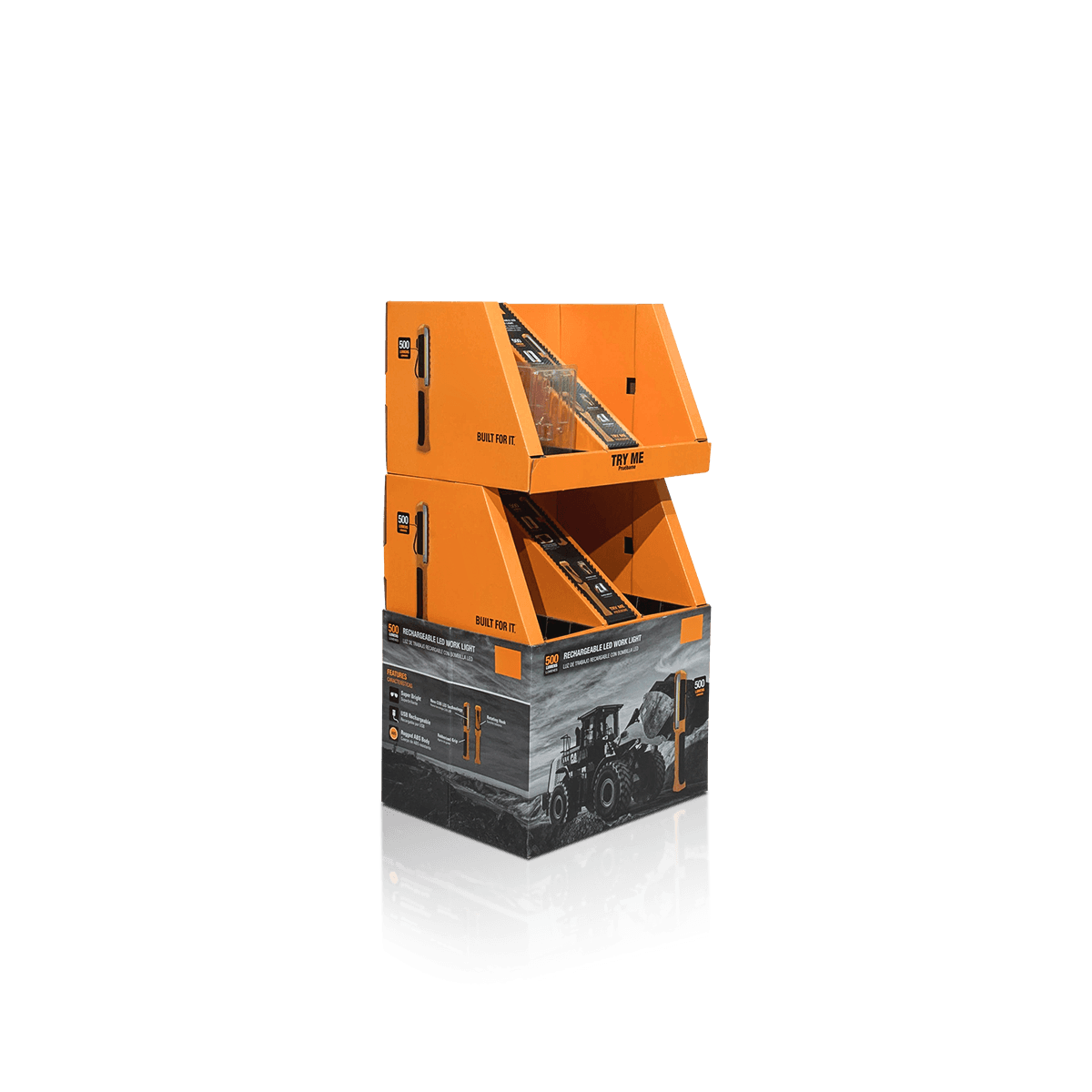
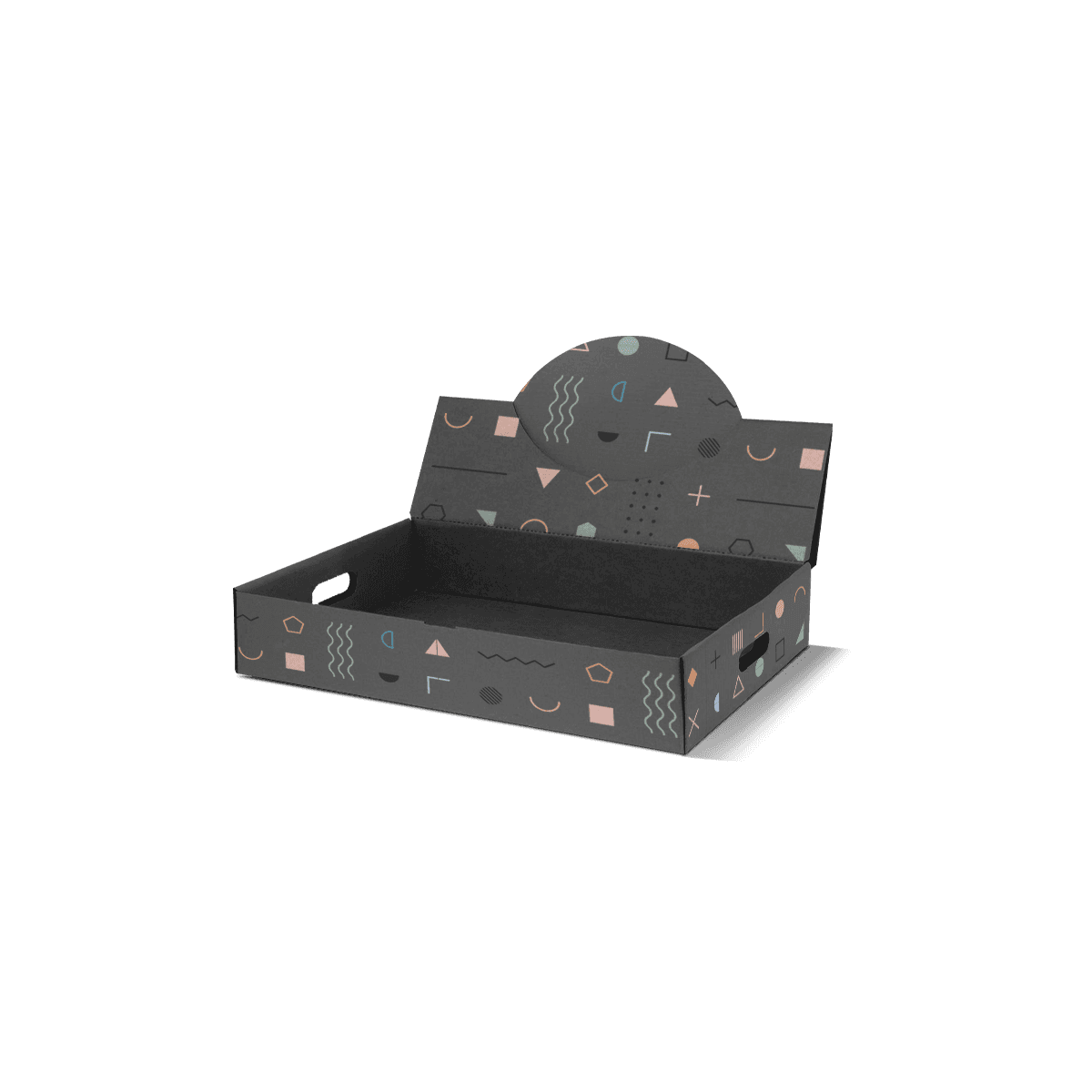
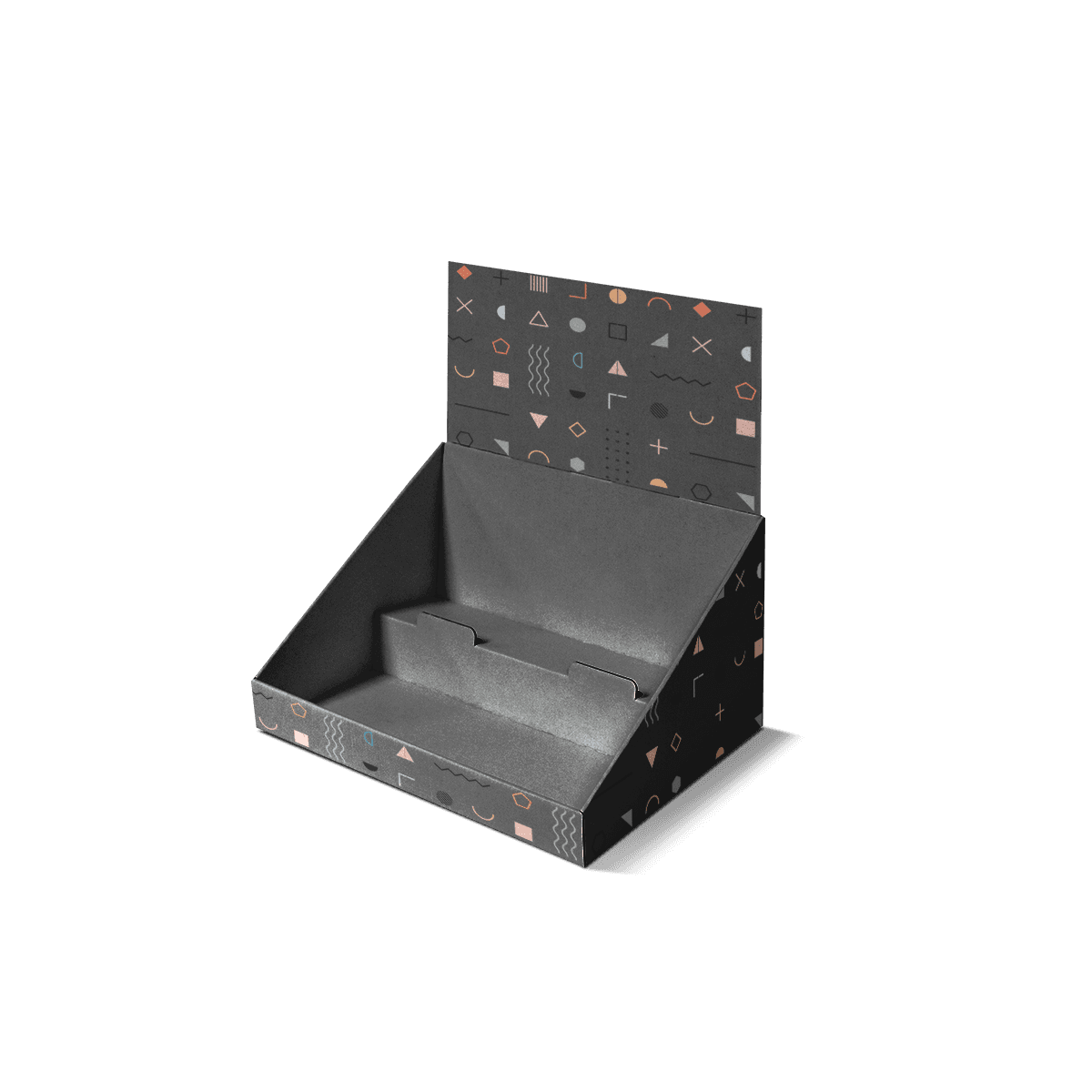
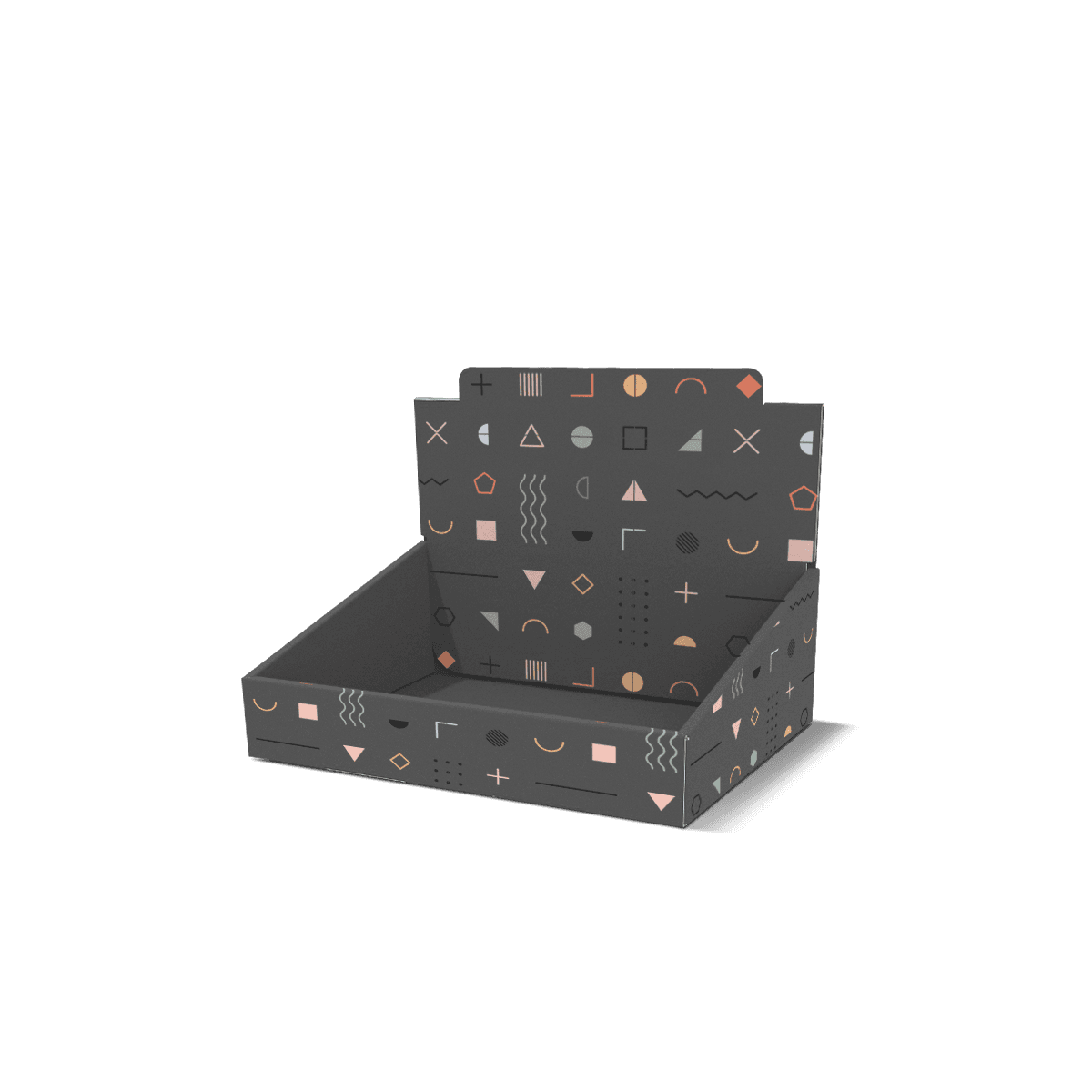
Custom counter ready display boxes are retail-ready shipping cases that convert into product display trays when opened. A removable top, tear-away front or other opening feature allows store employees to expose the merchandise and place the loaded tray directly on a shelf or counter.

The products stay inside the same structure throughout the transition. There is no need to unpack every unit and arrange it individually in a separate display.

These boxes are particularly practical for packaged snacks, supplements, cosmetics, electronics accessories and other compact retail products sold in repeated case quantities.

Their construction must perform two different jobs.

During distribution, the closed case needs sufficient strength to protect and contain the merchandise. Once opened, the remaining tray must retain its shape, keep products upright and allow customers to remove individual units.

A conventional shipping carton does not automatically perform both functions. Its closure panels, opening method and remaining wall heights may be unsuitable for retail presentation.

Counter-ready packaging is therefore specified around the complete transition from a closed case to a stocked display.

Custom Packly produces custom printed counter ready display boxes with product-specific dimensions, corrugated or suitable paperboard construction, removable panels and retail-facing artwork.

The result is a single packaging structure that supports transportation and becomes the merchandise's selling tray.
Opening Changes the Structure

The opening mechanism determines which parts of the shipping case remain after the store prepares it for sale.

This is the most important structural decision because removing material changes the strength and appearance of the finished display.

A successful opening should expose the products without requiring employees to cut into the merchandise or dismantle the supporting tray.

Perforated Tear-Away Panels

A perforated panel uses a controlled cutting pattern to create a removable portion of the case.

The opening can extend across the top and front or follow another profile suited to the finished display.

The perforation must be strong enough to remain intact during packing, stacking and transportation. It must also separate predictably when employees open the case.

These requirements work against each other.

An overly aggressive perforation can weaken the closed shipping case. A perforation that is too difficult to separate may require excessive force, deform the remaining tray or encourage employees to use a knife.

Its location matters as much as its cutting pattern.

A tear line that crosses a heavily loaded corner or structural support can create a weakness before the case reaches the retailer.

Where the intended opening introduces a significant structural risk, reinforcement or a different conversion method may be appropriate.

Removable Top Covers

Some counter-ready designs use a separate removable cover or a top panel that can be detached without damaging the lower tray.

This arrangement can protect the merchandise while retaining a relatively simple display base.

A separate cover may also be suitable when the display tray needs a clean upper edge or a low front wall.

The closure method must suit the product weight and expected handling. It should not depend on adhesive or tape placement that makes opening difficult or damages the printed selling surfaces.

Fold-Down Fronts

A fold-down front can expose the merchandise without requiring the entire front panel to be discarded.

Depending on the design, the panel may fold outward, downward or into a position established by the structural dieline.

This can be practical when the front panel has a secondary merchandising purpose or when retaining part of the material helps form the finished tray.

However, the folded panel must not project into a walkway or prevent the tray from sitting correctly on its assigned shelf.

It should also remain secure rather than springing back into the product access area.

Opening Without a Knife

Tool-free opening is a common retail-ready requirement because it reduces the need to cut shipping cases near merchandise.

The actual construction still needs to support the opening method.

A pull tab, perforated strip or removable cover should be accessible when the case is fully packed.

For a project where opening behavior is a significant uncertainty, assessing the exact loaded structure is more useful than examining an empty cardboard prototype.

Custom Packly can arrange paid custom physical samples when an exact opening mechanism needs evaluation before production.

Case Counts Become Shelf Units

The retail case quantity should reflect how the store intends to replenish its shelves.

For counter-ready packaging, the shipping case is also the replenishment unit. Its product count directly affects how much merchandise is placed into the selling position during each refill.

One Case, One Selling Position

A simple arrangement uses one case to replenish one designated shelf or counter position.

For example, consider a hypothetical product packed twelve units per case.

If the retailer's assigned shelf position accommodates twelve units, employees can open one case and place the entire loaded tray into position.

If the assigned position accommodates only eight units, four products must be removed or stored elsewhere.

The display may still function, but the case-to-shelf transition no longer eliminates the additional handling.

This is why the retailer's permitted case quantity and shelf allocation should be established before the final dimensions are approved.

Facings and Product Depth

A facing is the product position visible at the front of the display.

Consider an illustrative tray containing twelve identical cartons arranged in three lanes, with four units in each lane.

The tray has three initial facings and a total capacity of twelve units.

Changing the arrangement to four lanes of three units increases the number of visible facings but also changes the required tray width and depth.

Neither arrangement is automatically preferable.

The decision depends on the shelf position, product dimensions and retailer's merchandising requirements.

Product clearance must also account for the finished retail pack. A carton with a projecting hang tab or a bottle with a wide cap may need more room than its main body dimensions suggest.

Case Quantities Across Variants

A brand may sell several flavors, shades or product sizes using a common display construction.

Sharing one tray footprint can simplify retail placement, but only when the products have compatible dimensions and suitable case quantities.

A mixed case introduces another decision: should the variants occupy separate lanes, or should each case contain only one SKU?

Separate lanes can help customers identify products and make the arrangement easier to replenish.

Single-SKU cases may be more practical when the retailer manages each variant independently.

The correct approach depends on the store's ordering and replenishment system.

For businesses coordinating cartons, displays and other selling packs, custom retail packaging can be planned around the intended merchandise arrangement.

Transit Protection Before Conversion

The case must protect its contents before any removable panels are opened.

Its closed construction needs to account for the product weight, distribution method, expected stacking conditions and the strength of its closures.

The removable opening cannot be considered separately from those requirements.

Corrugated Board Selection

Corrugated board is commonly used for counter-ready shipping cases because its fluted construction can support compression and handling loads.

The appropriate board grade and flute profile depend on the product weight, case dimensions and distribution conditions.

A lightweight case of individually packaged snack bars has different requirements from a case containing dense bottles or boxed electrical accessories.

Fine flute profiles may suit smaller structures that require relatively smooth printed surfaces.

Other corrugated constructions may be appropriate when the distribution load or case dimensions require greater structural strength.

The flute direction, folded corners and remaining support panels also influence performance.

Increasing the board thickness cannot compensate for every structural weakness created by a poorly positioned opening.

Closure Integrity

A shipping case needs a secure closure that remains functional throughout distribution.

Depending on its construction and packing process, the case may use glued, tucked, locked or appropriately taped closure components.

The closure should be compatible with the intended conversion method.

For instance, placing sealing tape across a removable panel can make the opening difficult to use. Applying adhesive to a panel intended to separate may create the same problem.

The closed case must remain secure without introducing unnecessary work at the retailer.

Protection for Fragile Products

Counter-ready construction does not eliminate the protective requirements of the merchandise.

Products that need cushioning, temperature control or specialized containment may require additional packaging.

Fragile glass containers, for example, may need appropriate internal restraint and protective separation.

The principles behind reducing shipping damage through structure and fit apply to the closed case before it becomes a retail tray.

If the counter-ready unit cannot safely carry the complete distribution load, separate protective shipping boxes may be needed.

The retail-ready case should not be assumed to replace every protective layer.

The Tray That Remains

Once the removable panels are taken away, the remaining structure needs to function as a stable product display.

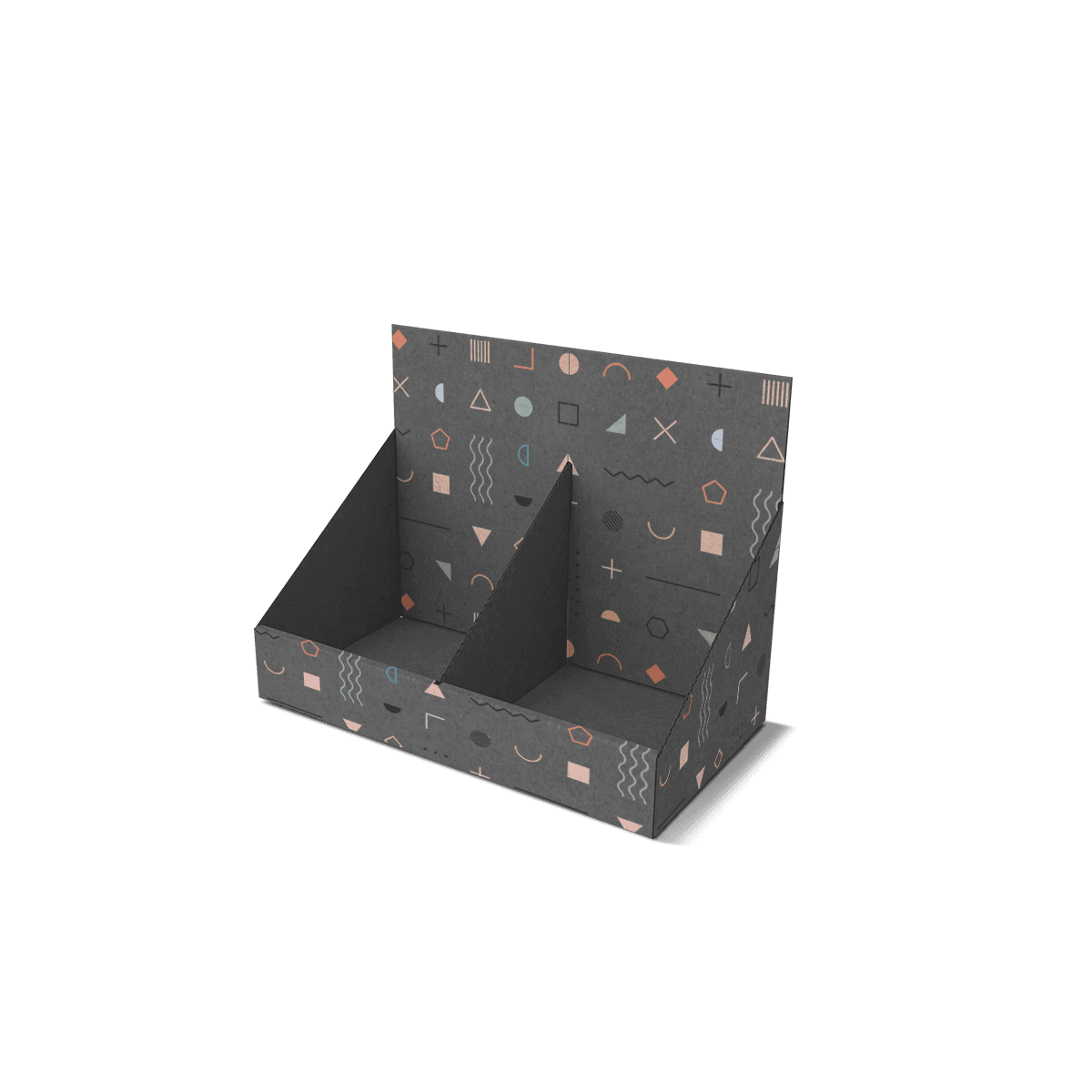
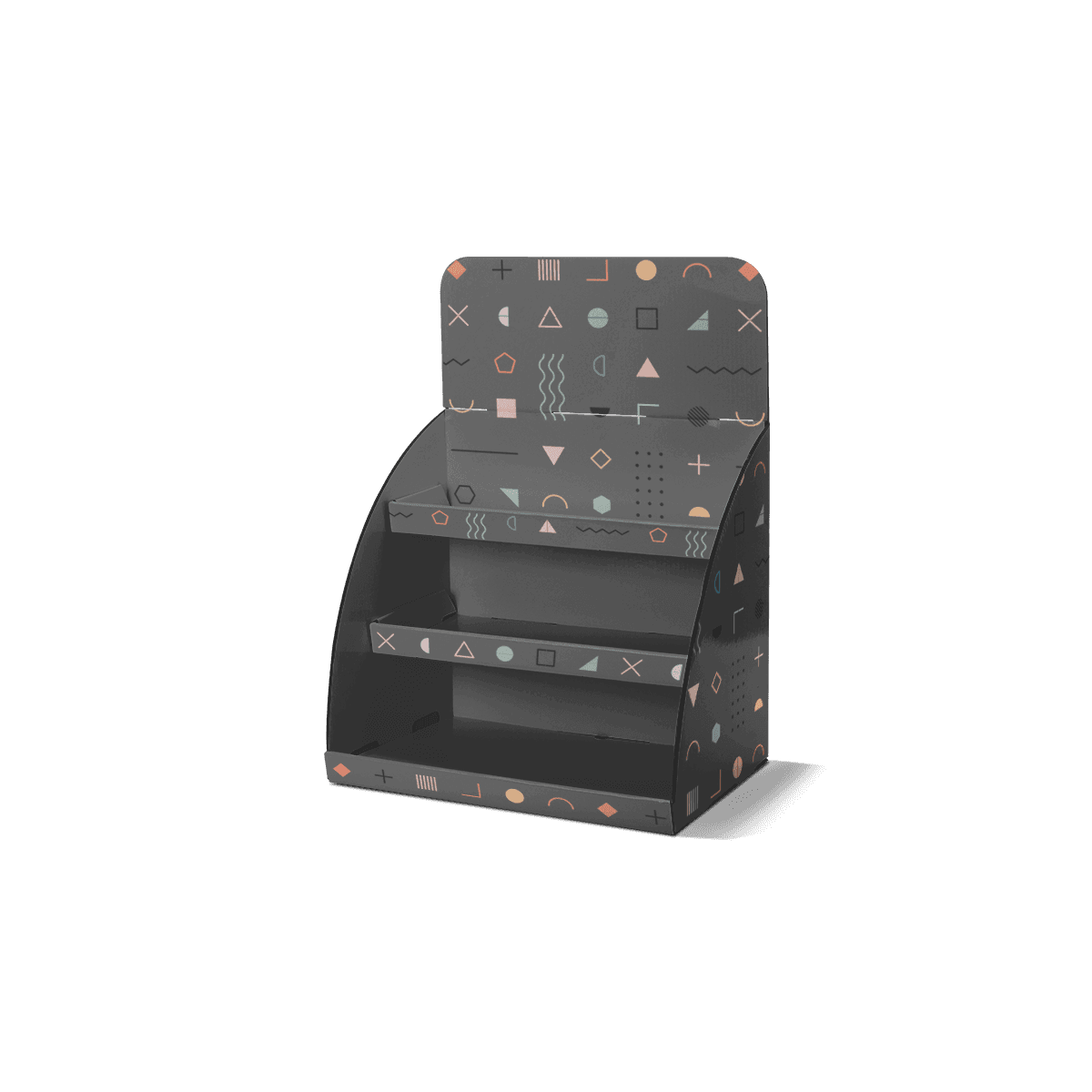
The finished tray usually consists of a base, side walls, a rear wall and a front lip. Dividers or other internal components may be incorporated when the merchandise requires them.

These components must retain the products while leaving enough access for normal shopping.

Front-Lip Height

The front lip prevents products from sliding out of the tray, but its height affects how much of the primary packaging remains visible.

A tall front wall may conceal product names, flavors or other distinguishing features.

An excessively low lip may provide insufficient restraint for the merchandise.

The appropriate height depends on the product's shape, center of gravity and intended removal movement.

For example, small rectangular cartons can remain relatively stable with a modest front lip when the tray has suitable side support.

Tall, narrow products may require additional restraint or a different arrangement.

Remaining Wall Strength

The closed shipping case may receive stiffness from panels that will be removed during conversion.

The finished tray cannot depend on those panels once they have been discarded.

Its corners, side walls and rear wall must retain sufficient rigidity to support normal handling and product removal.

This is particularly important when the removable top is connected to the case's front and side walls.

The perforation should leave an appropriate structural boundary rather than cutting through the components responsible for supporting the open tray.

Dividers and Product Lanes

Internal dividers can separate different SKUs or help products remain aligned.

They should be considered where merchandise varies in width, tends to lean or requires clearly defined selling positions.

A divider that works during shipping must also remain practical after conversion.

If employees need to remove it before displaying the merchandise, it may create unnecessary work.

For small packets or irregularly shaped items that are intended to be accessed without individual lanes, bin display boxes may suit the retail arrangement better.

Packing-Line Compatibility

Counter-ready cases can simplify store replenishment, but their construction must also suit the process used to fill and close them.

A structure that requires extensive hand assembly may be unsuitable for a high-volume product line unless that labor is accounted for.

The packing process should be established before the die-cut design is finalized.

Flat Supply and Erection

Counter-ready boxes may be supplied flat for erection and filling.

The precise assembly method depends on the construction.

Some designs use glued side seams and conventional folding operations. Others require particular locking components or a separate cover.

For automated or semi-automated packing, the case must be compatible with the actual equipment and its operating sequence.

A specialized design should not be assumed to work on an existing case erector, filling line or sealing machine without confirmation.

Product Loading Direction

The merchandise's orientation during packing should correspond to its final retail position.

A case packed with products lying horizontally may require additional handling if the finished tray is intended to display them upright.

For some products, turning the entire loaded case into its selling orientation may be practical.

For others, that movement could disturb the contents or place inappropriate pressure on the merchandise.

The product-loading arrangement and case-conversion method should therefore be developed together.

The Final Closing Operation

The filled case needs a closure that is secure enough for distribution and straightforward to open at the destination.

An additional folding operation may improve transit strength, but it should not complicate the retailer's opening sequence unnecessarily.

Likewise, a convenient retail tear strip should not obstruct the equipment used to close the case.

For businesses evaluating different carton constructions, custom folding cartons may suit lightweight retail packs that do not need the same distribution and conversion duties.

Printing Across Two States

A counter-ready case has different visible surfaces before and after conversion.

During transportation, the complete outer case may carry shipping identification and handling marks. On the store shelf, only the remaining tray and its printed selling surfaces are visible.

The artwork should account for both states.

The Retail-Facing Front

The front lip is often the most valuable branding surface on the finished tray.

It may carry the brand logo, flavor identification or a short promotional message.

The artwork should remain legible after the removable panel has been taken away.

If the tear line passes directly through a printed design, the resulting edge may disrupt the intended appearance.

The print layout should therefore follow the actual finished tray profile rather than the closed case alone.

Side Panels and Orientation

Printed side panels can help identify the merchandise when the tray is positioned near neighboring products.

However, their visibility depends on the shelf position.

For a tray placed between other merchandise, the front may be the only consistently visible printed surface.

A tray used independently on a checkout counter may expose its front and sides.

This distinction can influence print coverage and cost.

Custom Packly supports CMYK printing, Pantone color matching and premium offset printing where applicable.

A white print surface can support bright product graphics, while kraft-faced construction may suit a more restrained design.

The selection should follow the artwork and intended retail appearance rather than assuming that every surface needs full-color printing.

Shipping Identification

Outer case barcodes, SKU codes, lot identification and handling marks should remain appropriate for the distribution process.

Their position must account for the retailer's receiving and identification requirements.

For example, a shipping label should not cover the opening tab or create an adhesive bridge that prevents the removable panel from separating.

The case's retail-facing surfaces should also remain suitable for merchandising after opening.

These requirements are established in the production artwork and structural packaging dieline.

Custom Packly's free design and dieline support can help align the artwork with the opening pattern and finished tray.

A free 3D mockup can assist with reviewing the closed and converted appearances before final approval.

Retail Use by Product Type

Counter-ready displays are suited to products that can travel in an organized case and remain accessible when that case is opened.

The merchandise must be packaged appropriately for its own handling and product requirements.

Packaged Snacks and Confectionery

Individually wrapped snack bars, sealed confectionery packs and small food cartons can be arranged in counter-ready cases.

The display keeps multiple selling units together while reducing the need to transfer them individually onto the store shelf.

For food, bakery and restaurant packaging, the primary retail pack must handle containment and any applicable food-contact requirements.

The outer counter-ready case performs the separate shipping and merchandising functions.

An open-front tray may work well for products that are sufficiently stable in their individual packaging.

Supplements and Personal Care

Compact supplement cartons, sealed trial products and small personal care items can use organized counter-ready trays.

A single-SKU case may allow a retailer to replenish one product position without sorting merchandise.

Mixed assortments can also work, provided their compartment dimensions and product identification are appropriate.

For tall or unstable containers, additional restraint may be needed.

Electronics Accessories

Packaged charging cables, adapters, batteries and other compact accessories can be grouped by product type.

A front-facing arrangement is important when customers need to identify technical differences.

For electronics and gadgets packaging, the finished retail pack should communicate compatibility and any required product identification.

The counter-ready tray should leave that information visible rather than covering it with an unnecessarily high front wall.

Small Hardware and Consumables

Individually packed fasteners, repair accessories and other compact consumables can use counter-ready cases when the products have consistent retail packaging.

Case quantities and dividers may help maintain separate merchandise positions.

However, heavy metal parts or products with sharp edges may require stronger containment and additional protective measures.

An open retail tray should not replace packaging needed for the safe handling of individual products.

Cost Follows the Conversion Method

The manufacturing cost of a counter-ready display depends on the structural complexity of the complete case and its intended retail configuration.

A simple removable-top construction may require different tooling and material use from a case with shaped perforations, reinforced walls and several internal dividers.

The amount of printing also affects production requirements.

A case with a printed front lip and limited side graphics may have a different cost structure from one requiring full-color printing across all outer panels.

The economic decision should account for the work eliminated at the retail location, not just the unit price of the case.

Case Construction and Quantity

Different case counts can change the outside dimensions, board consumption and number of shipping units required.

Increasing the product count per case may reduce the number of cases needed for a given merchandise quantity, but it can also increase the case weight and create a larger tray than the retailer can accommodate.

Similarly, adding compartments may improve merchandise organization while increasing the number of components and assembly operations.

The appropriate construction balances the manufacturer’s packing process with the retailer’s replenishment needs.

For brands coordinating multiple retail products, the case-count decision may also affect the number of display versions required.

Custom Packly Production

Custom Packly supports USA production, bulk orders and repeat retail packaging programs.

The USA MOQ starts from 100 boxes. The minimum for an individual counter-ready construction should be confirmed against its material, size, printing and production requirements.

Standard turnaround is 4–6 days after final specifications and artwork approval. Complex structures, specialty materials and advanced finishes may require additional time.

Free USA shipping is included.

For a counter-ready project, the most important commercial inputs are the finished retail pack dimensions, product count per case, loaded weight, intended tray dimensions, opening method and order quantity.

Once the case arrangement is established, request a custom counter ready display quote based on the complete shipping and merchandising requirements.

The Replenishment Unit Is Final

The finished counter-ready case should be approved as the exact unit the retailer will receive, open and place into its assigned selling position.

That requires agreement between the product packing arrangement, retailer's shelf requirements and the approved conversion method.

A visually attractive tray alone does not establish that the complete case is suitable.

Before committing to a multi-store program, the final specification should identify the case count, product orientation, closed-case dimensions, converted tray dimensions and opening construction.

The retailer's receiving and replenishment requirements should also be confirmed.

Where the design involves a complex tear-away opening or significant distribution loads, physical validation should address the specific uncertainty.

A suitable assessment uses the intended merchandise and checks whether the closed case remains secure, the opening operates as intended and the finished tray retains its required structural support.

The principles behind custom packaging testing help determine which checks are appropriate for the actual product and distribution conditions.

For repeat orders, the approved conversion pattern and packing arrangement should remain consistent unless the merchandise or retailer's requirements change.

Custom Packly can support larger programs with warehousing and scheduled deliveries where appropriate, allowing production quantities and replenishment shipments to be coordinated.

The finished specification should leave the retailer with a straightforward operation: identify the case, open it using the intended method and place the loaded tray directly into its approved selling position.

FAQs

Because it makes stocking faster and simpler. Retail-ready packs are widely used to reduce handling, improve safety during opening, and place products directly on shelf with minimal prep.

They suit small to medium units sold in volume, especially snack cartons, supplement packs, batteries, chargers, pet treats, blister-pack outers, and compact household items.

Counter Ready Display Boxes are more operations-led: they arrive as a case pack and convert quickly for shelf use. Counter-Top Display Boxes are usually more promotion-led and are placed in dedicated sales spots rather than serving as a direct shelf-replenishment format.

No. They can include CMYK graphics, logo printing, brand color matching, and inside or outside print while still keeping the opening pattern practical.

It depends on the exact board, coatings, adhesives and local recycling facilities. Confirm recyclability for the finished case rather than assuming every paper-based retail display is accepted.

Process

How it works

Your Packaging Journey, From Idea to Production and Delivery

01

Tell Us Your Specs

Custom packaging boxes

Tell Us Your Specs

Provide size, quantity, printing, and finishes.

02

Get a Fast Quote

Custom packaging boxes

Get a Fast Quote

Instant transparent pricing, no hidden fees.

03

Design and Approval

Custom packaging boxes

Design and Approval

Artwork checks, revisions, and final sign-off.

04

Produce

Custom packaging boxes

Produce

Expert manufacturing to meet deadlines.

05

Ship to Your Door

Custom packaging boxes

Ship to Your Door

Hassle-free, flexible delivery options.

Get Your Quote for Custom Counter Ready Display Boxes

Share your product details, size, quantity and artwork needs. We’ll help choose the right packaging style and send a clear quote.