Skip to content
Details

Custom Bin Display Boxes for Grab-and-Go Retail

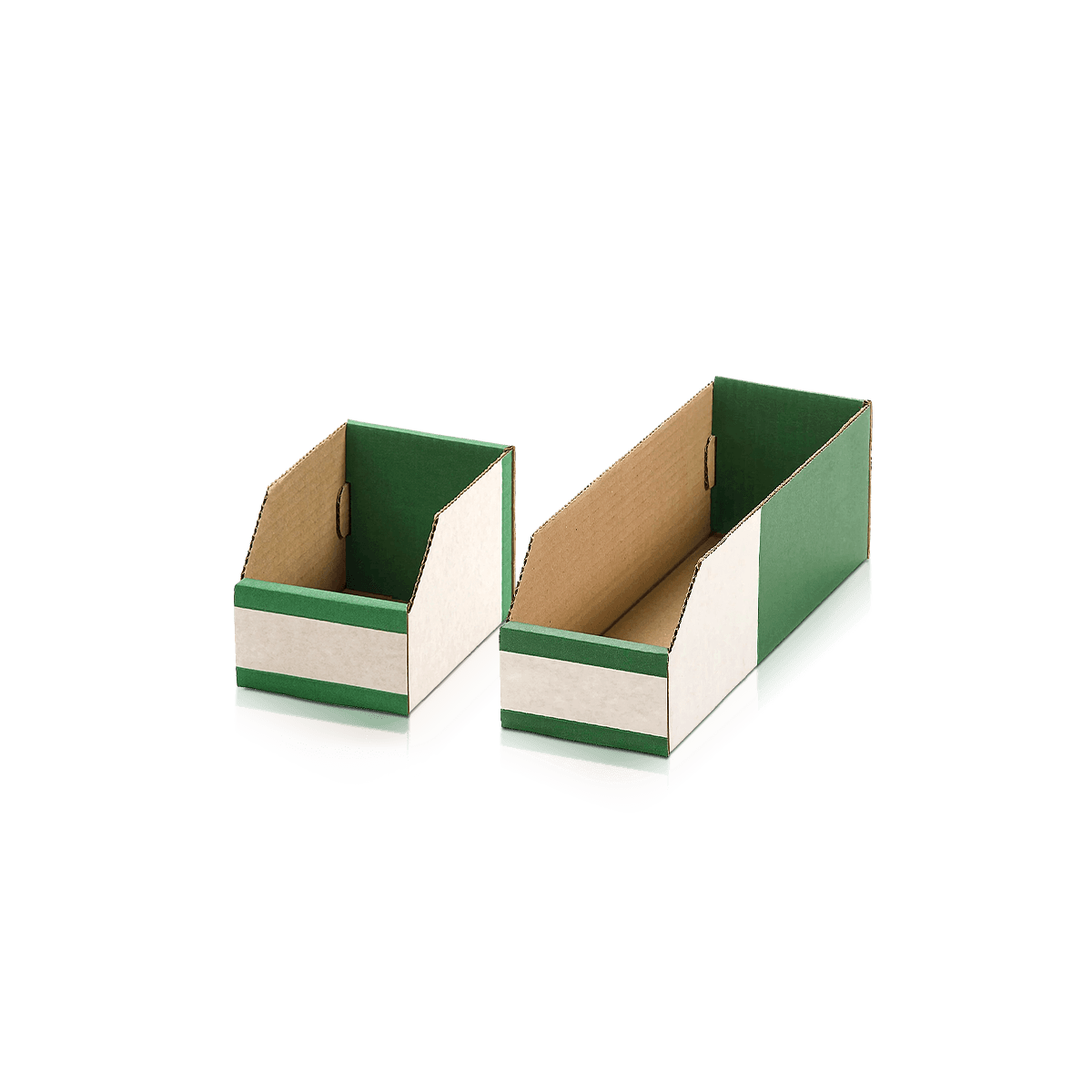
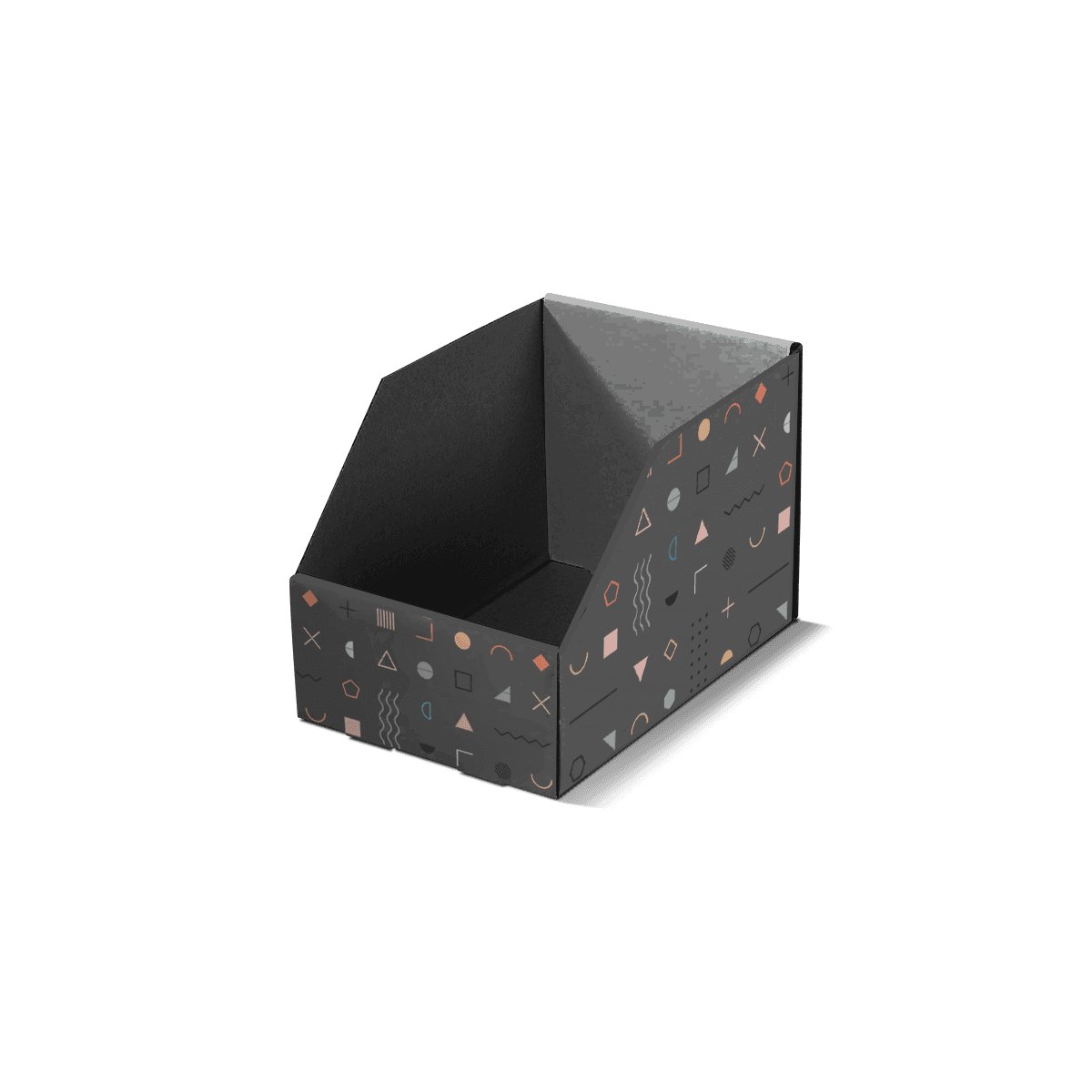
Open-top merchandising bins that hold packaged promotion stock at a reachable fill level, withstand repeated handling and give stores a clear way to refill.

A Bin Handles Constant Rummaging

The first shopper takes an item from the top. The next reaches into the middle and pulls two neighboring packs sideways. By the end of the day, the merchandise has shifted, the load presses against a different wall and the printed bin still has to look presentable. That constant rummaging defines an open-top retail bin more accurately than a photograph of a neatly filled display.

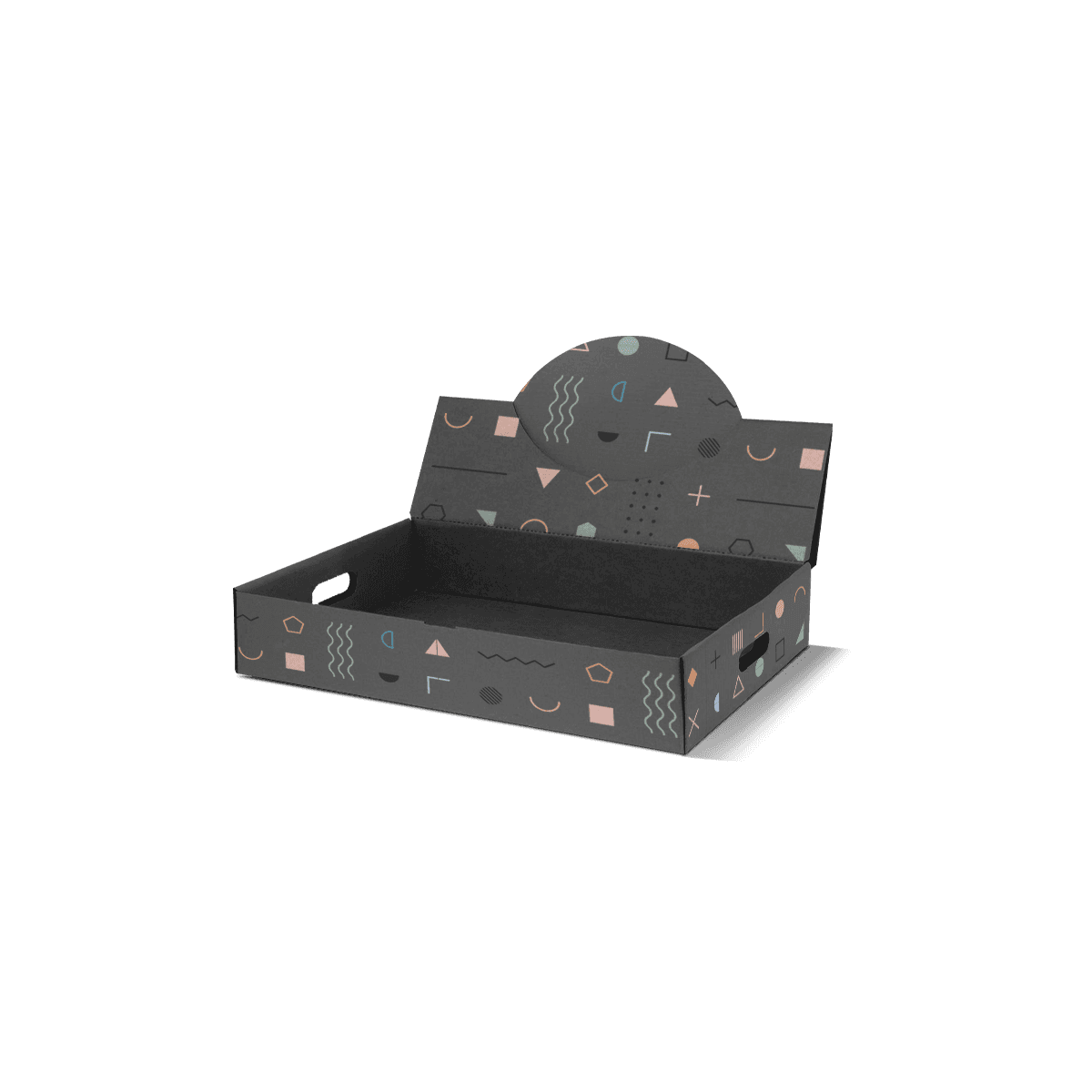
Custom Bin Display Boxes are printed, open-access retail containers that hold multiple sellable units for bulk or promotional shopping. They can stand on the store floor, sit on a promotional table or occupy a defined retail fixture. The product is normally already in its own sealed or labeled consumer package; the bin organizes the selling stock rather than replacing each item's primary pack.

A simple display bin works especially well for small packaged toys, wrapped accessories, lightweight household products, seasonal merchandise and sealed snack packs. The deciding behavior is free browsing from a shared compartment, not the precise front-facing row expected of a conventional display tray.

The design therefore has two jobs from the first day: contain a changing pile and leave a reachable opening. If a promotion needs every carton aligned by size, a stepped shelf display or divided counter tray is a different merchandising decision.
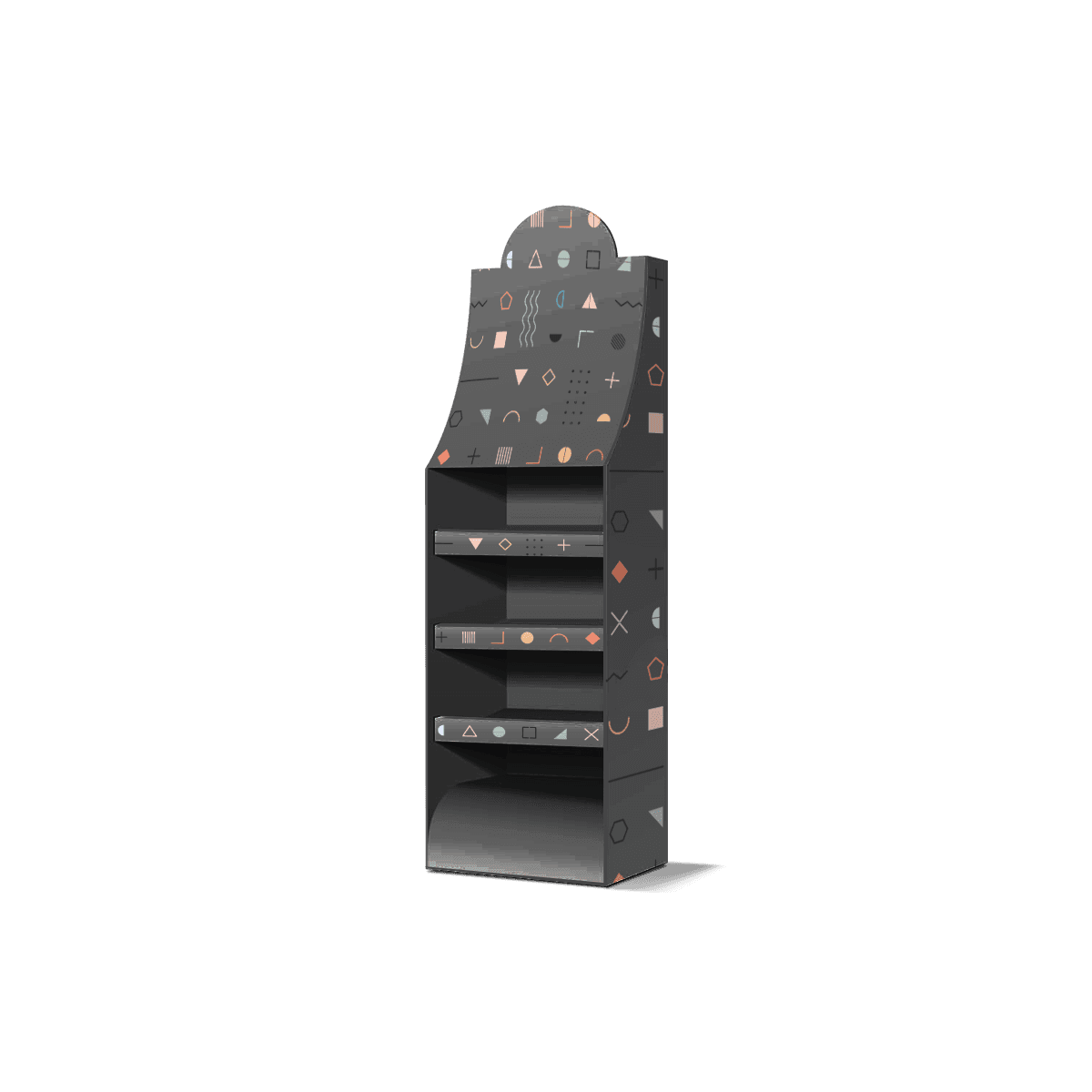
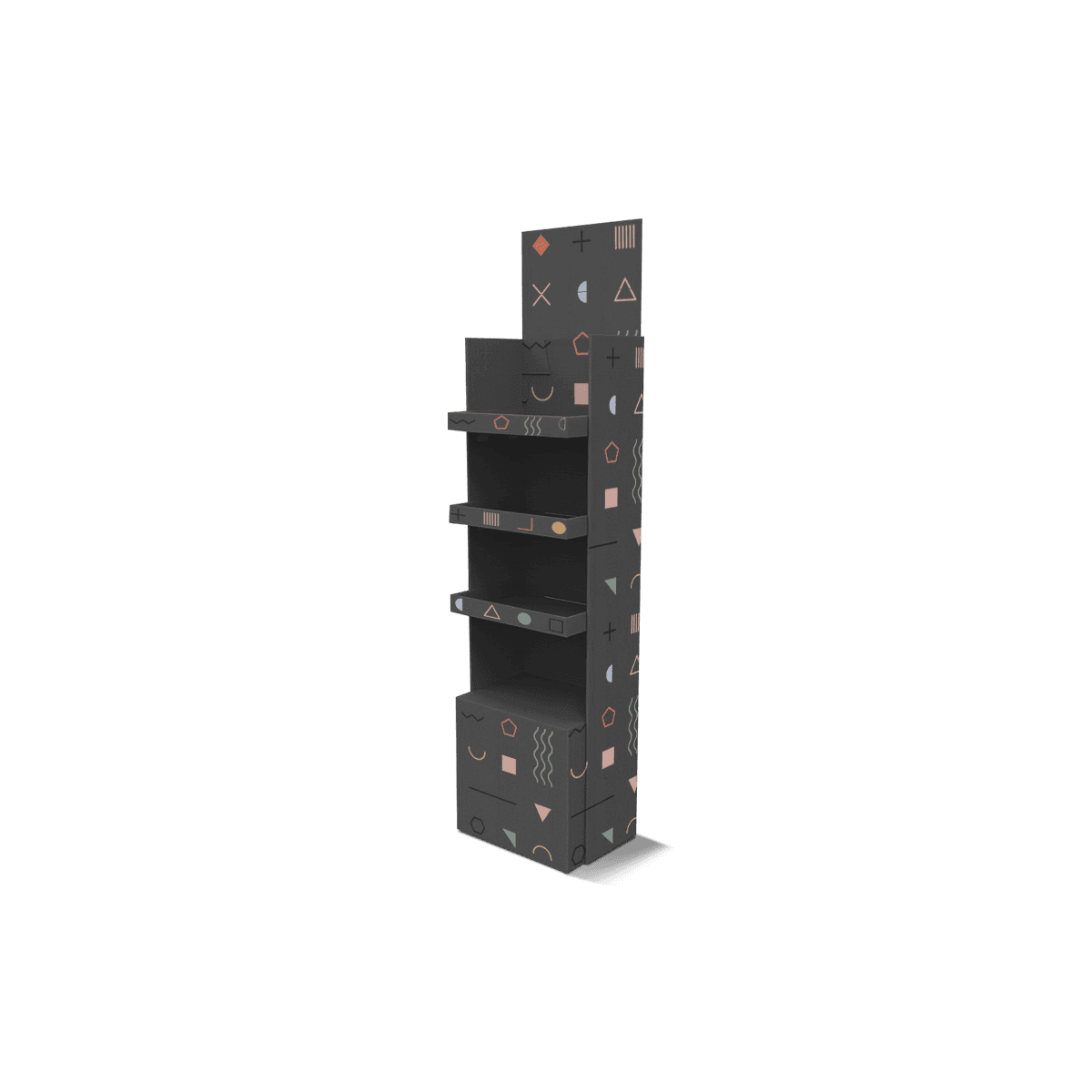
Set the Reachable Fill Line

Nominal bin capacity is not the same as practical selling capacity. A deep cavity may hold more cartons but force customers to lean over the rim once the top layer sells. A bin filled to the edge creates the opposite problem: products spill as shoppers sort through them.

Full Depth or Raised Platform

Full-depth bins make sense for sturdy, compact packs that can be retrieved from the lower layers without crushing or difficult reaching. For a lighter promotion, a raised internal platform, sometimes called a false bottom, can lift the merchandise to a comfortable level. It also keeps the displayed quantity visually present even when the container is tall.

A platform is a load-bearing component, not a loose sheet placed under products. Its deck, supports and connection to the sidewalls must carry the intended stock mass without sagging. A display that is stable with a decorative empty riser may fail when filled with dense goods.

Measure the Lowest Selling Level

Set the working fill line using the store's intended placement and the shortest practical reach into the opening. Check the bin with a representative low stock level, not just the launch quantity. A shallow opening or lowered front may improve access, but cutting away too much wall also reduces containment.

An illustrative floor promotion holding individually wrapped soft accessories might use a raised deck so the last units remain easy to pick. The deck height should come from real loaded samples and store access, not from an arbitrary percentage of the bin's height.

Product Shape Changes the Pile

The outside dimensions of a product do not predict how it will settle in an open bin. A smooth rectangular carton stacks differently from a soft pouch, rounded bottle or rigid blister card. Determine the likely pile behavior using the finished sellable package, including hang tabs, seals and protruding corners.

Slippery and Rolling Packs

Round containers may roll toward a lowered front wall. Glossy cartons can slide into gaps when neighboring units are lifted. A higher retaining edge, a shallower deck or a separate lane can address those behaviors. Avoid relying on a printed front panel to restrain a load it was never sized to hold.

Crushable and Snagging Packs

Flexible bags can compress under heavy stock; protruding hang tabs or rough edges may catch during picking. Reduce the loaded depth or separate incompatible shapes rather than simply increasing the bin's outside dimensions. If shoppers have to tug hard to remove one unit, the assortment is packed too tightly.

Place only appropriately packaged food or personal-care merchandise into a shared bin. Printed corrugated board should not be treated as an approved direct food-contact surface or as a substitute for primary containment. The same principle applies to small components that need their own quantity labels or protective packaging.

Retailers selling branded pet treats and accessories can plan the bin around their sealed retail units while keeping the product's mandatory labeling on each individual pack. The visible pile should invite selection without obscuring the identity of what the shopper takes.

The Walls Carry Side Pressure

A bin's structural demand is not limited to vertical weight on the floor. A shifting pile pushes sideways, customers lean on the rim and staff grip the upper edges during repositioning. Tall walls can bow even when the bottom has not failed.

Corrugated Construction and Corners

Corrugated board is a practical starting point for many disposable or short-to-medium-term retail bins. Select the grade and flute arrangement from loaded weight, wall height, floor span and expected handling. A more demanding program may need reinforced corners, a doubled rim, an internal sleeve or a stronger corrugated build. The name of a flute alone cannot establish a safe load capacity.

Pay attention to the lower corners, where a heavy pile transfers pressure into the base, and to any die-cut handholds that interrupt a loaded panel. A large header or decorative cutout should not weaken the area that holds the bin square.

Test the Actual Retail Load

Assemble the proposed structure with its real platform and intended maximum quantity. Fill and remove items repeatedly, press lightly against the walls during normal picking and inspect the rim, seams, lower corners and floor. If staff will move the display while loaded, evaluate that handling separately; a design that stands safely in place may not be safe to lift full.

The checks in custom packaging testing help identify which physical and print risks matter before production. For a bin, a real fill-and-rummage trial is more informative than an empty display that merely looks square.

Custom Packly can review corrugated construction and offer free design support for the intended display load. Complex structures or unusual reinforcement may require job-specific production planning rather than the standard turnaround.

Give the Bin a Retail Footprint

A floor bin takes up selling space from more than one direction. Its width and depth must fit the retailer's approved promotional position while leaving the intended approach and access clear. A broad mouth is wasted if a neighboring fixture blocks half the opening.

Floor, Table or Counter

Freestanding bins typically need a stable base, adequate stiffness and access from the directions shoppers will approach. A table display can be shallower because its working surface is already raised. A small checkout bin has stricter limits on counter depth, sightlines and cashier workspace.

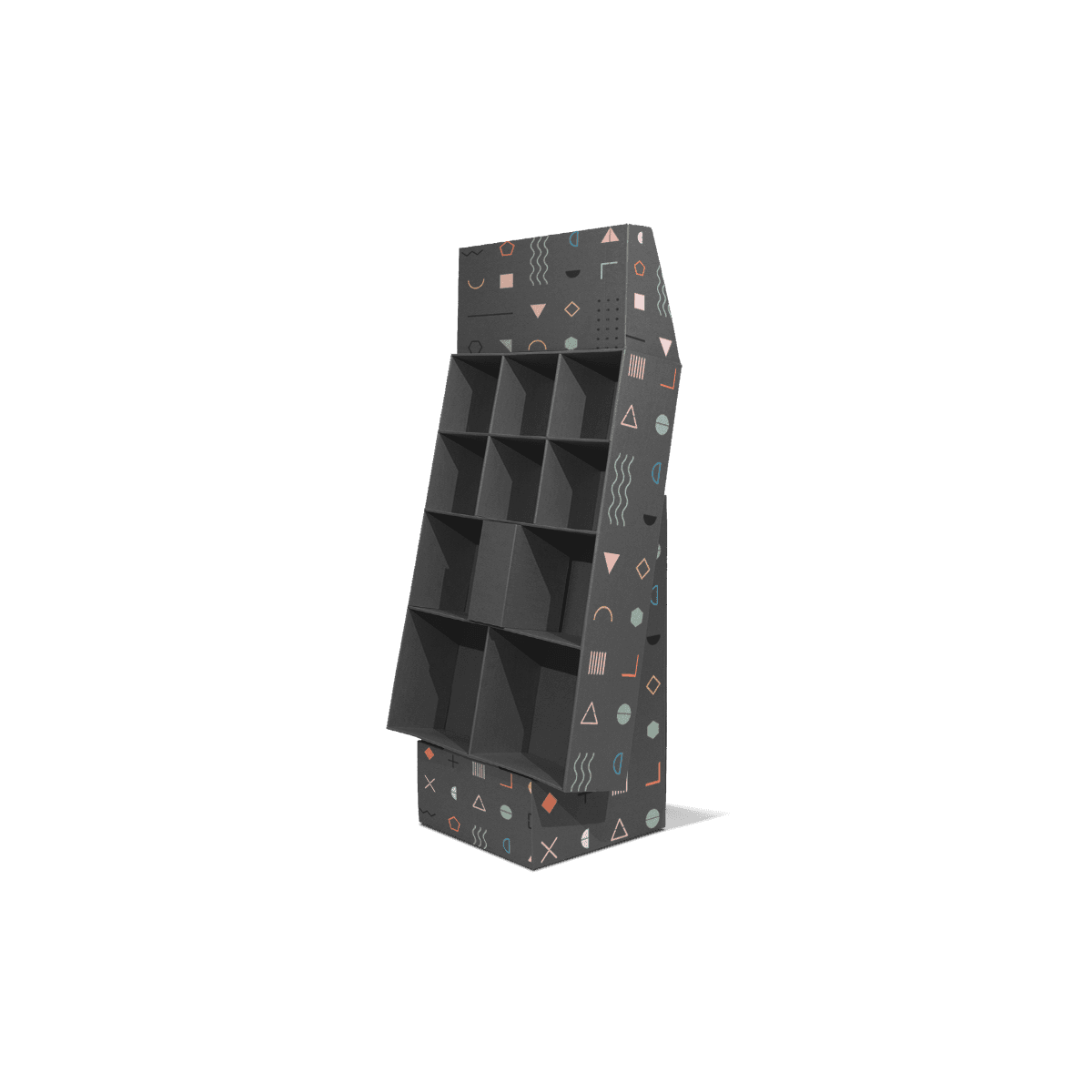
For a compact register placement, counter-top display boxes address the footprint and front-row picking decisions that a freestanding bulk bin does not. Large floor display boxes may instead use shelves or several merchandising levels when products require more structured presentation.

Approach and Stability

Confirm the likely approach direction and whether the unit must stand against a wall or be shopped from all sides. A tall promotional header works when it is visible without making the bin unstable or blocking the product opening. Do not assume every retailer accepts the same footprint, height or aisle placement; obtain the store's own fixture limits before finalizing the dieline.

A store mockup should include adjacent fixtures and the space needed to replenish the bin. Measure the outside footprint after any projecting header, base or folded reinforcement is assembled, not only the nominal panel dimensions.

One Cavity or Separate Compartments

A shared cavity is the simplest option when one product or one interchangeable assortment is intended to be browsed as a pile. It lets stores refill quickly and avoids dividers that reduce the working opening. Mixing variants becomes harder once shoppers move items between compartments.

When Separation Pays

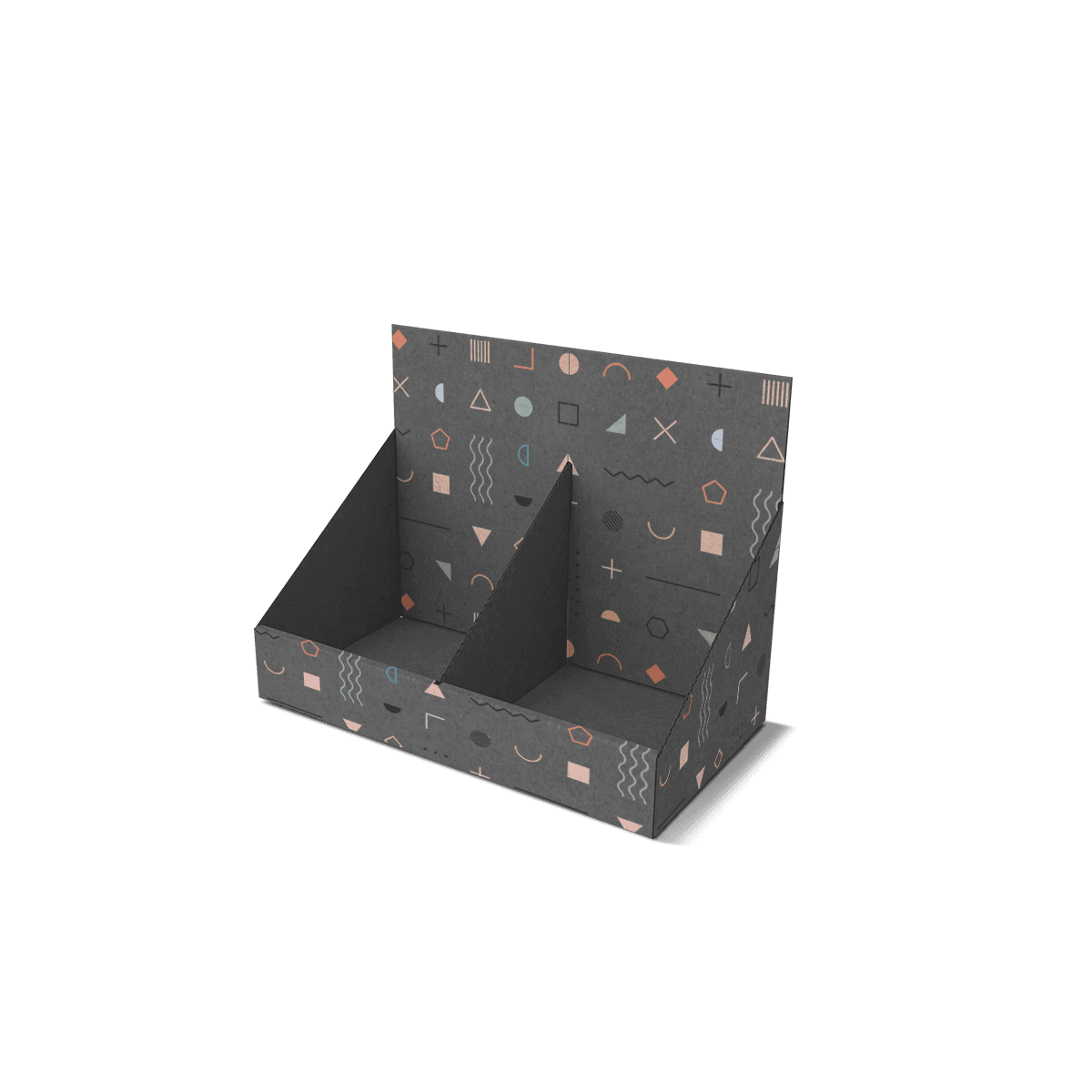
Separate pockets can work when flavors, sizes or price points must remain recognizable. Give each partition enough height and secure attachment to resist lateral pressure from the normal product load. If every unit needs a visible front label and fixed position, an orderly tray is often more suitable than a dump-style bin.

An illustrative seasonal promotion might group wrapped accessories by color in two pockets. If shoppers repeatedly move pieces across the partition, use individual product coding or move to separate bins rather than expecting a low divider to enforce perfect sorting.

Bulk Picking Is Different

Retail bin displays present sellable merchandise to shoppers. Backroom bin boxes serve a different task: storing and picking stock by part number for employees. The same open front does not make the two structures interchangeable.

Where a trade counter sells individually labeled electrical assortments, electrical parts display boxes prioritize identification and controlled selection. Do not turn a customer-facing loose promotion into an unlabeled small-parts station.

The right division scheme is the one customers can still understand after the display has been handled. More partitions do not automatically create better organization.

Refills Alter the Load Pattern

A display bin rarely stays at one fill weight for its entire promotion. Staff add cases of new merchandise, customers remove units unevenly and the contents may settle to one side. Replenishment is part of the structural brief, not an afterthought.

Top-Up Without Burying Stock

If the retailer adds new product on top, older units may remain trapped near the bottom. Agree on a stocking routine suited to the product's shelf life and inventory controls. Where stock rotation is required, staff may need to lift the remaining packs out before refilling; the bin should make that practical without damage to its rim or platform.

The access path must work with the real replenishment case. A narrow mouth that looks proportionate in artwork can slow every top-up, especially when the new stock arrives in rigid inner packs. An optional hinged or removable display component should have a verified mechanical purpose rather than exist only for visual effect.

Safe Movement Between Positions

If store staff routinely relocate the display, decide whether it will move empty, partly filled or on a separate store-approved handling aid. A bottom designed to support merchandise while stationary should not be assumed to support a loaded lift. Test the permitted movement method with actual merchandise before approving construction.

For large rollouts, flat-packed supply may reduce the space used by empty displays, while assembled or prefilled supply can reduce store setup. Compare the real assembly steps and outbound freight instead of assuming one format is always cheaper.

Artwork Works Around the Opening

The largest printable panel is not necessarily the panel shoppers can see. Merchandise hides lower interior graphics, hands scuff the rim and a freestanding bin may be approached from more than one side. Give the clearest product or promotion message to the surfaces that remain exposed in use.

Front Walls and Header Cards

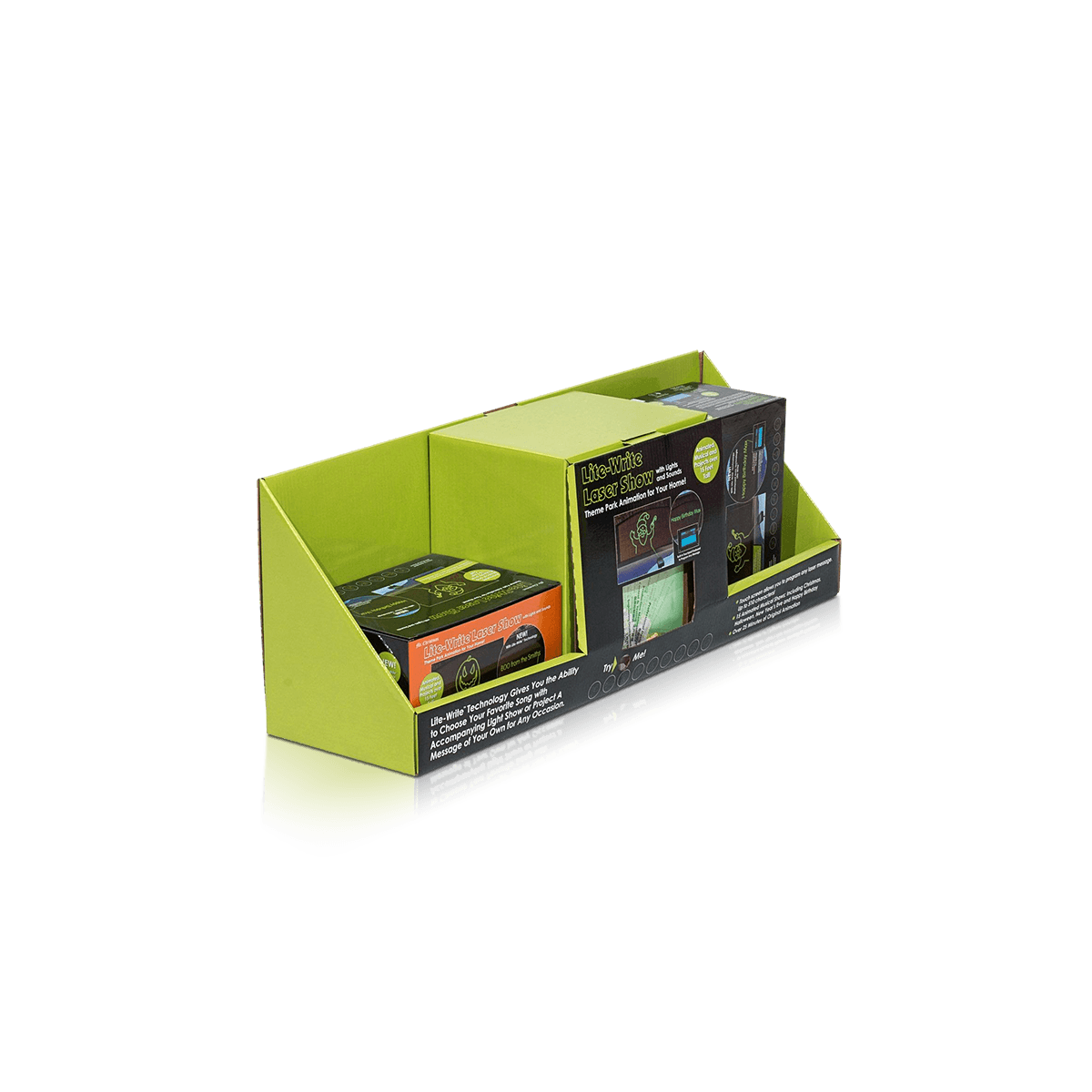
The outside walls can carry the brand, product type and campaign identity. A header may help from a distance, but it needs adequate support and should not block the mouth. Reserve retailer-applied price labels, if required, for a surface that remains accessible throughout the promotion.

The principles behind packaging that stands out on store shelves are especially relevant when the visible print area changes as people approach and browse. Set type size and contrast for the actual viewing distance rather than judging artwork only on a large monitor.

Print and Scuff Priorities

Premium offset printing can support multicolor campaign graphics on suitable printed board or a mounted print surface. Discuss surface coatings where repeated touch or abrasion is expected, then assess the finished printed structure at the folds and exposed edges. Foil or heavy decorative finishing is rarely the first expense to solve a crowded promotional bin.

Free 3D mockups and dieline support can help show header position, folded panels and visible branding before artwork approval. A digital mockup cannot confirm sidewall strength or how low the stock sits after repeated picking.

Do Not Confuse the Shipments

The object in the store and the object moving through distribution may be different packages. A bin can arrive empty and flat with merchandise in separate cases, arrive assembled but unfilled or be part of a retailer-approved prepacked display system. The selected route changes material, closure and labor requirements.

Display First, Shipper Second

An open bin should not be presented as a parcel-ready shipping box simply because it uses corrugated board. When it travels through a carrier or distribution center, the complete shipped arrangement needs suitable outer protection and secure containment.

Counter ready display boxes suit programs where the shipping case converts into the final selling tray. A freestanding promotional bin instead often needs a separate erection and loading step. The distinction is what staff receive, open and place on the floor.

The trade-offs in retail versus ecommerce packaging are relevant when a brand plans one promotional pack for stores and direct-to-consumer orders. A retail display's open top is not a substitute for transit protection.

Store Rollout Kit

Confirm whether each store receives one bin, several bins, a detachable header, a platform and a particular number of inner cases. Identify parts that can be misplaced and determine whether assembly instructions are required. Consistent kit contents matter more than an elaborate design that staff cannot set up predictably.

Price the Installed Selling Unit

A quotation for a printed outer sleeve does not describe the cost of a complete bin with a raised platform, reinforced base, separate header and shipping case. Compare production options using the same installed display and the same planned stock quantity.

The practical specification includes external footprint and height, working opening, approved fill line, packaged product dimensions, maximum loaded mass, display quantity, construction, print area, delivery form and number of retail locations. If a retailer specifies placement or handling restrictions, include them before pricing. For repeated campaigns, distinguish a new printed skin from a genuinely unchanged structural dieline.

Request pricing for a custom bin display once the intended load, store footprint, construction and rollout quantity are known. That allows the quote to account for the whole display instead of a bare printed shell.

Custom Packly's US MOQ starts at 100 boxes. Standard production is generally 4–6 days after the final artwork and specifications are approved; complex display engineering, specialty finishes and project-specific requirements can change the schedule. Free US shipping applies to the confirmed USA offer, while any unusual freight or staged delivery arrangements should be resolved for the specific job.

Free examples of prior production are distinct from a fully custom physical prototype, which may be a paid sample. For a load-sensitive bin, the physical sample decision belongs with the structural risk rather than being assumed free or skipped to meet a launch date.

Make Store Setup Self-Evident

The final handoff is an operating display, not an attractive flat die-cut sheet. Store staff should be able to identify which side faces customers, whether the platform sits at a fixed height and how much merchandise belongs in the opening. For a multi-store launch, those steps should not depend on an employee guessing from a product photograph.

Assembly and Refill Instructions

If assembly uses locking tabs, locate them where they remain accessible before filling. If the deck has supports, show their orientation and which component carries the load. A short packing card can identify the intended unit count, the maximum approved fill level and the permitted movement method. Do not print a load rating unless the final construction has been evaluated to support that exact statement.

When the bin is replenished from separate cases, keep the individual product identity visible and the refill procedure simple. For a single-SKU promotion, that may mean matching case codes and a clear fill line. A mixed campaign needs a compartment map or separated cartons that prevent staff from guessing where new merchandise belongs.

Custom Packly can review the final store setup with free design support and 24/7 packaging assistance. For qualifying bulk programs, warehousing and scheduled deliveries can help release display components and refill stock in stages. The production decision is complete when the unit can be erected, stocked, shopped and maintained in the retail location specified.

FAQs

They make promotional stock easier to browse and faster to buy, especially when the products are lightweight, replenished often, or sold in volume-driven campaigns.

Bin Display Boxes are better for open browsing and loose-item access, while Counter Ready Display Boxes usually suit neater pack-out, front-facing presentation, and more controlled unit placement. Bin or dump-bin displays are especially associated with bulk and impulse merchandising.

Yes, when the board grade, panel depth, and load capacity are engineered around the product weight and refill frequency.

They work well in aisle ends, promo islands, checkout-adjacent areas, entry zones, and event tables where shoppers are likely to make quick purchase decisions.

Yes. Brands often use customizable dimensions, divider layouts, and branded headers to adapt one bin concept to different SKU counts or campaign types.

Process

How it works

Your Packaging Journey, From Idea to Production and Delivery

01

Tell Us Your Specs

Custom packaging boxes

Tell Us Your Specs

Provide size, quantity, printing, and finishes.

02

Get a Fast Quote

Custom packaging boxes

Get a Fast Quote

Instant transparent pricing, no hidden fees.

03

Design and Approval

Custom packaging boxes

Design and Approval

Artwork checks, revisions, and final sign-off.

04

Produce

Custom packaging boxes

Produce

Expert manufacturing to meet deadlines.

05

Ship to Your Door

Custom packaging boxes

Ship to Your Door

Hassle-free, flexible delivery options.

Get Your Quote for Custom Bin Display Boxes for Grab-and-Go Retail

Share your product details, size, quantity and artwork needs. We’ll help choose the right packaging style and send a clear quote.