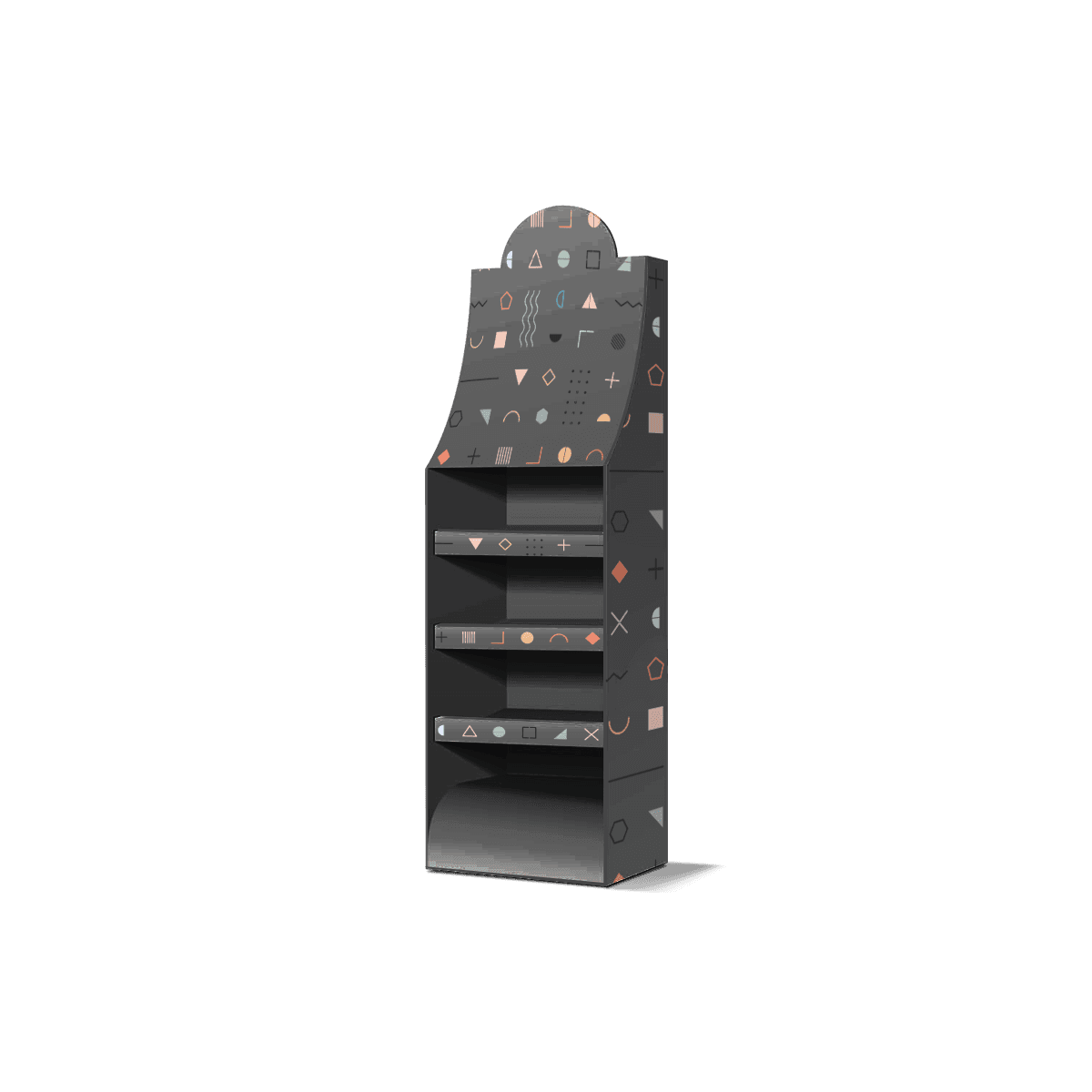
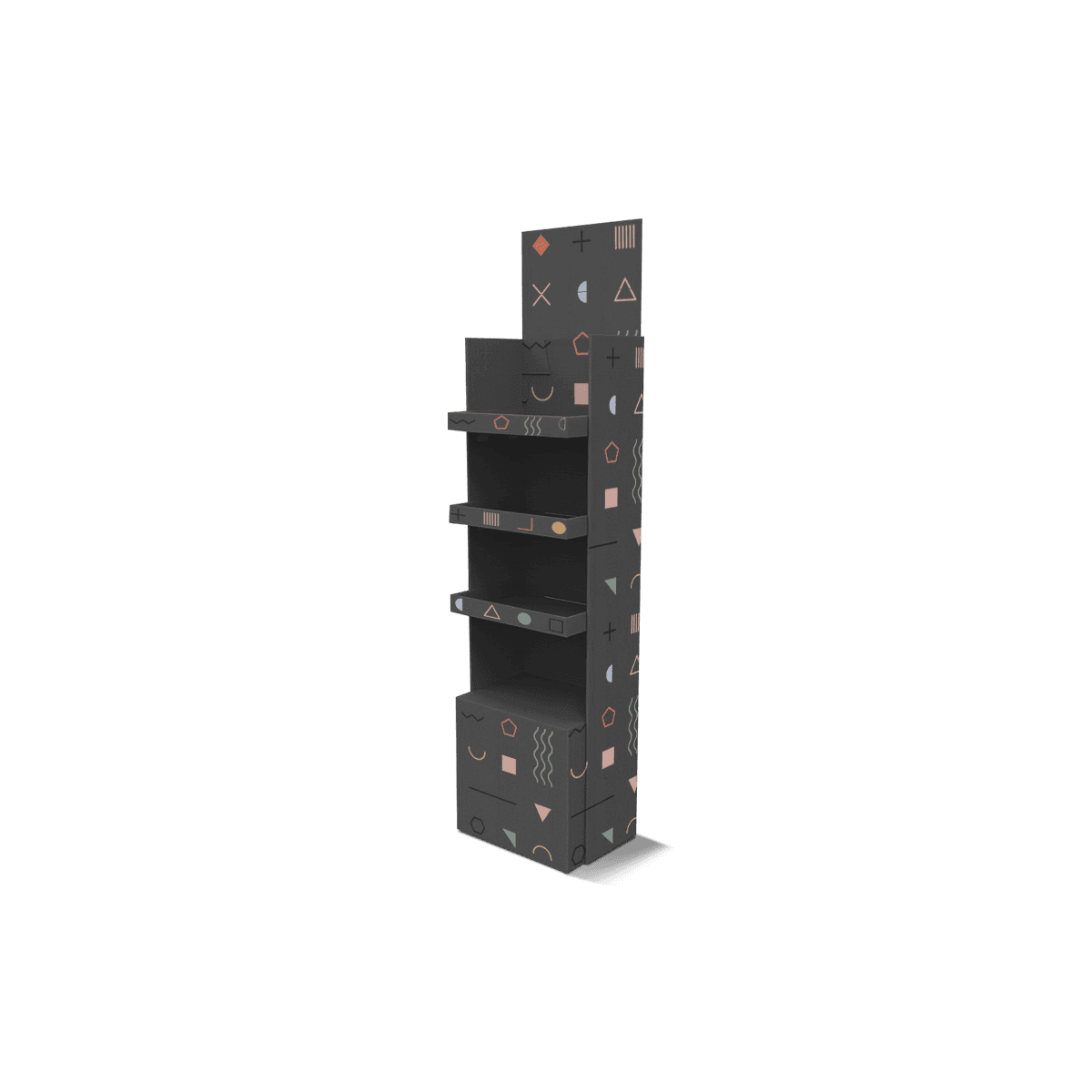
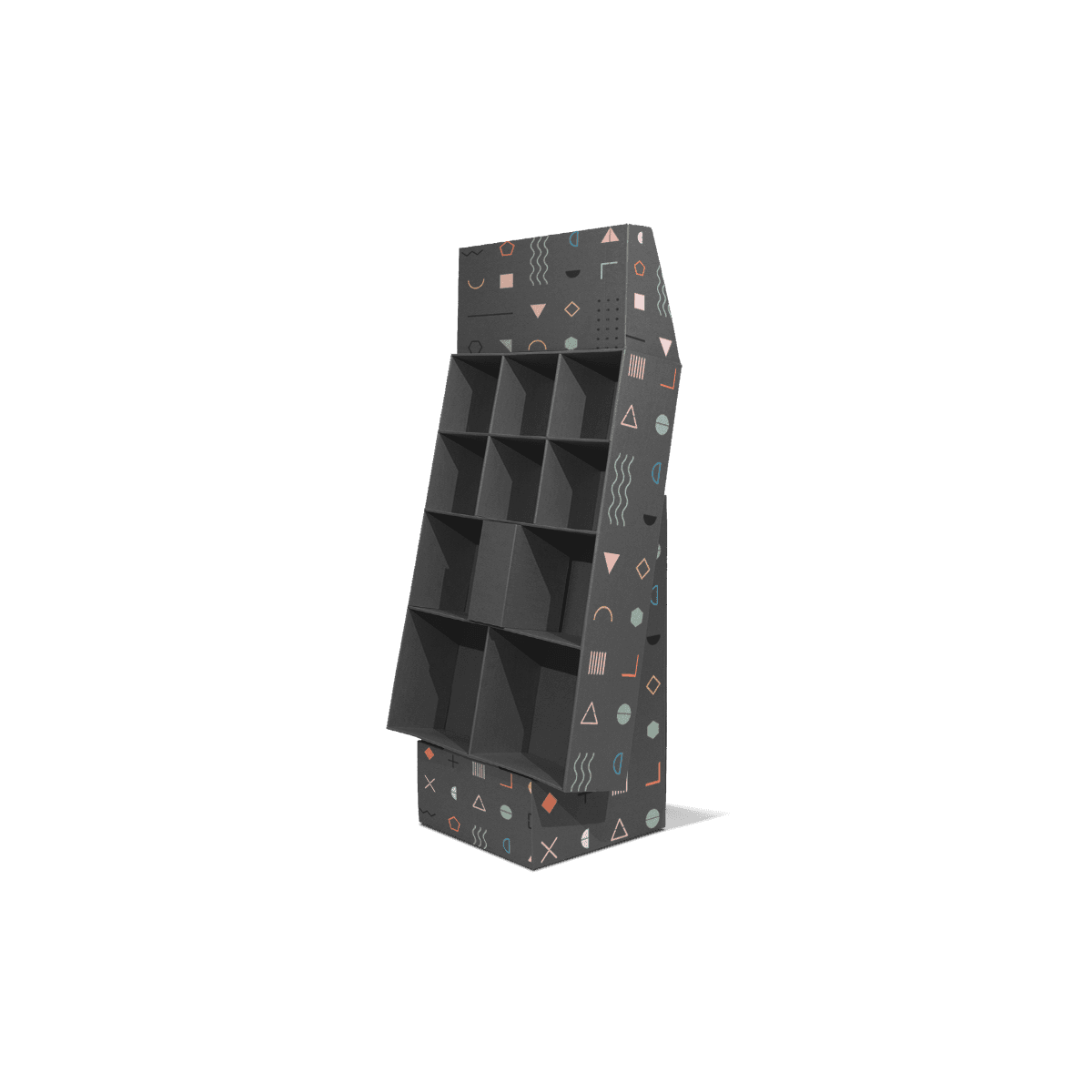
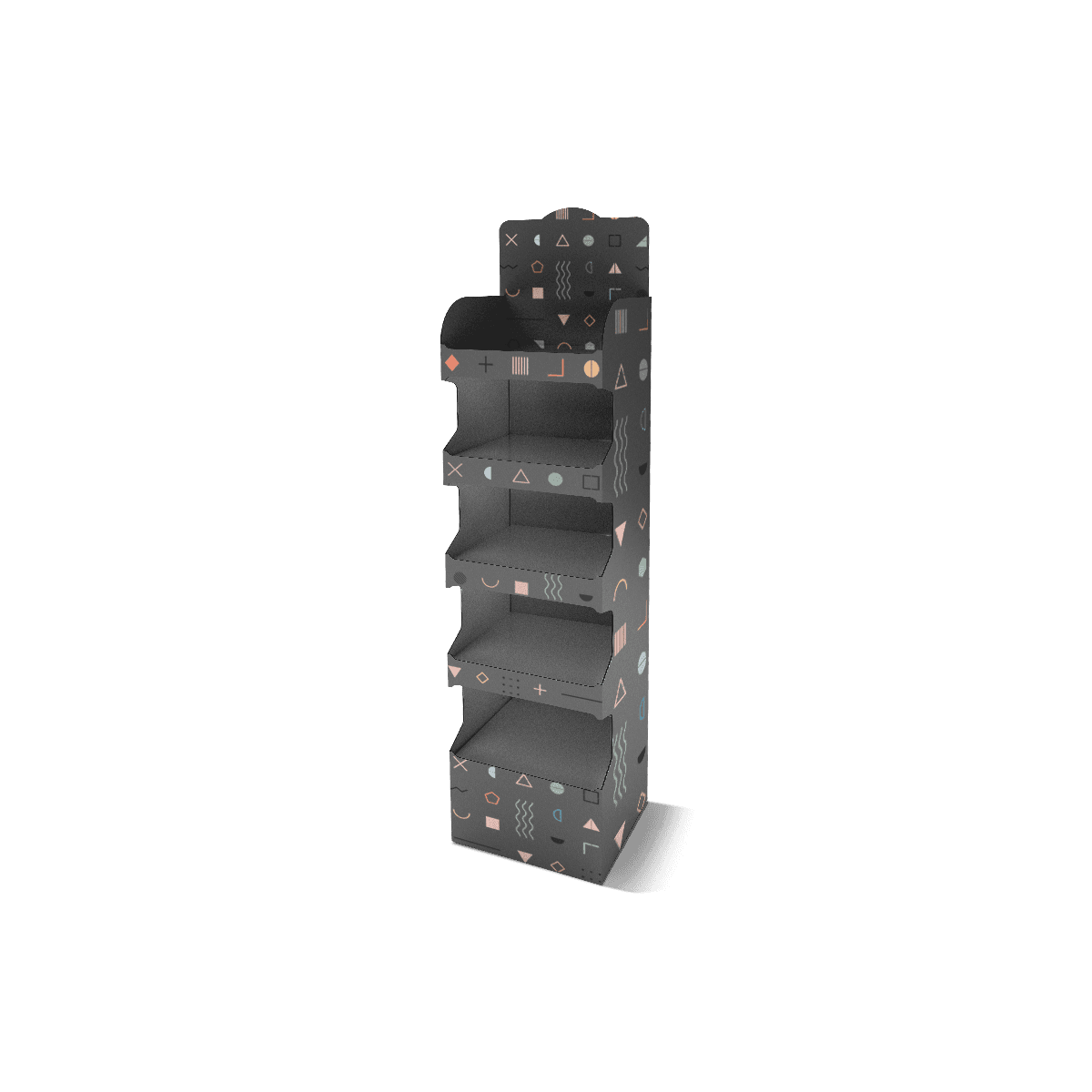
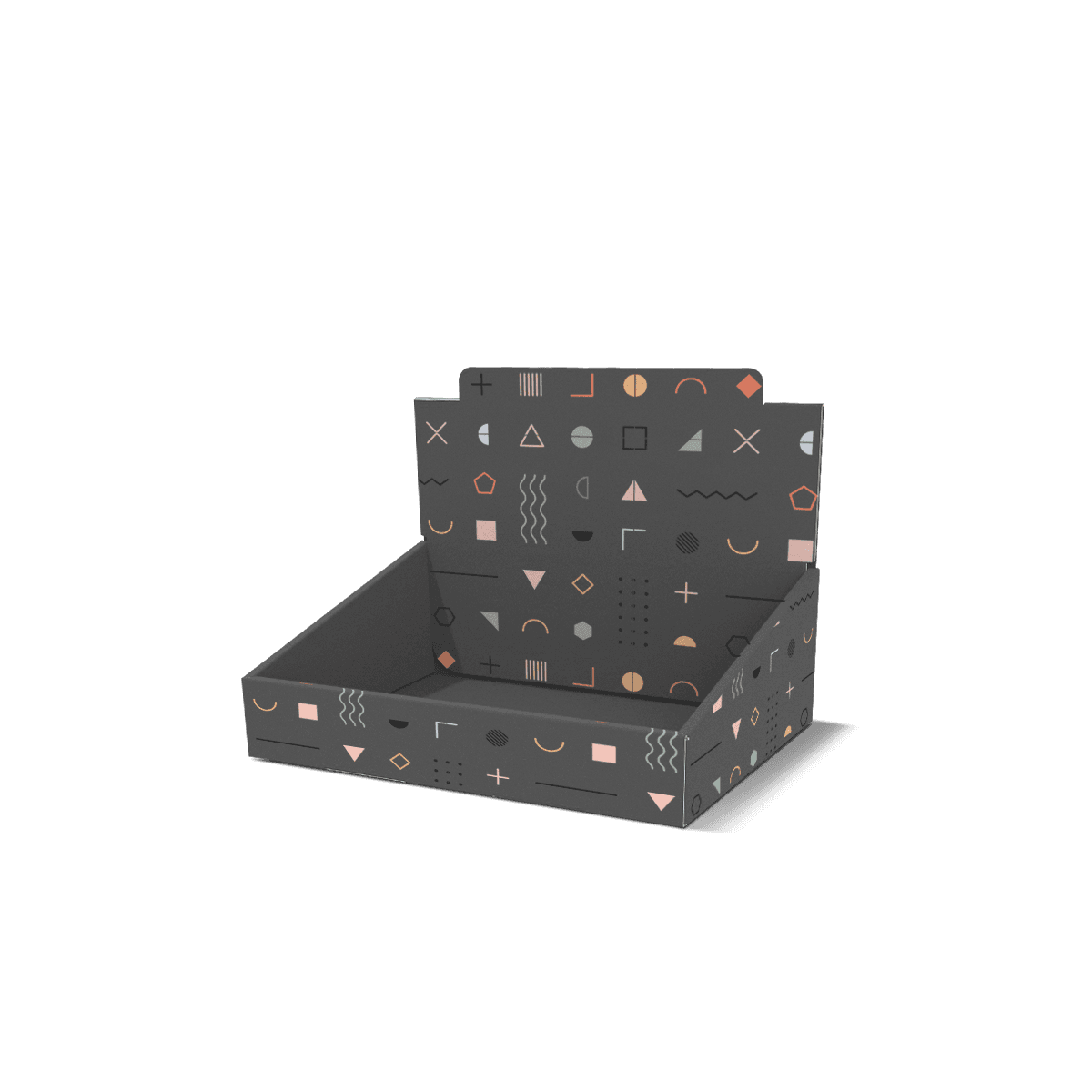
The structural capacity of a floor display depends on how product weight moves through its shelves, supports and base.
Total product weight alone is not enough to specify the construction.
Two stands carrying the same quantity can experience different stresses if one distributes the merchandise across several shelves and the other concentrates heavier products on a single tier.
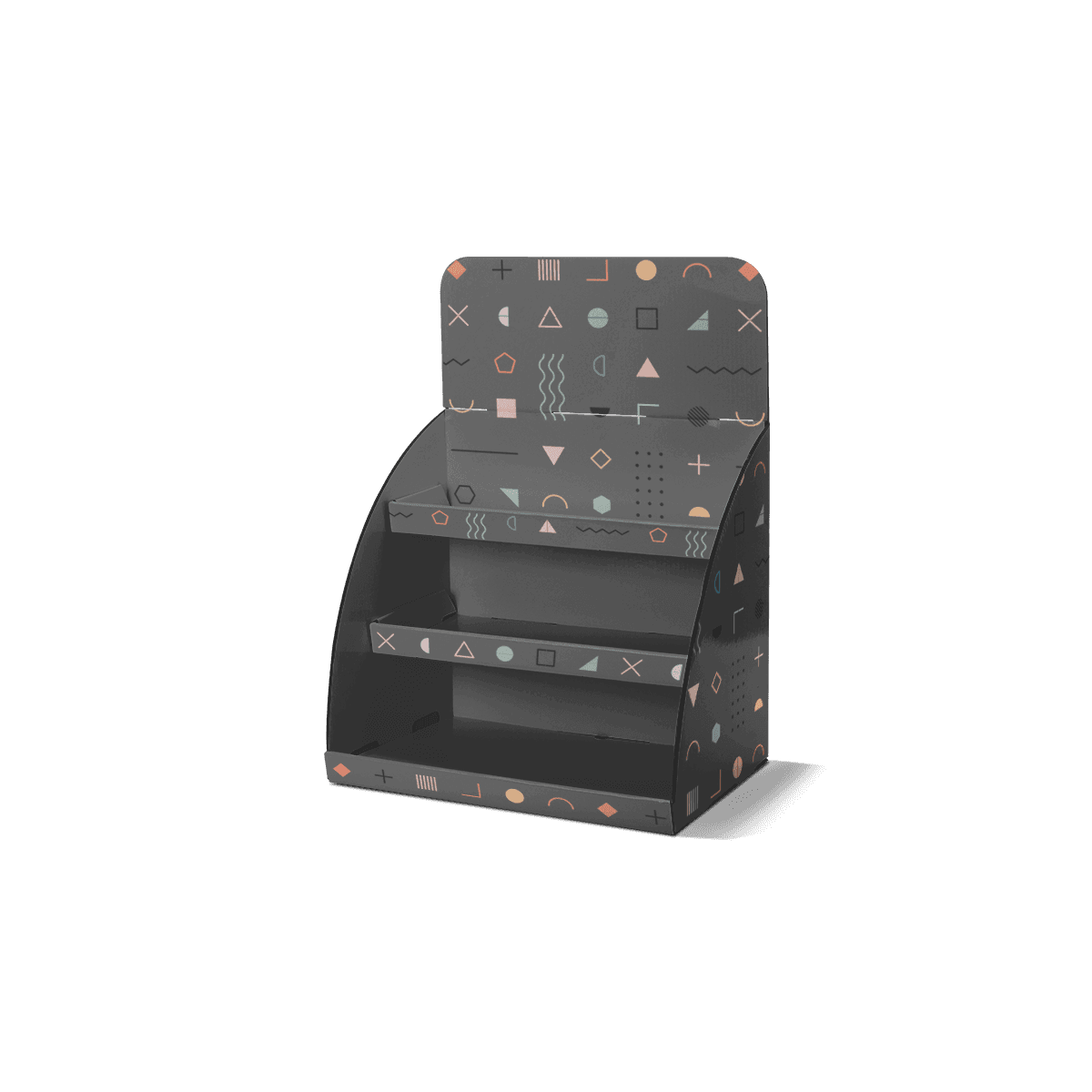
Support the Shelf Span
A shelf must transfer its load into the display's supporting structure.
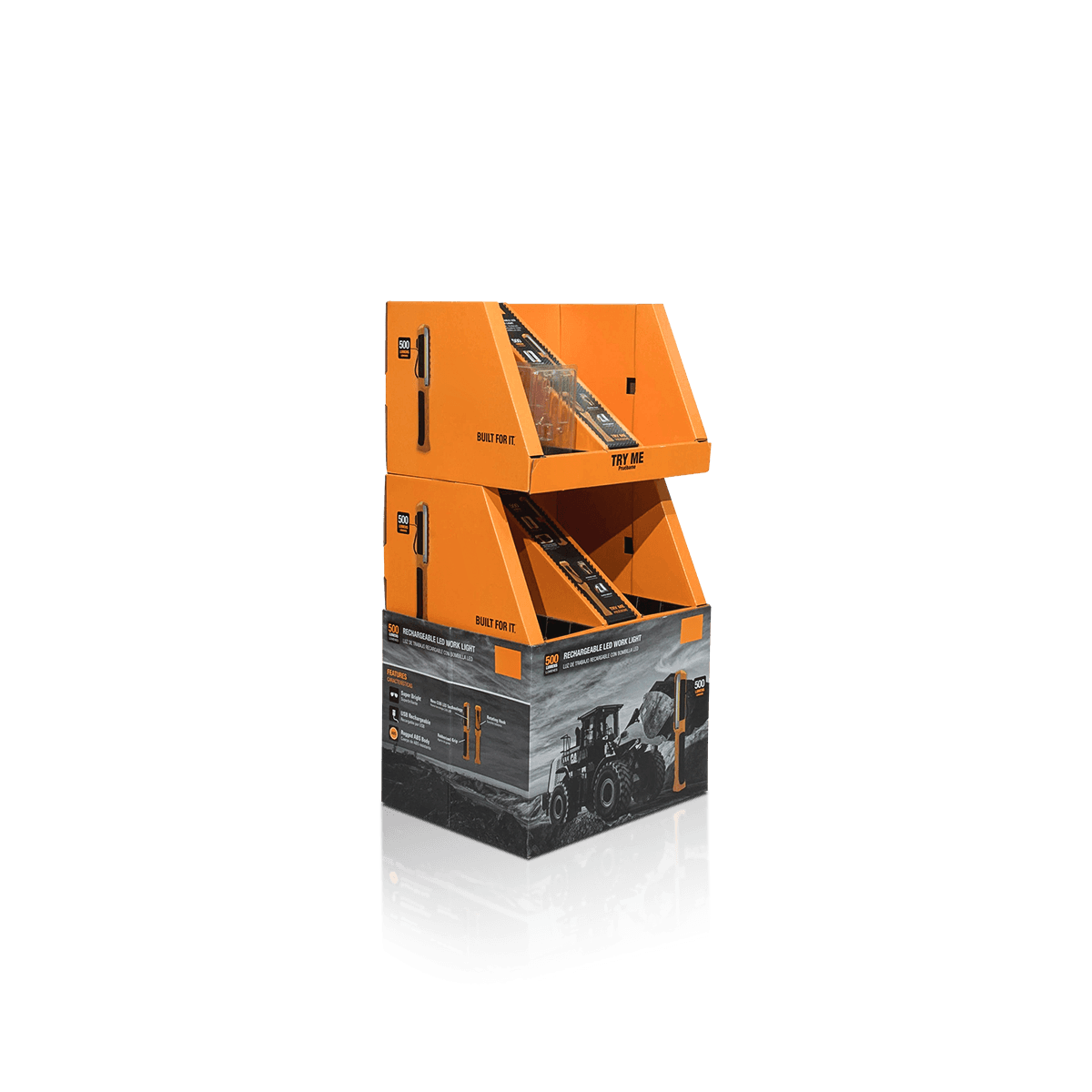
Depending on the design, that support may come from folded corrugated panels, side-wall slots, locking tabs, vertical dividers or additional reinforcement beneath the shelf.
A long unsupported shelf is more likely to deflect than a shorter shelf carrying an equivalent load.
Increasing the board thickness may help, but changing the support arrangement can be more effective than simply selecting heavier cardboard.
For example, a display intended for boxed grooming products might use three shelves. If the heaviest products occupy the middle tier, that shelf may need additional support even though the other two shelves use the same external dimensions.
The completed design should be assessed using the actual load assigned to each tier.
Make Products Easy to Remove
Shelf spacing must account for the product's full height and the movement required to pick it up.
An item that technically fits between two shelves may still be awkward to remove.
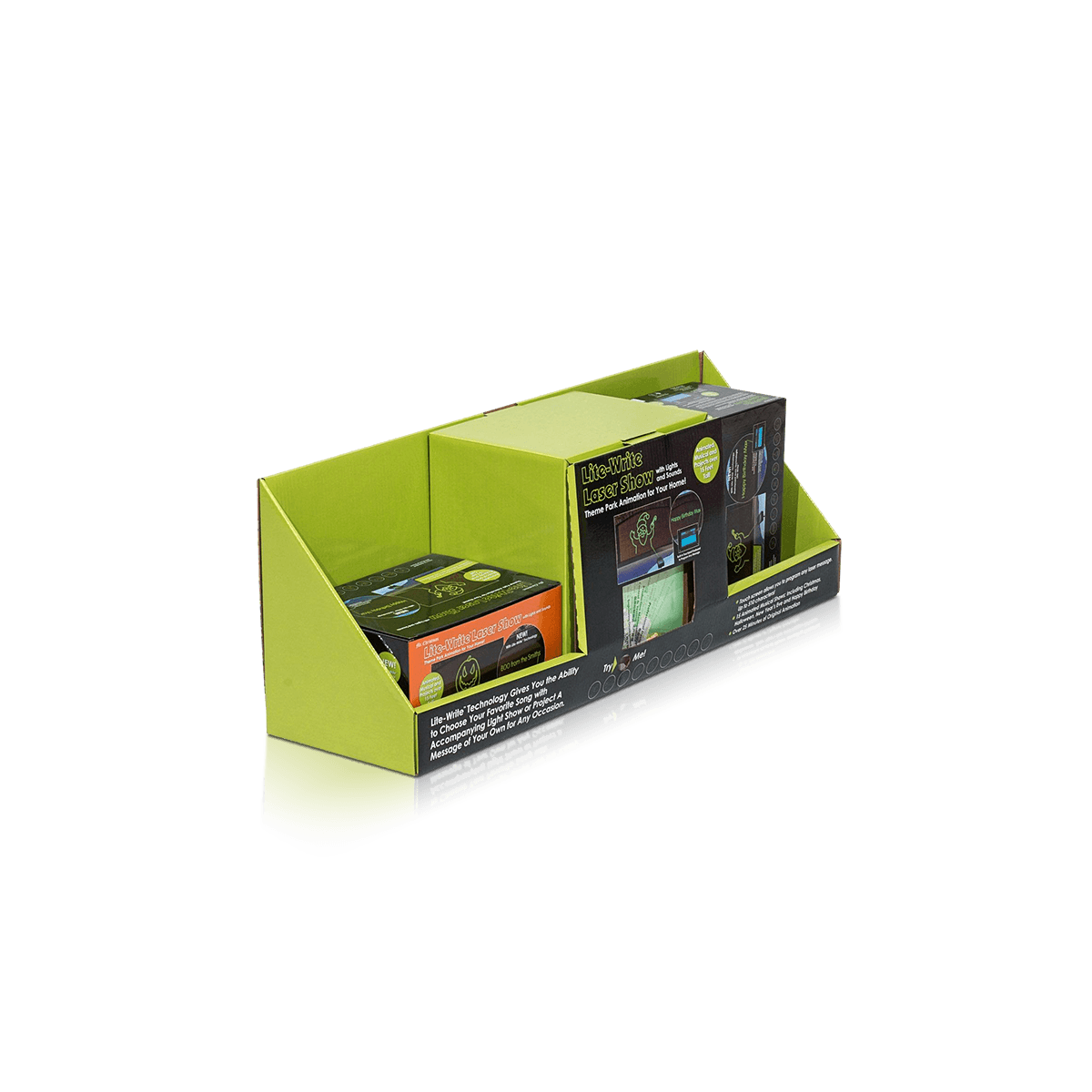
Consider a tall rectangular carton sitting beneath a shelf with very little headroom. A shopper may need to tilt it forward, which becomes difficult if the front lip is high or neighboring products restrict movement.
The solution could involve greater vertical clearance, a shallower shelf, a lower front lip or a different product orientation.
For tall bottles, the cap or pump may extend beyond the main container dimensions. Those projections must be included in the usable shelf clearance.
Products should also remain accessible near the back of the shelf. Excessive depth can make the last row difficult to reach, particularly on lower tiers.
Stability During Uneven Sales
A freestanding structure must remain stable when merchandise is removed unevenly.
Its center of gravity changes as products sell. Removing merchandise from one side, leaving heavier products near the top or concentrating stock toward the front can change the way the stand behaves.
The base needs an appropriate support footprint, while the side walls and internal structure must resist twisting and sideways movement.
The empty stand, fully loaded stand and partially loaded stand should all be considered.
For taller constructions, lower shelves may be the appropriate position for heavier merchandise. This helps reduce the tendency toward tipping while preserving the upper levels for lighter products and prominent presentation.
An exact custom sample is particularly valuable when shelf loading or freestanding stability remains uncertain. A fully custom physical sample can be arranged as a paid sample, allowing the proposed structure to be assessed with the actual merchandise before production approval.