Skip to content
Details

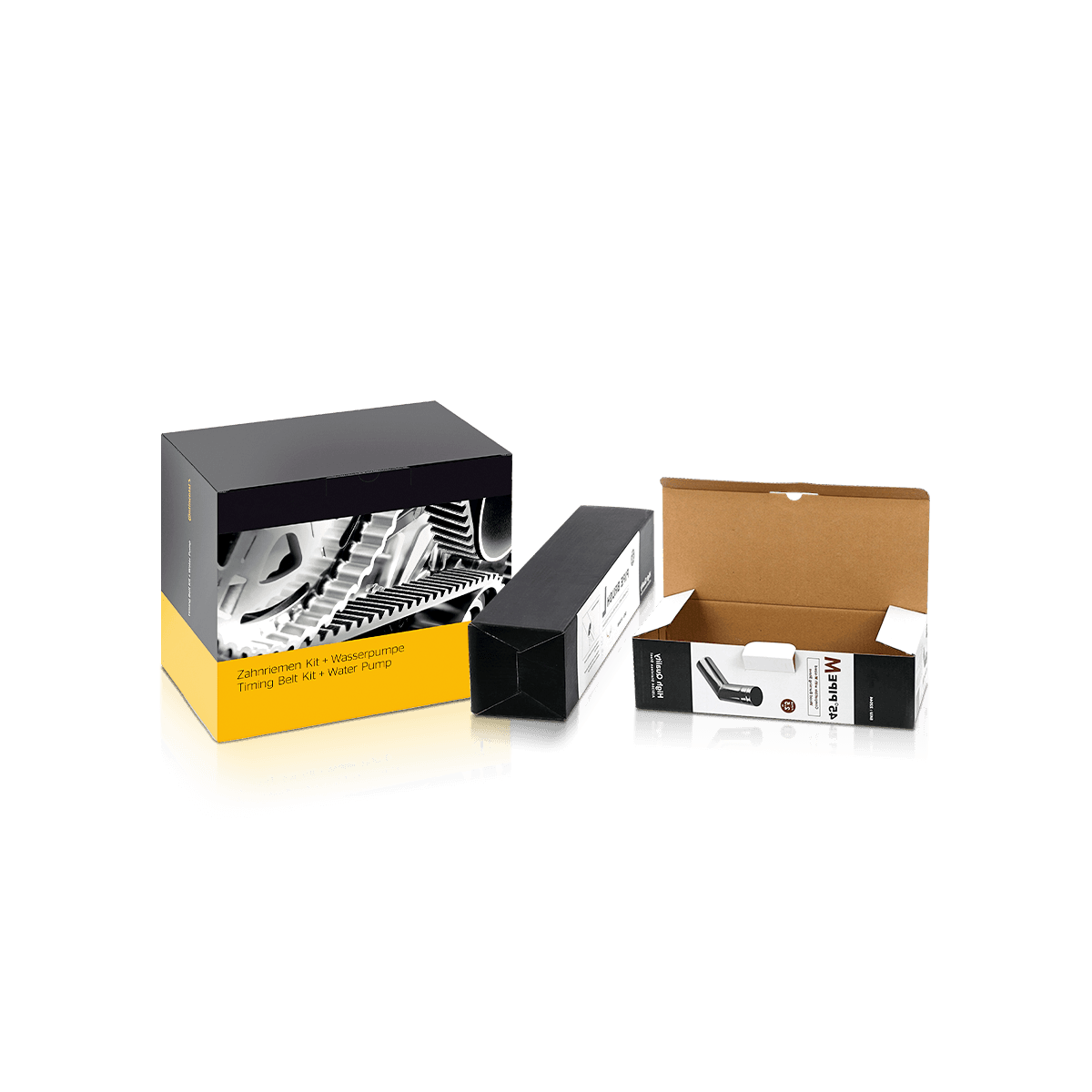
Custom Repair Parts Boxes

Replacement-part packaging built around component identity, vulnerable surfaces and clean handoff from inventory to the repair location.

Identity Travels With the Part

A replacement component may pass through picking, packing, shipment, receiving and a technician's hands before installation. Custom Repair Parts Boxes should keep its identity attached to it through every handoff.

That requirement separates repair-part packaging from ordinary storage. The packaging has to preserve the connection between the physical part and the part number it was ordered under.

The MRO packaging system therefore needs more than a box that survives transport. The pack should make the correct component easy to recognize without exposing it unnecessarily.

Part number, description, quantity, equipment applicability and revision identifiers can be positioned on a face that remains readable during picking and receiving. If a barcode or QR code is already part of the operation, its position should be treated as functional print space rather than decoration.

A replacement component that reaches the right building but loses its identity has not completed the job successfully.
Protect the Functional Surface

The most vulnerable point on a repair part is not always its largest or most fragile-looking feature.

Packaging should be planned around the surface or interface that must still work after transit.

A machined shaft may tolerate pressure on one body area but not on a finished bearing surface. A threaded fitting may be structurally strong yet unusable if exposed threads are damaged. A gasket can be lightweight but fail if it is folded. An electrical assembly may survive moderate impact while a projecting connector cannot.

That changes how the part sits in the box.

Machined Faces

Precision faces should not rub against the outer carton or a loose accessory.

Use clearance, a pad, folded support or a fitted interior so the critical surface is not the main contact point when the box is turned or dropped.

Threads and Connectors

Male threads, pins, plugs and projecting terminals often need space around them.

A smaller box is not automatically a better-fitting box if the inside wall presses directly against the feature that matters most.

Seals and Gaskets

Flat seals should remain flat when their geometry affects installation.

Trying to force a large gasket into a small carton by folding it can create a compact shipment while compromising the component the package was supposed to protect.

The right outside dimensions come after these no-contact zones are understood.

One Part Is Often Enough

Repair Parts Boxes do not need multiple compartments simply because the word “parts” is plural.

For many service shipments, one box should contain one replacement component or one tightly connected set of pieces. That makes picking, labeling and order matching simpler.

A replacement motor with its mounting hardware may logically travel as one pack. A sensor plus its dedicated connector may also belong together. Five unrelated spare components ordered for different repairs should not automatically be combined because they happen to leave the warehouse at the same time.

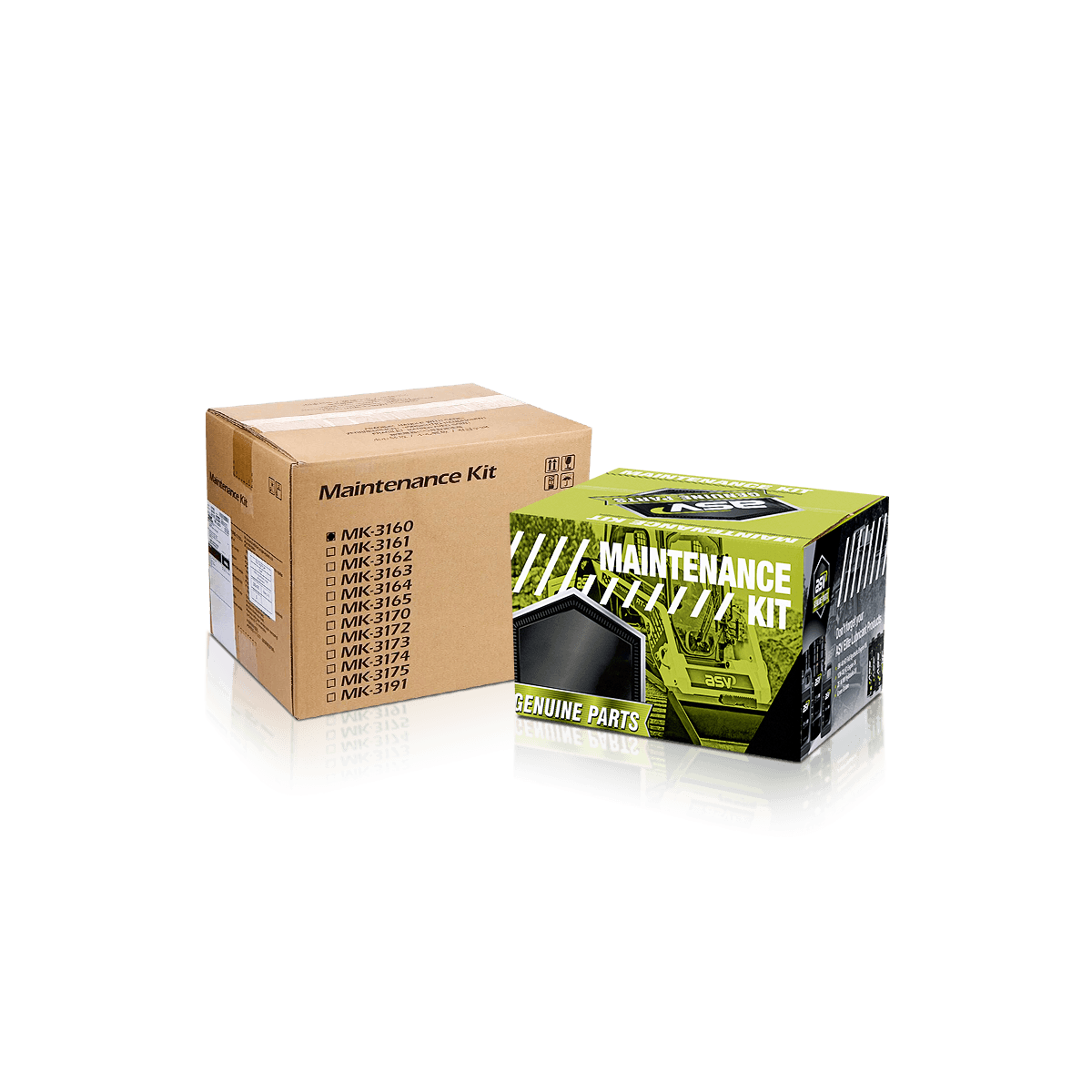
If several components form one planned maintenance task, Maintenance Kit Boxes are better suited to a multi-item service sequence.

If the parts remain in stock and are picked repeatedly instead of being sent to a repair location, Parts Storage Boxes should prioritize shelf access and replenishment instead.

This boundary keeps the Repair Parts Box focused on the replacement component's journey from inventory to installation.

Movement Creates the Damage

Small industrial components can be heavy enough to damage themselves when placed in an oversized carton.

A compact steel component may have only a short distance to travel inside the package, but its mass can create high impact when it repeatedly strikes the wall, another component or an exposed fitting.

The first correction is usually movement control.

The principles in reducing shipping damage with better structure and fit matter especially when a small dense part has room to accelerate inside the box.

Side-to-Side Play

Control lateral movement with correctly placed pads, folded corrugated supports or a fitted cavity.

The goal is restraint without putting damaging pressure onto a precision face.

Vertical Lift

A part can fit tightly from side to side and still bounce vertically.

Check the space between the top of the component and the closed panel, especially when a dense item sits in a shallow support.

Rotation

Irregular parts may rotate even when their maximum dimensions appear close to the box size.

A valve body, lever or bracket can pivot around a heavy center and drive one projection into the wall. The interior needs to control that rotational path.

A physical fit check is often more revealing than comparing three dimensions on a spreadsheet.

Dividers Solve Contact, Not Fit

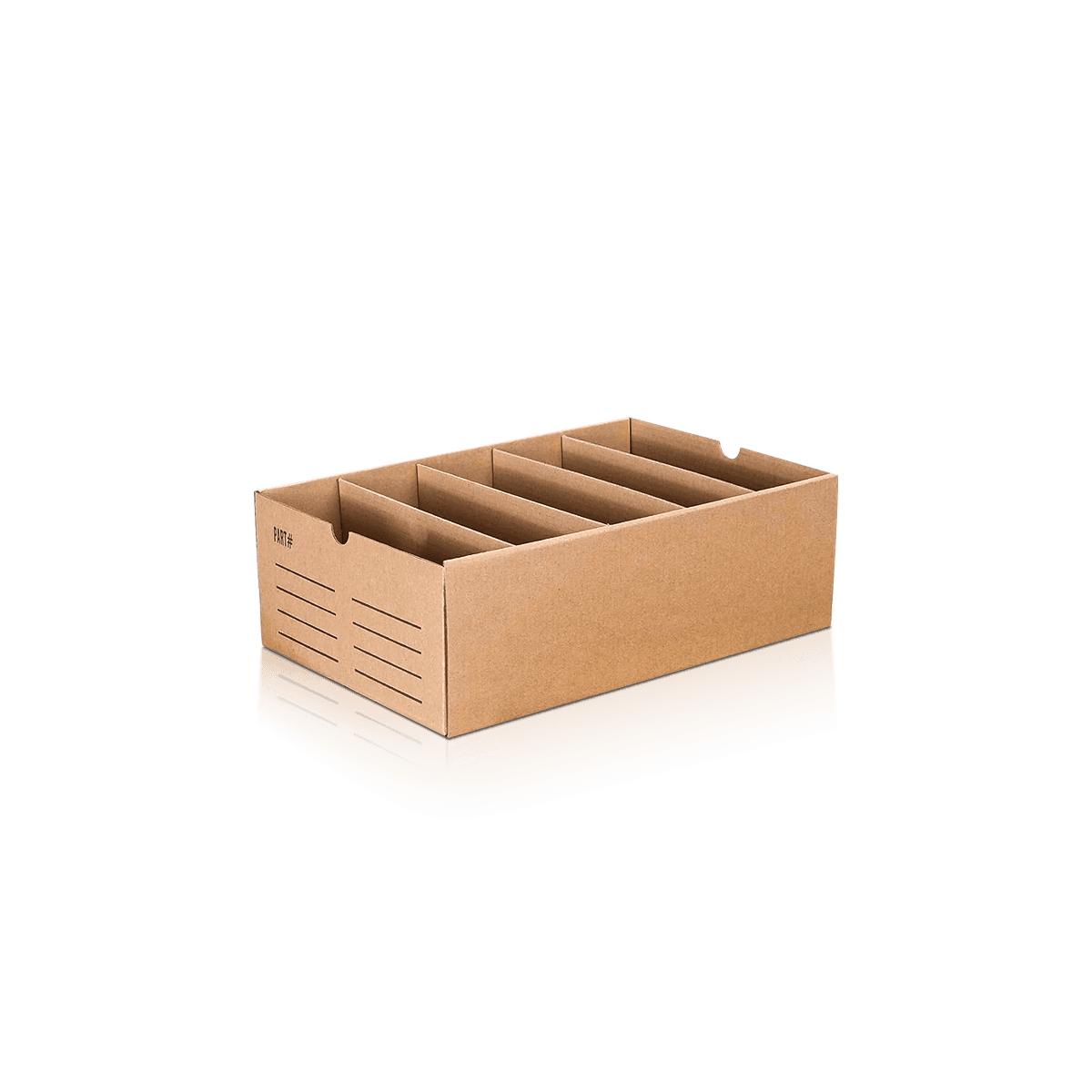
Dividers are effective when several repair components need to stay apart, but they do not automatically restrain each item.

A partition can stop two parts from contacting one another while both still move inside their individual cells.

Divider Boxes make sense when the primary problem is separation between several counted components.

For tighter protection, use folded supports, pads or fitted cushioning where the component geometry demands it.

Consider a hypothetical shipment containing four identical machined fittings. A four-cell divider can prevent metal-to-metal contact. If each cell is much larger than the fitting, however, every part can still strike its own walls throughout transit.

The adjustment is not more compartments. It is better cell geometry or additional restraint.

That distinction matters because an elaborate interior can look controlled while still allowing damaging movement.

The Box May Come Back

Some replacement-part programs have a return leg. The new component is installed and the removed unit, failed assembly or recoverable core is sent back.

When that workflow exists, packaging should be considered in both directions before production.

The returned component may not be in the same condition as the new part. It may be dirty, worn, drained, broken or missing protective caps. Its geometry may also differ slightly after removal.

The original insert should therefore not be assumed to work for the return without checking.

A return-capable pack may need:

  • a structure that can close securely a second time
  • clear instructions identifying the return use
  • enough tolerance for the removed component
  • a separate bag, liner or protective component when contamination control requires one
  • an area for return paperwork or service identification

Do not promise a reusable return system simply because the corrugated carton survives the outbound shipment. The closure and interior have to support the second journey.

If the returning component is much heavier, contaminated or physically damaged, a separate return pack may be safer than forcing two different jobs onto one box.

Shipping Box or Part Box

The package surrounding the replacement part does not always need to be the carrier-facing shipper.

An individually labeled component box can sit inside a stronger shipping box when the inner pack's main job is identification and component protection.

This separation becomes useful when several repair parts move in one shipment. Each component can retain its own part identity while the outer carton handles stacking, carrier labels and distribution impacts.

For very dense loads, Heavy Duty Boxes make more sense when stronger stacking and freight performance dominate the decision.

The inner Repair Parts Box should not be overbuilt merely because the master shipper faces rough conditions.

Likewise, a light retail-style carton should not be treated as a sufficient shipping container for a dense component simply because the fit looks clean.

Define the job of each layer.

Electronics Need Another Question

Electronic replacement parts can introduce requirements that ordinary corrugated packaging does not solve on its own.

Static-sensitive devices may need an ESD-control system. Moisture-sensitive or corrosion-prone components may need barriers, protective bags or other verified materials appropriate to the actual requirement.

Do not describe ordinary kraft or corrugated board as anti-static, corrosion-resistant or moisture-barrier packaging unless the specified construction actually has that property.

The outer box still matters. It can carry the identity, provide crush protection and hold protective components in position.

But the protective requirement must be assigned to the correct material layer.

A control module wrapped in the wrong material does not become adequately protected because the surrounding carton is strong.

This is also where component sensitivity should be documented early. A box supplier cannot infer ESD, moisture or surface-protection requirements from dimensions alone.

Print Prevents Wrong Installs

Repair-part printing should reduce identification errors first.

Brand graphics can still be used, but service data often deserves the clearest visual hierarchy.

Useful fields may include:

  • part number
  • component name
  • quantity
  • model or equipment applicability
  • revision level
  • barcode or QR code
  • lot or batch identifier when the operating system requires one
  • handling orientation
  • service-order identifier
  • destination or branch code

Do not overload every panel with the same data.

A large readable part number on the primary picking face can do more operational work than repeating a complete specification around the carton.

If several visually similar components use the same box size, print differences need especially strong control. One artwork file accidentally assigned to the wrong component can create a perfectly manufactured box carrying the wrong identity.

A digital proof should therefore be checked against the actual part record, not only for spelling and visual appearance.

Revision Changes Reach Packaging

Replacement components often remain active for years while equipment revisions, superseded part numbers or fitment rules change around them.

The box artwork has to follow those changes.

A new part may retain the same physical dimensions but receive a new SKU. One component can supersede another. A service network may need both versions in circulation during a transition.

The packaging specification should distinguish structure from identity.

If the physical part envelope has not changed, the same structural dieline may remain usable. The printed file, label data or insert may still need revision control.

This is where uncontrolled SKU growth can become expensive. The problems described in packaging that is not ready to scale become relevant when similar boxes multiply faster than teams can manage their artwork and packing rules.

Standardize box sizes only where the components genuinely tolerate the same internal geometry. Do not create one oversized carton for dozens of parts simply to reduce the number of dielines.

Fewer box specifications are valuable only when fit remains acceptable.

Samples Should Answer a Question

A sample is most valuable when there is a specific uncertainty to resolve.

For a Repair Parts Box, that question might be:

  • Does the threaded end remain clear of the wall?
  • Can the part rotate out of its support?
  • Does the connector touch the lid?
  • Can a technician remove the part without pulling on a weak feature?
  • Does the label remain readable after the box is packed?
  • Will the closure work for a return shipment?
  • Does the component still move when the box is turned?

A physical sample can be checked using the same fit, closure and handling logic used in custom packaging testing.

Free sample examples of previous Custom Packly work may be supplied. A fully custom physical sample can be arranged as a paid sample when the exact component and interior need to be evaluated.

That validation belongs next to the unresolved risk rather than being treated as a ceremonial step before every production order.

Turn the Part List Into Production

Custom Packly's USA MOQ starts from 100 boxes. US production, free shipping, free design and dieline support and free 3D mockups can support replacement-part programs from an initial run through repeat production.

Standard turnaround is 4–6 days after final specifications and artwork approval. More complex structures, specialty materials or advanced requirements can take additional time.

For an accurate Repair Parts Box specification, record:

  • component name and part number
  • maximum dimensions
  • packed weight
  • quantity per box
  • vulnerable surfaces or projections
  • whether several pieces can contact each other
  • shipping method
  • label and barcode requirements
  • expected annual or run quantity
  • number of printed variants
  • any return-use requirement
  • any ESD, corrosion, moisture or cleanliness requirement that needs separate verification

With the part envelope, annual quantity and protection method established, price the actual replacement-part program rather than a generic carton.

Larger recurring programs can also use warehousing and scheduled deliveries when producing a larger quantity makes sense but receiving the complete run at once does not.

Receiving Completes the Design

A Repair Parts Box succeeds when the receiving team can identify the component before opening it and the technician finds the correct part in usable condition after opening it.

That makes receiving a useful final design test.

Place a finished mockup or sample in the position a warehouse worker would actually see it. Is the part number visible? Can similar variants be distinguished quickly? Does the label remain readable after shipping marks are added? Does the package open without destroying an identifier needed later?

Then inspect the component itself.

The box should release the part without forcing pressure onto a connector, seal, thread or precision surface. Protective components should be obvious enough that the user does not accidentally discard something required for the repair.

Repair Parts Boxes are therefore not just smaller industrial shippers. They are controlled handoff packages. Their job ends only when the right replacement part reaches the right repair in the condition and identity expected.

FAQs

Because the pack often has to do more than protect the item. Direct print can carry part identification, barcodes and instructions so replacement parts are easier to receive, route and match to the correct service order.

Repair Parts Boxes are usually built around one replacement item or a tight set of related spares tied to a repair order. Maintenance Kit Boxes work better when the job requires a broader grouped assortment such as hardware, consumables, instructions and multiple scheduled-service components.

Yes. Inserts matter when parts can scratch, chip, shift or contact one another in transit. Small components can still suffer meaningful damage inside an oversized box, so the interior should control movement around the actual part.

It depends on weight, puncture risk and stacking conditions. Lighter replacement parts may work in standard corrugated while heavier or sharper components can need stronger wall construction or additional restraint.

Yes. Aftermarket parts packaging in the US often combines product protection with retail-ready information and order identification, which makes the format useful for distributor shipments, direct-to-customer replacements and service-network replenishment.

Process

How it works

Your Packaging Journey, From Idea to Production and Delivery

01

Tell Us Your Specs

Custom packaging boxes

Tell Us Your Specs

Provide size, quantity, printing, and finishes.

02

Get a Fast Quote

Custom packaging boxes

Get a Fast Quote

Instant transparent pricing, no hidden fees.

03

Design and Approval

Custom packaging boxes

Design and Approval

Artwork checks, revisions, and final sign-off.

04

Produce

Custom packaging boxes

Produce

Expert manufacturing to meet deadlines.

05

Ship to Your Door

Custom packaging boxes

Ship to Your Door

Hassle-free, flexible delivery options.

Get Your Quote for Custom Repair Parts Boxes

Share your product details, size, quantity and artwork needs. We’ll help choose the right packaging style and send a clear quote.