Your Packaging Can Outgrow Your Business
Packaging that works beautifully at 500 or 800 orders a month can become an operational liability at 5,000, 10,000 or 50,000 orders.
The problem is rarely that the box suddenly looks bad.
It is usually that the business around the box has changed.
The founder who once spent two relaxed minutes folding tissue paper, arranging bottles and tying twine is now paying a 3PL for every second of that process. The oversized box that created a dramatic reveal is now triggering dimensional-weight charges on thousands of shipments. The supplier who handled 1,000 boxes comfortably may struggle to maintain tolerances, color and lead times across much larger repeat runs.
This is why I believe growing brands eventually have to stop looking at packaging primarily as a design asset.
At scale, packaging becomes an operations system.
It affects fulfillment labor, shipping volume, damage, inventory, SKU complexity, cash flow, print consistency and the ability to reorder without disruption.
That does not mean abandoning a premium customer experience. It means engineering that experience so it can survive volume.
For brands planning larger repeat programs, Custom Packly approaches packaging from the product, production and operational requirements rather than treating the box as artwork alone. The broader custom packaging decision should account for what happens after the package leaves the design screen and enters a warehouse.
The principle I keep coming back to is simple:
Your first custom box may be a design project. Your tenth production run is an operations problem.
The Assembly Trap
The most underestimated packaging problem at scale is manual labor.
Small brands regularly create beautiful packaging that requires:
At a few hundred orders, none of this feels particularly dangerous.
At thousands of orders, every movement has a cost.
If an unnecessary packaging step adds only 45 seconds and your team processes 5,000 orders, that adds 62.5 hours of labor.
Now repeat that every week.
This is the point many founders miss because founder labor and fulfillment labor are valued differently.
Founders measure fulfillment labor in sweat equity. 3PLs measure it in seconds and invoices.
Once a brand moves into professional fulfillment, packaging needs to be judged partly by how quickly a trained packer can erect, load, check and close it.
A well-designed e-commerce packaging system should protect the brand experience without requiring warehouse staff to perform craft work on every order.
Count the Packing Steps
Before approving another large production run, physically assemble the package exactly as a warehouse worker would.
Count every action.
If the process looks like this:
you do not have a nine-step unboxing experience.
You have a nine-step fulfillment problem.
The best scaling work often comes from removing steps rather than making individual components cheaper.

Shipping Air Gets Expensive
The second major scaling failure is excessive package size.
Brands often start with one medium-sized box because it is convenient. It reduces the number of packaging SKUs and allows several products or bundles to fit inside the same structure.
At low volume, filling the unused space with tissue, crinkle paper or bubble wrap may seem reasonable.
At scale, it becomes dangerous.
Major parcel shipments may be priced partly according to dimensional weight. A lightweight box can therefore cost more than expected simply because of the amount of space it occupies.
That means a brand can negotiate a fantastic box price and still lose money because the box is too large.
The bigger question becomes:
How much does the packed order cost to move, not just how much did the empty box cost to buy?
This is where right-sized shipping boxes become an operational decision. The objective is not to crush the product into the smallest possible carton. It is to remove unnecessary volume while maintaining enough clearance, board strength and internal support for safe transit.
A dramatic reveal is not very dramatic when the customer realizes a small bottle arrived inside a box mostly filled with air.

Quality Drift Becomes More Dangerous
Another issue appears when brands begin placing larger and more frequent production orders: small inconsistencies suddenly matter.
At low volume, someone may manually catch:
At scale, those small deviations can move into thousands of packages before anyone reacts.
A dimensional error of a couple of millimeters might seem trivial when looking at one box on a desk. It can be much more serious when the packaging needs to fit a precision insert, move quickly through fulfillment equipment or stack consistently during distribution.
Color drift also becomes much more visible as the brand grows.
If January's box is a noticeably different blue from July's box, the problem is not merely cosmetic. Repeat customers, retailers and internal teams start seeing inconsistent brand execution.
This is why supplier capability matters more as volume rises. I would pay particular attention to the warning signs covered in custom packaging supplier red flags before trusting a large repeat program to a manufacturer that performed adequately only at smaller quantities.
A Wellness Brand Hit the Wall
One scaling project I keep coming back to involved a premium direct-to-consumer wellness and skincare brand.
The company sold curated kits containing three glass bottles, including tinctures and topical oils.
When they were small, they shipped roughly 800 orders per month from the founder's garage.
Then growth accelerated.
The company transitioned to a professional 3PL and began processing more than 12,000 orders per month.
That was when their beautiful packaging stopped working.
The Original Pack
The original setup used a premium roll-end tuck-front corrugated box.
Inside was a multi-piece custom paperboard insert designed to hold the three glass bottles.
The experience looked excellent.
The process was not excellent.
For each order, the packer had to:
When the founders were shipping 800 orders, spending a minute or two on each package felt like part of building the brand.
At 12,000 orders, the economics changed completely.
Ninety Seconds Became the Bottleneck
The 3PL billed fulfillment according to labor.
The complete packing process took approximately 90 seconds per order.
At 12,000 orders, that represents roughly 300 labor hours devoted to packing before considering the rest of the warehouse operation.
Kitting and fulfillment fees eventually consumed close to 15% of product margin.
The package also had another problem.
It was deliberately oversized because the founders wanted space around the products to make the reveal feel more luxurious.
That empty space pushed shipments into a higher dimensional-weight tier.
The brand was therefore paying twice for the same design decision:
first in packing labor, then in transportation.
This is why good custom product packaging needs to begin with the actual product dimensions, weight, fragility and fulfillment route rather than the visual impression of an oversized prototype.
We Rebuilt the System
We stopped treating the problem as a cosmetic redesign.
The objective became:
Preserve the premium experience while removing the operational friction.
Three structural changes made the biggest difference.
Faster Box Erection
We moved away from the manually intensive original system and introduced an auto-locking bottom structure.
Instead of manually building the lower structure during every pack-out, the packer could erect it rapidly and move directly into loading the products.
The principle is simple.
If a structural feature can be engineered into the box at production instead of recreated by a warehouse worker thousands of times later, it deserves serious consideration.
One Integrated Insert
The loose multi-piece paperboard insert was eliminated.
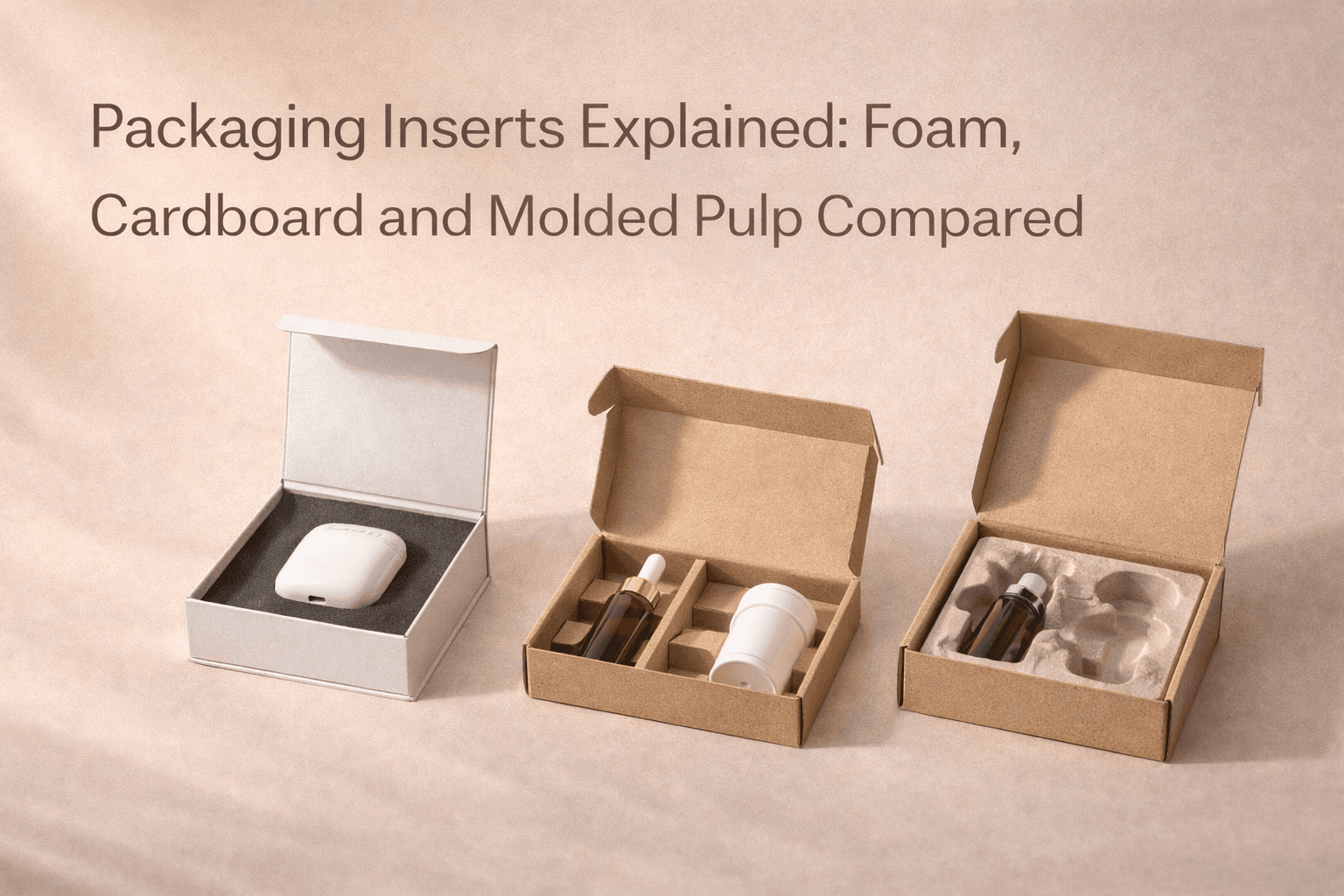
We engineered a single-piece corrugated insert that was integrated into the packaging. When erected, the product-retention sections moved into position without the packer having to separately construct several components.
This is one of my favorite scaling improvements because it attacks two problems at once.
It reduces fulfillment labor while also creating a more repeatable product position.
The Box Got Smaller
We removed approximately 1.5 inches from both the length and width.
That reduced unnecessary internal space and held the three bottles more tightly.
Once the fit was correct, the tissue, twine and additional void fill were no longer necessary for product retention.
The new pack did not feel cheaper.
It felt more deliberate.

The Numbers Changed Fast
The redesign produced several meaningful operational improvements.
Packing time fell from around 90 seconds to under 20 seconds per order.
At 12,000 monthly orders, 20 seconds per pack represents roughly 67 labor hours instead of 300.
That is more than 230 labor hours removed from the monthly pack-out process.
The smaller shipping footprint also changed the freight economics. The brand reported average domestic shipping savings of approximately $1.65 per shipment after dropping into a lower dimensional-weight tier.
Most importantly, the stronger integrated fit improved protection.

Prior damage claims had been around 2.4%. In the period following the structural change, the brand reported damage claims falling to zero.
Those numbers are why I dislike discussing packaging scale only in terms of box price.
A slightly different structure can change:
That is where the real economics live.
Know When to Stop Reordering
A growing company should not redesign its packaging every time sales increase.
Redesigning takes time, engineering work, testing and capital.
Change too early and you create unnecessary disruption.
Wait too long and operational friction can keep draining margin month after month.
I use several practical triggers to decide when a repeat order deserves more scrutiny.
The 3PL Transition
Moving from founder-led fulfillment into a 3PL is one of the clearest moments to reassess packaging.
Do it before signing off on another large box order.
A founder may tolerate a complicated pack-out because the labor feels free.
A 3PL will normally see:
as additional handling.
If a package takes several manual operations just to become ready for the product, I want to know what each of those operations will cost at the expected order volume.
The Damage Warning
My preference is to start investigating well before damage becomes a crisis.
If transit damage begins approaching 0.5%, I treat that as a warning that deserves an audit.
Once damage reaches roughly 1% or more of monthly shipments, I become much more reluctant to approve another identical run without understanding the cause.
These are decision thresholds I use in practice, not universal industry regulations.
The financial reason is straightforward.
At 100 monthly orders, one damaged shipment is irritating.
At 5,000 orders, a 1% rate means 50 damaged deliveries.
Those can create:
Before committing to more boxes, inspect product fit, inserts, board grade, corrugated flute, closure and the shipping environment.
The testing process matters even more when quantities rise. Custom packaging testing should validate the packed product and realistic handling risks rather than approve a box only because an empty sample looks good.
Too Many Shipping Sizes
SKU proliferation creates another scaling problem.
I become concerned when a brand is carrying more than about five different shipping box sizes simply to accommodate normal product combinations.
More box sizes can mean:
Sometimes the right answer is not another perfectly sized box.
It is a smarter master structure.
Variable-depth scores, modular dividers or two or three versatile cartons can sometimes replace a much larger packaging inventory.
This is where bulk custom boxes should be planned by SKU, repeat frequency, dimensions and forecast rather than treating one combined annual quantity as the only number that matters.
A New Sales Channel
Moving from DTC into wholesale, retail or marketplace fulfillment is another natural redesign trigger.
A package designed for the customer's doorstep may not automatically work for:
The product has not necessarily changed.
Its journey has.
Packaging needs to follow that journey.

Sometimes the Right Decision Is Nothing
Scaling does not automatically mean redesigning.
One of the most expensive habits I see is unnecessary tinkering.
A growing brand gets bored with the current packaging or feels that higher sales somehow demand a completely new box.
That is not operational strategy.
If the package works, leave it alone.
As a rule of thumb, I am less eager to push a major structural redesign when a brand is still below roughly 1,000 monthly orders, unless there is already a clear protection, logistics or fulfillment failure.
I would normally keep reordering when:
Cosmetic updates do not automatically require structural changes either.
If the box dimensions, material and opening experience are working, a brand can often refresh artwork or messaging on the next run without rebuilding the packaging architecture.
Cut Emotion Before Engineering
When cost pressure arrives, growing brands often cut the wrong things.
They attack board strength because shaving a few cents from the substrate is easy to see on a quotation.
Meanwhile, the pack still contains several manual presentation pieces that are costing far more in fulfillment.
My approach is the opposite.
Simplify emotional decoration before weakening functional engineering.
Remove Manual Presentation Pieces
Tissue paper, twine, separate stickers and decorative wrapping can create a beautiful founder-packed order.
They are also among the first things I challenge at serious volume.
Every secondary step should have to justify itself.
Ask:
Does the customer value this enough to justify the labor required on every order?
If not, move the brand experience into elements that can be manufactured directly into the package.
Printed interiors, structural reveals and well-designed graphics can communicate far more efficiently than requiring the warehouse team to assemble the brand story by hand.
Integrate the Insert
Loose multi-piece inserts are another common labor drain.
Whenever possible, I prefer to investigate:
The exact solution depends on the product, but the objective is consistent.
Move work from the fulfillment station into the packaging engineering.
For DTC products where presentation still matters, the right mailer box structure can combine shipping protection, internal print and an organized reveal without requiring an excessive number of pack-out steps.
Remove Empty Space
Oversized packaging is another early target.
A large box does not automatically create luxury.
Sometimes it simply makes the product look smaller.
Right-sizing can reduce:
The box should be large enough to protect and present the product properly, not large enough to create theater at the carrier's expense.
Challenge Every Premium Finish
I like foil, embossing, debossing and spot UV when they earn their place.
I do not believe every premium brand needs all of them.
When volume increases, every additional production process deserves a commercial reason.
If a finish creates extra tooling, setup, handling or scheduling complexity but customers barely notice it, reconsider it.
That does not mean stripping the packaging until it becomes generic.
It means concentrating budget where the customer actually experiences value.
Protect What Actually Matters
Efficiency does not mean making everything thinner, plainer and cheaper.
Some packaging decisions should survive the cost-cutting process.
Product Fit Comes First
I will not sacrifice the structural performance required to protect the actual product simply to achieve the lowest possible unit price.
Dropping from a suitable corrugated grade to an inadequate lightweight structure can save money on the packaging invoice while increasing product damage later.
That is false economy.
Board grade, flute, compression needs and insert support should be chosen around the product and distribution environment.
Keep Brand Color Controlled
Scaling brands also need repeatability.
A signature brand color should not become a different shade every time another batch is produced.
Where precise brand matching matters, use appropriate Pantone specifications or controlled color-management standards and retain approved references for repeat production.
The larger the packaging program becomes, the more valuable those controls become.
Keep the Reveal Where It Matters
If I had to choose between five manual decorative elements and one strong interior print, I would often choose the interior print.
A simple exterior can survive shipping cleanly and efficiently.
Then the customer opens the package and encounters the brand.
Inside printing can deliver:
without asking a warehouse worker to add those elements manually to every order.

Keep Material Decisions Practical
Brands should also avoid solving one scaling problem by creating another.
If paper-based inserts can provide the necessary product protection and the final material combination works for the intended recycling stream, they may be preferable to introducing unnecessary foam or plastic components.
The rule is not "paper at any cost."
The rule is to select the simplest material system that can genuinely perform the job.
Run a Packaging Scale Audit
Before a rapidly growing company approves its next major production run, I recommend performing what I call a Packaging Scale Audit.
The process has four stages.
Gather the Real Data
Do not begin with the box artwork.
Begin with the operation.
Collect:
Without this information, packaging optimization becomes guesswork.
Quantity also needs to be evaluated alongside setup, size and specification rather than in isolation. The relationship between production quantity and unit economics is covered in the custom printed box cost and MOQ breakdown.
Audit Fulfillment First
Physically time the pack-out process.
Do not estimate it.
Give the packaging to someone who does not know the design and watch them assemble it.
Measure:
Ask the 3PL what each additional activity means commercially.
A five-second improvement can look ridiculous in a design meeting.
Across hundreds of thousands of packs, it may be worth engineering around.
Audit Logistics Next
Compare the external box dimensions against the actual contents.
Look for:
Do not optimize only for one perfect order.
Use real order data to identify the combinations customers purchase most often.
Audit Structural Performance
Next, examine what happens to the packaging after it leaves fulfillment.
Review:
If a product is being damaged, find the actual failure mechanism before simply adding more material.
Sometimes the solution is thicker board.
Sometimes the box is too large.
Sometimes the insert does not control movement.
Sometimes the material is adequate but the structural design is wrong.

Choose One of Three Paths
After the audit, I place the packaging into one of three groups.
Keep and Reorder
Keep the current system when:
Do not redesign successful packaging merely because the business has grown.
Optimize
Optimize when the basic architecture is sound but one or two operational problems are developing.
That could mean:
Keep what already works.
Fix what does not.
Redesign Completely
Stop the repeat order and start again when the system no longer matches the operation.
Strong triggers include:
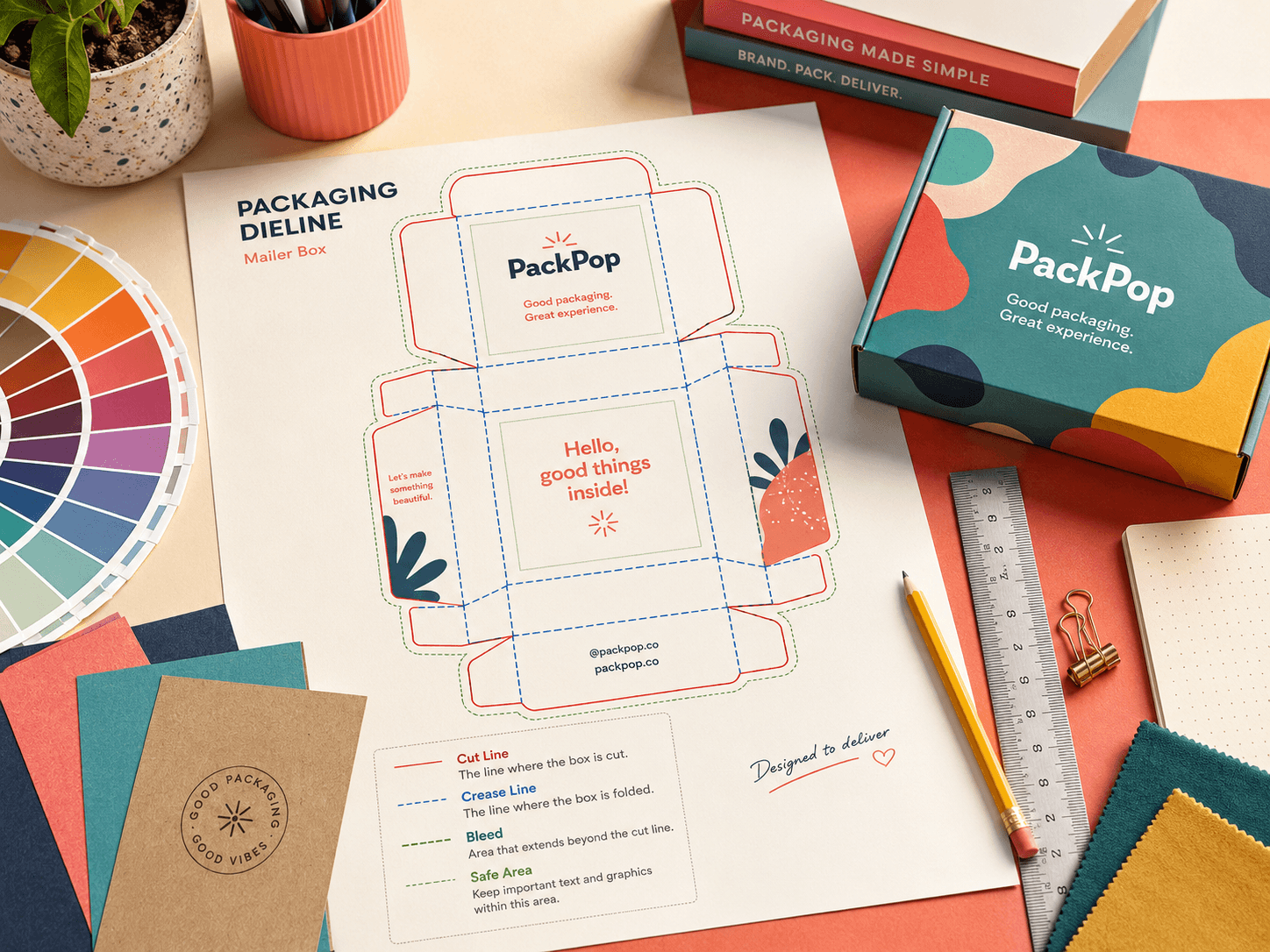
This is the point where trying to preserve an obsolete dieline can become more expensive than redesigning it.
Prototype in the Real Operation
Never approve a major structural redesign because the sample looks good on a conference table.
Put it into the environment where it will actually be used.
Give It to the 3PL
Send unprinted structural samples to the fulfillment team.
Ask the actual packers to build them.
Time the process.
Watch where they hesitate.
A designer may consider a particular locking tab intuitive. A warehouse employee assembling 400 units may disagree.
Their feedback matters.
Ship the Real Product
Load prototypes using the final products.
Send them through realistic parcel routes.
Inspect:
Do not test empty boxes and assume the results transfer to a fully loaded package.

Validate Color Physically
For brand-critical colors, review appropriate physical proofs or color references on the intended substrate before high-volume production.
Screen color is not finished packaging color.
Board shade, coating, ink system and finish can all affect the result.
Design for the Next Stage
The best scalable packaging is not necessarily the cheapest box.
It is not necessarily the fanciest box either.
It is the packaging system that can move from production to storage to fulfillment to shipping to the customer's hands without repeatedly creating unnecessary cost or friction.
For growing brands, that means asking different questions.
Not:
Can we make this box look more premium?
But:
Can 10,000 of these be assembled quickly?
Can we ship it without paying for empty space?
Can the product survive the route?
Can our supplier repeat the specification accurately?
Can we manage the SKU inventory?
Will this still make sense when order volume doubles?
That is what scalable packaging looks like.
If you are preparing for a larger run, changing fulfillment partners or trying to reduce packaging friction before the next growth stage, send your current dimensions, product details, quantities, dielines and pack-out requirements through the custom packaging quote. We can evaluate whether the smarter move is to keep the current structure, optimize it or re-engineer it before another production run locks the problem in.