A Cheap Box Can Be the Most Expensive Box You Buy
A box that fails to protect or fit your product is a total loss, no matter how cheap it was.
That is the principle I come back to whenever someone asks how to choose a custom packaging supplier.
Too many businesses still treat packaging primarily as a graphic design purchase. They spend months developing the product, perfecting the formula, choosing ingredients, testing electronics or preparing a retail launch. Then packaging procurement begins and suddenly the main question becomes, “Who gave us the lowest price per box?”
That is backwards.
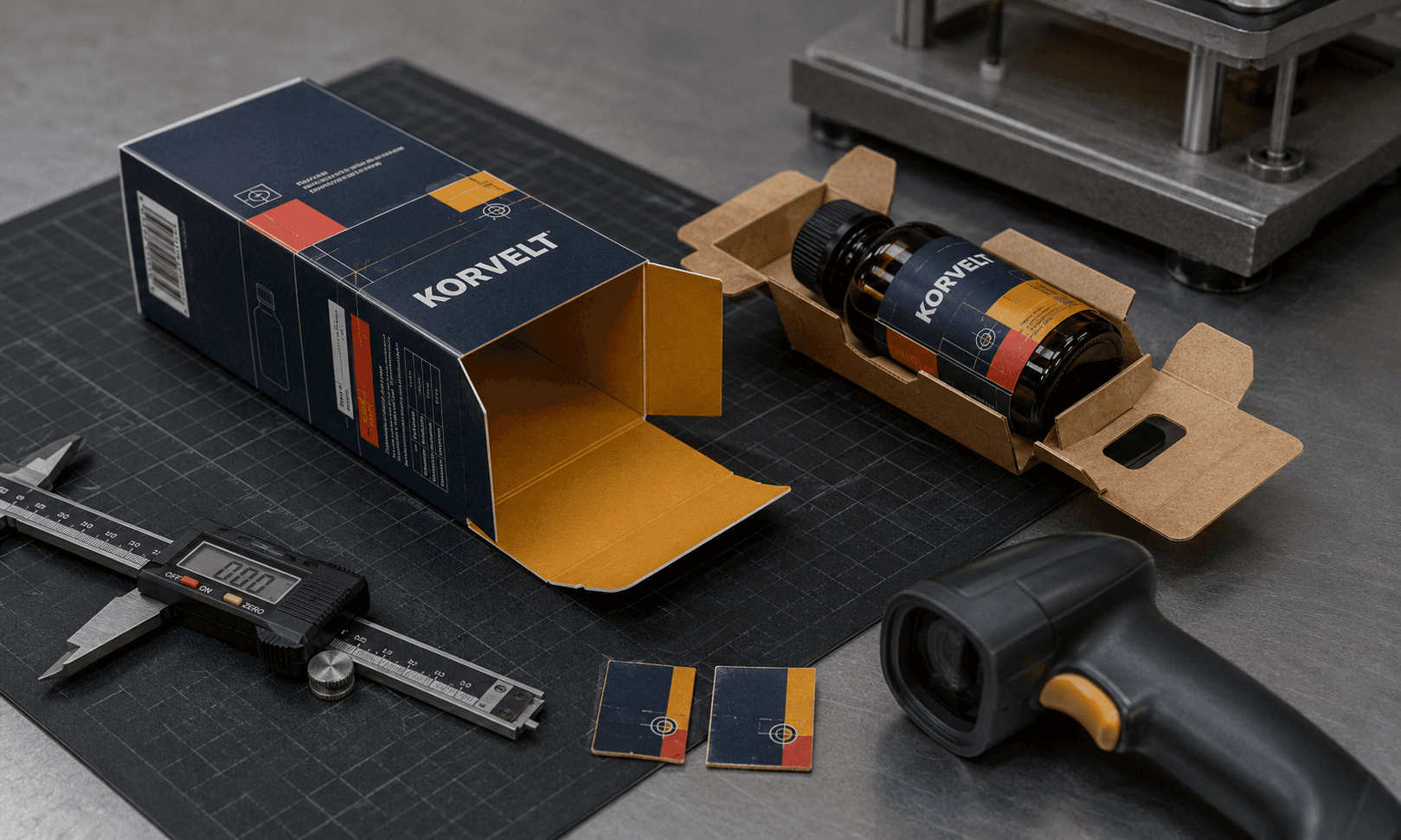
Custom packaging is an engineered component of the product system. Dimensions, board grade, flute, inserts, folds, glue, print, finishes, tolerances and shipping conditions all affect whether that component works.
If your product costs $10 and the packaging costs $1, a failed box does not create a $1 problem. If the packaging failure destroys the product, you have an $11 problem before counting replacement shipping, labor, missed sales or unhappy customers.
That is why I would rather work with a packaging supplier who challenges my assumptions than one who agrees with everything I ask for.
At Custom Packly, that engineering-first mindset is the standard I believe buyers should expect when sourcing custom packaging.
What Are the Biggest Custom Packaging Supplier Red Flags?
The biggest custom packaging supplier red flags are vague specifications, suspiciously low pricing, material substitutions, samples that do not represent production, undocumented manufacturing tolerances, poor color-control processes and suppliers who cannot clearly explain where or how the packaging will be manufactured.
One warning sign does not prove a supplier is unreliable. The real problem is a pattern of vague answers when you ask for the production specification, sample basis, tolerances, manufacturing responsibility or quality-control process.
Before paying a deposit, ask the supplier to restate the exact specification they are pricing and identify the main production risk they see. A supplier who understands the job should be able to tell you what could fail, not just what can be made.
The danger is that many of these problems do not appear in the quote.
They appear after the deposit.
Or after production.
Or, in the worst cases, after thousands of finished products are already being packed and shipped.
If you are sourcing custom packaging, the objective is not simply to find someone capable of making a box. You need a supplier who can repeatedly manufacture the same approved specification at production scale.
These are the 12 red flags I take most seriously.

The 12 Custom Packaging Supplier Red Flags
1. They Say Yes to Everything
I call this the Yes-Man Syndrome.
You send a complicated packaging concept and immediately hear:
“Yes, no problem.”
You ask for an unusually tight deadline.
“Yes.”
You want a complicated insert, specialty finish and aggressive price.
“Yes.”
You have not even supplied the final product weight or dimensions.
“Still no problem.”
That does not impress me. It worries me.
Experienced packaging people ask uncomfortable questions.
They want to know:
A good packaging partner should sometimes tell you that an idea will not work as expected.
If nobody challenges the design, material, dimensions or timeline, there is a real possibility that manufacturing limitations will only be discovered after the order has moved too far.
Technical competence matters more to me than polished sales communication.
A salesperson replying in five minutes is not useful if they cannot explain why the product needs E-flute instead of B-flute, or why the proposed folding carton cannot safely support the product weight.
2. The Quote Looks Cheap Because Important Costs Are Missing
A packaging quote should function like a technical specification, not a one-line receipt.
Be careful when the quote contains little more than:
“5,000 custom boxes: $X.”
What exactly are you buying?
A reliable quote should make the major specifications clear enough that you can compare suppliers on a like-for-like basis.
Depending on the project, that may include:
Some quotes appear incredibly competitive because necessary charges have simply been excluded.
Then tooling appears.
Then plate charges appear.
Then freight changes.
Then another setup fee appears.
By the time production is ready, the supposedly cheap supplier is no longer cheap.
Before comparing bids, make sure you know what details belong in a custom packaging quote. Price comparison is almost meaningless when the underlying specifications are different.
Ask how the MOQ applies when you have multiple sizes, artworks or SKUs. A headline minimum can mean the minimum applies separately to each version, which changes the real order quantity and cost.
Also ask what a repeat order looks like. Confirm whether dies, plates or other tooling are retained, which setup charges recur and whether the approved material and print specification will be referenced on the next run.
3. The Sample Is Better Than the Production Specification
One beautiful sample proves that somebody can make one beautiful sample.
It does not automatically prove that the factory can reproduce 5,000 of them.
This is what I call the golden sample disconnect.
A supplier can spend far more time hand-finishing a pre-production sample than would ever be possible during mass manufacturing. More seriously, the sample can be produced using a heavier board, better wrap paper or different printing process than the bulk order.
That is why sample approval should never stop at, “It looks great.”
Check whether the sample uses the exact material specification being quoted for production.
A blank structural sample and a printed proof answer different questions. The structural sample is for fit, closure, assembly and clearances; the printed proof is for color, artwork, registration and finish behavior.
Do not let approval of one be treated as proof of the other unless the sample was intentionally produced to the final production specification.
If you are ordering custom rigid boxes, verify the rigid board thickness, liner or wrap material, insert construction and finish. Premium structures contain enough components that a seemingly small substitution can noticeably change the final result.
I have seen the consequences when structural sampling is treated casually.
A luxury skincare company ordered 5,000 rigid boxes with molded foam inserts for a three-bottle set.
The supplier created the cavity from dimensions sent by email but handled the dimensional relationship incorrectly. The finished cavity did not properly account for the completed structure.
The problem was not discovered until the boxes reached the fulfillment center and workers began inserting the actual glass bottles.
The result was brutal.
About $14,000 of packaging was unusable.
The remake took approximately six weeks.
The brand missed its Black Friday retail launch and estimated the missed revenue at more than $40,000.
The mistake could have been caught with a blank structural fit sample and the real bottles before mass production.
That is why I never consider a digital mockup a substitute for physical fit testing.

4. They Will Not Define Internal Dimensions and Manufacturing Tolerances
A two-millimeter mistake can destroy an entire packaging run.
That sounds dramatic until your product is two millimeters too large for 5,000 finished boxes.
Every critical packaging project should clearly establish whether the dimensions being discussed are internal or external.
Those measurements are not interchangeable.
Board thickness, corrugated construction, wrapped rigid board and inserts all consume space.
I also want the agreed manufacturing tolerance documented.
For a project requiring tight dimensional control, a tolerance such as ±1.5 mm or ±1/16 inch might be discussed depending on the material, structure and manufacturing process. The correct tolerance is project-specific, which is exactly why it needs to be agreed rather than assumed.
A response such as:
“Don't worry, our machines are very accurate.”
is not a tolerance specification.
If a manufacturer refuses to define acceptable variance in writing, I become very cautious.
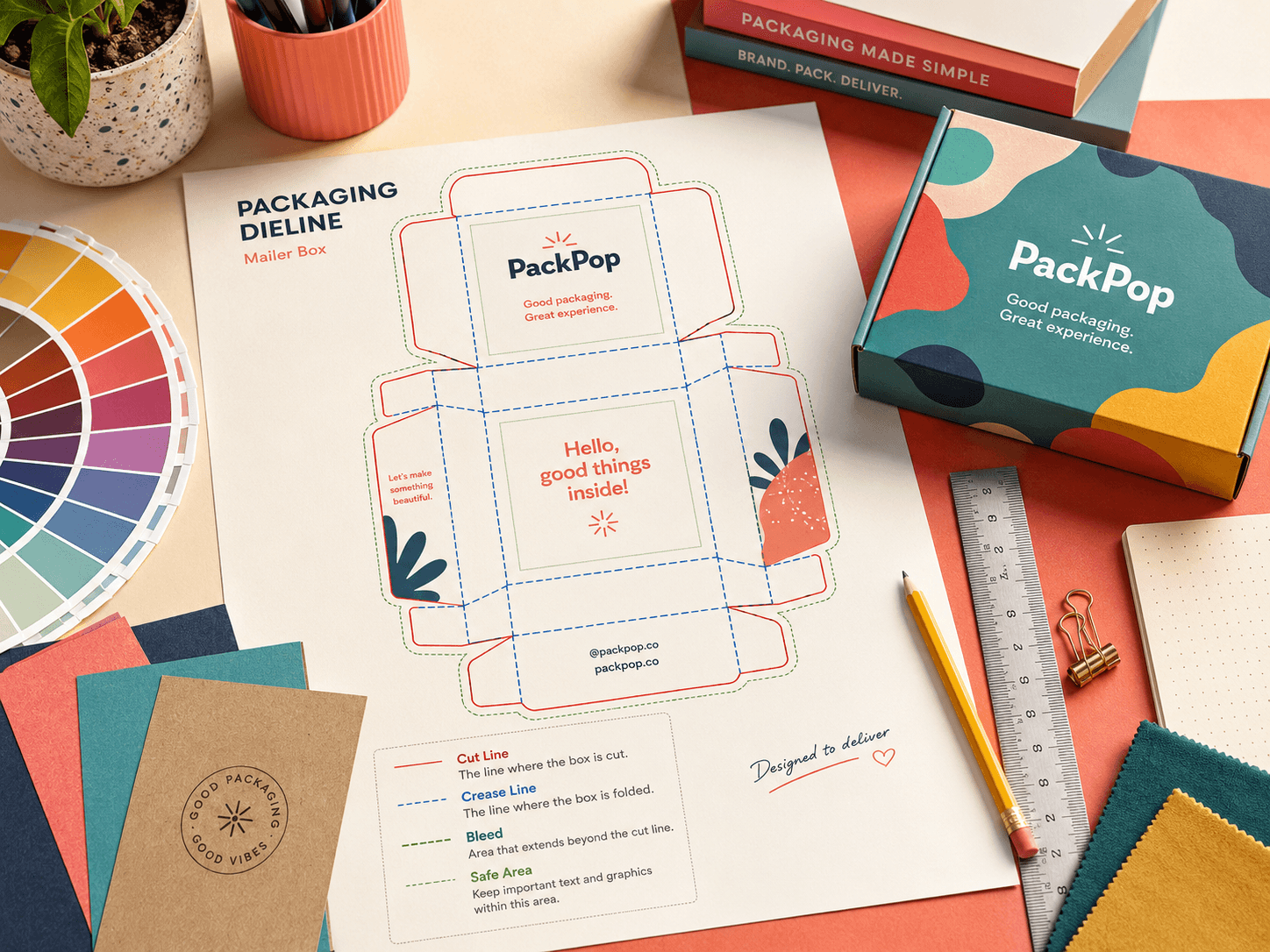
An approved dieline should function as an engineering document. If dimensional accuracy is critical, the tolerance agreement should also appear in the relevant production or purchasing documentation.
The more units you order, the less room you have for assumptions.

5. They Treat Brand Color as a JPEG Problem
Another red flag is a printer asking for a JPEG or generic CMYK file for a critical brand color and acting as though the substrate will not matter.
Ink does not print in a vacuum.
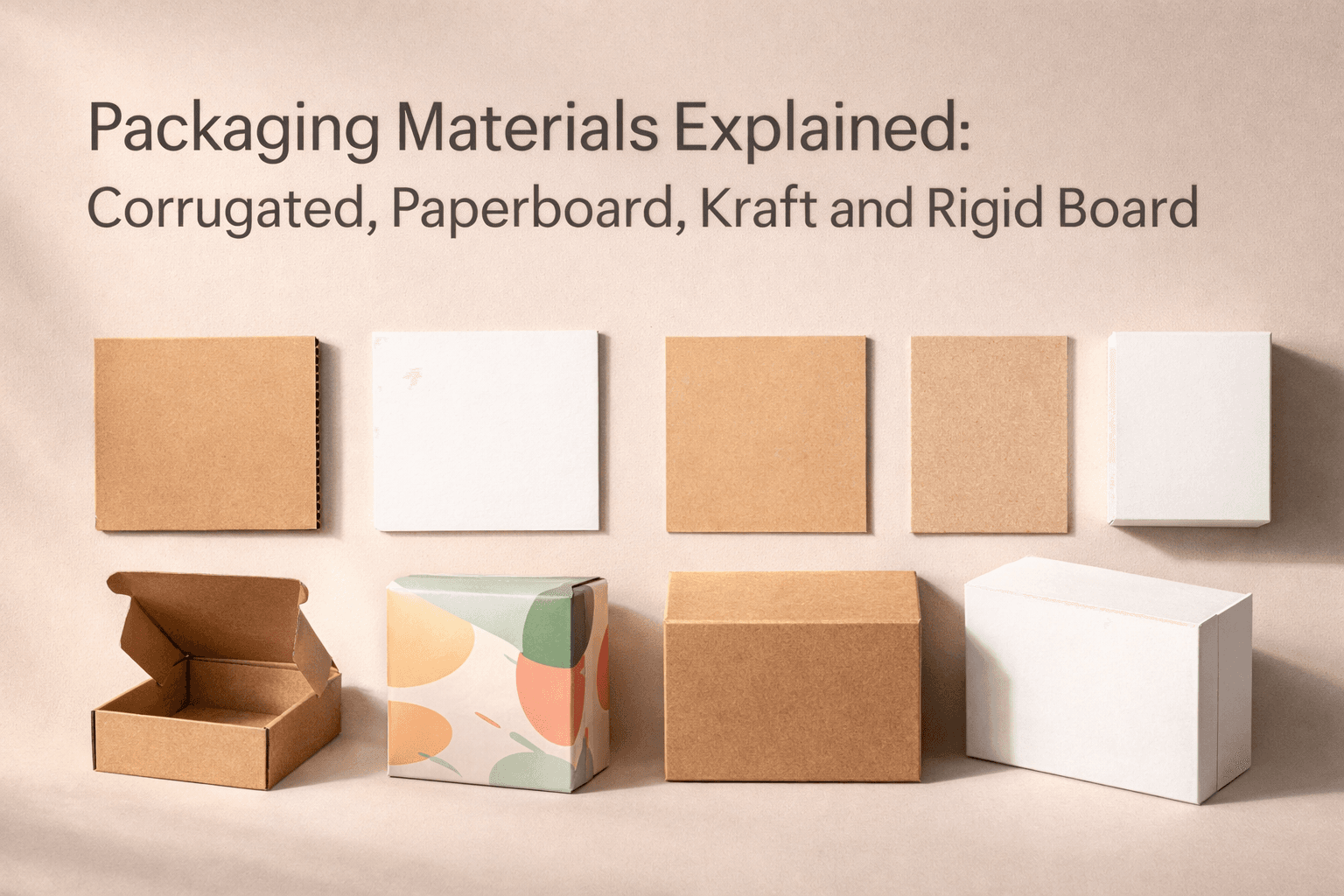
The same color can look significantly different depending on whether it is printed on white SBS, natural kraft, uncoated paper, corrugated liner or wrapped rigid board.
Kraft is an obvious example.
I saw a coffee subscription company order 10,000 kraft mailer boxes using a bright pastel green identity.
The supplier assured them that CMYK printing would make the green look vibrant on the natural kraft stock.
No physical ink drawdown was performed on the actual substrate.
When the mailers arrived, the cheerful green had shifted into a muddy brown-green that made the boxes look dirty rather than fresh.
The packaging cost approximately $8,500.
The supplier refused to remake the order and instead offered a small discount on a future purchase.
To rescue the launch, the company spent another $3,000 with a local printer producing high-quality labels to cover the failed branding.
The problem was predictable.
Unbleached kraft changes the visual base beneath the ink and uncoated fibers behave differently from bright white coated stock.
If a specific brand color matters, define the color-control method before production. Depending on the job, that could involve Pantone references, spot colors, physical drawdowns or production proofs.
The differences between CMYK and Pantone packaging printing become especially important when the brand depends heavily on color consistency.
For custom printed boxes, I would rather discuss color targets before the press starts than argue about them after pallets arrive.

6. They Hide Where the Packaging Is Actually Manufactured
Being a broker is not automatically a problem.
Pretending not to be one is.
For high-volume standardized orders, direct manufacturing can provide better visibility into production, equipment and quality control.
For complicated multi-component packaging, however, a competent broker can add significant value.
Imagine a premium rigid box requiring a molded insert, ribbon, foil stamping and several specialist components. One facility may not produce everything. A skilled packaging broker can coordinate several manufacturers, manage the interfaces and use purchasing leverage across them.
The problem begins when a supplier claims to control the factory while secretly shopping your job to whichever subcontractor is cheapest that week.
I ask where the packaging will physically be manufactured.
Then I ask technical questions.
For example:
The point is not to play detective.
The point is to understand who controls production.
If someone claims to manufacture directly but repeatedly needs days to obtain basic machinery answers from “the team,” I start asking harder questions.
Transparency matters more than labels.
A good broker who openly says, “This component is being produced at this facility and this one at another,” can be far more trustworthy than a fake manufacturer.
If a broker lies about owning or operating the factory, I walk away.
7. Communication Collapses as Soon as the Deposit Is Paid
Watch the communication pattern before and after payment.
Before the deposit:
Replies in five minutes.
Follow-ups every morning.
Calls whenever you want them.
After the deposit:
Two days.
Three days.
“Let me check.”
“We're waiting for production.”
That shift matters.
It can indicate that the salesperson has handed your project to an overloaded coordinator or outside production facility and no longer has direct visibility.
Not every slow response signals disaster, of course. Manufacturing involves real scheduling and technical coordination.
What concerns me is a sudden change in behavior immediately after the commercial commitment.
If communication becomes difficult before production has even begun, imagine trying to resolve a dimensional, printing or material problem once thousands of units are already on the line.
For bulk custom boxes, communication becomes more important rather than less important because artwork versions, specifications and repeat production need tighter control as volume increases.
8. Exact Material Names Quietly Become “Equivalent Grade”
This is one of the smallest wording changes with the biggest potential consequences.
The quote says:
“18pt SBS.”
The purchase documentation later says:
“18pt premium white board.”
Or:
“Equivalent grade.”
Stop.
I do not like the word “equivalent” in a production specification unless the buyer has explicitly approved the substitution.
Different boards can have similar nominal thicknesses while behaving differently during printing, scoring, folding and handling.
If SBS was approved, the production document should not quietly become an undefined white paperboard.
Likewise, if you approved a particular kraft liner, flute construction, rigid board thickness or wrap paper, the final manufacturing specification should preserve that decision.
This is not an argument that only one board type is acceptable.
Alternative materials can be completely valid.
The issue is substitution without informed approval.
A supplier may genuinely find a better or more available stock. Fine. Show it to the buyer. Explain why. Sample it if necessary. Then update the specification deliberately.
Do not hide it behind “equivalent.”
9. One Quote Is 30% to 40% Lower Than Everyone Else
A dramatically cheaper quote deserves investigation, not celebration.
Suppose four qualified suppliers quote the same packaging project.
Three bids are reasonably close.
One is 35% cheaper.
I do not automatically think:
“Fantastic negotiator.”
I ask:
“What specification is different?”
Paperboard, corrugated material, printing, labor, tooling and freight have real costs.
Large price differences can be legitimate when production methods, geography, capacity or purchasing scale differ.
But the supplier should be able to explain the difference.
A low bid may be based on:
Compare specifications line by line.
Never lower packaging cost by accidentally removing the thing that makes the packaging work.
10. The Sales Description and Factory Specification Do Not Match
This is where apparently minor terminology becomes expensive.
The salesperson says:
“Matte lamination.”
The factory specification says:
“Matte aqueous coating.”
Those are not simply two ways of saying matte.
Lamination applies a film to the printed surface. An aqueous coating is a liquid coating applied during printing.
They can differ in feel, scuff behavior, moisture resistance, production method and cost.
The correct choice depends on what the package needs. The problem is not that one is universally better.
The problem is that the buyer thinks they approved one finish while manufacturing is preparing another.
The same issue can occur with:
Read the technical production specification, not just the sales email.
The factory will manufacture what reaches the production floor.
11. Nobody Can Tell You How the Finished Boxes Will Reach Your Warehouse
Buyers spend enormous energy specifying the packaging and almost none specifying how the packaging itself will be packed.
That can be an expensive oversight.
Finished cartons may travel flat.
Rigid boxes may travel assembled.
Printed surfaces may rub.
Edges can crush.
Moisture can warp board.
Forklifts can puncture master cartons.
Poor palletization can destroy perfectly manufactured packaging before you use a single unit.
Before production, understand how finished goods will be:
This matters particularly for larger runs.
If 10,000 cartons arrive with curled panels, crushed corners or damaged print because the shipment was poorly packed, technically producing the boxes correctly does not save the order.
For businesses managing recurring production across multiple SKUs, custom packaging for large businesses should involve specification control beyond artwork alone. Finished-goods handling deserves the same thinking.

12. They Ignore the Small Production Details That Cause Big Failures
Some of the most expensive packaging problems hide in details most buyers never think to ask about.
Glue is one.
Suppose a folding carton receives a high-gloss surface treatment. The glue area may need to be appropriately prepared or kept free from certain coatings so the adhesive can bond correctly.
If the finishing specification and gluing process are incompatible, seams can fail.
The box looked perfect during artwork approval.
Then customers start receiving cartons that pop open.
Barcodes are another.
A barcode is not decoration.
Line quality, contrast, surrounding quiet space and final print execution affect whether it scans reliably.
A beautiful retail carton that repeatedly fails scanning creates an operational problem for the retailer and brand.
This is why custom packaging testing before production should include more than appearance. Product fit, closures, glue, print, finishes, barcode performance and the actual manufacturing specification all deserve attention according to the risk of the project.
We have used this approach in practice: when part of a run passed quality control and part did not, acceptable units were isolated while the balance was reprinted rather than releasing the entire run unchecked.
That is the response I want from a supplier: isolate the defect, protect usable production, correct the balance and document what changed before the next run.
The best packaging suppliers think about failure points before you ask.
A $35,000 Product Loss From the Wrong Corrugated Board
One electronics example captures why supplier selection cannot be reduced to price.
A startup was shipping premium desktop audio speakers weighing about 15 pounds each.
A supplier presenting itself as a manufacturer promised a 4–6 day turnaround at roughly 30% below typical competing pricing.
The material was described vaguely as a heavy-duty corrugated blend.
The order was actually outsourced.
Instead of the stronger double-wall BC-flute construction needed for the shipping application, the cartons were made using single-wall B-flute.
The failure did not appear when someone looked at the empty box.
It appeared in distribution.
Under stacking and courier handling, bottoms buckled and cartons began collapsing.
About 140 speakers were damaged or badly scratched.
The inventory loss was approximately $35,000.
Another $11,000 was spent sourcing appropriate replacement cartons urgently.
That is why I never accept “heavy-duty cardboard” as a material specification.
For shipping boxes, you need to know what board construction you are buying. Depending on the application, corrugated specifications may include flute combination, wall construction and an appropriate ECT or Mullen burst rating.
For corrugated shipping cartons, ask what box manufacturer information and strength specification will accompany the production.
A stronger shipping box is still cheaper than replacing the product it was supposed to protect.

When Should You Become Much Stricter With a Packaging Supplier?
My personal threshold is simple.
Once an order crosses approximately 2,000 units or $5,000 in total value, I become ruthlessly strict about documentation and physical approval.
That is a rule of thumb rather than a universal manufacturing standard.
The reason is practical.
You may be able to manually correct 50 boxes.
You may be able to relabel 100.
You might even rework a few hundred if you have enough labor and time.
At several thousand units, manual rescue becomes painful very quickly.
The larger the financial exposure, the more you should demand:
The objective is not bureaucracy.
It is to move disagreement from after production to before production, when changing something is still cheap.

Three Things I Want Verified Before Paying a Deposit
1. Physical Fit Is Approved
For fit-critical packaging, I want the real product tested in a physical structural sample.
Not a rendering.
Not a 3D mockup.
Not a PDF.
The actual product.
Put it inside.
Close the box.
Open it again.
Shake it.
Turn it sideways.
Check removal clearance.
Inspect pressure points.
If the package contains several items, test all of them together at final packed weight.
A 3D mockup is excellent for visualizing artwork and structure. It is not a substitute for physically proving product fit.
2. Manufacturing Tolerance Is Defined
If dimensional accuracy matters, put the acceptable tolerance in writing.
Do not leave it as:
“Standard factory tolerance.”
What does that mean?
Ask.
The specification should be realistic for the structure and manufacturing process, but both parties should know what constitutes acceptable production.
That creates a measurable standard instead of an argument after delivery.
3. Finished-Goods Packing Is Defined
Confirm how the finished packaging will leave the factory.
For flat cartons, that may involve bundle quantities, protective master cartons and pallet requirements.
Other formats may need different protection.
If moisture, crushing, scuffing or edge damage would make the packaging unusable, those risks should influence the packing specification.
The manufacturing job is not finished when the box leaves the folder-gluer.
It is finished when usable packaging reaches you.

How I Vet a Packaging Manufacturer Before a Large Order
I try to strip away the marketing language and understand the actual manufacturing capability.
First, I establish who is making the packaging.
If the supplier claims to manufacture directly, I want the physical production location.
I may ask equipment-specific questions when the project warrants it.
I also verify certifications when they are material to the claim or buying requirement.
For example, if FSC chain-of-custody is being promised for a project, verify the supplier’s certificate holder record and current status in FSC’s public certificate search rather than trusting an eco-friendly logo on a website.
The same principle applies to quality certifications.
Then I move to sampling.
I want to know whether the exact board, thickness and structure can be sampled before production.
For premium or high-volume work, printed proofing may also be justified to evaluate:
I do not expect every small order to require the same level of proofing.
Risk should determine rigor.
A lightweight promotional carton is different from a 15-pound electronics shipper.
A $500 packaging run is different from a $50,000 recurring program.
But as the consequence of failure rises, documentation should become stronger.
Manufacturer or Broker: Which Is Better?
Neither business model is automatically good or bad.
Transparency is what matters.
I generally prefer direct manufacturing for large, standardized production because it reduces layers between the buyer and the factory floor.
But sophisticated packaging brokers can solve problems a single factory cannot.
A multi-material premium package may involve:
A good broker can act as a packaging project manager and coordinate several specialist facilities.
That expertise has value.
What I will not tolerate is a broker pretending to manufacture directly.
If you are outsourcing, say so.
Tell the buyer where.
Tell them how quality will be controlled.
Tell them who is accountable.
Trust disappears when the production chain is deliberately hidden.
The Three Dealbreakers That Make Me Walk Away
There are three situations where I would seriously consider stopping a project even after spending weeks obtaining quotes and developing the specification.
First, the supplier refuses to commit to a meaningful dimensional tolerance where tolerances are critical to the packaging.
Second, an exact material specification suddenly turns into vague wording such as “equivalent grade” without prior approval.
Third, a quote sits dramatically below comparable bids and the supplier cannot clearly account for the difference.
Walking away after several weeks feels expensive.
Approving a bad production run is usually more expensive.
Sunk time should never pressure you into accepting new manufacturing risks.
What a Good Custom Packaging Supplier Should Do Instead
A strong supplier does not simply accept your artwork and ask for a deposit.
They reduce uncertainty.
They should help clarify:
They should also be willing to say:
“That structure is too weak.”
“That color will change on kraft.”
“That tolerance is unrealistic.”
“You should test this with the physical product.”
“You do not need that expensive finish.”
“That box is oversized.”
Those conversations may make the quote process slightly harder.
They make production much safer.

Stop Buying Packaging Like It Is Just Graphic Design
The most expensive packaging mistake is not choosing the wrong shade of blue.
It is forgetting that the box has a physical job.
It has to fit.
It has to fold.
It has to glue.
It has to carry weight.
It has to survive packing.
It may have to survive stacking, fulfillment, storage and shipping.
Then it has to arrive looking enough like the approved design that the customer recognizes your brand.
That is engineering and manufacturing, not just artwork.
My rule is simple:
Verify everything that could make the finished packaging unusable before mass production begins.
The cheaper a mistake is to catch before production, the less excuse there is for discovering it after 5,000 units have been made.
If you are preparing a new packaging run, Custom Packly can help you turn product dimensions, material requirements, artwork and quantity into a clearly defined production specification before you commit to scale. The goal is not simply to get another box quote. It is to make sure the box you order is actually the box your product needs.