Skip to content
Details

Custom Gable Boxes

Custom printed carry-handle boxes with a peaked folding top, secure bottom construction and product-fit interiors for bakery orders, gifts, retail products and event handouts.

From Counter to Customer

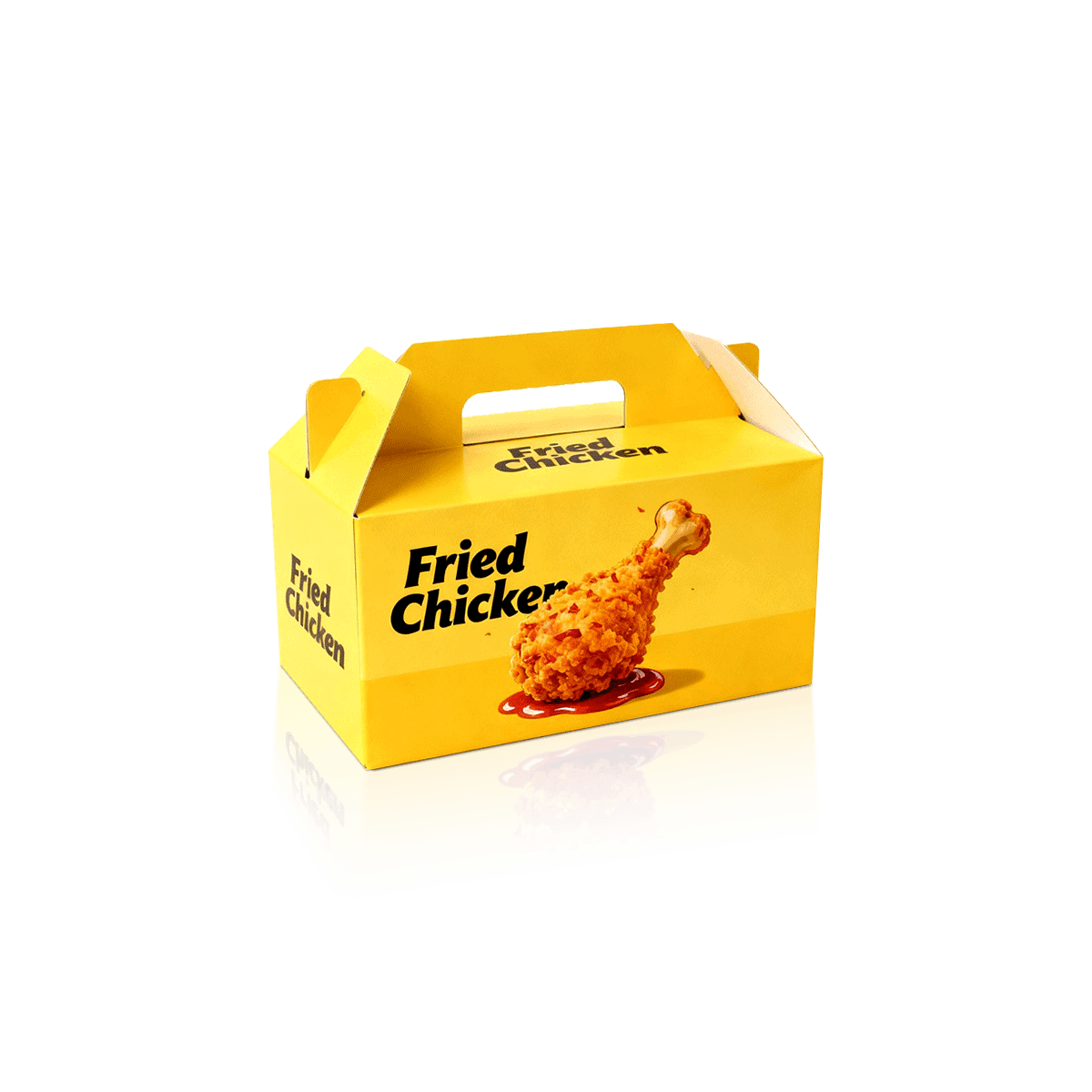
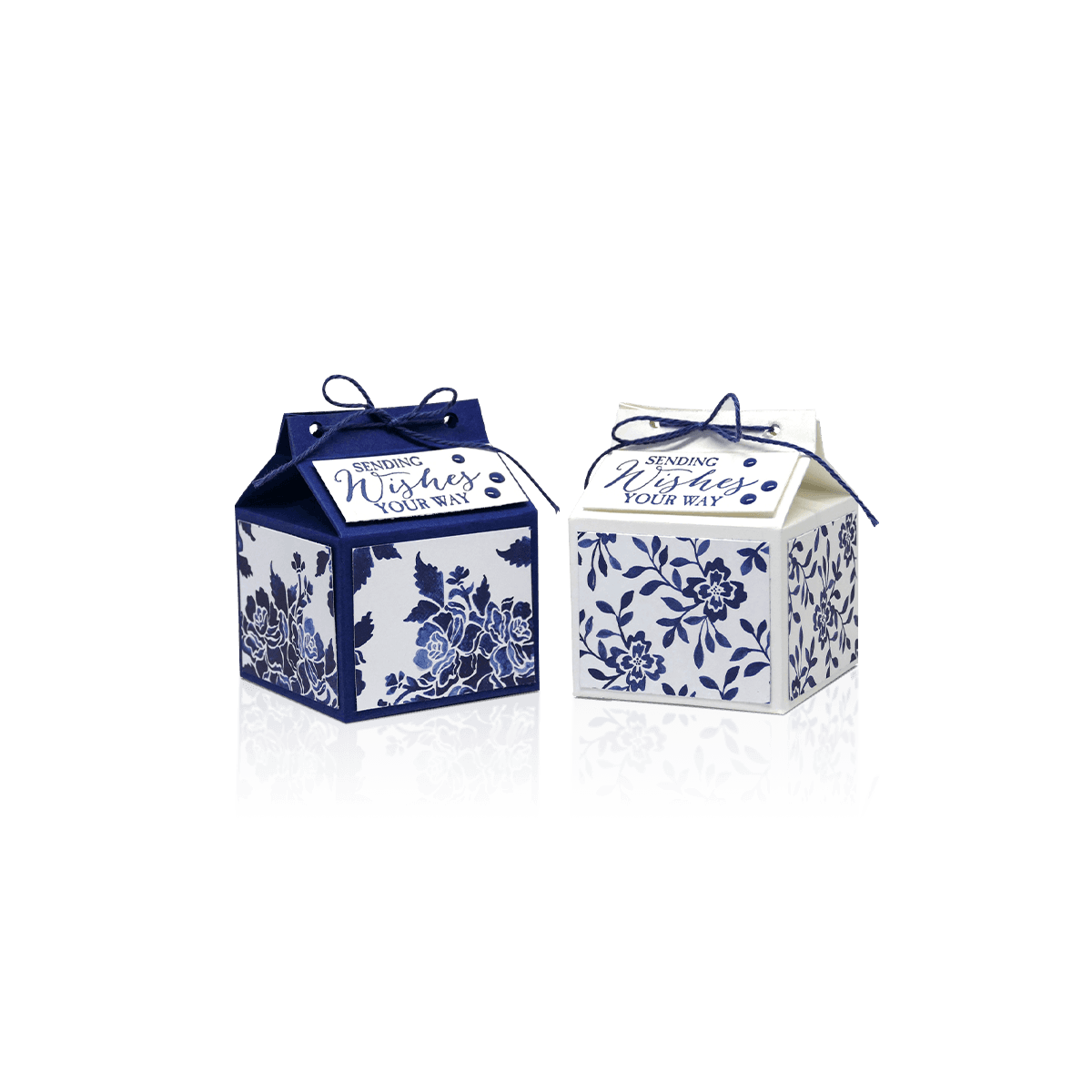
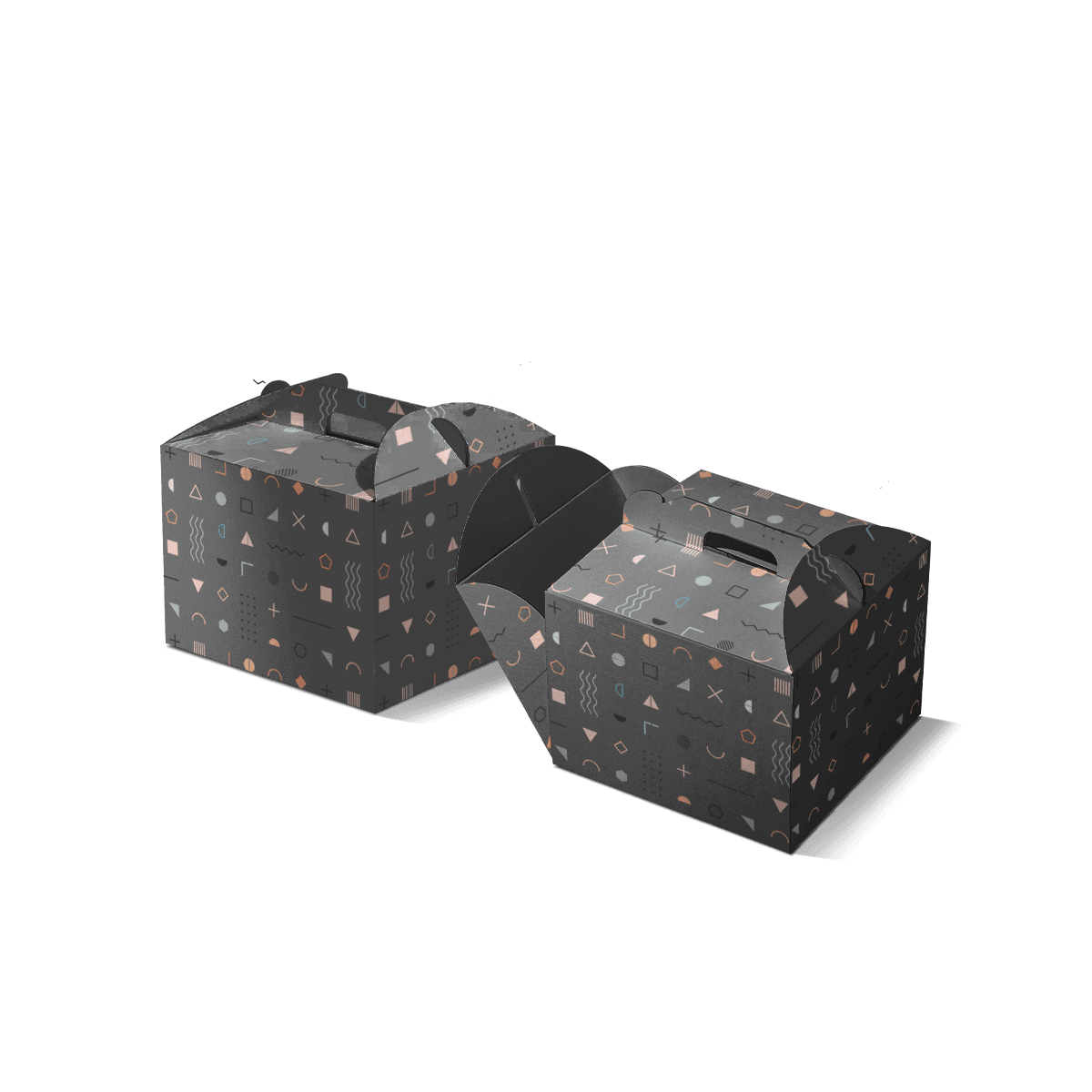
Custom gable boxes are folding boxes with a peaked top and an integrated carry handle. Their upper panels fold together to enclose the contents and form a handle, allowing customers to carry the finished package without a separate bag when the construction and product weight are suitable.

The structure is particularly practical for bakery assortments, gift sets, event favors and retail purchases that need to be packed, closed and handed directly to the customer.

Unlike a conventional folding carton, the handle is part of the box's load-bearing construction. When someone lifts the package, the weight of the contents transfers through the base, walls and upper panels to the handle.

The roof-shaped closure also creates a specific packing requirement: the contents must fit beneath the sloping panels without interfering with the top tabs or handle.

Custom Packly produces custom printed gable boxes in product-specific dimensions, with paperboard, kraft and suitable corrugated construction. Printing, structural inserts, window cutouts and finishes can be selected according to the intended product.

A successful gable box should be easy to assemble at the packing station, comfortable to carry and stable when placed on a counter or table.
One Handle, Several Load Paths

The carrying handle and the upper closure work together. The handle receives the lifting force, while the roof panels, side walls and bottom transfer the weight of the contents through the structure.

This makes the handle cutout, the locking tabs and the bottom construction connected decisions.

The Handle Bridge

The board surrounding the handle opening must retain enough strength to resist tearing when the filled box is lifted.

A larger cutout can give the customer more room for their fingers, but it also removes material from the upper panels.

A very narrow opening may preserve more material while making the box uncomfortable to carry.

The appropriate shape depends on the loaded weight, board specification and intended carrying method.

The grip should also be positioned so the contents hang reasonably level beneath it. An uneven load can cause the box to tilt, placing additional stress on one side of the handle.

Roof Panels and Locks

The two roof panels must meet correctly when the box is closed.

Their tabs or locking features should secure the upper structure without relying on the merchandise to hold them in position.

The closure should remain intact when the box is lifted, set down and carried again.

A top that closes easily when empty may behave differently when the contents push against the sloping panels.

The actual packed arrangement must therefore be considered when developing the locking geometry.

The Filled Carry Check

For a new construction, the appropriate physical check is to fill a sample with the intended merchandise or a representative equivalent load.

Lift it by the handle, carry it for the expected handoff distance and set it down repeatedly.

Observe the handle opening, locking tabs, roof folds, side walls and bottom.

The box should remain closed and the load should stay reasonably level.

A digital mockup can confirm appearance, but it cannot establish the carrying capacity of the finished structure.

Custom Packly can arrange a paid custom physical sample when the exact handle and construction need assessment before production.

Body Space Ends at the Roof

Gable boxes have a rectangular lower body and a peaked upper closure. The usable product height is normally measured within the lower body, not to the highest point of the assembled handle.

This distinction affects the entire packing arrangement.

The Three Working Dimensions

The starting dimensions are the internal width, depth and usable body height.

The product's maximum dimensions should include any wrapping, inserts, cups, trays or other components that will remain inside the box.

For a mixed gift set, measure the completed arrangement rather than adding the dimensions of individual products.

A box containing three small jars, for example, might use a side-by-side arrangement or a divided tray.

Those arrangements produce different base dimensions even though the contents are identical.

The assembled box also has an overall height that includes the roof and handle. That dimension matters for storage, display and transportation.

A box that fits the merchandise internally can still be too tall for the intended retail shelf once its handle is formed.

Clearance Beneath the Slopes

The roof is not dependable storage space for tall products.

An item extending into the sloping area can interfere with the closure panels or prevent the handle from forming correctly.

Increasing the overall height may solve a clearance issue, but it can also produce an unnecessarily tall package.

For compact assortments, a slightly wider base may create a more practical arrangement than placing products in a tall vertical stack.

The Center of the Load

The placement of the merchandise influences how the gable box behaves during carrying.

A heavy product positioned against one side can cause the package to tilt.

For several products, the arrangement should distribute the load appropriately across the bottom.

Paperboard dividers or fitted inserts can help maintain that arrangement.

For menu-specific applications, gable boxes for food can be configured around portion sizes, primary food containers and the intended carryout process.

The Bottom Carries Everything

The bottom must support the complete contents while the box is standing, being filled and hanging from its handle.

Different bottom constructions can be considered according to product weight, packing speed and manufacturing requirements.

Tuck and Lock Bottoms

A conventional folded bottom may use interlocking or tuck-in panels.

This construction can be suitable for lightweight merchandise, gift items and other applications where the completed bottom supports the intended load.

The tabs must engage correctly during assembly.

If the panels are not fully locked, the bottom may appear secure when the empty box is placed on a table but become unreliable when weight is added.

The appropriate board grade and bottom geometry need to be selected together.

Automatic Bottom Construction

For higher-volume packing, an automatic bottom may be considered if the gable structure is developed to accommodate it.

Pre-glued bottom panels can move into position as the box is erected, reducing the number of separate folding operations.

However, an automatic bottom is not inherently required for a gable box.

Its additional converting requirements should be justified by the packing operation.

Where the integrated handle is unnecessary, auto-lock bottom boxes can suit products that need quick erection and a stable retail-carton base.

Pressure Across the Base

A flat-bottomed box provides a stable surface for products that need to remain upright.

The bottom can still deform if the load is concentrated in a small area.

A heavy jar, for example, may place most of its weight through a relatively narrow contact surface.

An appropriate base support or fitted insert can help distribute that pressure.

Material selection should follow the intended load. Custom Packly's packaging capabilities support decisions involving folding paperboard, kraft stock, corrugated construction and structural reinforcement.

Food and Gifts Need Different Interiors

The integrated handle makes gable boxes practical for several applications, but the interior must suit what the customer is actually carrying.

A bakery order and a promotional gift set may share the same exterior shape while requiring substantially different internal arrangements.

Bakery and Food Handoffs

Wrapped cookies, packaged pastries and sealed snack assortments can be carried in gable boxes.

For decorated products, the interior should prevent the contents from touching the upper panels or moving excessively.

The appropriate arrangement may use individual wrappers, a separate food tray or suitable dividers.

Direct food contact requires material selection for the actual product and conditions.

Ordinary printed paperboard should not automatically be treated as approved for direct food contact. Grease, heat, moisture and the intended contact duration can change the material requirements.

For hot or greasy products, an appropriate primary container may be necessary.

The risks associated with unsuitable board, grease exposure and service conditions are addressed in food packaging mistakes to avoid.

A handled outer box should not be expected to prevent leakage from an unsuitable primary food container.

Event Favors and Promotional Kits

A gable box can combine several small handouts into one guest-ready package.

The integrated handle can be particularly practical when people collect their gifts from a registration desk, event table or promotional counter.

For event favor boxes, the individual gift dimensions, guest count and distribution method should determine the finished construction.

A small favor containing wrapped sweets may not require an insert.

A promotional set combining a glass jar, printed card and small accessory may need dividers or a fitted platform.

The insert should prevent the heavier component from moving into the lighter items during carrying.

Retail Purchases

Gable boxes can serve as customer-facing packaging for boutiques, gift shops and seasonal retail promotions.

A printed exterior can identify the brand while the structure gives customers a convenient way to carry a compact purchase.

However, the built-in handle is not necessary for every retail product.

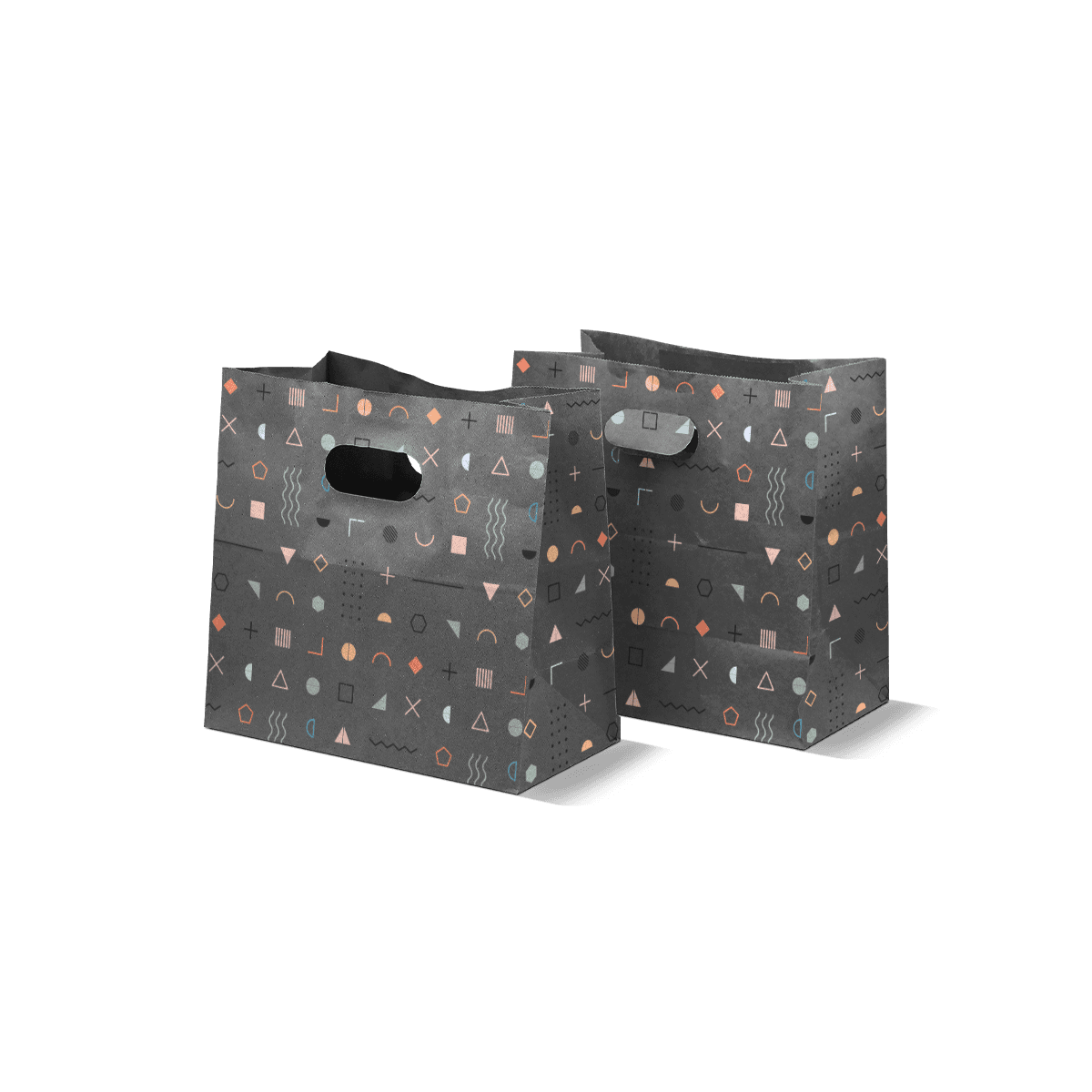
For lightweight merchandise already protected by individual packaging, bakery paper bags or another suitable carry bag may require less structure.

For compact gifts that do not need a handle or a substantial rectangular base, pillow boxes can suit the presentation.

The carrying requirement should justify the added roof and handle construction.

Windows Without Sacrificing the Handle

A die-cut window can reveal the contents while retaining the gable box's branded exterior.

The position of the window matters because the box has several panels that contribute to its structural strength.

Removing material from the wrong location can compromise the handle or the walls supporting it.

Window Position

The front and side panels are potential locations for a product-viewing window.

The best position depends on the merchandise and how the completed box will be displayed.

For a bakery assortment, a window should reveal the products rather than empty space, dividers or unnecessary wrapping.

A window on a gift box might frame the main item while leaving the smaller accessories concealed.

The opening should retain adequate material around the corners, bottom folds and upper closure.

A large cutout extending too close to the handle-supporting panels can remove material needed for carrying.

Open or Film-Covered Windows

An open cutout gives customers direct visual access to the contents.

A clear film patch can create a viewing area while maintaining additional coverage.

The appropriate option depends on hygiene requirements, product containment, presentation and the intended retail environment.

A window patch does not automatically establish food-contact suitability or provide a particular moisture barrier. Those requirements must be confirmed for the specific construction.

When product visibility matters but carrying does not, windowed folding cartons may achieve the intended presentation with a simpler top closure.

Artwork Across the Peaked Top

The gable structure creates distinctive printed surfaces, but the roof folds and handle cutout interrupt the available artwork area.

The design should account for the assembled shape rather than treating every panel as an uninterrupted rectangle.

Front and Side Panels

The rectangular body panels usually carry the main branding, product identification and promotional graphics.

Their proportions depend on the product-fit dimensions.

A wide, shallow gable box may give the brand a broad front panel but relatively short side walls.

A taller box may accommodate vertical artwork while providing less uninterrupted space beneath the roof.

Logos and essential product information should remain clear when the box is closed and carried.

The Roof as a Visible Surface

The sloping top panels can carry patterns, secondary branding or artwork that continues from the main body.

However, the handle opening and closing tabs must remain functional.

Important text should not be positioned where it will disappear beneath overlapping panels.

The orientation of any roof artwork should also be assessed when the box is assembled.

A graphic that reads correctly on the flat cutting layout may appear upside down or fragmented after folding.

The principles behind packaging dielines and artwork placement are particularly important for structures with several interacting top panels.

Printing and Finishes

CMYK printing can reproduce full-color graphics, photographs and multicolor artwork.

Pantone colors may be appropriate when precise brand color matching is required.

Premium offset printing can be considered for applications where the artwork and production requirements suit that process.

Kraft board supports a natural paper appearance, while white or coated stock can provide a suitable surface for brighter printed colors.

Matte, gloss, soft-touch, foil and other compatible finishes can be considered for the visible panels.

The grip area needs particular attention.

A decorative treatment should not make the handle uncomfortable or interfere with the way its panels engage.

Custom Packly provides free design and dieline support, together with free 3D mockups for reviewing the assembled box.

Carryout Is Not Parcel Shipping

A gable box can work well as customer-facing packaging without being suitable as the sole container for carrier shipping.

The distinction comes from the conditions it encounters.

A customer carrying a box home from a bakery or event generally handles it differently from a parcel moving through automated sorting, stacking and transportation.

The raised handle and peaked top also make ordinary stacking less straightforward.

Short-Distance Handoff

For counter pickup, the box should remain secure while the customer carries it by the intended handle.

The base should stand level when the package is placed on a table, in a vehicle or at the destination.

If the contents are fragile, their individual packaging or internal supports must manage the expected movement.

The handle should not be treated as a substitute for appropriate product protection.

Shipping Printed Gable Boxes

For ecommerce orders, a suitable outer carton may be required to protect the printed gable box and its contents.

The handle should not be left exposed to carrier equipment unless the complete construction has been assessed for the intended shipping conditions.

A fitted shipping box can accommodate the customer-facing package while protecting the roof and handle from direct handling.

The distinction between retail and ecommerce packaging becomes important when the same product is sold at a physical counter and shipped directly to customers.

A single customer-facing gable box may be retained across both channels while the shipping arrangement changes.

Production That Fits Your Handoff

The cost of custom gable boxes depends on the approved dimensions, board, bottom construction, printing and additional structural components.

The integrated handle is part of the die-cut design, but different handle and closure configurations can require different manufacturing arrangements.

A basic paperboard box for lightweight favors has different requirements from a reinforced corrugated box carrying several packaged products.

Window patches, inserts and specialty finishes can also affect the complete production cost.

Flat Supply and Assembly

Gable boxes can generally be supplied flat, reducing the space occupied before assembly.

Depending on the construction, the packing team may need to form the bottom, load the merchandise and secure the peaked top.

For a busy bakery or event operation, the number of assembly steps matters.

A construction that requires several separate locking operations can slow the packing process.

If the box will be assembled in advance, the business also needs space to store the erected units before filling.

These considerations should influence the construction selected for the order.

Quantities and Timing

Custom Packly's USA MOQ starts from 100 boxes. The applicable minimum depends on the final construction and production requirements.

Standard turnaround is 4–6 days after final artwork and specifications are approved. Complex structures, specialty materials and advanced finishes may require additional time.

US production and free shipping are included.

For larger repeat programs, warehousing and scheduled deliveries can be arranged where appropriate.

The most important pricing inputs are the internal body dimensions, complete packed weight, intended bottom and handle construction, order quantity and printing requirements.

If the project includes food, inserts or windows, those requirements should be established before the production specification is finalized.

Once the construction and quantity are sufficiently defined, request a custom gable box quote for the intended product and carrying conditions.

Opening at the Destination

The customer's first interaction after carrying the package is usually opening the peaked top.

That action should be straightforward without requiring the customer to damage the box or disturb its contents.

The upper locking tabs must remain accessible when the handle is released.

A closure that requires excessive force can bend the roof or cause the customer to pull on the handle incorrectly.

For a gift set, the opening should expose the contents without forcing the recipient to tip the package upside down.

For bakery orders, the customer should be able to open the top and remove the food containers without touching delicate products unnecessarily.

The intended use determines whether reclosure matters.

A box used for a single event handout may only need to open cleanly once. Packaging intended to hold several products over multiple uses may benefit from tabs that can be opened and secured repeatedly without excessive wear.

The opening should work with the contents still inside, not only when the box is empty.

A well-developed gable box completes the entire handoff: it closes at the packing station, carries the intended weight and allows the customer to reach the contents without fighting the structure.

FAQs

Use the internal body height below the sloped roof as the main product space. Custom gable boxes need extra room above the product so the top tabs can close and the handle can form without pressure.

Light corrugated board often gives more support than folding paperboard, but total weight, base size and handle design still matter. Very heavy products may perform better in a box without a raised carry handle.

They usually arrive flat to reduce storage space. Staff form the base, load the products and close the top as needed. Test setup speed before a large food, retail or event run.

Yes, but the opening must leave enough board around folds, tabs and the handle path. A smaller, well-placed window often protects the structure better than a large cutout.

Some corrugated builds may suit limited shipping needs, but many printed paperboard gable boxes are better used as the inner customer-facing pack inside a protective shipping carton.

Process

How it works

Your Packaging Journey, From Idea to Production and Delivery

01

Tell Us Your Specs

Custom packaging boxes

Tell Us Your Specs

Provide size, quantity, printing, and finishes.

02

Get a Fast Quote

Custom packaging boxes

Get a Fast Quote

Instant transparent pricing, no hidden fees.

03

Design and Approval

Custom packaging boxes

Design and Approval

Artwork checks, revisions, and final sign-off.

04

Produce

Custom packaging boxes

Produce

Expert manufacturing to meet deadlines.

05

Ship to Your Door

Custom packaging boxes

Ship to Your Door

Hassle-free, flexible delivery options.

Get Your Quote for Custom Gable Boxes

Share your product details, size, quantity and artwork needs. We’ll help choose the right packaging style and send a clear quote.