Skip to content
Details

Custom Eco-Friendly Pet Boxes

Custom printed pet packaging with recycled-content board options, paper-based inserts and fewer unnecessary components. Create retail cartons for treats, toys and pet care products with practical protection and clearly supported material claims.

One Pet Purchase, Several Discards

Once a cat-treat multipack is opened, its printed carton, sealed pouches and clear display film may need different disposal routes. The exterior looks like paper packaging, but the complete purchase contains several materials.

For Custom Eco-Friendly Pet Boxes, the material choices should make sense together. Using recycled paperboard is a worthwhile consideration, but it does not automatically establish that the finished package is recyclable or has a lower environmental impact overall.

The construction matters just as much as the material.

A carton with an integrated paperboard support may eliminate a separate plastic tray. A properly sized box may need less filler. An unnecessary film window might be removed without changing how the product is sold.

These adjustments can simplify the package while preserving its intended function.

Custom Packly supports custom paperboard and corrugated construction, recycled stock options and paper-based inserts for pet products.

The objective is to establish exactly what each component does, which materials are necessary and how the finished pack can be separated after use.

The Treat Pouch Still Needs Its Barrier

A paperboard carton should not replace a sealed treat pouch simply to eliminate plastic from the visible packaging.

Pet treats may require moisture, oxygen or aroma protection, depending on their formulation and intended shelf life. Those requirements must be addressed by the approved primary package.

The outer carton performs a different job. It can organize the selling unit, support retail display and carry printed product information.

For products already contained in suitable sealed pouches, the secondary carton may not need any additional barrier.

Sealed Treat Multipacks

A multipack containing several individual treat portions can use a printed paperboard carton around the sealed primary packs.

Its dimensions should accommodate the filled pouches, including their seals and the way their contents settle.

The carton should not compress the pouches so tightly that their seals become vulnerable during packing or retail handling.

For brands selling individual portions together, custom treat boxes can organize the selling unit while leaving product containment to the primary packaging.

The outer carton and sealed pouches should have separately assessed material and disposal specifications.

Direct Food Contact

A paper-based appearance does not establish food-contact suitability.

When a carton directly contacts pet food, its material, inks, coatings and construction must be appropriate for the intended application.

Recycled-content stock should not automatically be treated as suitable for direct food contact.

The product's regulatory and technical requirements must be established before selecting the material.

If a suitable sealed primary package already performs the containment function, a simpler secondary carton may be possible without introducing unnecessary material into the food-contact construction.

Does the Window Need Film?

A transparent window can help customers inspect a pet toy, grooming accessory or sealed treat product before purchasing it.

However, attaching plastic film to an otherwise paper-based carton introduces another material into the package.

Removing that film may simplify the material mix, provided the product remains adequately contained and the carton retains sufficient strength.

The decision depends on what the window actually contributes.

Open Die-Cut Windows

An open cutout can reveal the product without requiring a transparent film patch.

This may work for certain toys and accessories when the internal structure prevents the item from moving through the opening.

The window must leave enough board around the cutout to support the carton.

For a loose product, an internal retaining feature may be necessary.

An open window is less appropriate when it exposes a product that needs a sealed protective environment.

Windows Around Sealed Products

A multipack of individually sealed treats presents a different opportunity.

If the primary pouches already protect the contents, the carton may not need an additional film barrier purely for presentation.

Consider a hypothetical retail carton containing four printed treat pouches.

The original concept has a large transparent window and a separate plastic tray to hold the pouches upright.

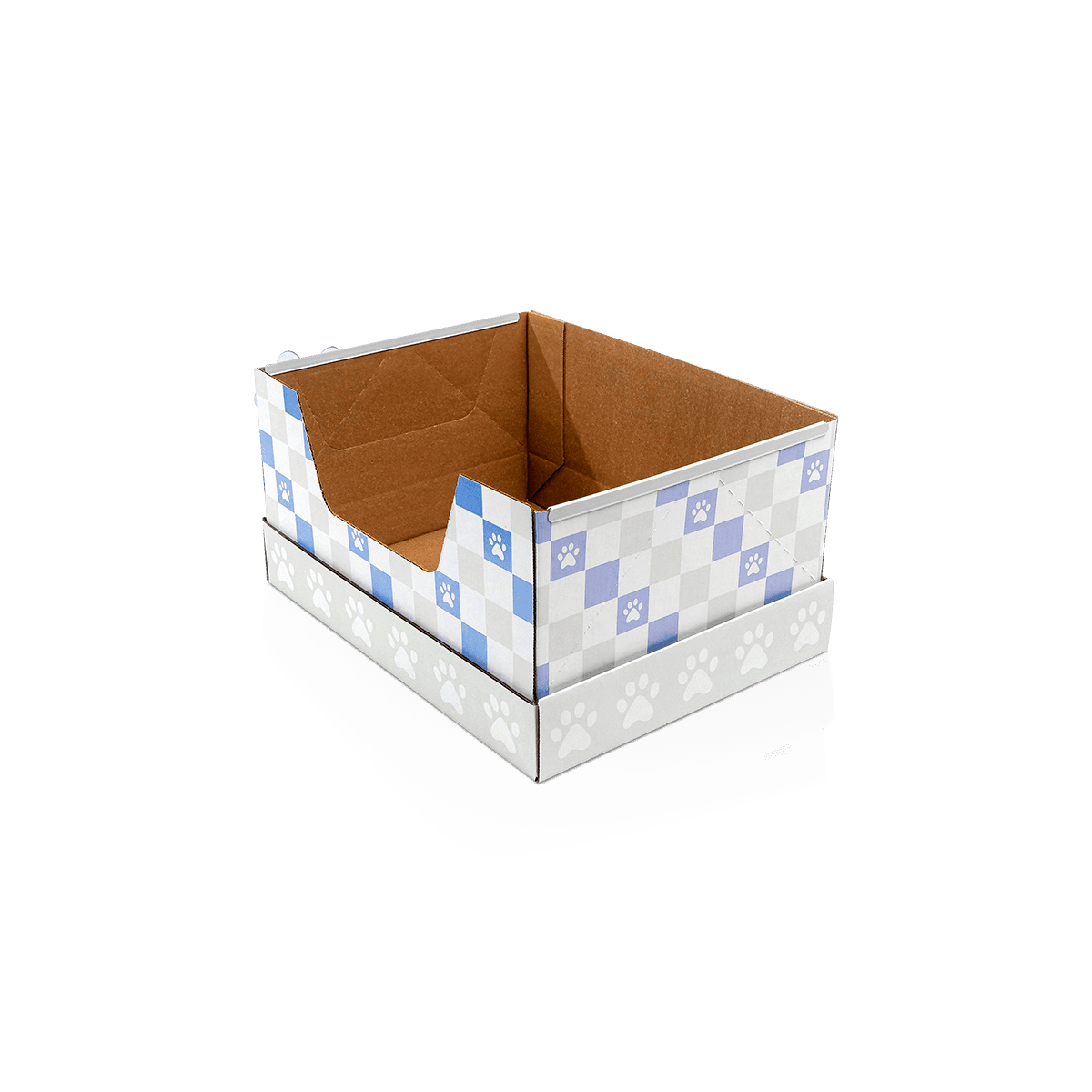
An alternative construction could use a paperboard display lip with an integrated support behind the pouches.

The individual packs remain visible through an open cutout, while the carton holds them in their intended retail position.

This removes the need for a separate window film and may eliminate the plastic tray.

The adjustment must still preserve product retention, shelf appearance and the strength of the remaining front panel.

An open cutout should not be adopted if it makes ordinary handling unreliable.

Recycled Board Without Assumptions

Recycled paperboard, kraft stock and corrugated board are different material specifications. They should not be treated as interchangeable environmental claims.

The appropriate choice depends on the product's weight, printing requirements and intended use.

Recycled-Content Paperboard

Recycled-content paperboard can be considered for retail cartons containing pet accessories, toys and appropriately sealed products.

The grade must have sufficient stiffness for the finished dimensions and intended load.

An excessively light board that bends under normal handling is not an improvement simply because it contains recycled fiber.

Where a specific recycled-content percentage is required, the material specification and supporting documentation need to establish that percentage.

Post-consumer recycled content is also a specific material attribute, not a synonym for every form of recycled fiber.

Natural Kraft Stock

Kraft board is an option for pet brands seeking a natural brown printing surface.

Its color can work with restrained artwork, simple illustrations and product identification.

However, kraft's appearance does not establish its recycled content or recyclability.

Brown paper is not automatically recycled paper.

For photo-heavy designs or artwork requiring a bright white background, white paperboard may produce a more suitable printed result.

The technical differences between corrugated, paperboard, kraft and rigid board affect structural performance as well as the finished appearance.

Corrugated Construction

Corrugated board can support heavier pet products, multipacks and boxes that need additional strength during distribution.

Recycled-content corrugated grades may be appropriate where the required structural performance can be achieved.

The board grade and flute should follow the packed weight, stacking requirements and intended handling conditions.

An unnecessarily heavy construction adds material without necessarily improving the complete packaging system.

For lightweight pet products sold on retail shelves, pet folding cartons may be sufficient without introducing corrugated board into the individual selling unit.

Paper-Based Support Instead of Plastic Trays

Plastic trays are sometimes used because they offer precise product positioning and a defined retail presentation.

For many pet products, a paperboard or molded-pulp support may perform the necessary job without requiring a separate plastic tray.

The replacement should be based on the product's actual retention and protection requirements.

Folded Paperboard Inserts

Die-cut paperboard can form retaining tabs, compartments and support platforms.

This construction can work for lightweight grooming accessories, compact toys and multipacks containing sealed products.

A single folded support may also replace several separate internal components.

For an accessory with a metal clip, the support should prevent the clip from striking neighboring products or the carton walls.

The insert material and geometry must suit the product rather than relying on a paper-based appearance alone.

Molded Pulp

Molded pulp can create shaped cavities for bottles, jars and other products that need formed support.

It may be appropriate when a simple folded paperboard insert cannot maintain the intended position.

However, a custom molded cavity can introduce tooling and dimensional constraints that make it less practical for products that change size frequently.

The foam, cardboard and molded-pulp insert trade-offs matter when changing the material could also change cushioning, retention or packing requirements.

Paper-based construction should be selected because it performs the necessary job, not merely because it replaces a plastic component.

The Cost of Removing a Component

Simplifying a package can change its manufacturing cost, but fewer components do not automatically mean a lower total price.

A carton with an integrated support may eliminate a separately purchased tray. It could also require a more complex dieline, additional die-cutting or a different assembly method.

The complete construction needs to be considered.

For a new pet packaging project, compare the proposed changes against the existing arrangement:

  • Removing a transparent window film while retaining the required product visibility.
  • Replacing a separate plastic tray with a suitable folded paperboard support.
  • Reducing unnecessary carton dimensions.
  • Combining multiple paperboard components into one practical construction.
  • Avoiding an additional exterior sleeve when the carton already has sufficient printing space.

Each adjustment can affect material consumption, production setup and packing labor.

Custom Packly's USA minimum order quantity starts from 100 boxes. Its instant quote system can support a commercially defined construction once the material requirements are established.

When requesting a custom packaging quote, identify the existing component you want to remove or replace. That gives the packaging team a specific manufacturing objective rather than an unrestricted request for an environmentally friendly box.

Free 3D mockups can help assess the proposed appearance. Fully custom pre-production samples can be arranged as paid samples when a physical construction needs to be evaluated.

Print Claims the Material Supports

An environmental statement should describe a verified property of the actual packaging, not simply the appearance of its exterior.

A kraft carton may look natural without containing recycled fiber. A paperboard box may be recyclable in some circumstances while an attached film or coating changes its recovery requirements.

The distinction needs to remain clear in the printed artwork.

The FTC's Green Guides caution against broad, unqualified environmental claims and call for specific, substantiated benefits. Recyclability claims must also account for access to appropriate recycling facilities.

For pet packaging, that means treating each material claim as part of the approved product specification.

Recycled Content

A recycled-content claim needs to reflect the actual material used.

If the carton contains a verified percentage of recycled fiber, the wording should accurately identify that percentage and the component to which it applies.

Do not extend a board supplier's recycled-content statement to the entire package when other components use different materials.

Recyclability

A recyclable claim requires consideration of the finished packaging construction and the recycling systems accessible to its intended market.

A standard paperboard carton and a carton with a permanently attached specialty laminate may require different assessments.

The same applies to attached windows, coatings and other mixed-material components.

An unqualified recyclable claim should not be used without the necessary substantiation.

Compostability

Compostability is a separate claim from recyclability.

A carton made from paper does not automatically qualify as compostable.

The complete construction, including applicable coatings, adhesives and other components, must satisfy the requirements supporting the claim.

Custom Packly does not need to describe a standard paperboard carton as compostable to communicate a verified recycled-content or material-reduction benefit.

Disposal Instructions

Where the complete packaging assessment supports it, printed instructions can identify components that should be separated before disposal.

For example, a carton may contain a separately removable insert and a sealed primary pouch.

The instructions must accurately reflect the finished materials and the recycling systems appropriate for the intended market.

For packaging sold across multiple US markets, disposal wording should account for differences in local recycling access.
Branding Without Unnecessary Layers

Eco-conscious packaging does not have to be unprinted or visually plain.

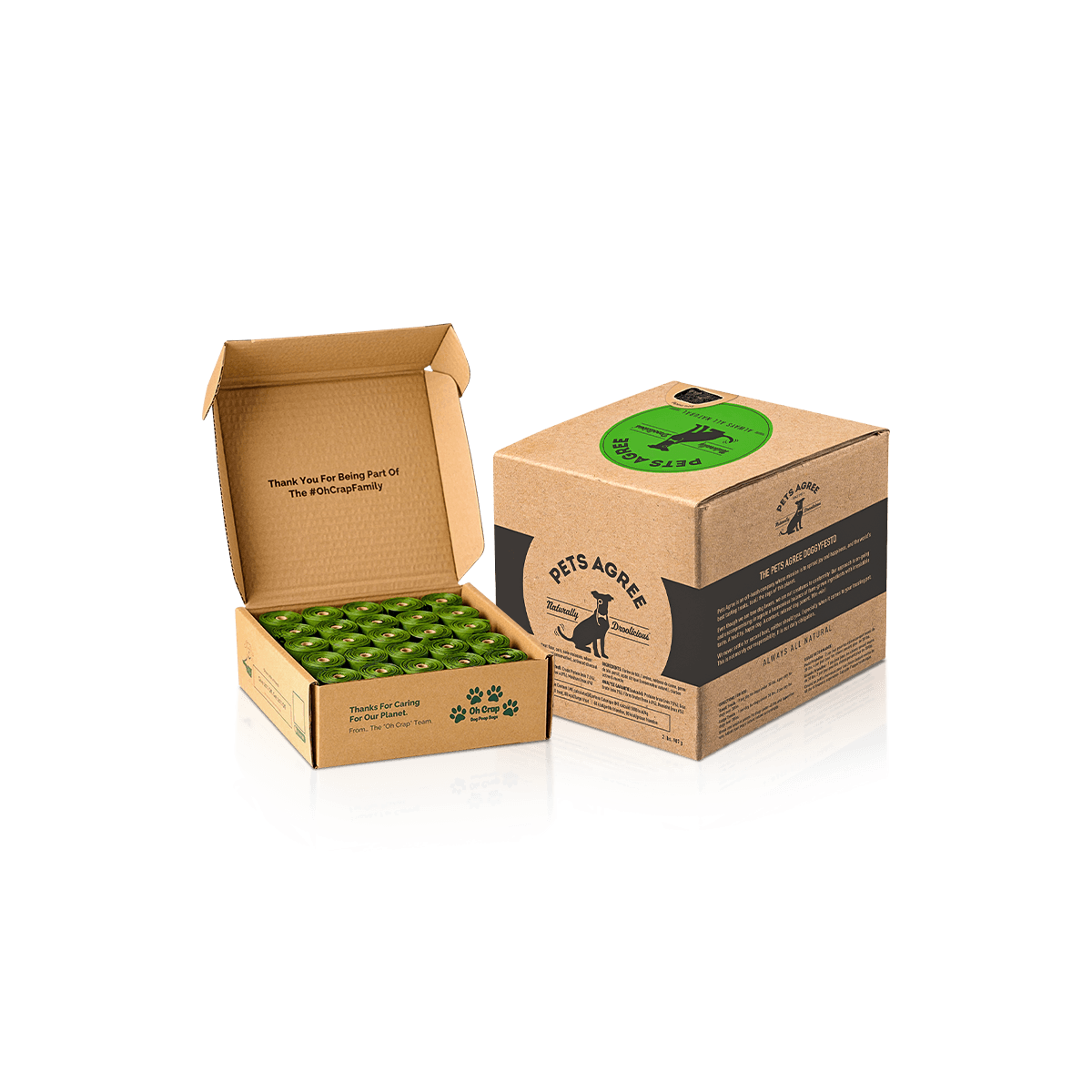
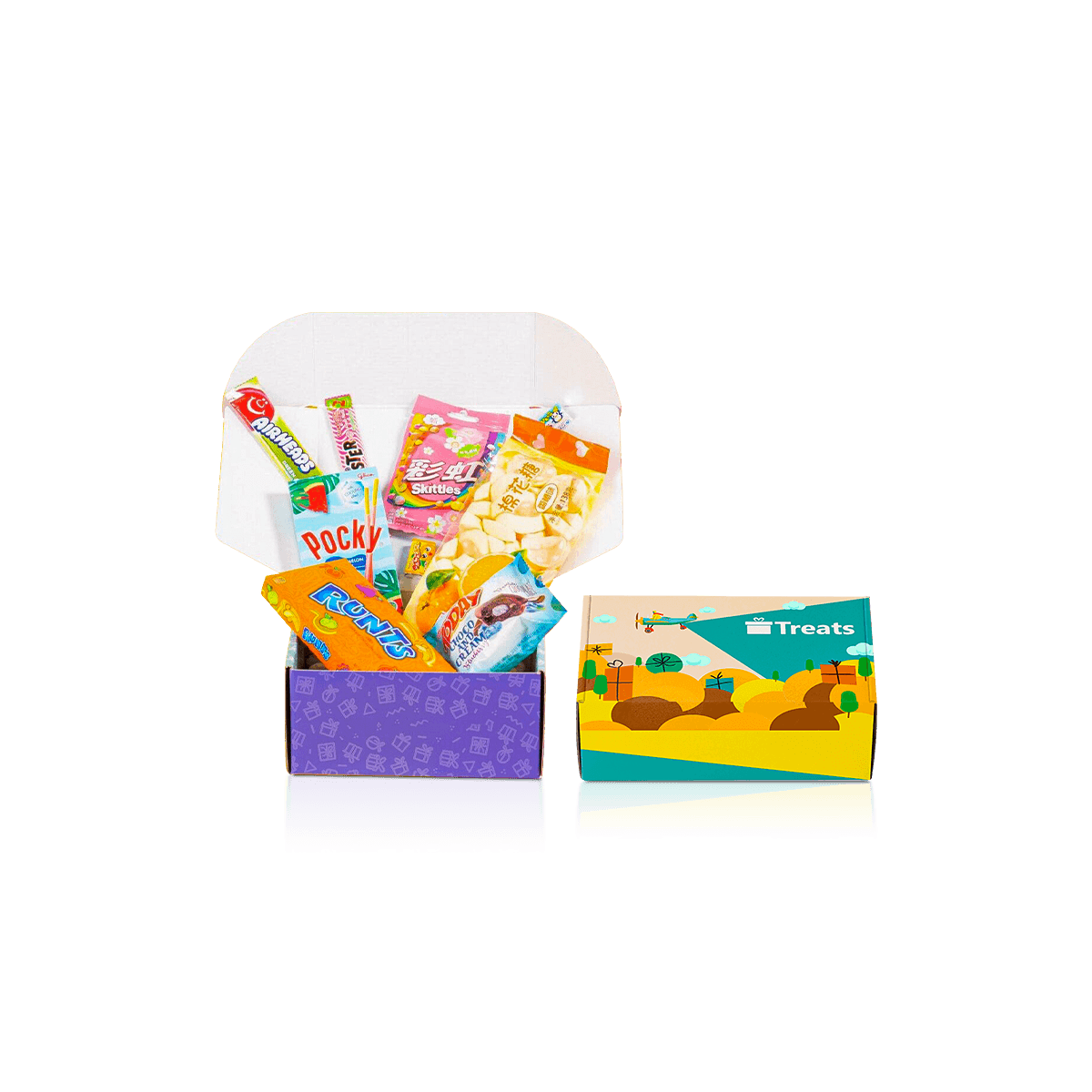
A well-prepared design can use typography, illustration and color to establish a recognizable retail identity without relying on additional decorative materials.

The important distinction is between the printed surface and any separate layer applied over it.

Printing on Paperboard

Custom Packly supports premium offset printing for branded cartons requiring sharp graphics and consistent color reproduction.

CMYK can accommodate multicolor artwork, while Pantone specifications may be considered for tighter control of particular brand colors.

The printing method should suit the board and the artwork.

A recycled stock may have different surface characteristics from a bright white coated board, so the chosen material needs to be considered during artwork development.

Coatings and Lamination

A protective coating may be appropriate when the carton needs additional resistance to normal retail handling.

However, coatings and plastic laminations are not interchangeable from a material-recovery perspective.

Their effect on the finished package must be assessed before making a recyclability claim.

A natural-looking matte finish is not automatically a lower-impact choice.

For brands prioritizing simpler paper-based construction, Custom Packly's packaging capabilities include recycled stock options, paper-based inserts and structural approaches that can reduce unnecessary material.

Brand Identity

A coordinated pet product line may use consistent typography and artwork across paperboard cartons and corrugated packaging.

The different materials do not need to reproduce colors identically to maintain brand recognition.

A deliberately limited graphic system may accommodate those differences without requiring additional surface treatments on every structure.

The objective is to make the material and printing choices work together.

A Retail Box Is Not Always the Shipping Box

A lightweight carton containing a pet accessory may perform well on a store shelf but need additional protection during parcel delivery.

Trying to eliminate the outer shipper can create a different problem if the retail carton cannot withstand the expected transit conditions.

The appropriate construction depends on the product and distribution method.

A custom mailer box may perform both presentation and shipping duties for a suitable direct-to-consumer pet accessory assortment.

Heavier products may need a stronger corrugated shipping carton.

For products already enclosed in an appropriate retail carton, the outer package should provide the remaining transit protection without duplicating unnecessary presentation features.

An oversized parcel can also increase the amount of corrugated board and loose filler required.

Better dimensional fit can reduce empty space while limiting unwanted product movement.

However, removing cushioning or reducing board strength without considering the product can create avoidable damage.

The relationship between shipping damage, box structure and product fit matters when reducing packaging material could compromise transit protection.

For ecommerce sellers whose main environmental priority concerns their outbound parcels, eco-friendly ecommerce boxes address the shipping construction rather than the individual pet retail carton.

Refill Products May Need Less Packaging

A pet care brand selling a shampoo bottle and a separate refill does not necessarily need an individual carton around both products.

The original bottle may benefit from secondary packaging that supports its retail presentation or carries additional instructions.

The refill may already have sufficient printed space and an appropriate primary package.

Adding a carton to the refill should serve a genuine purpose.

For instance, several refill units sold as a multipack may benefit from a paperboard sleeve or outer carton. An individual refill pouch intended for separate sale might not.

The primary refill package still needs to retain its contents and satisfy the formulation's requirements.

Removing its barrier simply to move toward paper-based packaging would not be an appropriate material-reduction strategy.

The eco-friendly custom packaging approach considers how paperboard, flexible primary packs and other structures can work together without assuming every product needs an additional box.

The choice should reflect the actual selling unit, not just the environmental message.

The Customer Shouldn't Need Tools

A package may use recyclable components but still be difficult to separate after use.

A film window that cannot be removed without tearing the carton, an unnecessarily complicated insert or unclear disposal instructions can undermine an otherwise straightforward material specification.

The actual opening and disposal sequence should be considered while developing the construction.

For an individual pet toy, a removable paperboard support may leave the customer with a simple outer carton and insert.

For a treat multipack, the customer may have an empty paperboard carton and separate primary pouches that need their own disposal assessment.

Where a component must be removed, the construction should make that action practical.

If a material cannot be separated without damaging the packaging or requiring an unreasonable amount of effort, its recovery implications need to be assessed as part of the complete pack.

Custom Packly's free design and dieline support can help develop the carton construction, while its packaging team can assess the applicable material and manufacturing options.

The finished packaging should carry a precise environmental claim only when the actual specification supports it.

For pet brands, that is a more dependable objective than treating every brown carton, paper insert or reduced-plastic design as automatically sustainable.

FAQs

Yes, when the board grade matches the load. Recycled corrugated and stronger carton constructions can support denser pet items while still aligning with paper-based sustainability goals.

Often you can. Paperboard inserts and molded pulp fitments are practical options for many toys, grooming items and bundled accessories, though fragile products still need fit testing before a full swap.

Paperboard or corrugated boxes are usually the simpler choice when recyclability, lower material use and easier disposal are the priority. Rigid formats make more sense when the pack is intended for longer-term reuse or premium presentation.

The easiest route is usually a simpler material mix plus clear disposal language. That matters even more as US packaging policy and recyclable-claim rules keep shifting.

Sometimes yes. Natural kraft can support an earthy look, but bright photo-heavy artwork often reproduces more sharply on lighter or coated paperboard surfaces.

Process

How it works

Your Packaging Journey, From Idea to Production and Delivery

01

Tell Us Your Specs

Custom packaging boxes

Tell Us Your Specs

Provide size, quantity, printing, and finishes.

02

Get a Fast Quote

Custom packaging boxes

Get a Fast Quote

Instant transparent pricing, no hidden fees.

03

Design and Approval

Custom packaging boxes

Design and Approval

Artwork checks, revisions, and final sign-off.

04

Produce

Custom packaging boxes

Produce

Expert manufacturing to meet deadlines.

05

Ship to Your Door

Custom packaging boxes

Ship to Your Door

Hassle-free, flexible delivery options.

Get Your Quote for Custom Eco-Friendly Pet Boxes

Share your product details, size, quantity and artwork needs. We’ll help choose the right packaging style and send a clear quote.