Skip to content
Details

Custom Corrugated Boxes

Corrugated packaging specified around flute, wall construction, board strength, box geometry and print demands for e-commerce fulfillment.

Strength Starts Between the Liners

Two corrugated boxes can look almost identical and perform very differently. The difference sits inside the board: liner papers, the fluted medium, wall construction, board grade and the dimensions of the finished box all affect how the package responds to weight, compression and handling.

That makes Custom Corrugated Boxes a material-and-structure decision rather than simply a thicker version of cardboard packaging.

For e-commerce retail packaging, corrugated works especially well when the package needs more stiffness, edge strength or cushioning than a lightweight paperboard carton can deliver. The board can then be converted into slotted shipping cartons, die-cut boxes, mailers and other structures according to the product and fulfillment job.

The difference between corrugated, paperboard, kraft and rigid board begins with construction rather than appearance. Corrugated board combines flat liners with a formed medium between them, creating a lightweight structure with depth and directional strength.

Choosing it well means looking beyond the word “corrugated.”
Flute Changes the Board

Flute is the formed paper medium between the liners. Its profile changes board thickness, stiffness, cushioning behavior, crease characteristics and the surface presented to printing.

Fine Flutes

Finer flute profiles create a thinner corrugated sheet with closely spaced flutes. They suit compact e-commerce packaging where a lower profile, cleaner fold and neater printed surface matter.

That can make them attractive for smaller branded packs, accessory boxes and presentation-led D2C orders.

The trade-off is that a thinner board does not automatically suit every load. Product weight, panel size and stacking pressure still have to be considered.

Larger Flutes

A larger flute creates more depth between the liners. That can add cushioning and structural depth for shipping applications where protection matters more than achieving the thinnest possible box profile.

It can also change how tightly a panel folds and how detailed artwork appears directly on the corrugated surface.

Neither direction is universally better. The flute should support the product and box structure rather than being selected from a material swatch in isolation.

Flute Is Not a Strength Rating

This distinction prevents one of the most common specification mistakes.

Knowing that a box uses a certain flute does not tell you everything about its stacking performance. The liner papers, combined board construction and strength rating also matter. Two boards using the same flute can be specified differently.

The flute name describes part of the construction. It does not replace the complete board specification.

Edge Strength Needs Context

Edge Crush Test, usually shortened to ECT, measures the edgewise compression strength of corrugated board. It is important when the box needs to support vertical load, but the number should not be treated as a promise that every finished box made from that board will withstand the same stack.

ECT is a corrugated-board strength measure used when stacking performance matters.

Finished-box performance is influenced by more than the board rating.

Box dimensions change the unsupported panel lengths. Scores change the continuity of the board. Openings, hand holes and die cuts can interrupt load paths. Humidity and storage conditions can affect paper-based materials. The weight and position of the contents can either support the carton or place additional pressure on it.

This is why a materially stronger board can still disappoint when the finished box geometry is poor.

A short, well-proportioned carton carrying a controlled load may behave very differently from a tall carton with the same board grade and large unsupported panels.

If vertical compression is central to the job, test the actual packed box rather than approving the board certificate alone. Custom packaging testing should match the risk being checked, including the real product, packed weight, folds, closures and internal support.

Wall Construction Changes the Job

Single-wall corrugated uses one fluted medium between two liners. Double-wall combines two fluted layers with three liners, creating a deeper and generally more substantial board construction.

The decision is not simply “light product equals single wall, heavy product equals double wall.”

Box footprint, product density, stack height, puncture risk and internal support can change the answer.

A compact shipment containing dense metal components can concentrate more load than a physically larger shipment of lightweight textiles. A fragile product may need cushioning and controlled movement even when its total weight is modest. A broad shallow box may need panel stiffness for reasons that a narrow box does not.

Double-wall construction can add protection where the shipping duty justifies it, but using more board than the application needs adds material, caliper and external size.

That matters for e-commerce because the outside dimensions affect how much space each packed order occupies.

The best corrugated specification is therefore strong enough for the job, not simply the thickest construction that can be produced.

Box Geometry Can Beat Extra Board

Right-sizing is structural, not only a shipping-cost exercise.

A smaller box reduces the distance across unsupported panels. It can also reduce movement around the product and decrease the amount of void fill needed to control the contents.

That means a poorly sized carton can sometimes create problems that teams try to solve by upgrading the corrugated board.

Consider an online home-accessory seller shipping one ceramic item inside a large general-purpose carton. The product is light enough for the board, but the wide top panel flexes and the item moves because the internal space is excessive.

Moving immediately to heavier corrugated may increase stiffness while leaving the movement problem intact.

A better correction could combine a tighter box footprint with a fitted corrugated pad or insert around the ceramic piece. The material now works with the geometry instead of compensating for it.

When product dimensions and fragile points need to control the package, custom product packaging keeps the box decision tied to the actual item rather than a convenient stock size.

This is also why interior dimensions should account for material thickness. Changing from a fine single-wall board to a thicker construction can change both the outside dimensions and the usable space inside the box.

Scores Are Structural Features

A corrugated sheet gains its final shape through cuts, slots and score lines. Those converting decisions affect how the board folds and how the finished box carries load.

A score has to compress the board enough to create a controlled fold without unnecessarily damaging the corrugated structure around it. A poor crease can make assembly inconsistent, distort corners or weaken the line where the box needs to remain square.

Thicker corrugated constructions also need enough allowance around folds. A dieline created as though corrugated behaved like thin folding-carton stock can create fit problems once real board thickness is introduced.

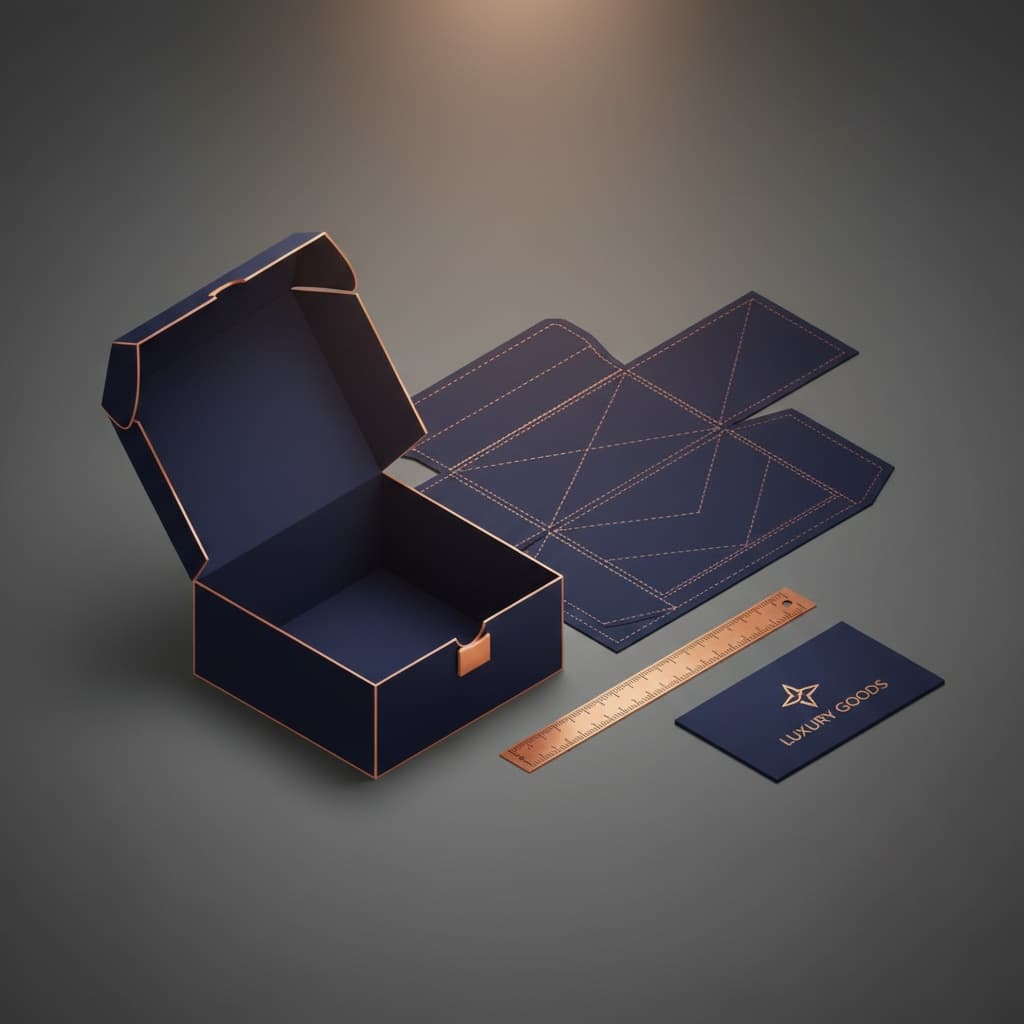
The packaging dieline controls cuts, scores, panels, flaps and artwork positions before a flat sheet becomes the finished box.

For suitable shipping structures, the dieline generator can establish a dimension-based starting layout. Design and dieline support can then account for the final corrugated construction rather than treating the flat drawing as independent from the board.

Free 3D mockups help review how panels and artwork meet after assembly. They are visual checks, while physical structure still needs to be considered separately where the board specification or load creates risk.

Corrugated Structure Still Matters

Corrugated is a material system. The box style decides how that material is used.

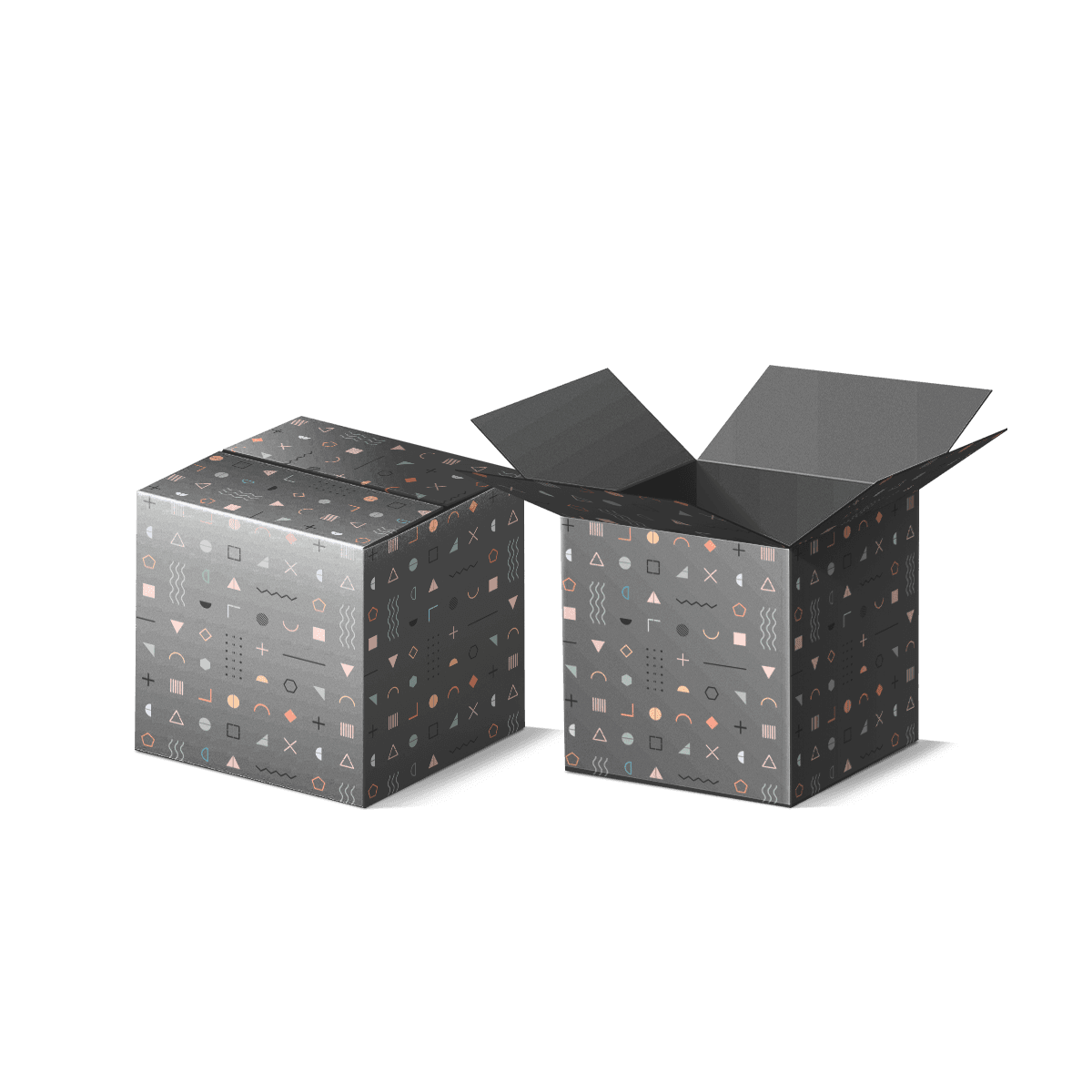
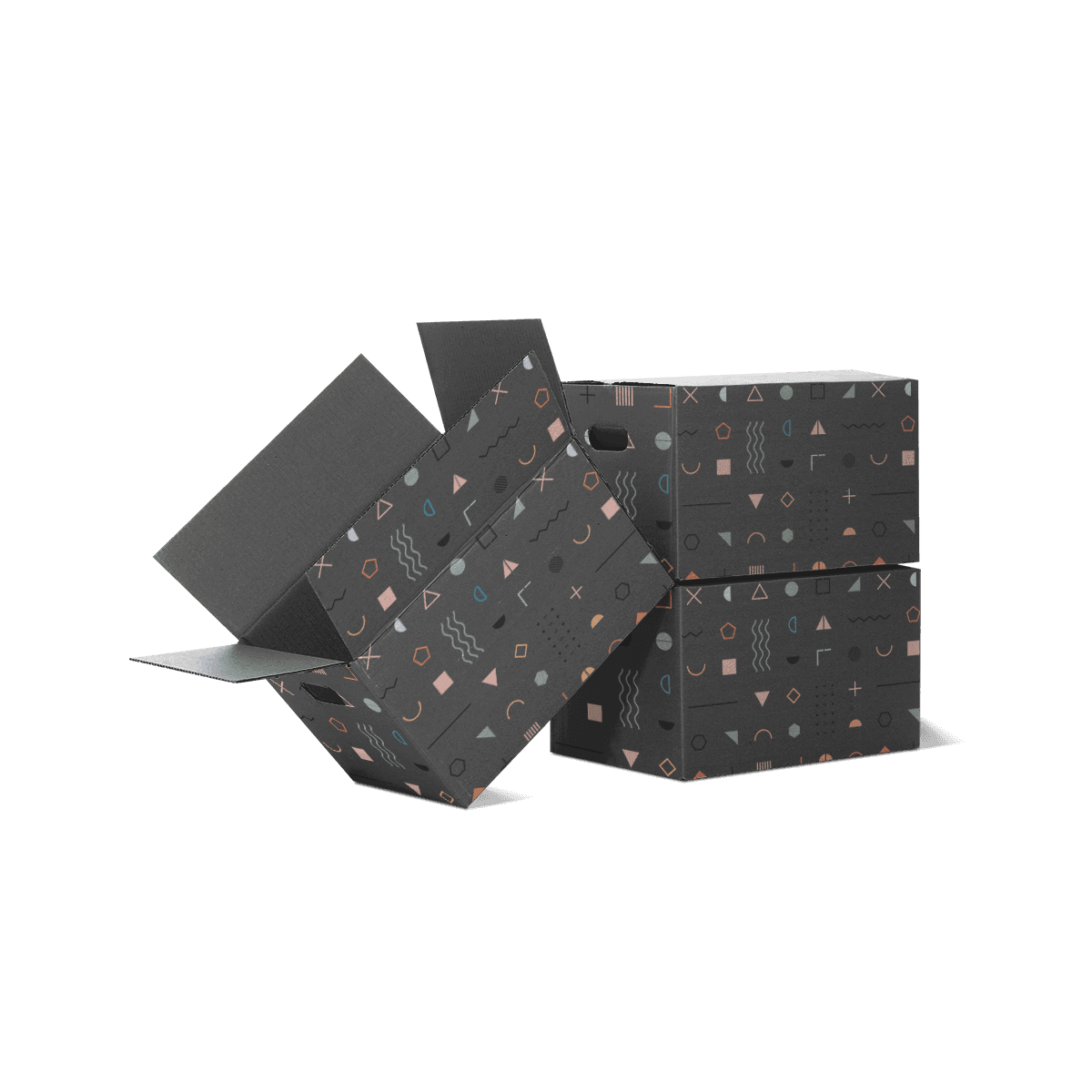
A basic slotted carton concentrates the structure around four walls and meeting flaps. A die-cut box can introduce locking tabs, shaped panels or a closer product fit. Multi-depth cartons add alternative score positions so one footprint can close at different heights.

The shipping box structures separate these mechanical choices from the board itself.

Slotted Cartons

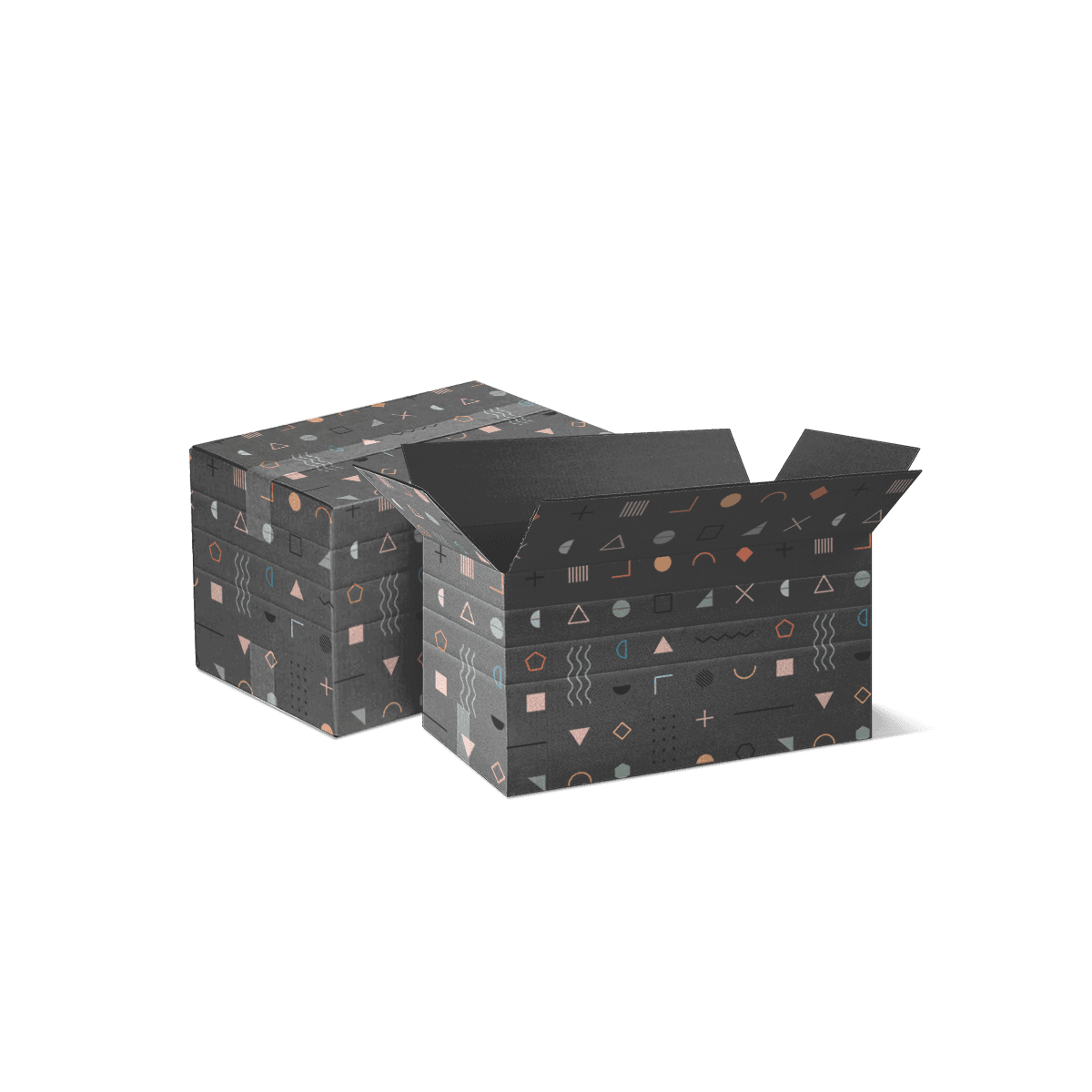
Slotted construction suits straightforward shipping and storage because it converts efficiently, stores flat and creates a familiar tape-sealed carton.

It makes sense when the product does not require an elaborate opening or integrated retention feature.

Die-Cut Corrugated

Die-cut shipping boxes become more relevant when the product shape, closure or internal geometry needs greater control.

The die can create tabs, locking panels and more specific contours, but every extra structural feature should have a job. Adding complexity without improving fit, packing or protection only adds converting work.

Mailer Construction

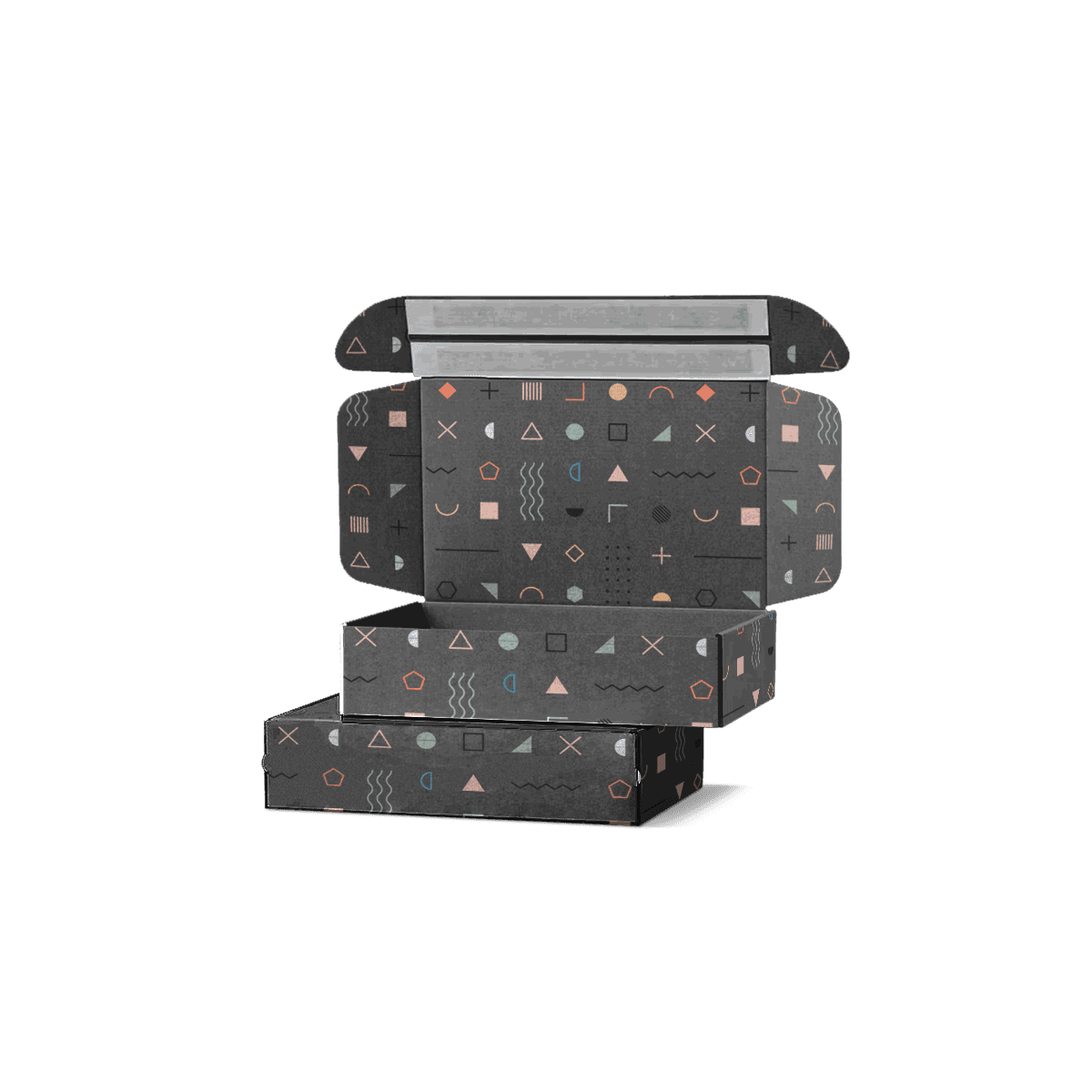
Product Mailer Boxes put more emphasis on self-locking assembly and customer-facing opening behavior.

They may use corrugated board too, but the structure serves a different fulfillment and presentation job from a conventional shipping carton.

Corrugated should therefore never be treated as one box style.

Print Starts at the Liner

The outer liner is the printing surface, so corrugated artwork should be planned around the paper the customer will actually see.

A natural kraft-facing board changes color behavior because the brown substrate influences the printed result. A white-facing liner gives artwork a brighter base and can make color easier to control visually.

That decision may matter more than adding another decorative finish.

For simple logos, handling marks and recurring shipping graphics, direct printing can keep the package commercially efficient. Higher-detail branding may call for a different surface or production route.

Digital, offset and flexographic printing suit different quantities, artwork patterns and packaging substrates.

Flexographic printing can make sense for recurring corrugated work with stable graphics. Digital production can suit shorter runs or more artwork variation. Premium offset printing can be used for corrugated applications through suitable production methods such as printing a liner before lamination when the job calls for a cleaner graphic surface.

A request for “offset printed corrugated” should therefore clarify how the printed surface and corrugated board will actually be combined.

When branding is the dominant requirement, custom printed boxes should be planned around substrate, artwork versions and repeat color expectations rather than print terminology alone.

Inserts Must Work With the Flute

Corrugated inserts and partitions can use the same structural logic as the outer box, but they experience different forces.

An outer carton may need compression strength. A divider may need enough edge stiffness to stay upright. A pad may need puncture resistance. A fitted corrugated insert may need accurate slots so intersecting parts assemble without bowing.

The flute and board thickness affect those dimensions.

A partition designed around a thin material can become too tight when converted to a heavier corrugated build. Slots that are too loose create movement. Slots that are too narrow crush the edges during assembly.

For multiple items, the divider should also support the packing sequence. Staff should not have to flex every partition out of shape just to load the products.

This is where paperboard and corrugated fitments can serve different roles. Paperboard can create thinner separators for light merchandise. Corrugated works better when the insert itself needs more depth or stiffness.

The outer box and interior components should be specified as one packing system even when they use different materials.

Do Not Overbuild the Whole SKU Set

E-commerce businesses rarely ship one product in one box forever.

As the SKU mix grows, it becomes tempting to standardize every order around one heavy corrugated construction. That simplifies purchasing but can put too much board around light shipments and still fail to solve fit differences between products.

A better program separates genuine structural demand from convenience.

Some boxes may need a compact fine-flute construction because print and low profile matter. Everyday shipping cases may use another corrugated build. Heavy mixed orders may justify stronger walls. Those decisions can coexist without turning every SKU into a unique material specification.

Custom Packly starts USA orders from 100 boxes, so a new box size or board construction can be produced without forcing every SKU into the same material specification.

For mature programs, bulk custom boxes can separate quantities across recurring dimensions, board specifications and artwork versions.

Diagnose Before Upgrading the Board

Before increasing board grade, name the failure that needs to be corrected.

Crushing under stack load, a bowing top panel, puncture at one product edge, excess internal movement and poor folding are different problems. They do not automatically need the same material change.

A stronger starting specification includes:

  • internal box dimensions
  • finished packed weight
  • product count per box
  • intended box structure
  • current flute or wall construction if known
  • stacking or compression concerns
  • fragile or puncture-sensitive areas
  • inserts, pads or dividers
  • kraft or white-facing liner preference
  • inside and outside printing
  • quantity by dimension and artwork version
  • any current failure such as bowing, crushing, excess movement or poor folding

Once the actual failure and construction are clear, an instant custom packaging quote can be based on the corrugated system rather than a generic cardboard-box request.

For repeat work, record the box dimensions, structure, flute, wall construction, relevant strength specification, inserts or partitions, print method and artwork revision. The target is to reproduce the same finished box behavior, not merely reorder the same flute name.

A corrugated box performs as a system: paper, flute, walls, dimensions, cuts, scores, closure, contents and internal support all interact. Diagnose those parts together before adding board simply because something went wrong.

FAQs

Corrugated board uses a fluted inner layer between outer liners, which is why it is the stronger choice for shipping and distribution instead of lighter paperboard cartons.

Yes. When stacking strength is a real concern, ECT is the more relevant measure than burst because it relates to box compression performance in storage and transit.

Choose corrugated when the pack has to survive parcel handling, warehouse stacking and longer shipping routes. Folding cartons make more sense when the product is lighter and presentation matters more than transport strength.

Yes. Corrugated shipping formats are commonly printed on the outside and some corrugated styles can also carry inside print when the artwork is set up for that box style.

Yes. Corrugated is commonly accepted in curbside recycling programs and the EPA reports a 96.5 percent recycling rate for corrugated boxes in 2018.

Process

How it works

Your Packaging Journey, From Idea to Production and Delivery

01

Tell Us Your Specs

Custom packaging boxes

Tell Us Your Specs

Provide size, quantity, printing, and finishes.

02

Get a Fast Quote

Custom packaging boxes

Get a Fast Quote

Instant transparent pricing, no hidden fees.

03

Design and Approval

Custom packaging boxes

Design and Approval

Artwork checks, revisions, and final sign-off.

04

Produce

Custom packaging boxes

Produce

Expert manufacturing to meet deadlines.

05

Ship to Your Door

Custom packaging boxes

Ship to Your Door

Hassle-free, flexible delivery options.

Get Your Quote for Custom Corrugated Boxes

Share your product details, size, quantity and artwork needs. We’ll help choose the right packaging style and send a clear quote.