Skip to content
Details

Custom Sugar Cone Sleeves

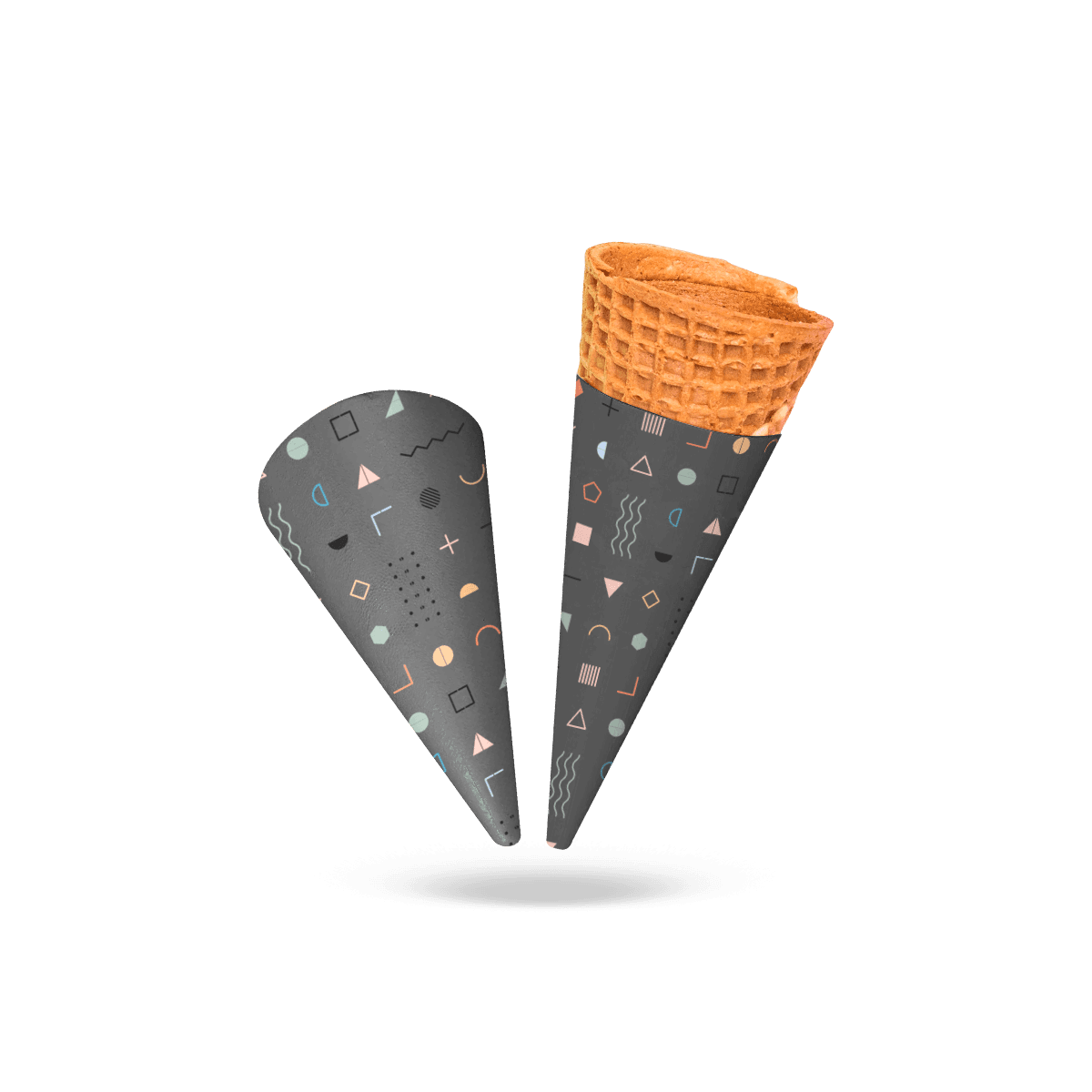
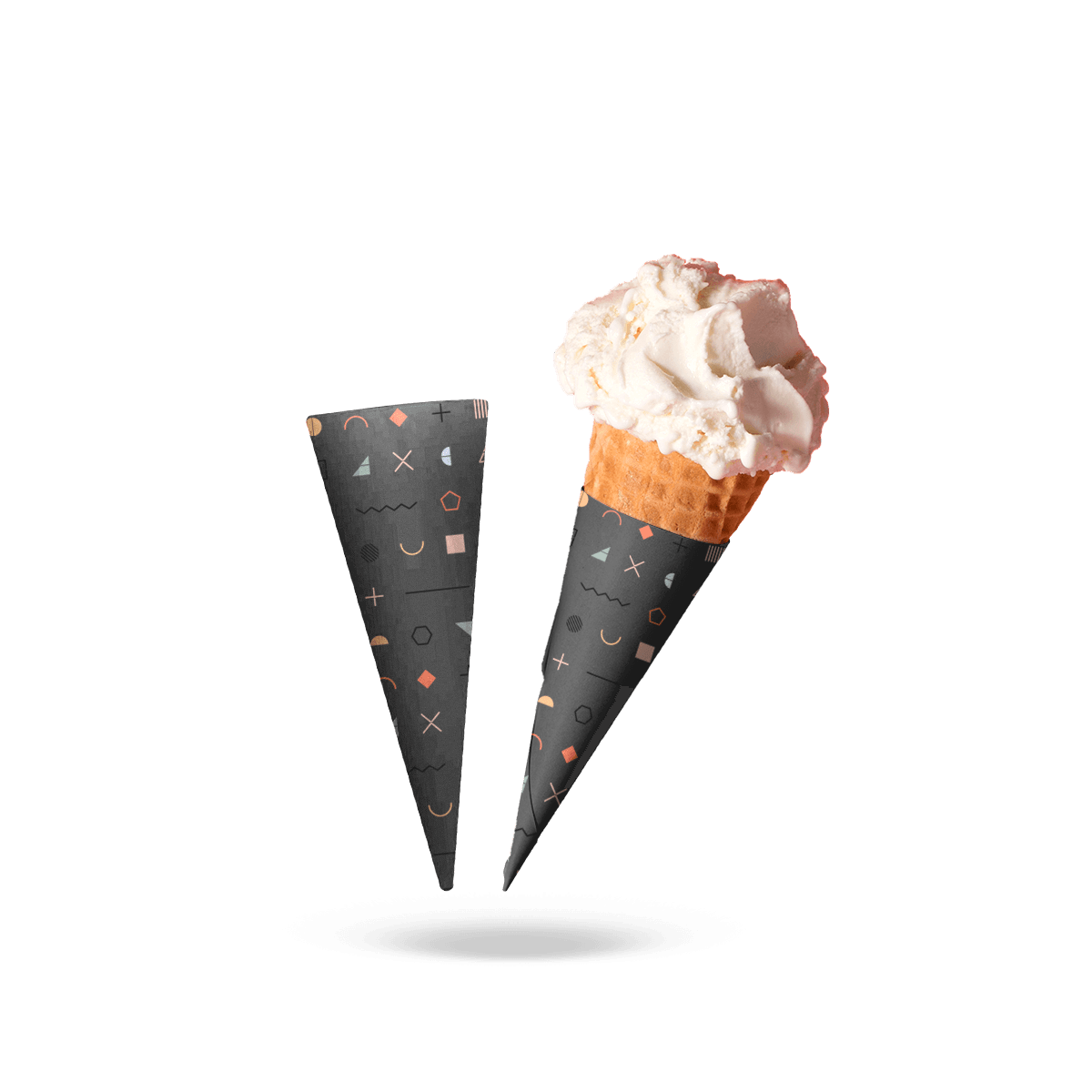
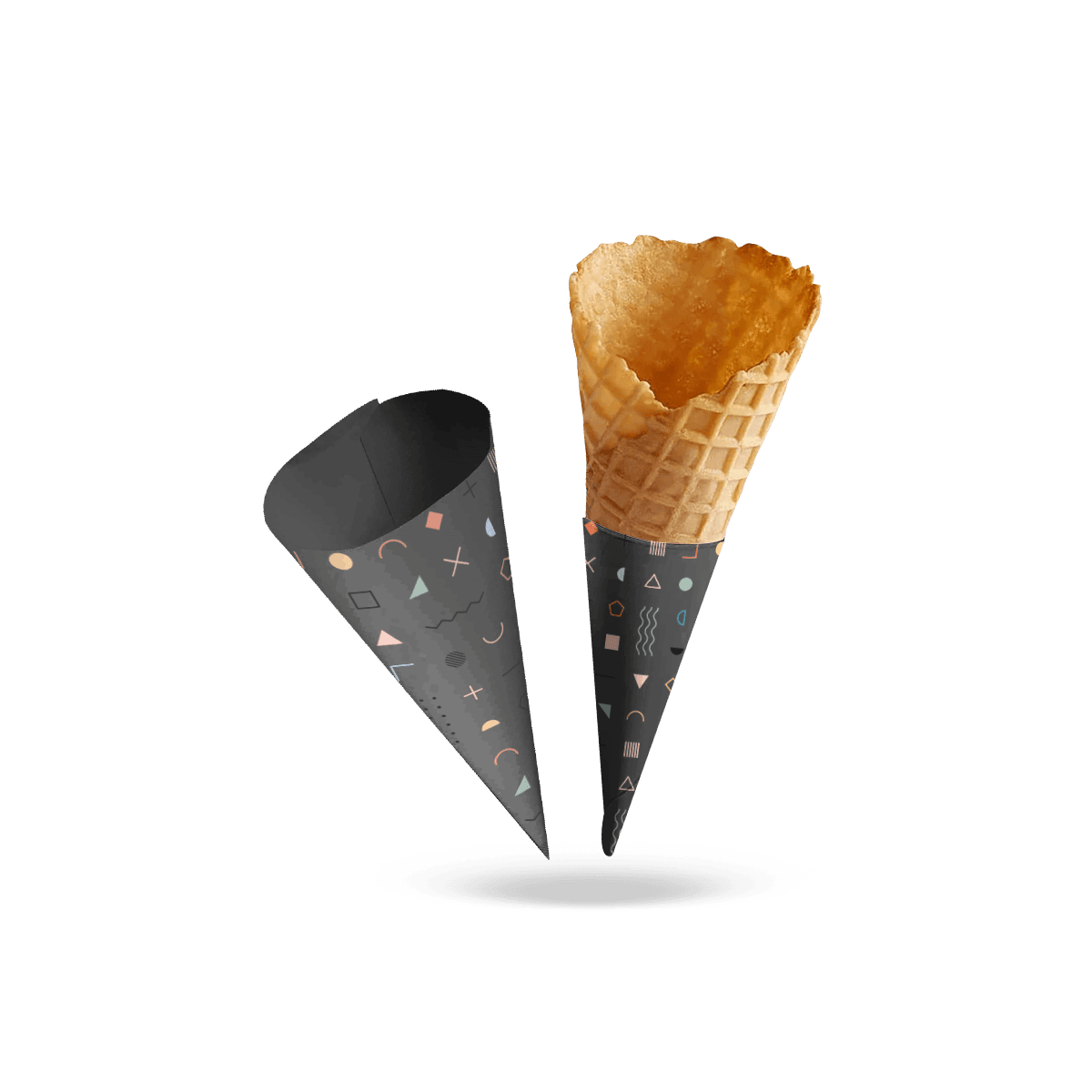
Sleeves shaped for the slim, fast taper of sugar cones, giving the hand a stable grip without sliding toward the tip or forcing paper against the brittle cone wall.

A Sugar Cone Sleeve Can Slide Too Far Before It Feels Loose

Sugar cones narrow quickly from the opening toward the tip. That steep change in diameter is what makes their sleeve fit different from a broad waffle cone.

A sleeve can feel reasonably close around the upper cone and still travel too far downward because the lower portion narrows faster than the paper profile. Once the sleeve moves past its intended grip position, the customer gets less covered hand area, the logo sits lower than planned and the sleeve may rotate as the cone is handled.

Custom Sugar Cone Sleeves should therefore be developed around where the paper is meant to stop, not just around the cone's maximum diameter.

The Custom Cone Sleeves structure starts from the real taper because the upper and lower edges of the wrap both have to meet the cone correctly.

The Stopping Point Is Part of the Fit

A good sleeve should naturally settle at the same working height each time staff apply it.

If it continues sliding toward the tip until friction eventually stops it, the dieline is not controlling the position well enough. If it stops too early and requires force to move higher, the sleeve is too restrictive through part of the taper.

That working height should be decided with a filled cone in hand. The customer needs enough covered area for a comfortable grip while enough of the sugar cone remains exposed to preserve the presentation.

A Narrow Tip Leaves Little Room for Error

The lower part of a sugar cone becomes small quickly. Extending the sleeve too far toward the tip can create a cramped lower seam, excessive material overlap or a pointed shape that is awkward to hold.

The sleeve does not need to chase the taper all the way down. It needs to occupy the part of the cone the hand actually uses.
Measure the Band the Sleeve Will Occupy

Top diameter alone cannot describe a sugar cone sleeve.

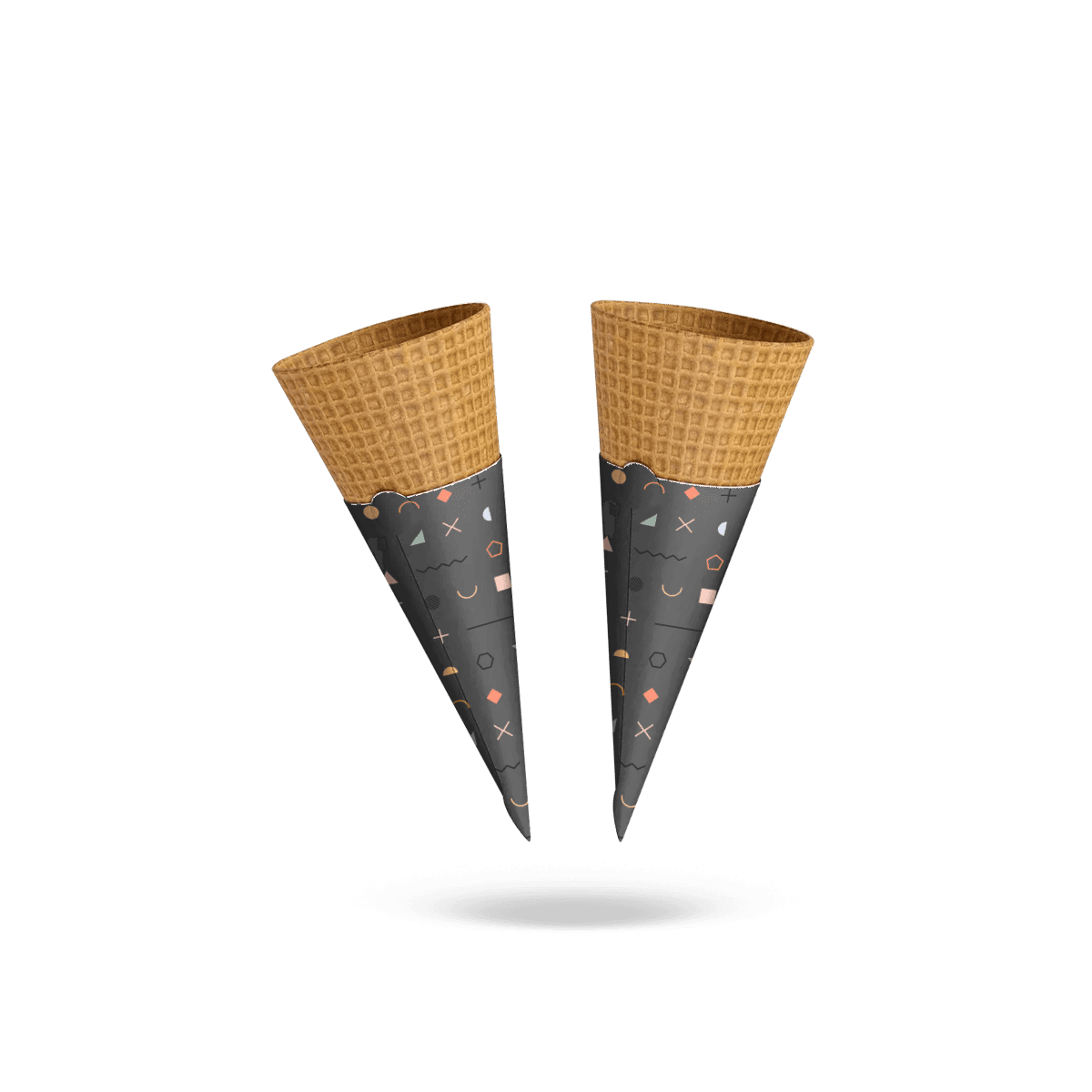
Establish where the upper edge should sit and measure the cone at that point. Then choose the lower sleeve position and measure again. Record the vertical distance between the two positions.

Those dimensions describe the actual tapered band that needs to be wrapped.

A cone manufacturer may quote height and opening diameter, but those values do not always tell you how quickly the cone narrows through the grip zone. Two cones with similar openings can still seat the same sleeve at different heights.

Circumference Can Be Easier to Capture on a Real Cone

If a reliable technical drawing is not available, circumference at the intended upper and lower sleeve positions can be easier to record than diameter on a fragile cone.

The important point is consistency. Measurements should come from several cones rather than one unusually large or small sample, especially if the product shows normal manufacturing variation.

Use Several Cones Before Finalizing the Profile

Sugar cones can vary slightly in roundness, wall shape and overall dimensions.

A sleeve fitted perfectly around one sample may become unnecessarily tight on another. Test several pieces from ordinary stock and establish enough tolerance for routine service without making the sleeve loose.

The goal is repeatable seating, not laboratory-level compression around one cone.

Sugar and Waffle Cones Should Not Share a Sleeve by Assumption

The visual difference between sugar and waffle cones is obvious. The structural difference matters even more to the sleeve.

A waffle cone often remains fuller farther down its body. A sugar cone generally reaches a slimmer lower profile sooner. A sleeve that works on the broad cone can therefore travel too low on the sugar cone before it grips.

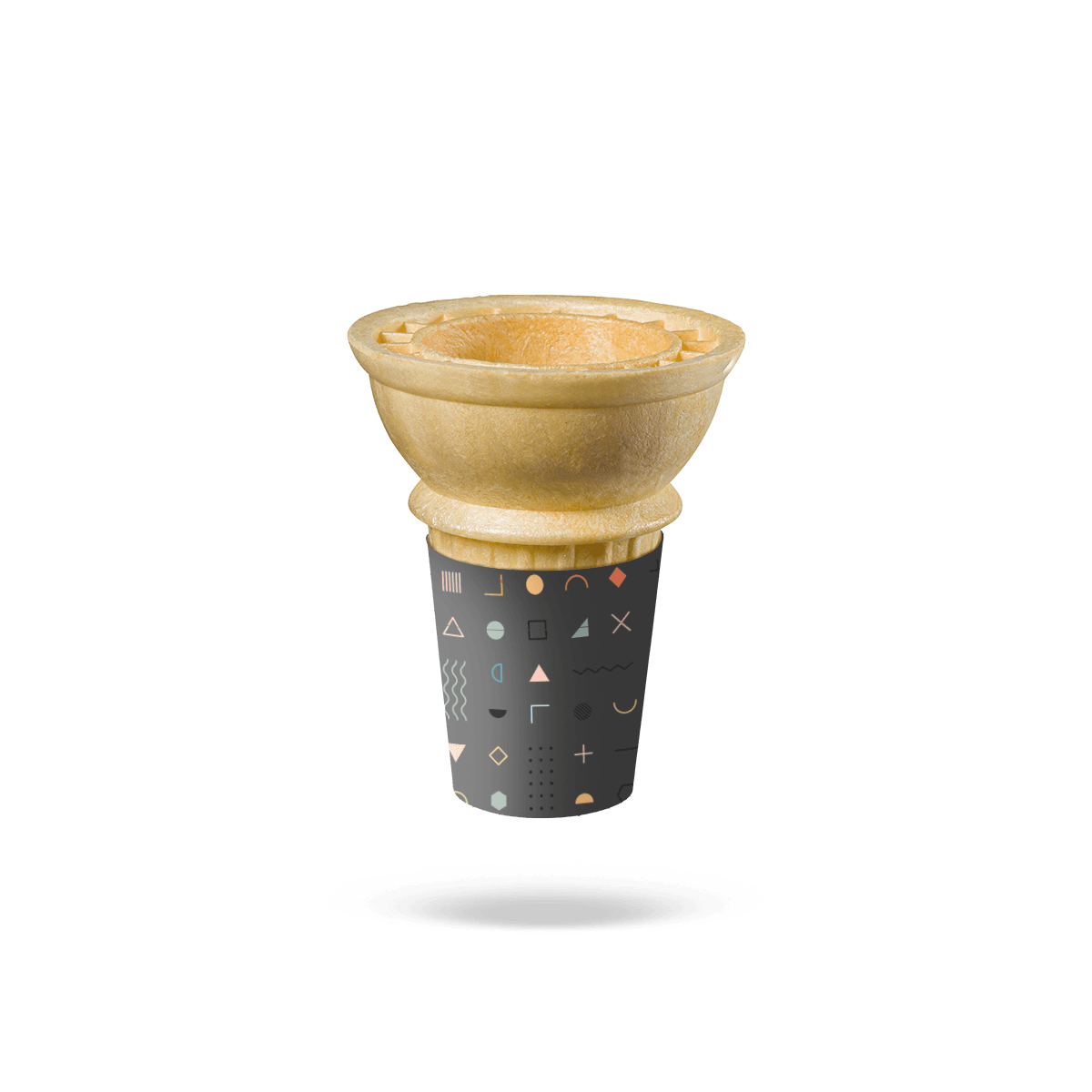
Waffle Cone Sleeves handle the pronounced flare and textured waffle body when that geometry controls the fit.

Using one sleeve for both can still be tested if the actual cone profiles happen to align through the intended grip zone. The decision should come from physical fit, not from an inventory goal.

If staff constantly push one sleeve upward on waffle cones and pull it back up on sugar cones, carrying one SKU has made the counter less efficient rather than more efficient.

Hard, Brittle Walls Need Controlled Pressure

Sugar cones tend to have a firm, crisp wall. That makes excessive sleeve pressure a poor way to create grip.

The paper should hold through matching geometry and surface contact rather than by squeezing the cone aggressively. A tight sleeve may look secure, but forcing it into position can stress the shell or chip the upper area during a busy service period.

This also affects material stiffness.

A thick, resistant stock that works around a larger cone may fight the sharper sugar-cone taper. A more conformable paper can form around the profile with less spring-back, provided it still has enough body for the intended handhold.

Spring-Back Can Open the Sleeve

Paper and paperboard naturally resist being bent.

On a steep taper, a stiff stock may try to flatten after forming, placing more load on the overlap and creating a sleeve that does not hug the cone as evenly as expected.

Material weight therefore has to be considered together with dieline geometry. Increasing thickness is not automatically an upgrade.

Paper Cone Sleeves suit service where a lighter paper construction gives enough grip while conforming easily around the cone.

Grip Height Changes with the Serving

The same sugar cone can be held differently depending on what sits on top.

A small scoop creates a relatively light serving and may be held higher. Multiple scoops, dipped rims or heavy toppings can shift the customer's hand lower as they try to balance the weight.

That means sleeve height should be evaluated with the finished dessert, not only the empty cone.

Place the sleeve at its intended position, add the normal serving and watch where fingers naturally settle. If most of the hand falls beneath the sleeve, the coverage is not doing enough work. If the printed paper reaches unnecessarily close to the ice cream, the sleeve may be taller than the serving requires.

For operations where melting behavior and holding time dominate the specification, Ice Cream Cone Sleeves put frozen-dessert exposure at the center of the decision.

The Small Surface Demands Disciplined Artwork

A sugar cone sleeve gives less visual area than many broad waffle-cone wraps. The taper also compresses the lower part of the graphic field.

That makes hierarchy important.

The strongest design usually establishes one clear brand face, keeps small text away from the narrowing lower area and leaves the overlap free of essential artwork. Trying to fit a logo, slogan, website, social handle, QR code and promotional message into the same small visible zone can make the finished sleeve difficult to read.

Artwork Should Be Judged After Forming

A flat tapered dieline can make graphics appear strangely angled before assembly. Once wrapped, those same elements may become visually level.

Do not straighten artwork against the rectangular screen if doing so makes it look wrong on the finished sleeve.

A free 3D mockup can help review the wrap before production and free design and dieline support can position artwork around the taper and overlap.

The Logo Needs a Reliable Handoff Face

Staff may not rotate every cone deliberately before handing it over, so the primary graphic should occupy a face that appears naturally when the sleeve is formed and applied.

The overlap position affects this. Keep the main brand mark far enough from the joint that ordinary manufacturing and application variation do not push it toward the back of the serving.

When print itself becomes the main commercial purpose, Custom Printed Cone Sleeves can carry campaign artwork, brand-color consistency and graphic treatment as the central specification.

Melt Exposure Usually Arrives from the Top

The sugar cone itself may begin dry while melting ice cream, sauce or condensation moves downward from the serving.

How quickly that reaches the sleeve depends on portion size, temperature, eating time and sleeve position. A small indoor serving may finish before moisture seriously affects the paper. A larger cone carried outdoors can create a much longer exposure window.

Material should match that real service period.

If recurring moisture or oily toppings visibly mark the handhold, Grease-Proof Cone Sleeves shift the specification toward surface resistance.

If food can directly touch the paper, ink, adhesive or coating, confirm suitability for the exact intended contact condition rather than assuming it from a generic material name.

A Slim Cone Makes Seam Position More Noticeable

The overlap occupies a meaningful share of the circumference on a narrow sleeve.

Too much overlap can create a noticeable ridge beneath the customer's fingers and consume valuable printable area. Too little can weaken the formed shape or leave inconsistent seating.

The joint should be large enough to form reliably without dominating the handhold.

Avoid Building Thickness Near the Tip

As the sleeve narrows, layered material becomes more noticeable.

If the overlap extends deeply into a very narrow lower point, the seam can feel bulky relative to the rest of the wrap. A cleanly resolved lower profile can make a lightweight sleeve feel more deliberate than simply extending maximum coverage downward.

Repeating Patterns Expose Seam Errors

Solid colors and isolated logos tolerate small seam variation better than stripes, grids or continuous illustrations.

If artwork is expected to meet across the joint, inspect a formed piece rather than relying only on the flat file. The slim sugar-cone profile can make a misaligned pattern particularly obvious.

Fast Service Rewards a Sleeve That Finds Its Position Immediately

The strongest fit is one staff do not need to think about.

Take a normal stack of sleeves and apply them to cones at working speed. Each piece should separate cleanly, open or form without excessive handling and stop close to the intended grip height.

Watch for repeated corrections.

If staff routinely pull sleeves back upward after they slide too low, the lower geometry is too loose. If they push hard to get the upper edge into position, the sleeve is too restrictive. If they twist it to keep the logo forward, the artwork orientation or fit may need adjustment.

A technically attractive sleeve that adds a correction to every serving is not finished.

Small Portions Need Their Own Proportion Check

Sugar cones are often used for smaller servings as well as standard scoops. A sleeve developed around a large branded surface can look oversized on a compact cone even when it technically fits.

Children's servings create the same issue. The hand is smaller, the cone may be shorter and excessive paper can cover most of the visible cone.

The sleeve height, logo scale and lower profile should remain proportional to the serving.

If the physical requirement comes primarily from smaller hands and reduced cone dimensions rather than the standard sugar-cone profile, a dedicated child-size structure may be more practical than shrinking artwork on a full-height sleeve.

Event Service Makes Consistency Easy to See

At an event, festival or catering station, many finished cones may be visible at once.

A sleeve that lands at different heights from cone to cone becomes much more noticeable when several guests stand together. Inconsistent rotation can also make branding appear random even though every piece uses the same print file.

Hospitality packaging fits programs where guest handoff, temporary serving stations and event identity influence the packaging system.

The sleeve specification should make consistent application easy for different staff members rather than depending on one experienced server knowing exactly how far to push each piece.

Quantity Should Follow the Actual Cone Mix

A shop using sugar cones as its main everyday option can consume sleeves at a very different rate from one that sells them alongside waffle cones, cups and seasonal specials.

Estimate sleeve demand from the serving mix. If sugar and waffle cones require different dielines, plan those quantities separately. Do not combine them into one total merely because they use the same artwork.

The production quantity should support the operational reality: the sleeve that gets used every day should not be planned the same way as a temporary flavor launch or event design.

The Sleeve Should Stop at the Same Height Every Time

Apply the sleeve to several ordinary sugar cones from current stock and watch where it stops without correction.

The finished dieline is working when the sleeve repeatedly settles at the intended handhold without sliding toward the tip or requiring staff to push it upward. If the cone supplier later changes, repeat this simple fit check before reusing the same sleeve unchanged.

For a sugar cone, a small change in taper can move the sleeve noticeably up or down the narrow body.

The final standard is therefore visible during service: the cone reaches the sleeve, the sleeve stops at the intended height and staff can achieve that position without pushing, pulling or correcting it.

FAQs

Because sugar cones have a narrower profile. A sleeve designed around that shape looks cleaner, fits better, and avoids the loose appearance that can happen with a more general cone format.

Choose Sugar Cone Sleeves when the serving uses a slimmer cone and a smaller grip area. Waffle Cone Sleeves are the better fit for wider cones, heavier toppings, and larger scoop presentations.

Usually, enough to show the cone shape clearly while still leaving a comfortable grip area below. Too much coverage can make the serving feel bulky, while too little can reduce handling control.

No, not when they are sized correctly. A well-matched sleeve actually helps staff move faster because it sits in place more naturally on the cone and needs less adjustment during handoff.

Simple branding usually performs best. A clean logo, one strong color direction, and a short brand-specific message tend to read better than crowded graphics on a compact sleeve.

Process

How it works

Your Packaging Journey, From Idea to Production and Delivery

01

Tell Us Your Specs

Custom packaging boxes

Tell Us Your Specs

Provide size, quantity, printing, and finishes.

02

Get a Fast Quote

Custom packaging boxes

Get a Fast Quote

Instant transparent pricing, no hidden fees.

03

Design and Approval

Custom packaging boxes

Design and Approval

Artwork checks, revisions, and final sign-off.

04

Produce

Custom packaging boxes

Produce

Expert manufacturing to meet deadlines.

05

Ship to Your Door

Custom packaging boxes

Ship to Your Door

Hassle-free, flexible delivery options.

Get Your Quote for Custom Sugar Cone Sleeves

Share your product details, size, quantity and artwork needs. We’ll help choose the right packaging style and send a clear quote.