Skip to content
Details

Custom Waffle Cone Sleeves

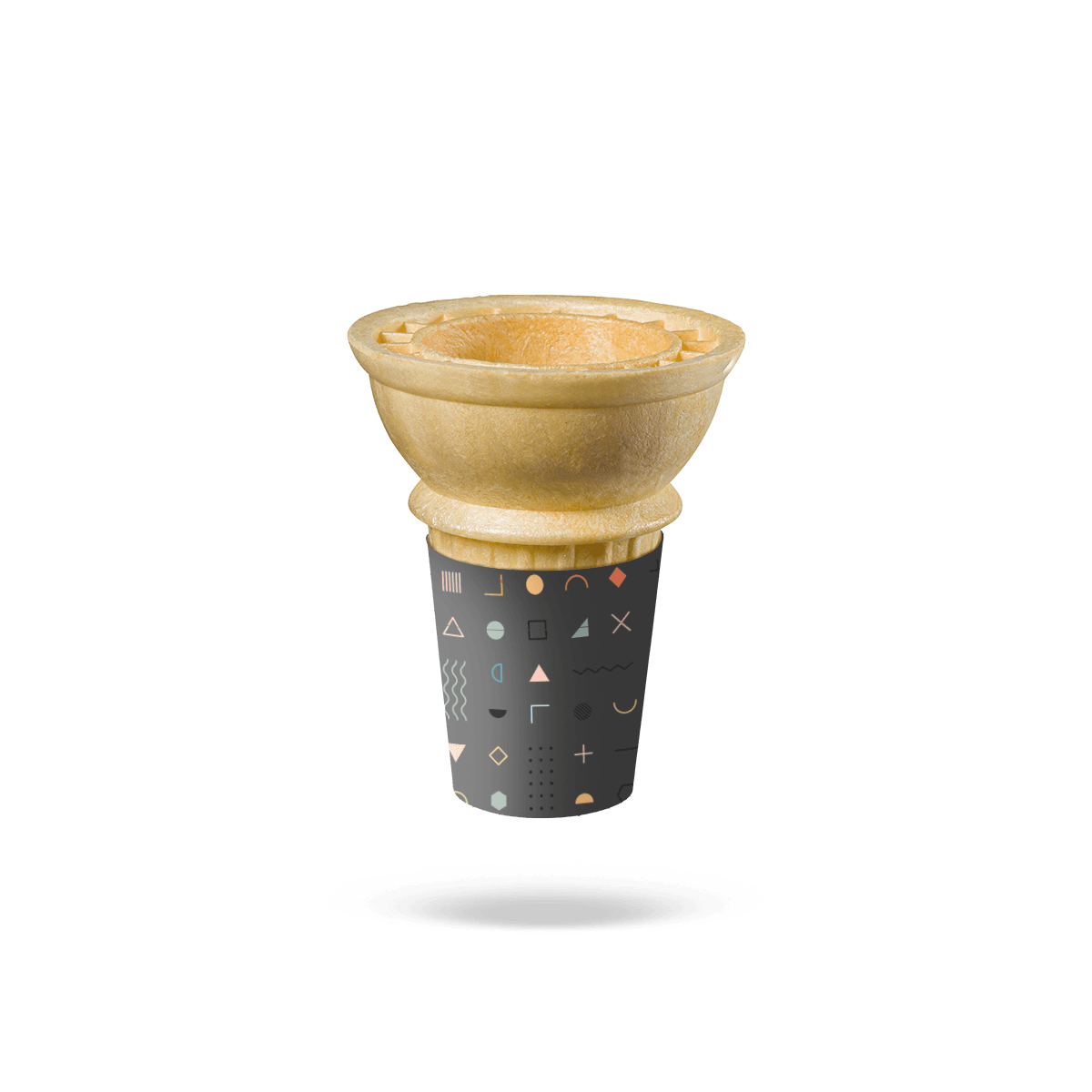
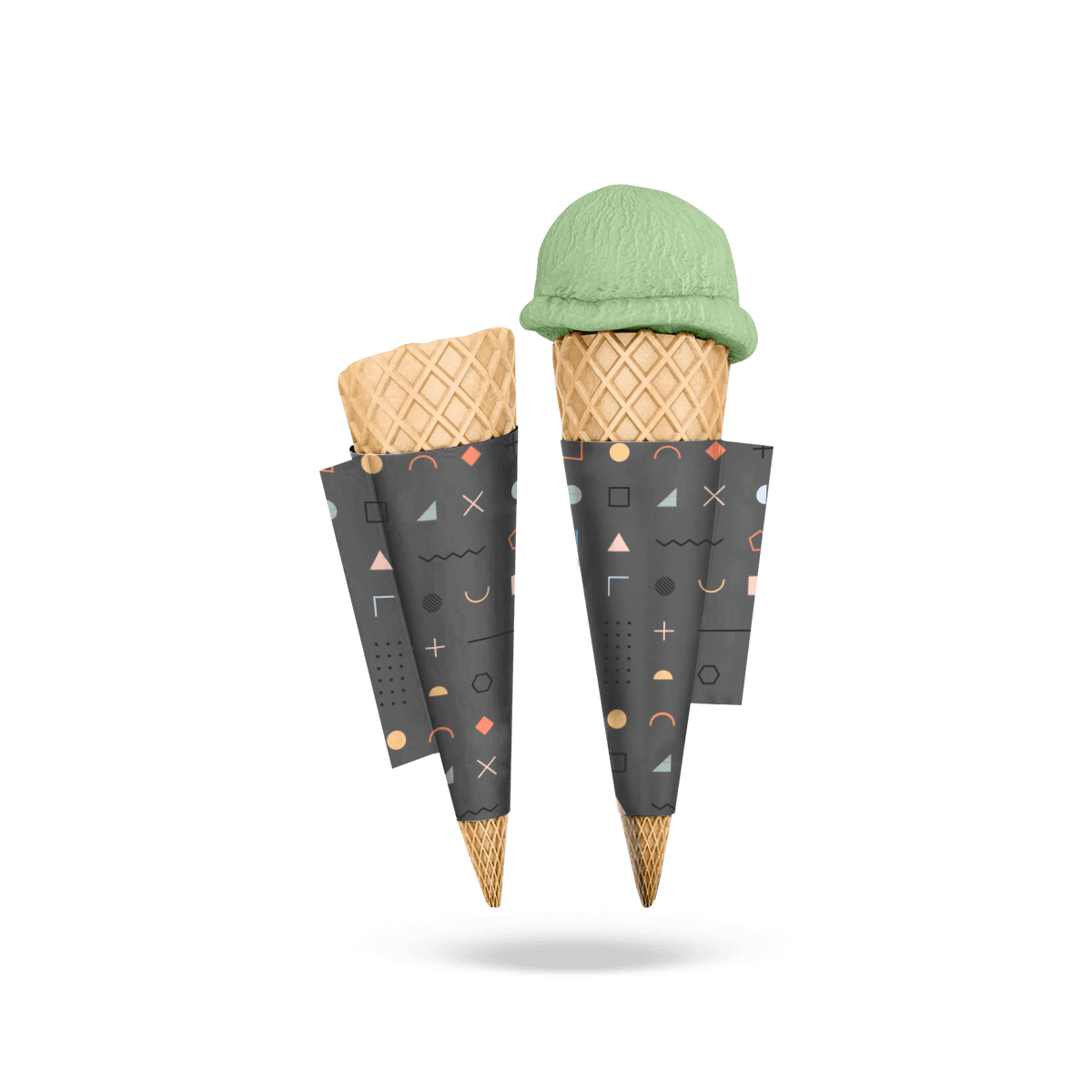
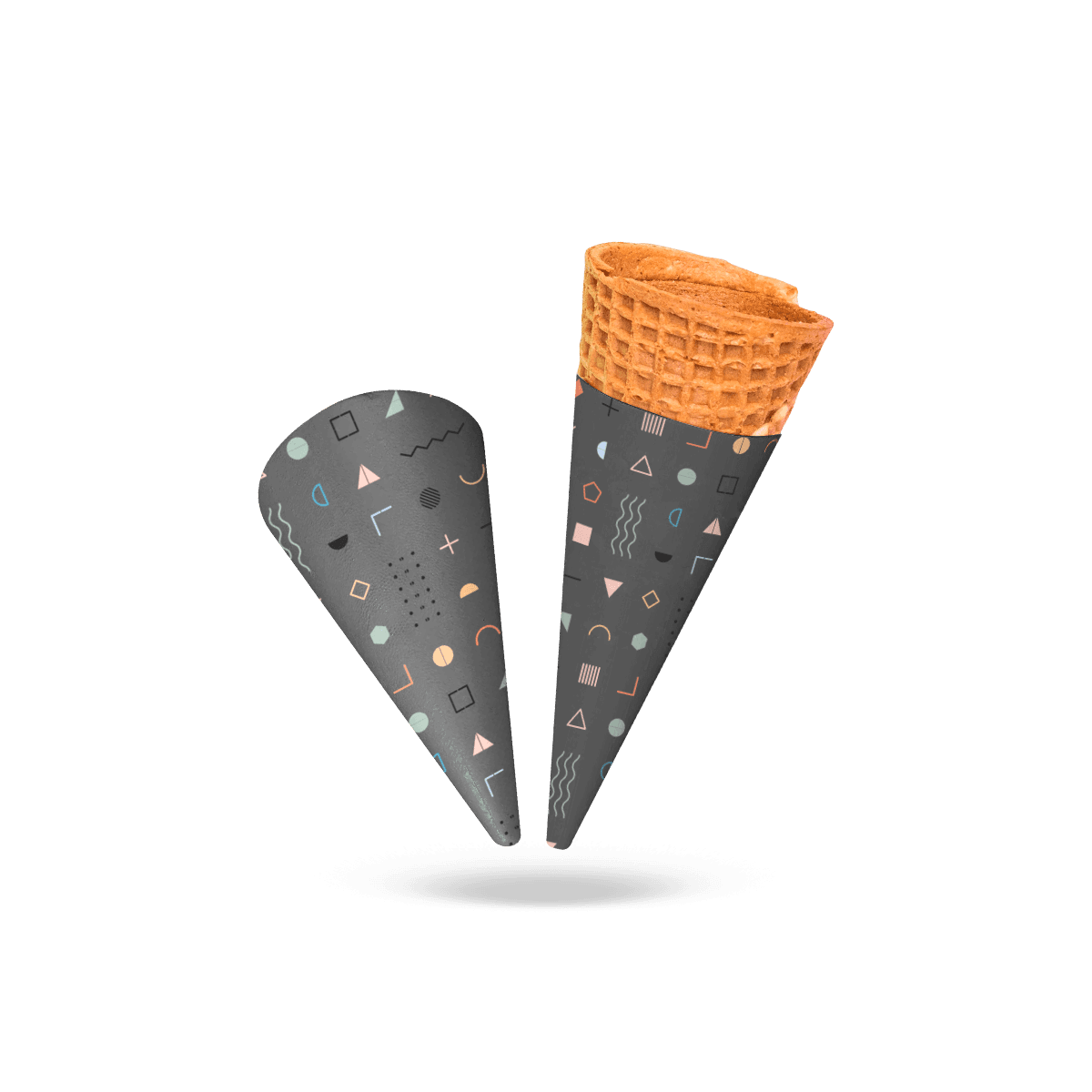
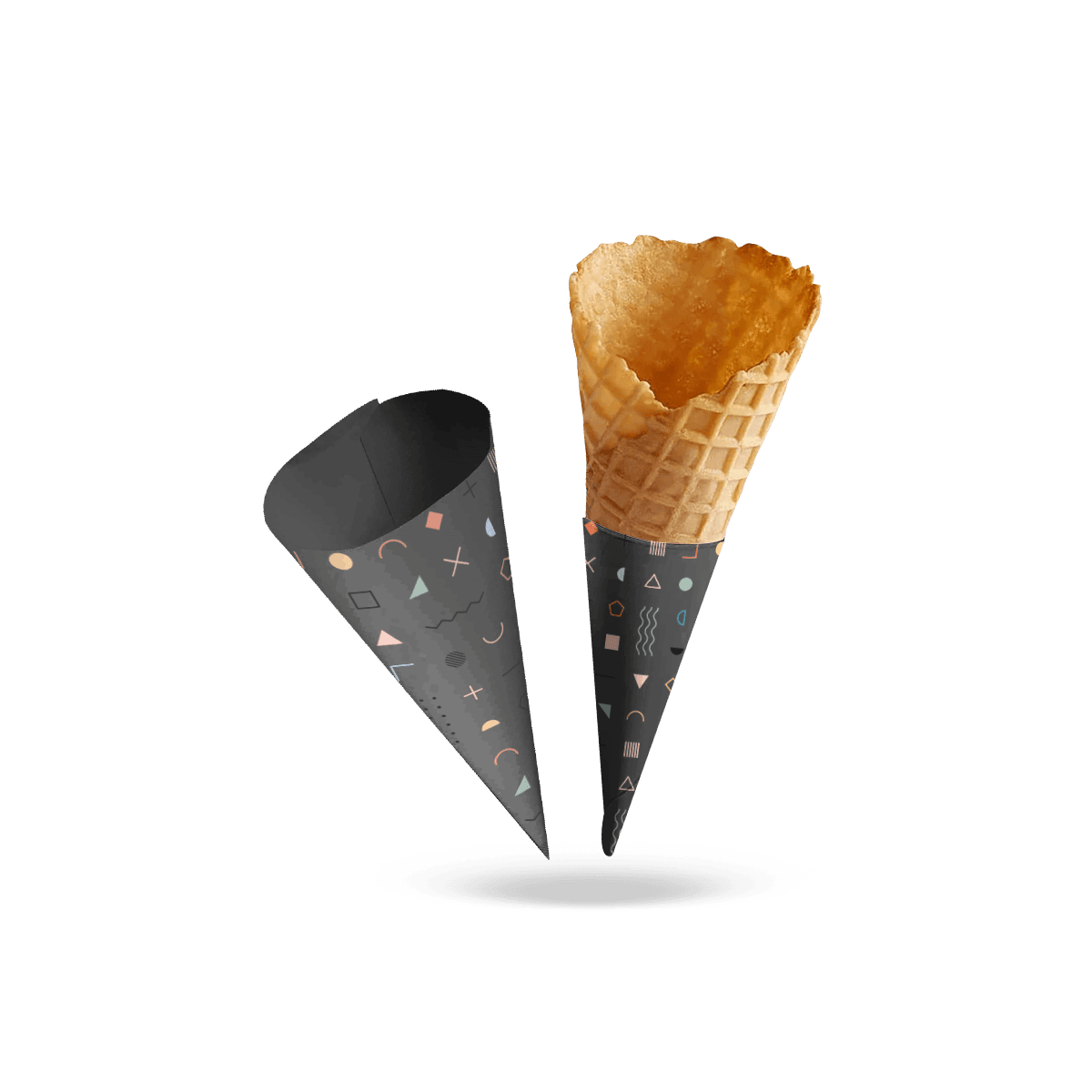
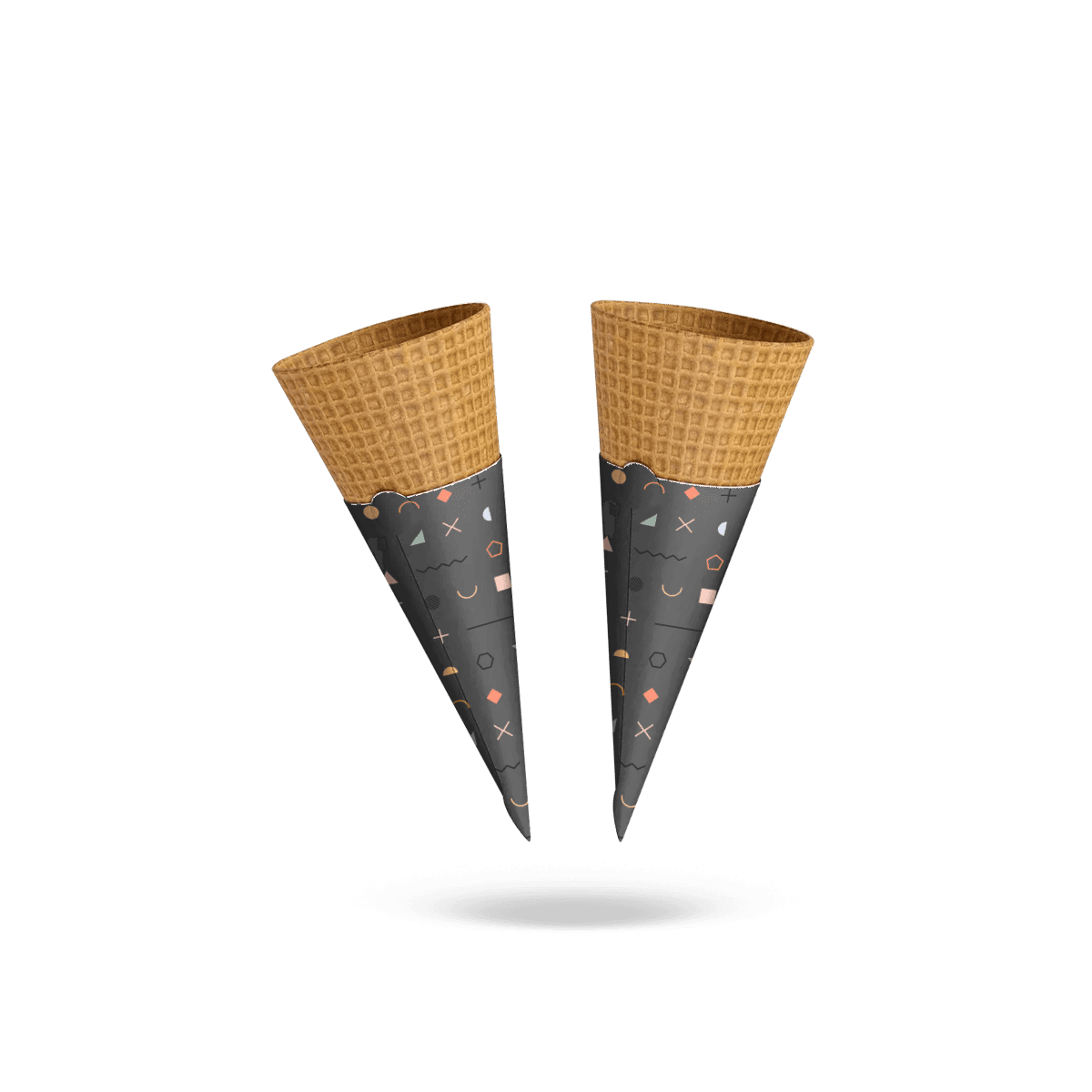
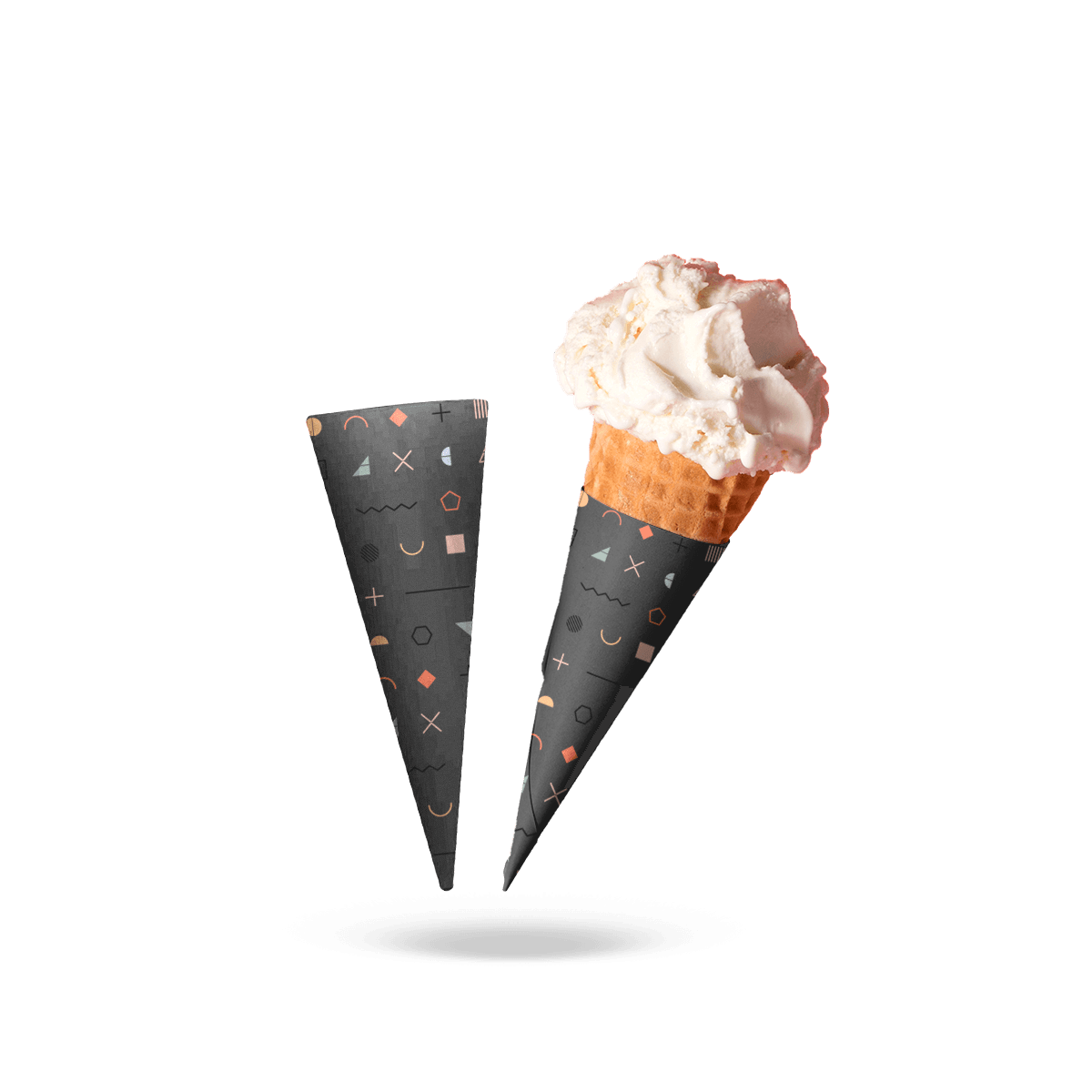
Sleeves shaped around the broad taper and textured body of waffle cones, giving customers a secure grip without forcing the paper against fragile ridges or hiding the cone itself.

The Fit Lives Under the Flare

A waffle cone sleeve should settle into position without being pushed hard toward the top of the cone. That sounds simple, but a broad waffle cone can change diameter quickly as it approaches the rim. If the sleeve geometry is too narrow, staff end up forcing it upward until the paper presses against the textured shell.

That is the wrong kind of fit.

Waffle cones are brittle. Their raised grid also creates uneven contact points against a sleeve. A tight wrap can catch on those ridges or concentrate pressure instead of sitting smoothly around the cone.

The target is a natural seating position under the broad upper body. The sleeve should grip enough to remain stable during normal hand movement while leaving the exposed cone free from excessive pressure.

The Custom Cone Sleeves structure starts from taper, grip position and serving conditions because a cone wrap has to fit the shape that customers actually hold.

Rim Diameter Alone Cannot Set the Dieline

The rim tells you how broad the cone is at the opening, but the sleeve normally sits lower.

Measure the cone where the upper sleeve edge should land and again at the lower edge. Record the vertical distance between those points. Those measurements describe the tapered band that the finished sleeve has to occupy.

Two waffle cones with similar rim diameters can still need different sleeve geometry if one narrows much faster than the other.

The Sleeve Should Seat Without Crushing the Grid

A correctly fitted piece should slide or wrap into its intended position with ordinary hand pressure.

If staff have to twist the sleeve repeatedly, squeeze the cone or push the paper upward against resistance, the geometry needs work. The finished appearance may look neat, but the serving process is putting unnecessary stress on a fragile product.
The Waffle Pattern Changes the Contact Surface

A smooth cone and a deeply textured waffle cone do not meet paper in the same way.

Raised ridges touch the sleeve first. The valleys between them create small air gaps, which means the paper does not make uniform contact around the cone. That texture can help reduce broad surface friction, but it also makes an overly tight sleeve more likely to catch at isolated points.

Paper thickness, stiffness and formed taper all influence how the sleeve behaves over that surface.

A sleeve that works well on a smooth sugar cone should not automatically be transferred to a waffle cone simply because the overall height is similar.

Sugar Cone Sleeves suit the narrower pointed geometry that needs a different relationship between sleeve height and taper.

Grip Should Increase Control Without Carrying the Dessert

The sleeve is a hand-contact component. It is not a structural support for the scoops sitting on top of the cone.

That distinction matters with large waffle-cone servings. A double scoop, dipped rim or heavy topping makes the complete serving feel more substantial in the customer's hand, but the cone itself still carries the food. The sleeve should improve grip and separate fingers from moisture or mess without creating the impression that customers can squeeze harder because paper is present.

A sleeve that is too stiff can encourage a firmer grip than the brittle cone tolerates. A sleeve that is too soft can wrinkle under the fingers and feel unstable.

The best hand feel is controlled but responsive. The paper should stay smooth around the grip zone while allowing the customer to feel where the cone is.

Test the Position with a Filled Cone

An empty cone does not recreate how people hold a finished dessert.

Load the normal serving, place the sleeve at its intended height and watch where the customer's fingers settle. Larger portions can move the natural grip lower as people try to balance the serving.

This check can change sleeve height even when the cone dimensions stay exactly the same.

Exposed Waffle Texture Is Part of the Presentation

A waffle cone has visual value before branding is added. Its grid, baked color and broad rim already contribute to the dessert presentation.

Covering too much of that surface can make a large cone appear smaller and remove one of the physical signals that distinguishes it from a standard cone.

The sleeve should claim the handhold rather than the whole cone.

That often leaves a generous band of waffle texture visible between the sleeve and the rim. The exact amount depends on cone height, serving size and where customers naturally grip.

A short sleeve preserves more of the cone but reduces branding area. A taller sleeve creates more print space and hand coverage but can visually dominate the serving.

There is no universal percentage that solves that balance. It should be judged on the actual filled cone.

Melt Travels Down Toward the Handhold

Frozen dessert service adds a moving condition that does not exist when the sleeve is first applied.

Ice cream can soften, condensation can form and melted product can travel down the cone exterior. A sleeve that feels firm at handoff may experience moisture several minutes later.

The exposure is especially relevant with larger waffle-cone servings because the customer may hold and eat them for longer. The exact time depends on serving size, temperature and setting, so the material should follow the real service environment rather than a generic assumption about ice cream.

Ice Cream Cone Sleeves suit programs where frozen-dessert conditions drive the sleeve specification regardless of the exact cone style.

Dry Service and Melt-Heavy Service Need Different Paper Decisions

A fast indoor handoff may work well with straightforward printed paper or paperboard. Outdoor service in warm weather can expose the sleeve to more moisture before the customer finishes the cone.

If dripping, sauces or oily toppings regularly reach the paper, Grease-Proof Cone Sleeves put surface resistance at the center of the construction.

The sleeve material should be assessed after realistic holding time. A quick touch immediately after serving will not show how the stock behaves several minutes into the dessert.

Food Contact Has to Be Confirmed for the Exact Construction

The sleeve normally contacts the cone exterior and may also encounter melted dessert or toppings.

If food can touch the packaging directly, confirm the suitability of the exact paper, ink, coating and adhesive for that intended contact condition. Do not assume suitability from a generic stock description.

Broad Cones Create More Artwork Area, Not Unlimited Artwork

Waffle cones can give a sleeve a relatively generous visible face, but the surface still curves and narrows.

Artwork that looks balanced on a flat file may shift visually once the piece is formed. Text can rotate toward the seam, horizontal elements can appear angled and graphics near the tapered edges can lose prominence.

The artwork needs to be composed for the assembled sleeve.

Establish the Handoff Face First

Decide which area should normally point toward the customer when staff pass over the cone.

Place the primary logo or graphic in that zone. Keep essential text away from the overlap and from areas likely to rotate out of sight once the sleeve wraps around the cone.

The broad visual surface can support stronger imagery than a tiny cone wrap, but readability still benefits from restraint. One recognizable brand mark and a clear graphic system usually survive curvature better than several competing messages.

Seasonal Artwork Can Reuse Proven Geometry

A successful sleeve dieline does not need to change because the flavor campaign changes.

Once the fit has been established for a specific waffle cone, seasonal graphics, event identities or limited-time promotions can use the same geometry as long as the cone itself stays unchanged.

Custom Printed Cone Sleeves make sense when print treatment becomes the primary commercial decision rather than cone-specific fit.

Custom Packly supports free design and dieline help and free 3D mockups, so curved artwork can be reviewed in formed context before production. Premium offset printing can support repeat branded runs where clean graphics and color control matter.

Overlap Placement Affects Both Grip and Graphics

The seam is a physical ridge in an otherwise thin wrap. On a small sleeve that ridge may sit directly under the fingers.

Its position therefore deserves more attention than simply finding a place for adhesive.

A large overlap uses extra material and creates a thicker local area. Too little overlap can make the formed shape less dependable. The final amount should support consistent forming without creating an unnecessarily heavy seam.

The main brand element should also remain clear of that joint. The customer sees the assembled sleeve, not the flat dieline.

Pattern Continuity Needs a Finished-Sleeve Check

Repeating stripes, geometric motifs or illustrations can expose a poor seam more clearly than a simple logo.

If artwork is expected to meet across the overlap, inspect that junction in a formed proof or realistic mockup. Tiny alignment differences that disappear on solid color can become conspicuous when a line or pattern is meant to continue.

Hand-Rolled and Supplied Cones Can Behave Differently

Waffle cones do not always arrive with identical geometry.

A tightly controlled supplied cone may stay very consistent across cases. Hand-rolled or less uniform products can show small differences in taper, diameter or roundness. Those variations matter when the sleeve fit is already tight.

Do not remove every tolerance by making the sleeve extremely loose. Instead, determine how much normal variation exists in the actual cones and make sure the sleeve can accept that variation without dropping too low.

If several suppliers are used, sample cones from each source before freezing one production dieline. A change in food supplier can unintentionally become a packaging-fit change.

This is one reason a physical cone should remain part of the approved production specification rather than relying only on a written size.

Counter Workflow Should Not Include Sleeve Adjustment

During service, staff should be able to pick up the sleeve, place it on the cone and move on.

A sleeve that repeatedly stops too low and needs a second push has not reached its intended fit. Neither has one that slides past its handhold and has to be pulled upward.

At high-volume dessert counters, those corrections repeat through every shift.

Run several consecutive handoffs using real cones and normal staff movements. Do not slow down for the packaging. That is precisely what the test is meant to reveal.

Paper Cone Sleeves are appropriate when a lightweight paper handhold is enough and cone-specific structural demands remain modest.

A waffle-cone specification earns its own dieline when the broad taper, texture and serving size make a generic sleeve harder to apply consistently.

Outdoor and Event Service Increase Handling Time

Waffle cones are common in settings where customers do not immediately sit down: festivals, dessert carts, hotel pool areas, catering stations and outdoor events.

People may walk, carry another item or stop to take photos while the dessert melts. That increases the importance of a stable grip and a sleeve surface that stays comfortable as conditions change.

Hospitality packaging fits service programs where guest handoff, event branding and repeated serving stations shape the packaging decision.

Artwork should also be easy to recognize from normal hand distance. Highly refined small typography may look strong on screen yet disappear when the sleeve is moving through a busy venue.

Separate Waffle Sizes Only When the Geometry Requires It

A dessert business may use more than one waffle cone without needing a different sleeve for every SKU.

Compare the intended sleeve positions, not just the rim diameters. If two cones have similar taper through the grip zone and the sleeve lands at an appropriate height on both, one dieline may be workable.

If one sleeve sits naturally on the smaller cone but has to be forced onto the larger one, the shared specification has failed. The reverse failure is a sleeve that fits the large cone but slides too far down the small one.

Inventory simplicity is valuable only when service stays simple too.

A Cone Supplier Change Can Break a Good Sleeve

A sleeve approved on one waffle cone should be rechecked when the cone source, dimensions or hand-rolled process changes.

The artwork can remain correct while the physical match shifts. A slightly different taper may move the sleeve higher or lower, increase pressure on the raised grid or create enough looseness for the wrap to rotate.

Keep one approved cone profile as the fit reference, but treat a supplier or recipe change as a trigger for a fresh application check.

The working standard is physical: the paper should reach its position naturally, hold comfortably around the textured cone and leave the upper waffle profile visible without staff forcing the two together.

FAQs

Because waffle cones are wider and often carry heavier servings. A narrow sleeve can fit poorly, while a waffle-specific sleeve keeps the cone more balanced in hand and better proportioned visually.

Usually enough to show the cone texture and support the eating experience while still leaving a practical grip area below. The right balance depends on scoop size, toppings, and serving style.

Choose Waffle Cone Sleeves for broader cones, larger scoop builds, and more premium dessert presentation. Sugar Cone Sleeves are the better choice for narrow, pointed cones with lighter serving weight.

Yes. The cone brings texture, while the sleeve adds branding, cleaner handling, and a more finished presentation. The two elements usually work better together than on their own.

They perform best anywhere larger cone servings move quickly, especially scoop shops, boardwalk stands, hotel dessert counters, festivals, and catering setups with branded frozen treats.

Process

How it works

Your Packaging Journey, From Idea to Production and Delivery

01

Tell Us Your Specs

Custom packaging boxes

Tell Us Your Specs

Provide size, quantity, printing, and finishes.

02

Get a Fast Quote

Custom packaging boxes

Get a Fast Quote

Instant transparent pricing, no hidden fees.

03

Design and Approval

Custom packaging boxes

Design and Approval

Artwork checks, revisions, and final sign-off.

04

Produce

Custom packaging boxes

Produce

Expert manufacturing to meet deadlines.

05

Ship to Your Door

Custom packaging boxes

Ship to Your Door

Hassle-free, flexible delivery options.

Get Your Quote for Custom Waffle Cone Sleeves

Share your product details, size, quantity and artwork needs. We’ll help choose the right packaging style and send a clear quote.