Skip to content
Details

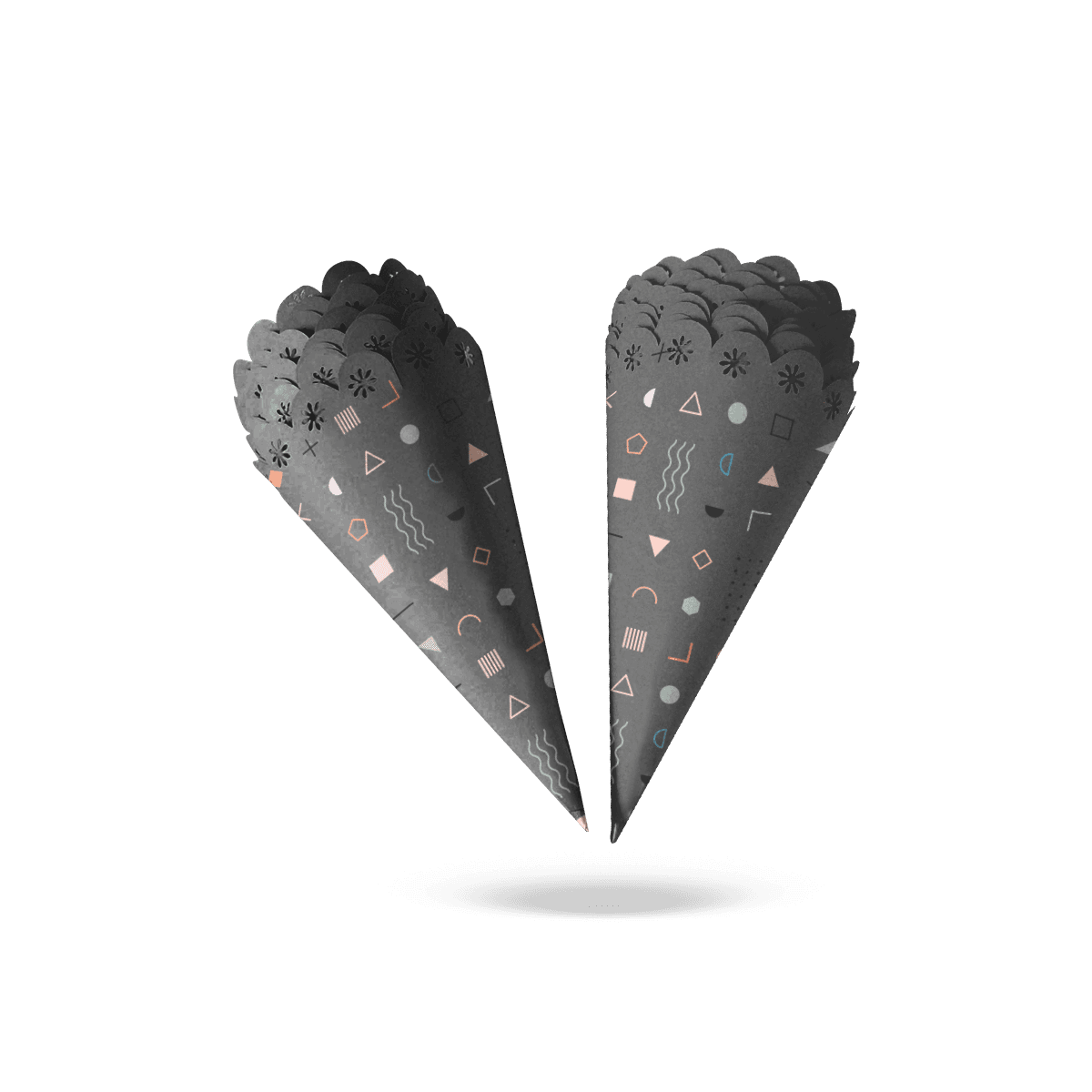
Custom Jacketed Cone Sleeves

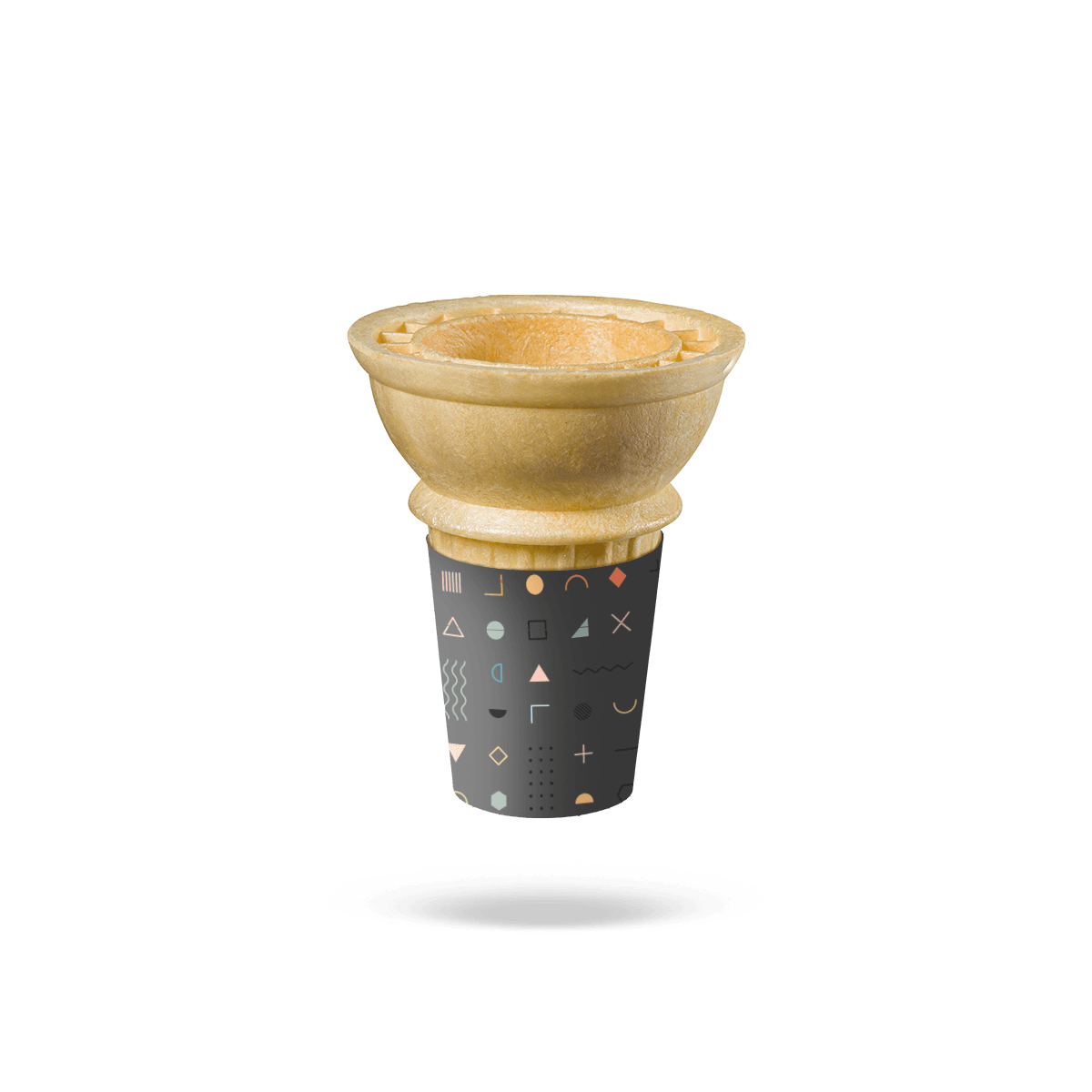
Plan the paper jacket around how the cone is handled before filling, so the sleeve stays fitted, presentable and ready for fast service.

Service Begins During Prep

A loose sleeve can be fitted while an order is being prepared. A jacketed-cone workflow moves that step earlier, so the cone reaches the service station already carrying its paper wrap or is prepared in advance before the rush.

That changes what matters.

Custom Jacketed Cone Sleeves need to remain correctly positioned while cones are stored, handled, moved to the counter and filled. The jacket cannot depend on a final adjustment every time someone serves a scoop.

The fit therefore has to tolerate the full pre-service workflow, not merely look right when one sleeve is placed on one cone.

Across custom cone sleeves, taper controls whether the wrap grips or slides. A jacketed setup adds another requirement: the sleeve should still be sitting where intended when service actually begins.

Position Before Filling

Decide where the jacket should sit while the cone is empty.

If staff have to push it upward after ice cream has already been added, the operational advantage of pre-jacketing disappears.

A stable jacket should occupy the intended holding zone before filling and remain there without squeezing the cone unnecessarily.

Handling Starts Earlier

A pre-jacketed cone may be touched during stocking, counter setup and filling before it reaches the customer.

That makes edge condition, seam security and sleeve movement more important than they are in a wrap applied immediately before handoff.

The jacket needs to survive those extra handling stages without looking crushed or shifting out of position.
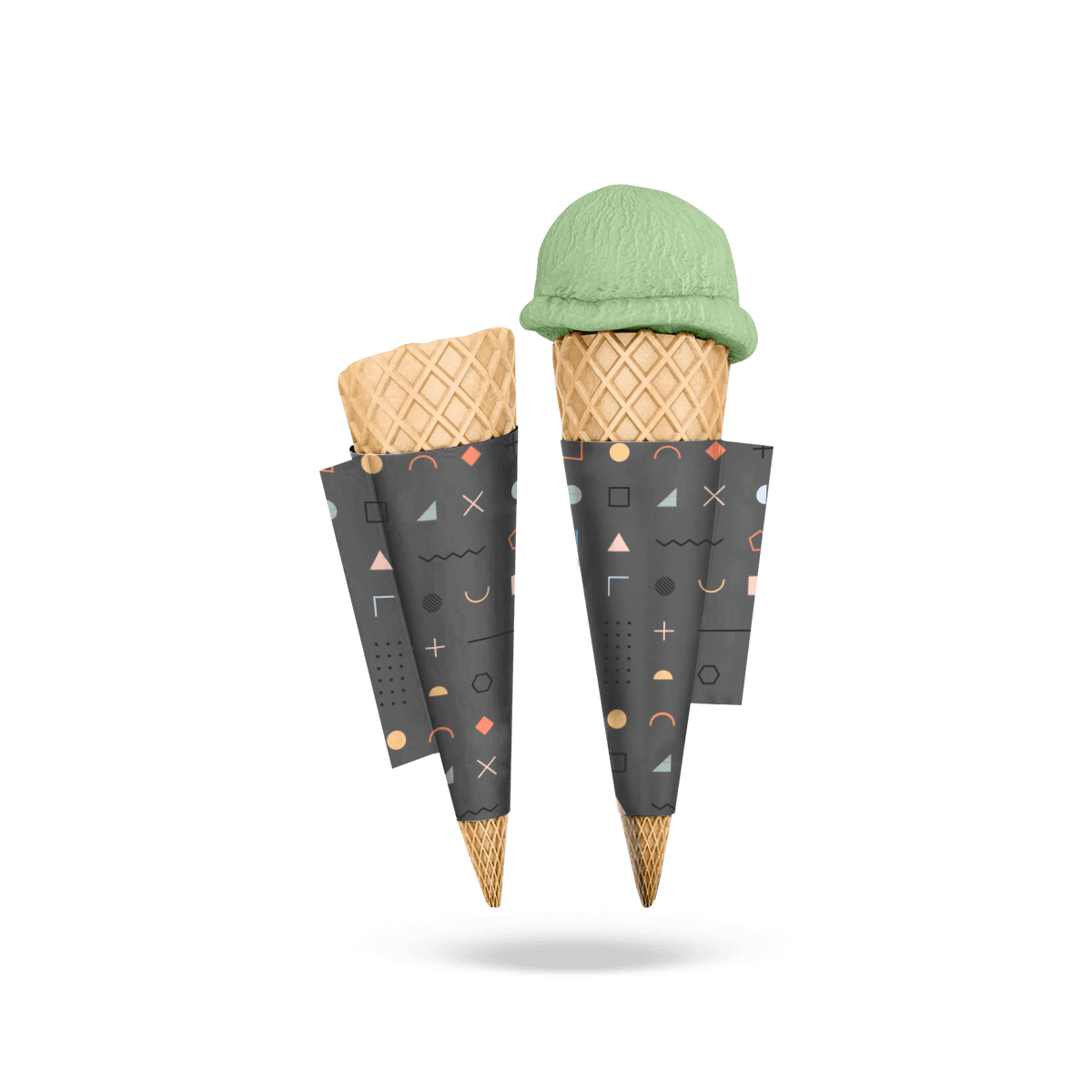
Jacket Means Two Things

The term “cone jacket” is used inconsistently in the market.

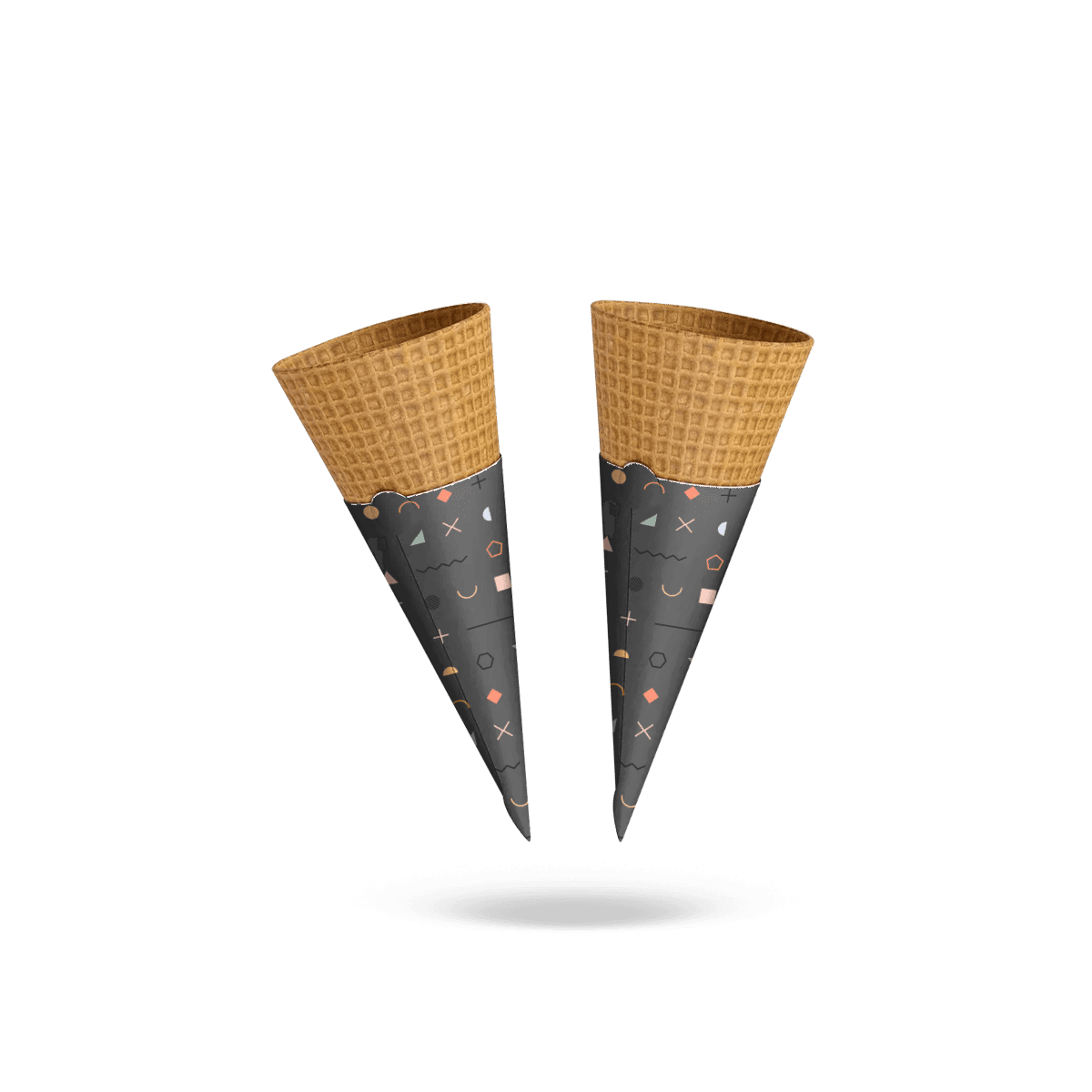
Sometimes it is simply another name for a cone sleeve or wrapper. In food-service purchasing, “jacketed cone” can also describe a cone supplied or staged with its paper sleeve already fitted before filling.

That distinction matters for this specification.

If the only requirement is a normal loose sleeve applied during service, the operational decisions are no different from other Paper Cone Sleeves.

A jacketed program becomes more specific when the sleeve is expected to remain on the cone through storage, staging and filling.

Define the Supply State

Before specifying the sleeve, decide how cones reach the service counter.

Will the sleeve and cone remain separate until an order arrives? Will staff fit jackets during prep? Will another production or packing step pair the jacket with the cone earlier?

Those routes create different handling demands.

The sleeve itself may be similar, but the approval criteria should follow the way it will actually be used.

Do Not Invent Extra Layers

“Jacketed” does not automatically mean double-wall, insulated or multilayer.

If an extra paper layer, barrier layer or separate outer wrap is genuinely required, specify it directly. Do not assume those features from the product name.

A simple paper jacket can still be the correct construction when the real requirement is pre-positioned handling.

The Cone Carries the Jacket

Once a sleeve is fitted before service, the cone itself becomes the support structure during storage and movement.

That changes the fit tolerance.

A jacket that is slightly loose may stay in place when held by hand but slide down while cones are transferred between containers. A jacket that is too tight can load the cone wall continuously before any food is added.

The safest fit sits securely without turning the edible cone into a structural mandrel.

Fragile Walls Need Clearance

Waffle and sugar cones can be brittle.

The jacket should not require force to reach its intended position. If staff have to twist or push it firmly upward, small dimensional errors are being transferred into the cone.

For the larger ridged profile, Waffle Cone Sleeves need enough clearance to pass over the textured body without catching.

The same principle applies here, but the fit also needs to remain stable after the cone is staged.

Grip Without Clamping

A jacket does not need to grip by compression alone.

Taper geometry can stop the sleeve at the correct height without creating excessive pressure around the cone.

That is preferable to making the wrap progressively tighter until it stays in place. A jacket that behaves like a clamp can increase breakage risk and make cone-to-cone dimensional variation harder to tolerate.

Prep Storage Becomes Part of Fit

Pre-jacketed cones consume space differently from bare cones.

The paper layer adds thickness around each cone. Depending on how the cones are stored, that can change how tightly units nest and how easily staff remove one without disturbing the rest.

A specification that works in the customer’s hand can still create trouble in back-of-counter storage.

Nesting Needs Clearance

If jacketed cones are nested, test the actual stack.

The paper should not wedge neighboring cones together so firmly that staff have to pull or twist them apart. Repeated friction can also scuff print or damage top edges.

The right jacket height can help. Extending the sleeve unnecessarily far upward can interfere with how cones nest while adding little value to the final grip.

Stack Height Can Change

A sleeve thickness that seems insignificant on one cone becomes more noticeable across a tall stack.

That matters for countertop dispensers, prep bins and storage cartons that were originally selected for bare cones.

Do not approve a pre-jacketed setup from one assembled piece. Load the quantity staff normally keep at the station and confirm that the storage method still works.

Removal Should Stay Clean

Staff should be able to remove one jacketed cone without catching the sleeve edge of the cone beside it.

Bent upper edges quickly make a clean paper jacket look poorly finished.

This is an operational tolerance problem, not a branding problem. Adjust jacket height, fit or storage method before trying to hide the damage with heavier material.

Paper Weight Affects Prepping

Material stiffness matters differently when the sleeve spends time on the cone before service.

Very light paper can wrinkle during repeated handling. Very stiff paper can resist the cone’s curve or create a stronger seam ridge.

A medium paper or light paperboard may make sense when the jacket needs better shape retention, but thickness should not be added without testing the effect on nesting and cone pressure.

Flex Should Follow Taper

The material needs to bend smoothly around the cone instead of forming flat spots.

A smaller or steeper cone creates a tighter radius. The same stock can behave differently when moved from a large waffle cone to a narrow sugar cone.

That is why stock selection and dieline geometry should be approved together.

Barrier Is a Separate Choice

A jacket used for clean handling does not automatically need foil, lamination or grease resistance.

Add a barrier only when the food or service conditions require it.

If oil migration is the dominant problem, Grease-Proof Cone Sleeves make residue control the primary material decision.

If the jacket mainly protects the holding area before and during service, a simpler paper construction may be enough.

Print Faces More Handling

A jacket fitted before filling can spend more time being touched, stacked and moved than a loose sleeve placed on at the last moment.

That creates a practical print question: will the visible face still look clean by the time the customer receives it?

Large solid colors, dark backgrounds and delicate surface treatments may show scuffs differently from lighter or more forgiving artwork.

The expected prep process should influence the graphic design.

Put the Logo After Rotation

A pre-jacketed cone may rotate while being stored or removed from a stack.

If the brand mark depends on one exact orientation, staff would have to turn every cone before serving it.

That defeats the purpose of a fast pre-jacketed workflow.

A repeated mark, broad visual identity or artwork that remains recognizable from several angles can work better when orientation is not controlled.

If exact front-facing graphics are the priority, Custom Printed Cone Sleeves focus more heavily on assembled artwork position and seam clearance.

Keep Prep Marks in Mind

Think about where fingers contact the jacket during setup and filling.

If staff naturally hold the same printed spot every time, a delicate finish in that area may see more wear than expected.

This does not require eliminating premium print. It means placing sensitive visual features where they are less exposed to repeated handling.

Pre-Jacketed Service Needs a Trial

The most meaningful validation is not a flat proof or one freshly assembled sleeve.

Stage the cones the way the operation actually will.

Fit a working quantity of jackets. Store them for the expected prep period. Move them into the service station. Remove cones at normal pace, fill them and hand them over.

Then look for movement, crushed edges, scuffing, hard separation and cracking.

This test sits beside the workflow because that is where jacketed service succeeds or fails.

Watch Sleeve Drift

Mark the intended jacket position on several sample cones and observe whether the sleeves move during handling.

A few millimeters of movement can alter grip position or cause the printed face to sit too low.

If drift appears repeatedly, change the taper relationship rather than asking staff to correct every cone.

Test More Than One Cone

Edible cones have natural dimensional variation.

A jacket that fits one unusually large or small cone proves very little. Test several pieces from the actual cone supply.

The objective is not a frictionless fit on one perfect specimen. It is a practical tolerance that works across normal production variation.

Measure the real cones first; cone sleeve sizing starts from height, rim diameter and the actual holding zone.

Food Service Sets the Workflow

Jacketed sleeves make the most sense when earlier sleeve application removes work from the busiest part of service.

That can matter at ice cream counters, concession operations, event stations and other environments where employees repeat the same handoff hundreds of times.

The benefit is operational only if prep remains simple.

A pre-jacketed cone that jams in storage, arrives with bent sleeve edges or still needs repositioning at the counter has merely moved the problem to another stage.

Dessert shops and concession operations often coordinate cones with other food-service packaging, so Food, Bakery & Restaurants packaging should follow the same counter workflow.

Events May Prep Earlier

Catering teams may prepare serving stations before guests arrive.

In that setting, a fitted jacket can help create a more orderly setup because cones are already dressed for presentation and handling.

But earlier preparation also means the jacket may remain fitted longer before use. Confirm that it does not loosen, distort or interfere with the way cones are staged.

At catered functions and guest-service programs, Hospitality packaging should account for prep stations and handoff sequence.

Size the Jacket Program

A production brief should distinguish between the sleeve itself and the way it will enter service.

Practical inputs include:

  • actual cone height and rim diameter
  • diameter through the intended grip position
  • waffle, sugar or other cone type
  • sleeve height
  • paper or paperboard direction
  • whether cones are jacketed during prep or at service
  • intended nesting or storage method
  • total sleeve quantity
  • artwork status
  • number of printed versions

Custom Packly can support custom sizing, artwork setup, free 3D mockups and digital proofing before production.

The commercial decision should not stop at cost per sleeve. If pre-jacketing is meant to remove work from the rush, storage and handling need to support that goal too.

Jacketed Must Mean Something

A separate jacketed specification is justified only when the workflow changes.

If staff simply take an ordinary paper sleeve and put it on the cone after an order is placed, calling it “jacketed” adds no structural distinction.

The stronger use case is a sleeve planned for the cone to carry before filling: during prep, stocking, counter setup or another defined pre-service stage.

That creates real decisions around retention, nesting, scuffing, cone pressure and prep speed.

Custom Jacketed Cone Sleeves should therefore be judged by what happens before the food is served. If the jacket stays correctly positioned, stores cleanly and removes a handling step from the rush, the specification has a clear operational job. If none of those conditions apply, a standard cone sleeve is likely describing the same physical product more accurately.

FAQs

They add the most value when the sleeve is fitted before filling or prepared ahead of peak service, so the cone reaches the counter already jacketed without needing a final adjustment.

The meaningful difference is the service workflow, not an automatic extra layer. A jacketed setup is planned to stay fitted through prep, storage and filling before customer handoff.

Choose Jacketed Cone Sleeves when pre-fitted or pre-service handling is the main requirement. Ice Cream Cone Sleeves are the clearer choice when the need is general frozen-dessert grip and branding across standard cone service.

It can remove a step from the rush when the sleeves stay positioned, nest cleanly and separate easily during prep. The workflow should be tested with the actual cone stack before production.

No. A jacket can use simple color blocking, a small logo or a restrained printed message. The artwork should stay readable after the sleeve has been fitted, stored and handled before service.

Process

How it works

Your Packaging Journey, From Idea to Production and Delivery

01

Tell Us Your Specs

Custom packaging boxes

Tell Us Your Specs

Provide size, quantity, printing, and finishes.

02

Get a Fast Quote

Custom packaging boxes

Get a Fast Quote

Instant transparent pricing, no hidden fees.

03

Design and Approval

Custom packaging boxes

Design and Approval

Artwork checks, revisions, and final sign-off.

04

Produce

Custom packaging boxes

Produce

Expert manufacturing to meet deadlines.

05

Ship to Your Door

Custom packaging boxes

Ship to Your Door

Hassle-free, flexible delivery options.

Get Your Quote for Custom Jacketed Cone Sleeves

Share your product details, size, quantity and artwork needs. We’ll help choose the right packaging style and send a clear quote.