Skip to content
Details

Custom Ice Cream Cone Sleeves

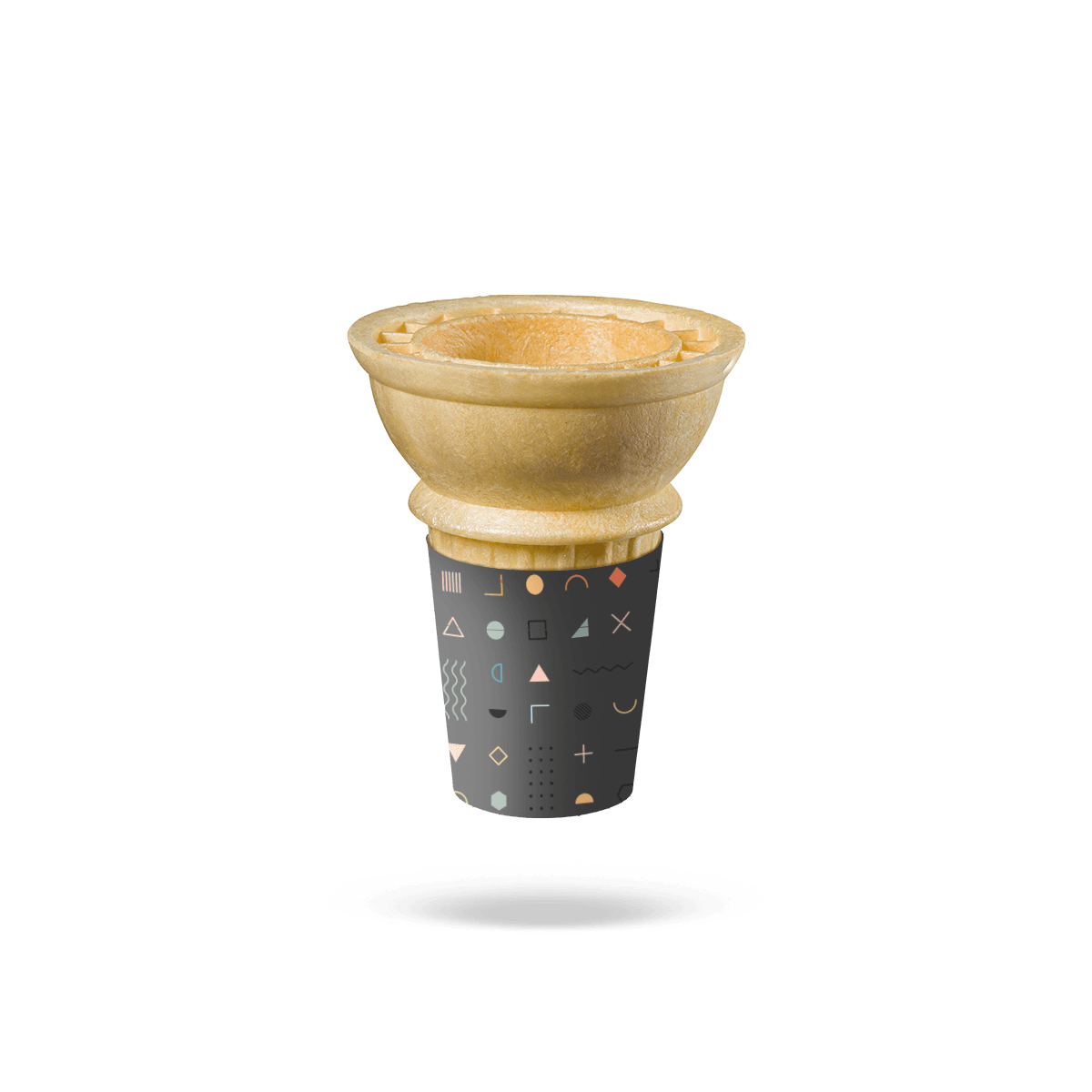
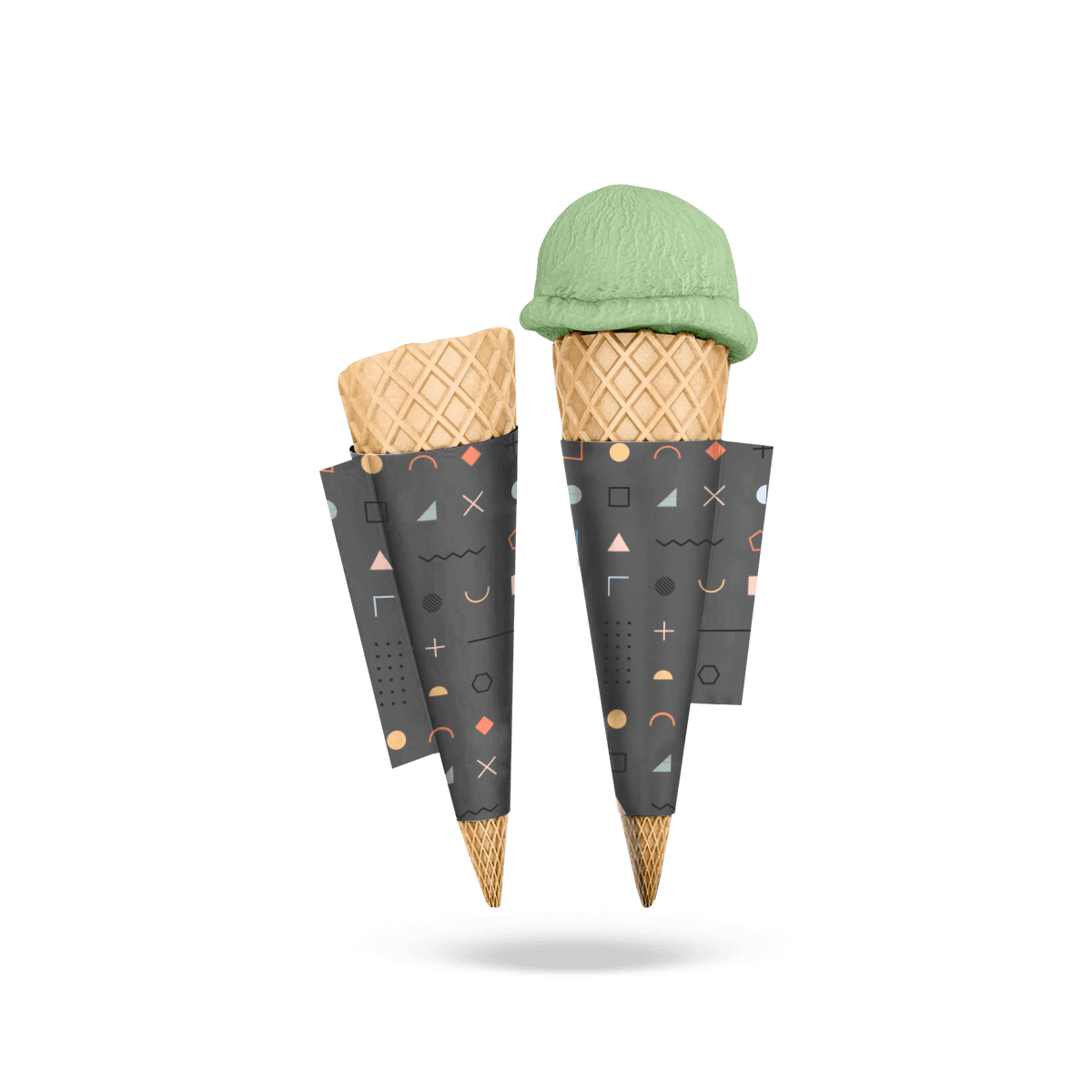
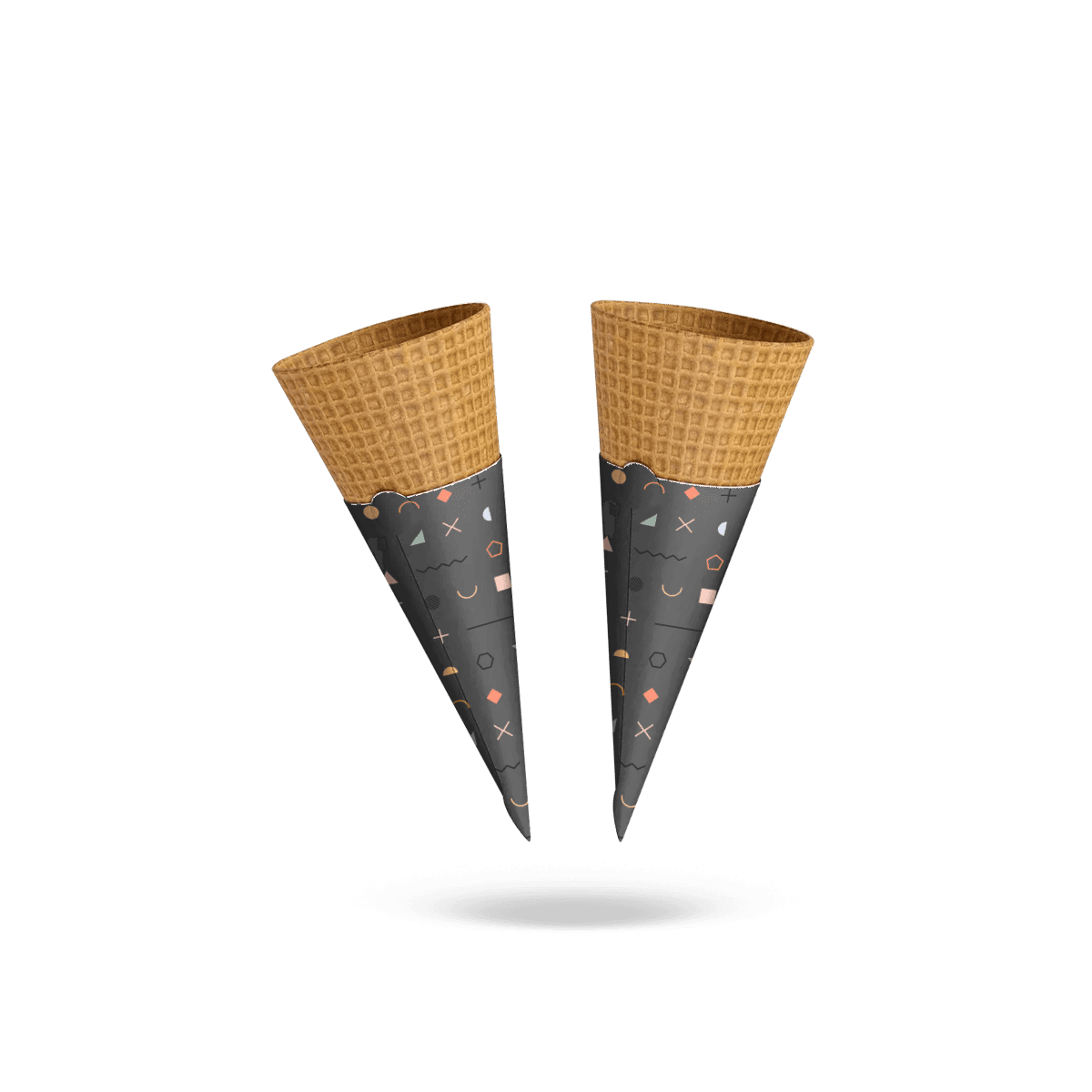
Frozen-dessert sleeves specified around cone taper, grip height and melt exposure, so customers still have a controlled handhold several minutes after the cone leaves the counter.

The Sleeve Has to Work After the First Melt

An ice cream cone sleeve may fit perfectly at handoff and still perform poorly a few minutes later. The serving changes as the customer eats it. Ice cream softens, condensation develops, drips move downward and fingers shift as the cone becomes shorter.

That changing condition is the main job of Custom Ice Cream Cone Sleeves.

The sleeve needs a stable position before melting begins, enough paper coverage where the customer naturally holds the cone and a material that keeps a reasonable hand feel during the expected eating time. It should improve control without implying that a thin paper wrap can contain every drip or compensate for a badly fitted cone.

This frozen-service behavior separates the product from cone-specific sleeves. Custom Cone Sleeves cover the structural system, while an ice cream sleeve is specified around what cold dessert service does to that structure after handoff.
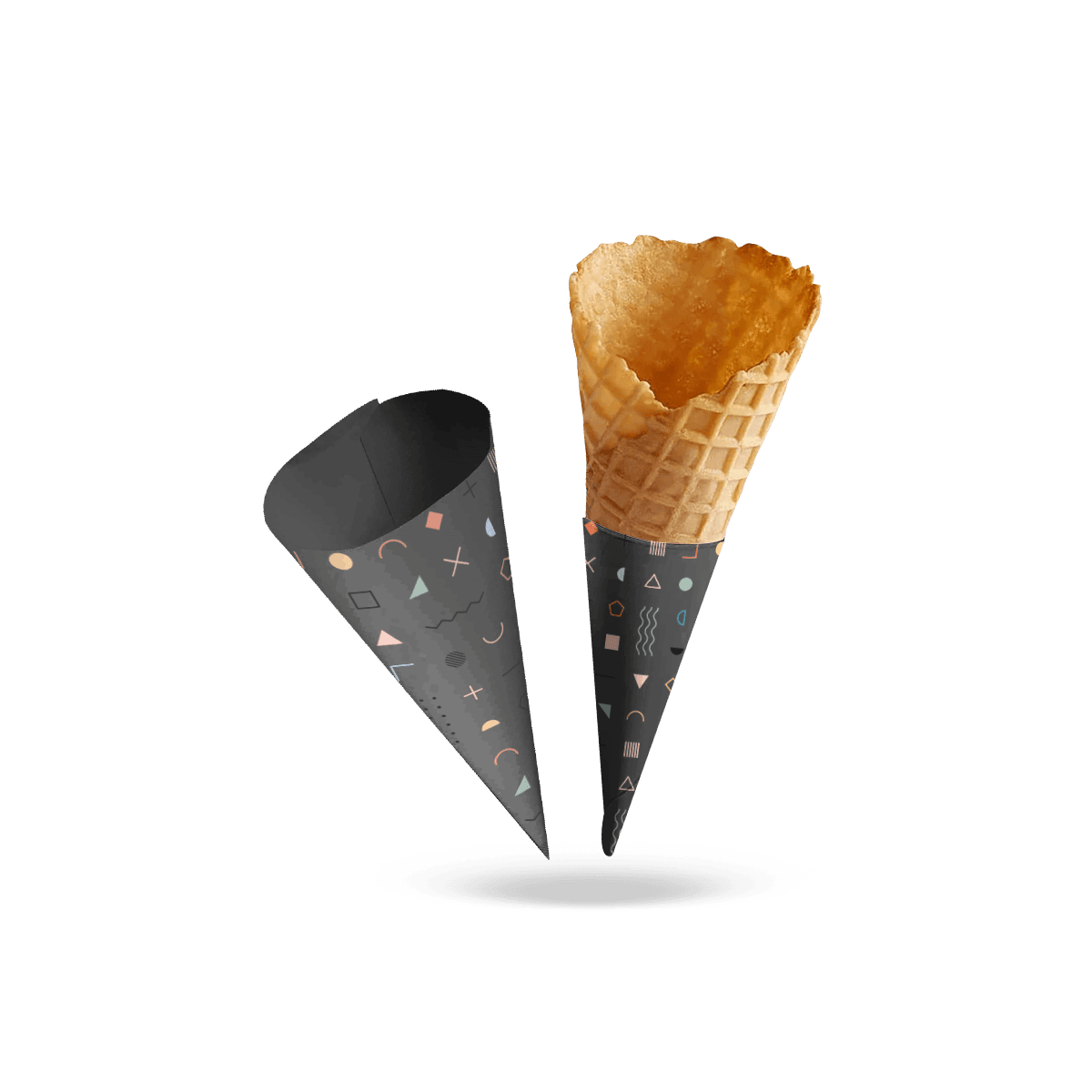
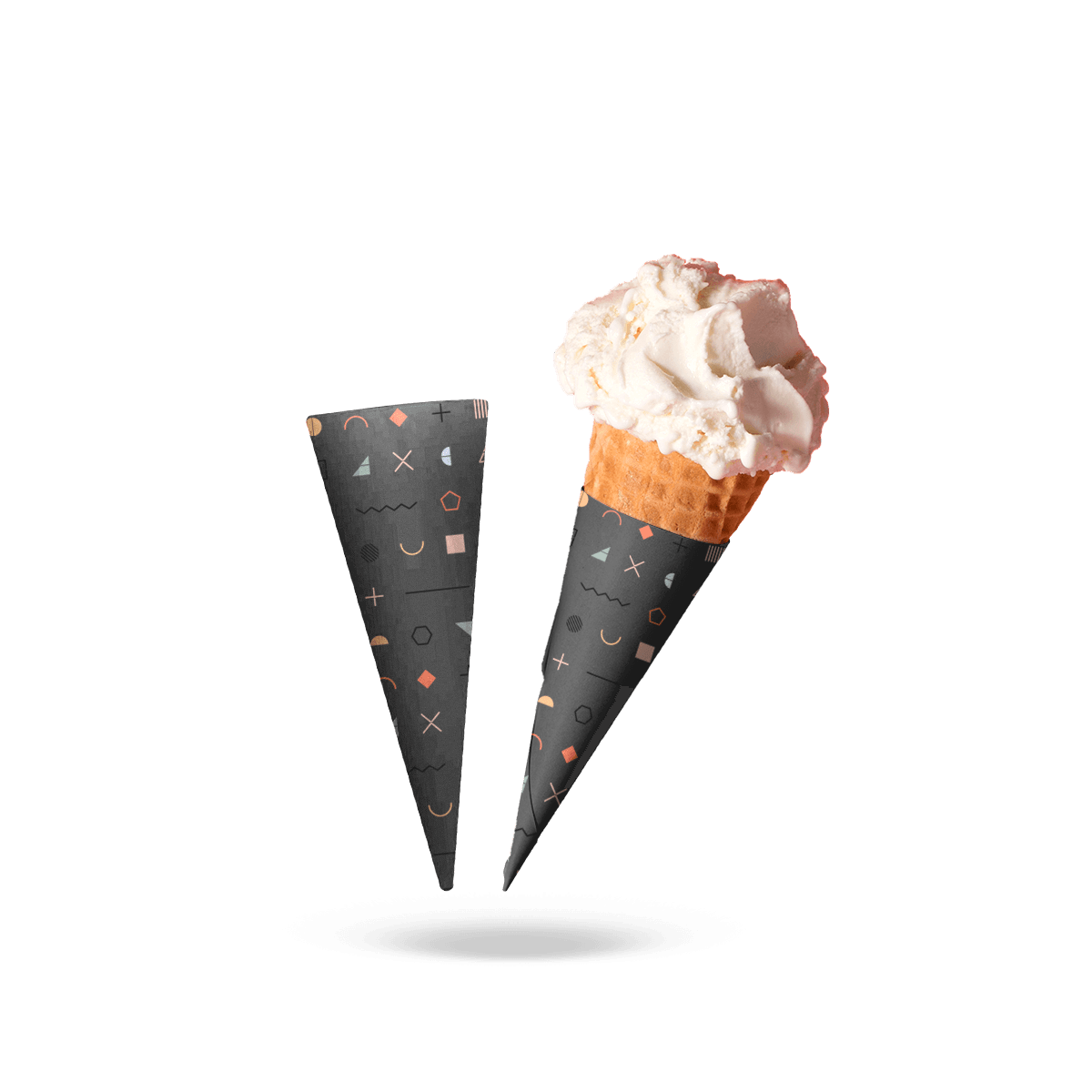
Follow the Likely Melt Path

Melt usually begins near the food and travels downward. Where it reaches the sleeve depends on scoop size, serving temperature, toppings, weather, eating time and how much cone remains exposed.

A sleeve placed very low may preserve the visual appearance of the cone but leave the customer's main grip exposed before the dessert is finished. A sleeve placed too high can sit close to the ice cream, hide the cone and increase the chance of direct contact with melting product.

The useful position is where hand placement and likely drip travel overlap.

Scoop Count Changes the Exposure Time

A single scoop may be eaten before moisture becomes a serious issue. A tall double or triple scoop can stay in the customer's hand considerably longer and gives melted product more opportunity to move down the cone.

That does not mean every large serving needs a taller sleeve. It means serving size belongs in the specification along with cone dimensions.

The cone is only one part of the packed product. The complete serving determines how long the sleeve has to keep doing its job.

Dipped Rims and Sauces Move the Mess Outward

Chocolate-dipped rims, syrups and other toppings can create runoff that follows an uneven path down the cone.

If those products account for meaningful sales, test them rather than using a plain scoop as the only reference. The messiest normal serving is often more informative than the neatest one when evaluating sleeve coverage.

Ice Cream Does Not Define the Cone Shape

A shop can serve the same ice cream in a waffle cone, sugar cone or another tapered cone. The frozen dessert defines the service condition. The physical cone still defines the sleeve geometry.

That distinction matters because a sleeve developed around a broad waffle profile may sit too low on a slimmer sugar cone. A sleeve developed for a pointed sugar cone may stop early or need force when staff apply it to a fuller cone.

Waffle Cone Sleeves suit broad textured cones when the flare and brittle waffle shell determine the fit.

Sugar Cone Sleeves suit slimmer pointed cones where a faster taper changes the natural sleeve position.

Ice Cream Cone Sleeves make sense when frozen-dessert handling is the central requirement, but the dieline still has to follow whichever cone sits underneath.

Measure at the Sleeve Position

Rim diameter alone is not enough.

Record the cone at the intended upper sleeve edge and again where the lower edge should sit. Add the vertical distance between those points. Those measurements describe the tapered area the sleeve actually wraps.

For operations using more than one cone, cone sleeve sizing by actual cone dimensions helps determine whether one dieline can genuinely serve both.

A shared sleeve is worthwhile only when it lands correctly without staff twisting, forcing or repositioning it.

Grip Changes as the Cone Gets Wet

Dry paper against a dry cone behaves differently from damp paper several minutes later.

Moisture can reduce stiffness and alter friction between the sleeve, cone and fingers. An initially secure wrap may begin to soften or rotate. A sleeve that starts too tight can also become uncomfortable because customers grip harder as the serving becomes messier.

The material decision therefore needs a realistic exposure time.

Paper may work well for quick indoor service and modest portions. Paperboard can create a firmer handhold for larger servings or longer handling. The correct choice depends on cone size, sleeve coverage and service conditions rather than a generic preference for thicker stock.

Paper Cone Sleeves fit lighter-duty service where straightforward paper conformability and compact handling are the main requirements.

Moisture Resistance Should Solve a Real Problem

A coating or more resistant construction should be specified because the sleeve actually experiences enough moisture, grease or sauce to need it.

If recurring drips soften or stain conventional paper, Grease-Proof Cone Sleeves put barrier behavior at the center of the material decision.

Do not add a treatment simply because the product contains ice cream. A fast indoor serving and a large outdoor sundae cone expose the sleeve differently.

Confirm Direct Contact for the Exact Stock

Melted dessert can eventually reach areas that started as hand-contact surfaces.

If food may touch the sleeve directly, confirm the suitability of the exact stock, ink, coating and adhesive for that intended contact condition. A generic paper name is not enough to establish that.

Sleeve Height Is a Trade Between Grip and Product Visibility

The top edge of the sleeve changes how the entire serving looks.

A taller sleeve gives the hand more covered area and can intercept drips sooner. It also hides more of the cone. A short sleeve exposes the baked texture and makes a generous cone more visible but leaves less protected grip.

The serving itself should settle the choice.

Place a finished cone in front of staff and customers at normal handoff distance. Check where the fingers fall, how much cone remains visible and whether the printed area is still large enough to recognize the brand without turning the wrap into the dominant object.

Large Servings Can Shift the Hand Lower

Customers often change grip when a cone carries more weight at the top.

A heavier serving can encourage the hand to move lower for balance, especially while walking. That shift can make a sleeve that looked correctly positioned on an empty cone feel too short once the real dessert is added.

Testing with the finished portion catches that problem early.

A Sleeve Cannot Replace Good Drip Control

Cone sleeves can create a cleaner holding surface, but they should not be described as a complete drip-management system.

If soft ice cream consistently runs over the cone before customers can eat it, portion temperature, serving shape, toppings and service conditions also matter. Increasing paper coverage may hide the symptom without addressing the service issue.

The packaging should manage the contact zone it realistically controls.

This is particularly important at outdoor kiosks, food trucks, boardwalk locations and summer events, where the product can soften faster than it would indoors.

Counter Speed Depends on Immediate Seating

During a queue, staff should not have to diagnose the sleeve fit for every cone.

The piece should reach its intended position in one natural movement. If workers repeatedly push it upward, rotate it to stop sliding or squeeze the paper to make it hold, the taper needs attention.

Test multiple cones from normal stock, not one carefully selected sample. Small manufacturing differences can reveal whether the fit has enough tolerance for day-to-day service.

Stack Behavior Matters Before Application

Sleeves normally sit in a stack near the serving station. They need to separate cleanly without several pieces clinging together or collapsing when staff grab them quickly.

This is an operational detail customers never see, but it affects every handoff.

Material stiffness, forming method and storage orientation all influence how quickly a server can pick one piece and apply it.

Branding Is Seen While the Hand Is Covering Part of It

An ice cream sleeve is rarely displayed untouched. The customer's fingers cover part of the printed surface almost immediately.

That should influence artwork placement.

Put the main logo or graphic where it stays visible around the natural grip. Avoid placing essential text directly across the area most likely to be covered by fingers or lost in the overlap seam.

The curved, tapered surface also changes the apparent alignment of artwork. A logo that looks centered on a flat file can rotate away from the strongest viewing face once formed.

For campaigns where artwork is the primary decision, Custom Printed Cone Sleeves can focus the specification more heavily on color, graphic placement and campaign consistency.

Keep the Message Short Enough to Survive Movement

Customers are walking, talking and eating while holding the sleeve. Dense copy has very little opportunity to be read.

A recognizable brand mark, distinctive color and concise supporting element usually make stronger use of the visible face than several lines of small text.

Premium offset printing can support clean repeat graphics and stable brand color. CMYK works for multi-color artwork while Pantone colors can be considered when a specific brand color needs tighter control.

Outdoor Service Changes the Material Decision Fast

Indoor scoop shops usually give the sleeve a relatively controlled environment. Outdoor service can combine warm air, direct sun, longer queues and customers walking farther with the dessert.

The product may melt sooner and the sleeve can stay in the hand longer.

Do not create an entirely different structure just because an event is outdoors, but test the normal sleeve against those conditions before committing a large seasonal order.

Hospitality packaging fits hotel, catering and event programs where repeated guest handoff and temporary service stations affect how food packaging is used.

An event sleeve may also need simpler graphics, faster identification between serving points or separate artwork for sponsors and campaigns while retaining the approved cone geometry.

One Sleeve Across Several Cones Is a Physical Question

A universal ice cream sleeve sounds efficient. Sometimes it is.

If two cone styles have similar taper through the actual grip zone, one dieline may sit securely on both even when their rims differ. If their profiles diverge sharply, one sleeve usually compromises one of them.

Test the same piece on every cone intended for the program. Check where it stops, how much surface remains exposed, whether the customer can grip it naturally and whether staff can apply it at normal speed.

Do not count inventory simplification as a saving if every serving requires manual adjustment.

A shop with meaningful volume across both waffle and sugar cones may be operationally better off with two clearly identified sleeve stacks than one piece that fits neither properly.

Production Should Follow the Seasonal Serving Cycle

Ice cream demand can move sharply between regular trade, warm-weather peaks, events and limited campaigns. Sleeve quantity should follow that operating cycle rather than a flat annual assumption.

Separate the dependable core quantity from artwork that may expire after a promotion or season. A proven structural dieline can stay the same while print changes, provided the cone supplier and serving geometry remain stable.

Price the stable core run and temporary artwork separately when their quantities or production timing differ. That keeps the commercial decision tied to the real seasonal cycle rather than one blended annual estimate.

Judge the Sleeve After Several Minutes of Eating

The most useful final test runs past the counter.

Serve the real ice cream, let someone hold and eat it for a realistic period and inspect the sleeve after several minutes. Check whether it stayed in position, softened excessively, rotated, became uncomfortable or allowed moisture to reach the grip earlier than expected.

Use the same cone profile, scoop count and toppings that represent the normal serving. If any of those inputs change materially later, repeat the timed check rather than assuming the previous result still applies.

The approved sleeve should still make sense after the dessert has started changing. That is the physical behavior this packaging needs to preserve.

FAQs

No. They can be sized for cake cones, sugar cones, or waffle cones depending on the portion and the way the product is served.

Choose Ice Cream Cone Sleeves when you want a more general cone-service format that can work across multiple frozen dessert setups. Waffle Cone Sleeves are the better option when the sleeve needs to match the wider shape and larger serving profile of waffle cones more precisely.

Usually, enough to create a secure grip without hiding too much of the cone or interfering with the eating experience. The exact height depends on cone style, scoop count, and topping load.

Yes. They do not replace napkins, but they give the customer a better hold point and help the cone look more controlled during fast service.

Yes. This format works well for limited-time menus, branded activations, pop-ups, and shop promotions where a small printed sleeve can add visibility without changing the serving process.

Process

How it works

Your Packaging Journey, From Idea to Production and Delivery

01

Tell Us Your Specs

Custom packaging boxes

Tell Us Your Specs

Provide size, quantity, printing, and finishes.

02

Get a Fast Quote

Custom packaging boxes

Get a Fast Quote

Instant transparent pricing, no hidden fees.

03

Design and Approval

Custom packaging boxes

Design and Approval

Artwork checks, revisions, and final sign-off.

04

Produce

Custom packaging boxes

Produce

Expert manufacturing to meet deadlines.

05

Ship to Your Door

Custom packaging boxes

Ship to Your Door

Hassle-free, flexible delivery options.

Get Your Quote for Custom Ice Cream Cone Sleeves

Share your product details, size, quantity and artwork needs. We’ll help choose the right packaging style and send a clear quote.