Skip to content
Details

Custom Necklace Boxes

Necklace packaging that controls chain routing, pendant position and excess length so delicate pieces open centered, untangled and ready to present.

Chain Routing Prevents the Tangle

A necklace box has to control something most jewelry packaging does not: a long, flexible product that can move independently at several points.

Holding the pendant in the center is only part of the job. The chain still needs a defined path from the upper anchors, around the visible presentation area and into a controlled space for any excess length. If that path is missing, the necklace can arrive with the pendant centered while the chain is twisted, crossed or gathered underneath it.

For jewelry and accessories packaging, that makes necklace packaging fundamentally different from a compact ring or earring box.

The box should control the complete necklace, not simply provide an attractive surface beneath it.

Upper Anchors Establish the Shape

The first anchor points establish the necklace’s displayed width and drop.

Place them too close together and a necklace designed to form a broad curve can look unnaturally narrow. Place them too far apart and a short chain may be pulled tight across the insert.

The anchor spacing should follow the jewelry’s natural hanging shape rather than a standard decorative layout.

For necklaces sold at several lengths, check the shortest and longest versions before standardizing one insert.

Excess Chain Needs a Destination

Longer chains rarely fit neatly inside the visible display area without some length being routed behind or beneath the insert.

That excess should have a deliberate destination.

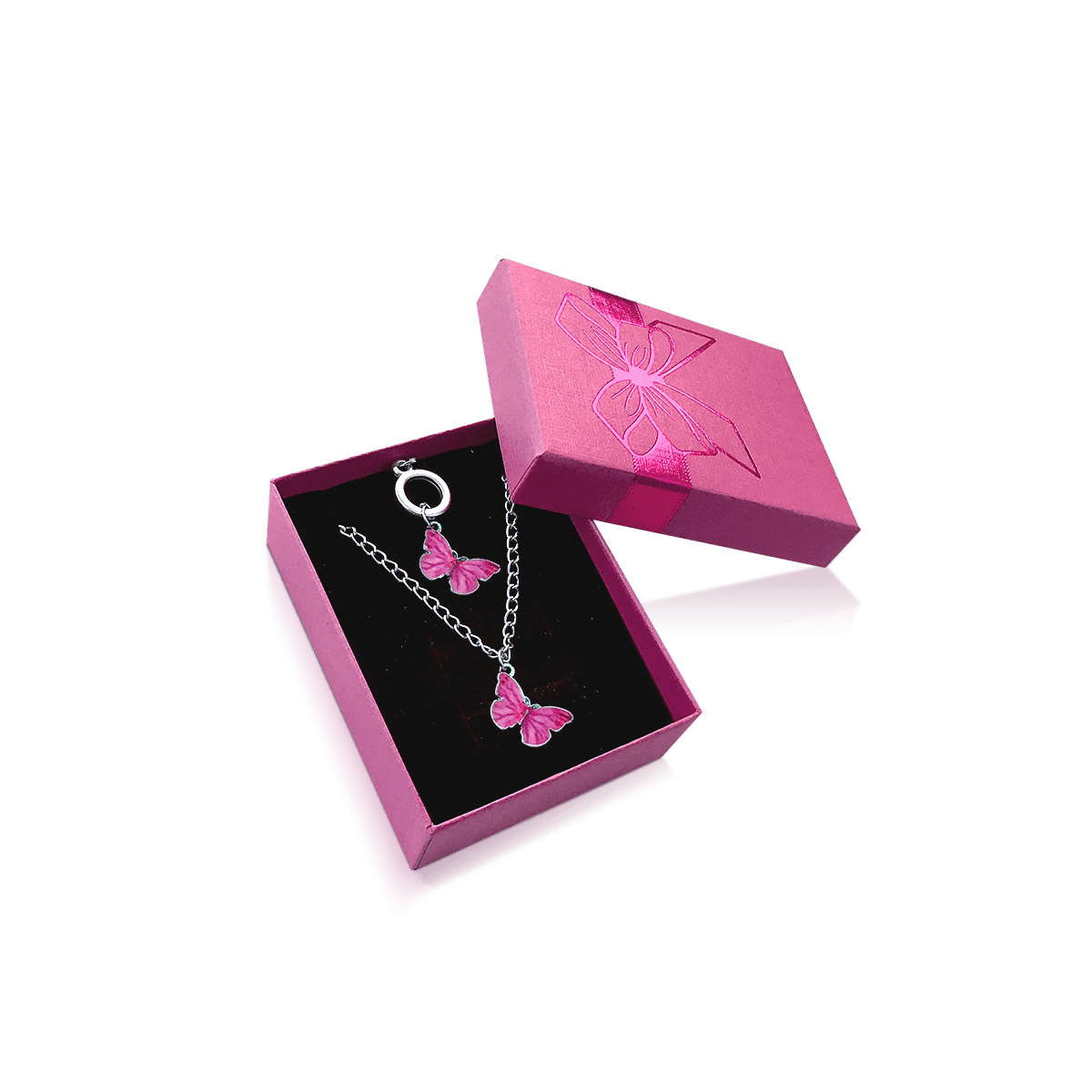
A lower pocket, rear channel, concealed slot or other retention feature can collect the unused length without leaving it free to knot behind the pendant. The exact method depends on the box and insert construction, but loose chain should not simply be pushed into an empty cavity during packout.
Pendant Weight Changes Chain Tension

The pendant affects how the whole necklace sits.

A lightweight charm may need little more than stable chain anchors. A heavier gemstone, metal pendant or statement centerpiece pulls downward and can change both the chain curve and the load on the upper retention points.

The insert should let the pendant settle naturally without allowing it to swing freely inside the box.

Heavy Pendants Need Their Own Support

Do not make a fine chain carry the full load of a heavy pendant during handling.

A recessed area, shaped support or carefully positioned lower retention point can stabilize the pendant while the chain remains responsible mainly for presentation.

This becomes more important when the necklace box will be turned vertically, packed into ecommerce orders or repeatedly moved between storage and a retail counter.

The differences between foam, cardboard and molded pulp inserts matter here because each material creates different possibilities for routing, cushioning and fitted support.

Pendant Thickness Needs Depth

A pendant may be visually small but physically thick.

Raised gemstones, lockets, sculptural pieces and layered metalwork can sit well above the chain plane. If the cavity beneath them is too shallow, the pendant can rock. If the lid clearance is too tight, its face can contact the interior surface.

Measure pendant width, height and thickness separately from chain length.

That gives the centerpiece enough space without making the whole necklace box unnecessarily deep.

A Centered Pendant Can Still Arrive Tangled

Consider a fine chain displayed on a flat insert with two upper slots. The pendant sits neatly in the center when the necklace is packed, so the setup appears finished.

The remaining chain length is tucked loosely behind the insert.

During handling, that loose section shifts around the back, crosses over itself and pulls unevenly through one of the upper slots. When the box opens, the pendant may still be near the center, but the chain has twisted and one side is visibly shorter.

The failure is not at the pendant.

The correction is to control the hidden chain as deliberately as the visible chain. A lower retention pocket or defined rear routing path gives the excess length somewhere to stay while the upper anchors preserve the visible curve.

The customer then sees the necklace in the position the packer intended rather than having to untangle it before the first wear.

The Box Follows the Necklace Drop

Necklace length influences box proportions, but the package does not need to reproduce the entire chain at full length.

The useful measurement is the displayed drop: how much of the necklace needs to remain visible to communicate its shape and keep the pendant correctly positioned.

A compact pendant necklace can often use controlled rear storage for excess chain. A broad collar necklace or statement piece may need a larger presentation area because folding the visible portion would destroy the intended shape.

Chokers Need Width

A choker or short necklace often needs more horizontal presentation space than a fine pendant chain.

The box should preserve the shape around which the jewelry was designed rather than forcing it into a narrow vertical layout.

For structured or semi-rigid pieces, bending the necklace sharply to fit a smaller package can also place unnecessary stress on the jewelry.

Long Chains Need Routing, Not Empty Space

Simply increasing box length to accommodate every inch of a long chain is inefficient.

A well-planned insert can display the important portion of the necklace and manage the remaining chain out of sight. This keeps the package compact while avoiding uncontrolled folding.

The goal is not the smallest possible box. It is the smallest box that can preserve the intended presentation without forcing the necklace into awkward bends.

Necklace Boxes and Pendant Boxes Are Different

A pendant is part of many necklaces, but the packaging problems are not identical.

Pendant Boxes can center more strongly on the focal jewelry piece and the compact presentation around it.

Custom necklace boxes need to account for the complete chain path as well.

This distinction becomes clearer with chains that have no dominant pendant, layered necklaces, chokers, pearls or statement necklaces where the shape of the entire piece is the presentation.

A pendant-centered insert can therefore be too simplistic for a necklace whose chain itself carries much of the visual design.

Use the necklace structure when chain control and displayed length matter. Use a more compact pendant-led presentation when the focal piece carries most of the visual weight and the chain can be managed around it without defining the whole interior.

The Clasp Should Stay Out of the Main View

Clasps, extension chains and tags are necessary parts of the product, but they rarely belong beside the pendant in the primary presentation area.

A well-routed necklace insert gives these components a controlled position outside the central visual field.

That may mean routing the clasp behind the insert, locating it below a lower slot or holding it in a small concealed area where it cannot work its way back into the visible chain.

Extension Chains Need Extra Control

Adjustable necklaces can have several inches of extension chain beyond the main clasp.

If that section is left loose, it can migrate into the display area or wrap around the main necklace during handling.

Treat it as a separate routing problem rather than assuming the same slot that holds the main chain will control everything.

Tags Should Not Pull the Jewelry Sideways

Care tags, authenticity labels or small product identifiers can create weight on one side of a fine necklace.

If they remain physically attached during presentation, position them so they do not pull the chain off center.

Where operationally practical, the box can give product documentation its own location rather than allowing it to hang from the jewelry throughout the opening experience.

Layered Necklaces Need Separation

Multiple chains introduce a different problem from a single necklace.

Even if each chain is secured at the top, two or three layers can cross during handling unless their paths remain distinct.

Upper anchor positions should preserve the intended spacing between layers. Lower routing should also prevent the chains from converging into one loose pocket where they can knot together.

For coordinated jewelry lines, Set Jewelry Boxes make more sense when the package needs to organize several different jewelry types rather than several chains intended to be worn as one necklace.

The key difference is presentation logic.

A layered necklace should still read as one product. A jewelry set needs individual positions for distinct pieces.

Rigid Boxes Support Presentation-Led Necklaces

Fine jewelry, bridal pieces, statement necklaces and gift-led collections often benefit from a rigid presentation structure because the box can maintain a broad, shallow interior without losing its shape.

Rigid Jewelry Boxes also give fitted inserts and soft interior treatments a stable outer shell.

That does not mean every necklace needs rigid board.

Lightweight fashion necklaces, promotional jewelry and higher-volume retail programs may work well in compact paperboard cartons with a necklace card or shaped insert. Those structures can store flat before use and may be more efficient when the packaging is not intended as a keepsake.

The choice should follow the jewelry, selling price, retail environment and expected customer experience rather than a blanket rule that jewelry must always use a rigid box.

Shallow Depth Often Works Better

Necklaces usually need presentation area more than internal volume.

An unnecessarily deep rigid box can make a flat necklace look lost at the bottom and increase the amount of material around a lightweight product.

Depth should come from the thickest jewelry component, insert construction and lid clearance, not from the idea that a deeper box automatically feels more premium.

Matching Earrings Need Their Own Positions

Necklace-and-earring combinations are common gift sets, but the earrings should not simply be placed beside the chain on the same unrestricted surface.

Posts, hooks and drop components need their own retention points.

Earring Boxes deal specifically with pair alignment and the clearance needed behind different earring constructions. When earrings are added to a necklace pack, those same requirements need to be incorporated into the set insert.

The necklace should retain its intended curve while the earrings remain level and separated.

Avoid placing the earring positions where they interrupt the chain path or force the necklace into an unnatural shape merely to create visual symmetry.

The jewelry should determine the composition.

Interior Contrast Can Frame Fine Chains

Very fine chains can visually disappear against an insert that is too close to the jewelry color.

Interior color and texture therefore have a functional presentation role.

A pale metal chain may stand out better against a darker restrained surface. Dark or oxidized jewelry can benefit from a lighter interior. The exact direction should follow the product photography, retail lighting and brand identity rather than a fixed “luxury” palette.

Velvet-like surfaces, wrapped paperboard and other soft-looking treatments can support premium jewelry presentation, but the underlying insert still needs to control the chain mechanically.

A beautiful lining cannot correct poor routing.

Branding Should Leave Room for the Jewelry

Necklace boxes provide more visible interior area than ring boxes, especially above or around a shallow insert.

That space can support a restrained logo, collection message or inside-lid print without competing with the product.

Custom printed boxes can carry coordinated exterior and interior artwork across jewelry lines. Premium offset printing also supports fine graphics and controlled brand colors when several package sizes need to remain visually consistent.

Foil, embossing, debossing and spot UV can provide focal details, but the necklace should remain the dominant object when the box opens.

Different Necklace Lengths Can Share One Outer Box

A jewelry line may sell the same pendant on several chain lengths.

That does not automatically require several external box sizes.

If the visible necklace layout remains similar, one outer structure may support different lengths through controlled excess-chain routing or insert variations.

This approach works only when the shortest chain still displays naturally and the longest chain can be stored without tangling.

A very long necklace, broad choker or statement collar may fall outside that system and deserve its own box geometry.

The correct grouping is therefore based on how the necklaces behave inside the pack, not simply on collection name.

For brands with many jewelry SKUs, this distinction can reduce unnecessary structural variation while keeping product-specific interiors.

Retail Presentation and Parcel Shipping Are Separate

A necklace box can hold the jewelry beautifully and still need an outer shipping package.

Ecommerce handling introduces impacts, compression and movement that a presentation insert is not intended to manage on its own. The inner box controls the necklace. The outer mailer or shipper protects that presentation package through the carrier network.

This is especially important with broad rigid necklace boxes because corners and wrapped surfaces can be marked even when the jewelry itself remains undamaged.

Shipping damage is reduced through structure and fit when movement is controlled at each packaging layer.

Do not enlarge the necklace box merely to turn it into its own shipper. Preserve the product presentation and solve transit protection around it.

Packout Should Be Easy to Repeat

An insert can perform well in a prototype and still slow production if every chain requires careful manual adjustment.

The routing sequence should be obvious to the packing team.

Upper attachment points need to be easy to access. Excess chain storage should not require repeatedly threading a clasp through narrow hidden openings. Pendants should locate themselves naturally in the intended center rather than requiring visual alignment by eye on every unit.

A simple packout sequence improves consistency across larger runs.

Custom Packly’s US MOQ starts from 100 boxes, with US production, free shipping, free 3D mockups and design and dieline support. Standard turnaround is 4–6 days after final artwork and specifications are approved. Complex structures, specialty materials or advanced finishes may require additional time.

For established jewelry programs, warehousing and scheduled deliveries can support repeat packaging requirements without changing the approved physical setup.

A paid fully custom pre-production sample can also be useful when actual chain routing, insert tension or multi-piece positioning needs to be validated before the production run.

Preserve the Chain Path on Reorders

The most valuable repeat specification for a necklace box is the approved route through the insert.

Record the outer box dimensions, upper anchor positions, pendant location, lower retention method, insert material and the amount of chain intended to remain visible.

If one box supports several necklace lengths, document which insert or routing method belongs to each product family.

That protects something artwork files alone cannot capture: how the necklace is supposed to sit when the customer opens the box.

A later reorder can match the same logo, color and finish and still feel wrong if the chain hangs differently or the pendant moves away from its intended position.

For necklace packaging, repeat consistency begins inside the box.

The chain should follow the same controlled path, the pendant should arrive where it was designed to sit and the customer should not have to untangle the product before seeing it properly.

FAQs

A slotted insert is usually the best choice because it anchors the clasp and limits excess movement inside the box. Foam, velvet-lined pads and paperboard inserts can all work well when they are sized to the necklace length and pendant weight.

Necklace Boxes are better when the chain length, drape and full presentation matter. Pendant Boxes usually suit smaller pieces where the focus is the charm or pendant itself rather than the full necklace layout.

Rigid formats are often the stronger option for fine jewelry because they add weight, shape retention and a more deliberate opening feel. Folding cartons can still work for lighter collections, promotional pieces or higher-volume retail programs.

There is usually enough surface area for logo printing, foil accents, embossing, color-matched wraps and interior messaging. That makes Necklace Boxes useful for both identity building and practical inserts such as care instructions or authenticity cards.

Yes, if the inner fit is snug and the box is paired with a suitable outer shipper. Many jewelry sellers use Necklace Boxes as the branded inner pack, then place them inside a corrugated mailer for better shipping resistance.

Process

How it works

Your Packaging Journey, From Idea to Production and Delivery

01

Tell Us Your Specs

Custom packaging boxes

Tell Us Your Specs

Provide size, quantity, printing, and finishes.

02

Get a Fast Quote

Custom packaging boxes

Get a Fast Quote

Instant transparent pricing, no hidden fees.

03

Design and Approval

Custom packaging boxes

Design and Approval

Artwork checks, revisions, and final sign-off.

04

Produce

Custom packaging boxes

Produce

Expert manufacturing to meet deadlines.

05

Ship to Your Door

Custom packaging boxes

Ship to Your Door

Hassle-free, flexible delivery options.

Get Your Quote for Custom Necklace Boxes

Share your product details, size, quantity and artwork needs. We’ll help choose the right packaging style and send a clear quote.