Skip to content
Details

Custom Pendant Boxes

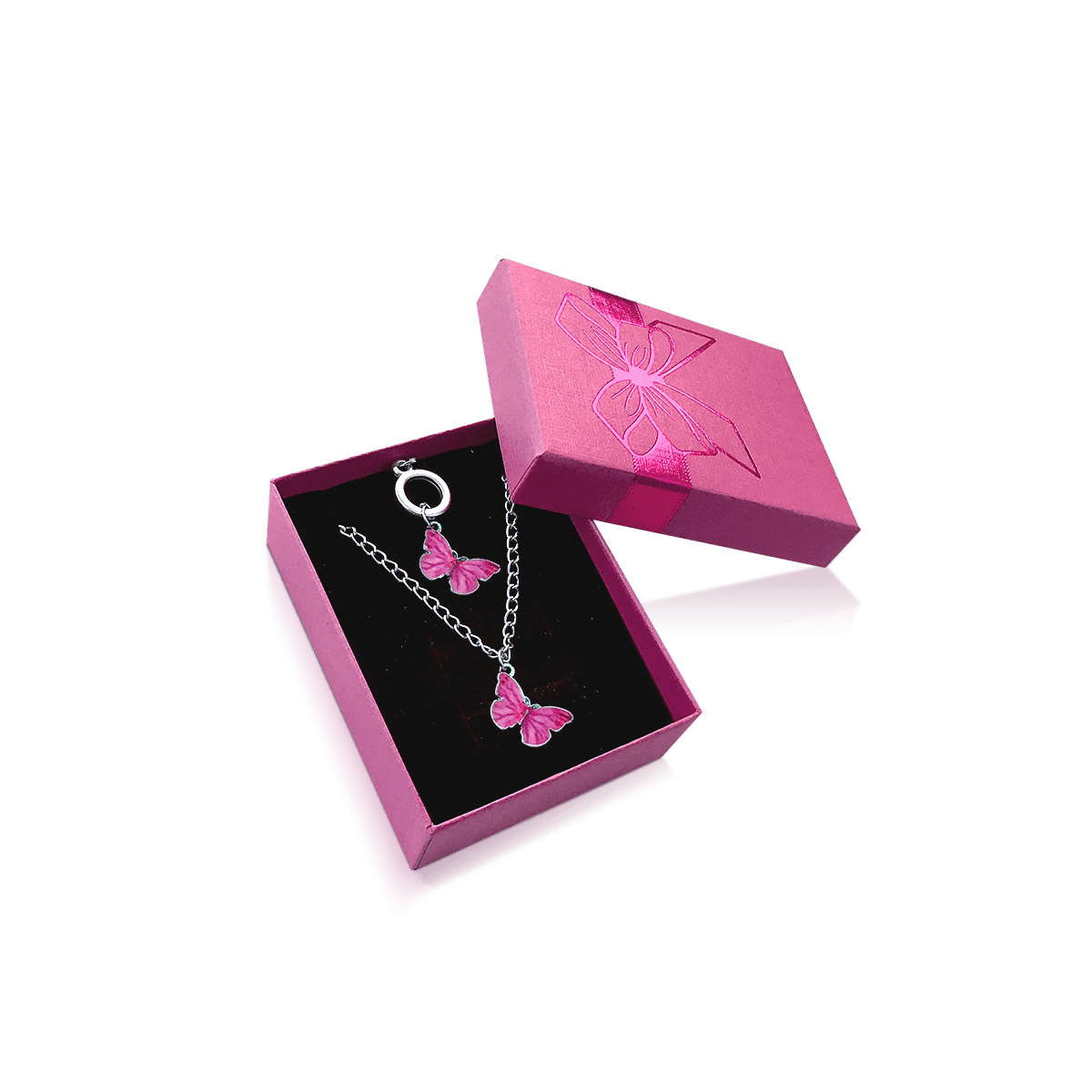
Present the pendant face-up while controlling the chain behind the display, with fitted inserts that keep the centerpiece centered, untangled and easy to remove.

A Pendant Box Has Two Jobs at Once

A pendant package has to present one focal piece while managing the chain attached to it.

Those two parts behave differently.

The pendant needs to remain centered, face-up and clear of surrounding surfaces. The chain needs enough control that it does not tangle around the pendant, slip underneath it or collect visibly in one corner.

Custom Pendant Boxes solve both problems through the relationship between the box and the insert. The pendant occupies the visual center while the chain can be guided through slots, channels or concealed space behind the display surface.

That is what separates pendant packaging from a generic small jewelry box.

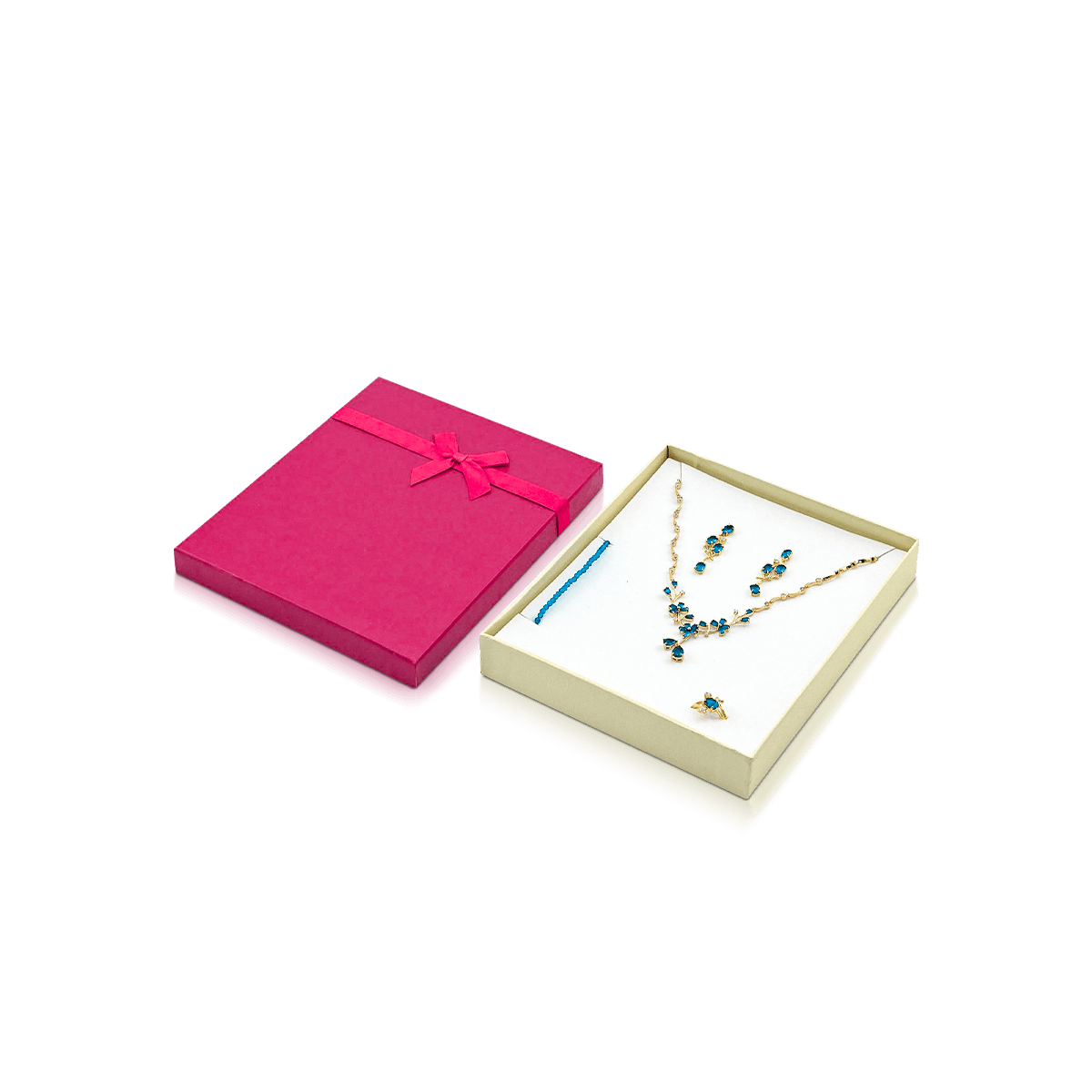
For rings, earrings, bracelets and watches, Jewelry & Accessories packaging follows the movement and retention needs of each jewelry type rather than reusing one insert layout.
The Pendant Should Own the First View

When the lid opens, the customer should see the pendant before noticing the mechanics holding it in place.

That sounds straightforward, but the result depends on several small dimensions working together.

The bail has to sit at the correct height. The pendant body needs enough surrounding space. The chain has to disappear or remain orderly without pulling the centerpiece away from its intended position.

Center the Bail, Not Just the Insert

The pendant hangs from its bail, so the position of that connection point often determines whether the piece actually appears centered.

A perfectly centered insert slot can still produce an off-center presentation if the pendant shape extends asymmetrically below the bail.

A round solitaire, cross, initial, locket and irregular artisan pendant may all need different visual positioning even when their overall dimensions are similar.

The layout should therefore be judged with the real jewelry installed rather than by measuring the insert alone.

Leave Breathing Room Around the Focal Piece

A pendant placed too close to the insert edge can feel cramped.

Too much open space creates the opposite problem and makes a small piece look lost.

The strongest layout gives the pendant enough surrounding negative space to read clearly while keeping the package compact.

For fine jewelry, that proportion can contribute more to presentation than increasing the outer box size simply to make it feel more substantial.

Chain Storage Should Disappear From the Presentation

A pendant may be small, but the attached chain can occupy considerably more length than the focal piece.

Trying to display all of that chain on the front surface can overwhelm the pendant.

One practical approach is to guide the chain through discreet slots near the upper part of the insert and manage the unused length behind or beneath the presentation surface.

This allows the visible chain to establish the pendant’s hanging position while keeping excess length out of sight.

Avoid Sharp Chain Turns

Fine chains should not be forced through tight turns merely to hide them.

Slots and channels need enough space for the chain type, clasp and any extender section to pass without catching.

Very fine jewelry may need especially smooth contact points because narrow cut edges that seem harmless on a heavier chain can snag delicate links.

Give the Clasp Somewhere to Go

The clasp is often thicker than the chain itself.

If hidden storage is planned only around chain thickness, the clasp can create a lump behind the insert or prevent the pad from sitting flat.

A recess, deeper rear space or carefully located channel can accommodate that extra thickness without pushing the display surface forward.

When chain storage and pendant support need different contact points, packaging inserts can combine paperboard, foam or other suitable structures around the jewelry.

Pendant Orientation Matters During Movement

A pendant can stay inside the box and still lose its presentation.

If the centerpiece has too much freedom, it may turn sideways, rotate backward or swing far enough to overlap the visible chain.

That creates a poor first impression even when nothing is physically damaged.

The insert needs enough control to maintain orientation without clamping the pendant itself.

A shallow recess can reduce lateral movement. The visible chain can help stabilize the top. Some shapes benefit from an additional subtle support point near the lower section.

The exact solution depends on the pendant.

Flat engraved discs behave differently from raised gemstone settings. Lockets add depth and hinges. Long drop pendants introduce more leverage below the bail.

Treat those differences as geometry, not decoration.

A Heavy Pendant Pulls Against the Chain

Pendant weight changes the internal load path.

A light charm can sit comfortably on a simple card or soft pad. A heavier metal pendant or stone-set piece can pull downward more strongly against the visible chain and upper retention slots.

If the insert relies entirely on the chain to hold that weight, the jewelry may sag during handling.

The display should support the pendant where necessary rather than using a delicate chain as a structural component.

Support the Jewelry Without Hiding It

A discreet recessed area can support part of the pendant body while leaving the front clearly visible.

The support should not cover the details the customer is meant to see.

For sculptural or irregular pendants, this may require a custom cavity rather than a generic flat slit pad.

The aim is visual suspension with practical support behind it.

A Locket Creates a Different Depth Requirement

Pendant boxes are often treated as shallow jewelry packaging, but not every pendant is flat.

Lockets, domed pieces, raised stone settings, multi-layer charms and sculptural pendants can add significant thickness.

That changes lid clearance.

The box should close without the lid lining or interior panel contacting the highest point of the jewelry. A presentation that looks correct from above can still be too shallow once the real pendant is installed.

Measure the deepest assembled point, including the bail and any stone setting that projects forward.

Then consider the insert thickness beneath it.

Extra depth should be intentional. A flat pendant does not need the same cavity as a locket, and one universal box may make smaller pieces look unnecessarily recessed.

Necklace Boxes and Pendant Boxes Should Not Do the Same Job

A pendant necklace and a necklace can technically describe overlapping products, but the packaging emphasis can be different.

Necklace Boxes make more sense when the chain itself is a major part of the presentation, when more of its length should remain visible or when the jewelry needs a longer spread across the insert.

Pendant Boxes can concentrate more strongly on one centerpiece.

The visible chain supports that focal object rather than becoming the main display.

This is especially useful for:

  • gemstone pendants
  • engraved discs
  • initials
  • lockets
  • symbolic charms
  • solitaire drops
  • memorial pieces
  • small artisan pendants

The distinction helps avoid oversizing a compact pendant package simply to display chain length that does not need to remain visible.

A Twisted Pendant Can Ruin an Otherwise Clean Reveal

Consider a small gemstone pendant placed on a soft flat insert.

The chain passes through two upper slots, but the pendant itself has no lateral control.

At the packing table, the gemstone faces forward and everything looks correct.

During shipping and handling, the pendant swings repeatedly between the two chain points. By the time the customer opens the box, the chain is still secure but the stone has rotated sideways and part of the setting sits against the insert.

Nothing has broken. The presentation has failed.

A shallow fitted recess beneath the pendant can limit that rotation while the chain slots continue to manage the upper position.

The jewelry still lifts out easily, but the centerpiece is much more likely to arrive facing the customer.

The fix does not require a larger box or a heavier exterior. It requires better control at the point where the pendant actually moves.

Small Pendants Benefit From Strong Contrast

A fine pendant can disappear visually if the interior is too close to the jewelry color.

Silver against a cool gray surface, gold against warm tan or a pale stone against cream can reduce definition.

The answer is not always a darker interior, but contrast should be considered deliberately.

A deep insert can make light metals stand out. A soft neutral may suit colorful stones. Warm jewelry can work against several backgrounds depending on the desired tone of the brand.

The interior should frame the piece without competing with it.

For higher-value presentation, Luxury Jewelry Boxes can combine stronger rigid construction with more controlled interior materials and opening formats.

Everyday collections can use lighter packaging if the insert still creates a clear visual stage for the pendant.

Box Material Should Follow the Product Tier

A pendant does not automatically require a rigid box.

Lightweight fashion jewelry, promotional items and faster-moving collections can work well in paperboard structures with a suitable card or fitted insert.

Cardboard Jewelry Boxes can reduce packaging bulk while still giving brands printable surfaces and organized presentation.

Fine jewelry, premium gifting and higher-ticket pieces may justify Rigid Jewelry Boxes when stronger walls and a more substantial hand feel support the selling experience.

The insert remains important in both cases.

A heavy rigid shell around a loose pendant does not solve orientation or tangling. A lighter box with well-planned retention can sometimes control the jewelry more effectively.

Structure and fit should solve separate parts of the packaging problem.

Printing Should Stay Secondary to the Jewelry

Pendant boxes are relatively small, which makes restrained branding especially effective.

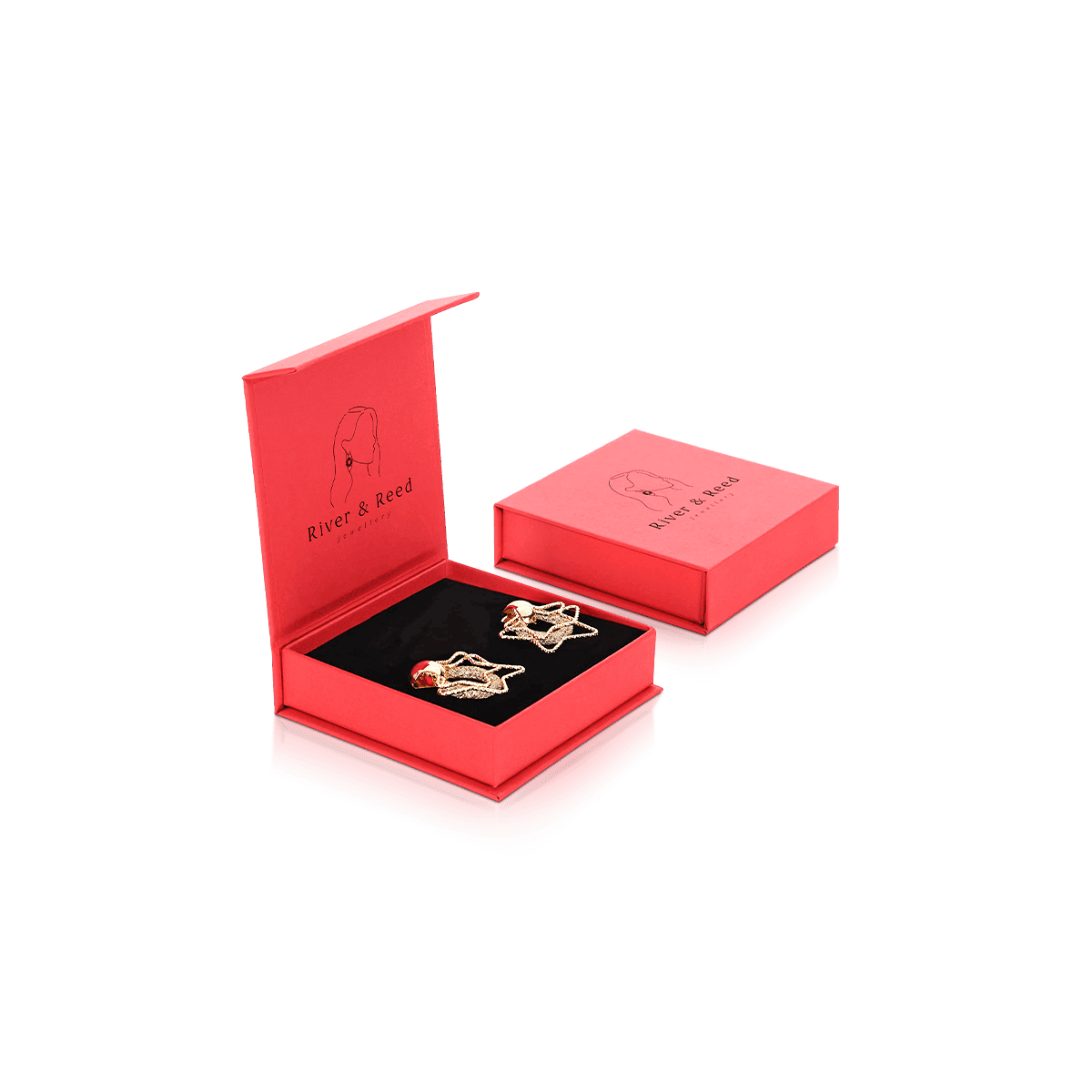
A compact foil logo, clean printed mark or subtle deboss can create recognition without turning the lid into a dense graphic field.

Inside printing can add a collection name, short message or controlled brand element where the structure allows it.

Custom Printed Jewelry Boxes can keep logo position, color and print treatment consistent across pendant, ring, bracelet and earring packaging.

The strongest design usually creates hierarchy:

  1. identify the brand when the box is closed
  2. let the pendant become the focal point when it opens
  3. keep supporting information visually secondary

The packaging should frame the jewelry rather than compete with its scale.

Finishes Need to Suit a Small Lid

Foil stamping, embossing, debossing, matte surfaces, gloss and soft-touch finishes can all work on pendant packaging.

The lid area is limited, so placement matters.

A tiny embossed logo may lose clarity if the mark contains very fine detail. An oversized foil area may dominate a box containing a delicate pendant. Dark soft-touch wraps can look refined but may require more care during packing and shipping.

Packaging finishes should therefore be chosen for the actual logo, box size and handling environment.

Custom Packly supports premium offset printing and extensive customization across rigid and paperboard jewelry packaging.

The finish should reinforce the level of the product without making the package visually heavier than the pendant inside.

Gift Extras Should Not Cover the Jewelry

Pendant purchases often include care cards, authenticity information, gift messages or other supplied printed pieces.

Those extras can disrupt the reveal if they are simply placed on top of the insert.

A loose card covering the pendant means the first thing the customer sees is paperwork rather than jewelry.

The better arrangement gives each component its own place.

A card may sit beneath a removable insert, inside a separate recess or behind the lid where the structure permits it.

For occasions where gifting needs more room or several pieces have to be combined, Jewelry Gift Boxes can handle a more layered presentation without making every standard pendant package oversized.

Ecommerce Needs Protection Around the Presentation Box

Pendant Boxes are presentation packaging.

They should keep the jewelry organized and protect it from normal contact inside the box, but an ecommerce shipment still needs suitable outer packaging.

A rigid pendant box can scuff or dent if shipped without a mailer or shipping carton. A lighter paperboard box can crush under parcel pressure.

The pendant also needs to remain stable inside its presentation pack while that pack is restrained inside the outer parcel.

This creates two separate movement problems:

  • pendant movement inside the jewelry box
  • jewelry-box movement inside the shipment

Solving only one can still leave the customer with a damaged or disorganized arrival.

Sample the Chain Path, Not Just the Outer Box

A digital mockup can show logo placement, colors, exterior proportions and the general insert arrangement.

Pendant packaging has a physical detail that deserves separate attention: how the real chain passes through the retention system.

Use the actual jewelry to check whether the chain slides cleanly into its slots, whether the clasp fits behind the insert and whether the pendant returns to the same centered position after the box is handled.

Also review:

  • pendant rotation
  • bail position
  • chain slack
  • rear storage depth
  • surface contact
  • lid clearance
  • ease of removal
  • insert recovery after repeated use

Custom Packly provides free 3D mockups and free sample examples of previous work. Fully custom pre-production samples can also be arranged as paid samples when exact pendant and chain interaction needs physical approval.

Quantity Planning Can Follow the Insert, Not Only the Box

Several pendant styles may be able to share one external box dimension.

That can simplify a collection, but only if the internal presentation remains appropriate.

A small solitaire and larger locket might fit the same outer rigid box while needing completely different insert layouts. One may require minimal chain storage and a shallow central recess. The other may need more depth and stronger pendant support.

Separating the outer box specification from the insert specification can reduce unnecessary structural variation without forcing every pendant into one generic interior.

For US orders, Custom Packly’s MOQ starts from 100 boxes.

Once quantity, box structure, dimensions and insert requirements are established, an instant custom packaging quote can reflect the actual combination rather than treating every pendant package as identical.

Decide How Much Chain the Customer Should See

The final presentation decision is not simply where to hide the chain.

It is how much chain should remain visible.

Showing only a short section above the pendant puts almost all attention on the centerpiece. Displaying a longer drop can communicate proportion and show how the pendant sits when worn. Showing too much can make the chain dominate a small box.

The right answer depends on what makes the jewelry understandable.

A highly distinctive pendant may need very little visible chain. A piece whose appeal comes partly from an unusual chain or connection detail may deserve more exposure.

Once that visible length is chosen, the insert can be built around it. Upper slots control the displayed chain, hidden storage manages the remainder and the pendant can be positioned according to its real shape rather than the geometric center of the box.

That creates a clearer production target for repeat orders and different pendant SKUs: decide what the customer should see first, then make the internal mechanics support that view.

FAQs

Smaller is usually better as long as the insert holds the piece securely and the lid closes without pressure on the hardware or stone. A tight visual fit often feels more premium than a large box with excess empty space.

Pendant Boxes are the better option when the piece needs a centered presentation or has a bail, drop or charm shape that should stay upright. Earring Boxes work better for studs, pairs and smaller jewelry layouts that do not need the same front-facing display.

No. Flocked foam is common because it holds the piece neatly and looks polished, but paperboard platforms, velvet pads and suede-style inserts can also work well depending on weight, finish level and budget.

Yes. A small foil logo, subtle embossing or inside-lid message is often enough for pendant packaging because the box itself is compact and the jewelry should remain the focal point.

Yes, when they are used as the inner presentation pack and placed inside a protective outer shipper. That setup helps the pendant arrive clean while still giving the buyer a more polished unboxing moment.

Process

How it works

Your Packaging Journey, From Idea to Production and Delivery

01

Tell Us Your Specs

Custom packaging boxes

Tell Us Your Specs

Provide size, quantity, printing, and finishes.

02

Get a Fast Quote

Custom packaging boxes

Get a Fast Quote

Instant transparent pricing, no hidden fees.

03

Design and Approval

Custom packaging boxes

Design and Approval

Artwork checks, revisions, and final sign-off.

04

Produce

Custom packaging boxes

Produce

Expert manufacturing to meet deadlines.

05

Ship to Your Door

Custom packaging boxes

Ship to Your Door

Hassle-free, flexible delivery options.

Get Your Quote for Custom Pendant Boxes

Share your product details, size, quantity and artwork needs. We’ll help choose the right packaging style and send a clear quote.