Skip to content
Details

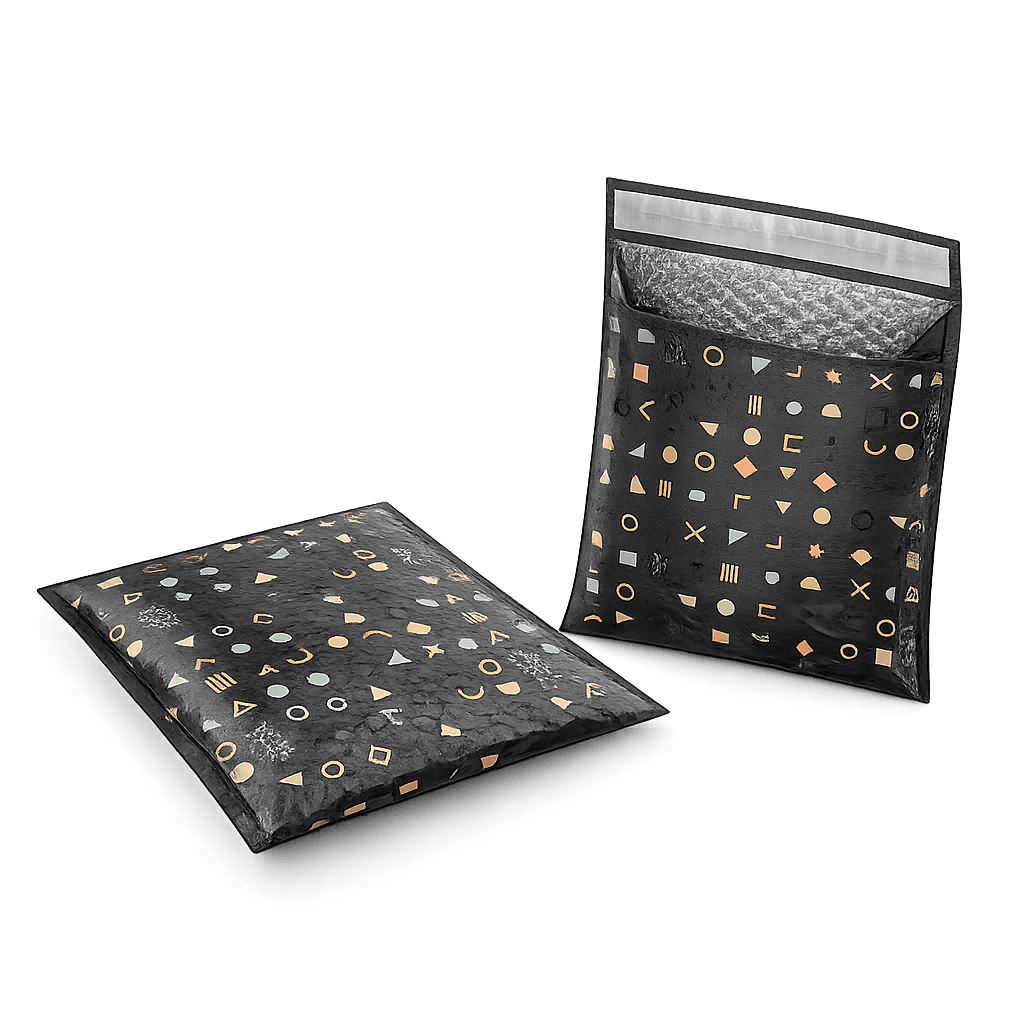
Custom Bubble Mailers

Give compact, semi-fragile shipments a working cushion around the product without automatically moving every order into a corrugated box.

Cushioning Needs Room to Work

The bubble layer inside a mailer protects by compressing under impact. If the product is packed so tightly that those air cells are already flattened before shipment, much of that working cushion has been used before the parcel reaches the carrier.

That makes Custom Bubble Mailers different from plain flexible shipping bags. The important dimension is not simply whether the product fits through the opening. The packed item needs enough space for the bubble lining to remain present around the surfaces that require protection.

Compact accessories, boxed small goods, books, media, selected cosmetics and other semi-fragile products can benefit from this low-bulk cushioning. Truly fragile, heavy or crush-sensitive products may still need a box, insert or another protective system.

Soft goods that do not need an internal cushion often fit Poly Mailers better because the extra bubble layer would add material without solving a real protection problem.

Products that need defined walls, stacking strength or a fixed internal layout belong closer to Custom Mailer Boxes.

The decision is therefore not “mailer or box” based on price or appearance alone. It starts with the damage mechanism you are trying to control.
Inside Space Is Smaller Than the Flat Size

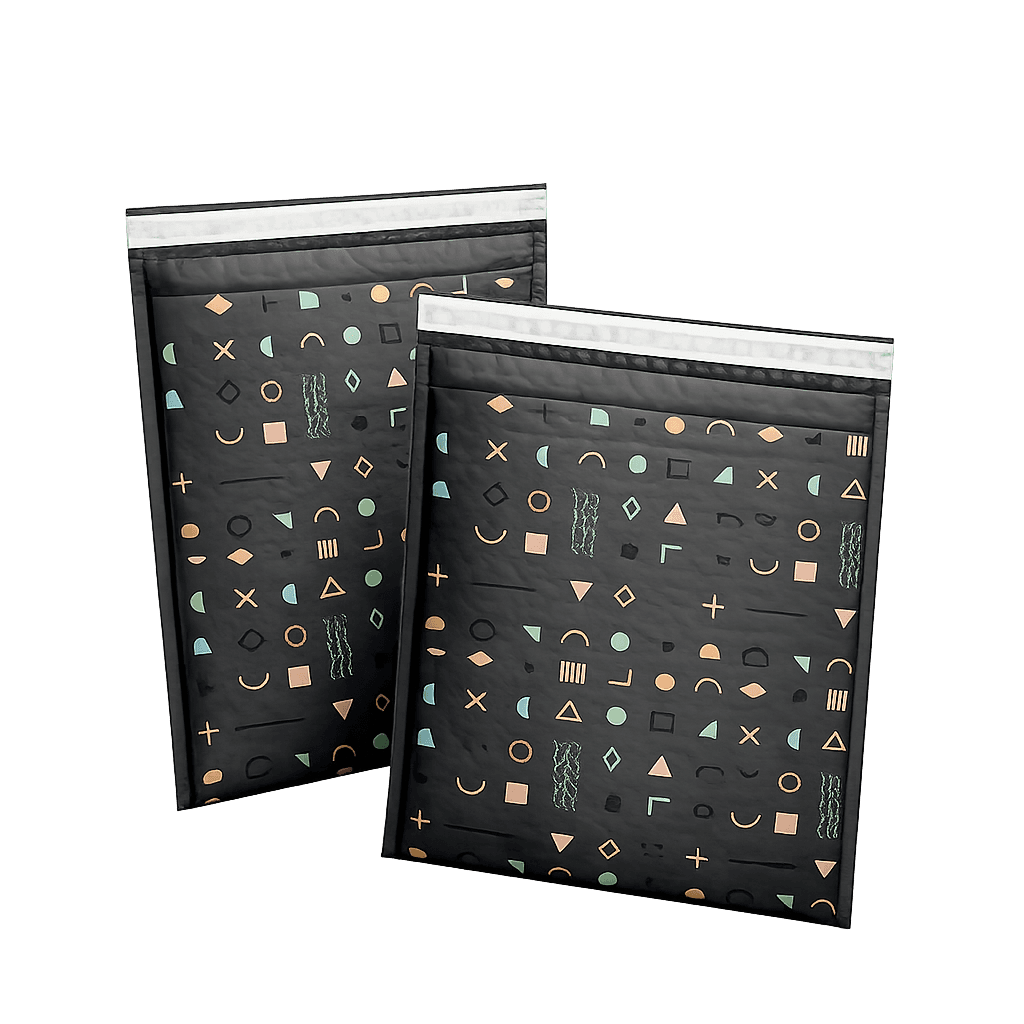
A bubble mailer loses some usable capacity to its cushioning layer, seams and closure area. Looking only at the outside dimensions can therefore produce a specification that appears correct on paper but becomes tight once the actual item is inserted.

Measure the product at its largest packed dimensions, including any retail carton, sleeve or wrapping that travels inside the mailer.

Then check the loaded envelope rather than relying on arithmetic alone.

Corners Consume Cushion First

A rectangular retail carton may fit comfortably through the opening while pressing hard against the bubble layer at all four corners.

Those concentrated points matter because the mailer does not distribute load through rigid walls. If a corner has already crushed most of the nearby cells, there is less cushioning left at exactly the point most likely to receive a knock.

A slightly larger mailer may perform better than increasing the bubble profile while preserving the same tight internal fit.

Thickness Changes the Closing Geometry

Product depth also shortens the effective length of the mailer because the material has to travel around the sides of the item.

An envelope that looks long enough while flat can become surprisingly short once a thick product is loaded. The closure flap should still reach its intended sealing area without being stretched over the contents.

This is why product length × width alone is not enough for bubble-mailer sizing.

Air Cells Handle Impact, Not Crushing

Bubble cushioning can absorb small knocks and isolate a product from direct contact with the outer surface. It does not turn a flexible envelope into a rigid shipping container.

If another parcel presses heavily against the shipment, the mailer will deform with it. If a product needs its shape protected from compression, a box may still be necessary.

That distinction is especially important for:

  • products with crush-sensitive retail cartons
  • items with protruding controls or fittings
  • glass or brittle components
  • products whose appearance depends on sharp carton corners
  • dense items that can concentrate force in a small area

The bubble layer solves one kind of protection problem. It should not be expected to solve every shipping hazard.

Shipping damage caused by poor structure and fit often starts with identifying whether the real risk is impact, movement, crushing or direct product contact.

Bubble Profile Changes the Cushion

Bubble size and layer thickness affect how much distance exists between the product and the outside surface.

A finer bubble profile can keep the mailer relatively slim and create cushioning across smaller product surfaces. A larger cushioning profile can increase separation but also adds parcel thickness.

More air volume is not automatically better. The right profile depends on product weight, vulnerability, edges and how closely the mailer fits.

The final choice should be evaluated with the real product rather than selected from bubble size alone.

Test the Failure That Matters

Bubble mailer evaluation should be tied to realistic shipment risks rather than a ceremonial sample approval.

For a compact semi-fragile product, inspect how the loaded mailer behaves when it is handled, rotated and subjected to reasonable impact screening. Look for product migration, flattened cushion zones, stressed seams, closure tension and damage to the item or its primary carton.

The sample should contain the actual product at normal packed weight.

A digital artwork proof cannot answer these questions.

Custom packaging testing should become more demanding as product vulnerability, production volume and the consequence of failure increase.

Formal testing may be justified for higher-risk distribution. A simple low-value product may need only sensible physical checks. The testing intensity should follow the risk rather than being identical for every bubble-mailer program.

Custom Packly can arrange a paid fully custom sample when exact construction needs physical approval before the larger run.

Movement Can Defeat the Padding

A mailer can contain plenty of cushioning and still perform badly if the product repeatedly slides from one end to the other.

Every movement creates another opportunity for a hard edge to strike the seam, closure or outer surface.

The mailer should therefore control excessive travel without trapping the product so tightly that the bubbles remain permanently compressed.

That middle ground is product-specific.

A compact item with a consistent rectangular footprint can usually tolerate a closer fit. An irregular accessory with protruding parts may need additional internal control or a different package altogether.

If several small products travel together, avoid assuming the bubble layer will stop them from colliding with each other. The lining protects the parcel perimeter. It does not automatically separate the contents.

A small paper wrap, carton or divider may solve internal contact. Once the pack begins requiring significant component separation, however, custom product packaging may give better control than adding more loose pieces inside an envelope.

Seams Are Part of the Protection System

The center panels may have plenty of bubble coverage while seams and edges behave differently.

A dense product repeatedly hitting the side seam can create stress where the mailer construction is least able to spread the load. Overfilling adds more tension because the item pushes outward continuously before transit begins.

The product should sit inside the intended cushioned cavity rather than wedging hard into one edge.

Watch Rigid Corners

Hard carton corners, metal fittings and pointed accessories deserve particular attention.

If a corner repeatedly contacts the same seam, changing the orientation can sometimes solve more than moving immediately to a heavier mailer.

For products with genuinely sharp or projecting components, isolate the edge or use packaging that gives it structural clearance.

Do Not Use the Seal as Restraint

The adhesive flap closes the mailer. It should not be the component preventing an oversized product from pushing out.

A closure sitting under permanent outward tension can become a weak point even when the adhesive itself is appropriate.

Normal packout should leave the flap lying naturally over the sealing area before pressure is applied.

Small Products Need Different Protection Levels

Bubble mailers are strongest in the space between an unpadded shipping bag and a rigid parcel box.

That makes them well suited to products that need some impact and surface protection but do not justify a full box for every shipment.

Examples can include compact accessories, small boxed retail goods, books, media, replacement components and selected personal-care products whose exact vulnerability has been checked.

The keyword is selected.

A heavy glass product does not become a safe mailer shipment simply because bubbles surround it. A delicate device with a projecting screen or control may need structural support. A soft textile may not need bubbles at all.

E-commerce retail packaging should therefore use different parcel structures across the product mix instead of turning one mailer into the default for every SKU.

This SKU-level decision can also reduce overpacking. Cushioning is concentrated where the shipment benefits from it rather than added to orders that would perform perfectly well in a lighter pack.

Exterior Material Changes the Parcel

The cushioning layer is only part of a bubble mailer. The outer surface also affects handling, print behavior, moisture exposure, appearance and how the package feels in the customer's hands.

Bubble mailers commonly pair internal cushioning with polymer or paper-based outer constructions. Those systems should not be treated as visually interchangeable.

A polymer exterior can create a different surface and flexibility from a paper outer layer. Paper changes print appearance, fold behavior and the way creases or transit marks show.

The outer material should therefore be selected after the shipping job is understood.

Environmental claims also need to match the actual finished construction. A paper-looking outer layer does not by itself establish recyclability, recycled content or another environmental property for the complete padded mailer. Any such statement should come from the specific material specification.

Print Around a Filled Envelope

A bubble mailer is not a flat poster after it is packed.

The surface rounds over the product, wrinkles near transitions and changes tension between empty and loaded states. Artwork needs to tolerate that movement.

Large logos, repeating patterns and graphics with sufficient breathing room can survive deformation better than fine elements positioned exactly where the product edge changes the surface shape.

Keep Operational Areas Quiet

The shipping label and closure need space of their own.

Do not place critical branding where a carrier label is expected to cover it or put important artwork into the sealing zone.

A free 3D mockup can help establish artwork direction, but the final loaded appearance should also be considered because the product changes the shape of the printed surface.

Print method should follow the selected outer material, artwork and production quantity. The differences between digital, offset and flexographic printing matter before a design developed for a rigid box is transferred directly onto a flexible mailer.

Custom Packly includes design support, which can help position branding around seams, seals and the practical shipping-label area.

A Tight Fit Can Remove the Protection

Consider a compact accessory packed inside a rigid retail carton.

The carton slides into the selected bubble mailer, but the fit is so close that its four corners visibly press through the outer surface. Staff like the size because the parcel looks neat and uses little empty space.

The problem appears when the protection system is examined rather than the silhouette.

At each carton corner, the inner bubbles are already compressed. A knock to that area has very little cushioning travel left before force reaches the retail carton.

Making the bubble layer heavier while keeping the same tight dimensions may not address the cause.

The first correction is to create enough internal clearance for the cushioning to remain active around the hard corners. If that increases the parcel too much or the product still needs stronger corner protection, the shipment should move to a small rigid mailer or shipping box instead.

Bubble and Padded Protect Differently

Bubble mailers and padded mailers are often grouped together, but the practical choice depends on the cushioning system.

Padded Mailers suit shipments that need a protective padded envelope without requiring air-cell cushioning specifically.

Bubble Mailers make sense when compressible air cells are the chosen mechanism for absorbing light impacts and separating the product from the outer surface.

A soft T-shirt normally does not need this cushion and can move in a poly mailer. A boxed accessory may benefit from bubbles. A crush-sensitive or highly fragile item may need corrugated walls and fitted internal protection.

Choosing among them by product vulnerability keeps each shipping structure doing the job it was actually made to do.

FAQs

For light products that mainly need cushioning against minor impact or surface damage, they can be. If the item needs crush resistance or rigid support, a corrugated mailer box is safer.

This style suits phone accessories, smart device components, sample kits, skincare tools, collectible parts, stationery sets, and other compact items that benefit from cushioned delivery.

Bubble Mailers use compressible air cells as the cushioning layer, while Padded Mailers can use other protective linings. The better choice depends on the product’s impact, surface and edge risks.

Yes. The outer shell can carry full-color artwork, barcodes, handling notes, and branded messaging while the protective layer stays inside the pack.

Choose Bubble Mailers when the item needs air-cell cushioning against light impacts. Poly Mailers are better for soft goods that do not need built-in cushioning, while rigid boxes are safer when crush resistance matters.

Process

How it works

Your Packaging Journey, From Idea to Production and Delivery

01

Tell Us Your Specs

Custom packaging boxes

Tell Us Your Specs

Provide size, quantity, printing, and finishes.

02

Get a Fast Quote

Custom packaging boxes

Get a Fast Quote

Instant transparent pricing, no hidden fees.

03

Design and Approval

Custom packaging boxes

Design and Approval

Artwork checks, revisions, and final sign-off.

04

Produce

Custom packaging boxes

Produce

Expert manufacturing to meet deadlines.

05

Ship to Your Door

Custom packaging boxes

Ship to Your Door

Hassle-free, flexible delivery options.

Get Your Quote for Custom Bubble Mailers

Share your product details, size, quantity and artwork needs. We’ll help choose the right packaging style and send a clear quote.