Skip to content
Details

Custom Eco-Friendly Cone Sleeves

Reduce unnecessary material, simplify the construction and make environmental claims only from what the finished sleeve can actually support.

Eco-Friendly Is Not a Material

“Eco-friendly” does not tell you what a cone sleeve is made from, how it performs around food or what happens after use.

For Custom Eco-Friendly Cone Sleeves, the environmental direction should be translated into a specific decision: use less material, keep the construction paper-based where practical, choose verified recycled content when required, avoid unnecessary mixed layers or select a disposal route the finished sleeve can genuinely support.

That is clearer than starting with a green color, kraft appearance or recycling symbol.

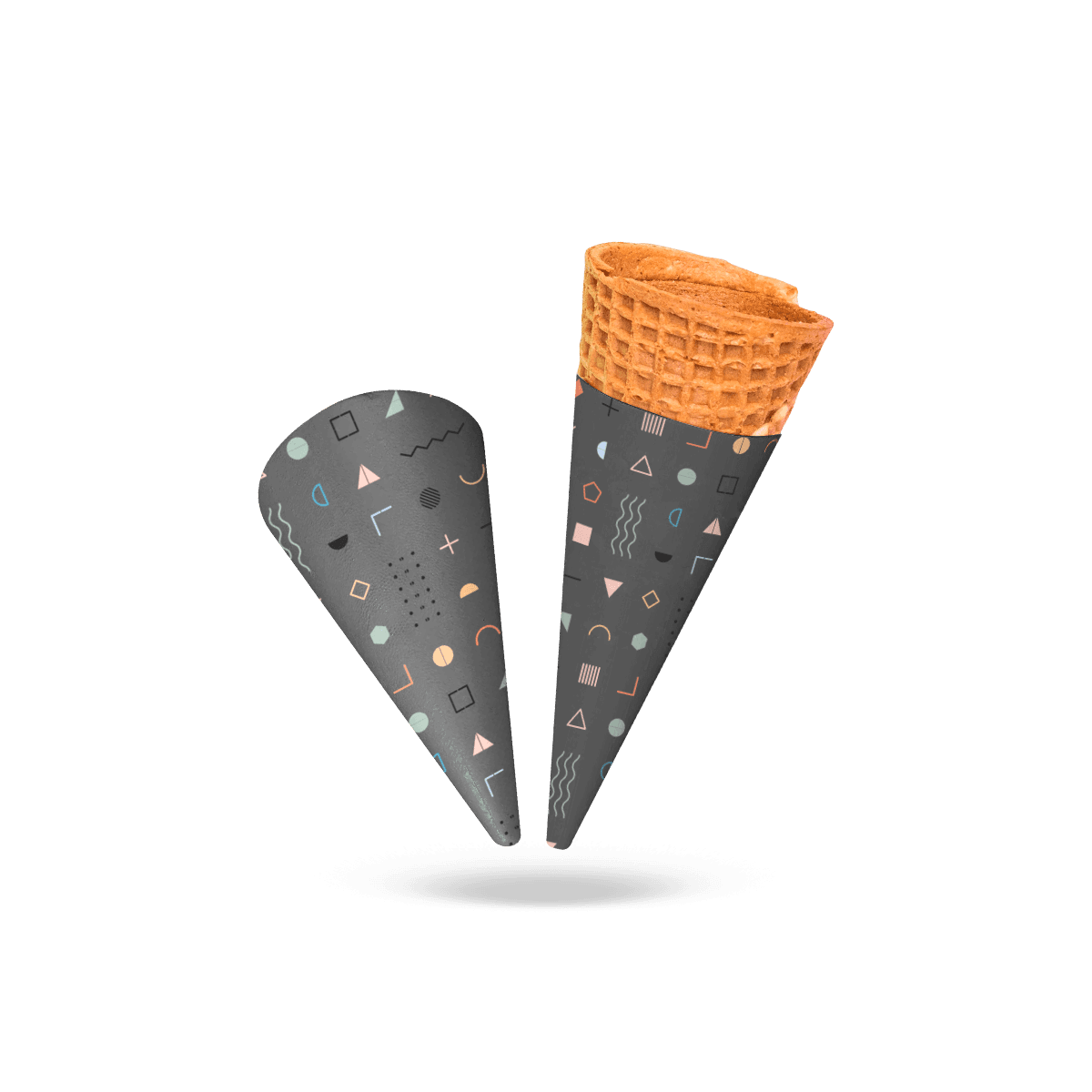
The sleeve still has to fit the cone, stay comfortable in the hand and tolerate the real dessert or snack. Across custom cone sleeves, taper and grip remain physical requirements even when sustainability is the main brief.

Name the Intended Benefit

Decide what “better” is meant to accomplish.

A shop may want a lightweight paper wrap with no unnecessary lamination. Another may prioritize verified recycled fiber. A venue may have access to a specific composting stream and need packaging compatible with that system.

Those are different specifications.

Write the environmental objective into the production brief before choosing stock or artwork.

Avoid Blanket Green Claims

Broad environmental claims should be qualified with specific, supportable attributes rather than left undefined.

For the sleeve itself, say what is actually known.

That might be a verified recycled-content percentage, a specific recyclable paper construction where appropriate, reduced material coverage or another documented attribute. Do not let the product name become a substitute for evidence.
Reduce Material Before Adding Features

A cone sleeve is already a small piece of packaging, but its dimensions can still be excessive.

Extra height, unnecessary overlap and heavier-than-needed stock all add material without automatically improving service.

The most direct material-efficiency decision is to fit the holding area accurately.

Shorter Can Be Enough

The sleeve does not need to cover most of the cone simply to look substantial.

Watch where the customer actually holds the serving. If a shorter wrap protects that zone, keeps the hand cleaner and leaves enough room for branding, extending it farther upward may add little practical value.

This also keeps more of a waffle or sugar cone visible.

Overlap Needs a Purpose

The seam needs enough overlap for secure conversion, but more overlap is not automatically safer.

Excess overlap creates a double layer around part of the circumference and can add stiffness exactly where the hand closes.

Set the seam from the chosen stock, adhesive and taper rather than carrying over an oversized overlap from another sleeve.

Weight Should Follow Service

A heavier paperboard can feel substantial, but it also uses more material and may resist a tight cone radius.

For dry, short-duration dessert service, Paper Cone Sleeves may achieve the required grip with a lighter construction.

Use added caliper when it solves a real stiffness or handling problem.

Simple Constructions Are Easier to Assess

Every coating, film, foil layer and decorative treatment changes the finished material system.

That does not make those features wrong. It means they should earn their place.

A simple paper sleeve with compatible print and adhesive is easier to describe accurately than a multilayer wrap carrying several unsupported disposal claims.

Lamination Changes the Question

A plastic film laminated over paper may improve scuff or moisture performance, but it also changes how the finished sleeve should be evaluated for disposal.

Do not call the piece recyclable simply because the base sheet started as paper.

The whole construction matters, including coatings, films, adhesives and food residue.

Barrier Coatings Need Scrutiny

Dessert and snack service can require grease or moisture resistance.

When a barrier is necessary, choose it for the food condition and then assess what that treatment means for the intended disposal route.

For oily or buttery servings, Grease-Proof Cone Sleeves put residue control first rather than treating sustainability language as a replacement for food performance.

Foil Is a Different System

A foil-faced sleeve may solve a barrier or metallic-surface problem, but it should not be grouped automatically with a simple paper construction.

Mixed layers can change recovery options.

If foil is genuinely required, specify it for the service need first and make environmental claims only from the confirmed finished construction.

Recycled Content Needs Proof

Recycled fiber can be a meaningful material attribute, but the claim should be precise.

If recycled content is part of the brief, the amount should come from the verified material specification used for that production run.

Ask for the Percentage

Confirm the recycled-content percentage and whether the claim applies to the paper stock or the complete sleeve.

Do not invent a recycled percentage in artwork.

The amount should remain tied to the stock actually approved for production.

Recycled Does Not Mean Recyclable

These two claims answer different questions.

Recycled content describes where some material came from. Recyclability concerns whether the finished item can enter an appropriate recycling system after use.

A sleeve can contain recycled fiber without automatically qualifying for every recyclability claim.

Keep those statements separate in packaging copy.

Kraft Is a Visual Choice Too

Natural kraft is often associated with environmentally minded packaging because its brown fiber appearance looks less processed.

That appearance is not proof of a specific environmental benefit.

Kraft should be chosen because its stock properties, print behavior and visual character fit the serving and brand.

Brown Stock Changes Color

Natural kraft influences printed ink.

Light colors, pale illustrations and white design elements do not behave the same way they do on a white sheet. A simple dark logo or restrained color treatment often works more predictably.

Different paper and board types affect print and structure in different ways, so packaging materials should be selected before the artwork is finalized.

Natural Looking Is Not Evidence

Avoid turning brown stock into a visual shortcut for claims the specification cannot substantiate.

Leaves, recycling arrows and phrases such as “planet friendly” can imply environmental benefits even when no specific supporting attribute is stated.

Let the material look natural if that suits the brand, but keep environmental copy factual.

Food Residue Changes Disposal

Cone sleeves live in a difficult disposal environment because they are handled next to melting dairy, grease, sauces and crumbs.

The clean stock entering the shop is not necessarily the same material condition reaching a waste bin.

That matters when deciding what disposal statement, if any, belongs on the sleeve.

Clean Paper Is Different

A relatively clean, uncoated paper sleeve has a different end-of-use condition from one saturated with ice cream, butter or sauce.

Local recycling programs can also differ in what they accept.

Do not promise a disposal outcome the serving itself or local recycling system may prevent.

Composting Is Not Automatic

Paper does not automatically make a finished food-service sleeve compostable.

A compostability claim needs to apply to the complete construction, including coatings, inks and adhesives, and it should match the intended composting system.

If compostability is required, specify and substantiate it for the finished sleeve rather than inferring it from the paper base.

Biodegradable Needs Caution

“Biodegradable” should not be used as a loose synonym for paper-based.

Breakdown conditions and disposal environment matter.

For most sleeve artwork, a specific supported material or disposal statement is clearer than a vague degradability claim.

Printing Should Not Undo Simplicity

Branding can remain strong without loading the sleeve with unnecessary processes.

A clean logo, controlled ink coverage and a design that works with the stock can preserve the visual identity while keeping the construction straightforward.

Sustainability does not require plain packaging.

It requires the print decisions to match the environmental objective.

Print for the Stock

White paper can support bright CMYK artwork. Natural kraft may suit darker inks and simpler graphics.

If the environmental direction prioritizes a simple paper construction, test whether the brand can achieve the intended look without adding a film solely for appearance.

For print-led programs, Custom Printed Cone Sleeves address artwork placement, color and curved-surface visibility.

Finishes Need a Job

Foil stamping, heavy film lamination, spot effects and other decorative treatments can change material complexity.

Use them when the brand benefit justifies them, not by default.

An eco-focused brief can often gain more credibility from accurate material language and a restrained design than from adding several premium effects and then calling the result sustainable.

Disposal Copy Belongs in Artwork

If the sleeve carries a recycling, recycled-content or compostability statement, that wording should be approved with the material specification.

Do not let disposal copy arrive at the end of the design process as a generic icon added by the artwork team.

The claim is part of the production specification.

Symbols Need Support

A recycling symbol can imply recyclability to customers.

Only use environmental symbols in a way that matches the substantiated finished construction and the markets where the sleeve will be used.

Do not add a symbol merely because the base material is paper.

Local Rules Can Differ

A national restaurant program may serve customers under different municipal waste systems.

One disposal statement may not describe every location equally well.

If the chain intends to print instructions on the sleeve, decide whether the statement needs location-specific qualification or whether simpler material identification is more appropriate.

Food Performance Still Comes First

Reducing material or removing a barrier is not an improvement if the sleeve stops working.

A weak wrap that becomes greasy, tears during service or forces staff to use a second napkin can undermine the original material-saving goal.

The environmental brief has to survive real food use.

Test the Messiest Serving

Do not validate the sleeve only with the cleanest menu item.

Use the serving most likely to expose the paper to melt, butter, oil, sauce or long holding time.

If the simple stock performs there, it has a stronger case for use across easier servings.

If it fails, add only the treatment needed to correct that failure and reassess the resulting material system.

Right-Sizing Beats Green Theater

A precisely sized sleeve can reduce unnecessary material while improving fit at the same time.

That is a practical change the customer can feel: less paper where it is not needed, correct grip where it is needed and no exaggerated environmental promise.

Custom Packly supports custom sizing and can consider paper-based and recyclable material options where they suit the required construction.

Build the Brief Around Evidence

An eco-focused production brief should be more specific than “use sustainable stock.”

Record:

  • actual cone dimensions
  • required sleeve height
  • expected food exposure
  • paper or paperboard direction
  • barrier treatment if needed
  • recycled-content requirement, if any
  • disposal claim intended for artwork
  • print coverage
  • finishes
  • quantity
  • number of artwork versions

If a claim will appear on the sleeve, keep the supporting material specification with the approved artwork.

That makes repeat orders easier to control because a stock substitution cannot silently change the meaning of the environmental statement.

Custom Packly can support custom sizing, dieline development, artwork review, digital proofing and free 3D mockups before production.

Price the Confirmed Construction

Eco-focused packaging should be priced from the actual stock and treatments rather than from the word “eco-friendly.”

A simple paper sleeve, a recycled-content paperboard sleeve and a specially substantiated compostable construction can carry different material, sourcing and production requirements.

The quote should follow the chosen specification.

Specialty stocks, coatings or more complex sourcing can also affect production timing.

Make the Claim Match

The strongest environmental statement may be the least dramatic one.

If the sleeve uses verified recycled content, state the verified amount. If it uses a recyclable paper construction and the claim is appropriate for the intended market, state that accurately. If the main improvement is reduced material through tighter sizing, say that instead.

Do not force every environmental objective into one word.

Custom Eco-Friendly Cone Sleeves should earn the name through specific choices that can be described and supported: material efficiency, simpler construction, verified fiber attributes or an appropriate end-of-use path.

The final sleeve still has to serve food cleanly, fit the cone and move quickly through the counter.

Sustainability works best here when it changes the specification, not merely the artwork.

FAQs

They can reduce unnecessary material through tighter sizing and can use paper-based or recyclable material options where those choices suit the serving. Any environmental statement should match the exact finished construction.

Eco-Friendly Cone Sleeves make more sense when material efficiency, simpler paper-based construction or a substantiated disposal claim is the priority. Aluminum Foil Cone Sleeves suit jobs where a foil barrier or metallic surface is the defining requirement.

Yes, for many applications, but the stock choice matters. Dry snacks and lighter servings are usually straightforward, while oilier foods may need a grease-resistant paperboard setup to keep performance consistent.

Ask about the exact board, any coating or lining, and how the sleeve is expected to be disposed of in the target market. Local recycling rules and material combinations can affect the final answer.

Yes. Eco-Friendly Cone Sleeves can be produced with personalized print layouts, simple color programs, and made-to-order sizing for seasonal menus, events, or growing food brands.

Process

How it works

Your Packaging Journey, From Idea to Production and Delivery

01

Tell Us Your Specs

Custom packaging boxes

Tell Us Your Specs

Provide size, quantity, printing, and finishes.

02

Get a Fast Quote

Custom packaging boxes

Get a Fast Quote

Instant transparent pricing, no hidden fees.

03

Design and Approval

Custom packaging boxes

Design and Approval

Artwork checks, revisions, and final sign-off.

04

Produce

Custom packaging boxes

Produce

Expert manufacturing to meet deadlines.

05

Ship to Your Door

Custom packaging boxes

Ship to Your Door

Hassle-free, flexible delivery options.

Get Your Quote for Custom Eco-Friendly Cone Sleeves

Share your product details, size, quantity and artwork needs. We’ll help choose the right packaging style and send a clear quote.