Skip to content
Details

Custom Child-Resistant Boxes

Custom printed child-resistant packaging with controlled opening mechanisms, secure product retention and practical adult access for pharmaceutical, wellness and regulated consumer products.

The Lock Must Re-Engage

A box may resist its first opening but become ordinary packaging if its locking mechanism no longer catches after use.

For products that remain in their original packaging, reliable reclosure is as important as the initial opening mechanism. The carton must return to its intended secured position after an adult removes or uses the product.

Custom Child-Resistant Boxes can incorporate controlled-release mechanisms that require a deliberate opening action rather than a conventional tuck flap.

Depending on the construction, the mechanism may use a press-and-slide arrangement, opposed release points or an appropriately developed locking tray.

The intended result is a package that restricts child access while remaining practical for adults.

Under the US Poison Prevention Packaging Act (PPPA), special packaging must meet specified child-resistance and adult-use requirements. Reclosable packaging must also retain its required performance through the number of openings and closings customary for its contents.

Custom Packly can help develop the carton structure and product fit around the intended opening mechanism. A required child-resistant performance claim must be supported by appropriate testing and documentation for the applicable packaging system.

Positive Lock Engagement

A reclosable carton needs a dependable way to retain its locked position.

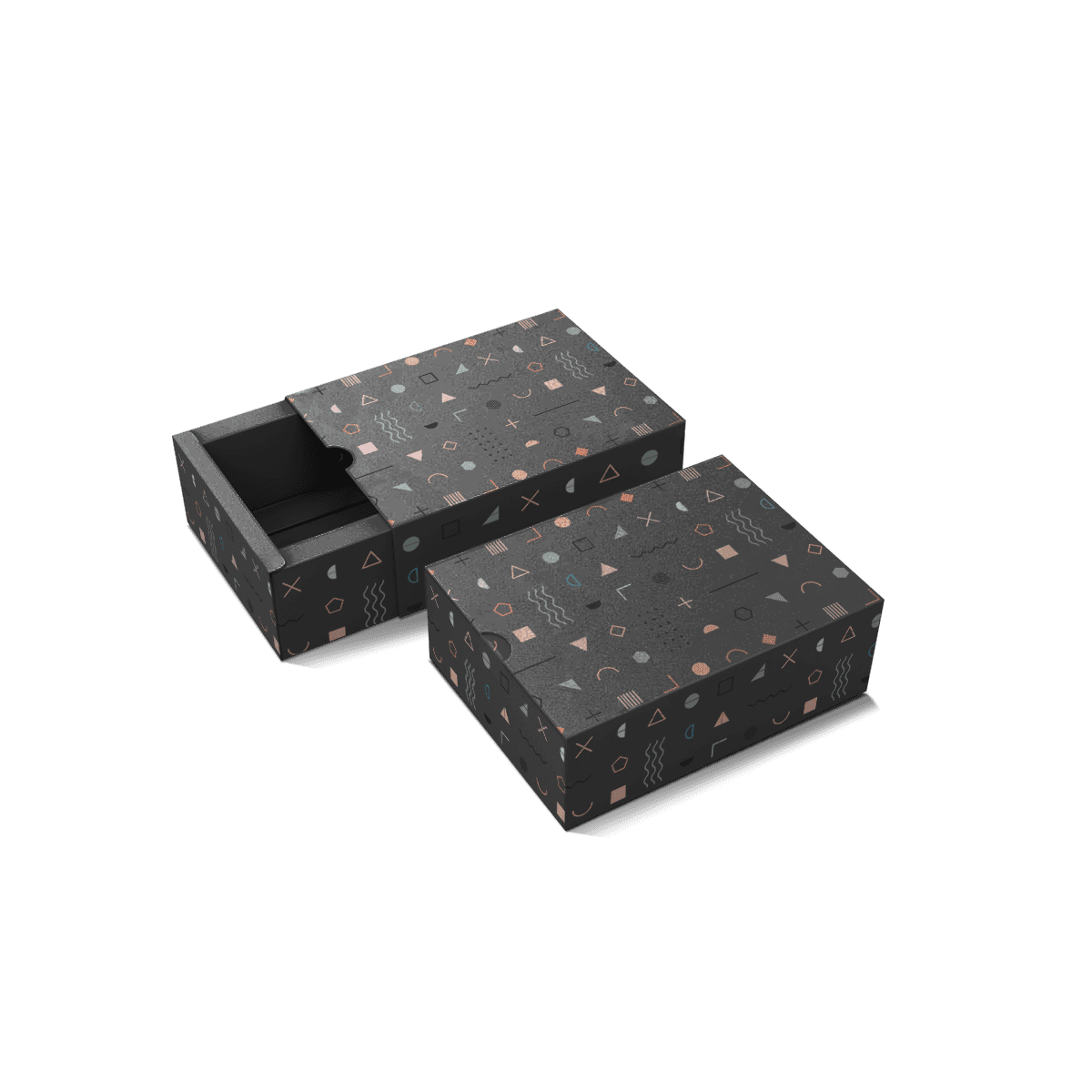
For a sliding construction, the inner tray and outer sleeve may incorporate interlocking features that engage when the tray is fully inserted.

A suitable mechanism should not rely entirely on friction between the two paperboard components.

Friction can change as the surfaces experience wear, compression or changes in the surrounding environment.

The intended locking action must be established through the actual construction and supported by the required performance evidence.

Closing Without Guesswork

Adults need to recognize when the carton has returned to its secured position.

An opening mechanism that requires careful alignment every time may create difficulties during routine use.

A defined closing position can make the intended operation easier to understand.

However, an audible click or noticeable resistance does not independently establish that the carton is child-resistant.

The complete locking mechanism must perform according to its validated specification.
Locate the Access Barrier

The first design decision is identifying which packaging component is responsible for restricting access.

That may be the primary bottle, the blister system or a specially developed outer carton.

Adding a locking box around an already secured container does not automatically improve the complete packaging system.

The correct arrangement depends on the product, applicable regulations and intended use.

Primary Container Closures

Some products already use an appropriate child-resistant bottle closure.

If the validated primary container satisfies the applicable requirements, an ordinary printed outer carton may be sufficient for additional branding, product identification and retail presentation.

The primary closure must retain its intended function throughout normal use.

A decorative sleeve or secondary carton should not be represented as an additional child-resistant barrier unless it performs a verified access-control function.

Outer Carton Access

A child-resistant outer carton may be appropriate when the complete packaging system requires controlled access at the outermost opening.

The mechanism needs to restrict access to the product rather than simply make the packaging look secure.

Its design should account for every opening through which the contents could be reached.

A locking drawer, for example, cannot perform its intended function if another accessible part of the construction allows the contents to be removed.

The correct arrangement must be assessed as a complete packaging system.

Controlled Opening Mechanisms

The opening method determines the carton structure, required assembly operations and interaction with the product.

A conventional tuck-end carton normally opens through a single pulling movement.

Child-resistant constructions may instead require a coordinated action that operates an appropriate release mechanism.

The selected mechanism must have supporting performance evidence for its intended application.

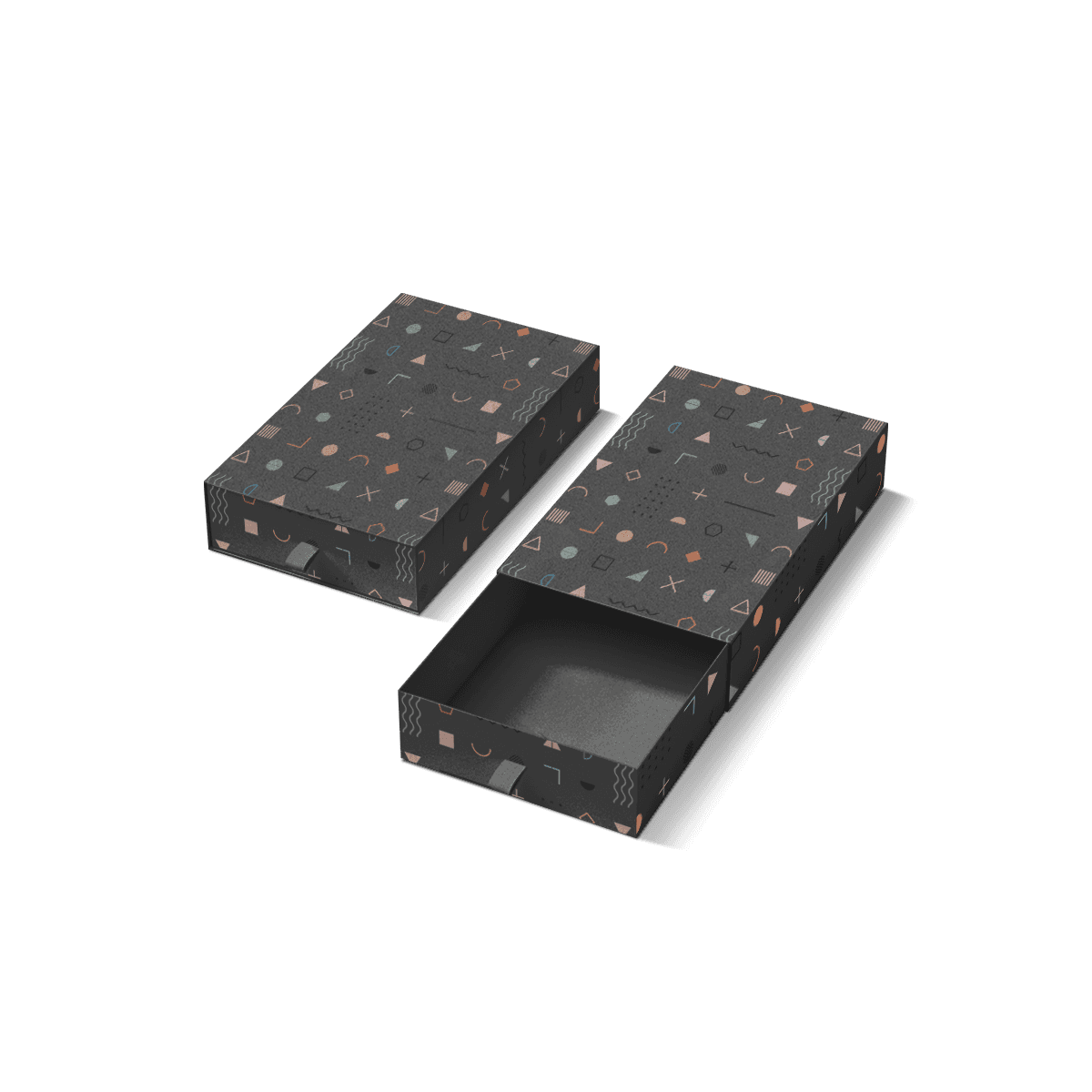
Press-and-Slide Drawers

A press-and-slide construction can combine an outer sleeve with an internal tray.

The user operates a release feature while moving the tray in the intended direction.

The structural design must establish how the components engage, release and return to their secured positions.

Tray travel also matters.

The mechanism must retain the tray while permitting sufficient movement for the intended adult access.

A conventional drawer-style rigid box does not become child-resistant merely because its tray fits tightly.

The required difference is the validated access-control mechanism.

Opposed Release Points

Some locking constructions use release points that must be operated together.

This can require a coordinated action rather than a simple pull on the carton opening.

The release positions should suit the intended adult handling method.

Their geometry must also remain compatible with the board, internal construction and product dimensions.

A mechanism should never be assumed to meet a child-resistant standard solely because it uses two release points.

Its actual performance must be established through the applicable testing process.

Integrated Locking Tabs

Certain folding-carton constructions can incorporate locking features into their die-cut geometry.

These mechanisms may reduce the need for separate locking components.

However, their performance depends on the complete structure, including the material, tab geometry and engagement surfaces.

A standard tuck tab, snap-lock bottom or friction closure is not inherently child-resistant.

Custom Packly's structural and dieline support can help assess an intended carton construction, subject to feasibility and any required mechanism-specific verification.

Adult Access Without Excessive Force

A child-resistant package should not depend on being difficult for everyone to open.

The intended adult user must be able to operate the mechanism correctly.

This is particularly important for products used repeatedly and for customers who may have limited hand strength or dexterity.

US special-packaging regulations establish adult-use performance requirements alongside child-resistance requirements. The applicable testing procedures include a senior-adult panel for most special packaging.

The adult opening sequence is therefore a functional requirement rather than a secondary convenience.

Release Force

A locking feature needs sufficient resistance to perform its intended function.

Excessive force, however, can make the carton difficult to operate correctly.

An adult should not need to deform the box, use a tool or damage the mechanism during normal access.

The appropriate force depends on the actual construction and its validated performance.

Changing release-tab dimensions or board stiffness can alter that behavior and may require reassessment.

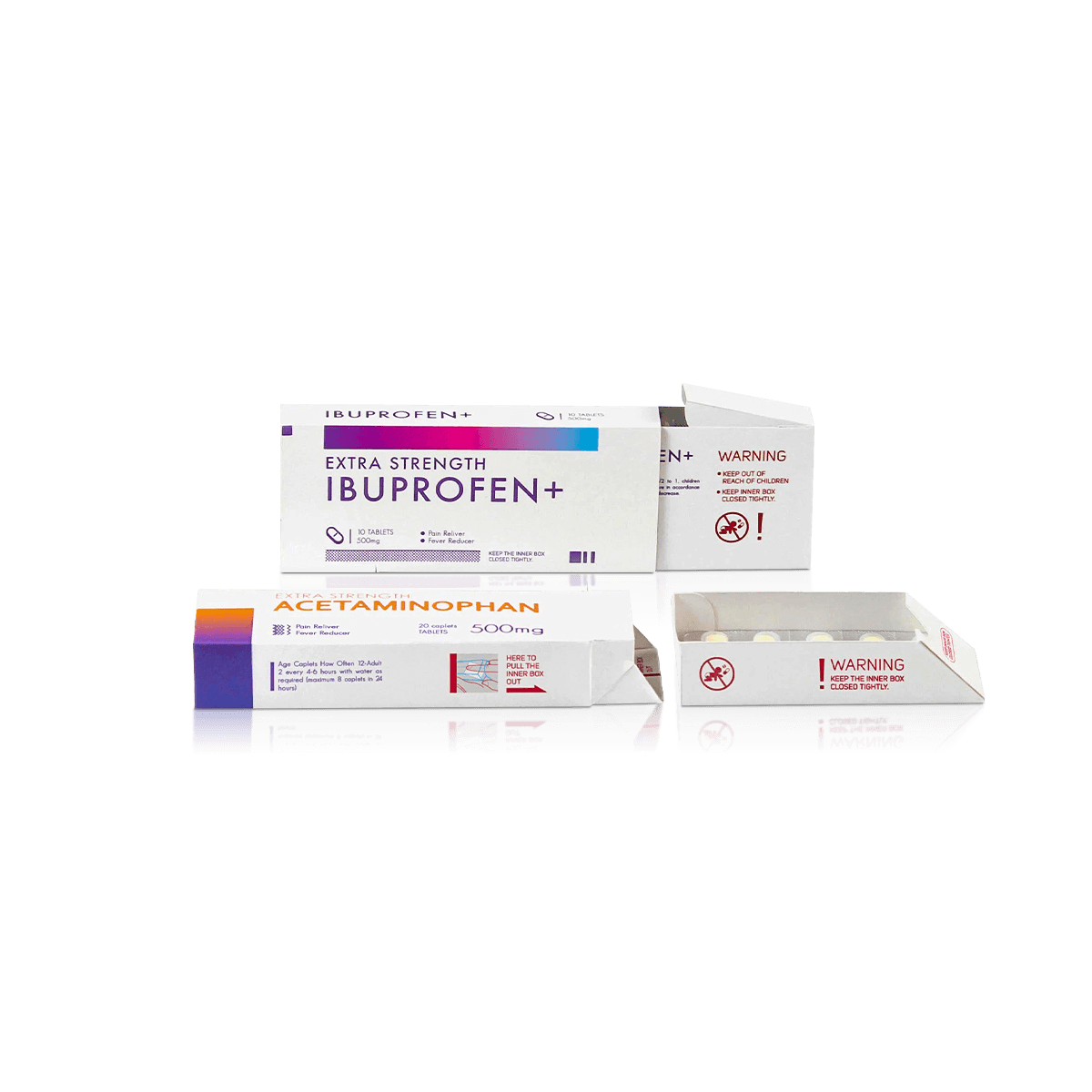
Opening Instructions

A short opening instruction can help adults understand an unfamiliar mechanism.

Directional arrows or concise text may identify the intended release points.

The instruction should correspond exactly to the physical opening action.

For example, an instruction describing simultaneous pressure must not be applied to a mechanism that requires a different sequence.

The wording and placement must also meet any applicable product-labeling requirements.

Instructions can support correct use, but they cannot substitute for a properly performing locking mechanism.

Paperboard at the Lock

The locking areas of a child-resistant carton experience different stresses from ordinary printed panels.

Release tabs may bend during opening. Engagement surfaces experience contact as the carton is repeatedly opened and closed.

The paperboard must therefore be assessed for mechanical behavior as well as appearance.

Caliper and Springback

Board thickness affects the geometry and stiffness of the locking components.

A release tab may need enough flexibility to move during opening while recovering sufficiently to perform its intended function.

A board that is too stiff for the proposed geometry may make the release difficult to operate.

A board that is insufficiently stiff may not retain the required engagement.

Caliper, grain direction and crease geometry must be evaluated together.

Increasing board thickness is not automatically an effective way to improve child resistance.

Release-Slot Clearance

Release openings must accommodate the intended movement without creating unnecessary play.

A slot that is too tight can interfere with adult operation.

Excessive clearance may change how the mechanism engages or retains the moving component.

The final dimensions must account for the actual board and any finishing applied to the engagement surfaces.

These are mechanism-specific tolerances. They should be established through the intended construction and supporting performance evidence rather than assigned as universal measurements.

Surface Wear

Repeated contact can affect exposed paperboard edges and coated surfaces.

A release feature that operates smoothly on a new sample may behave differently after repeated use.

Suitable material selection and converting accuracy help maintain consistent construction.

For a reclosable child-resistant design, the required assessment must address the intended period of use, not simply the first opening.

Internal Fit Without Lock Interference

The product must fit securely without obstructing the locking mechanism.

This creates a different dimensional problem from an ordinary retail carton.

The internal space must accommodate the product and any support components while preserving the movement required for opening and closing.

For a sliding construction, the tray must also move through its intended travel without the contents catching against the sleeve.

Bottle Retention

A bottle may sit inside a paperboard tray or another suitable internal support.

Its cap, shoulder and overall filled height affect the required cavity.

If the bottle extends into the locking area, it can interfere with release-tab movement or prevent the tray from reaching its secured position.

The finished bottle must be assessed with its actual closure and any external seal in place.

A fitted paperboard support may be appropriate when it prevents the container from moving into the locking mechanism.

However, an insert should not add unnecessary complexity when the carton itself already retains the product adequately.

Blister Card Clearance

Blister cards require space for their formed cavities and any accompanying leaflet.

A locking tray introduces another dimensional constraint because the blister stack must not interfere with the moving components.

The internal arrangement should preserve the intended card orientation and access method.

For products whose main requirement is secondary containment of unit-dose cards, blister pack outer boxes address card geometry and leaflet accommodation.

A child-resistant construction requires a separately established access-control function in addition to that containment.

Insert Position

An insert should retain the product without interfering with the release mechanism.

Its edges must remain clear of moving tabs, slots and other functional surfaces.

The insert's thickness also affects the usable internal dimensions.

A particularly important check is whether the product and insert remain properly positioned when the carton is tilted or opened.

Custom Packly's product-fit and structural support can help establish the internal arrangement before the exterior dimensions and dieline are finalized.

Packout Must Preserve the Lock

A child-resistant carton can lose its intended function if the packing operation damages, obstructs or incorrectly assembles the mechanism.

The intended packing sequence should be established before selecting the final construction.

This is especially important when the carton contains several paperboard components or requires a specific tray orientation.

Assembly Sequence

A locking carton may arrive flat, partially assembled or fully erected, depending on the approved construction.

The packing process must account for any required folding, component insertion and final closure operations.

For a sliding design, the inner tray and outer sleeve need to be assembled in the intended orientation.

An incorrectly folded locking tab may prevent engagement even when the exterior looks normal.

The assembly method should therefore be treated as part of the production specification.

Automated Equipment

A conventional cartoning machine should not automatically be assumed to accommodate a specialist child-resistant construction.

The equipment must be compatible with the carton blank, loading direction and closing mechanism.

Some constructions may require an additional assembly operation or a different packing method.

The contract packer should confirm equipment compatibility before the carton is approved.

A sample assembled successfully by hand is not sufficient evidence of automated packing compatibility.

Packing-Line Checks

Appropriate production checks should confirm that the mechanism has not been damaged or obstructed during assembly.

The precise checks depend on the approved construction and the manufacturer's quality requirements.

Routine engagement checks can help identify assembly defects. They do not replace the formal testing required to establish child-resistant performance.

Establish the Performance Evidence

A child-resistant claim requires evidence for the applicable packaging system.

A difficult opening, a supplier's marketing statement or a successful demonstration by one adult is not sufficient.

Under the PPPA, packaging must meet the applicable performance standards in 16 CFR 1700.15 using the testing procedures specified in 16 CFR 1700.20. The standards address child resistance and adult usability.

For products subject to these requirements, the responsible manufacturer, domestic packager or importer must establish the applicable obligations and supporting documentation.

Testing the Actual Construction

Performance evidence must adequately represent the packaging that will be used.

The relevant specification may include the locking mechanism, material, dimensions, closure components and intended operating method.

Changing a tested construction can affect its behavior.

A different board, altered release slot or modified tray geometry should not automatically inherit the original construction's performance claim.

The responsible party must determine whether existing testing remains representative or additional testing is necessary.

Certification Responsibility

The Consumer Product Safety Commission does not approve or certify individual child-resistant packaging designs or manufacturers.

For PPPA-regulated products, the responsible domestic packager or importer must issue the applicable certificate of conformity. Supporting test data may be used where it adequately represents the actual packaging.

A packaging supplier's existing test documentation may assist that process, but it does not automatically establish compliance for every customized version.

Custom Packly's structural development, mockups and sample support should not be represented as independent regulatory certification.

Print Outside the Release Areas

Printing and finishing should support the carton without changing the operation of its locking features.

A printed graphic may extend across the outer sleeve, but the final artwork needs to accommodate release slots, moving tabs and other functional areas.

Opening Cues

An opening instruction should appear where the intended adult user can find it.

The visual treatment should distinguish the operational instruction from ordinary promotional text.

For an appropriate design, a small printed arrow or concise instruction may be sufficient.

The supplied wording must correspond to the validated mechanism.

Instructions should not imply that the package is impossible for children to open. Child resistance is not the same as childproofing.

Coating and Lamination

Coatings and laminates can affect the thickness and friction of surfaces that interact during opening.

A decorative finish applied across a moving engagement surface may alter its behavior.

Foil, embossing or spot UV should be positioned away from functional areas where they could interfere with the mechanism.

Premium offset printing can support detailed branding and readable instructions on suitable paperboard.

Custom Packly's artwork and prepress review helps identify production-layout issues before printing. A digital proof can confirm the intended placement of release instructions, barcodes and supplied product text.

The actual opening behavior still requires the appropriate physical assessment.

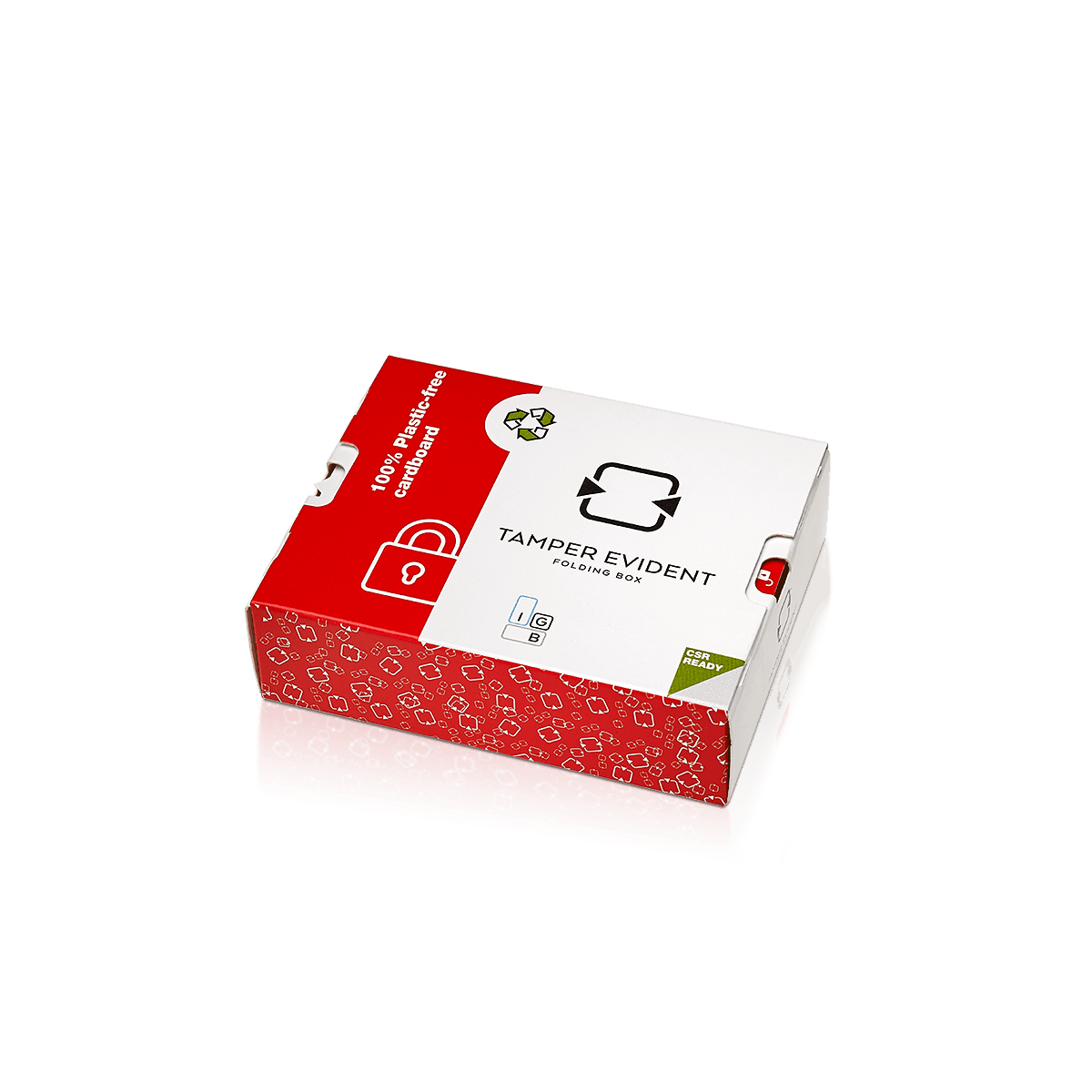
Child Resistance and Tamper Evidence

Child resistance restricts access. Tamper evidence makes prior opening or interference apparent.

The two functions are not interchangeable.

A carton may have a mechanism that remains resistant to child access after repeated opening without creating visible evidence of its first use.

A tear strip may provide evidence of first opening while leaving the product accessible afterward.

Where both functions are required, they must be addressed as separate performance requirements.

A first-opening feature must also be compatible with the child-resistant mechanism.

For example, a security label should not obstruct the required release points or encourage users to damage the locking construction.

Tamper-evident boxes address visible first-opening evidence through an appropriate carton feature or sealing arrangement.

A product needing both functions requires a complete packaging specification that establishes how they operate together.

Product-Specific Access Requirements

Not every medicine, supplement or wellness product requires the same child-resistant packaging.

The applicable requirements depend on the product, its formulation, package quantity, intended use and relevant regulations.

Certain substances are specifically subject to PPPA special-packaging requirements under 16 CFR 1700.14. These include specified medicines and certain iron-containing dietary supplements, subject to the regulation's conditions and exceptions.

The product manufacturer must establish whether child resistance is required and which component fulfills that requirement.

Pharmaceutical Products

For applicable pharmaceutical products, the packaging specification should begin with the regulatory requirements and approved primary container.

A child-resistant outer carton may perform an access-control function where the complete packaging system requires it.

However, the presence of a printed pharmaceutical carton does not establish that the outer box itself must be the child-resistant component.

The decision must reflect the actual product and approved packaging arrangement.

Supplements and Vitamins

Some supplements may require special packaging because of their ingredients and package quantities.

Others may use child-resistant primary closures without requiring an additional locking outer carton.

For individually packaged supplement boxes, the primary container and intended retail presentation should be considered before introducing another access-control mechanism.

An unnecessary locking carton can add material, assembly operations and customer inconvenience without performing an additional required function.

Other Regulated Wellness Products

Products sold through different US jurisdictions may be subject to additional product-specific packaging requirements.

These requirements should be established for the actual product and intended sales location before the structural specification is finalized.

No single carton construction should be assumed to satisfy every regulated product or market.

Price the Access Mechanism

A child-resistant carton's production cost depends partly on the construction responsible for controlled access.

A specialized sliding sleeve may require separate components, additional converting operations or a different assembly process from an ordinary folding carton.

The material, finish and product-support components can also affect the specification.

The commercial decision should therefore consider the complete packaging system rather than the printed carton alone.

Existing Versus New Mechanisms

An existing, appropriately tested construction may be commercially more practical than developing a new locking mechanism from the beginning.

However, the available dimensions and internal space must suit the actual product.

A new construction may introduce development, tooling and independent testing requirements.

The cost and time associated with those requirements should be established before the production order is agreed.

Custom Packly supports custom sizing and structural guidance, with specialist construction feasibility assessed according to the project.

Production and Quantity

The USA minimum order quantity starts from 100 boxes.

Instant pricing supports suitable packaging specifications, while specialist child-resistant constructions may require a separate assessment of their mechanisms and production requirements.

The intended mechanism, primary container, internal arrangement, quantity and applicable testing requirements should be established to price the access-controlled carton.

Custom Packly supplies free design and dieline support, free 3D mockups and free examples of previous packaging work. Fully custom physical samples may be paid.

US production, free shipping and a standard 4–6 day turnaround are current commercial capabilities after final artwork and specifications are approved. Specialist development, external testing and complex constructions may require additional time.

The standard turnaround should not be treated as a commitment to complete a new child-resistant mechanism's development and regulatory testing in that period.

Preserve the Approved Construction

Once a child-resistant packaging system has been properly established, its functional construction needs to remain consistent.

The critical specification includes more than the outside dimensions and printed artwork.

The material, release geometry, engagement surfaces, assembly method and any separate locking components may all affect the intended performance.

Functional Production Changes

A production change should be assessed according to its effect on the approved mechanism.

Changing the paperboard caliper may alter release force or engagement.

Changing the coating may affect friction.

Changing an insert can affect the movement or position of the inner tray.

Even an alteration intended to simplify manufacturing can require reassessment if it affects the validated construction.

The responsible party must determine whether the available performance evidence still adequately represents the revised package.

Product Variants

Several products may share a child-resistant construction if their dimensions, internal arrangements and applicable requirements support it.

However, separate artwork versions may be required for different formulations, strengths or package quantities.

A common exterior appearance must not create confusion between products.

For larger repeat orders, Custom Packly's warehousing and scheduled deliveries can support the supply of approved packaging according to the agreed production requirements.

The functional mechanism and correct artwork version should remain identifiable throughout that process.

Retain the Correct Safety Barrier

The most important decision is whether the outer carton needs to perform child resistance at all.

A validated child-resistant primary container may already perform the necessary access-control function.

In that situation, a conventional carton may be sufficient for branding, identification and ordinary retail handling.

If the outer carton is responsible for child resistance, its locking mechanism must operate as part of the approved packaging system and retain the required performance throughout the intended use.

For reclosable products, the mechanism must return to its secured position after the intended opening and closing sequence.

The finished packaging should not depend on decorative features, unusually tight friction or printed warnings to perform a mechanical safety function.

Child-resistant packaging is effective only when the relevant access barrier is established, supported by appropriate performance evidence and used as intended.

FAQs

They are most common where the contents require more restricted access than a standard carton provides. Prescription drugs are a clear US example under special-packaging rules and brands in adjacent regulated categories often adopt similar structures when product risk and retail expectations call for it.

Yes. The goal is not to make the package frustrating for everyone. US guidance frames special packaging as child-resistant and adult-friendly which is why the opening sequence has to balance control with practical everyday use.

They solve different problems. Child-Resistant Boxes are built to restrict access while Tamper-Evident Boxes are meant to show whether the pack was opened or interfered with. Some products need one system and others need both working together.

No. Graphics can support safer use but they do not create child resistance by themselves. If a product must meet child-resistant requirements, the packaging system and its testing data are what matter.

Many paperboard CR cartons use slide trays, side-button releases or hidden locking tabs rather than a plain tuck closure. Those approaches help add resistance without forcing the brand into bulky plastic-heavy packaging.

Process

How it works

Your Packaging Journey, From Idea to Production and Delivery

01

Tell Us Your Specs

Custom packaging boxes

Tell Us Your Specs

Provide size, quantity, printing, and finishes.

02

Get a Fast Quote

Custom packaging boxes

Get a Fast Quote

Instant transparent pricing, no hidden fees.

03

Design and Approval

Custom packaging boxes

Design and Approval

Artwork checks, revisions, and final sign-off.

04

Produce

Custom packaging boxes

Produce

Expert manufacturing to meet deadlines.

05

Ship to Your Door

Custom packaging boxes

Ship to Your Door

Hassle-free, flexible delivery options.

Get Your Quote for Custom Child-Resistant Boxes

Share your product details, size, quantity and artwork needs. We’ll help choose the right packaging style and send a clear quote.