Skip to content
Details

Custom Self-Sealing Shipping Boxes

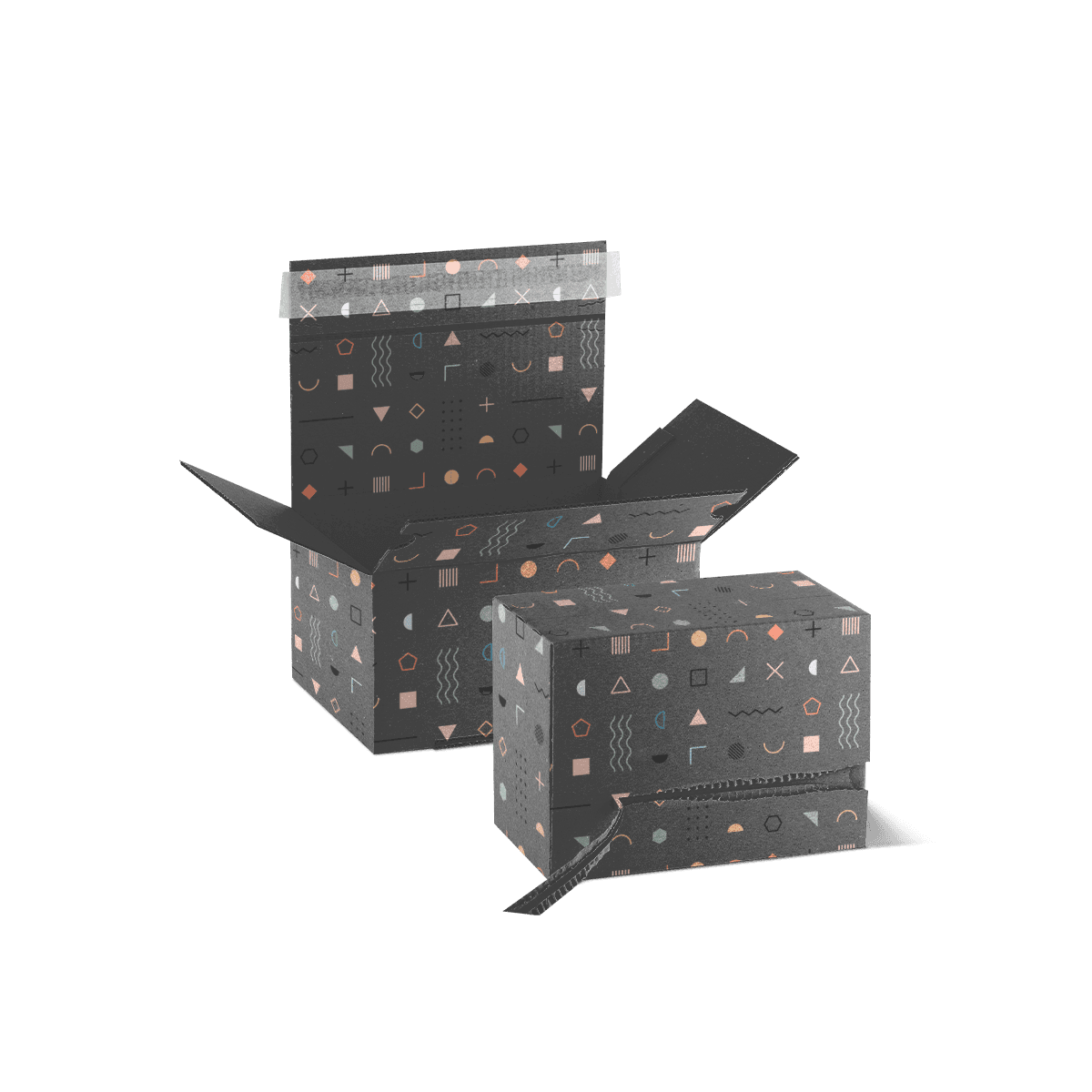
Corrugated shipping boxes with integrated adhesive closure for faster pack-out, cleaner sealing and more consistent fulfillment.

The Seal Removes a Packing Step

The main advantage appears at the end of the packing cycle.

Custom Self-Sealing Shipping Boxes use an integrated adhesive strip so staff can close the carton without reaching for a tape gun, finding the seam and applying a separate strip of tape. On repeat e-commerce orders, removing that motion can simplify the workflow and make closure more consistent from one packer to another.

That makes self-sealing construction a different decision from Tuck-Top Shipping Boxes. A tuck-top structure is chosen mainly for top access and mechanical flap engagement. Self-sealing construction is chosen when the adhesive closure itself needs to reduce handling.

The box still has to fit the product, stay square and carry the required shipping load. Adhesive cannot correct poor dimensions or weak corrugated construction.

Across Shipping Boxes, the structure makes the most sense where closing speed repeats often enough for one fewer packing step to matter.
Adhesive Needs a Clean Landing

A pressure-sensitive strip only works as intended when the mating surface reaches it cleanly and evenly.

The sealing flap and receiving panel need enough overlap for the adhesive zone to make full contact. If the packed box bows upward, twists out of square or carries too much product height, part of the strip may touch while another part remains under tension.

That can create a closure that looks sealed at the packing table but is being pulled apart by the box itself.

The first requirement is therefore mechanical: the closed panels should naturally meet before pressure is applied.

The adhesive should secure the structure. It should not have to drag misaligned panels into position.

Dust, loose paper fibers, heavy surface contamination and other material between the strip and receiving area can also interfere with contact. Keep the closure zone clear during packing rather than treating it as another general-purpose print or handling surface.

Pressure Activates the Closure

Peeling the release liner is only part of the sealing motion.

Pressure across the full strip helps the adhesive contact the receiving surface consistently. A quick touch at one end can leave uneven engagement across a long box.

This becomes more important as the flap gets wider.

The packing sequence should make that pressure easy. Staff should be able to close the flap, align it once and press along the seal without lifting or rotating the carton unnecessarily.

A simple hand motion across the strip can be faster than separate taping while still creating a repeatable close.

If staff routinely press the same area twice, add tape afterward or hold the flap down because it springs upward, investigate the carton fit before blaming the adhesive.

The packed structure may be loading the seal line continuously.

Overfilling Pulls Against the Strip

Self-sealing boxes make excessive product height particularly easy to spot.

When products, inserts or filler rise above the intended packing plane, the top flap has to bend over the contents before reaching the adhesive area. Once pressure is released, those contents push back.

The strip is then working against a spring-loaded lid.

This is different from a bond failure caused by poor adhesive contact. The package is physically trying to reopen.

A health and wellness fulfillment operation shows the problem clearly. Imagine a refill order that normally contains three cartons and a leaflet. A promotion adds a fourth carton, and staff keep using the same shipper by compressing the contents before sealing.

The adhesive may initially close, but the packed products continue pushing upward.

The better correction may be another box depth for that order combination rather than more adhesive or an added tape strip.

Standard E-commerce Boxes can organize recurring order patterns into a controlled size set when common baskets need different depths.

Adhesive Should Not Carry the Product Load

The seal keeps panels together. The box structure carries the shipment.

Heavy contents that push directly against the closing flap can place unnecessary peel or shear force on the adhesive area. Products should sit inside the carton so their weight transfers through the base, walls and internal support rather than through the seal.

This distinction matters with dense products such as hardware, bottled goods, electronics accessories or multi-unit orders.

A box may need stronger corrugated construction, better internal restraint or another structural layout even if the adhesive itself is capable of making a secure bond.

Corrugated Boxes should resolve flute, wall build and board strength when load performance is the larger concern.

Choosing stronger adhesive cannot make an under-specified carton structurally stronger.

One Strip or a Return Strip

Some self-sealing structures need only an outbound closure.

Others can be planned with a second adhesive strip so the recipient can open the package and reseal it for a return. That second function should be decided at the structural stage because it changes the flap layout and opening sequence.

A return strip is most valuable when returns are a normal part of the business model.

Apparel, footwear and selected retail products may justify it because customers frequently need a clean way to send an item back. A low-return replacement-parts shipment may gain little from carrying a second adhesive system on every box.

The opening method also matters.

If the customer tears through the same panel needed for resealing, the second strip has limited value. A tear strip or planned opening path may be needed so the return closure remains intact.

Do not add return functionality merely because the box can accommodate it. Add it when the customer journey makes the second seal operationally meaningful.

Tear Strips Need Their Own Geometry

A tear strip changes how the customer opens the carton.

Its position should let the user start the tear easily and continue across the intended line without cutting into an insert, product or important printed message.

Perforation depth and board construction affect how predictably the strip opens.

A perforation that is too resistant can lead customers to use scissors or tear the panel elsewhere. A cut that is too aggressive can weaken the box before delivery.

The opening feature therefore needs to be matched to the corrugated material rather than added as a decorative line late in artwork development.

The tear path should also leave the remaining structure in the condition the business expects. If the carton must be reused for a return, the opening should preserve the panels needed for the second closure.

If reuse is irrelevant, a simpler first-opening experience may be enough.

Seal Speed Matters at Repetition

A self-sealing box should not be justified by saying adhesive is faster in the abstract.

The actual question is whether the packing operation repeats the closing motion enough for the difference to matter.

For a business shipping a few specialized orders each day, conventional tape may be completely practical.

For a fulfillment line closing hundreds or thousands of similar cartons, removing tape handling can change the rhythm of the station. Workers no longer need to pick up the dispenser, pull tape across the seam, cut it and return the tool before moving to the next parcel.

The time saved on one box may be small. The operational value comes from repetition.

That is why self-sealing construction often makes the strongest case on stable, recurring e-commerce programs rather than irregular shipments using many different structures.

The box should also arrive at the station ready for that workflow. If assembly before sealing is overly complex, time saved at the adhesive strip can be lost earlier in the packing cycle.

Remove the Liner Last

The release liner protects the adhesive before the box is ready to seal.

Removing it too early creates unnecessary exposure to dust and accidental contact. It can also let the strip catch tissue, packing paper, gloves or another carton while staff are still arranging the contents.

A better sequence is to pack first, verify the order, close any interior components, then remove the release liner immediately before final sealing.

That keeps the adhesive step near the end of the process where it belongs.

It also reduces the chance of partially sealing the box before a final item or document has been added.

This matters on kits and multi-part orders because an integrated adhesive closure can be less forgiving than a flap that is repeatedly opened during packing.

The fastest closure works best when the upstream packing sequence is already organized.

Tape Can Still Have a Role

Self-sealing does not mean tape is prohibited.

A particular shipping route, unusually heavy load, fulfillment policy or product risk may still justify reinforcement. The adhesive strip should not be treated as a universal replacement for every closure requirement.

The important point is to know why additional tape is being used.

If every self-sealing carton receives a full conventional tape seal automatically, much of the packing advantage disappears. If only one heavy order pattern needs reinforcement, that exception can be handled separately.

Likewise, tape should not be routinely added because staff do not trust a poorly fitted box.

First check whether the carton is square, whether the adhesive area makes full contact and whether the contents are loading the top panel.

Use reinforcement for a defined shipping reason, not as a permanent correction for unresolved structure.

Print Around the Seal Zone

The adhesive and release liner occupy physical space on the carton.

Artwork should respect that space instead of treating every part of the flap as an uninterrupted print panel.

Critical copy, QR codes or small legal text should stay away from areas that will be hidden by the sealing system or damaged when the box is opened.

For a heavily branded shipper, Printed E-Commerce Shipping Boxes put carrier-label zones, print process and brand visibility at the center of the artwork decision.

On a self-sealing structure, closure still comes first.

The seal face may benefit from simpler graphics while side panels carry larger brand elements. Inside print can also hold messaging that appears after the opening strip is used.

Free 3D mockups can help confirm where artwork sits once the flap is closed, but the final dieline should remain the production authority for adhesive zones, scores and printed safe areas.

The Dieline Fixes the Closure Relationship

Adhesive position cannot be treated independently from flap depth and panel geometry.

The packaging dieline determines where the sealing flap folds, how far it overlaps the receiving panel and where opening features sit in relation to scores and cuts.

A dimensional change can alter that relationship.

Increasing depth, moving a score or changing board construction may affect how the closing panel lands. Artwork and adhesive placement should therefore be reviewed after the structural dimensions are settled.

For supported structures, the dieline generator can establish a starting layout from the intended dimensions.

Custom Packly's design and dieline support can then align closure areas, graphics and board construction before production.

Compare the Whole Packing Cost

A self-sealing carton may cost more than a similar box without integrated adhesive.

That does not automatically make it more expensive to use.

Compare the complete packing operation: tape, dispensers, labor motions, closure consistency, packing speed and any return feature the carton replaces.

The reverse is equally important.

A low-volume operation that already seals several box types with the same automated or manual taping process may gain little from adding a separate self-sealing specification.

Integrated closure earns its cost when it removes enough repeated work or customer friction to justify the additional box feature.

For recurring runs, record the corrugated construction, flap geometry, adhesive-strip position, opening feature, return-strip arrangement if used and the approved dieline revision. Artwork changes should remain distinguishable from structural closure changes.

Custom Packly starts USA orders from 100 boxes. For larger recurring quantities, bulk custom boxes can keep established closure specifications tied to repeat production.

For pricing, include the internal box dimensions, product dimensions and packed weight, normal quantity per shipment, corrugated construction if known, outbound or return-strip requirement, tear-strip requirement, current sealing method, recurring volume, printing, inserts, quantity by size, shipping ZIP code and any current issue such as slow taping, inconsistent closure, overfilling or difficult returns.

Free sample examples of previous work can help assess general corrugated and print quality. A paid fully custom pre-production sample can be used when exact adhesive placement, opening behavior or return functionality needs physical confirmation.

Once the box dimensions and closure plan are established, an instant custom packaging quote can price the integrated sealing system with transparent pricing and no hidden charges.

Watch the Seal at the Packing Table

The most useful final check happens during normal packing.

Load the standard order. Confirm that the top panel closes without force. Remove the release liner only when the contents are complete. Press the full adhesive strip against its landing area and watch whether the panel remains flat after pressure is released.

If the box immediately tries to reopen, investigate the product height and carton geometry.

If one portion of the strip repeatedly fails to contact, inspect panel alignment.

If staff still add tape to every box out of habit, confirm whether reinforcement is actually required or whether the packing procedure simply never changed after the new box arrived.

If the structure includes a return strip, open the parcel through the intended tear path and reseal it as a customer would.

Self-sealing shipping boxes work best when the closure makes the last packing motion simpler and predictable. The adhesive is not the whole package. Its value comes from fitting cleanly into a box, product load and fulfillment process that are already working together.

FAQs

Both matter. The faster seal saves labor on the packing line, and the cleaner closure usually gives the shipment a neater finished look.

They can be, especially when the structure is planned around easy opening and controlled resealing steps. That depends on the box format and how the operation handles returned goods.

Choose Self-Sealing Shipping Boxes when you need a sturdier corrugated shipper for broader product types or larger order formats. Adhesive Strip Mailer Boxes are often the better option for lighter direct-mail and compact e-commerce packs.

Yes, when the adhesive spec, board grade, and packed weight are matched correctly. The closure needs to be engineered for the product load and shipping route, not treated as a one-size-fits-all detail.

They work for both. Many brands use them for standard daily fulfillment, while others use custom-printed versions for launch kits, promo drops, and subscriber shipments.

Process

How it works

Your Packaging Journey, From Idea to Production and Delivery

01

Tell Us Your Specs

Custom packaging boxes

Tell Us Your Specs

Provide size, quantity, printing, and finishes.

02

Get a Fast Quote

Custom packaging boxes

Get a Fast Quote

Instant transparent pricing, no hidden fees.

03

Design and Approval

Custom packaging boxes

Design and Approval

Artwork checks, revisions, and final sign-off.

04

Produce

Custom packaging boxes

Produce

Expert manufacturing to meet deadlines.

05

Ship to Your Door

Custom packaging boxes

Ship to Your Door

Hassle-free, flexible delivery options.

Get Your Quote for Custom Self-Sealing Shipping Boxes

Share your product details, size, quantity and artwork needs. We’ll help choose the right packaging style and send a clear quote.