Skip to content
Details

Custom Shoe-Box Style Rigid Boxes

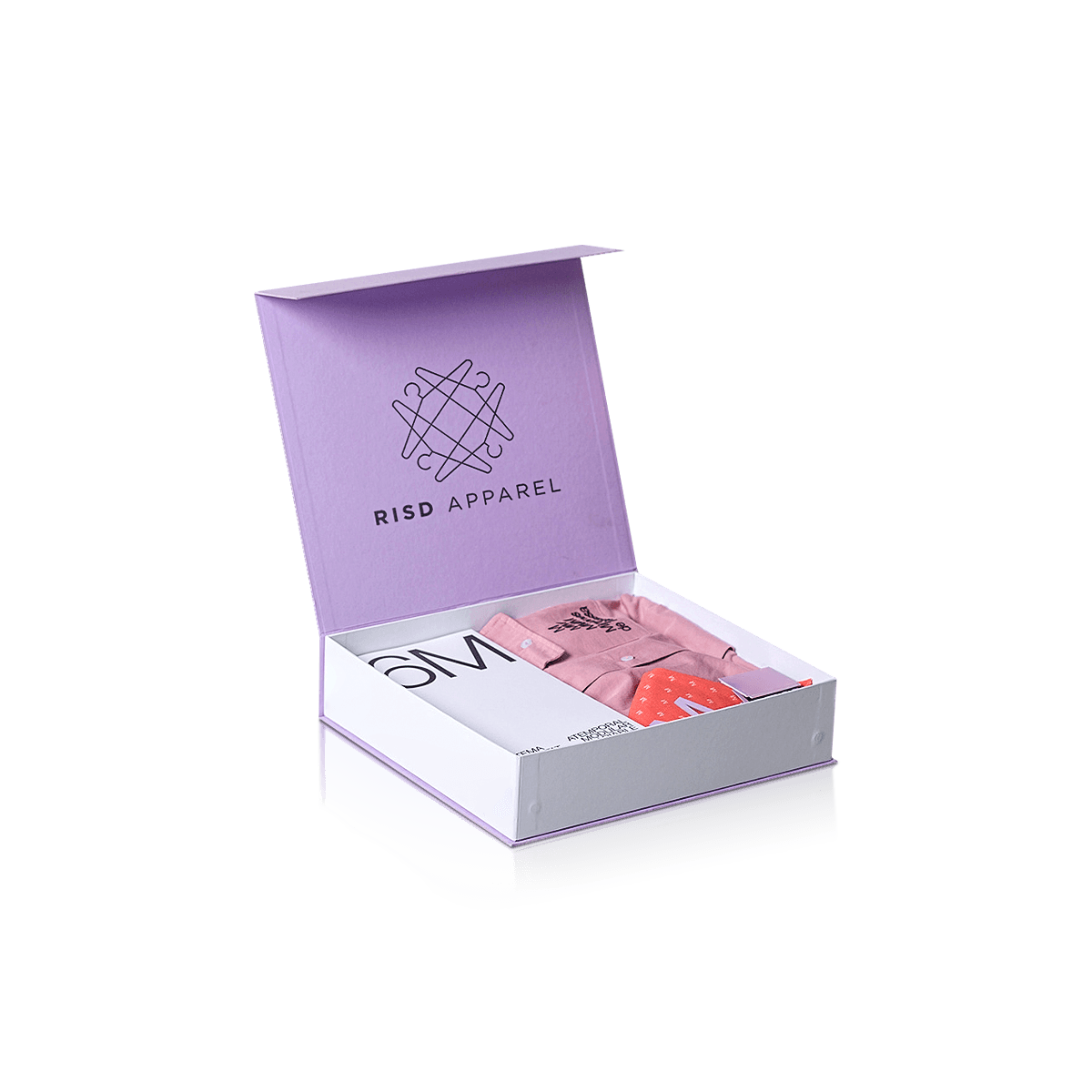
A shallow lift-off lid over a deep rigid base for fast top loading, stable stacking and premium presentation across apparel, footwear, gifts and boxed sets.

The Lid Should Stop High on the Base

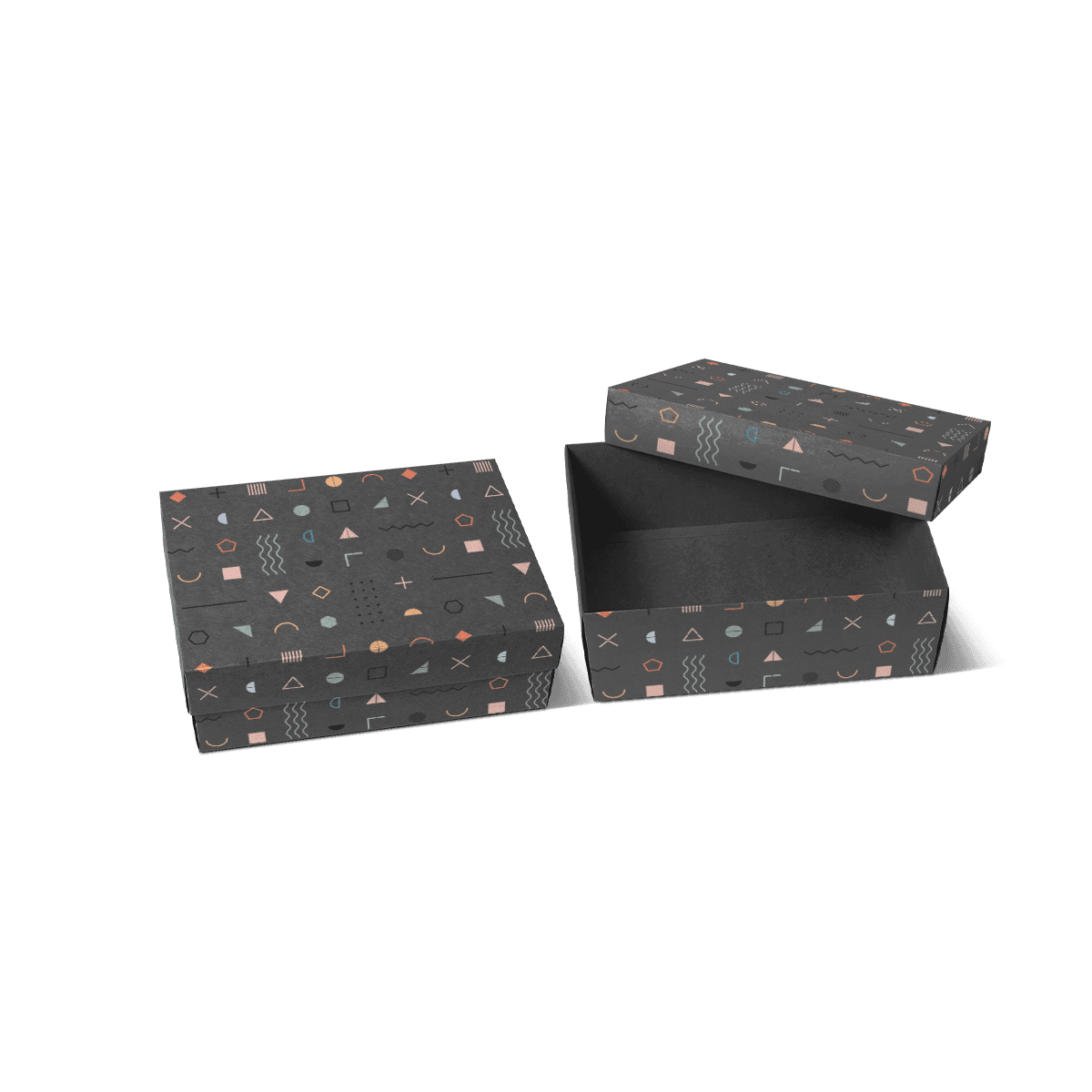
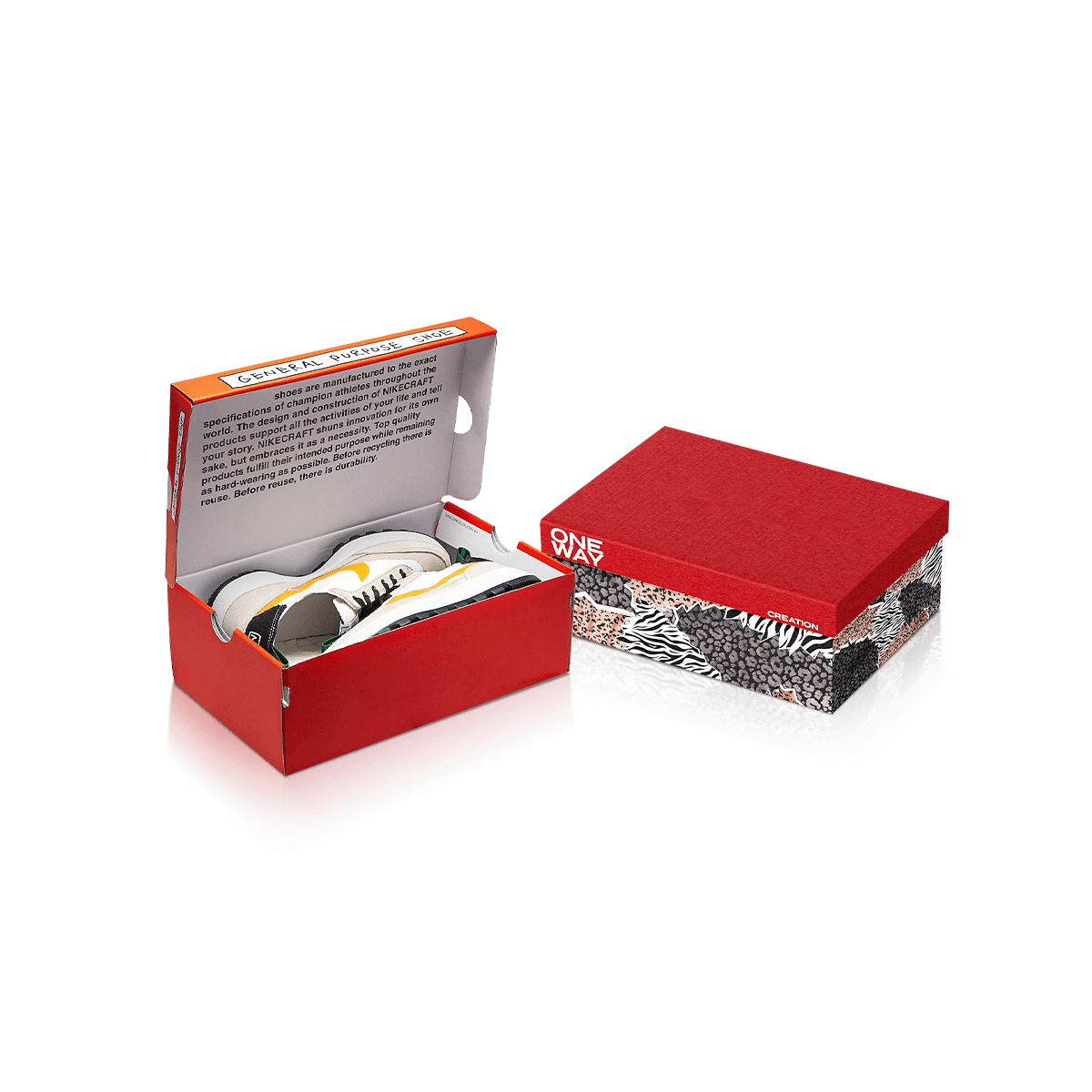
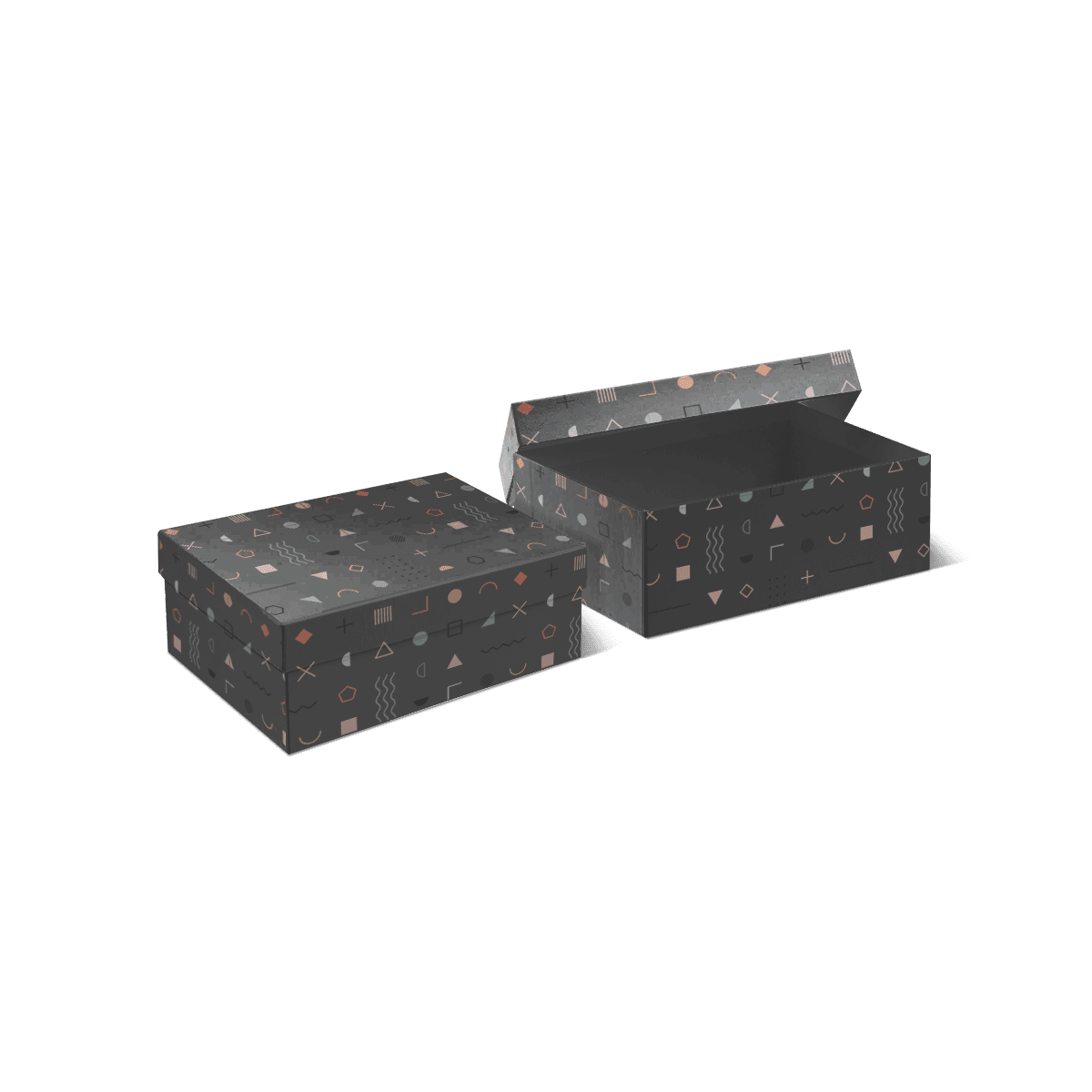
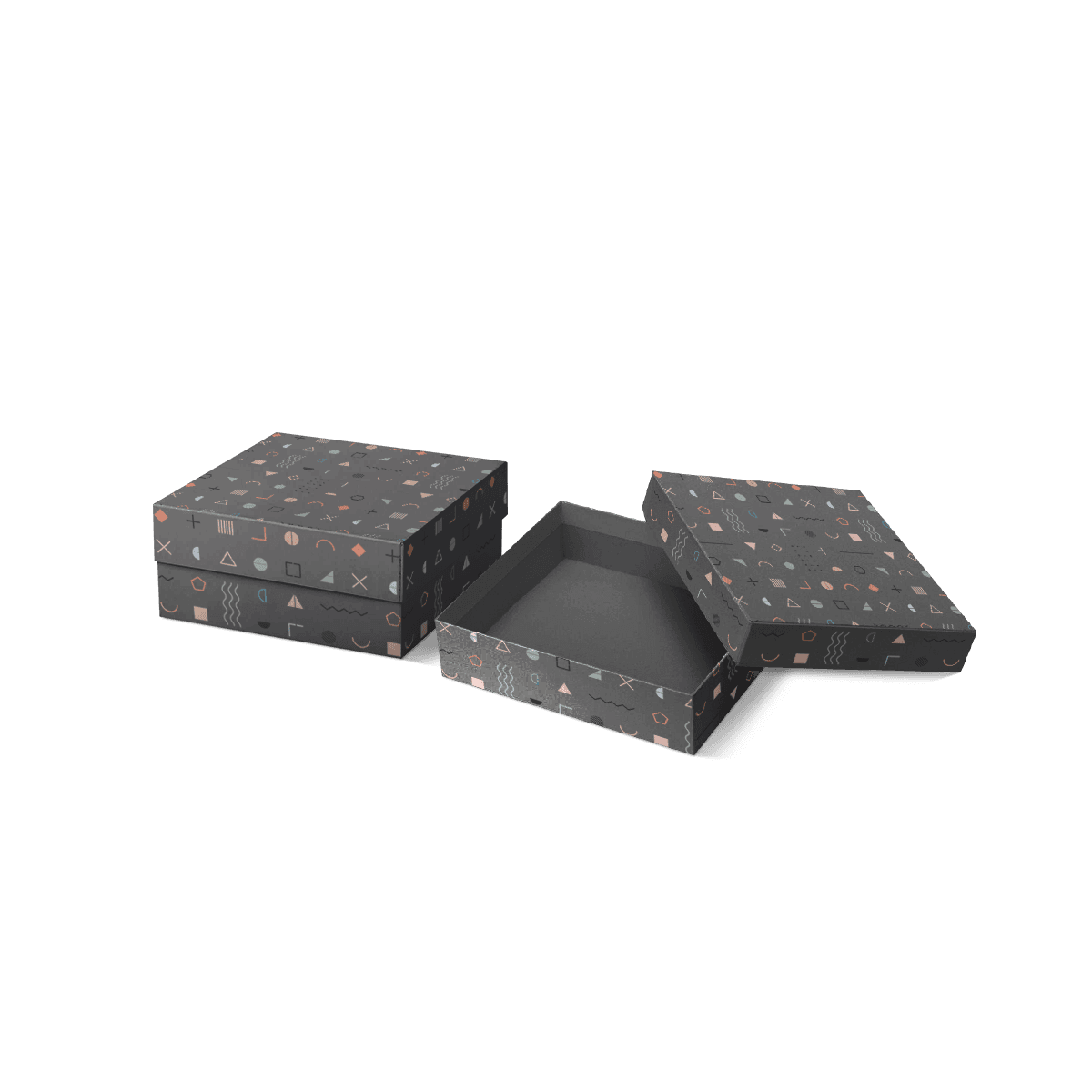
The defining feature of Custom Shoe-Box Style Rigid Boxes is not the product placed inside. It is the proportion between the lid and base. A relatively shallow lift-off lid sits over the upper part of a deeper rigid base, leaving most of the base wall visible when the box is closed.

That proportion creates a different handling experience from a full-depth telescoping lid. The top comes away quickly, the product becomes visible almost immediately and the base remains easy to hold during packing or opening. It works especially well for wide, relatively low-profile products such as folded apparel, footwear, accessories, presentation sets and boxed merchandise.

The style belongs among custom rigid box structures when permanent shape, wrapped surfaces and a substantial hand feel matter more than flat storage.

Shallow Lid, Deep Base

A shallow lid reduces the amount of overlapping wall that must slide past the base every time the box opens. That makes the opening motion shorter and gives packing teams faster access from above.

The lid still needs enough depth to remain seated during normal handling. Too little overlap can make the top feel unstable. Too much changes the character of the box and adds unnecessary friction during opening.

The right depth depends on the overall footprint, box height, board construction and intended handling rather than one universal measurement.

Clearance Changes the Feel

The small clearance between lid and base has an outsized effect on quality.

A lid that fits too tightly may drag against the wrapped base, lift the entire box when opened or mark delicate surface papers. Excessive clearance creates the opposite problem. The lid can shift laterally, sit unevenly or make a stacked group look poorly aligned.

The goal is a controlled lift. The lid should remain secure in normal handling, then release without forcing the user to shake or pull aggressively.
Top Loading Keeps Packout Simple

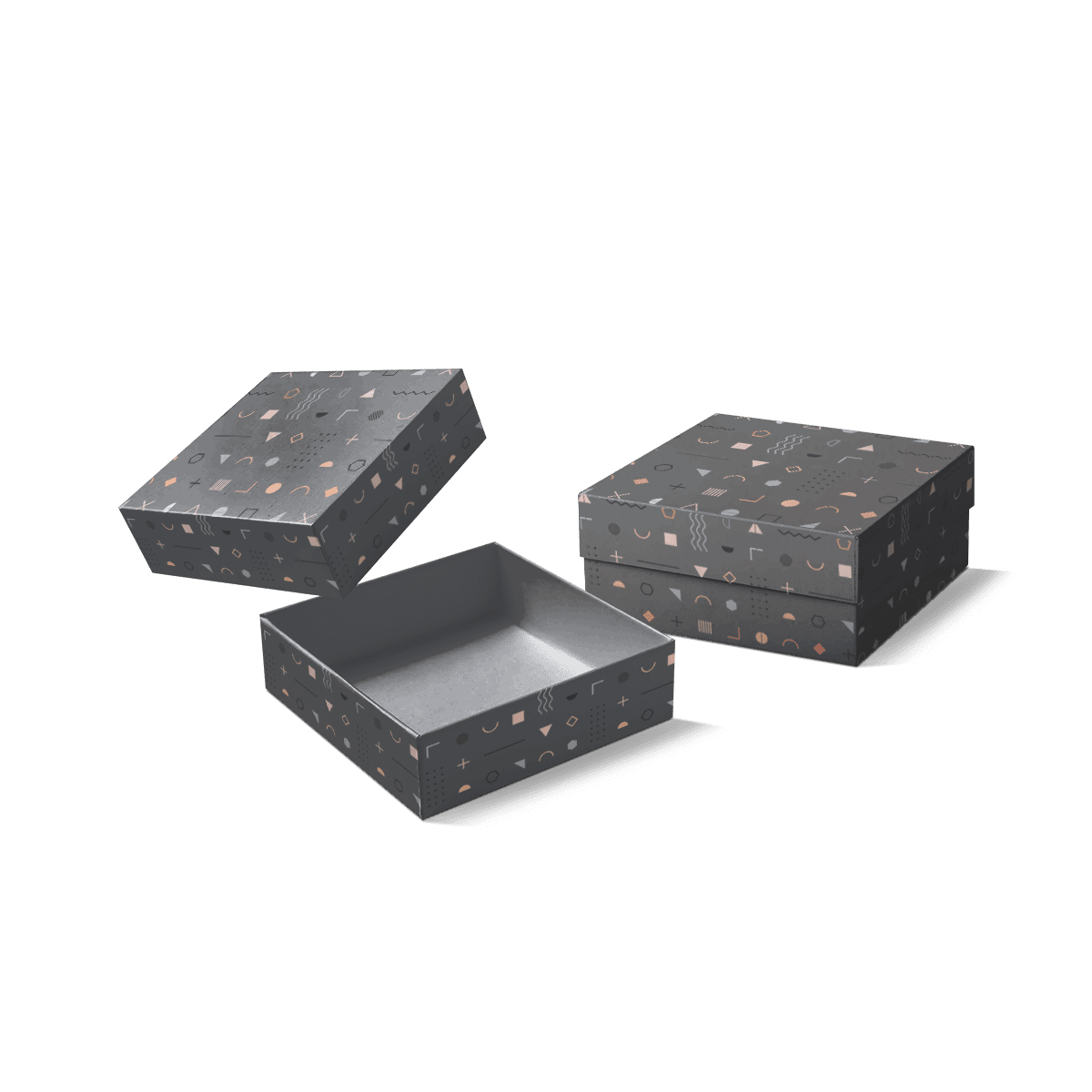
Shoebox-style construction is efficient because almost the entire interior is exposed as soon as the lid comes off. Products can be lowered directly into the base instead of being pushed through a sleeve, slid into a drawer or positioned around a hinged closure.

That matters when each order includes tissue, cards, garments or several components added in sequence. The packer can see the full interior and correct the arrangement before closing the box.

A folded shirt can be placed, wrapped and covered in one vertical workflow. A gift assortment can be checked from above. A shoe pair can be positioned without navigating a narrow opening.

For footwear-specific needs such as pair control, end-panel size labels and stockroom identification, custom shoe boxes address the operational requirements around the product itself.

The structural advantage here is simpler: the lid gets out of the way.

This is also why the style can work outside footwear. Premium apparel, stationery sets, corporate gifts, accessories and retail kits can all benefit when the packing sequence is primarily top-down.

Wide Boxes Need Stack Discipline

A broad rigid box may look simple, but its proportions make stack behavior important. The lid spans a relatively large area and repeated boxes may sit directly on one another in storage, retail backrooms or presentation stacks.

The rigid board, lid depth and product height therefore need to work together.

Lid Span and Board Stiffness

A large lid has more unsupported area than a compact jewelry box. If the board specification is too light for the footprint, the top can feel less substantial or show unwanted deflection.

The answer is not automatically the thickest board available. Excess material can add cost and weight without solving the actual structural requirement.

Box dimensions, product weight and stack conditions should establish the board specification. Custom Packly's packaging capabilities can be used to narrow rigid board, wrap stock, print and finishing requirements together.

Nothing Inside Should Push the Lid Up

A rigid exterior cannot compensate for an overfilled interior.

Tissue, garment folds, cards, inserts or product components that rise above the intended packing height can create a high point under the lid. The lid then rocks, sits proud on one corner or transfers pressure into the item underneath.

This problem often appears after the structural size has been approved but extra presentation material is added later.

Treat the packed product, not the empty box, as the real height reference.

Product Height Controls the Reveal

The vertical position of the product determines what the customer sees the moment the shallow lid clears the base.

If the contents sit too low, the first impression becomes an empty wall around a distant product. If they sit too high, the product or tissue can interfere with closure.

The strongest arrangement usually keeps the contents clearly visible while leaving enough headroom for repeatable closing.

Soft Goods Need Compression Allowance

Folded apparel changes height more than a hard product. Knitwear, scarves, shirts and fabric sets can compress differently from one pack to another.

The box should therefore be tested using the actual fold, tissue and any cards that will ship with the product.

Brands working primarily with garments may also need the merchandising and fold decisions covered by apparel boxes rather than treating every soft product as a generic rigid-box project.

Hard Goods Need Positional Control

Accessories, electronics sets and gift assortments create a different problem. Their dimensions stay consistent, but several pieces can move independently.

An insert is worthwhile when it prevents those pieces from crossing positions, striking each other or arriving at different angles. It should support the arrangement without turning a straightforward top-loading box into an unnecessarily complex construction.

A single large product that already fits securely may need no insert at all.

A Deeper Cover Changes the Structure

Shoebox-style rigid boxes lose their main advantage when the lid is extended far down the side walls without a clear reason.

If fuller side coverage, slower opening or a more enclosed appearance is required, telescopic rigid boxes are structurally closer to that goal.

A deeper lid increases the overlapping surface between top and base. That changes friction, opening speed and visual proportion. It can make sense when the side walls should be largely concealed, but it is a different decision from the short, quick-release lid associated with the classic shoebox construction.

If the requirement is simply a premium detachable lid and base without a strong preference for shallow lid depth, luxury 2-piece rigid boxes leave more freedom to set the overall lid proportion around the presentation.

That distinction keeps the structure purposeful. Do not deepen the lid only because more board appears more premium.

Print the Lid as the Main Brand Surface

A shoebox-style lid gives branding a large uninterrupted horizontal area. That makes it well suited to strong typography, centered marks, patterns and restrained specialty finishes.

The surface is visually prominent before the box is opened, so artwork hierarchy matters more than filling every available inch.

Premium offset printing can handle full-color artwork and refined detail. Pantone references may be appropriate when a brand color needs tighter repeat control. Foil stamping, embossing, debossing or spot UV can add emphasis without turning the entire surface into a finish demonstration.

Large Solid Color Needs Control

Large lid panels make color consistency easier to notice.

A dark solid wrap or heavily printed surface may also reveal rubbing, fingerprints or small production variations more readily than a lighter or patterned design. Artwork and surface choice should therefore be reviewed as one decision.

When several sizes need the same visual system, custom printed boxes can keep color references, artwork versions and print placement consistent across the run.

Finishes Should Survive Handling

The lid is the part people touch most. A decorative treatment that looks strong in a proof still needs to suit stacking, opening and repeated handling.

Matte, gloss, foil, embossing, debossing and spot UV each change the surface differently. The practical effects of packaging finishes matter most when the lid has large printed areas or tactile details that will be handled repeatedly.

Test the Closing Motion Before Production

A rendering can confirm proportions and artwork, but it cannot fully communicate how a lift-off lid feels in the hand.

Physical validation matters when lid clearance, wrap thickness or packed-product height is close to the tolerance limit.

A premium apparel set exposes the problem quickly when folded fabric, tissue and an insert card create a slight mound at the center. The empty prototype may close correctly, but the finished pack can make the lid rest on the tissue instead of seating against the base and a stack of finished boxes can begin to lean.

Increasing board thickness would not solve the real issue.

The better correction is to reduce the packed height by adjusting the fold, lowering an internal platform, reducing unnecessary tissue volume or adding a small amount of box depth. Once the contents sit beneath the lid path, the lid can seat level again and the stack returns to a consistent height.

This is why the final validation should use the complete packout rather than an empty shell.

Custom Packly supports the process with free 3D mockups and design and dieline assistance. Free sample examples of previous work are available. When the exact custom structure needs physical approval before the production run, a fully custom pre-production sample can be arranged as a paid sample.

Control Cost Through Proportion

A simple lift-off structure can be one of the more straightforward ways to get a permanent rigid box, but large dimensions can consume material quickly.

The footprint matters because every increase affects the base, lid and wrap. Making a box longer and wider also increases the lid span, storage volume and shipping volume.

The practical cost controls are therefore structural rather than cosmetic.

Avoid adding empty perimeter space simply to make the package look larger. Keep the lid depth appropriate to the shoebox construction instead of extending it without purpose. Add an insert only when the contents need retention or presentation support. Reserve premium finishing for areas where it will actually be noticed.

Quantity also changes the economics of setup-box production. The factors behind custom rigid box cost include size, structure, quantity, wrap, printing, inserts and finishing.

Once dimensions, lid depth, quantity and surface treatment are fixed, an instant custom packaging quote can price the actual construction rather than a loosely defined rigid box.

Standardize the Lid Logic Across SKUs

A strong shoebox-style program does not require every SKU to have identical dimensions. It needs the same structural reasoning carried consistently across the sizes.

A footwear line may have several footprints. An apparel program may need shallow and deeper bases for different garment sets. A gift program may keep one visual identity while the contents change by season.

The lid-to-base relationship should remain intentional across all of them.

Record the approved internal dimensions, packed height, lid depth, board specification, wrap, artwork revision and any insert used for each SKU. Do not scale every dimension by the same percentage without checking what the actual product needs.

A small box may tolerate a certain lid proportion that feels awkward when copied onto a much larger footprint. A deeper product may require extra base height without requiring a proportionally deeper lid.

For programs moving from one approved size into several production versions, bulk custom boxes can keep quantities, artwork versions and structural specifications aligned across repeat runs.

The shoebox-style rigid box works best when its simplicity stays intact: a deep base that holds the product, a shallow lid that lifts cleanly and proportions that remain controlled from the first unit to the last.

FAQs

They work better when the product is folded, layered, or packed in a wider footprint. Apparel, shoes, flat gift sets, and organized kits usually benefit from the extra surface area.

No. The name describes the shape more than the category. They are also used for apparel, accessories, electronics kits, gourmet assortments, and promotional packs.

Shoe-Box Style Rigid Boxes are better when fast packing, stackability, and a simple lift-off reveal matter most. Drawer-Style Rigid Boxes are better when the product needs a slide-out presentation or a more staged unboxing sequence.

Matte lamination, soft-touch finish, foil stamping, embossing, debossing, and printed wraps all work well because the lid gives a clean, uninterrupted branding zone.

Yes. A personalized insert can reduce movement, improve presentation, and keep multiple items aligned, especially in gift sets, tech bundles, and structured apparel packaging.

Process

How it works

Your Packaging Journey, From Idea to Production and Delivery

01

Tell Us Your Specs

Custom packaging boxes

Tell Us Your Specs

Provide size, quantity, printing, and finishes.

02

Get a Fast Quote

Custom packaging boxes

Get a Fast Quote

Instant transparent pricing, no hidden fees.

03

Design and Approval

Custom packaging boxes

Design and Approval

Artwork checks, revisions, and final sign-off.

04

Produce

Custom packaging boxes

Produce

Expert manufacturing to meet deadlines.

05

Ship to Your Door

Custom packaging boxes

Ship to Your Door

Hassle-free, flexible delivery options.

Get Your Quote for Custom Shoe-Box Style Rigid Boxes

Share your product details, size, quantity and artwork needs. We’ll help choose the right packaging style and send a clear quote.