Skip to content
Details

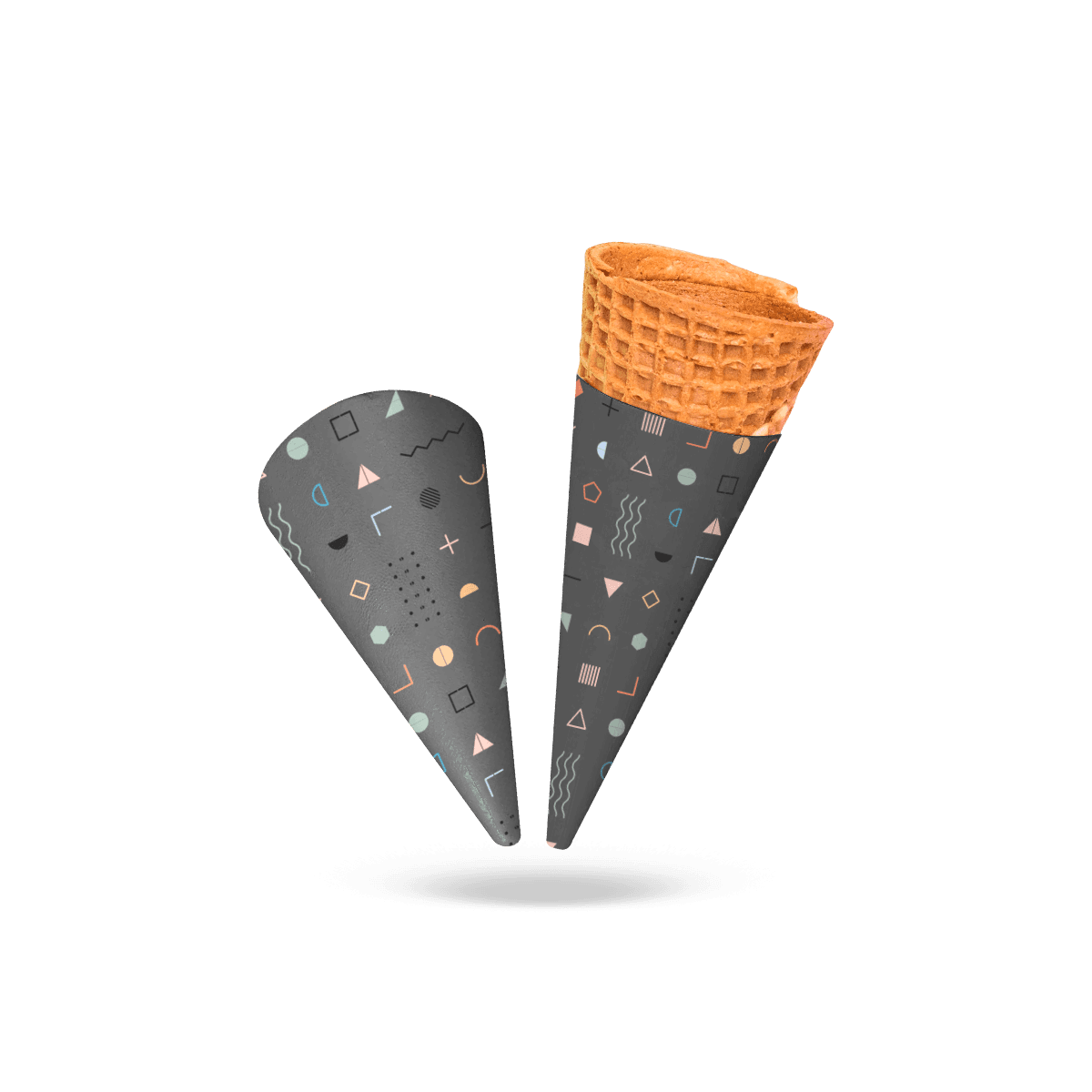
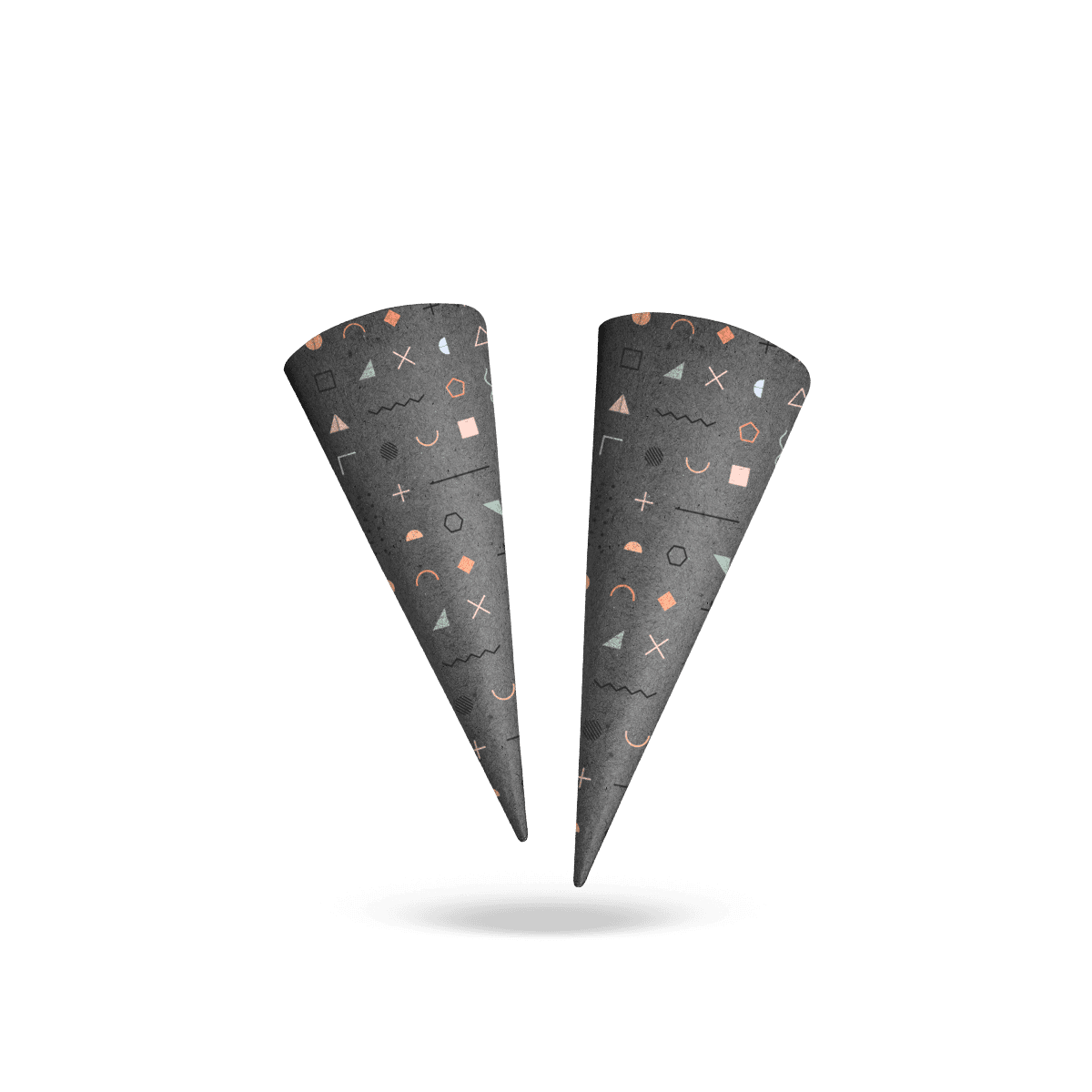
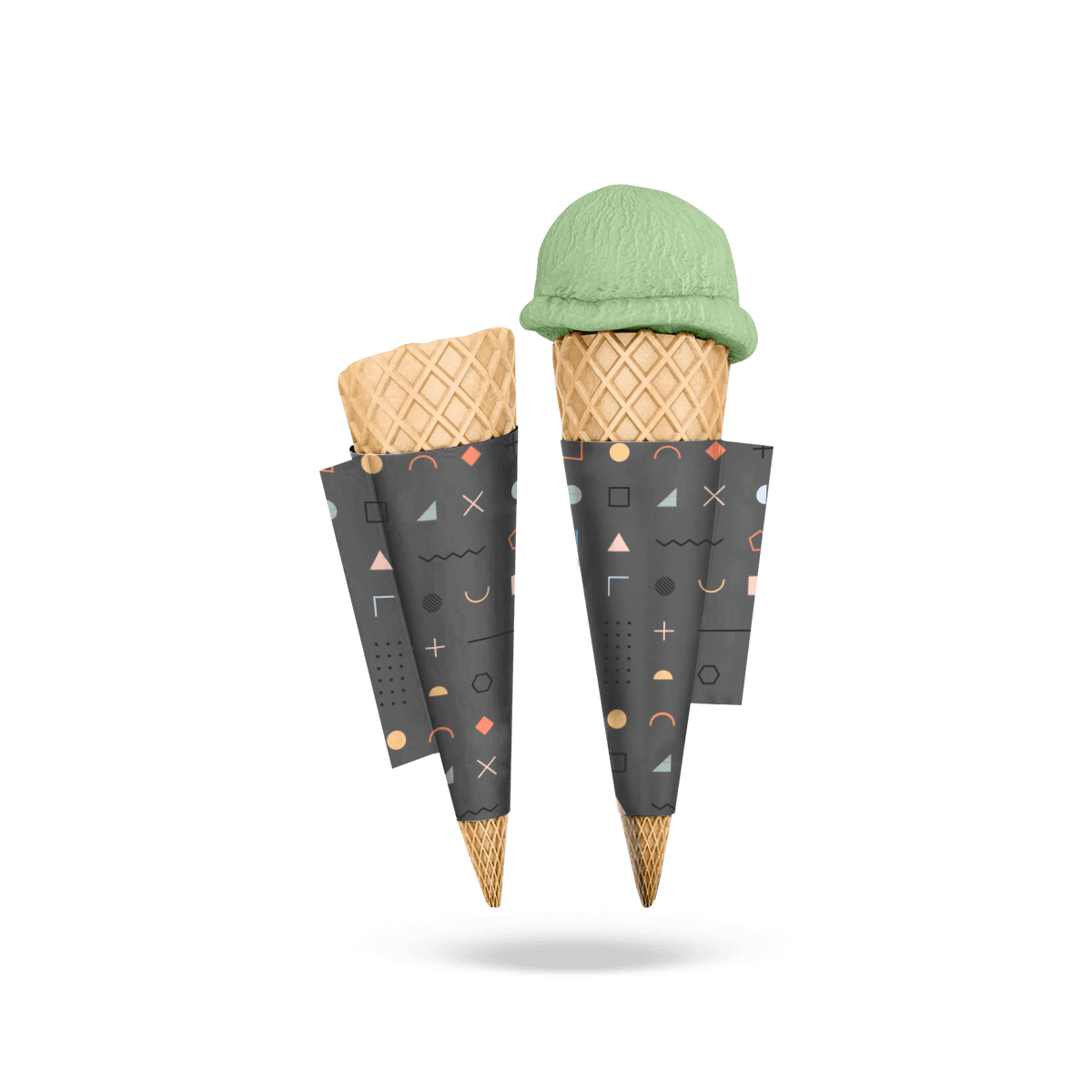
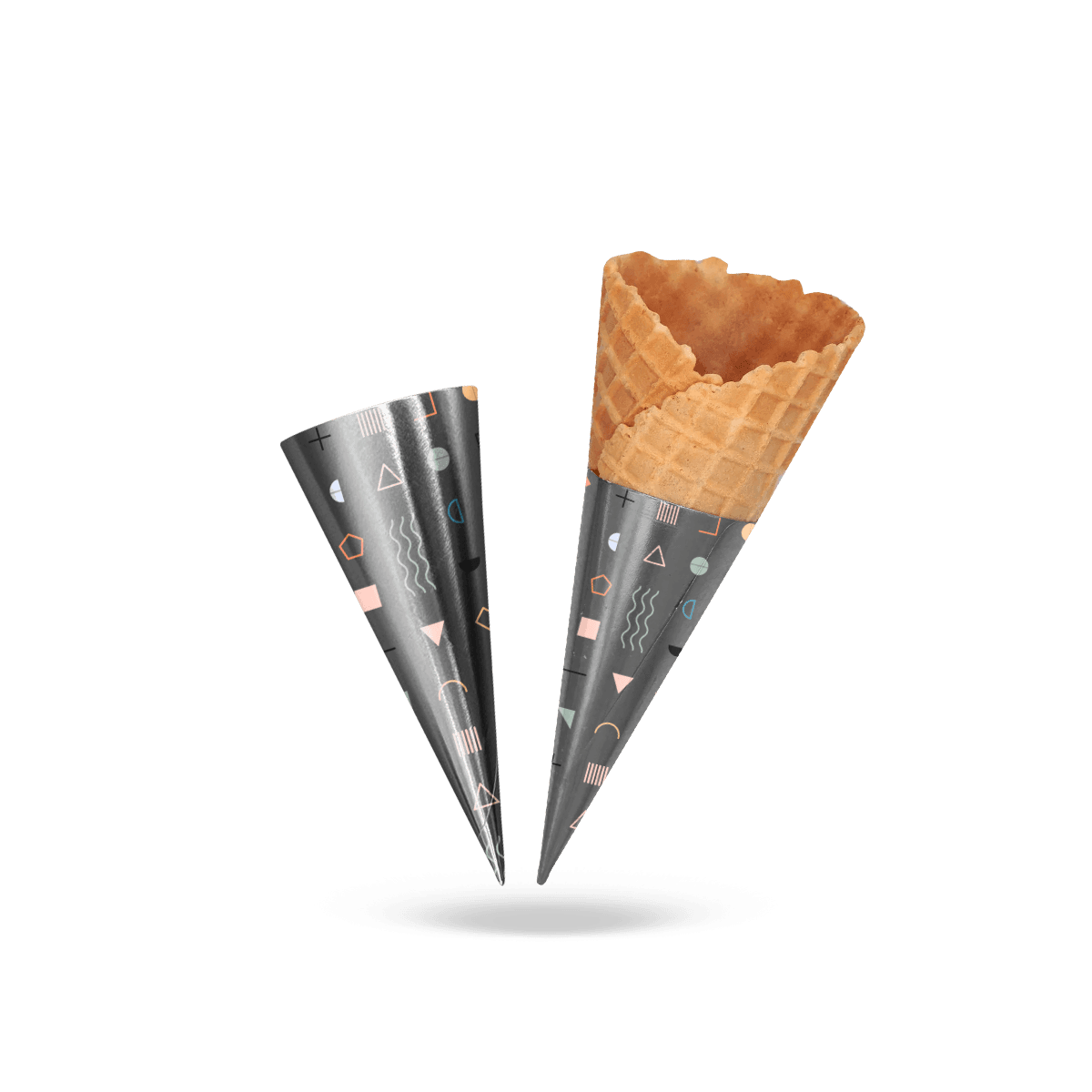
Custom Pretzel Cone Sleeves

Hold warm pretzel bites, sticks and snack portions upright with a tapered serving shape matched to portion weight, grease exposure and counter speed.

Loose Pieces Need Containment

Pretzel bites do not behave like an ice cream cone. They move independently, settle downward and can shift toward the opening as the customer walks.

That changes the job of Custom Pretzel Cone Sleeves.

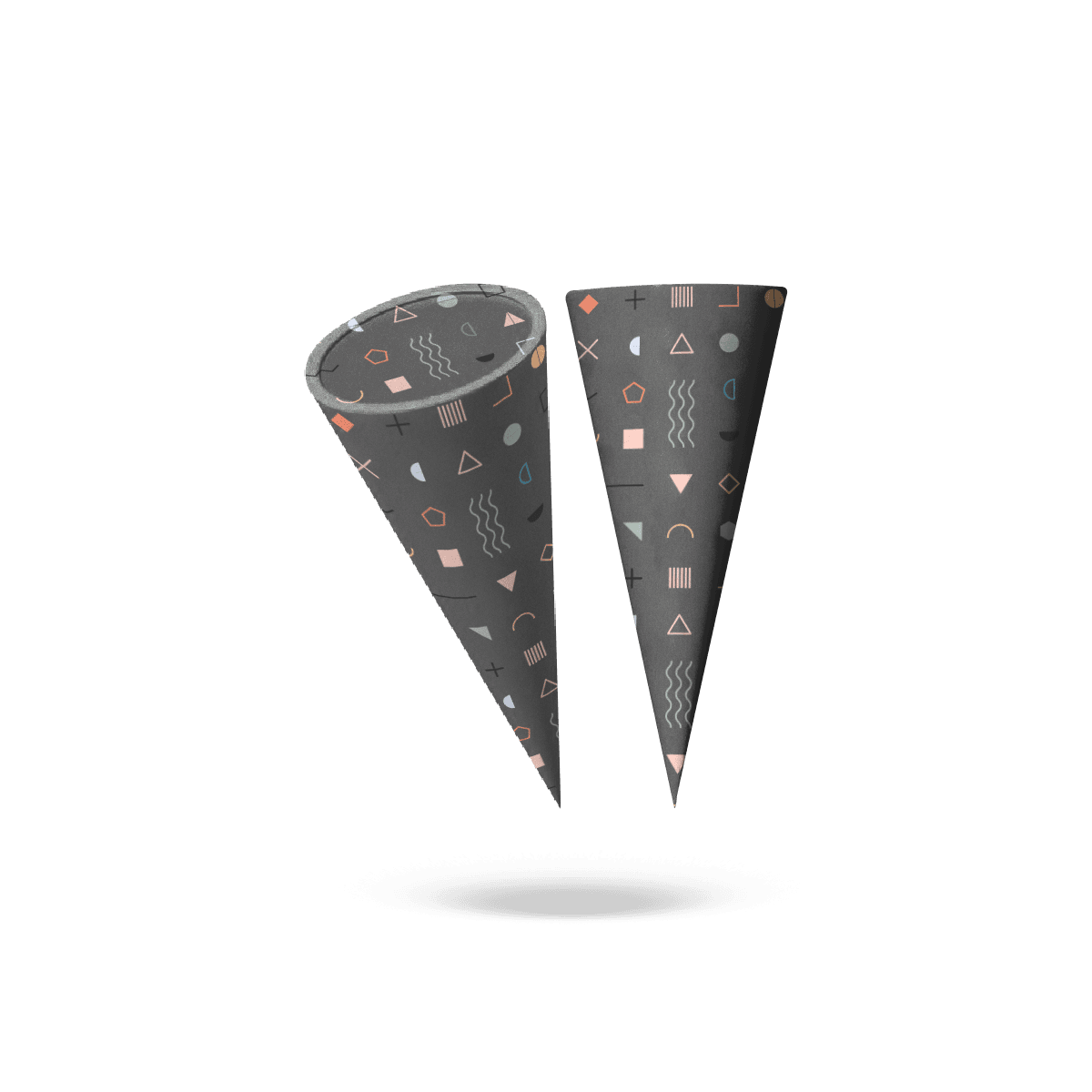
The tapered serving shape needs to gather a loose snack portion into one hand-held pack while leaving enough opening for easy filling and eating. Height, top opening and lower taper therefore matter as much as the printed surface.

A sleeve that is too narrow can slow filling and make the portion look cramped. One that opens too broadly can let bites spread outward, reducing the controlled upright presentation that makes this style practical for concession service.

The main custom cone sleeve geometry still matters, but pretzel service starts with the food portion rather than an edible cone profile.

Bites Settle Downward

Small pretzel pieces settle as the serving is carried.

That means the lower part of the cone has to support the accumulated portion without collapsing or becoming uncomfortable to grip.

A very narrow point can leave too much food concentrated higher up. A more gradual taper can distribute the portion farther down while preserving a controlled hand-held shape.

The right geometry depends on bite size and serving weight rather than a generic snack-cone dimension.

Sticks Need More Height

Pretzel sticks create the opposite problem.

Long pieces need enough sleeve height to remain gathered while still extending far enough from the opening for easy access.

If the sleeve is too short, sticks fan outward and become awkward to carry. If it is too tall, customers have to reach deep into the serving or tip the entire cone aggressively to reach the last pieces.

The sleeve height should follow the actual pretzel length and intended fill level.
Fill Level Sets the Opening

A pretzel serving is easiest to load when the top opening gives staff enough room to fill it quickly without spilling pieces across the counter.

That opening also controls how securely the food stays gathered after handoff.

Do not size it from appearance alone.

A dramatic narrow cone may look tidy while empty but become slow to fill during a rush. A very open shape may fill quickly but lose the upright containment customers expect from a hand-held snack cone.

Portion First, Sleeve Second

Start with the portion that will actually be sold.

Load the normal number or weight of pretzel bites into a prototype and observe where the food naturally settles. The filled shape gives better dimensional guidance than an empty paper mockup.

If the business sells small and large portions, test whether one sleeve can handle both without making the small portion look lost or the large portion unstable.

One size only simplifies stock when both servings still look and handle correctly.

Headspace Helps Handoff

Filling to the absolute rim makes a warm snack harder to carry.

Some open space at the top gives staff room to hand the serving over without touching the food and gives customers a clearer place to begin eating.

Headspace also matters when salt, crumbs or toppings can shift during walking.

The correct amount depends on the serving rather than a fixed percentage.

Grease Reaches the Grip

Warm pretzels may carry butter, oil, cheese residue or seasoning that moves from the food into the paper.

That matters because the same outer wall containing the snack is also where the customer holds it.

A stock that looks clean when empty can quickly become unpleasant if grease moves through to the exterior.

The material decision therefore has to follow the actual recipe and holding time.

For heavily buttered or oily servings, Grease-Proof Cone Sleeves put residue control ahead of ordinary paper performance.

Salt Is Not the Main Risk

Visible salt may make a pretzel look messy, but dry salt alone is usually less demanding on the sleeve than butter or oil carried with it.

Specify the material around the wettest or oiliest realistic serving rather than the cleanest one.

A plain salted pretzel and a butter-brushed pretzel bite portion can place very different demands on the same paper.

Sauce Changes the Pack

Cheese sauce creates a separate structural decision.

If sauce is served in an independent cup, the sleeve only needs to carry the pretzel portion. If the business wants sauce physically attached to the serving, the cup or pocket has to be supported without pulling the cone out of shape or making the grip awkward.

Do not improvise a hanging sauce cup after the cone has been created.

A dedicated pocket or carrier feature changes the dieline, balance and filling workflow. It should be treated as part of the structure from the beginning.

Warm Food Is Not Insulation

A paper sleeve creates separation between the snack and the hand, but that does not mean every paper construction should be described as thermally insulating.

Temperature at handoff depends on the food, paper thickness, coatings, number of layers and how long the serving is held.

If hand comfort is important, test the filled sleeve with the pretzel at normal serving temperature.

Grip Area Needs Structure

The lower holding area carries the weight of the portion.

Very light paper can feel soft once the cone is full, especially when grease or steam affects the stock. A firmer paper or light paperboard can improve shape retention when the serving is heavier.

The material still needs enough flexibility to form the taper cleanly.

A stock that is too stiff can produce a bulky seam or resist the curved shape.

Double Layers Need a Reason

Adding another layer can increase firmness, but it also adds material, seam thickness and cost.

Use a heavier or layered construction when testing shows that the serving actually needs it.

A well-sized single-wall piece can outperform an unnecessarily heavy cone if it fills faster, stacks better and remains comfortable to hold.

Counter Speed Favors an Open Mouth

Pretzel counters often operate differently from dessert stations.

Staff may scoop bites from a heated holding tray, add seasoning and move directly to handoff. The package needs to cooperate with that motion.

A narrow opening that requires careful placement slows the sequence.

The strongest shape lets staff fill from the normal scoop or utensil without forcing them to rearrange the food afterward.

Restaurants and concession operations often pair pretzels with other takeaway packaging, so Food, Bakery & Restaurants packaging should follow the same counter motion.

Scoop Width Matters

Check the utensil used during service.

If the scoop is almost as broad as the opening, staff may repeatedly catch the rim, spill product or damage the upper edge.

The top dimension should be set with the real filling motion in mind.

This is one of the easiest operational problems to identify with a simple working prototype.

One Hand Should Be Enough

Customers often carry concession food while walking.

The cone should remain stable in one hand without requiring the customer to squeeze it tightly or support the base with the other hand.

That requirement becomes more important at stadiums, festivals, cinemas and fairs where the customer may also be carrying a drink, ticket, phone or bag.

Crumbs Collect at the Point

Loose snacks generate fragments.

In a tapered cone, those crumbs naturally travel toward the lowest part of the serving. That is harmless until the point or lower seam creates a weak path for grease, crumbs or seasoning.

The lower closure needs enough integrity for the actual snack.

Close the Bottom Cleanly

The bottom does not need to carry liquid, but it should keep small fragments inside.

Check the formed point or lower seam with the smallest pieces likely to break from the pretzel.

A visually attractive cone that drops salt and crumbs onto the customer is not performing correctly.

Avoid a Sharp Hand Point

The lowest tip can also affect comfort.

If a stiff construction creates a hard projecting point, the cone can dig into the palm when the customer grips it low.

A small structural adjustment can preserve the tapered silhouette while making the serving more comfortable to hold.

Print Must Survive Food Service

Pretzel cone artwork has to compete with the food itself.

The snack is textured, browned and often visually busy. Dense graphics on a small cone can make the whole serving feel cluttered.

A strong logo, bold color field or simple graphic device is often enough.

Custom Printed Cone Sleeves become the better starting point when artwork architecture, color consistency and version control dominate the brief.

Front Space Is Limited

The visible print area narrows toward the bottom.

Put the most important brand element where the cone is still broad enough to read naturally. Small text placed too low becomes compressed visually and is more likely to sit under the customer’s fingers.

Short menu cues can work when they help distinguish flavors, seasonings or serving sizes.

Grease Can Change Appearance

Dark grease marks become part of the visual result when the stock does not resist the serving.

That means material testing and artwork cannot be treated as completely separate decisions.

A natural kraft design may tolerate minor tonal change differently from a clean white sleeve with large unprinted areas.

The material should still be selected for performance first.

Dipping Changes Eating Behavior

Pretzels are frequently paired with cheese, mustard or another dip.

That changes how customers use the package.

They may hold the cone in one hand while repeatedly reaching for sauce with the other. They may rest the cone temporarily on a counter or cup holder. They may tilt it more aggressively to reach the final bites.

The package needs to remain controllable through those movements.

Sauce Placement Affects Balance

If a dipping cup is attached high on one side, the serving becomes asymmetrical.

That extra weight can rotate the cone in the hand or make a flexible wall buckle.

Any integrated sauce feature should therefore be tested filled, not empty.

A sauce pocket also reduces the printable area and may change how pieces enter the main compartment during filling.

Separate Cups Can Stay Simpler

A separate sauce cup may keep the cone itself cleaner and easier to manufacture.

It can also simplify seasoning changes because the same pretzel sleeve works with several dips.

The right decision depends on how the food is served, carried and eaten rather than how many features can be added to one piece of paper.

Events Increase Walking Time

Pretzel cones often make sense where people eat while moving.

Fairs, sporting events, beer gardens, school functions and catered stations create more walking time than a seated restaurant handoff.

The sleeve may therefore remain in the customer’s hand longer and experience more tilting, squeezing and movement.

For guest and event service, Hospitality packaging should account for queue flow, carrying and branded handoff.

Longer Holds Need Better Stock

A paper that performs for two minutes at a counter may feel different after ten minutes of contact with warm, buttered food.

Test for the longest realistic customer hold rather than the fastest transaction.

Look for softening, exterior grease marks, seam movement and loss of rigidity.

Walking Exposes Overfill

A portion that looks generous while stationary can become unstable once the customer starts moving.

If bites regularly fall from the top, the answer may be more headspace or a slightly taller wall rather than a smaller opening.

The serving should remain generous without depending on perfect upright carrying.

Material Claims Need Precision

Paper, kraft and paperboard describe the base material, not the complete performance specification.

Grease behavior can depend on coatings or treatments. Direct food contact depends on the exact stock, inks, adhesives and intended use.

Do not infer a food-contact or sustainability claim from the material name alone.

Grease exposure and stock choice are recurring food packaging mistakes when the serving conditions are not tested before ordering.

Kraft Changes the Print Base

Natural kraft can fit a casual concession or bakery look, but the brown surface affects printed color.

Bright artwork and pale colors will not reproduce like they do on white stock.

If brand color accuracy matters more than the natural material appearance, a white printable surface may be easier to control.

White Stock Shows Staining

White stock gives cleaner, brighter graphics, but oil marks can also be more visible.

That does not make white stock unsuitable. It makes grease performance more important if the snack is heavily buttered or oily.

Choose the surface and barrier requirement together.

Specify the Filled Serving

Pretzel cone pricing should begin with the intended portion and structure, not a generic cone dimension.

A production brief is stronger when it includes:

  • pretzel type
  • bite or stick dimensions
  • typical portion amount
  • filled serving weight
  • required cone height
  • top opening
  • grease level
  • paper or paperboard direction
  • sauce setup if applicable
  • print coverage
  • total quantity
  • artwork versions

Use the filled-service specification for pricing rather than an empty cone estimate.

The Portion Proves the Shape

The final decision should be made with pretzels inside the pack.

Fill it normally. Carry it through the distance a customer is likely to walk. Hold it for several minutes. Eat from it. Use the dip setup. Check the final bites at the point.

That reveals whether the opening, wall height, grease control and grip work together.

A cone made for loose pretzel bites should not be approved because it resembles an ice cream sleeve. The food moves differently, carries different residue and places its weight in different parts of the structure.

Custom Pretzel Cone Sleeves earn their place when they turn a loose warm snack into a controlled one-hand serving without slowing the counter or creating a messy grip.

FAQs

Because pretzel portions usually benefit from a taller, more controlled shape. A sleeve designed around that serving style helps the product look fuller, stay neater, and move through service with less handling.

Yes. The cone shape helps keep the serving gathered, and the outer panel gives customers a cleaner hold point than carrying a loose snack portion by napkin alone.

Choose Pretzel Cone Sleeves when the priority is portion shape, upright presentation, and snack-specific fit. Grease-Proof Cone Sleeves are the better option when oil resistance is the main concern and the product leaves more visible residue on the outside.

Simple logos, bold color blocks, short menu text, and clear campaign graphics tend to read best. On a narrow sleeve, clean layout usually performs better than dense artwork.

This style fits places that sell warm snacks quickly, including cinemas, breweries, food trucks, stadiums, school events and mall snack counters where clean one-hand service matters.

Process

How it works

Your Packaging Journey, From Idea to Production and Delivery

01

Tell Us Your Specs

Custom packaging boxes

Tell Us Your Specs

Provide size, quantity, printing, and finishes.

02

Get a Fast Quote

Custom packaging boxes

Get a Fast Quote

Instant transparent pricing, no hidden fees.

03

Design and Approval

Custom packaging boxes

Design and Approval

Artwork checks, revisions, and final sign-off.

04

Produce

Custom packaging boxes

Produce

Expert manufacturing to meet deadlines.

05

Ship to Your Door

Custom packaging boxes

Ship to Your Door

Hassle-free, flexible delivery options.

Get Your Quote for Custom Pretzel Cone Sleeves

Share your product details, size, quantity and artwork needs. We’ll help choose the right packaging style and send a clear quote.