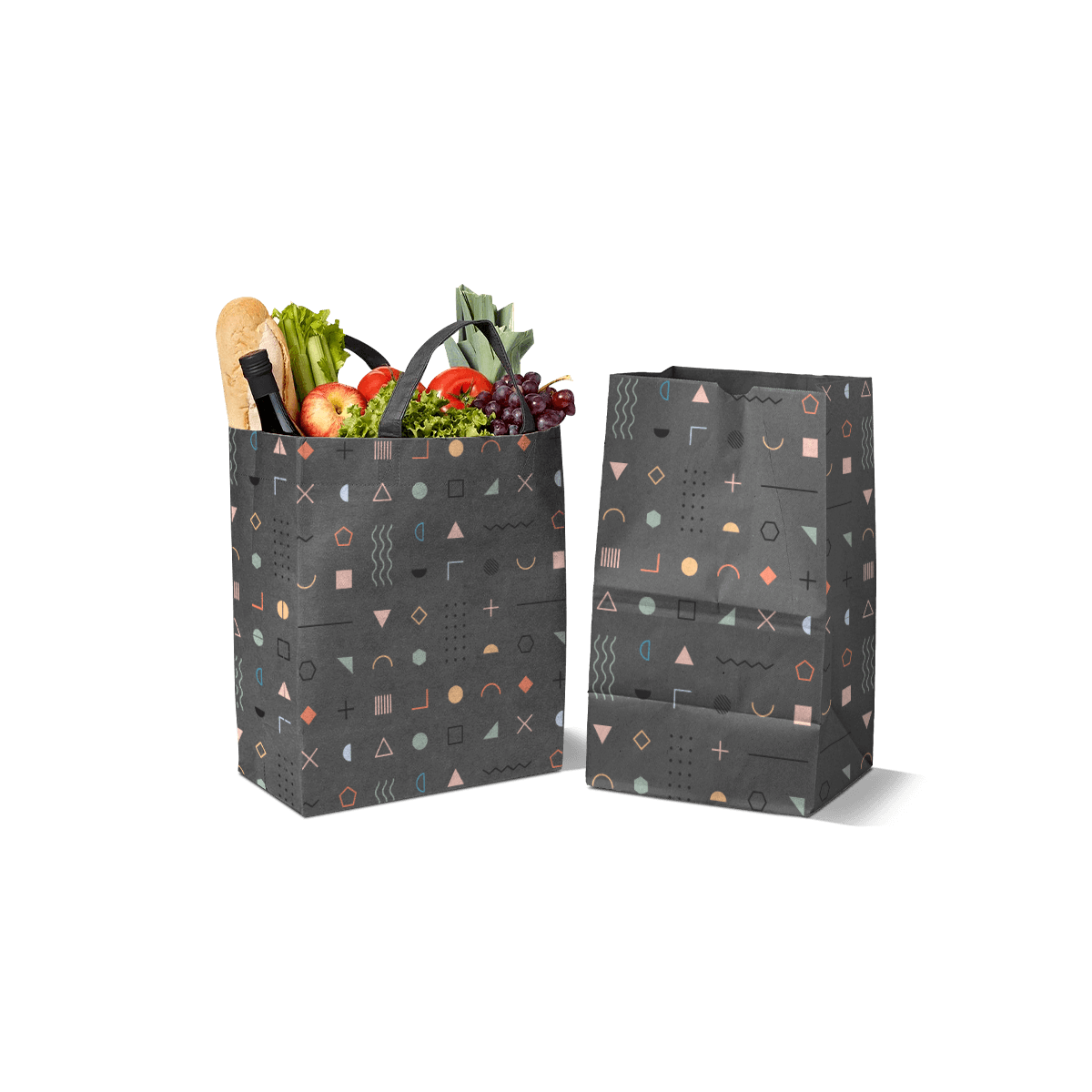
Build the Load in Layers
A grocery order rarely puts one type of stress on a paper bag. Cans concentrate weight at the bottom, boxed foods create hard corners, produce fills irregular gaps and bottles can make the entire load top-heavy. Custom Grocery Paper Bags need to work with that mixture rather than fit one neatly measured product.
Start with how employees actually bag an ordinary basket. Heavy, stable items usually establish the base. Lighter cartons and produce sit higher. Fragile foods need positions where harder packages cannot crush them.
That packing sequence determines the footprint and paper demand more accurately than total bag volume alone.
A bag can appear large enough for the order and still fail operationally if the first few heavy items distort the base before the rest of the groceries are packed.
Heavy Items Belong Low
Dense products such as cans, jars and bottles create concentrated loads. Placing them close to the bottom keeps the center of gravity lower and reduces the tendency for the bag to lean during carrying.
The base needs enough width and depth for those items to sit naturally rather than balancing on folded edges.
If the typical basket begins with several rigid products, establish their combined footprint before deciding the final bag dimensions.
Soft Items Need Separation
Bread, produce and other compressible foods should not carry the pressure from cans or rigid cartons.
The bag does not necessarily need internal partitions. A sensible footprint and packing order can often create enough separation. If employees consistently struggle to protect soft goods in the standard bag, adding another grocery size may be more useful than simply making one bag taller.