Custom wax paper does not have one reliable universal per-sheet price. Three practical pricing examples range from about $0.075 to $0.30 per sheet, and each reflects a different quantity, size and production setup. Quantity often has the biggest influence, followed by sheet size, print colors, ink coverage, paper weight and logistics.
Here are three realistic pricing examples that show how dramatically the unit cost can change:
These figures illustrate three different specifications and quantities; they should not be read as a guaranteed current rate card.

The interesting part is that the largest sheet in those examples has the lowest unit price. That is why I never recommend comparing custom wax paper by size alone. Production quantity and setup efficiency can outweigh the extra material used in a larger sheet.
In my experience, the better question is not simply, “How cheap can I get custom wax paper?”
It is, “What specification gives me the lowest practical cost without creating problems for my food, staff, storage or brand?”
That distinction can save a restaurant far more than chasing the lowest advertised price.
How Much Does Custom Wax Paper Cost?
The three example specifications range from $0.075 to $0.30 per sheet. Treat those figures as order-specific examples, not a universal market rate.
Short runs usually carry more setup cost per sheet. Large runs can fall below these examples when material, print and production yield are efficient, while specialized short runs can cost more.
There is no honest universal price because custom wax paper is manufactured to a specification.
For restaurants, bakeries and food brands ordering custom wax paper, the right specification should match the food, sheet size, grease exposure, print coverage and expected order volume rather than price alone.
Changing any of these can change the quote:
This pricing behavior is not unique to wax paper. Fixed production setup costs influence many printed packaging products. The same economics can be seen in custom printed box pricing, MOQ and quantity, where spreading setup across more units can materially reduce the unit cost.
With wax paper, however, volume matters even more because the physical product itself can be relatively inexpensive compared with the cost of preparing the press, plates, color setup and production run.
Why Quantity Changes the Price So Much
Quantity is usually the single biggest factor affecting custom wax paper cost.
Printing 1,000 sheets and printing 10,000 sheets do not require ten times as much setup work.
Before a production run begins, there may be plate preparation, machinery calibration, ink setup, registration checks, roller preparation, material loading and cleaning. Those costs exist whether the final run is relatively small or very large.
On a low-volume order, those fixed costs have to be divided among fewer sheets.
That is why you might see something like:
The exact numbers will vary, but the principle stays the same.
A Restaurant That Needed $0.12 Per Sheet
One restaurant we worked with illustrates this perfectly.
They initially wanted 1,000 custom printed sheets and had a target cost of $0.12 per sheet.
At 1,000 sheets, that target simply did not work. Too much of the unit price was being consumed by setup costs.
Instead of stripping quality out of the product or pretending we could hit an unrealistic price, we recommended increasing the quantity to 5,000 sheets.
That changed the economics of the run.
The setup cost was now distributed across five times as many sheets and we were able to achieve their target of $0.12 per unit.
For the same reason, we prefer a spec-first conversation rather than immediately quoting whatever quantity appears on the inquiry.
Sometimes the most effective way to reduce cost is not changing the product at all. It is changing the quantity.
The $0.12 result belongs to that specific order and should not be treated as a standing price for a new specification.

What Affects Custom Wax Paper Pricing?
Six factors usually explain most of the difference between wax paper quotes. Order volume is often the largest, but material construction and print setup can overtake it on specialized jobs.
1. Order Volume
Order quantity normally has the greatest financial impact.
Small runs carry heavy per-sheet setup costs because calibration, plates and production preparation are spread across relatively few units.
This creates what I call the low-volume trap.
A buyer may choose 500 or 1,000 sheets because the total invoice looks safer, yet pay materially more per sheet because the same setup is spread across fewer units.
That does not automatically mean a larger order is better. Cash flow, storage and artwork stability still matter. But MOQ should never be evaluated without looking at unit economics.
2. Sheet Size and Dimensions
Larger sheets use more paper and coating, so they generally cost more to manufacture.
A 12 × 16.5-inch sheet consumes more material than a 10 × 10-inch basket liner.
But raw material consumption is only part of the story.
Manufacturers cut sheets from larger master rolls. Certain dimensions fit those rolls more efficiently than others.
An unusual custom dimension can leave awkward trim margins that become waste. When yield falls, the customer effectively pays for some paper that never becomes usable finished sheets.
That is why changing a dimension slightly can occasionally reduce cost without making any noticeable difference in actual use.
I normally recommend starting with the food or basket size rather than choosing a dimension simply because it sounds standard.
A sheet that is too small can be even more expensive. If staff need two sheets to wrap one product properly, a cheaper sheet has immediately doubled your liner cost.
For restaurants using wax paper alongside boxes, bags and other food-service formats, food, bakery and restaurant packaging should be planned as one system rather than as disconnected supplies.
3. Number of Print Colors
Every additional print color can increase setup complexity.
Traditional custom printing may require a separate plate or cylinder for each color. A three-color design therefore involves more tooling, calibration and registration work than a simple one-color logo.
This is one of the first places I look when a customer has a tight budget.
A strong one-color design can still look highly branded, particularly when the logo is repeated consistently across the sheet.
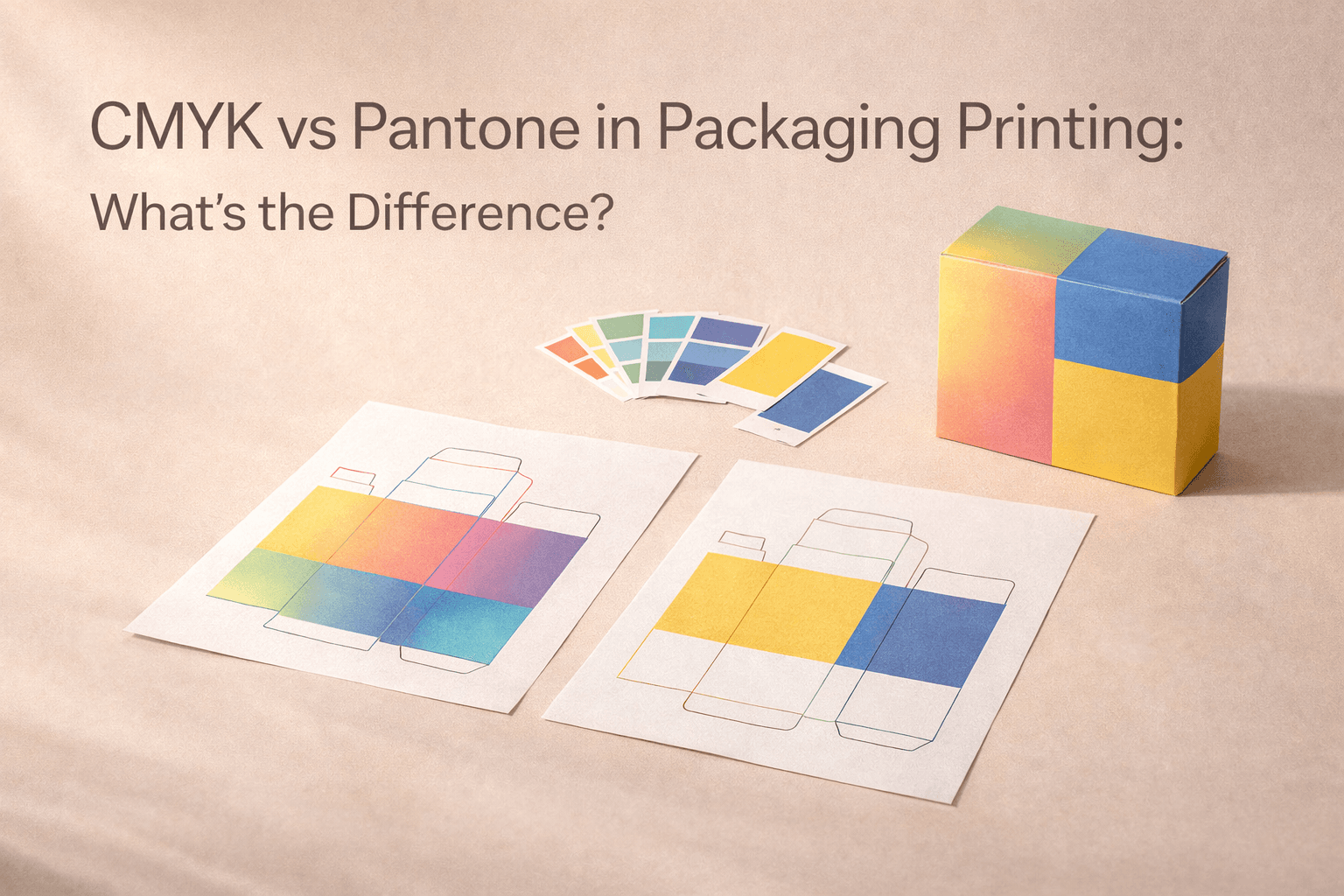
For brands coordinating wax paper with custom printed boxes, keeping Pantone colors, logo scale and print treatment consistent across both formats creates a more unified presentation without making every component overly complex.
I would rather see a restaurant execute one brand color cleanly than pay for three colors that add very little to the final presentation.
4. Ink Coverage
Two designs using the same number of colors can still have very different production costs.
A small logo repeated across a mostly unprinted sheet uses relatively little ink.
A full-flood design does the opposite. Most or all of the sheet is covered in ink, often leaving the logo or graphic elements in negative space.
That can create a striking result, but it uses much more ink and can require additional production control.
For most everyday restaurant applications, I consider a well-designed step-and-repeat pattern the better-value choice.
The logo remains visible after folding, wrapping or lining a basket without paying to cover the entire sheet in color.
5. Paper Weight and Base Specification
Paper thickness also changes price.
Custom food paper specifications may range from relatively lightweight deli-style sheets to heavier grease-resistant stocks.
In practical terms, going too light can be a false economy.
A thin sheet that tears, becomes saturated or requires doubling-up costs more in actual service than a slightly more expensive sheet that performs correctly the first time.
The correct specification depends on what touches the paper.
A dry pastry, cold sandwich and heavily sauced burger should not automatically receive the same material specification.
That same principle matters when choosing burger boxes, sandwich boxes and other food packaging. Start with how the food behaves, then choose the material.
6. Shipping and Logistics
Wax paper looks lightweight until thousands of sheets are packed into cases.
At 5,000, 10,000 or 25,000 sheets, paper becomes dense inventory. Freight can therefore make a meaningful difference to the landed cost.
That is why I do not like comparing supplier quotes using the printed product price alone.
The destination ZIP code matters.
So does the quantity per case, shipment configuration and whether additional delivery charges apply.
A low factory price can quickly become an expensive order once transportation is added.

The Biggest Pricing Mistake I See
The most common mistake is focusing strictly on the lowest possible order quantity.
I understand why businesses do it.
A new restaurant, food truck or bakery wants to protect cash. Ordering 500 sheets feels less risky than ordering 5,000.
But reducing the invoice total does not necessarily reduce the cost of using the packaging.
Imagine paying $0.35 each for 1,000 sheets when the same design could fall toward $0.07 each at 10,000.
You saved money on the initial invoice, but you bought the most expensive version of that sheet.
You also reach reorder time sooner and potentially pay another round of logistics and administrative costs.
My recommendation is to evaluate four things before choosing the MOQ:
The lowest quantity is sometimes right.
It just should not be chosen automatically.
How Many Custom Wax Paper Sheets Should You Order?
The correct quantity is a balance between production economics and operational reality.
Telling every restaurant to “buy more because it is cheaper” is lazy advice.
A massive volume discount is irrelevant if the purchase damages cash flow or leaves cases of paper sitting in poor storage conditions for years.
I use four decision drivers.
Calculate Your Burn Rate
Start with how many sheets the business actually uses.
If a burger restaurant uses 200 sheets per day, that is approximately 1,400 sheets per week.
An order of 1,000 sheets is not a serious inventory plan for that operation.
At the opposite extreme, a boutique bakery using only 50 sheets per week would need years to consume 10,000 sheets.
I also like businesses to maintain a healthy reorder buffer.
That buffer should account for artwork approvals, production scheduling, shipping variability and internal delays rather than assuming the next shipment will arrive exactly when the last sheet is used.

Match Quantity to Artwork Lifespan
Ask yourself how long the printed design will remain valid.
If the sheet includes:
a lower quantity may be smarter.
If the design is simply an evergreen logo or pattern that should remain unchanged for several years, higher quantities become far easier to justify.
One of the simplest ways to make bulk custom wax paper safer is to keep the printed design evergreen.
Put temporary messages somewhere else.
Be Realistic About Storage
Wax paper inventory needs suitable dry storage.
Do not chase a few cents of unit savings if it means stacking cases beside steam, heat or moisture in an already cramped kitchen.
A smaller urban restaurant may be better served by 5,000-sheet purchases even if the 10,000-sheet unit cost looks more attractive.
Storage has a cost too.
For carryout operations balancing multiple packaging components, coordinating liners alongside takeout boxes and custom paper bags can also make inventory planning easier.
Protect Working Capital
A well-funded multi-location restaurant can think differently from a newly opened food truck.
If a larger order reduces the unit price substantially and the sheets will definitely be used, buying 10,000 or more can make excellent financial sense.
A startup struggling to fund ingredients, staffing and marketing may have better uses for that cash.
For that business, paying a higher unit price for 1,000 sheets can be rational.
The goal is not to achieve the cheapest possible wax paper.
The goal is to achieve the best overall business outcome.
My Practical Quantity Benchmarks
As a starting point:
These are decision benchmarks, not universal rules.
A restaurant consuming 1,000 sheets every week should think differently from a bakery consuming 1,000 every five months.
When Paying More Is Worth It
Cost cutting makes sense until it begins damaging performance.
I would rather recommend a slightly more expensive specification that works reliably than help a buyer save three cents on a sheet that tears, leaks or requires staff to use two at a time.
Heavy or Moist Foods
Heavier foods and foods carrying more oil, sauce or moisture may justify a stronger paper specification.
Think about:
If the liner becomes saturated, tears during handling or sticks badly to the product, the lowest unit price has accomplished nothing.
Performance should come before a theoretical saving.
Food packaging mistakes often start when appearance is specified before grease, heat, weight and delivery conditions are understood.
Delivery Orders
Dine-in and delivery create different demands.
A basket liner used for a meal eaten immediately has a relatively short job.
Paper sitting around hot food inside closed packaging for an extended delivery trip deals with heat, steam, oil and moisture for much longer.
That can justify spending more on the correct barrier or paper specification.
Larger Sheets
A larger sheet can actually reduce operational cost if it replaces two smaller ones.
Employees also work faster when they are not fighting undersized liners during a lunch rush.
If a 12 × 12-inch sheet cannot wrap an oversized sandwich properly, moving to 12 × 15 or 15 × 15 inches may be cheaper than using two sheets every time.
Premium Printing
More print colors and full-flood artwork are not automatically wasteful.
They are worth considering when packaging presentation is an important part of the brand experience.
That may include:
If customers routinely photograph the food and packaging together, distinctive printed paper can become part of the visual identity.
But premium printing should be intentional.
Do not pay for a full-flood design just because it looks impressive on a mockup.
Where I Would Not Spend More
There are several places where I regularly think extra specification adds little practical value.
Full-Flood Printing on a Hidden Liner
If the sheet sits at the bottom of a basket and immediately disappears under fries, a solid full-color background may be unnecessary.
A simple repeating logo can provide enough branding at significantly lower print coverage.

Extra Colors for Minor Details
Adding another print color purely to make a URL, secondary phrase or social handle different from the logo can create more setup cost than branding value.
Whenever possible, incorporate secondary information into the existing spot color.
Heavy Material for Light, Dry Foods
A cookie, donut or cold deli item may not require the same heavy specification as a greasy burger.
Over-engineering the paper is still waste.
Spend according to the application.
A Practical Specification for Comparing Quotes
For a typical restaurant use case, this specification creates a useful like-for-like quote benchmark. It is not a default production recommendation; food condition and intended use still control the final material.
Use this as a comparison baseline, not a universal specification. Change the paper or barrier first when the food demands it; change the print or quantity only when the commercial case supports it.

The 12 × 12-inch format is flexible for burgers, sandwich wraps and basket lining. Mid-weight paper provides a balance between flexibility and durability. White stock gives a clean printing surface. One-color repeating artwork controls plate and ink costs while keeping the brand visible.
Then I upgrade only where the food or brand gives me a reason.
For example:
A spec-first process prevents both under-buying and over-buying.
Hidden Costs to Watch for in Wax Paper Quotes
The lowest headline price is not always the lowest final price.
When comparing quotes, I recommend checking what is included before comparing the number at the bottom.
Confirm the Paper Construction Before Comparing Prices
“Wax paper,” “deli paper” and “greaseproof paper” are often used loosely in supplier listings. A quote for a wax-coated sheet is not automatically comparable with one for grease-resistant or deli-style paper.
Match the base paper, basis weight or GSM, coating or barrier, print method and intended food use before comparing unit prices. A cheaper number may simply describe a different product.
Freight Excluded From the Quote
One supplier may quote only factory pricing while another includes transportation.
Those numbers cannot be compared directly.
For large paper orders, freight can materially change the landed cost.
Ask for the amount you will actually pay to get the finished product to your ZIP code.
Plate or Cylinder Charges Added Later
Custom print setup may require dedicated plates or cylinders.
First-time tooling charges can sometimes be quoted separately from the unit price.
The important question is:
“Are all printing plate, cylinder or setup charges included and will any of them apply again when I reorder?”
You want that answer before approving the order.
Cheaper Paper Hidden Inside the Specification
A low quote may be based on lighter paper than the specification you requested.
If one supplier quotes 28 lb paper and another quietly quotes 18 lb material, you are not comparing the same product.
Always confirm the basis weight or GSM.
Different Case Counts
Never compare wax paper only by the case price.
One supplier may pack 5,000 sheets per case while another packs 4,000.
Convert everything to a per-sheet basis.
Color Matching Charges
If exact brand color matters, provide the PMS specification at the beginning.
Do not assume every quoted print price includes exact color matching.
Complete specifications reduce surprises. The details needed for a custom packaging quote follow the same logic: dimensions, quantity, material, printing and destination make pricing much more reliable.
How to Compare Wax Paper Quotes Properly
I compare wax paper on landed cost per usable sheet, not on the advertised unit price.
Before deciding that Supplier A is cheaper than Supplier B, make sure both quotes use the same:
Then use a very simple calculation:
Total landed cost ÷ total finished sheets = true cost per sheet.
Even that number should not be viewed in isolation.
If the cheaper paper tears and your kitchen routinely uses two sheets instead of one, the real cost has doubled.
If an undersized sheet slows wrapping, labor is part of the cost.
If poor grease resistance damages outer packaging, that matters too.
Good purchasing decisions look beyond the supplier invoice.
What Do You Need for an Accurate Wax Paper Quote?
The fastest way to get reliable pricing is to send enough information for the manufacturer to quote the actual product rather than guess at the specification.
Exact Sheet Dimensions
Provide width × length in inches.
Examples might include:
Also specify whether you need flat pre-cut sheets, interleaved sheets, dispenser-style configurations or rolls.
Quantity
Ask for several tiers if you are flexible.
I particularly like comparing quantities such as:
Seeing multiple tiers immediately shows where meaningful price breaks occur.
Paper and Coating Specification
Tell the supplier whether you have a preference for:
If you do not know the specification, describe the food instead.
A competent packaging supplier should help connect the application to the material rather than expecting every restaurant owner to understand paper engineering.
Printing Details
Provide:
Artwork does not necessarily need to be production-ready before the conversation begins. What matters initially is understanding what you want the finished sheet to look like.
Intended Food Use
This is one of the most important details people forget.
Tell the supplier what will actually touch the paper.
For example:
That context helps determine whether the requested material makes sense.
If your business requires specific food-contact, environmental or other documentation, mention those requirements before pricing so the correct material and production specification can be reviewed.
ZIP Code and Timing
Provide the delivery ZIP code and the date by which you need the order.
Both can influence the final quote.
When the core specification is ready, you can request a custom packaging quote using the size, quantity, artwork and application details you already have.
Should You Order 1,000 or 10,000 Sheets?
Choose based on usage, artwork stability, storage and cash flow, not on unit price alone.
If you are launching a new food truck and may change the logo in three months, paying more per sheet on 1,000 units could be financially smarter than owning 9,000 obsolete sheets.
If you operate three busy restaurant locations using thousands of liners every week and the logo has not changed for years, repeatedly buying 1,000 sheets is difficult to justify.
The best quantity is where:
That is how I think about MOQ.
Not as “What is the smallest quantity the factory will accept?”
But as “At what quantity does this purchase make sense for this business?”
Is Custom Wax Paper Worth the Cost?
For many restaurants, bakeries, cafés and food brands, it can be.
A custom printed sheet performs two jobs at once.
It handles the food and creates a branded surface.
Wax paper works best when its role is defined alongside the rest of the pack, so the liner, carton, bag and insert each have a clear job instead of every packaging component carrying the same branding burden.
That makes wax paper particularly useful in situations where a fully custom primary container would be more expensive or where the food is already served in baskets, trays, bags or standard boxes.
A repeated logo can turn a plain food presentation into something recognizably yours without requiring every component to carry complex printing.
For burger-focused concepts, wax paper can work alongside branded burger packaging. For mixed carryout orders, it can complement takeout packaging and printed carry bags.
The objective is not to brand every square inch.
It is to put branding where the customer actually notices it.

Use Cost per Service, Not the Cheapest Sheet
The pricing examples span $0.075 to $0.30 per sheet, but the useful number is the landed cost of a sheet that performs correctly for the food and service job. Treat any per-sheet figure as specification-specific, not as a universal rate.
Quantity will usually have the greatest effect on the price.
After that, focus on dimensions, print colors, ink coverage, paper specification and landed logistics cost.
The biggest mistake I see is ordering the minimum simply because it creates the smallest invoice.
Sometimes 1,000 sheets are absolutely the right decision. Sometimes increasing that order to 5,000 can change the economics completely, as it did for the restaurant we helped reach its $0.12-per-sheet target.
My preferred approach is simple: specify the paper around the food first, calculate how quickly the business will use it, keep the artwork evergreen where possible and then compare multiple quantity tiers.
At Custom Packly, that is the role we want to play. Not simply taking a size and sending back a number, but helping restaurants and food brands understand how the specification itself affects cost.
When quantity, material, artwork and production efficiency are planned together, custom wax paper becomes much easier to budget, scale and reorder without paying for features the business does not actually need.