Skip to content
Details

Custom Burger Boxes

Burger packaging planned around bun clearance, grease migration, closure pressure, fast kitchen packout and delivery-bag stacking.

Hold the Burger Upright

A burger is a soft, stacked product that changes shape as soon as the lid closes. The bun compresses, sauces move, loose toppings shift and a tall build can lean before the order reaches the pickup counter. Custom Burger Boxes need enough internal space to contain that movement without giving the burger so much room that it slides across the base.

Start from the finished burger, not the bun diameter on a supplier sheet. Measure the widest assembled footprint and the tallest realistic build after the patty, cheese, vegetables and sauces are added. A double stack or brioche burger can need very different headroom from a thin smash burger using the same bun diameter.

The aim is not maximum empty space. It is a controlled envelope that keeps the lid off the crown bun, leaves room for normal ingredient variation and limits sideways travel during carrying.

Headroom Has a Limit

Too little headroom lets the lid press into the bun and can push toppings outward. Too much headroom creates unnecessary volume and gives a tall burger more room to tip.

A useful fit check closes the carton over a production-representative burger without forcing the lid. Press lightly on the lid where another meal box might sit during staging. If that pressure transfers directly into the bun, the structure needs more clearance or better load support around the food.

Sauce Moves Under Pressure

Sauce is not only a grease issue. Closure pressure can drive it toward the wrapper, sidewall or locking edge. Loaded burgers with multiple sauces, melted cheese or soft toppings need enough lateral space that closing the box does not squeeze the build.

This is especially important when staff wrap the burger before boxing it. The packed footprint is the wrapped burger, not the unwrapped menu item.
One Motion at the Counter

Kitchen speed depends on how many actions are required between loading the burger and staging the order. A hinged carton can let staff place the burger, fold the lid and close the lock in one short sequence. A more complex folding structure may store efficiently but add handling steps during a rush.

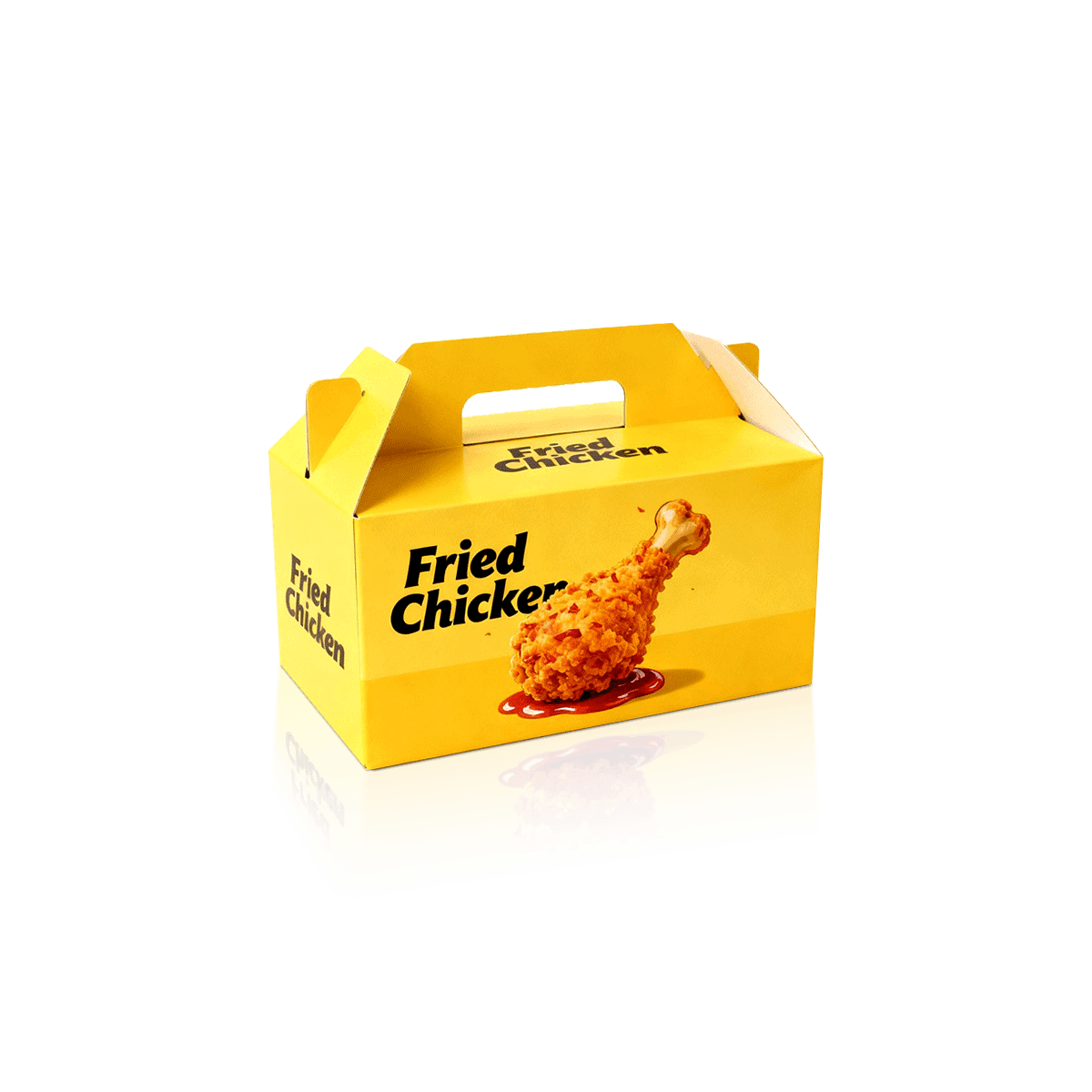
A one-piece hinged pack is the core behavior behind Clamshell Food Boxes. For burger service, the important question is whether the hinge, sidewalls and front lock work cleanly around the burger height and grease level.

Preassembly Changes Labor

Some folded cartons can be staged before service while others are formed as each order is packed. Neither method is automatically better. Preassembly uses counter or shelf space. On-demand forming keeps blanks flat longer but adds a task at the busiest point in service.

Test the intended closing sequence using gloved hands if that matches the kitchen routine. Small tabs that feel easy at a desk can behave differently when staff are moving quickly.

Locks Need Clean Contact

A front tuck or locking tab should engage without pushing the lid downward into the burger. Grease or sauce should also stay away from the locking area as much as the structure allows. A closure that becomes slippery or distorted during service can pop open in a delivery bag.

Map the Grease Path

Grease rarely spreads evenly across a burger box. It tends to concentrate under the patty, around cheese and sauce contact points and near any wrapper edge where oil migrates onto the board. That makes the base panel the first place to assess rather than treating every surface as though it has the same exposure.

Grease-resistant board, a suitable barrier treatment or a liner can reduce visible staining and board softening. The exact board, coating, adhesive, ink and any direct-food-contact surface still need to be confirmed for the intended use before production. A material name alone does not establish suitability for direct food contact.

The structure also matters. A base crease sitting under the greasiest part of the burger can become a weak point as the board absorbs oil and moisture. Moving the food footprint, adjusting the base design or changing the barrier approach may be more effective than simply increasing board thickness.

Steam Changes During Holding

A burger continues releasing heat and moisture after it is boxed. Venting can help moisture escape, but more open area is not automatically better. A short counter handoff, a ten-minute pickup and a longer delivery route create different conditions inside the carton.

The burger itself matters too. A toasted bun, fried chicken burger, smash burger and vegetable-heavy build release different amounts of moisture. Vent placement should therefore follow the menu item and expected closed-box time rather than a decorative perforation pattern.

Counter and Delivery Differ

Counter service may prioritize fast closure and clean handoff because the box remains closed briefly. Delivery places more emphasis on what happens after several minutes inside a paper bag or insulated delivery bag.

Run the vent decision beside the hold-time decision. Pack a real burger at normal serving temperature, close the box and inspect bun texture, condensation and carton stiffness after the typical service interval. That is the point where vent size or position can be adjusted with evidence from the actual menu.

Load Travels Around the Burger

Delivery stacking adds vertical pressure that a dine-in handoff may never create. The top panel can bow under another box, especially if the carton has a broad unsupported lid. If the lid deflects far enough to touch the bun, the burger begins carrying part of the stack load.

Strong sidewalls, corner geometry and the relationship between lid span and burger height determine whether pressure travels around the food or into it. This matters more for tall burgers because the available clearance disappears sooner.

Do not test only an empty carton. Stack the number of packed boxes that staff actually place in one holding area or delivery bag. Check the bottom carton for lid deflection, corner collapse and closure release.

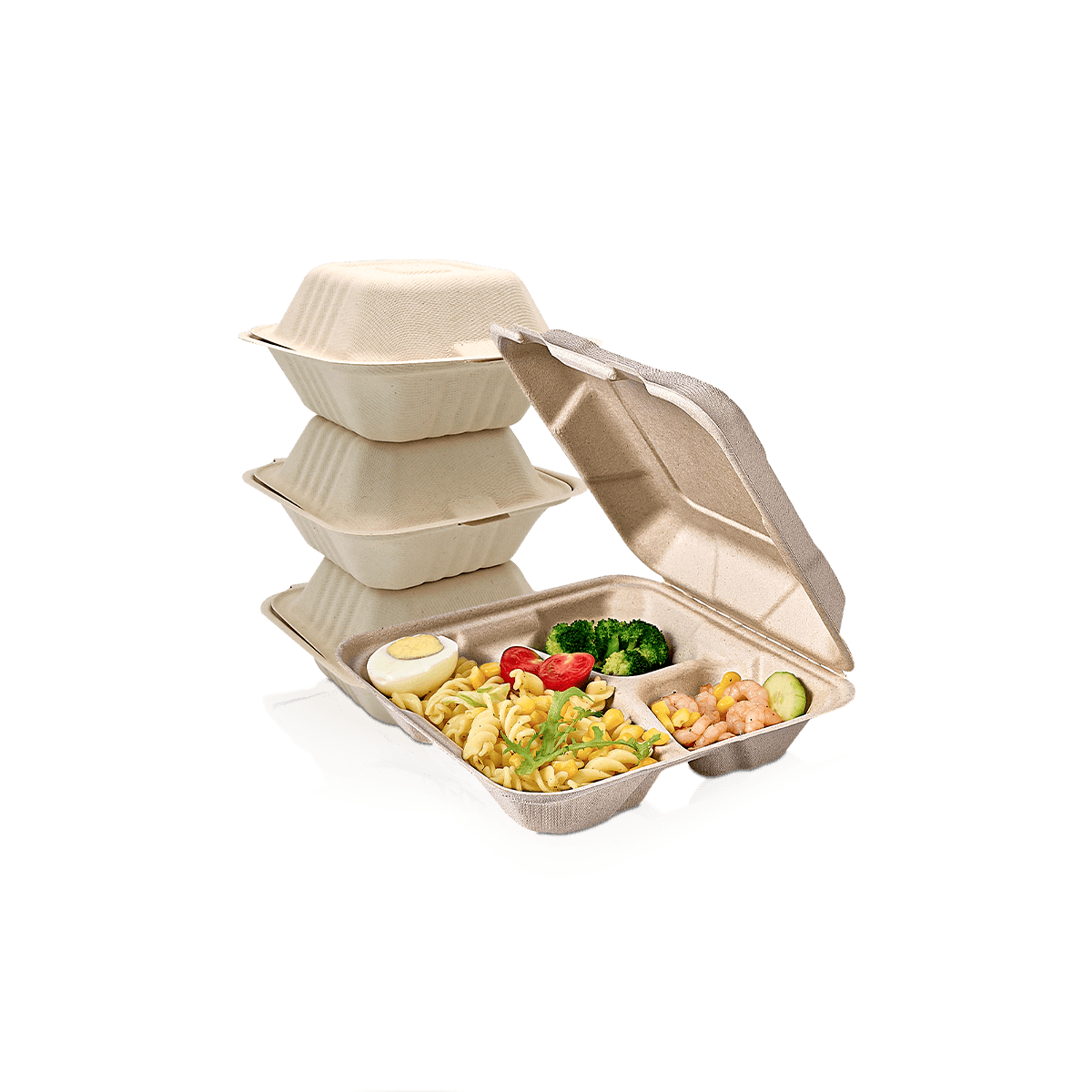
For heavier meals that combine a burger, fries and multiple sides in one pack, Takeout Boxes may handle the load more cleanly than enlarging a burger carton until it becomes a general meal container.

Singles, Doubles and Sliders

One restaurant may have three burger footprints but five finished heights. A sensible box program groups menu items by packed geometry instead of assigning a new carton to every recipe.

Singles and doubles can sometimes share a footprint while using different headroom. Sliders create another decision because the pack may need to stop several small burgers from colliding rather than protect one central stack. A multi-slider carton can use a tighter tray footprint, separators or individual wraps depending on how the food is served.

Custom Packly's USA MOQ starts from 100 boxes, which makes it possible to separate a genuinely different burger size without forcing a very large initial run. The extra SKU still needs a reason: better fit, cleaner service or a distinct meal configuration.

Combo Meals Need a Boundary

Putting fries, sauce cups and a burger into one oversized burger box can create new problems. Fries can press into the bun, sauce cups can tip and empty areas let items move.

If the meal is meant to arrive as one unit, define the internal positions before increasing the outer dimensions. If the burger performs better in its own carton, keep the burger pack compact and let the outer carry system handle the rest of the order.

Slider packs deserve their own movement check. Several small burgers can migrate as a group even when each one fits the depth. If the pack is likely to be carried vertically in a paper bag, confirm that wrappers, dividers or the carton footprint keep the row from collapsing toward one end.

Print Around Handling Zones

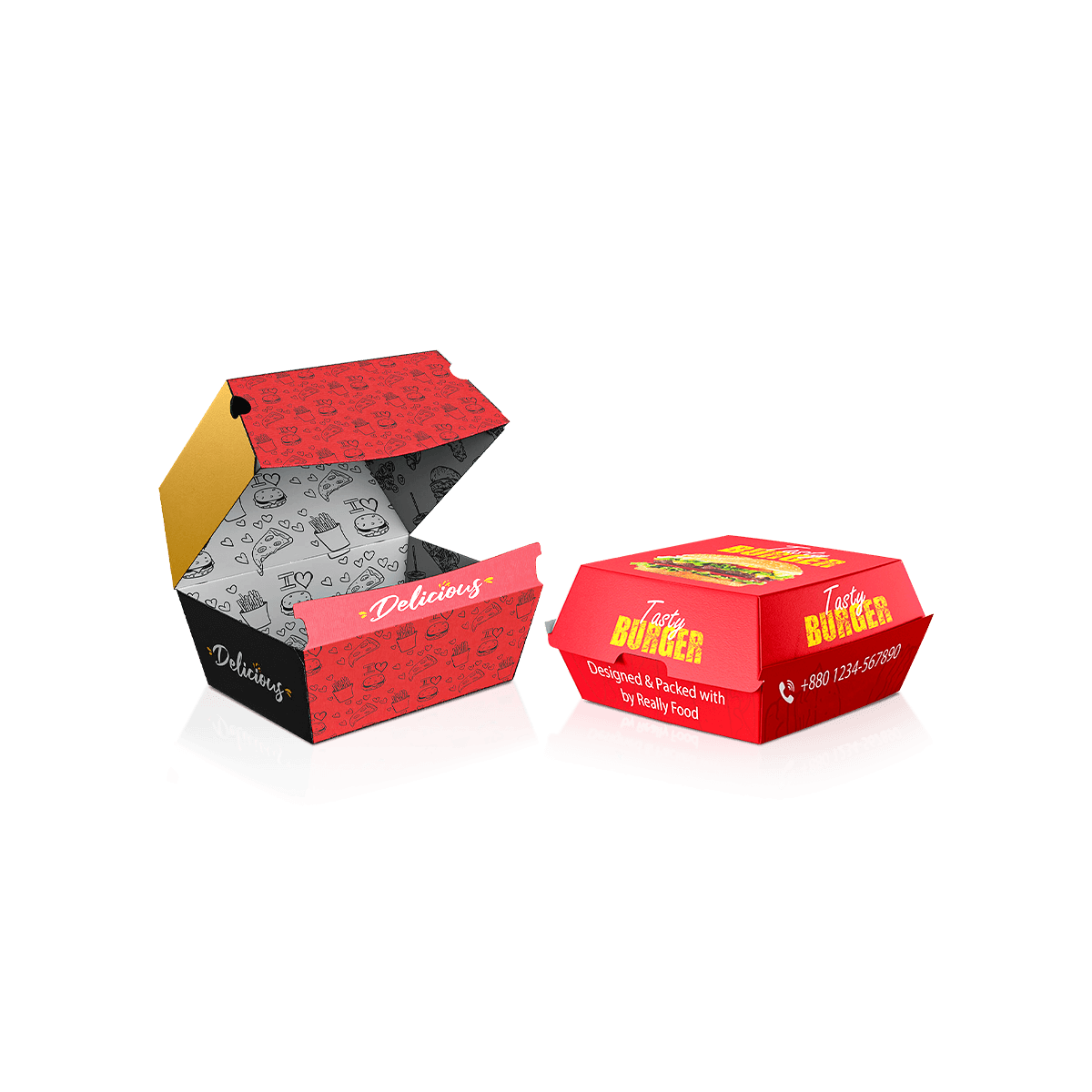
Burger packaging is handled on the base, lid edges and front closure, so artwork should account for where fingers, grease marks, stickers and order labels normally land. The cleanest branding zone is often the lid center, but the final layout depends on how the box is stacked and bagged.

Use side panels for short identifiers that still need to be visible when several boxes are stacked. Keep QR codes away from creases, locks and corners that distort during assembly. Small legal or product text needs enough contrast against kraft or printed backgrounds to remain readable after production.

Custom folding cartons can support full-panel artwork when the burger structure is produced as a printed paperboard carton.

Free design and dieline support can help place logos, QR codes and panel copy on the final structure. Free 3D mockups can check orientation before production and premium offset printing can suit artwork that needs controlled color and fine detail.

Control Rush-Hour Packout

A good burger box should disappear into the kitchen routine. Staff should know which blank to grab, how to form it and how to close it without stopping to correct tabs or reshape sidewalls.

Flat storage matters because a high-volume restaurant may keep several sizes close to the line. Similar-looking blanks can slow picking if size identification is weak. A discreet size code on a flap, bundle label or non-customer-facing panel can make the correct carton easier to spot.

For multi-location operations, the 4–6 day turnaround can support planned replenishment once artwork and specifications are approved. Larger repeat orders can also use warehousing and scheduled deliveries where staged supply fits the restaurant's storage constraints.

Packout Exposes Weak Creases

Score lines need to fold cleanly without excessive cracking or resistance. If staff have to over-bend a crease to make the carton square, assembly becomes inconsistent and print near the fold may suffer.

Check the actual packout sequence before final approval. The important signs are simple: the box forms quickly, stays square, closes without touching the burger and remains closed when lifted or bagged.

Price the Service Setup

Pricing becomes meaningful after the operating choices are known. Interior dimensions, carton style, board direction, grease-control requirement, print coverage, quantity per size and the number of designs all affect the production setup.

A restaurant using one carton for 80% of orders has a different production mix from a chain splitting volume across sliders, singles and tall premium burgers. Quantity should therefore be stated by size and artwork version rather than as one combined total.

Once those decisions are defined, request an instant custom packaging quote using the actual burger mix. Free shipping applies to USA orders and US production supports local order planning.

Separate Burgers From Full Meals

A burger box earns its place when the burger itself is the main object that needs containment, headroom and grease control. Once the carton has to organize fries, side dishes, cups or multiple entrées, a different food pack may solve the meal more cleanly.

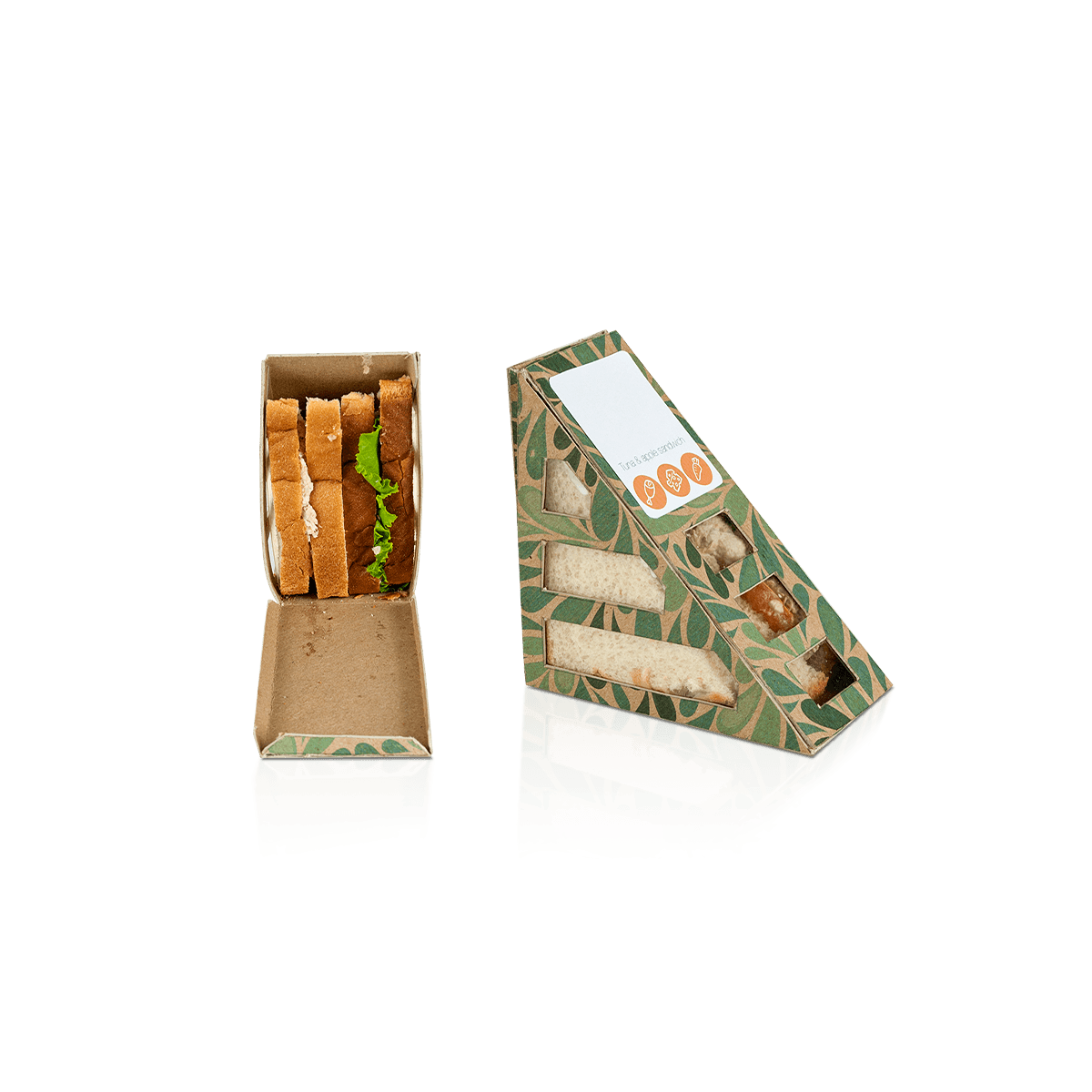
Hot sandwiches with similar height can sometimes use burger-style structures, but prepacked wedges and cooler merchandising behave differently. Sandwich Boxes fit that slimmer retail and grab-and-go role.

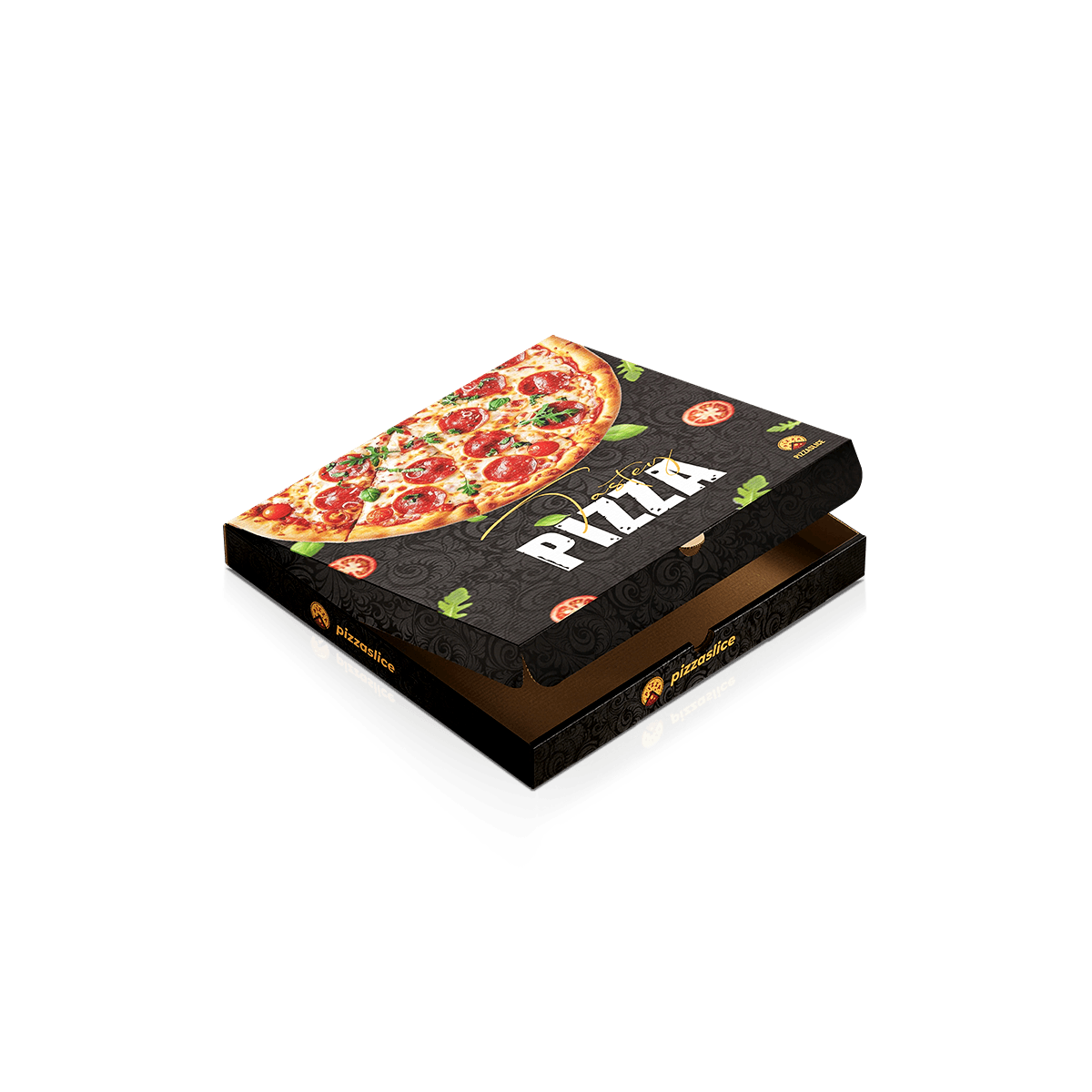
Pizza creates a broad, shallow load with different stacking and moisture behavior, so Pizza Boxes remain a separate restaurant structure even when the same operation sells both foods.

The final burger-box decision is therefore not simply kraft versus white board or printed versus plain. It is whether the carton protects the assembled burger without becoming slower, larger or more complicated than the kitchen needs.

FAQs

The right size depends on the burger width, height and whether fries or sauces go inside. Send the product size and serving style, and the box dimensions can be recommended around the actual burger rather than guessed from a standard size.

Yes, grease-resistant burger boxes are worth it for juicy burgers, saucy builds, loaded toppings and delivery orders. They help reduce oil marks and softening, which keeps the packaging cleaner during handoff and transport.

Choose kraft burger boxes when you want a natural, casual or eco-minded look. Choose white paperboard when you want brighter full-color artwork, cleaner logo contrast or a more polished printed surface. Both can work well when matched to the restaurant’s brand style.

Yes, burger boxes can be printed with logos, brand colors, patterns, QR codes and full-color artwork. Simple logo printing works for minimal branding, while full-coverage designs help takeout and delivery orders feel more recognizable.

Burger boxes usually give more room for branding and a cleaner boxed presentation, while Clamshell Food Boxes are practical for fast-service meals and hinged-lid convenience. The better choice depends on burger height, grease level, speed of service and how the meal is handed to customers.

Process

How it works

Your Packaging Journey, From Idea to Production and Delivery

01

Tell Us Your Specs

Custom packaging boxes

Tell Us Your Specs

Provide size, quantity, printing, and finishes.

02

Get a Fast Quote

Custom packaging boxes

Get a Fast Quote

Instant transparent pricing, no hidden fees.

03

Design and Approval

Custom packaging boxes

Design and Approval

Artwork checks, revisions, and final sign-off.

04

Produce

Custom packaging boxes

Produce

Expert manufacturing to meet deadlines.

05

Ship to Your Door

Custom packaging boxes

Ship to Your Door

Hassle-free, flexible delivery options.

Get Your Quote for Custom Burger Boxes

Share your product details, size, quantity and artwork needs. We’ll help choose the right packaging style and send a clear quote.