A packaging specification can look precise and still be incomplete. “350 GSM,” “18 pt,” and “0.018-inch caliper” may all appear to describe board thickness, but they do not describe the same physical property.
The practical distinction is simple: GSM tells you how much a square meter of paper or board weighs. Caliper tells you how thick the sheet is under defined measuring conditions. PT, in US packaging, is a convenient way of stating that caliper in thousandths of an inch.
That difference matters because two boards can have the same GSM and different thickness, stiffness, folding behavior and feel. It also means a GSM-to-PT chart should be treated as an estimate for a particular stock, not as a universal conversion formula.
The Custom Packly approach is to specify board around the job the package must do, then confirm the actual stock rather than buying a number in isolation.
Quick Answer: GSM and PT Are Not the Same Measurement
GSM means grams per square meter. It measures grammage, or mass per unit area.
PT means points. In paperboard packaging, one point equals 0.001 inch of thickness. A 16 pt sheet is therefore nominally 0.016 inch thick, and a 24 pt sheet is nominally 0.024 inch thick.
Caliper is the physical thickness of the sheet. It can be stated in points, mils, inches, millimeters or micrometers depending on the supplier and market.
So the useful mental model is:

If the structure itself is still undecided, Packaging Styles helps separate cartons, rigid boxes, mailers, shipping boxes, tubes, bags and pouches before the board specification is locked.
What GSM Actually Tells You
Grammage answers a weight question. If a board is rated at 350 GSM, one square meter of that material has a mass of 350 grams under the stated test conditions.
That is useful for procurement, material consistency, yield calculations and comparing papers that belong to the same grade or construction. It is also much cleaner than US basis-weight terminology when you are comparing materials internationally, because basis weight can depend on the paper type and its traditional parent-sheet size.
But GSM does not directly tell you how thick a sheet will feel between your fingers.
A dense, highly compressed board can pack more fiber into a thinner sheet. A bulkier board can achieve a similar GSM at greater caliper. Coatings, furnish, recycled content, refining and mill process can change the relationship again.
This is why I would never approve a packaging board from GSM alone when structure matters.
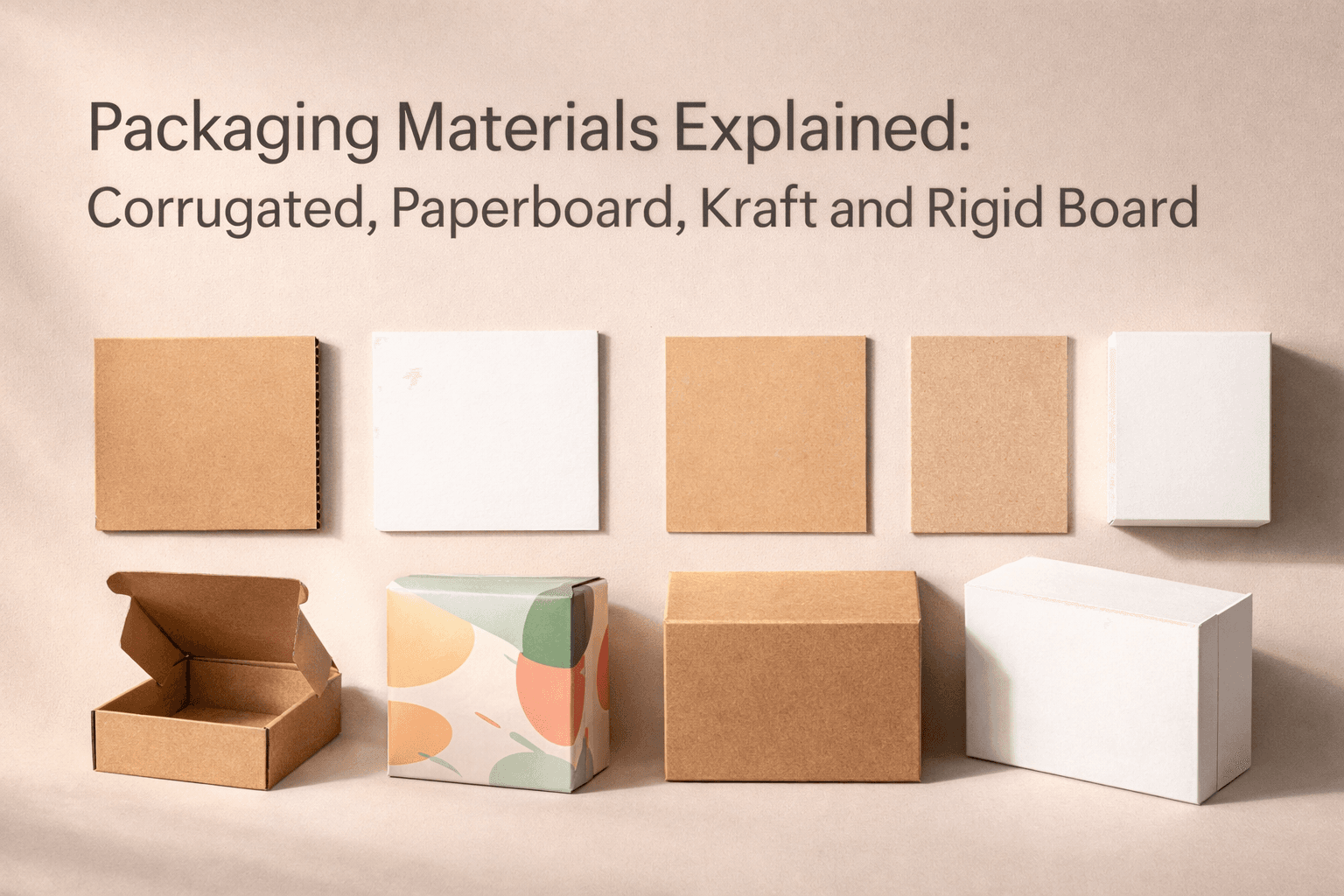
Before choosing caliper, separate the material systems in Packaging Materials: Corrugated, Paperboard, Kraft and Rigid Board. The same number means very little if the underlying board type is different.
What PT and Caliper Actually Tell You
PT is easier to visualize because it maps directly to thickness.
One point equals 0.001 inch.
That means:
The conversion from PT to millimeters is mathematical: multiply PT by 0.0254.
The conversion from GSM to PT is not mathematical in the same way because GSM measures mass per area, not thickness.

There is another source of confusion. A packaging “point” is not the same thing as a typographic point used for font sizes. In packaging stock specifications, PT is shorthand for thousandths of an inch.
For retail paperboard, Custom Folding Cartons show why caliper cannot be separated from closure style, blank layout, crease design and the product load.
Why GSM-to-PT Conversion Charts Can Mislead You
Conversion charts are useful when they are tied to a named stock. They become dangerous when they are treated as material law.
Suppose two suppliers both quote 350 GSM paperboard. One sample measures close to 16 pt. Another measures noticeably thicker. Neither figure automatically proves that one supplier is wrong.
The boards may differ in density, fiber composition, coating, bulk or manufacturing process.
The reverse problem also happens. Two 18 pt boards can have similar caliper but different grammage, stiffness and surface behavior.

That creates three common purchasing mistakes.
Mistake 1: Assuming Higher GSM Always Means a Stiffer Box
Higher grammage usually means more material per square meter, but stiffness is not a one-number property.
A carton panel behaves as part of a structure. Board grade, grain direction, panel span, crease placement, closure design and product support all affect whether it bows, buckles or stays square.
Mistake 2: Using a Conversion Chart as the Purchase Specification
If a quote states only “400 GSM” and your approved sample was selected for its 18 pt feel, you have left room for a different stock to appear later.
The safer specification records the board grade, grammage, caliper and any approved sample or material code that matters to repeat production.
Mistake 3: Believing Thickness Alone Equals Strength
A thicker carton can still fail if the bottom lock is wrong for the load, the grain direction works against the crease, or the product creates a concentrated pressure point.
That is why Custom Product Packaging starts from the actual product dimensions, weight, fragility and route to the customer rather than from a preferred board number.
How Thick Should a Folding Carton Be?
There is no single correct PT value for folding cartons. The sensible answer is a starting band followed by structural validation.
For many printed paperboard cartons, roughly 14 pt to 24 pt is a useful commercial starting area. The right point inside that area depends on box size, product weight, unsupported panel span, closure, inserts, print and finish requirements.
As a practical starting point:
These are selection starting points, not engineering guarantees.
A compact 16 pt carton can feel very firm because the panels are short. A large 18 pt carton can feel weak because the broad faces have more room to flex. A well-designed insert can reduce panel stress more effectively than simply adding two points of board.
If you are comparing several box structures rather than one carton format, Custom Boxes gives a cleaner starting point for matching paperboard, corrugated and rigid formats to the packaging job.
A Typical Folding-Carton Case: Same GSM, Different Result
Consider a skincare brand requesting a 350 GSM folding carton for a glass dropper bottle.
Supplier A sends a board that feels crisp, scores cleanly and keeps the front panel flat. Supplier B sends another 350 GSM board that feels softer and slightly bulkier. The buyer assumes Supplier B substituted a lower grade because the carton behaves differently.
That conclusion may be wrong.
The more useful comparison is:
The lesson is not “choose the thicker one.” The lesson is to compare like for like.
Thickness Has to Match the Dieline
Changing board caliper after artwork and dieline approval can create structural problems that are easy to miss on screen.
Thicker stock changes how material bends around a score. It can affect panel take-up, tuck fit, lock engagement, glue-flap behavior and the clearance around an insert.
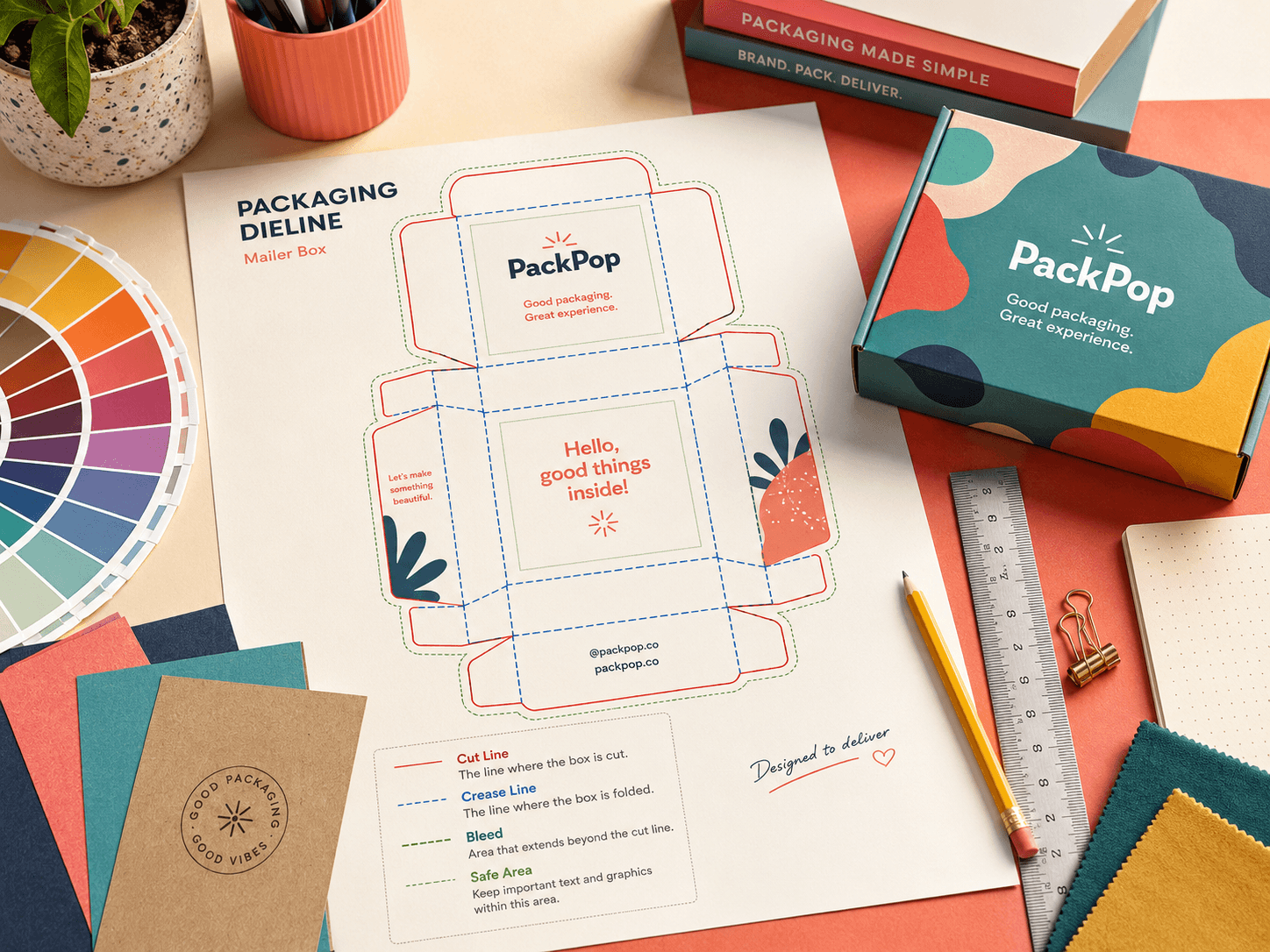
The technical relationship between board and crease geometry is covered in What Is a Packaging Dieline?.
Once dimensions and caliper are fixed, the Dieline Generator can be used to review the flat structure before final artwork is treated as production-ready.
This is one reason I do not like the sequence “design first, choose material later.” The board is part of the engineering input, not a decoration decision at the end.
Grain Direction Can Matter as Much as Two Extra Points
Paperboard is directional because fibers tend to align during manufacture. That creates a machine direction and a cross direction, and the sheet will not behave identically both ways.
For a folding carton, grain direction can influence:
A buyer who upgrades from 16 pt to 18 pt but ignores grain direction may spend more money and still dislike the result.

This is where supplier communication matters. Ask how the blank will be laid out on the sheet and whether grain direction is controlled for the structure being produced.
Finishes Can Change How the Same Board Behaves
Lamination, coating, foil, embossing and other finishing steps affect more than appearance.
A laminated sheet becomes a composite of board, film and adhesive. Heavy embossing locally deforms the stock. A dense foil area can create different surface behavior around scores. Soft-touch and anti-scuff systems can alter how the finished pack handles, rubs and folds.
Surface effects such as matte, gloss, spot UV, foil and embossing should therefore be evaluated on the actual board intended for production.
Production choices such as printing, coatings, foil, embossing and insert work sit under Packaging Capabilities, where material and structural decisions can be reviewed together.
Rigid Box Thickness Is a Different Conversation
A rigid setup box should not be specified like a folding carton.
The structural core is commonly greyboard or chipboard measured in millimeters rather than thin paperboard caliper. Commercial rigid boxes often use cores around 1.5 mm to 3 mm, but the correct choice depends on box dimensions, lid span, product weight, insert design and desired hand feel.
A 2 mm core is already about 79 pt if you convert the dimension mathematically. That does not make it a “79 pt folding carton.” The construction is entirely different.
Custom Rigid Boxes use a thick structural core plus a separate paper wrap, so the board thickness, wrap stock, adhesive, corner build and insert all contribute to the finished result.
A Typical Rigid-Box Case: Thicker Can Make the Box Worse
Imagine a compact presentation box originally built around a 2 mm greyboard core.
The buyer asks for 3 mm board because the number sounds more premium. The new box becomes heavier, the corners become bulkier, the magnetic flap has less forgiving clearance and the insert geometry has to change.
The extra millimeter did not solve a real problem. It created several new ones.
For a small box, better board density, cleaner wrapping, precise squaring and a better insert can produce a stronger result than simply maximizing core thickness.
Corrugated Board Needs Different Strength Numbers
Corrugated packaging introduces another trap: overall thickness does not tell you enough about shipping performance.
The flute creates most of the board depth, but box strength also depends on liner and medium properties, flute profile, wall construction, dimensions, score placement, handling and load.
A thicker flute is not automatically the strongest option for every shipment.
For parcel packaging, thickness should sit beside the relevant board-strength specification and the real packed-product test. Edge crush, compression, drop performance and product retention may matter more than the caliper number by itself.
That is why a folding-carton PT chart should never be copied into a corrugated shipping specification.

How Box Size Changes the Thickness Decision
The same board can behave very differently at different box sizes.
A small carton has short panel spans, so even a moderate caliper can feel stiff. Increase the length and width while keeping the same stock and the broad panels can flex more easily.
Before increasing board thickness, check whether the real problem is:
Changing the structure can sometimes save more material than upgrading every square inch of board.
A Typical Scale-Up Case: The Carton Was Not the Real Problem
Consider a growing supplement brand moving from a single bottle to a three-bottle retail pack.
The first instinct is to increase the outer carton from 18 pt to 24 pt because the pack now feels heavier.
But the failure is concentrated at the base, where the bottles transfer load into the bottom panel. A better bottom structure and a paperboard insert may control that load without turning the entire carton into unnecessarily heavy stock.

This is the kind of decision that separates “thicker packaging” from better packaging.
What Should Be Written on a Packaging RFQ?
If thickness matters, do not send a request that says only “350 GSM box.”
A stronger request can include:
If the stock must match a previous run, the most useful reference is often the exact approved material and sample rather than a reconstructed GSM-to-PT conversion.
Do Not Approve Thickness From a Digital Proof
A screen cannot tell you whether 16 pt is stiff enough for a large carton.
A 3D rendering cannot tell you whether a lid feels substantial enough.
A PDF cannot show how a laminated score will resist folding after conversion.
For a structural decision, physical sampling is the better check. Put the real product inside. Close the box repeatedly. Stack it. Pack it the way your team will actually pack it. Check panel bowing, corners, closure tension and product movement.

For repeat orders, keep the approved stock specification tied to the approved sample so a future reorder does not drift into “something equivalent.”
My Rule: Specify the Job First, Then the Number
I would not start a packaging project by asking, “Should we use 350 GSM or 400 GSM?”
I would start by asking what the package has to survive and how it must behave.
Does it need to sit square on a retail shelf? Carry a glass bottle? Fold quickly on a packing line? Hold three products in position? Survive parcel shipping? Feel substantial when opened? Stay light enough to avoid unnecessary material and freight?
Those answers narrow the board choice far more intelligently than chasing the highest GSM or PT number.
For a folding carton, specify the actual board grade and caliper, then validate the structure. For a rigid box, specify core thickness, density, wrap and insert fit. For corrugated, consider flute and strength requirements rather than caliper alone.
The right thickness is the thinnest material specification that reliably performs the job, converts cleanly and gives the presentation you want. Anything beyond that should earn its extra cost, weight and material use.
Frequently Asked Questions
Is GSM the same as thickness?
No. GSM measures mass per square meter. Thickness is measured as caliper. Two boards can share the same GSM and still have different caliper because their density, fiber composition, coating and manufacturing process can differ.
Is PT the same as caliper?
PT is a common way to express caliper in US paperboard packaging. One point equals 0.001 inch, so 18 pt describes a nominal thickness of 0.018 inch.
What GSM equals 16 pt?
There is no universal answer. A specific paperboard grade may have a typical GSM-to-caliper relationship, but another grade at the same GSM can measure differently. Ask for the stock grade and caliper instead of relying on a generic conversion.
Is thicker paperboard always stronger?
No. Thickness can improve bending stiffness, but carton performance also depends on board grade, fiber orientation, box dimensions, structural design, creases, closures and internal support.
What paperboard thickness should I use for product packaging?
For many folding cartons, 16–18 pt is a practical starting area, while lighter applications may use less and larger or heavier cartons may move toward 20–24 pt or beyond. Confirm the final choice against the product, structure and physical sample rather than treating those numbers as universal rules.