Skip to content
Details

Custom Foam Insert Boxes

Precision-cut foam packaging that restrains sensitive MRO parts, tools and instruments around their actual load points, vulnerable features and handling conditions.

Foam Needs a Load Path

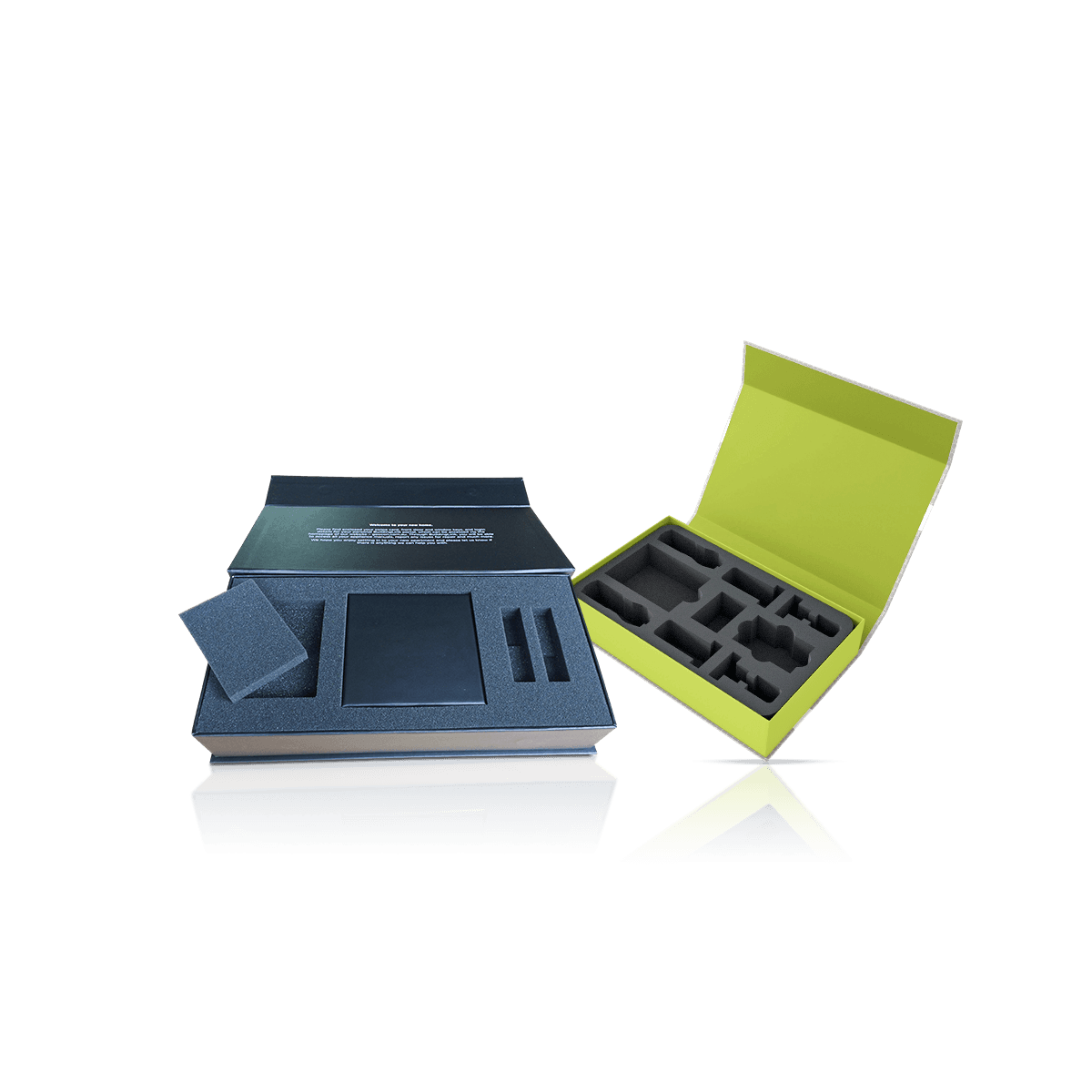
The safest foam cavity supports the surfaces that can carry pressure and leaves vulnerable features clear. Custom Foam Insert Boxes should therefore be built from a contact map, not just a traced silhouette.

A cavity that simply traces the outside silhouette can look precise and still protect the product poorly.

For MRO packaging, the important question is where the component should actually touch the foam.

A metal housing may tolerate support across broad flat surfaces while a connector, sensor tip, threaded shaft or calibrated face should remain free. A tool may be durable overall but too heavy to rest on one small switch. An instrument may need even support beneath its body while its display stays untouched.

The insert therefore needs a load map, not just an outline.

Identify:

  • surfaces that can carry compression
  • projections that need clearance
  • areas that should never contact the cavity wall
  • the component's center of mass
  • the direction in which it will enter the insert
  • the point a person will use to remove it

Those decisions determine the cavity more reliably than tracing a photograph.
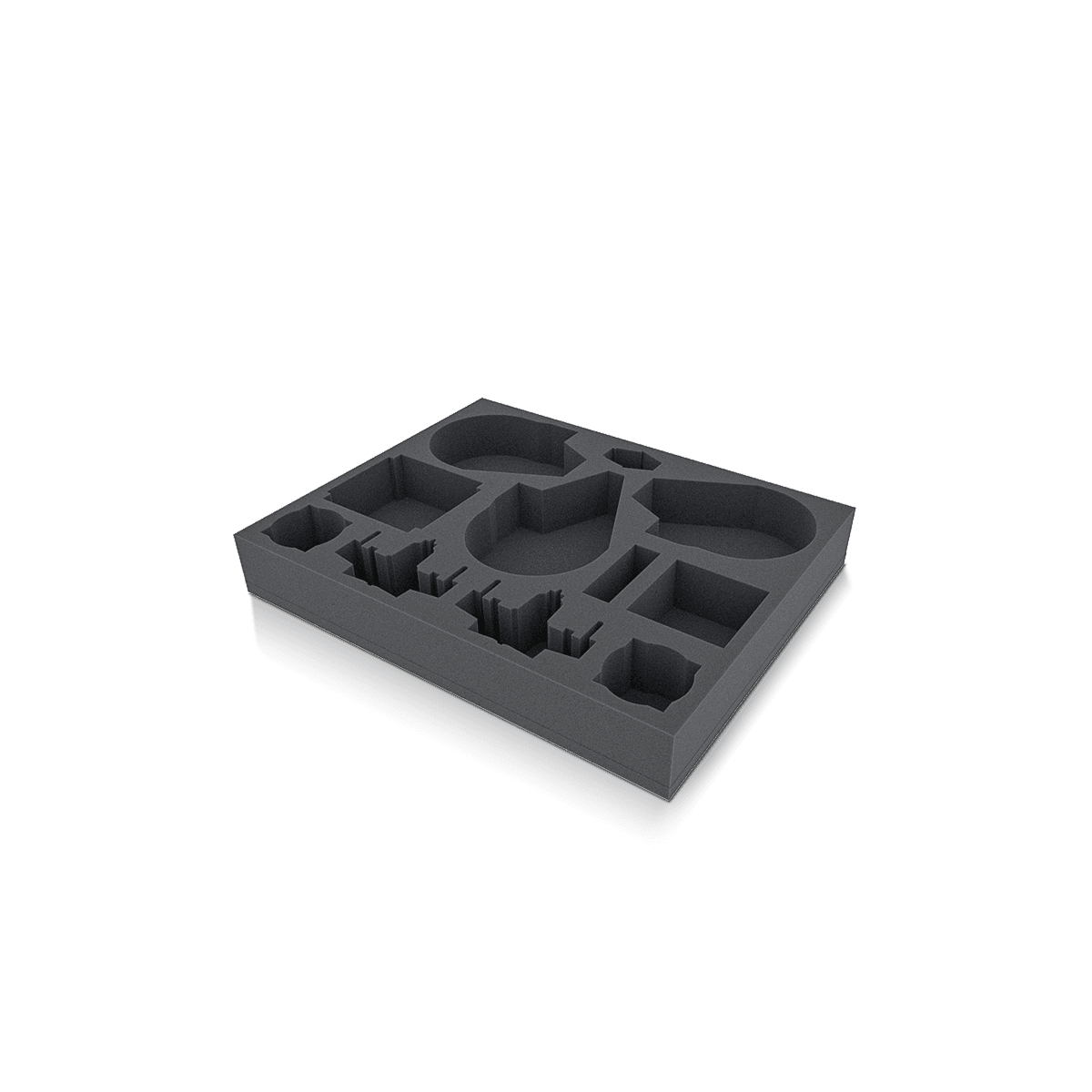
Restraint and Cushioning Differ

A foam insert can hold a product in position, absorb some handling energy or do both. Those functions should not be treated as the same requirement.

A dense steel component may need strong positional restraint but relatively little concern about cosmetic scuffing. A calibrated instrument may need lower surface pressure and greater cushioning. A painted or finished tool may be structurally durable while still needing protection from abrasion.

The insert should therefore be specified around the failure risk.

Positional Control

A close cavity limits sliding, rotation and product-to-product contact.

That is useful when the main concern is keeping the component from moving into a wall, accessory or neighboring part.

Cushioning Space

Impact protection requires room for the foam to deform.

If a product is packed so tightly that the cushioning material cannot compress where needed, a visually snug cavity may not perform the job expected from it.

Surface Contact

The foam surface itself matters when parts have polished, painted, plated or otherwise sensitive finishes.

Do not assume that every foam type is equally appropriate for every surface or industrial condition. The exact material should be checked against the component and its handling environment.

The decision framework in foam, cardboard and molded-pulp inserts helps separate cushioning needs from simpler organization.

Clearance Protects Weak Features

The cavity should deliberately avoid putting pressure on vulnerable projections.

That may mean creating a void around a connector, recessing a control knob or supporting a tool on stronger neighboring surfaces so a delicate feature never becomes a load point.

Consider a hypothetical industrial sensor with a metal body and projecting electrical connector.

If the foam cavity follows the full outside envelope closely, the connector may press against the foam every time the sensor is inserted. During an impact, that same contact can transfer force directly into the projection.

A better cavity can support the body and leave a controlled clearance around the connector.

The outside box might not change at all. The protection improves because the internal contact geometry changes.

This is one of the main reasons foam inserts should be designed from the real component, CAD geometry or accurate measurements rather than a rough outside dimension.

Cavity Depth Controls Grip

A cavity can be too shallow or too deep.

If the component sits too high, it may move vertically or contact the lid. If it sits too deep, removal becomes awkward and workers may pull on the wrong feature.

Exposed Grip Area

Leave a sensible grip point.

A semicircular finger relief, side access cut or exposed handle area can let the user lift the product by a strong surface.

The removal method should be obvious without instructions.

Top Clearance

The closed box should not press onto a delicate component simply because the foam holds it securely from the sides.

Top pads can add restraint where necessary, but pressure needs to land on surfaces that can accept it.

Bottom Support

The foam beneath a heavy item needs enough material to prevent the product from effectively bottoming out against the box under normal handling.

The required depth depends on weight, impact exposure and the foam system chosen.

A cavity depth should therefore be evaluated as part of the complete insert thickness, not as an isolated cut dimension.

Dense Parts Change Foam Behavior

Heavy components load foam differently from lightweight electronics or presentation products.

A small motor, machined assembly or steel tool can concentrate substantial weight into a compact footprint. If the foam is too soft for the load, the component can settle deeply and lose the clearance the original layout was supposed to maintain.

That is why “soft” does not automatically mean “protective.”

The insert needs enough resistance to support the load while still performing the required cushioning function.

Heavy components may also need local geometry changes:

  • more material under the main body
  • larger support surfaces
  • less unsupported foam around narrow projections
  • a stronger corrugated outer structure
  • separate accessory cavities so dense items cannot collide

For very demanding loads, Heavy Duty Boxes can carry the outer compression and freight duty while the foam controls the component inside.

The strongest carton and the best-cut insert solve different forces. They should be specified together when both matter.

Foam Is Not a Divider Upgrade

Foam should not be added simply because it sounds more protective than paper partitions.

Divider Boxes are often the cleaner choice when components mainly need separation, count control or individual cells.

Foam earns its place when the product needs tighter retention, cushioning, shaped support or surface protection that a simple partition cannot achieve efficiently.

The difference matters commercially.

Imagine twelve identical metal fittings that only need to remain separated. A corrugated divider grid may solve the problem with less material and easier assembly.

Now imagine one calibrated instrument with a protruding connector and polished face. A shaped foam cavity can support the instrument around safe surfaces and hold vulnerable features away from the carton.

These are not better and worse versions of one interior. They solve different problems.

A hybrid pack can also work. Paper partitions may organize ordinary components while foam protects one sensitive part.

Multi-Part Layouts Need Hierarchy

Foam can give every item its own cavity, but that does not mean every item deserves equal space or equal visual priority.

For tool sets, repair kits and instrument packs, establish the hierarchy before the cavity map.

The primary component usually controls the insert orientation. Accessories then occupy the remaining footprint according to weight, use order and sensitivity.

A charger should not sit where its cable crosses the main tool cavity. Small adapters should not occupy deep pockets that make them difficult to retrieve. A dense accessory should not be placed beside a fragile component just because the remaining rectangular space happens to fit it.

For task-driven assortments, Maintenance Kit Boxes focus the full pack around one defined service job.

Foam can support that architecture when particular components need close control, but the kit logic should still determine which items belong together in the first place.

Orientation Should Be Deliberate

A component can often fit the same outside box in several orientations. Foam makes that choice permanent, so orientation deserves deliberate analysis.

A flat orientation can reduce box height but increase footprint. Standing a component upright can save area but increase tipping leverage and require deeper foam.

The strongest orientation usually balances:

  • component stability
  • vulnerable-feature clearance
  • insert thickness
  • outside box dimensions
  • removal ergonomics
  • accessory placement
  • expected shipping direction

Do not rotate the product simply to make the dieline smaller if the new orientation puts weight onto a weaker surface.

Orientation can also affect the visual check during packing.

A technician or packer should be able to tell quickly when the item has been inserted incorrectly. An asymmetric cavity can help prevent reversed loading when orientation matters.

Shipping Adds Another Layer

A precision-cut insert does not eliminate the need for an appropriate outer box.

Foam can control movement around the component while the outer corrugated package handles closure, stacking and external distribution forces.

For parcel or freight movement, Shipping Boxes can form the carrier-facing layer around the foam system.

The insert should fit the outer structure without excessive gaps around its perimeter. If the entire foam block shifts inside the box, a precise product cavity does not produce precise overall restraint.

The structure-and-fit approach to shipping damage is especially relevant here because the product, foam and outer box work as one system.

Check three movement paths separately:

  1. product movement inside the cavity
  2. insert movement inside the box
  3. outer box movement inside any master carton

Control can be lost at any of those interfaces.

ESD Needs the Right Material

Foam and ESD protection should not be treated as interchangeable concepts.

A standard foam insert may physically cushion an electronic component without controlling electrostatic risk.

If the contents are electrostatic-discharge sensitive, the packaging requirement needs to be defined explicitly.

Custom Anti-Static Boxes belong to that decision when electrical sensitivity changes the material system.

The same applies to the electronics-focused Protective Foam Insert Boxes when device protection and electronic-component handling are the dominant context.

For MRO applications, Foam Insert Boxes should stay centered on mechanical retention and cushioning across industrial tools, instruments and repair components rather than drifting into a generic electronics-protection topic.

Do not label ordinary foam as anti-static because of its color or appearance. The actual protective material specification must support the claim.

Packing Speed Still Matters

A foam insert can improve packout consistency because each item has one obvious position.

That advantage disappears if the cavities are difficult to load.

Very tight pockets can slow insertion. Deep cavities without finger access can slow removal during quality checks. Similar-looking accessory positions can create packing errors if the layout does not communicate what belongs where.

Good foam geometry helps the packer.

The cavity should:

  • accept the component without forcing
  • resist incorrect orientation where possible
  • make missing items visible
  • keep accessory positions distinct
  • allow efficient visual inspection
  • release the product without damage

For repeated production, a controlled cavity layout can reduce reliance on individual packing judgment.

That is particularly useful when the same MRO kit is assembled by different workers or at different times.

The design still needs to account for real manufacturing tolerances in both the product and the foam. A theoretical zero-clearance cavity is not a practical production specification.

Product Variation Can Break Fit

Foam is less forgiving of dimensional variation than a loose divider.

If two products share the same SKU but vary materially in shape, a tight cavity can fit one production lot and interfere with another.

Measure the production part, not only a prototype.

Check whether removable handles, cable positions, protective caps or accessory configurations change the maximum envelope.

For products with several variants, ask whether one insert can safely support all of them or whether separate cavity layouts are needed.

A universal cavity can reduce packaging SKUs, but only when the extra clearance does not create unacceptable movement.

This decision is especially important for tools and equipment families whose external housings look similar but differ around handles, controls or attachments.

Standardization is valuable only after the fit envelope is verified.

Physical Fit Deserves Proof

Foam Insert Boxes are one of the cases where a physical sample can answer questions that a digital visualization cannot fully settle.

A 3D mockup can confirm layout, cavity positions and overall presentation. It cannot reproduce the exact hand feel of inserting a dense component or show with certainty how much a real foam material compresses around an irregular part.

A sample can answer:

  • Is insertion too tight?
  • Does the product bottom out?
  • Does the connector remain clear?
  • Can the product rotate?
  • Is finger access adequate?
  • Does the insert lift with the product?
  • Does the lid create unwanted pressure?
  • Do accessory cavities retain small parts?
  • Does the complete packed box remain balanced?

Testing should target the uncertainty that matters.

The principles used in custom packaging testing can then be applied to the complete packed system before a larger run.

Free sample examples of previous Custom Packly work may be supplied. Fully custom physical samples can be arranged as paid samples for exact fit evaluation.

Outer Print Can Stay Practical

MRO foam packaging does not need elaborate decoration to justify custom printing.

The outer box may need to communicate:

  • part or kit number
  • equipment identity
  • component count
  • handling orientation
  • barcode or QR code
  • service location
  • inspection status
  • return instructions
  • revision identifier

Interior labeling can also help when several cavities look similar.

A short part code printed on a paper layer or accompanying diagram can make packing and checking easier, but do not crowd the foam with unnecessary text.

Branding can remain restrained when operational identification matters more.

If color consistency across several printed industrial SKUs becomes important, CMYK and Pantone printing can be selected according to artwork and brand-color requirements.

The foam itself should be selected for performance first rather than treated as another decorative surface.

Price the Interior and Outer Together

Foam Insert Box pricing depends on the complete system rather than the outer carton alone.

The insert can change material usage, conversion work, assembly and final outside dimensions.

For an accurate specification, prepare:

  • product dimensions
  • product weight
  • photos or CAD geometry where possible
  • vulnerable projections
  • surfaces that can carry load
  • number of items per box
  • accessory dimensions
  • preferred product orientation
  • shipping or storage conditions
  • ESD or other special handling requirements
  • required printed identifiers
  • production quantity

Custom Packly's USA MOQ starts from 100 boxes. Free design and dieline support can help coordinate the outer structure with the cavity plan, and free 3D mockups can show the proposed arrangement before production.

US production and free shipping support domestic orders. Standard turnaround is 4–6 days after final specifications and artwork approval. Complex insert systems, specialty materials or other advanced requirements can require additional time.

Once the component geometry and insert requirement are fixed, request an instant custom packaging quote for the complete box-and-foam configuration.

Inspect the Contact Points

The final approval should focus on where the component touches the insert.

Load the product slowly and watch which surfaces contact first. Close the box and check whether top pressure moves the part. Turn the pack through realistic orientations and inspect whether the product has migrated. Remove it and look for areas where the foam marks, rubs or grips more than expected.

Then repeat the test with accessories removed.

The cavity should not depend accidentally on one neighboring item to hold the primary product in position.

This is the central advantage of Custom Foam Insert Boxes when they are engineered properly: each sensitive component receives a controlled physical position based on how it should be supported, not simply an empty shape cut into foam.

FAQs

They matter most when the product is fragile, high-value, scratch-sensitive or shaped in a way that shifts too much inside a standard box. A fitted insert gives the product a defined resting position and helps protect both the item and the presentation.

Foam Insert Boxes are the better choice when the product needs closer retention, more cushioning or a shaped cavity that matches the item precisely. Divider Boxes are more useful when several products need simple separation inside one pack but do not need the same level of fitted support.

No. They are often used for premium presentation but they are also practical for shipping-sensitive goods repair kits, instruments, electronics, and fragile components that need better internal protection.

A multi-cavity insert usually works best because it assigns a fixed place to each item. That helps with count checks, cleaner setup and a more organized opening experience for kits or bundled products.

Yes. They can support shelf storage, internal transfers, and final shipments when the insert depth, foam density and outer box structure match the product weight and handling conditions.

Process

How it works

Your Packaging Journey, From Idea to Production and Delivery

01

Tell Us Your Specs

Custom packaging boxes

Tell Us Your Specs

Provide size, quantity, printing, and finishes.

02

Get a Fast Quote

Custom packaging boxes

Get a Fast Quote

Instant transparent pricing, no hidden fees.

03

Design and Approval

Custom packaging boxes

Design and Approval

Artwork checks, revisions, and final sign-off.

04

Produce

Custom packaging boxes

Produce

Expert manufacturing to meet deadlines.

05

Ship to Your Door

Custom packaging boxes

Ship to Your Door

Hassle-free, flexible delivery options.

Get Your Quote for Custom Foam Insert Boxes

Share your product details, size, quantity and artwork needs. We’ll help choose the right packaging style and send a clear quote.