The Lid Sets the Interior Height
A wooden jewelry box can have generous outside dimensions and still fail inside if the lid closes into the space the jewelry needs.
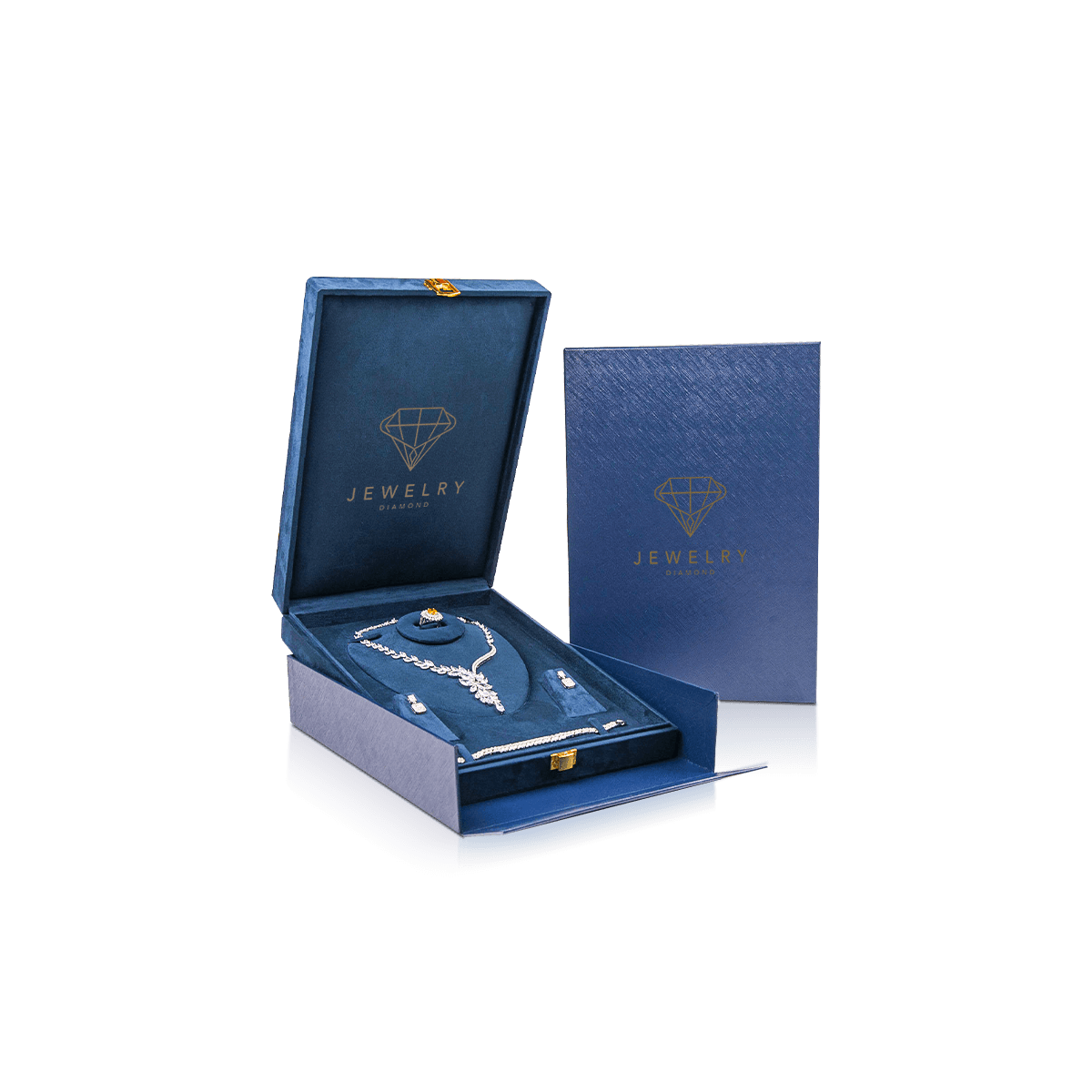
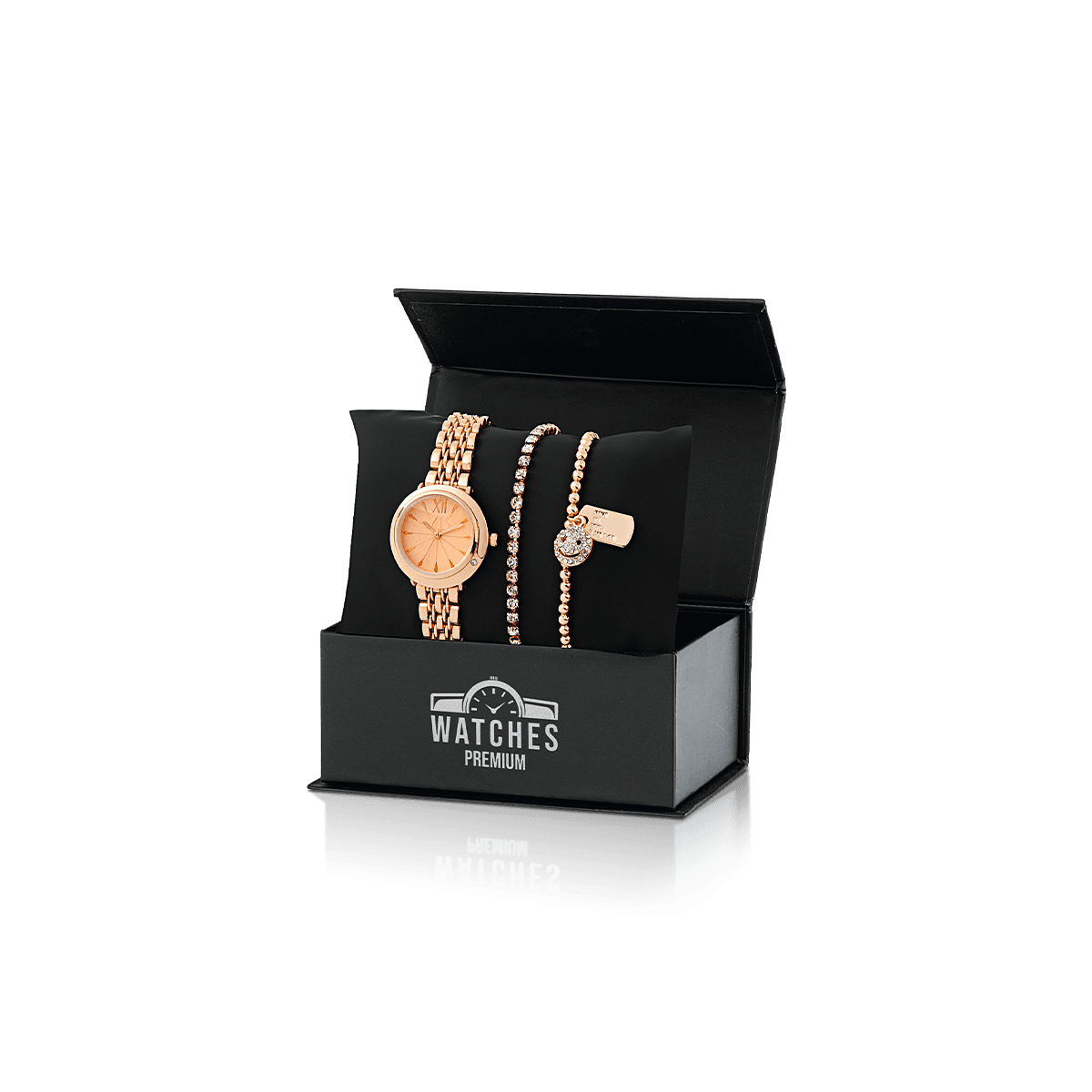
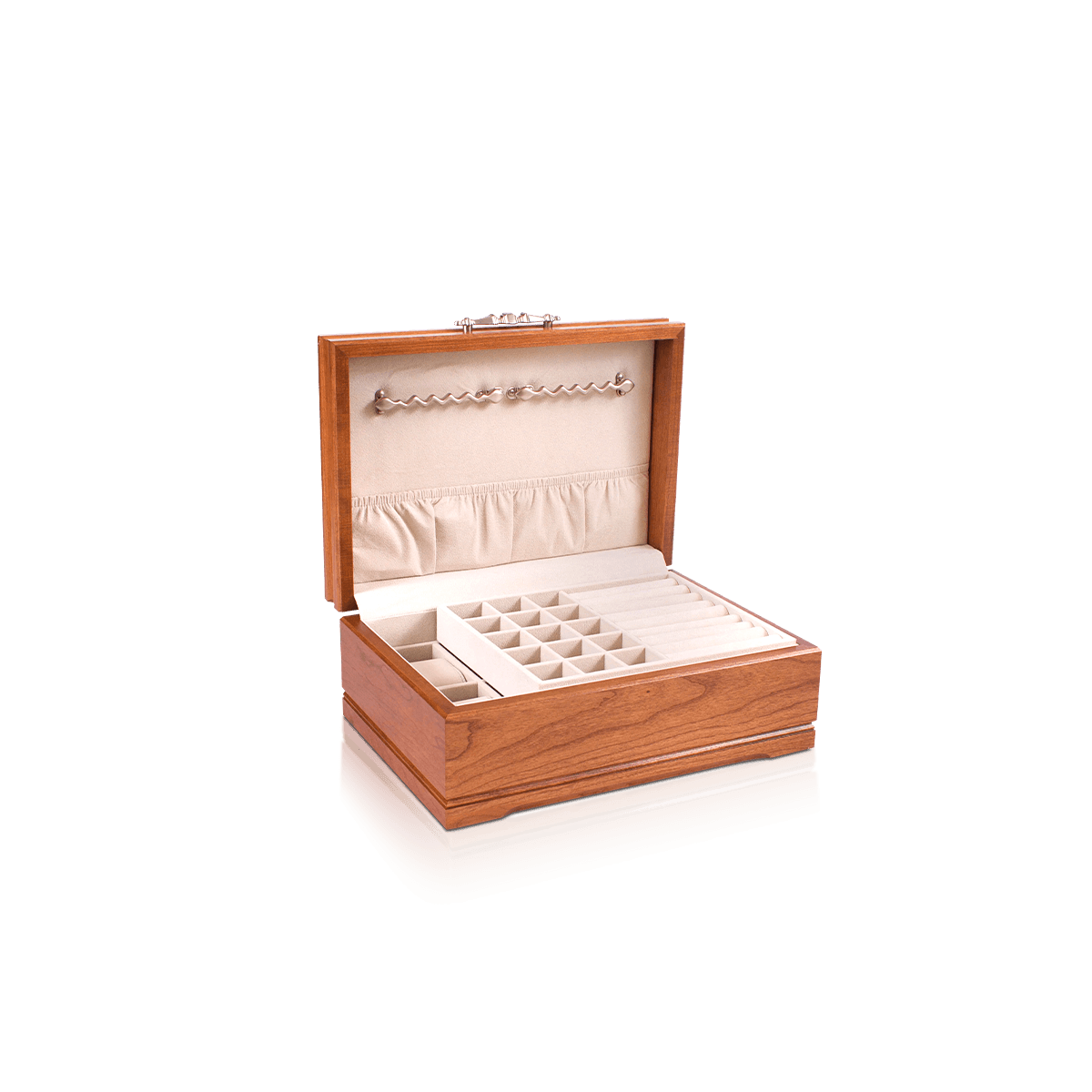
Hinge position, lid thickness, interior lining and any padding under the lid all reduce usable clearance. That matters most with raised rings, stone settings, watch cushions, bracelets on forms and multi-piece arrangements that sit above the insert surface.
The interior should therefore be checked as a fully assembled system, not as an empty wooden shell.
Wooden cases sit at the keepsake end of jewelry and accessories packaging, where the container often remains with the product long after the sale.
Check the Closed Position
Open-box photography can hide a clearance problem.
A ring may look centered and secure while the lid is upright, yet the stone can touch the upper lining as the lid comes down. A watch cushion may sit comfortably until the case closes and compresses the watch against the top surface.
The critical measurement is the clear interior height with every lining layer, pad and insert installed.
A fully custom pre-production sample can be valuable here because lid movement, insert compression and product clearance are physical behaviors. Free sample examples of previous work can help with material direction, while an exact custom sample can be arranged as a paid pre-production sample.
Leave Relief Around High Points
Consider a wooden ring box designed around the shank diameter and overall ring width. The ring sits neatly in the slot, but the center stone rises close to the padded lid.
Making the ring slot tighter will not fix that problem. The correction belongs above the jewelry: more clear height, a shallower insert position or a relieved upper lining where appropriate.
The result is a box that still holds the ring confidently without turning the lid into a pressure surface.