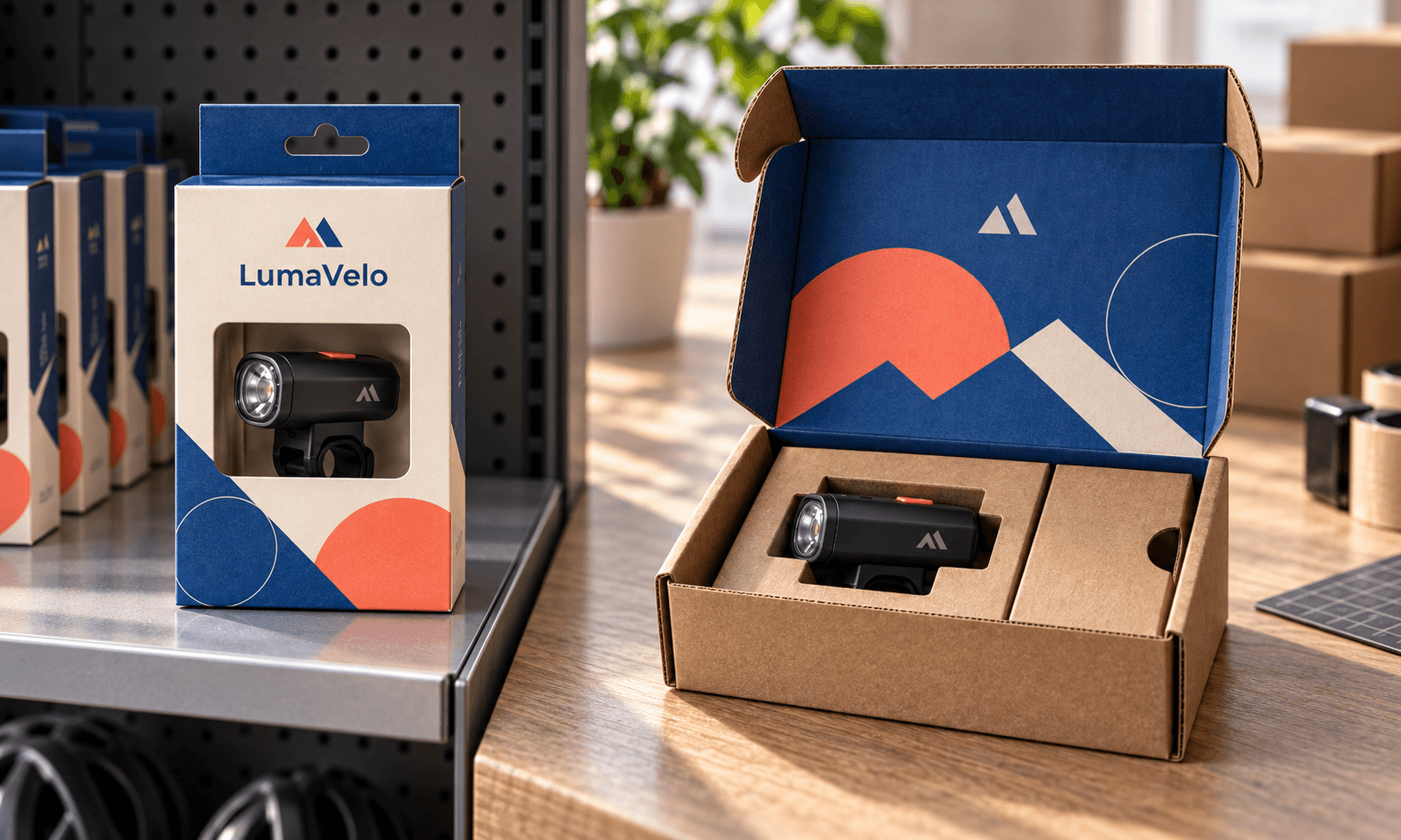
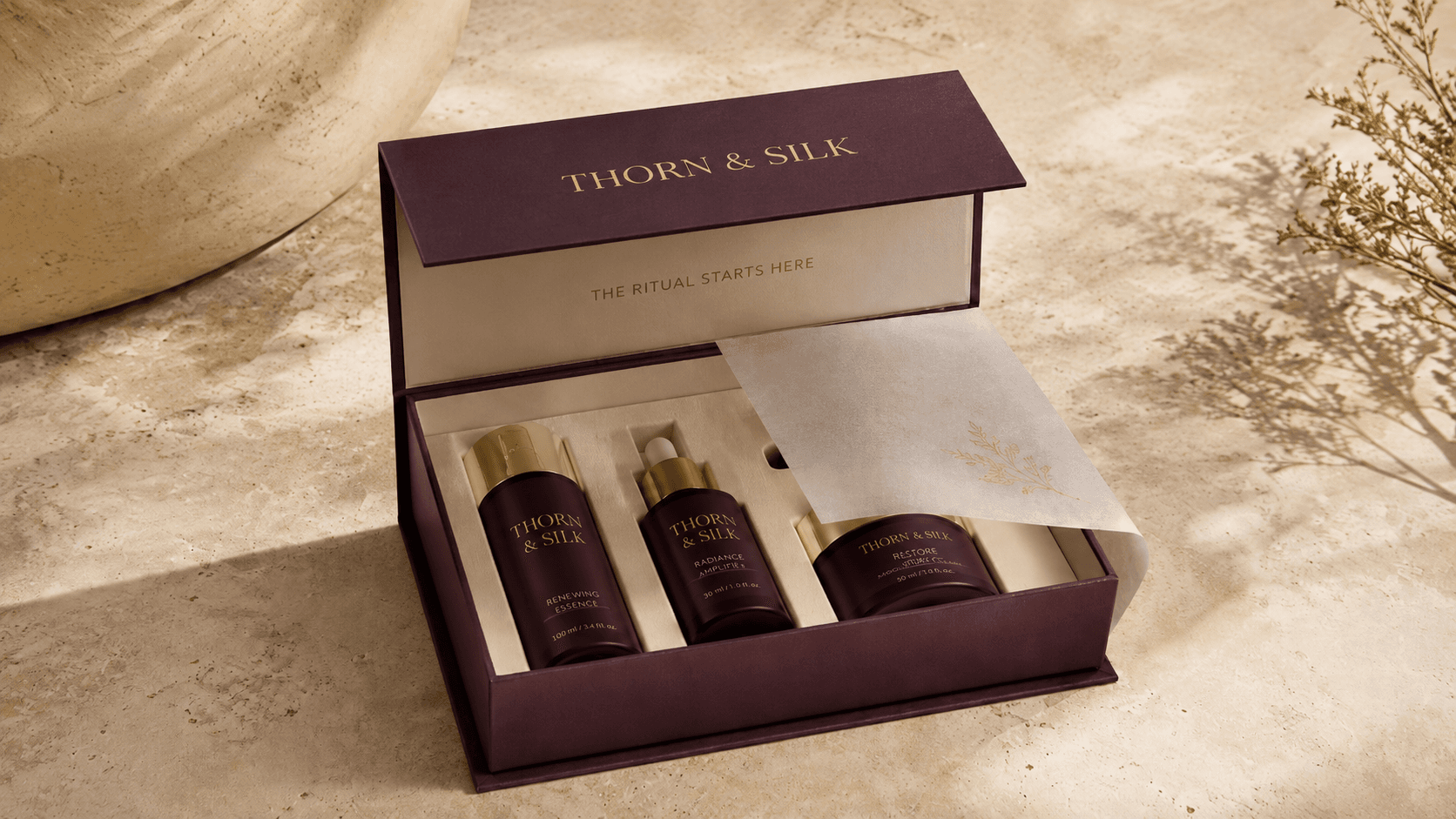
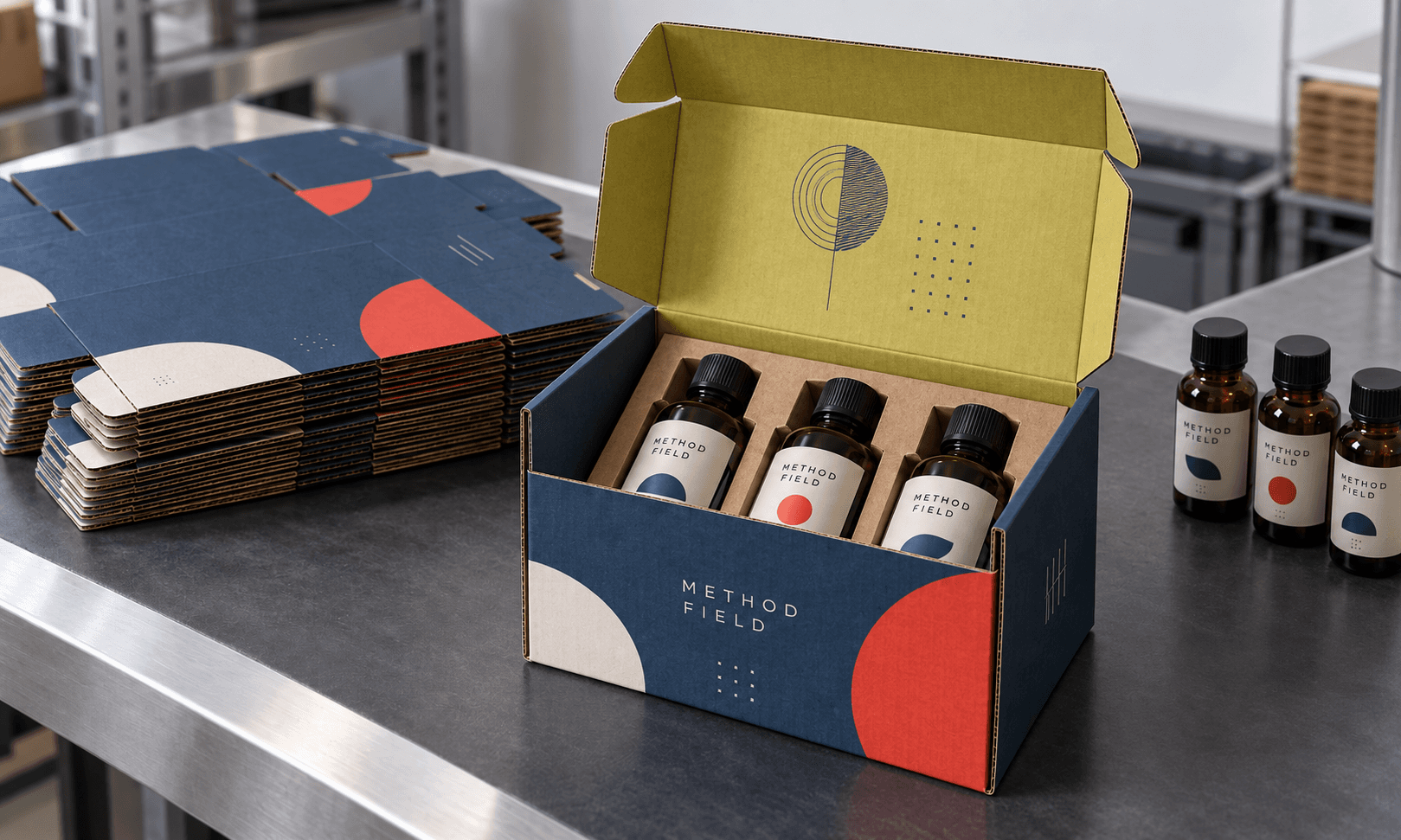
Yes, custom packaging can help increase sales, but the box is not a sales engine by itself. Packaging matters when it changes something that affects a real purchase: how quickly a product is noticed, how clearly the brand is remembered, how confident the customer feels about the order, whether the product arrives in good condition or how easy it is to buy again.
That distinction matters. A printed logo cannot rescue weak demand, an uncompetitive price or a disappointing product. Good packaging can strengthen a product that already has a reason to be bought by making the brand easier to recognize and the experience easier to trust.
The strongest packaging decisions therefore start with a commercial question, not a decoration question: what customer behavior should this package improve?
Packaging Affects Sales at Different Points in the Buying Cycle
The same package does not influence every sale in the same way. Where the customer first sees the package determines what it can realistically do.
Retail packaging can influence the first purchase
On a store shelf, the package is visible before the product is bought. Structure, front-panel hierarchy, color, product naming, windows and finish can help a shopper notice the product and understand what it is. Here, packaging can affect the first purchase because it is part of the decision environment.
Ecommerce packaging usually influences the next purchase
For a direct-to-consumer order, the first purchase often happens before the shipping package is seen. The outer mailer or shipper has a different job: protect the product, confirm the brand choice, make the delivery feel deliberate and make the business easier to remember when the customer is ready to order again.
That is why measuring packaging only by immediate conversion can be misleading. Retail, ecommerce and delivery packaging operate at different moments in the customer journey.
A Real New York Example: From Plain Food Boxes to Branded Packaging
One example from our packaging work involved a food-delivery business in New York. Before the packaging change, it used plain boxes for burgers, pizzas and other delivered food. Monthly box volume was around 2,000 to 3,000 units.
For a delivery brand, the package may be one of the few physical brand touchpoints. That makes fit, closure, presentation and visible branding especially important across food, bakery and restaurant packaging.
We moved the business to branded packaging with a clearer visual identity, stronger brand visibility, contact details and social handles. After that shift, its monthly box volume grew to around 14,000 to 15,000 units.
Those numbers are worth preserving because they show what happened around a real packaging change. They should not be read as a promise that changing a box will produce the same growth for another business.
The operational side matters too. In food delivery, avoiding food packaging mistakes helps make the short handoff cleaner and more consistent instead of relying on branding to compensate for a weak package.

What That Example Shows, and What It Cannot Prove
The New York example shows a strong before-and-after business change, but it does not isolate packaging as the only cause. We did not run a controlled test that held menu, pricing, promotions, locations and every other growth variable constant.
The defensible conclusion is narrower: as the business grew, branded packaging gave each delivery more brand visibility and more ways for the customer to remember or contact the business. The packaging became useful marketing inventory instead of anonymous material.
That is also the right standard for evaluating your own packaging. Track what the package can plausibly influence, then compare the result against the extra cost. Do not credit packaging for every increase in revenue that happens after a redesign.
We have also recorded individual projects in which customer response, repeat-order activity or order volume was reported as 60–70% stronger after a move from plain to custom packaging. Those are different outcomes, not one standardized metric, and they were not measured under a controlled methodology. Treat the 60–70% figure as a historical observation from those projects, not a forecast, benchmark or expected sales lift.
The Sales Mechanisms Worth Paying For
Custom packaging is most valuable when you can name the mechanism you expect it to improve. Five mechanisms matter more than simply making the box look expensive.
Recognition lowers the effort of buying again
A clear logo, repeatable color system, readable product name and consistent visual language help the customer connect the package with the business. That memory is useful when the product is needed again, particularly when several similar brands compete for attention.
Presentation can change perceived value and trust
Customers form an opinion before they fully use the product. A box that closes properly, prints cleanly and suits the product can make the order feel more considered. An oversized, flimsy or poorly printed package can do the opposite, even when the product itself is good.
Shelf packaging can change what gets noticed
Retail packaging has to work at viewing distance. A custom retail packaging decision should account for front-panel hierarchy, product visibility, barcode and required information, store handling and how the pack sits beside competing products.
For many lighter retail products, folding cartons give enough printable surface for recognition without forcing a premium rigid structure that the product or price point does not need.
The right expression depends on the product and channel. A bakery might use a windowed cake box with printed branding, a skincare brand might choose a soft-touch carton and an online store might use a branded mailer with a simple inside print. The point is not to copy premium cues across industries, but to match structure and finish to the product and the moment the customer sees it.
Unboxing can create referral and sharing opportunities
For ecommerce, the package can give customers something worth photographing or mentioning, but shareability should come from a coherent experience rather than random decoration. A clean opening, intentional interior print, a useful insert or a well-placed reorder cue can matter more than adding several finishes.
Fit and protection protect future revenue
A package that looks good but lets the product move, crush, leak or arrive scuffed works against repeat purchase. Custom product packaging should start with the finished product dimensions, weight, weak points and route to the customer before the artwork is treated as final.
This is where packaging becomes more than branding. Structure, board choice, clearance and inserts can protect the experience that the graphics are trying to sell.
Research Supports an Effect, but Not a Guaranteed Sales Lift
A 2025 systematic review in Humanities and Social Sciences Communications analyzed 221 academic papers on packaging design and purchase intention. It found packaging research consistently connects visual, structural and informational design with consumer response, while also stressing an important limitation: purchase intention is not the same as an actual purchase decision. Price, promotions and economic conditions still affect what people finally buy. The review is available from Springer Nature.
A 2026 Journal of Retailing and Consumer Services study adds useful context for redesigns. It collected evaluations from 484 US and 491 UK consumers across 48 redesigned packages and found that modernization affected purchase intention mainly through likeability and familiarity rather than a simple direct effect. In practical terms, a redesign can backfire if it sacrifices the distinctive cues customers already recognize. The study is available through ScienceDirect.
The useful conclusion is not that research guarantees more revenue. It is that packaging can influence the perceptions and intentions that sit upstream of a purchase, and the commercial result still depends on product, price, channel and execution.
When Custom Packaging Is Unlikely to Pay Back
Custom packaging is a poor investment when the added cost has no realistic path back to the business. Common cases include:
Before adding finishes or complexity, compare the extra spend with the main custom printed box cost drivers such as structure, material, size, print coverage, quantity and finishing.
Design Packaging Around a Behavior You Can Measure
A sales-focused package should be designed around a behavior, not an adjective. “Premium” or “bold” describes appearance. “Make repeat ordering easier” or “make the product recognizable from six feet away” describes a job.
A stronger packaging system usually starts with structure and brand recognition working together. The principles in designing custom packaging for a stronger brand are more useful when they are tied to a specific customer behavior rather than decoration for its own sake.
Print decisions should also serve the job. CMYK may be suitable for full-color graphics, while Pantone spot colors can make sense when a specific brand color needs tighter control. Inside print is useful when the opening experience matters. Inserts should be added when they control movement, separation, protection or presentation, not simply because a premium box is expected to have one.
Brand fit matters as much as visual polish. A playful burger brand should not be styled like a luxury perfume brand, and a premium skincare pack should not look like a discount shipping carton. A small food business, candle brand, bakery, apparel store, cosmetics brand or subscription business may all justify custom packaging, but none automatically needs a luxury structure.
The action you want can also change by channel. A food-delivery box may make the website, phone number or social handle easy to spot. A cosmetics pack may make the brand handle easy to follow. An ecommerce pack may use a trackable QR code for a refill, reorder or offer. Use a response cue only when it gives the customer a useful next step and you can measure it.

How to Measure Whether Packaging Actually Increased Sales
The cleanest way to evaluate packaging is to choose the measurement before the new pack launches. Otherwise it is easy to notice growth afterward and assign too much credit to the box.
Start with the metric that matches the packaging job:
Then compare like with like. Keep the same SKU and sales channel where possible. Note changes in price, promotions, advertising, distribution, seasonality or product availability so they are not mistaken for a packaging effect.
A useful commercial check is simple: estimated packaging payback equals the measurable contribution from incremental or recovered orders, plus any measured reduction in return or damage cost, minus the added packaging spend. If you cannot measure the first two parts, treat the result as a hypothesis rather than a proven return.
This approach is less exciting than claiming a box will automatically boost revenue, but it gives you a decision you can defend.
Use Different Packaging Logic for Retail, Ecommerce and Food Delivery
Retail
Retail packaging can influence the first purchase because the pack is part of the shelf decision. Prioritize product identification, front-panel hierarchy, physical stability and brand cues that remain recognizable when the package is viewed beside competitors.
Ecommerce
In ecommerce retail packaging, the first order is often complete before the customer touches the package. The outer box should therefore protect the product and make the post-purchase experience reinforce the brand.
For products that suit a corrugated mailer, printed branded mailers can carry outside branding, inside print or reorder cues without changing the fundamental delivery structure.
Food delivery
Food-delivery packaging has a short job window. It must hold and hand off the food properly first. Branding, contact details and reorder cues are valuable when they do not interfere with closure, handling or the food-service function. Expensive decoration is not automatically better.
Plain Packaging Is Not Neutral, but It Can Be the Right Starting Point
Plain packaging gives up brand visibility, so it is not neutral when the customer repeatedly sees and handles the pack. It can make an otherwise good product easier to forget.
That does not mean every business should immediately move to a complex printed box. Plain stock can be sensible while demand is being tested, for internal or wholesale movements where the end customer never sees the pack or when margin and order volume do not yet support a custom run.
The decision changes when packaging becomes a repeated customer touchpoint. At that stage, staying plain has an opportunity cost: every order is another physical interaction in which the brand could have been easier to recognize.

Packaging Should Earn Its Extra Cost
Custom packaging can support sales when it improves a behavior that matters: first-purchase visibility, recognition, repeat ordering, referral, product condition or perceived value. It does not create demand on its own, and it should not be judged by appearance alone.
The New York food-delivery example is useful because it shows how branded packaging can become more valuable as a business grows. The careful conclusion is not that the box caused the entire increase from 2,000–3,000 to 14,000–15,000 monthly units. It is that the business stopped sending anonymous boxes into the market and started using each delivery to reinforce its identity.
If that is the job your packaging needs to do, define the product, channel, structure and measurable goal first. Then build the custom packaging specification around those decisions rather than starting with finishes.