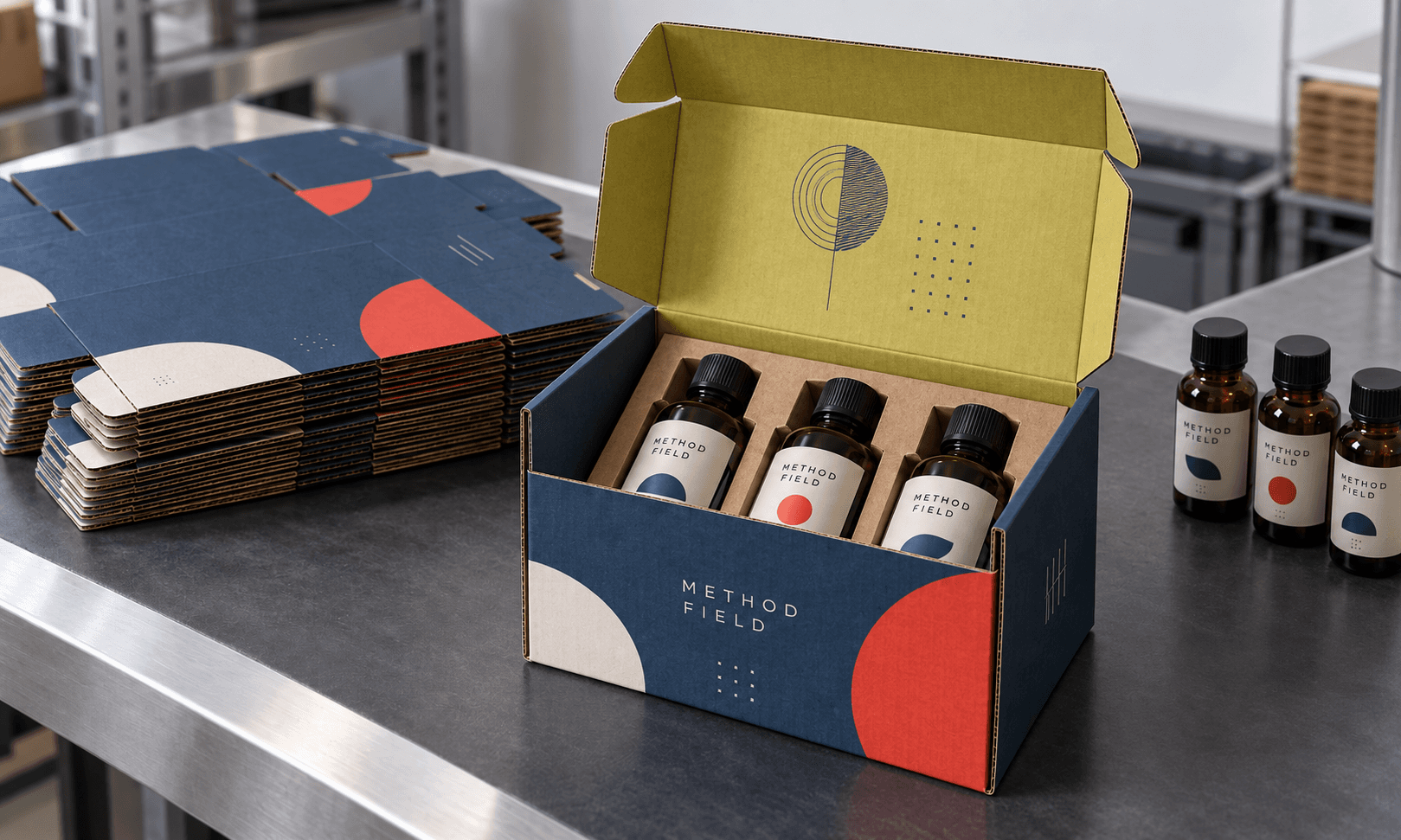
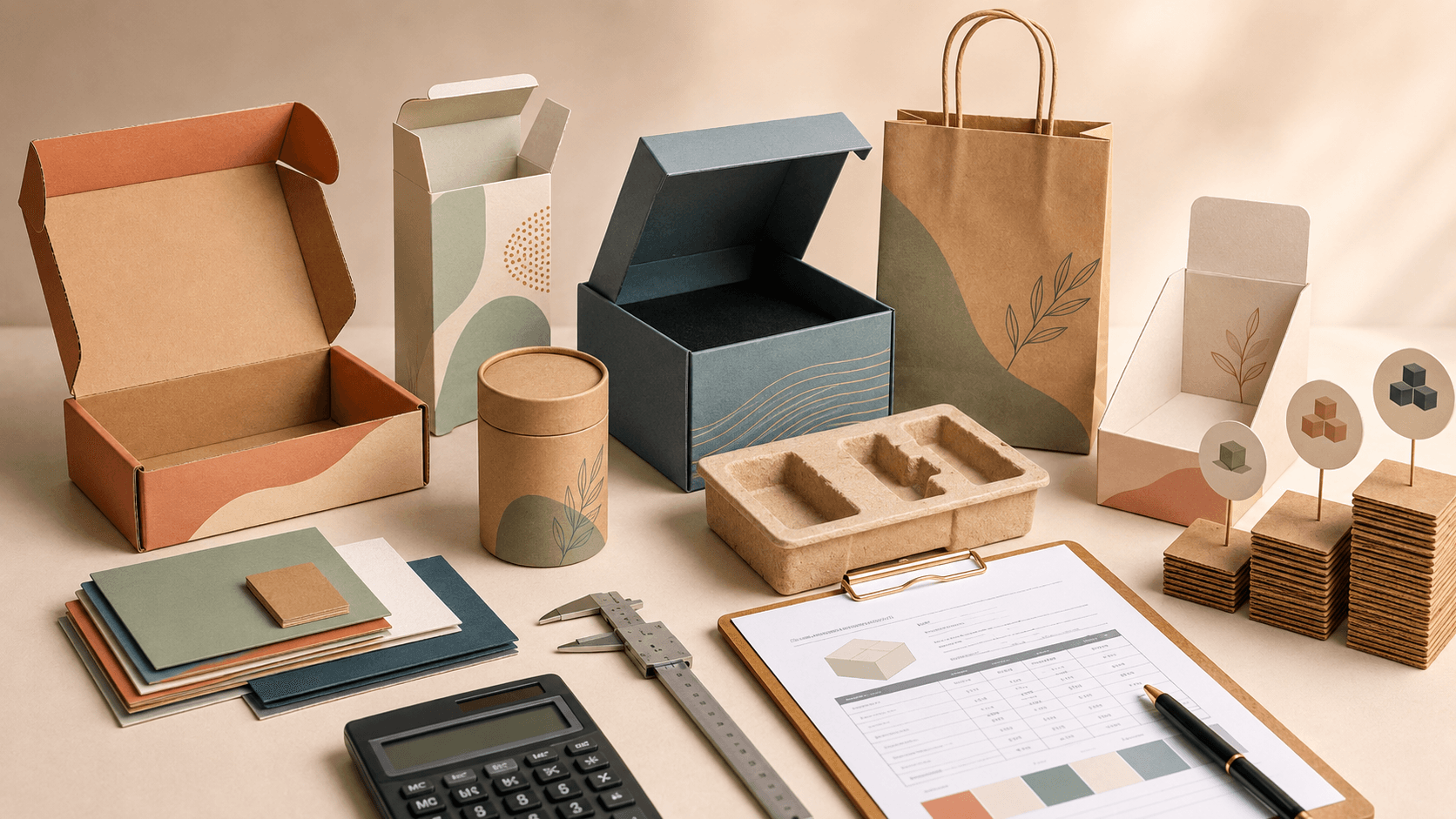
If you need 5,000, 10,000 or 60,000 custom mailer boxes per month, supplier selection stops being a simple box purchase. The box has to be right, but the supplier also has to reproduce the same specification, keep production moving and release inventory when your fulfillment operation needs it.
I have seen buyers focus on the unit price and then absorb the cost elsewhere through print variation, weak board, delayed production, rushed reorders or too much finished packaging arriving at once. Large orders turn packaging into a supply-chain input.
For a large or recurring mailer order, compare suppliers on the same physical specification and the same supply plan. A low quote is useful only when the structure, board, print, quantity, freight, storage and release assumptions are genuinely comparable.
Quick Answer: What Makes a Good Bulk Mailer Box Supplier?
A good bulk mailer box supplier should be able to define the box clearly, validate it before mass production, reproduce the approved print and structure across batches and support the volume and delivery pattern your operation actually needs. Price matters, but it should be compared after the specification is locked.
The strongest evidence is operational: a written specification, a sample or production-representative approval process, clear print controls, realistic capacity, a documented release schedule and an explanation of what happens when demand changes.
What Counts as a Large Custom Mailer Box Order?
There is no universal industry threshold for a “large” mailer order. For supplier planning, these volume bands are useful examples:
At these volumes, the cost of a small mistake multiplies quickly. If 200 boxes arrive a few days late, the disruption may be manageable. If 20,000 boxes miss a launch or a recurring fulfillment window, the same problem can affect labor, inventory and customer shipments.
If the box structure itself is not settled, compare custom mailer box structures before asking several suppliers to quote volume. You want each supplier pricing the same job, not a different interpretation of “custom mailer box.”

Make Every Supplier Quote the Same Mailer Box
The most important pricing rule is simple: do not compare unit prices until the physical specification is comparable. Two mailers can look nearly identical in a PDF and still differ in board construction, internal size, print process, closure details or production assumptions.
Lock the Structure, Dimensions and Board
A common branded shipper is the roll end tuck-front mailer. If you are comparing that structure, ask each supplier to state whether the quoted dimensions are internal or external, the corrugated flute or board construction, the closure style and any material grade or strength specification they use.
For high-throughput packing, self-sealing mailers can change the labor equation because the closure method becomes part of packout. That means a lower-priced tuck closure and a higher-priced peel-and-seal format are not the same operational product.
Do not accept “standard corrugated” as the entire material description on a serious repeat program. Product weight, box span, stack height, carrier handling and whether the mailer ships alone all affect the board decision. If the board in production is weaker than the board you approved, a low quote can become a quality problem.
Separate Print Method From Artwork Coverage
Large-volume print should be discussed as a production decision, not just a color choice. Ask whether the job is digital, flexographic or offset/lithographic, whether printing is direct to corrugated or produced on a printed liner and what color standard will be used for repeat work.
The economics and repeatability of digital, offset and flexographic printing change with quantity, substrate, artwork and version count. For a 10,000-box run with one stable design, the best process can be different from a 10,000-box total split across several SKUs.
If brand color is important, ask how the supplier will approve and control it. CMYK, Pantone targets, proofs and physical samples solve different problems. The supplier should be able to tell you what will actually be measured or matched on the production run.
Compare the Inclusions, Not Just the Unit Price
A quote can look cheaper because something is missing. Confirm whether pricing includes printing, tooling or plates where applicable, prepress, dieline work, sample charges, freight, storage, split releases and any special packing requirements.
Custom Packly currently includes free US shipping, so a fair comparison against another supplier should use landed cost rather than comparing one delivered price with another ex-factory or freight-extra price. The same principle applies to storage and release charges: compare the cost of the full supply plan you intend to use.
Supplier Type Changes the Tradeoffs, Not the Basic Questions
Different supplier models can work for the same order. The useful question is not which model is automatically best. It is which one can prove control over your specification, timing and repeat requirements.
Online Packaging Platforms
Online platforms are useful when the structure is standard, artwork is straightforward and the buyer wants fast configuration or pricing. Their self-service model can also make small or mid-size reorders easy.
For a recurring 10,000+ program, check what happens after checkout. You may need account-level support for color control, production planning, warehousing or scheduled releases that a basic configurator does not show.
Local or Domestic Manufacturers
A nearby corrugated manufacturer can be a strong fit when direct communication, plant access or faster freight lanes matter. But location alone does not prove that the plant is set up for branded mailers, repeat color work or the finishes you need.
Ask to see production-relevant printed samples and ask who owns the specification after approval. A plant that excels at plain RSC shipping cartons is not automatically the right production route for a highly printed ecommerce mailer.
Overseas Manufacturers
Overseas production can be commercially sensible when unit economics are strong, forecasts are stable and the buyer can absorb longer replenishment cycles. The tradeoff is usually more planning: freight, customs, communication windows, larger safety stock and less room for urgent specification changes.
Do not reject overseas production by default, and do not choose it on unit price alone. Model the landed cost and the inventory you need to carry while the next run is being produced and transported.
Wholesale Distributors
Distributors can be efficient for stock packaging, standard mailers and replacement inventory. For a fully custom repeat program, confirm whether the distributor controls manufacturing specifications or is reselling a product that may change between sources.
If a supplier is vague about who manufactures the box, what material is being quoted or how the approved specification is controlled, treat those as supplier red flags before production rather than minor sales details.
Custom Packaging Partners
A packaging company that coordinates structure, artwork, production, sampling and logistics can make sense when the program has several moving parts. The value is coordination, but it should still be verified with the same questions you would ask a plant or platform.
Ask who is responsible for the production specification, how changes are documented, what manufacturing route is being used and how repeat orders are checked against the approved version.

Capacity Must Cover Reorders, Not Just the First Run
A supplier can have enough capacity to produce one large order and still be a poor fit for a recurring program. What matters is whether the production and release plan works month after month.
Ask what quantity can be produced within your required window, how peak periods are handled, what changes on a repeat order and whether inventory will be produced in one larger run or manufactured in separate batches. If the supplier proposes multiple batches, ask how they will control print and board consistency between them.
When larger production runs improve unit economics but your site cannot hold the full volume, bulk custom boxes with warehousing and staged supply can solve a different problem from simply ordering more boxes. The production quantity and the delivery quantity do not have to be identical.
For multi-SKU procurement, multiple destinations or recurring programs, custom packaging for large businesses should be planned around specification control and release timing, not just a larger purchase order.
That matters most when packaging feeds daily e-commerce retail fulfillment. Packaging inventory is useful only if the right size and printed version are available when orders are being packed.
Custom Packly's current USA standard turnaround is 4–6 days after final artwork and specifications are approved. Complex structures, specialty materials or advanced finishes can require additional planning. On a recurring high-volume program, the production turnaround and the warehouse release schedule should be discussed as two separate timelines.
Samples Should Validate the Production Decision
Do not approve thousands of mailers from a 3D render alone. A render is useful for artwork placement and presentation, but a physical sample tests a different set of risks.
Check the sample for:
A physical sample should be checked against the same risk areas that matter in production. Custom packaging testing before production is especially important when the mailer is carrying a heavier product, uses fitted inserts, has dark solid print or will be stacked and handled repeatedly.
Custom Packly provides free 3D mockups for visual review. Fully custom physical samples can be arranged as paid samples when an exact pre-production sample is needed. That distinction matters: a digital preview helps you approve artwork, while a physical sample helps you approve fit, structure and feel.

The California 60,000-Box Example: Logistics Was the Bottleneck
A California e-commerce brand needed around 60,000 custom mailer boxes per month. The problem was not one isolated box defect. It was the stability of the whole supply program.
Before working with Custom Packly, the brand was dealing with three recurring issues:
Storage made those problems harder. The brand did not have enough space to receive all the boxes at once, and the previous packaging company did not have the right storage capacity to manage scheduled deliveries properly.
The response focused on repeat production control, competitive pricing for the monthly volume, warehouse support and scheduled deliveries. At the time this example was documented, Custom Packly had been delivering the mailers for nine months.
The useful lesson is not that every 60,000-box program should use the same setup. It is that a bulk price does not solve a supply problem if neither side can hold inventory and release it on the rhythm the fulfillment operation needs.

The Cheapest Quote Can Still Be the Most Expensive Program
Some buyers start with a blunt question: where can I get the cheapest custom mailer boxes? Price should absolutely be challenged at high volume, but “cheapest” only becomes meaningful after the scope is normalized.
For a repeat program, calculate the commercial decision across:
A higher unit price can still be the lower-risk commercial choice if it removes freight, reduces excess inventory or gives you more dependable repeat control. The reverse can also be true. The decision should come from the numbers and operating constraints of your program, not a supplier label.
What to Send Before You Ask for Final Pricing
A supplier can quote faster and more accurately when the request removes ambiguity. For a serious large-order comparison, send the same information to every supplier:
Once those inputs are stable, request a custom quote against the same specification you are sending to other suppliers. That makes the price comparison much harder to distort with different materials, missing freight or vague service assumptions.
Final Decision Rule
Choose the supplier that gives you the clearest written specification, the strongest validation before mass production and a supply plan that matches your real order pattern. The lowest number on the first quote is not enough if the board, print process, delivery basis or repeat controls are vague.
A domestic supplier is not automatically better than an overseas supplier. A platform is not automatically weaker than a manufacturer. The deciding question is whether the supplier can prove that it can reproduce the approved mailer and deliver the right quantity, in the right version, when your operation needs it.